

Product and application illustrations. Follow the product label and written use guidance.
CleenU product solution
Eyeglass Lens Cleaner
Ammonia-free, coating-safe · Streak-free · Private label
Fingerprints and smudges on your lenses that a shirt-tail only smears? Rinse off grit, mist both sides, and wipe clear with a microfiber cloth. Ammonia-free for coated lenses, factory-direct private label.
- Fingerprints and the smudges near nose pads are skin oil, and dry-wiping just spreads it. Clothing and tissues trap fine grit that leaves micro-scratches on coatings over time. This cleaner dissolves oil with low-strength isopropyl, lifts makeup with a touch of surfactant, and flashes off without streaks for a clear finish with a microfiber cloth.
- Many glass cleaners contain ammonia, which can slowly cloud and peel anti-reflective and blue-light coatings. This one is ammonia-free and near-neutral, suitable for coated lenses. If a coating is already flaking, cleaning won't fix it; see your optician.
- MOQ
- 500 bottles
- Free samples
- Free samples in 3–5 days
- Bulk lead time
- Scheduled with the order after packaging and labels are approved

Product value
What lenses is it for?
CleenU Eyeglass Lens Cleaner removes fingerprints and smudges without streaks.
View product detailsProduct summary
- Product type
- Lens cleaner for coated eyeglasses
- Core use
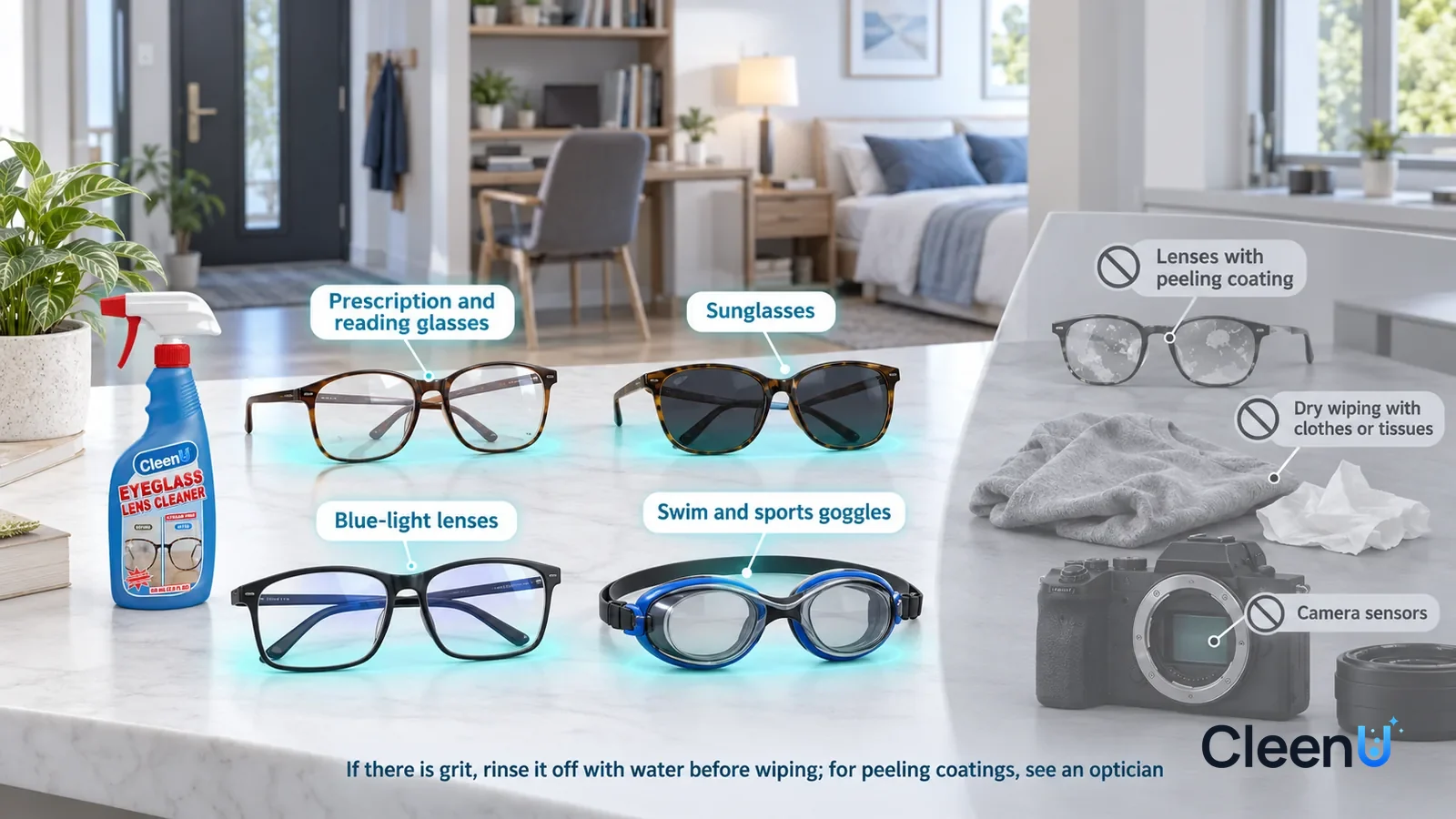
- Fingerprints, skin oil, makeup, and haze on prescription and reading glasses, sunglasses, blue-light lenses, swim goggles, and sports eyewear
- Formula focus
- Low-strength isopropyl alcohol and deionized water with a trace of surfactant, ammonia-free, pH 6.5–7.5; unscented spray with microfiber cloth.
- Best for
- Electronics and eyewear care brands, Optical shops, Ecommerce sellers

Before & after
Before and after (illustration)
Before: blue-light glasses after a full day, with fingerprints, oil by the nose pads, and mascara marks that blur the screen. After: grit rinsed off, both sides misted, and wiped with microfiber, the lenses are clear and streak-free.
- Before: prints and smudges, blurry screen
- Rinsed, misted, wiped
- Clear and streak-free

How it works
How fingerprints come off
Lens prints are skin oil, sweat salts, and skin flakes. Isopropyl alcohol dissolves triglycerides and fatty acids, deionized water dissolves the salts, and a trace of surfactant lowers surface tension so the liquid spreads evenly; the alcohol evaporates fast without water spots, and microfiber pulls loosened soil into its fibers.
- Rinse off grit
- Mist both sides
- Dissolve oil and salts
- Wipe with microfiber
- Dries clear fast

Usage guidance
Use guidance
- Rinse grit and dust off the lenses with water.
- Mist both sides.
- Wipe gently with a microfiber cloth; never dry-wipe with clothing or tissue.
Before you use it
Important notes
- Not for: Lenses with flaking coatings
- Not for: Dry-wiping with clothes or tissue
- Not for: Wiping over grit
- Not for: Camera sensors
- Test first for special materials, special equipment, or sensitive scenarios.
Product comparison
How to choose a Eyeglass Lens Cleaner
Use Eyeglass Lens Cleaner for glasses and sunglasses, Screen Cleaner for phones and laptops, and Camera Lens Cleaner for camera optics.
View product comparison
| Decision point | Eyeglass Lens Cleaner | Shirt-tail wipe |
|---|---|---|
| Skin oil | Dissolved and lifted | Smeared around |
| Coatings | Ammonia-free | Grit can scratch |
| Streaks | Dries clean | Often oily |
| Portability | Mini spray with cloth | — |
Where Eyeglass Lens Cleaner stands out
Why lenses smear more as you wipe
Fingerprints and the smudges near nose pads are skin oil, and dry-wiping just spreads it. Clothing and tissues trap fine grit that leaves micro-scratches on coatings over time. This cleaner dissolves oil with low-strength isopropyl, lifts makeup with a touch of surfactant, and flashes off without streaks for a clear finish with a microfiber cloth.
Why ammonia-free matters
Many glass cleaners contain ammonia, which can slowly cloud and peel anti-reflective and blue-light coatings. This one is ammonia-free and near-neutral, suitable for coated lenses. If a coating is already flaking, cleaning won't fix it; see your optician.
Who it's for, where it's used, and when not to use it
For
End-use scenarios
When not to use it
Product Specifications and Custom Options
Key product details and custom options for your project.
Product specifications
Product type, cleaning scope, and format.
| Product type | Lens cleaner for coated eyeglasses |
| Surfaces | Prescription and reading glasses, sunglasses, blue-light lenses, swim goggles, and sports eyewear |
| Applications | Everyday glasses, Blue-light and anti-reflective lenses, Sunglasses and sports goggles |
| Main soils | Fingerprints, skin oil, makeup, and haze on prescription and reading glasses, sunglasses, blue-light lenses, swim goggles, and sports eyewear |
| How to use | Rinse grit, mist both sides, wipe with microfiber |
| Not for / avoid | Lenses with flaking coatings; Dry-wiping with clothes or tissue; Wiping over grit; Camera sensors |
| Size & packaging | 60 mL spray with microfiber cloth |
| pH | pH 6.5–7.5 (25°C) |
| Scent | Unscented |
| Shelf life & storage | 24 months unopened; store sealed in a cool, dry, ventilated place away from heat, sun, and freezing |
B2B custom options
Private label, packaging, MOQ, samples, and delivery.
| OEM/ODM & private label | We run Eyeglass Lens Cleaner private-label projects from positioning and samples to packaging, production, and delivery. |
| Packaging & labels | Fill size, microfiber cloth, labels, and giveaway sizes available |
| Case pack | 100 × 60 mL per case |
| OEM/ODM and private label | Available for project discussion |
| Packaging and labels | Fill size, microfiber cloth, labels, and giveaway sizes available |
| MOQ | 500 bottles |
| Sample time | Free samples in 3–5 days |
| Bulk lead time | Scheduled with the order after packaging and labels are approved |
| Documents | SDS/MSDS, TDS, and batch COA provided with quotes |
OEM/ODM project process
Move from product direction and sample review to packaging, production, and delivery for Eyeglass Lens Cleaner.
Define the buyer and plan
Choose 60 mL travel or 120 mL home size, whether to include a microfiber cloth, and optical, ecommerce, or retail channel.
Free samples
Free samples are usually ready in 3–5 days for project review.
Packaging and labels
Set fill size, cloth size and print, label language, and directions on rinsing grit and not dry-wiping.
Production and delivery
Standard MOQ is 500 bottles; production is scheduled after packaging and labels are approved.
Why choose CleenU for Eyeglass Lens Cleaner?
From product positioning and samples to packaging and repeat supply, CleenU supports OEM/ODM projects built around Eyeglass Lens Cleaner.
Coating-friendly
Ammonia-free and near-neutral for anti-reflective and blue-light lenses.
Optical-shop channel
Giveaway minis with new glasses and refill bottles for the counter.
Sample testing that means something
We plan sample evaluation on prescription, sun, and blue-light lenses: streaking, evaporation speed, and coating appearance.
Labels and documents ready
Bilingual label copy, SDS/MSDS, TDS, and batch COAs, with warnings and directions prepared for your target market.
Consistent reorders
Every batch is retained and issued a COA, so reorders match on color, scent, and feel.
Formula discussion
Discuss formula direction based on product positioning, target market, and channel selling points.
Packaging and labeling options
Plan packaging format, label language, and shelf presentation around Eyeglass Lens Cleaner and your target channel.
Show packaging and label options
Packaging options
Main size: 60 mL spray with microfiber cloth. Also available: 120 mL home size, optical-shop giveaway minis, and channel case packs, with labels and cartons in your branding.
Supporting Documents and Materials
Purchasers usually confirm whether the materials are complete before formal cooperation. Preparing documents in advance helps with quoting, sampling, and channel review.
Show available documents
Project documents
SDS/MSDS, TDS, batch COA, label directions, and packaging files are provided per project after inquiry.
Related products, solutions, and articles
Explore related cleaning products, application guidance, and OEM/ODM resources for Eyeglass Lens Cleaner.
Frequently asked questions (FAQ)
Find practical answers about Eyeglass Lens Cleaner, private label, samples, MOQ, documents, and delivery.
Product, use, and procurement
Can I clean glasses with dish soap?
Warm water and a drop of mild dish soap is fine occasionally, but some dish soaps are alkaline or fragranced and can affect coatings over time. A dedicated lens cleaner is gentler on coatings and easier to use.
Why rinse with water first?
Grit on the lens scratches coatings when you wipe. Rinsing it off first cuts scratches dramatically.
How fast can we get samples and a first order?
Free samples ship in 3–5 days. MOQ is 500 bottles, and production is scheduled once packaging and labels are approved.
How do I clean my glasses if I'm out of lens cleaner?
Rinse them under lukewarm water with a single drop of mild dish soap. Rub the lenses gently with your fingertips, rinse well, and blot dry with a clean microfiber cloth. Skip shirts, paper towels, and tissues; they drag grit across the coating.
Product usage questions
How do I use it?
Rinse grit off with water first, spray each side once, and wipe with the microfiber cloth until clear.
When shouldn't I use it?
Never dry-wipe lenses with clothing or tissue; take lenses with peeling coatings to an optician.
Can I use it on plastic lenses?
Yes. It's made for plastic, glass, and coated lenses; use as directed with a clean microfiber cloth.
Can I use it on my phone screen?
Yes. Mist the cloth, then wipe; don't spray into ports.
How do I care for the microfiber cloth?
Hand-wash in warm water with a little dish soap and air-dry; skip fabric softener.
What about anti-fog swim goggles?
Don't wipe the anti-fog inside; clean only the outside.
How long does a bottle last?
At 2–4 sprays a day, 60 mL lasts about 2–3 months.
Can I use it on progressive lenses?
Yes, like other coated lenses; use as directed and check your optician's care advice.
Can I clean the frames too?
Yes, metal and acetate; use a soft brush around nose pads.
Can I use it on VR headset lenses?
Mist a cloth and wipe gently, never spray directly, and follow the maker's guidance.
Can I use window cleaner on my glasses?
Use a lens cleaner instead. Household glass cleaners are made for plain window glass, and some are harsh enough to wear on anti-reflective and other lens coatings over time. Rinse grit off with water, mist each side with lens cleaner, and wipe with a microfiber cloth.
How often should I clean my glasses?
Once a day is a good routine, plus any time you see smudges. Skin oil and fingerprints build into a film that scatters light, so a quick daily clean keeps lenses clear without heavy rubbing. Rinse first, use 2–4 sprays, and wipe gently with the microfiber cloth.
OEM/ODM customization questions
What can we customize?
Formula direction, scent, pack size and format, label design and language, and ecommerce bundles.
What paperwork comes with a private-label order?
Documents such as SDS/MSDS, TDS, COA, and label copy for your target market are prepared per project. We confirm which ones your order includes when we quote.
Launching your own lens cleaner?
Send us your market, sizes, cloth plans, and estimated volume. We'll build it out with you.