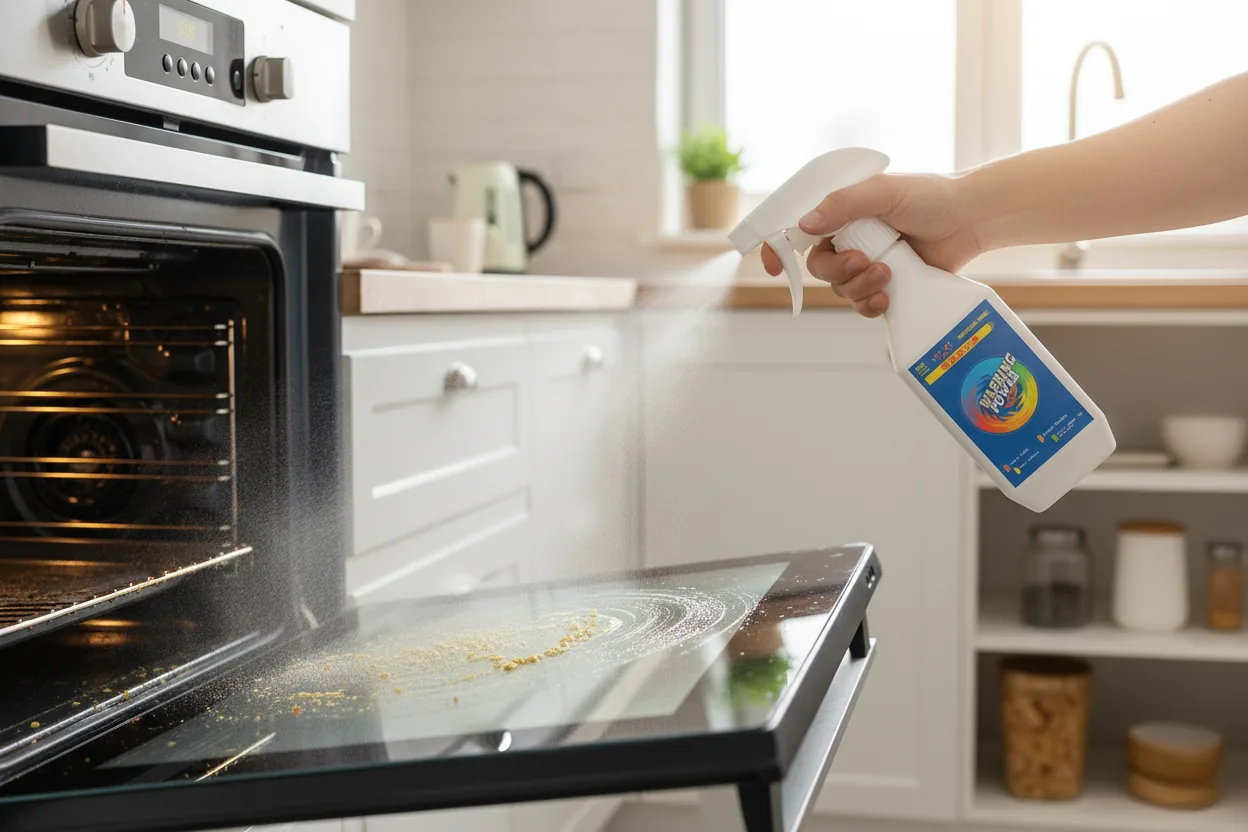
From splatter on the stovetop and sticky film on the range hood to baked-on buildup inside the oven, heavier and older grease needs more alkalinity and more dwell time. CleenU matches kitchen cleaners to the grease level and the surface, and makes private-label and OEM/ODM kitchen degreasers for brands, distributors, and online sellers.
Adjust alkalinity and scent for your target grease and market
Match the Degreaser to the Grease
For everyday splatter and film, use an alkaline kitchen cleaner, let it sit 1–3 minutes, then wipe. For baked-on oven buildup, use a strong alkaline gel on a cold oven for 15–30 minutes, then scrape. For fingerprints and smudges on stainless steel, use a near-neutral polish and wipe with the grain. Spot-test aluminum, natural stone, and coated surfaces first.
Grease Level: Everyday splatter, sticky hood film, and baked-on oven buildup each call for a different product.
How It Works: Alkaline builders break down grease, surfactants lift the film, and a sponge plus clean water carries it away.
How to Use: Ready to use, no dilution. Let it sit 1–3 minutes on everyday grease, wipe, then wipe again with water.
Surfaces: Fine on tile, stainless steel, glass, and enamel; keep alkaline products off aluminum, natural stone, and unsealed wood.
Food-Prep Areas: After cleaning counters near cutting boards and dining tables, wipe with clean water and let dry.
Cleaning Areas
Stovetops, range hoods, ovens, backsplashes, and counters
Surfaces
Tile, stainless steel, glass, enamel, and sealed countertops
Formats
Mist spray, foam spray, and gel spray
Service
Private label and OEM/ODM from 500 bottles
Where to Use It
Stovetops & Grates
Splatter and sticky grease on the cooktop, grates, and around burners: spray the kitchen cleaner, let it sit 1–3 minutes, then wipe or scrub.
Range Hood Exteriors
Sticky film on the hood exterior and visor: use the foam trigger so the cleaner clings, then wipe. Keep alkaline degreasers off aluminum filters and use a neutral cleaner instead.
Oven Interiors & Racks
Baked-on buildup on oven walls, racks, and baking trays: apply the oven gel in a cold oven, let it sit 15–30 minutes, then scrape.
Backsplashes & Counters
Tile backsplashes and countertops with grease spots or film: spray, wipe, then go over with clean water.
Spot-test natural stone, coated, and wood surfaces in a hidden area first.
When Not to Use It
Natural marble, unsealed wood, and aluminum cookware: alkaline degreasers can dull or corrode them, so use a cleaner made for that material.
Stovetops and ovens that are still warm: let the appliance cool completely before you clean.
Oven heating elements, fans, temperature probes, and door gaskets: follow the appliance manual and don't spray them directly.
One bottle for grease, bathroom hard-water scale, and every surface in the home: grease and mineral scale need different chemistry, so choose them separately.
Choose by Grease Level and Method
Everyday Splatter and Grease Film
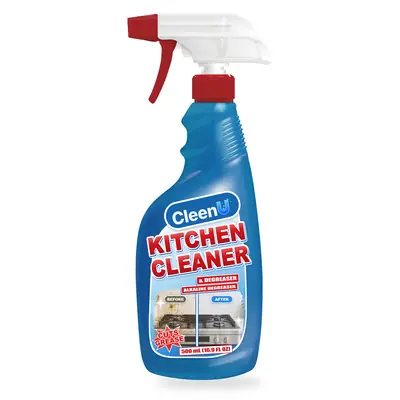
Kitchen Cleaner & Degreaser
Surface
Cooktops, range hood exteriors, backsplashes, cabinet doors, and sealed counters
Note
Keep off aluminum, natural stone, and unsealed wood; spot-test coated surfaces first
Use Method
Let it sit 1–3 minutes (about 5 on sticky grease), wipe, then wipe again with water
Customization
Alkalinity, scent, mist or foam trigger, bottle size, and label language
Alkaline degreasingClinging foam optionReady to use
Baked-On Oven Grease
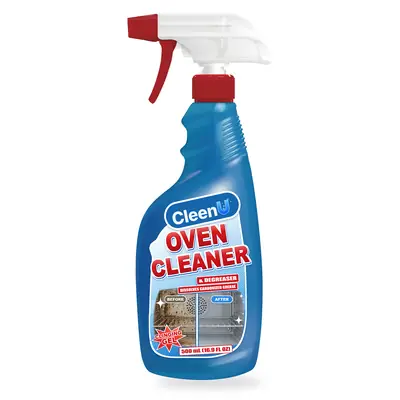
Oven Cleaner & Degreaser
Surface
Oven interiors, racks, baking trays, and inner oven doors
Note
Use only in a cold oven; keep it off heating elements, fans, temperature probes, and door gaskets
Use Method
Apply the gel, let it sit 15–30 minutes, scrape, then wipe with a damp cloth
Customization
Gel thickness, scent, pack size, and warning labels
Strong alkaline gelClings to wallsMade for baked-on grease
Smudges and Fingerprints on Stainless Steel
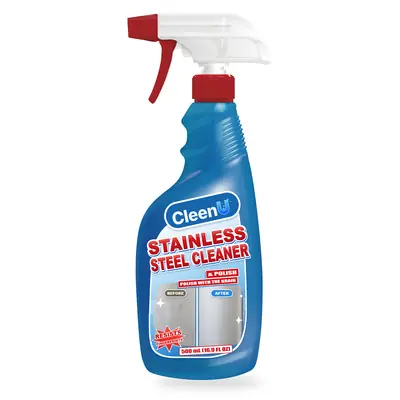
Stainless Steel Cleaner & Polish
Surface
Stainless range hoods, oven doors, fridges, dishwashers, and sinks
Note
Not for heavy or baked-on grease; clear thick grease with the kitchen cleaner first
Use Method
Spray, then buff with a microfiber cloth along the grain
Customization
Scent, fine-mist trigger, bottle size, and label language
Near-neutralWipe with the grainEveryday care
Counters Near Cutting Boards and Dining Tables
Water Rinse Finish
Surface
Counters next to cutting boards, dining tables, and prep areas
Note
Move food and dishes away first, and put them back once the surface is dry
Use Method
Wipe the grease off with the kitchen cleaner, then wipe again with clean water
Customization
Low-scent options, label language, and directions for use
Water rinse finishLow-scent optionBilingual labels
Recommended Products
Kitchen Cleaner & Degreaser
Surface
Stovetops, range hood exteriors, backsplashes, cabinet doors, and counters
We adjust alkalinity, solvent, and scent for heavy stir-fry kitchens or everyday Western kitchens.
How an OEM/ODM Project Works
01Share Your Brief
02Formula Recommendation
03Free Samples
04Packaging Approval
05Production
06Shipping
OrderingDetails
MOQ
500 bottles for standard projects
Sample Lead Time
Free samples, usually ready in 3–5 days
Production Lead Time
Scheduled with the order after packaging and labels are approved
Documents
SDS/MSDS, TDS, and batch COA, sent on request
Compare the Options
Four common kitchen grease jobs, compared by product, alkalinity, spray format, and method. The heavier and older the grease, the more alkalinity and dwell time it needs. Foam clings to range hood exteriors and backsplashes instead of running down, while smudges on stainless steel don't need strong alkalinity at all—a near-neutral polish wiped with the grain does the job.
Cleaning Job
Where
Strength
Foam
Method
Everyday Splatter & Film
Cooktops, backsplashes, cabinet doors, and counters
Alkaline, pH 10.0–11.5
Mist or foam
Spray, let sit 1–3 minutes, wipe
Sticky Range Hood Film
Range hood exteriors and visors
Alkaline, pH 10.0–11.5
Foam that clings to vertical surfaces
Foam on, let sit about 5 minutes, wipe
Baked-On Oven Grease
Oven interiors, racks, and baking trays
Strong alkaline, pH 12.5–13.5
Clinging gel
Let sit 15–30 minutes in a cold oven, scrape
Stainless Smudges
Stainless exteriors and panels
Near-neutral, pH 7.0–8.5
Fine mist
Spray, buff with the grain
How to Use It
Check the Surface
Tell tile, stainless steel, and glass apart from stone and coated finishes before you pick a product.
FAQ
Frequently Asked Questions
Common questions about how to use it, which surfaces are safe, and private-label orders.
Use & Cleaning
Do I need to spot-test before cleaning kitchen grease?
Yes. On stone, coated countertops, aluminum, wood, and aging surfaces, spray a little in a hidden spot, let it sit, wipe it off, and make sure the surface hasn't dulled or darkened before you clean the whole area.
How do I clean heavy grease on the stovetop and range hood?
Scrape off loose residue first. Spray, let the cleaner sit 1–3 minutes (about 5 minutes on sticky grease), wipe with a sponge, then wipe again with clean water. On backsplashes and hood exteriors, a foam trigger keeps the cleaner from running. For old, built-up grease, two lighter passes work better than scrubbing harder.
Can I mix kitchen cleaner with other cleaners?
No. Kitchen degreasers are alkaline, so mixing one with an acidic cleaner neutralizes both and weakens the grease-cutting action, and chlorine bleach can release irritating gas when mixed with other products. Use one product at a time and wipe with clean water before switching.
Surfaces & Safety
Can I use a kitchen degreaser on any countertop?
No. Tile, stainless steel, glass, and sealed countertops handle an alkaline kitchen cleaner well. Skip it on natural marble, unsealed wood, and aluminum, and use a neutral or material-specific cleaner instead.
Does a food-contact area need to be wiped or rinsed after cleaning?
Yes. Most kitchen degreasers are alkaline, so after cleaning counters next to cutting boards, dining tables, or other food-contact areas, wipe or rinse with clean water and let the surface dry. Follow the product label.
Can I use a kitchen degreaser on aluminum pans, frames, or range hood filters?
No. Alkaline cleaners turn aluminum dark and can corrode it. Use a neutral cleaner on aluminum pans, frames, and range hood filters.
Private Label & Ordering
What should I decide before asking about a private-label kitchen cleaner?
Four things: your target market (heavy stir-fry kitchens or everyday Western kitchens, which call for different alkalinity), mist or foam trigger, scent and bottle size, and label language. With those, we can have free samples ready in 3–5 days.
What documents are available for a kitchen-cleaner OEM project?
We provide SDS/MSDS, a TDS, and batch COAs, plus bilingual label content for your target market. They aren't available for public download; we send them on request.
Is a kitchen degreaser a good private-label product?
Yes. Kitchen degreaser is one of the biggest single products in household cleaning. Standard projects start at 500 bottles, and production is scheduled once packaging and labels are approved. Brands usually stand out on grease-cutting speed, scent, and trigger format.
Launching a Kitchen Degreaser? Start with Free Samples
Kitchen grease comes down to two questions: how heavy is it, and what surface is it on? Use an alkaline kitchen cleaner for everyday splatter and film, a strong alkaline gel for baked-on oven buildup, and a near-neutral polish for stainless steel—and keep alkaline products off aluminum, stone, and unsealed wood. If you're building a kitchen cleaning line, CleenU can start from these three formulas and adjust alkalinity, trigger, scent, and packaging for your market, with free samples first and a 500-bottle minimum.
Tell us your target market, grease jobs, and packaging ideas. Free samples are usually ready in 3–5 days.