
How-to
How to Clean a Kitchen: Grease, Oven, Cooktop, Stainless Steel, and Fridge
Direct answer
Match the product to the grime and the surface. Use an alkaline degreaser on the range and hood, a strong alkaline gel on baked-on oven carbon, and a cooktop cleaner with a scraper on glass cooktops. Wipe stainless steel with the grain and use a neutral, fragrance-free cleaner in the fridge. Finish food areas with a plain-water wipe.

Most kitchen grime comes down to grease, but not all grease is the same. Fresh spatter on the stovetop wipes right off with a damp cloth. The yellow, tacky film that builds up on the range hood over a few months just smears when you wipe it. The black crust on the oven floor and racks has been baked into carbon, and a regular degreaser barely touches it. Add stainless appliances that streak, glass cooktops that scratch and a fridge that needs to stay fragrance-free, and it is clear why one bottle cannot clean the whole kitchen.
The three stages of kitchen grease
Fresh spatter. Cooking oil that just landed is still liquid and barely clings. Ordinary surfactants emulsify and lift it, so a mild cleaner or a damp cloth right after cooking is the least effort you will ever spend on grease.
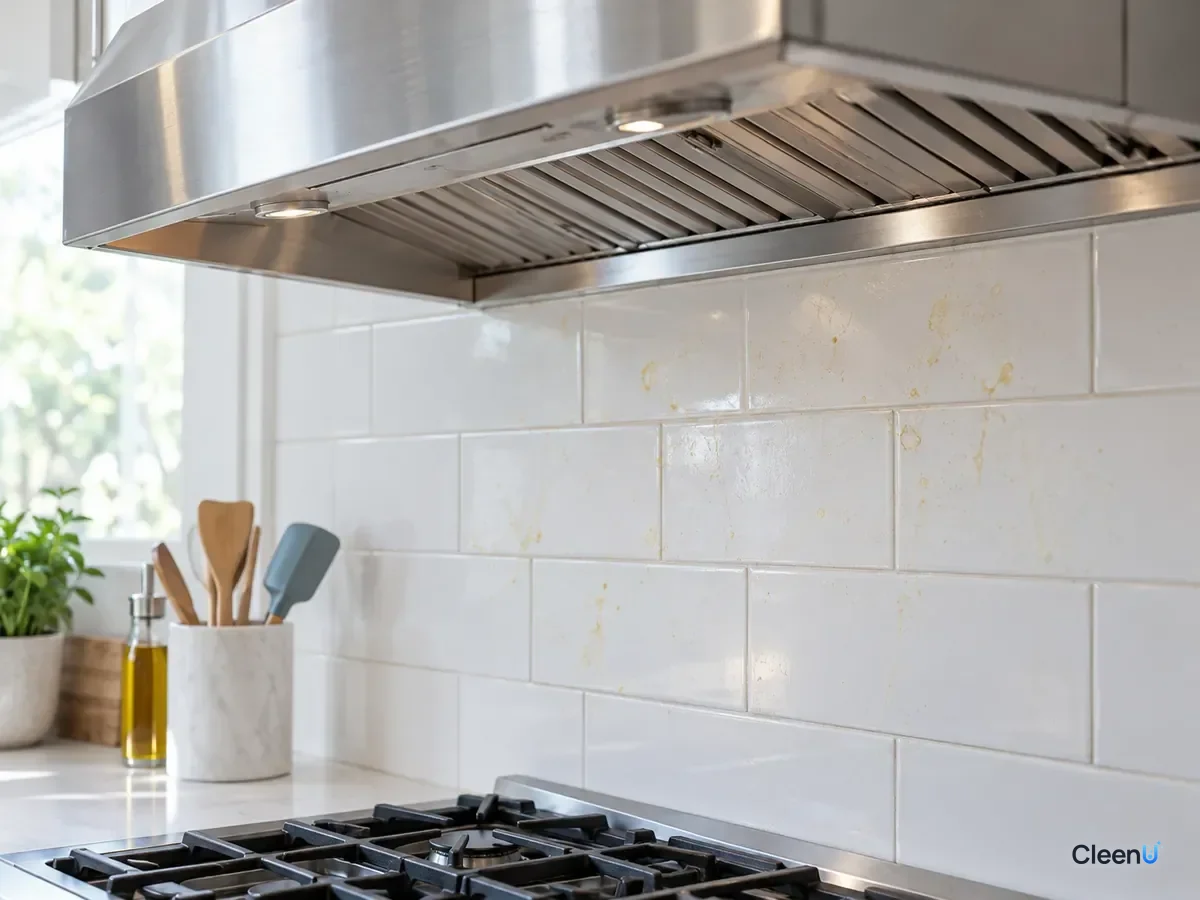
Aged, sticky film. Exposed to air and heat, oil slowly oxidizes and polymerizes, going from a liquid to a tacky, gummy film that turns yellow-brown and traps dust. This is the coating you feel on range hoods, cabinet doors and backsplashes. Surfactants alone are not enough at this stage. An alkaline cleaner saponifies the fats, turning insoluble grease into water-soluble soaps, while surfactants and solvents soften and emulsify the rest so it wipes away cleanly.
Baked-on carbon. Oil and food residue that go through high heat again and again in an oven or on grill grates dehydrate and carbonize into a hard black crust fused to enamel and metal. That calls for a stronger alkali and more time: a thick alkaline gel that clings in place for a long dwell, softens the crust, and then comes off with a plastic scraper.
Once you know which stage you are dealing with, it makes sense why the same product works well in one spot and poorly in another, and which strength belongs where.
Before you start: cool down, power off, ventilate
A few safety basics apply everywhere in the kitchen. Let the range, oven and cooktop cool completely first. Cleaner sprayed on a hot surface flashes off, bakes on and can cause burns. Unplug or switch off the range hood and oven at the breaker before cleaning so liquid never reaches motors, heating elements or wiring. With alkaline degreasers, and especially strong oven cleaners, wear alkali-resistant gloves and eye protection and open a window.
Clear food, dishes and spice jars off the counters so nothing gets splashed.
Zone by zone: range and hood, oven, cooktop, stainless and fridge
Five kitchen zones and how to clean each
Range, hood exterior and backsplash
Let it cool, spray an alkaline degreaser and wait for the film to cloud
Turn off the burners and wait until the range and hood are cool to the touch. Spray an alkaline kitchen degreaser on the grease, let it sit 1 to 3 minutes (5 for sticky film), and wipe once the film turns cloudy and soft.
Caution:Spray the hood's outer panels only, never directly at the motor, switches or seams.
Wipe clean, then follow with a plain-water cloth
Wipe away the loosened grease with a damp sponge or cloth, then go over it again with a cloth dampened in plain water to remove leftover cleaner. Always do this on counters near food.
Oven and racks
Apply a thick alkaline gel to the cold oven and let it dwell
With the oven fully cool and powered off, take out the racks and pans. Spray the oven cleaner gel evenly on the buildup from about 8 inches away, avoiding heating elements, the fan, the temperature probe and the door gasket. Close the door and wait 15 to 30 minutes, or up to an hour for heavy buildup.
Caution:Wear alkali-resistant gloves and eye protection, keep the kitchen ventilated, and keep strong alkaline cleaners off aluminum and nonstick coatings.
Scrape off the softened crust and wipe repeatedly with water
Use a plastic scraper to lift the softened crust, then wipe with a damp cloth and clean water at least three times, until nothing feels slippery. Run the empty oven briefly to clear any odor. Racks can be coated with a foaming oven-and-grill cleaner and sealed in a plastic bag to soak, then scrubbed and rinsed.
Glass cooktop
Spray a cooktop cleaner when cool, then scrape at a low angle
Once the cooktop is cool, wipe away loose crumbs. Spray the cooktop cleaner on rings and burn marks and wait 2 to 3 minutes, covering thick spots with a damp paper towel to keep them wet. Push a cooktop scraper at a low angle, wipe with microfiber and buff dry.
Caution:Skip steel wool and gritty cleansers; both scratch glass.
Stainless appliances and fridge
Wipe stainless with the grain; use a neutral, fragrance-free cleaner in the fridge
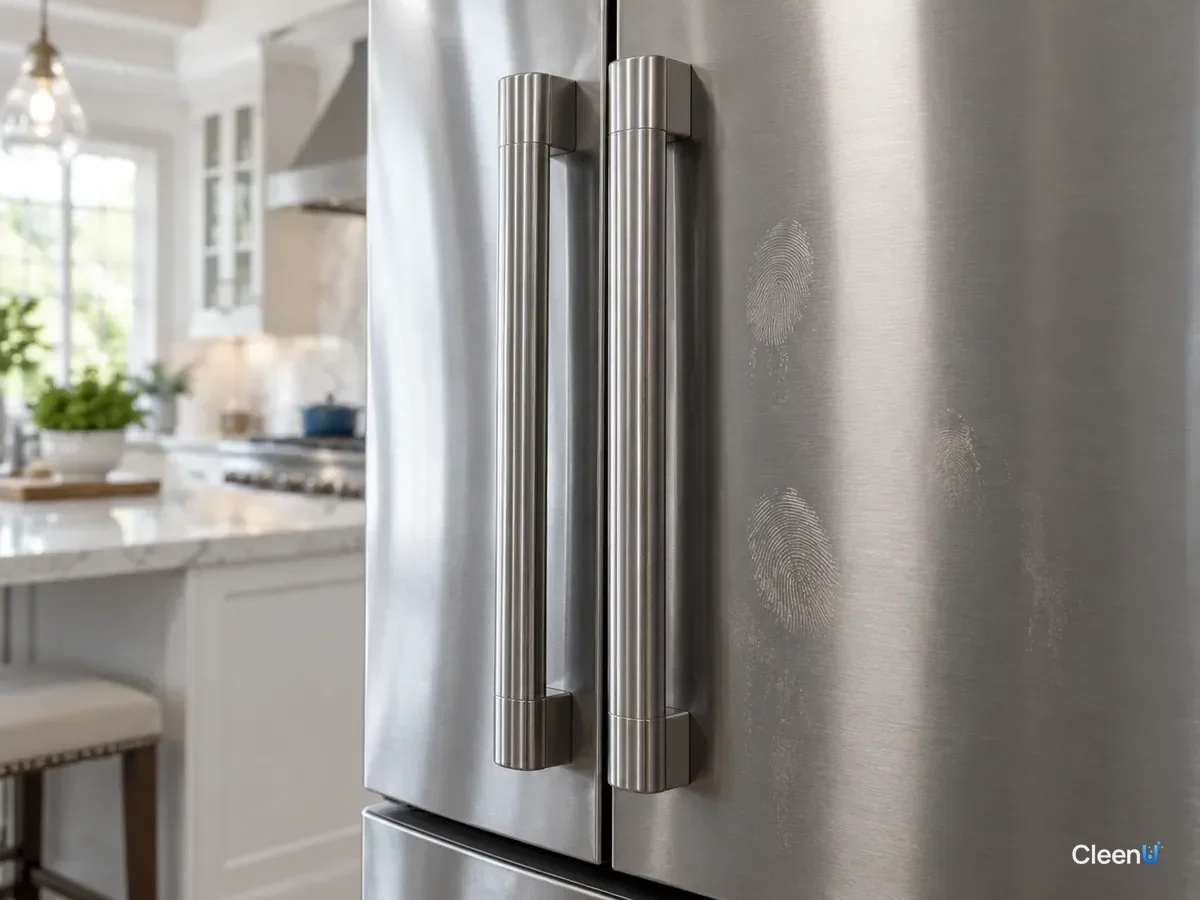
For stainless fridge doors and dishwasher panels, spray a stainless steel cleaner onto a cloth, wipe with the grain, then buff with a dry cloth in the same direction. Inside the fridge, remove the food and shelves, spray a neutral fridge cleaner onto spills or onto a cloth, wipe after a minute, follow with a plain-water cloth, and dry before putting food back.
Why degreasers come in such different strengths
CleenU's kitchen line is built around the grease stages, which makes it a useful reference:
Kitchen Cleaner & Degreaser (alkaline spray). pH 10.0–11.5. Alkaline builders plus nonionic surfactants and a glycol ether solvent for spatter and sticky film on stovetops, hood exteriors, backsplashes and cabinet doors. Let it sit 1 to 3 minutes (5 for sticky film), then wipe.
Oven Cleaner & Degreaser (strong alkaline gel). pH 12.5–13.5. A thickened gel that clings to oven walls for a long dwell, aimed at carbonized buildup: 15 to 30 minutes, longer for heavy crust.
Ceramic Glass Cooktop Cleaner. A mildly alkaline formula (pH 8.5–10.0) with no abrasive particles, used with a scraper to lift burnt-on rings without scratching the glass.
Stainless Steel Cleaner & Polish. pH 7.0–8.5. Cleans and conditions in one step; buff with the grain.
Refrigerator Cleaner & Deodorizer. A neutral formula (pH 7.0–8.5) with no fragrance, no dye and no chlorine, plus a cyclodextrin-type odor-neutralizing ingredient, suited to a space that holds food.
The higher the alkalinity, the better it handles carbonized grease, and the more care it demands for surfaces and skin. Regular wipe-downs with a milder product, saving the strong stuff for occasional deep cleans, are both safer and less work.
Range hood filters need their own routine
The hood's outer panels are easy. The real grease trap is the filter. It catches cooking vapor directly, and after a few months the mesh clogs with sticky grease. That cuts suction, and a heavily coated filter is also a fire risk.
Start by checking what the filter is made of. Stainless steel filters can take an alkaline degreaser: pop them out, lay them flat in the sink or a large tub, spray the greasy side, and wait about 5 minutes until the film clouds and softens. Then scrub along the mesh with a soft brush and rinse with warm water. For thick buildup, soak the filter in warm water with some degreaser before scrubbing. Aluminum filters need more care. Aluminum darkens and corrodes in strong alkali, so wash them only with a mild, neutral dish soap in warm water, and never use oven cleaner on them.
Let the filters dry completely before putting them back. A damp filter picks up grease faster. Most households should wash hood filters every one to three months, and more often if you fry a lot. If the fan wheel or grease cup needs cleaning, follow your manual, or call a professional if you are unsure. Never spray liquid into the motor.
How often: keeping grease from ever getting heavy
As with the bathroom, the easiest kitchen to clean is one where grease never reaches the sticky stage.
Daily. After cooking, once the burners are off and the surfaces are warm but safe to touch, wipe fresh spatter off the stovetop and backsplash with a damp cloth, then wipe the counters with plain water. Fresh spatter barely needs any cleaner. Leave it until tomorrow and you will need a degreaser.
Weekly. Spray and wipe the stovetop, hood exterior and the area around cabinet handles with an alkaline degreaser, then follow with plain water. Wipe stainless appliances with the grain and toss expired food from the fridge.
Monthly. Fully clean rings and burn marks from a glass cooktop, empty the fridge and wash the shelves, and check the hood filters.
Quarterly, or based on use. Deep-clean the oven interior and racks and give the hood filters a thorough wash.
On that rhythm, most grease stays easy to wipe away, and strong alkaline products are only needed now and then for high-heat zones like the oven. That is easier on your surfaces and your skin.
Surfaces to keep away from strong alkaline cleaners
Aluminum. Strong alkali corrodes and darkens aluminum. Keep oven cleaner away from aluminum pans, aluminum sheet pans and the aluminum mesh filters found in many range hoods.
Nonstick coatings. Strong alkali and abrasive tools damage nonstick surfaces. Wash air fryer baskets and nonstick pans with a mild, neutral dish soap.
Cast iron. Strong alkali strips the seasoning. After washing, dry it completely and rub on a thin coat of oil.
Natural stone counters. Marble does not tolerate acid, and it should not sit under a strong alkaline cleaner either. Use a neutral stone cleaner.
Wood counters and cabinets. Do not soak wood with degreaser. Test in an inconspicuous spot first and dry it right after wiping.
When in doubt, check the "do not use on" list on the label, or test a small hidden area first.
Before you call the kitchen done
- Food-contact counters and the inside of the fridge wiped again with plain water
- Oven interior no longer slippery and briefly heated to clear the smell
- Hood and oven surfaces fully dry before power goes back on
- Gloves and scraper rinsed and dried, cleaners capped and stored
- No aluminum or nonstick cookware exposed to strong alkaline products
Stop right away if this happens
If a strong alkaline cleaner gets on your skin or in your eyes, or your hands start to sting or burn, stop and flush with plenty of water, then follow the first-aid directions on the label. Never mix chlorine products with acidic or alkaline cleaners. If you notice a sharp smell while cleaning, open the windows and step out until it clears.
Written for: Anyone who wants a system for cleaning the whole kitchen, can't tell fresh grease from baked-on buildup, or isn't sure how strong a degreaser to useNot for: Commercial kitchens with heavy equipment (they need commercial products and procedures), and aluminum or nonstick cookware (avoid strong alkali)
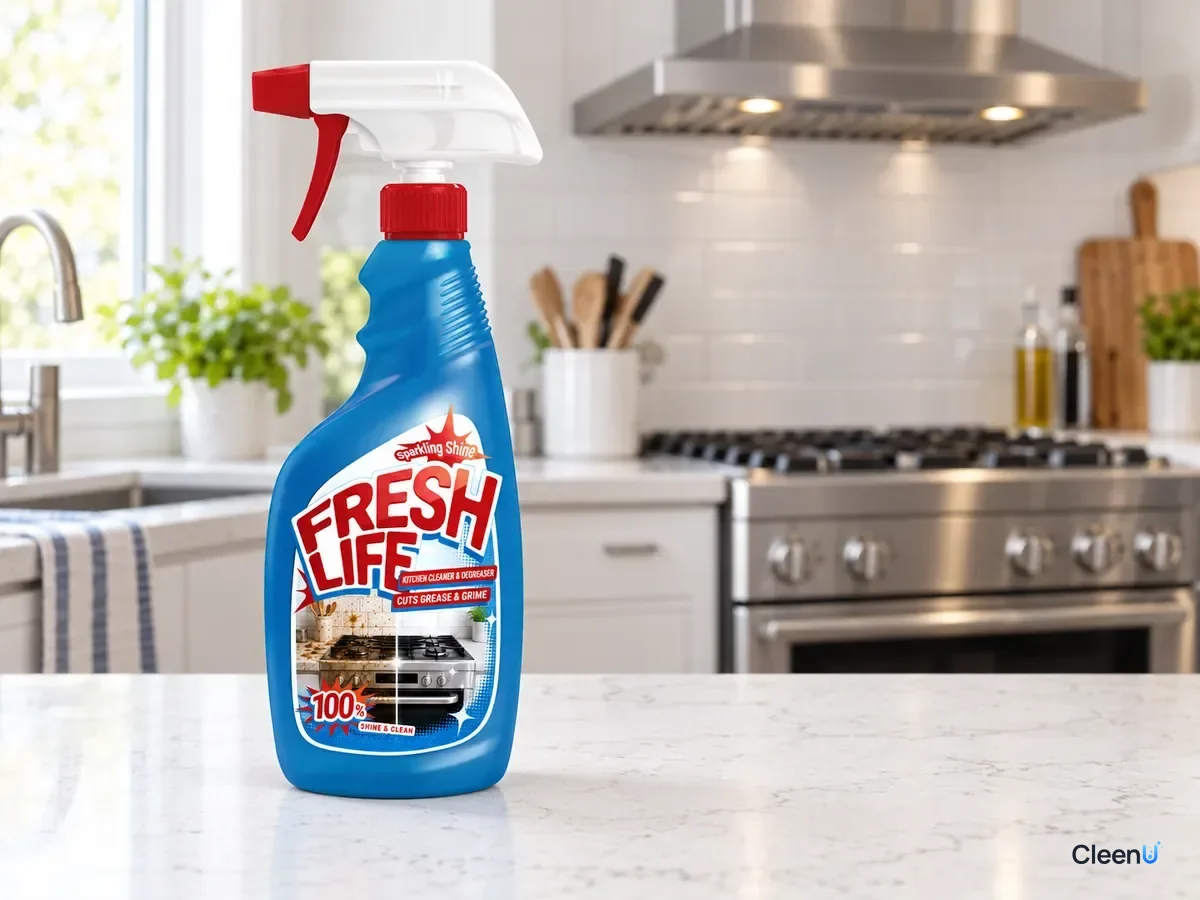
For sticky grease on the range, hood and backsplash, reach for our alkaline Kitchen Cleaner & Degreaser.
Match the product to the zone: for the oven interior, Oven Cleaner & Degreaser; for ovens and grill grates, Oven & Grill Cleaner; for glass cooktops, Ceramic Glass Cooktop Cleaner; for stainless appliances, Stainless Steel Cleaner & Polish; and for inside the fridge, Refrigerator Cleaner & Deodorizer.
Grease, ovens and stainless: quick answers
Why does the yellow film on my range hood just smear when I wipe it?
That is oxidized, polymerized grease, and water will not dissolve it. Let an alkaline degreaser sit for a few minutes to soften and emulsify it, then wipe and finish with a plain-water cloth.
Can I use a kitchen degreaser inside the oven?
For light grease, yes. Black, carbonized crust needs a strong alkaline oven gel with a long dwell to soften it.
Can I use steel wool on a glass cooktop?
No. Steel wool and gritty cleansers scratch the glass. Use a cooktop cleaner with a scraper held at a low angle.
Why does my stainless fridge look streaky after I clean it?
Two things cause it: wiping against the grain and leaving product behind. Spray the cloth, wipe with the grain, then buff dry in the same direction.
Can I use a kitchen degreaser inside the fridge?
It is not a good idea. The fridge holds food, so use a neutral, fragrance-free fridge cleaner and follow with a plain-water wipe.
Do I need to wipe with water after using a degreaser?
Yes, especially on counters near food. A plain-water cloth removes leftover cleaner.
What's the best way to clean stainless steel appliances?
Wipe with a mild cleaner on a microfiber cloth, following the grain, then buff dry with a clean cloth. Use a degreaser only on actual grease spots and wipe it off with water afterward. Avoid steel wool, chlorine bleach and gritty powders, which scratch or spot the finish.
Does WD-40 polish stainless steel?
It adds shine, but it leaves an oily film that attracts dust and fingerprints and doesn't belong near food-prep areas. For everyday care, clean with a mild cleaner, wipe with the grain and dry with microfiber. Use a polish made for stainless steel if you want extra shine.
Start by figuring out which stage the grease is in. Wipe fresh spatter right away, use an alkaline degreaser on sticky film, and leave carbonized oven crust to a strong alkaline gel. Scrape glass cooktops, wipe stainless with the grain and keep the fridge neutral and fragrance-free. Let surfaces cool, cut the power, ventilate and wear gloves, keep strong alkali off aluminum and nonstick, and finish food areas with a plain-water wipe.