
How-to
How to Remove Grease from Kitchen Backsplash Tile
Direct answer
Once the wall has cooled, spray degreaser on the greasy tile, let it sit a minute or two so the film emulsifies, and wipe it away with a damp cloth. Finish with a cloth dampened in plain water, then a dry cloth. Work grease out of the grout with a soft brush, never steel wool.
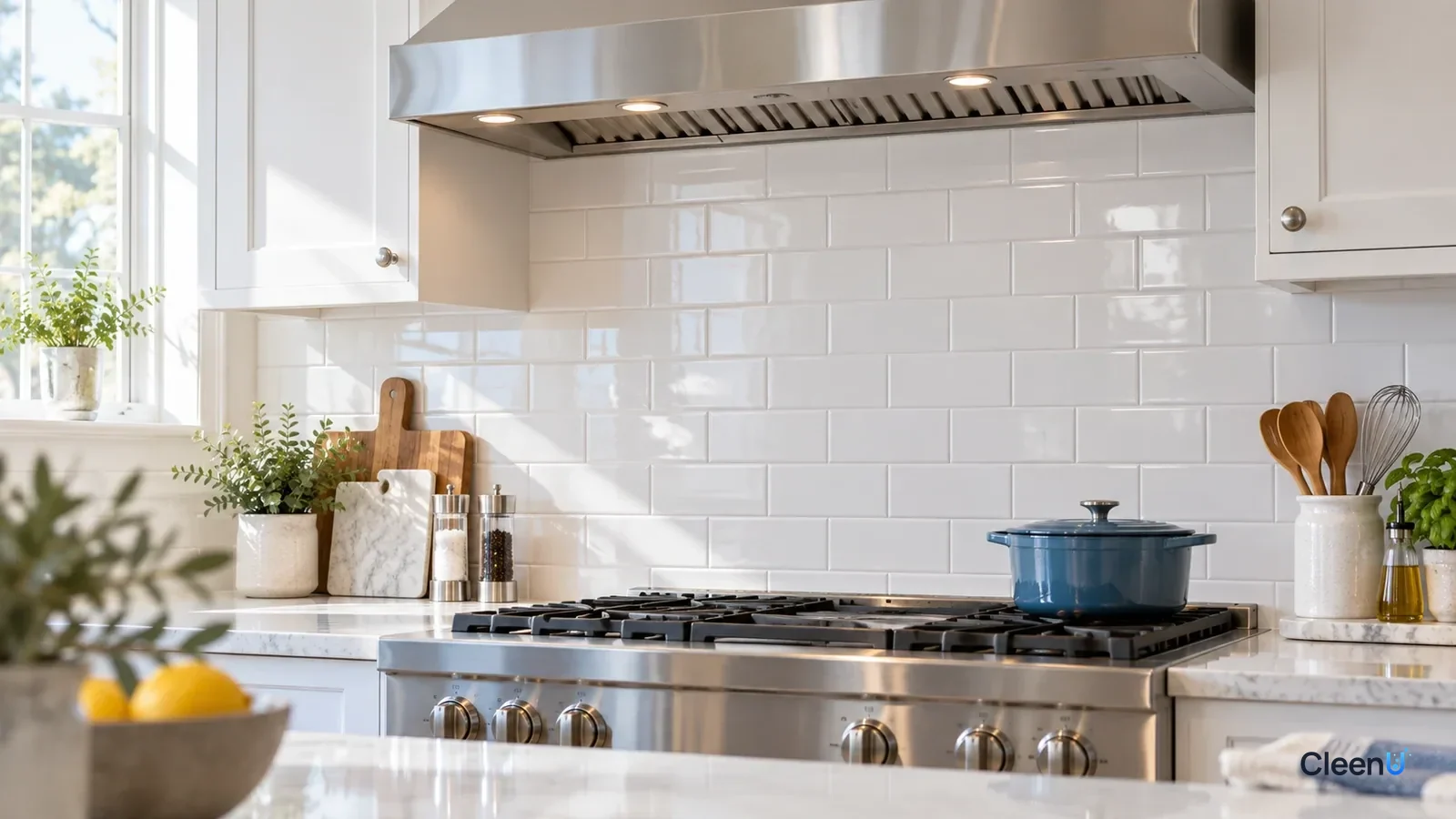
The tile wall behind the stove is the most overlooked spot in the kitchen and the one that collects the most grease. Every stir-fry spatters oil onto it and leaves cooking vapor condensed on the surface. At first it is an invisible film. A few months later it is a yellowed, dull, tacky layer, and the grout has slowly turned tan.
Tile itself is easy to clean; the method is what trips people up. Soapy water barely moves old grease. Steel wool scratches the glaze, so the tile holds grease more easily afterward. Skip the plain-water wipe after a degreaser and the wall ends up sticky. Done right, one backsplash takes about fifteen minutes.
Why does backsplash grease get harder to remove over time?
Cooking vapor carries tiny droplets of oil. When they first land on the wall they are still liquid, and a damp cloth wipes them off. Over time, air and heat from the cooktop oxidize and polymerize the oil: it goes from runny, to gummy, to a yellow, hard film. That polymerized film also traps airborne dust, which is why old grease looks both yellow and gray.
Grout is trickier. Common cement-based grout has fine pores that grease soaks into, so wiping the surface only gets part of it, and the grout line slowly turns from white to yellow. That is why tile is best wiped while the grease is fresh, and why grout needs a brush.
Why use a degreaser, and why wait before wiping?
Removing old grease film comes down to getting it to let go first. The alkaline ingredients in a degreaser react with fats (saponification), turning hard-to-dissolve grease into something water can carry away, while surfactants and solvents emulsify and break up the film. Those reactions take a moment, so let the cleaner sit until the film turns cloudy and soft; it wipes off with much less effort than if you wipe right away.
CleenU Kitchen Cleaner & Degreaser is one example: an alkaline, ready-to-use kitchen spray with a pH of 10.0 to 11.5, made with alkaline builders, nonionic surfactants and a glycol ether solvent, with no chlorine and no abrasives. On typical grease, let it sit 1 to 3 minutes; on sticky, yellowed buildup, about 5 minutes. Wipe it off, then wipe again with plain water.
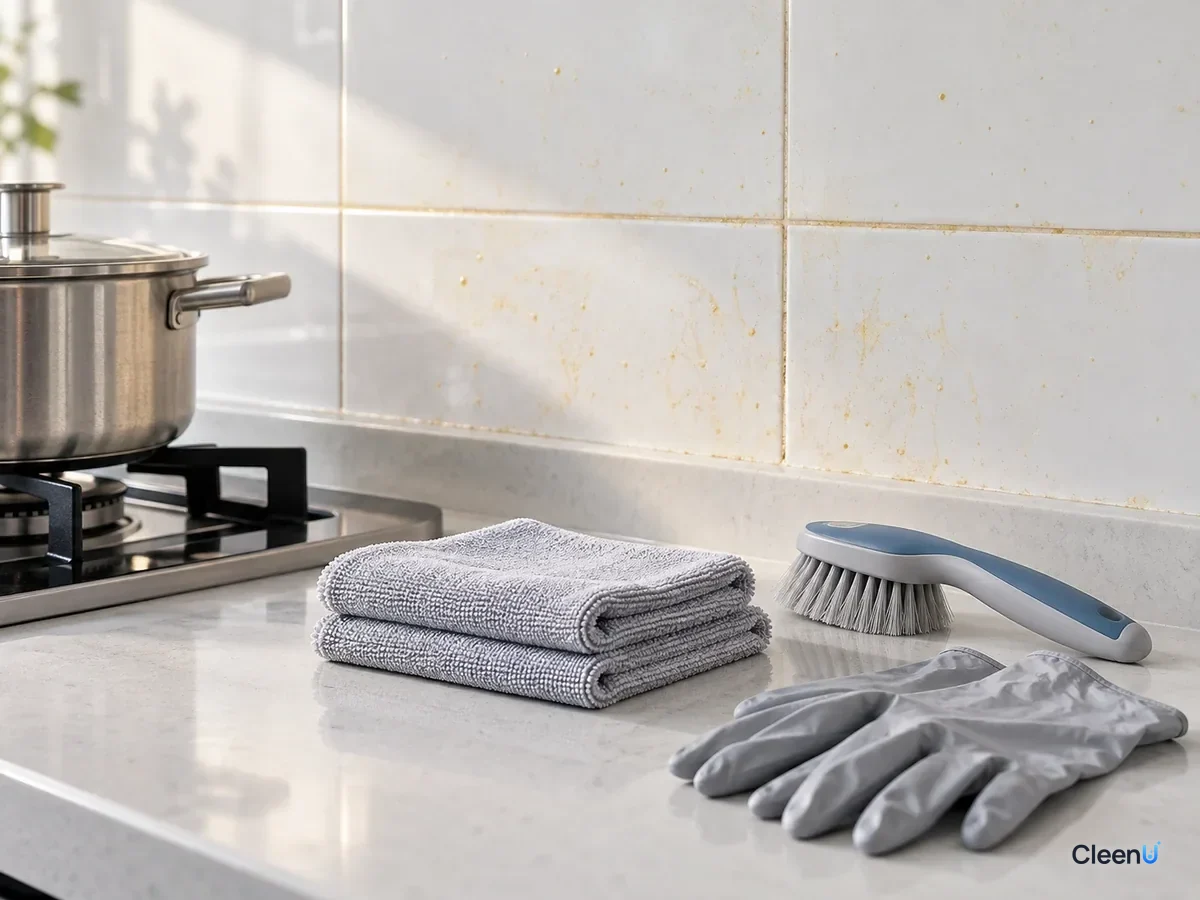
Step by step: cleaning a greasy backsplash
From cool-down to dry, clean the tile behind the stove this way
Turn off the stove and let the wall cool
Right after cooking, the tile is still warm, and cleaner sprayed on it dries instantly into streaks that are hard to remove. Wait until it is cool to the touch, and make sure the gas is off.
Wipe off loose dust and fresh spatter first
Go over the wall with a well-wrung damp cloth to remove dust and fresh oil spots, so the degreaser can focus on the old film.
Spray from the bottom up and wait 1 to 3 minutes
Spray degreaser evenly over the greasy area, starting at the bottom and working up to limit drip marks running down the wall. Let typical grease sit 1 to 3 minutes and yellowed, sticky buildup about 5 minutes, until the film turns cloudy and soft.
Caution:Don't let the cleaner dry on the wall. If it starts to dry, mist a little more.
Wipe from top to bottom and turn the cloth often
Wipe from top to bottom with a damp microfiber cloth to pull the softened film down and off. When a section of the cloth gets dirty, fold to a clean side or rinse it, or you'll smear the grease back on.
Brush the grout lines
For yellowed grout, spray it, let it sit, then scrub along the lines with a soft brush or an old toothbrush, and wipe clean with a damp cloth. Skip wire brushes; they scratch glaze and grout.
Caution:If the grout is still yellow after brushing, the grout itself may be stained or discolored; it isn't necessarily leftover grease.
Wipe with plain water, then dry
After an alkaline degreaser, always go over the whole wall with a cloth dampened in plain water to remove residue, then dry it with a dry cloth. Skip this and the wall stays tacky and picks up grease again faster.
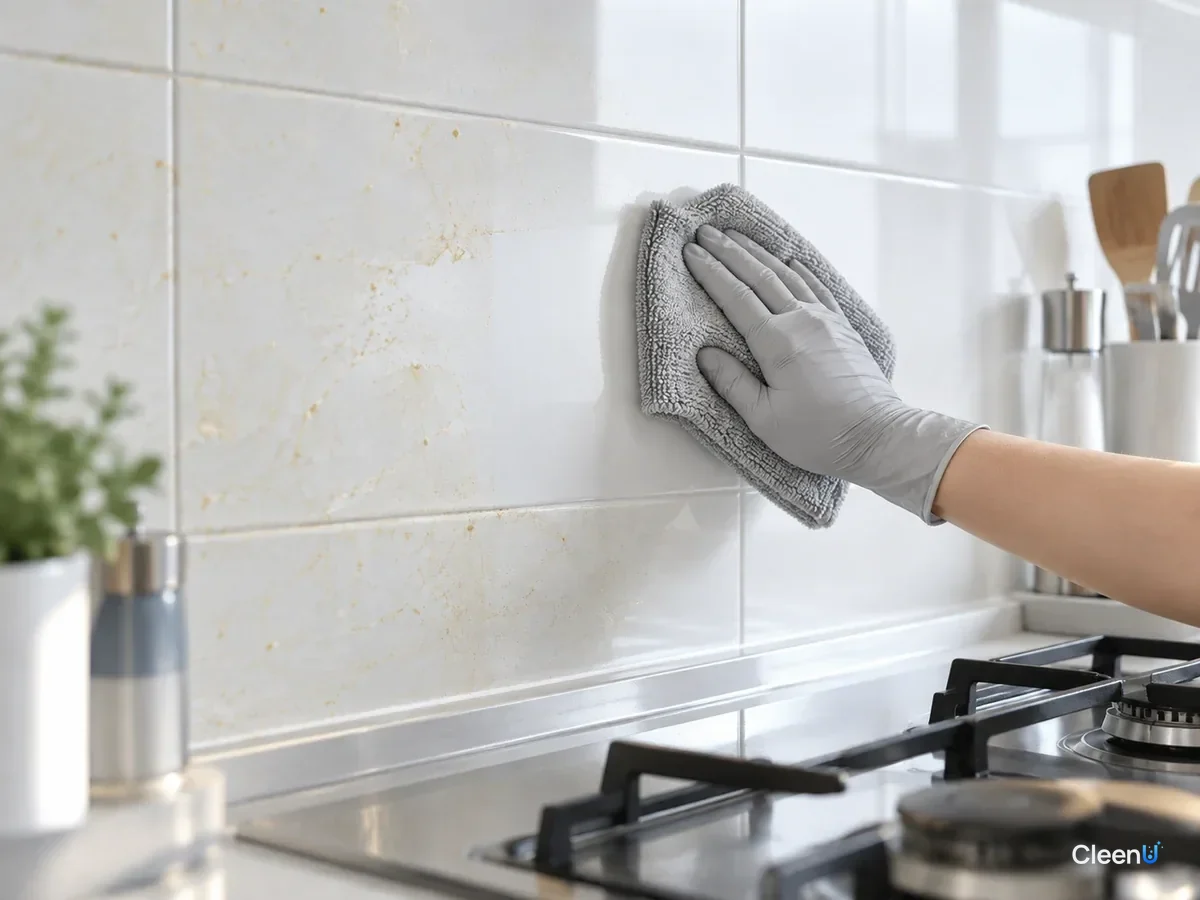
Different backsplash materials need different care
Glazed ceramic and porcelain tile: the most common, and they handle alkaline cleaners well; follow the steps above. The glaze is smooth, so once the old film softens it wipes right off. Just don't scratch it with steel wool.
Matte and textured tile: the fine texture holds grease more readily. Give the cleaner a little longer and work the surface with a soft brush along with the damp cloth.
Natural stone (marble, granite and similar): stone can react to strong alkali as well as strong acid, and prolonged contact can leave it white or dull. Test a small, hidden spot first, keep the dwell time short, and rinse with plain water right away. If the stone supplier gives specific care instructions, follow them.
Glass and stainless steel backsplashes: both shed grease easily. Spray degreaser on a cloth and wipe, then go over it with plain water and buff dry; on stainless, follow the grain.
Painted walls and wallpaper next to the tile: an alkaline cleaner can blotch paint and discolor wallpaper. Keep the spray off those areas and shield them with a towel if needed.
Tricky stains and how to handle them
Tomato sauce, curry and soy sauce splatter: these carry pigment and sugar along with the oil. Lay a warm, damp cloth on them for a minute to soften the sauce and sugar and wipe that off first, then degrease the film left behind. If color remains in the grout after degreasing, the pigment has probably soaked into it; a few more rounds of brushing will lighten it, but it may not disappear completely.
Soot marks near a gas cooktop: after long use, the tile closest to the burners can develop a gray-black patch made of cooking grease mixed with fine particles from the flame. Treat it like old grease film: spray degreaser, let it sit about 5 minutes, and wipe repeatedly with a damp cloth. It usually lightens noticeably.
Syrup and juice splashes: once dry they turn hard and shiny, and a degreaser does little against sugar. Soften them with warm water and wipe them off first, then degrease the whole area.
The silicone caulk line where the counter meets the backsplash: grease and water collect there and it can turn yellow or even black. Wipe grease off gently with a cloth sprayed with cleaner instead of scrubbing with a brush, which can tear the silicone. Black specks are usually mold; if they won't wipe off, the caulk needs to be replaced.
How do you know it is really clean?
Once the wall is dry, run your hand over it: it should feel dry and smooth, not tacky. Look at it from an angle: no shiny wipe streaks or drip marks. The grout should look lighter than before and not feel greasy. If the tile still feels a little tacky, that is almost always cleaner residue; one more wipe with plain water fixes it.
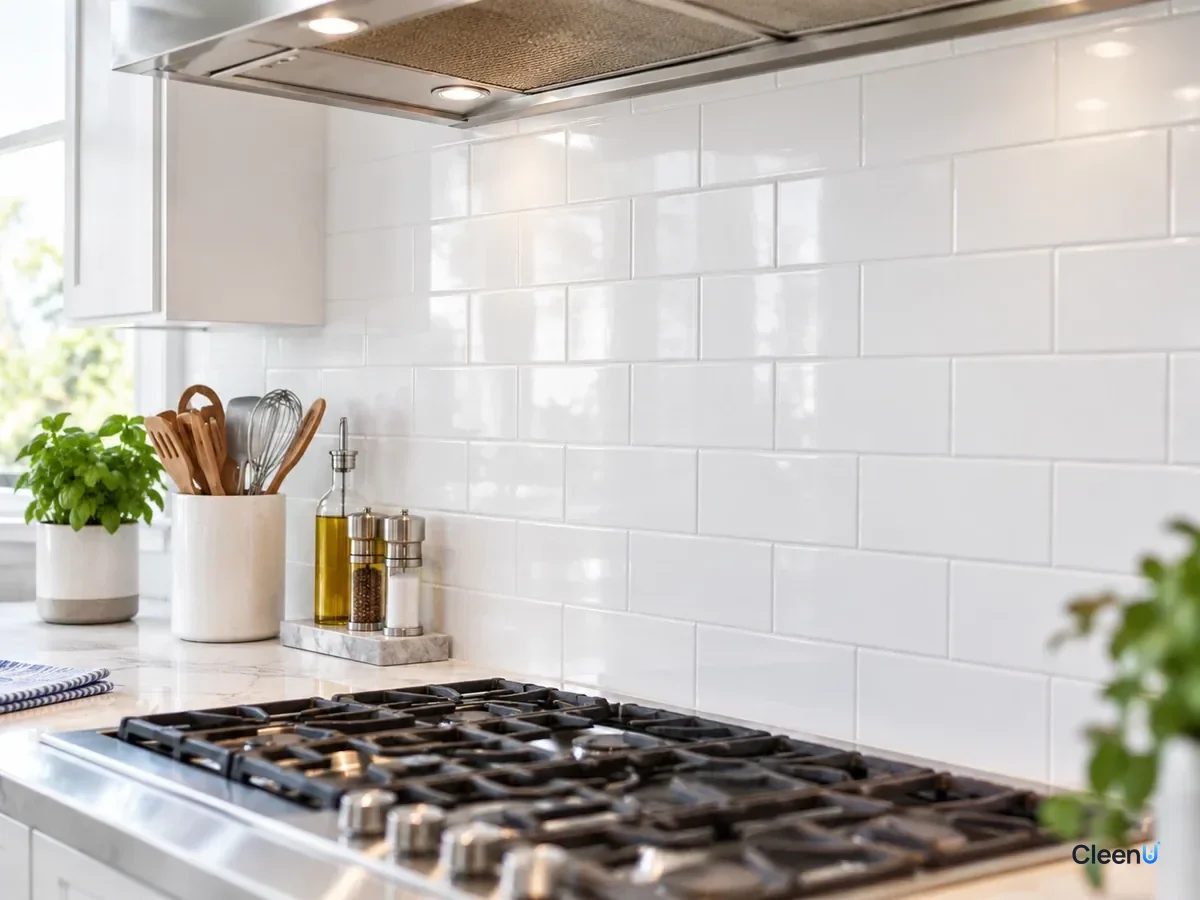
How often to clean, and how to keep grease from building up
The least effort is to never let grease polymerize. After cooking, give the wall behind the stove a quick wipe with a damp cloth; fresh spatter comes right off. Degrease the whole backsplash once a week, and brush the grout every month or two.
Also turn the range hood on before you start cooking and leave it running a few minutes after you finish, so more of the vapor gets pulled away instead of landing on the wall. A clean hood filter keeps the suction strong, too. For the cooktop, range hood, counters and fridge, see our complete kitchen cleaning guide.
Stop if you see any of these
Tile, stone or nearby paint turning white, dull or discolored; stinging or redness on your skin; cleaner splashing into your eyes. Rinse with plenty of water, stop using the product, check the label, and get medical help if needed. Never mix an alkaline degreaser with chlorine bleach, and keep the kitchen ventilated while you work.
Backsplash cleaning questions people ask first
Can dish soap get grease off a kitchen backsplash?
Fresh spots, yes. Old, yellowed, sticky film takes a lot of repeat wiping with dish soap; a degreaser left on for a minute or two is much less work.
How long should degreaser sit on the tile?
About 1 to 3 minutes for typical grease and about 5 minutes for yellowed, sticky buildup. Wipe once the film turns cloudy and soft, and don't let it dry on the wall.
How do I clean yellowed grout behind the stove?
Spray it, let it sit, scrub with a soft brush and wipe clean. If it stays yellow, the grout itself may be discolored rather than greasy.
Can I use steel wool on backsplash tile?
It is not a good idea. Steel wool scratches glaze and grout, and the scratches trap grease, so the wall gets harder to clean over time.
Why does the wall still feel sticky after cleaning?
It is almost always leftover cleaner. After an alkaline degreaser, wipe with a cloth dampened in plain water, then dry it.
Can I use kitchen degreaser on a marble backsplash?
Natural stone can be sensitive to strong alkali. Test a hidden spot first, keep the dwell time short, rinse right away, and follow the stone supplier's guidance.
For sticky grease film on backsplash tile and splash panels, try Kitchen Cleaner & Degreaser.
To get grease off backsplash tile, let the wall cool, spray degreaser and let it sit 1 to 3 minutes (5 for sticky buildup), wipe from top to bottom with a damp cloth, brush the grout, then wipe with plain water and dry. Keep the spray off natural stone and nearby paint or test first, and give the wall a quick wipe after cooking so grease never hardens.