
How-to
How to Clean Baked-On Grease Inside an Oven with Oven Cleaner
Direct answer
To clean the inside of an oven, let it cool completely and remove the racks. Spray oven cleaner on the baked-on grease, let it sit 15 to 30 minutes, then lift it off with a plastic scraper and a damp cloth. Wipe several times with clean water and air it out. Don't use it inside a self-cleaning oven.
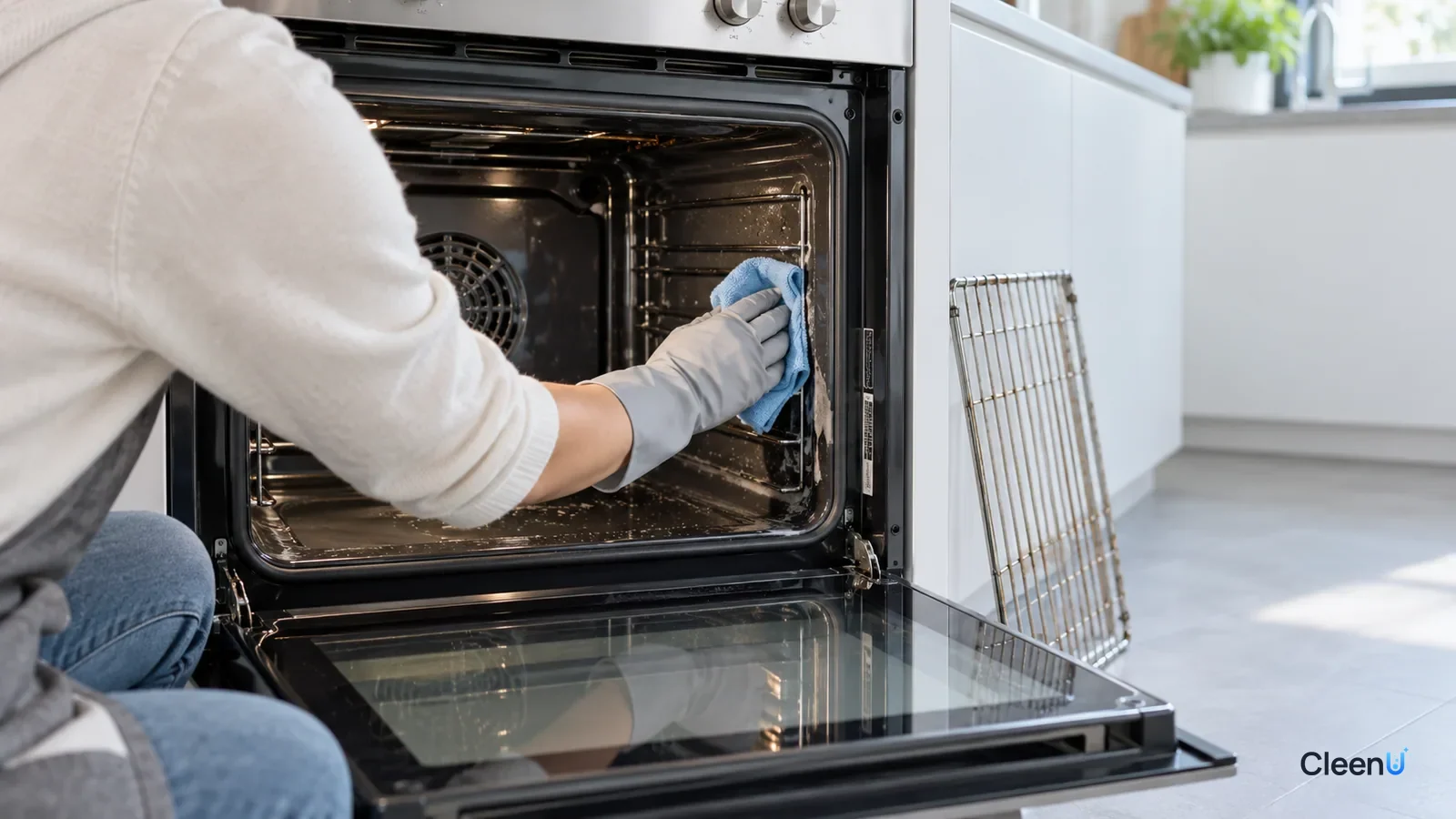
After a few months of use, the walls, floor and inside of the door of most ovens are coated in a dark brown or even black crust. Grease spattered from a roast, cheese dripping off a pizza, juice bubbling over the edge of a pan: each spill bakes on at high heat, layer on layer, until dish soap and a sponge barely make a dent.
Baked-on oven grease isn't hard to clean because you aren't scrubbing hard enough. It's hard because it has become a different material. Once you know why, it makes sense to use a dedicated oven cleaner and not to skip the waiting step.
Why is baked-on oven grease so hard to remove?
Grease on a countertop is mostly liquid or soft fat, and an ordinary degreaser can emulsify it and wipe it away. Oven grease is different. Fat and food juices heated over and over above 400°F polymerize and carbonize, turning from something that flows into a hard, black crust bonded to the oven wall.
That crust has two problems. It no longer dissolves in water, so the surfactants in dish soap can't get into it. And it builds in layers, with the oldest and hardest layer closest to the enamel. Scrubbing with dish soap and steel wool takes off a little of the top while the black underneath stays, and it can scratch the enamel lining.
Dedicated oven cleaners are usually strong alkaline degreasers. CleenU Oven Cleaner & Degreaser is one example. The alkali reacts with fat in a process called saponification, turning the grease into soap that dissolves in water, and it breaks down the polymerized structure of the crust so it softens. The formula clings, so it stays on the oven ceiling and side walls instead of dripping, giving it time to work. Once the crust has softened, it wipes or scrapes right off.
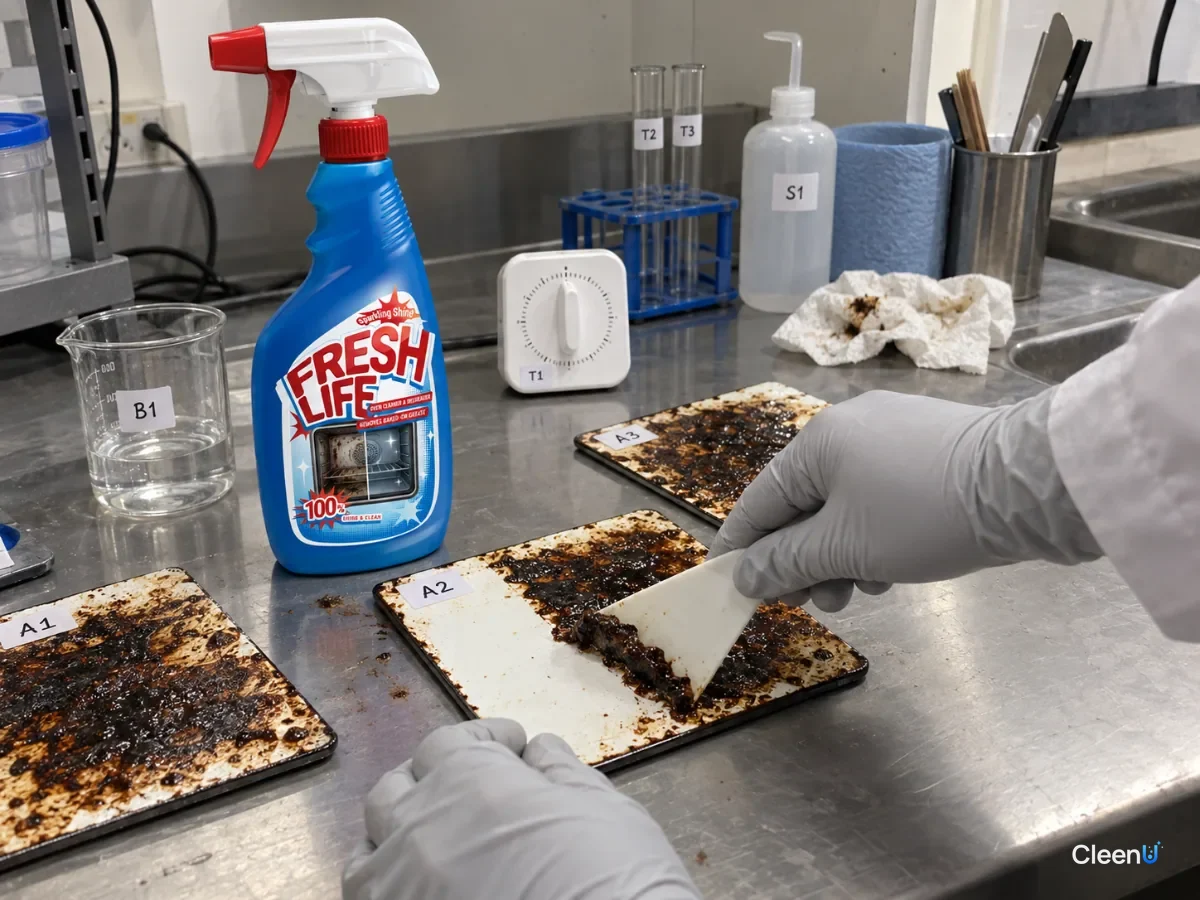
That is why dwell time matters. Saponification and softening take time. Wiping right after you spray only removes the loosest top layer.
Check three things before you start
Know what kind of oven you have. Self-cleaning (pyrolytic) ovens have a special liner that oven cleaner can damage; use the self-clean cycle as the manual describes instead. Standard enamel ovens are fine. If you aren't sure, check the manual.
Make sure the oven is completely cool. A warm interior makes the cleaner evaporate quickly, makes the fumes harsher and can leave marks. If you used the oven today, clean it tomorrow.
Protect yourself. Strong alkaline cleaners irritate skin and eyes, so wear rubber gloves and safety glasses. Open a window and turn on the range hood so the kitchen stays ventilated.
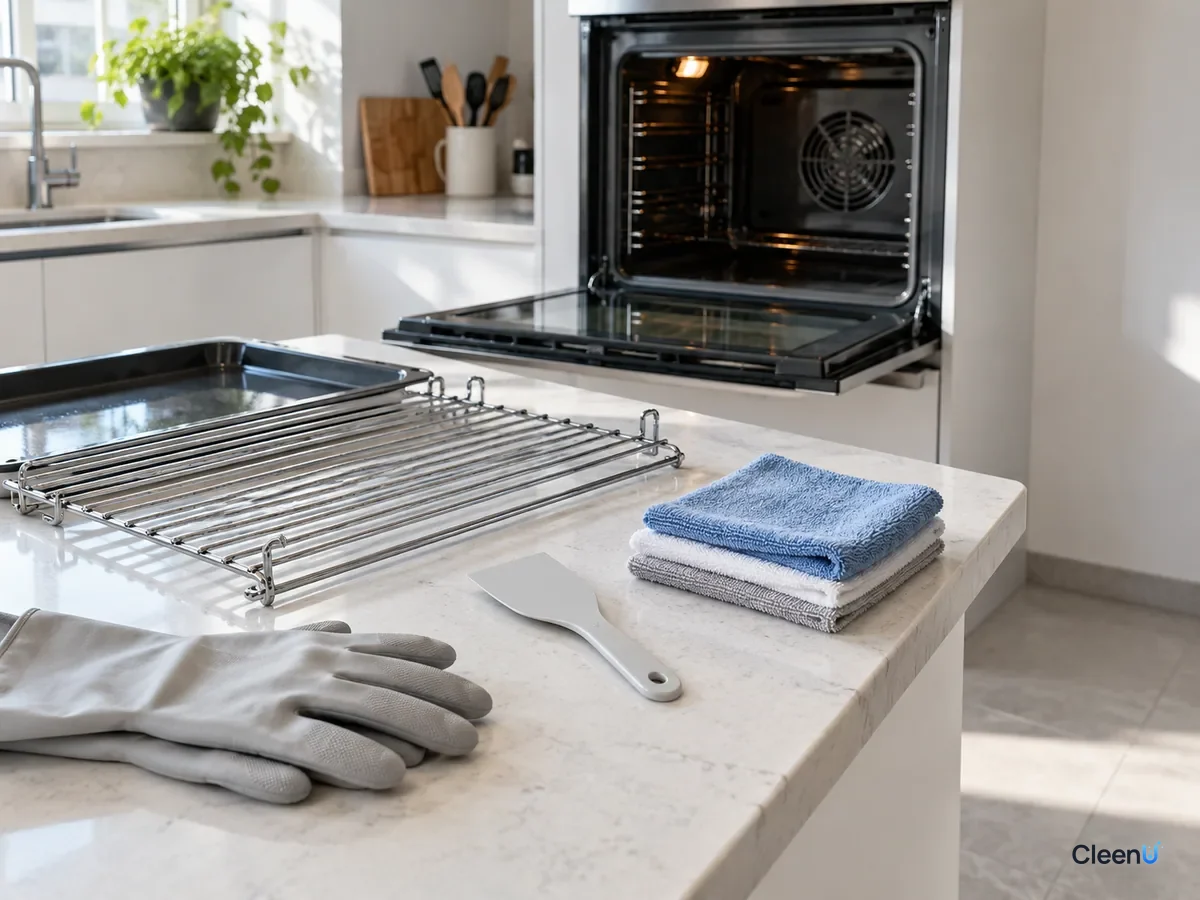
Step by step: clean the inside of your oven
From pulling the racks to wiping away the last residue
Turn off the power and remove the racks
Unplug the oven or switch off its breaker, then take out the racks, baking sheets and drip pan to deal with separately. Sweep loose crumbs and charred bits off the oven floor with a dry cloth or paper towel.
Keep clear of the elements and spray the cleaner
Holding the can or bottle about 8 inches away, spray the baked-on grease on the floor, side walls, ceiling and inside of the door glass. Apply enough to fully cover thick deposits.
Caution:Keep the spray off the heating elements, fan, temperature probe and door gasket. Don't let the cleaner touch any aluminum parts.
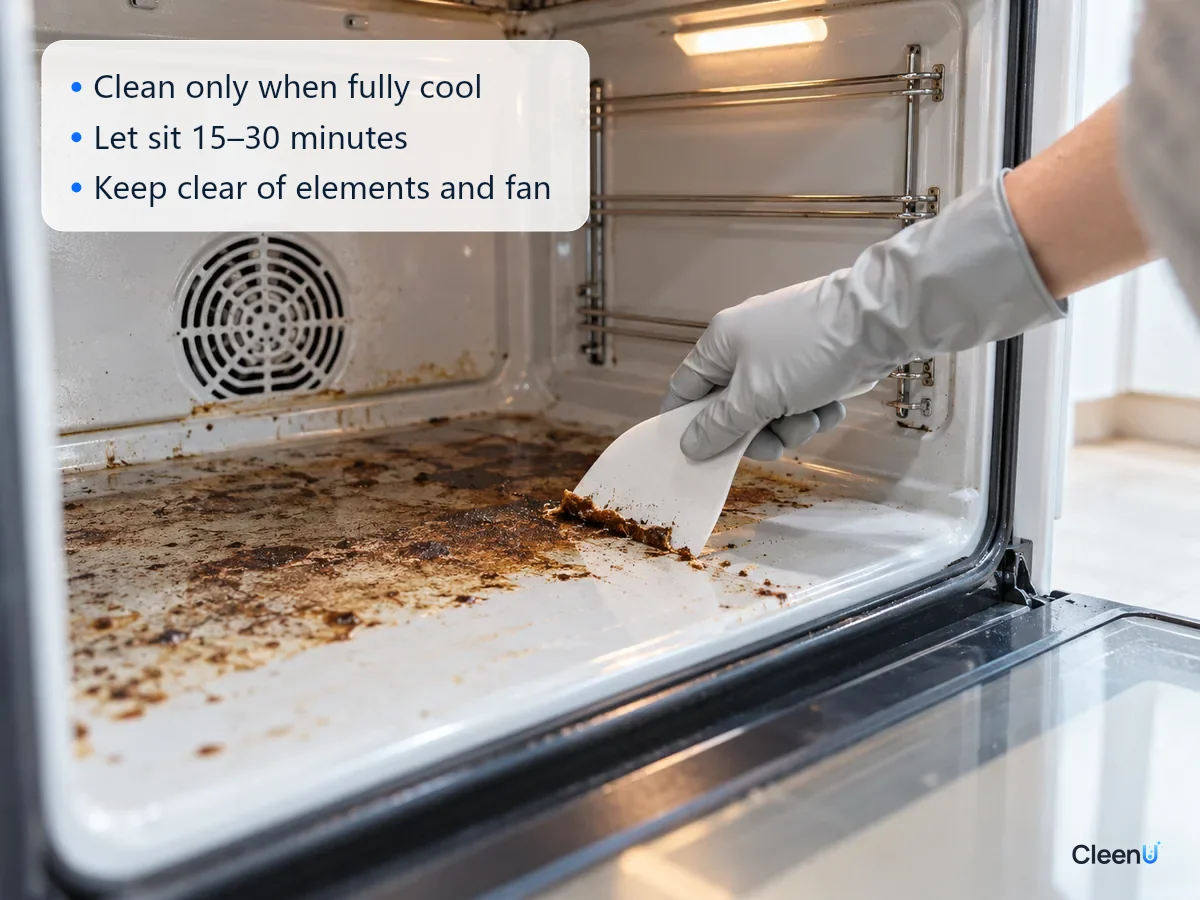
Close the door and wait 15 to 30 minutes
Close the door and let the cleaner work. Thin grease softens in about 15 minutes; years of thick buildup may need the full 30. Don't turn the oven on during this time.
Scrape and wipe away the softened crust
Open the door and gently lift the softened crust with a plastic scraper held at a low angle against the wall, then wipe it away with a damp cloth. Skip metal scrapers and steel wool so you don't scratch the enamel.
Caution:If a spot is still hard, the cleaner hasn't finished working. Spray it again and wait another 10 to 15 minutes instead of forcing it.
Wipe off every trace of cleaner
This is the step people skip, and it matters. With a clean cloth dipped in plain water, wipe the walls, floor and door three or four times, until the cloth no longer feels slippery or picks up suds. Then dry everything with a dry cloth.
Air it out and run it empty
Leave the door open for 10 to 15 minutes, put the racks back, then run the empty oven for about 10 minutes to drive off any lingering odor.
Why the final rinse-wipe matters
A lot of people scrape out the crust, see clean walls and call it done. The next time the oven heats up, there is a sharp smell, and food can pick up an off taste. Strong alkaline cleaner and the grease it has turned into soap both leave a thin residue on the oven walls. It is hard to see, but it feels slightly slippery.
Left in place, that film dries and breaks down the next time the oven heats, which gives off odors and can leave whitish or blotchy marks on the enamel. An oven is where you cook food, so the residue deserves a thorough cleanup.
The test is simple. After a rinse-wipe, run a finger along the wall. If it feels slick, residue remains; switch to a clean cloth and fresh water and wipe again. When the cloth no longer picks up suds and the wall feels squeaky rather than slippery, you are done. Those extra five minutes do more than airing the oven out or running it empty afterward.
How to clean the racks, pans and door glass
Racks and baking sheets: soak them in the sink or tub in hot water with a little dish soap for about 30 minutes, then scrub with a brush. For heavily crusted racks, spray them with oven cleaner outside the sink while wearing gloves, let it sit, then scrub and rinse. Don't use strong alkaline cleaner on aluminum pans; it will darken and corrode them.
Oven door glass: treat the brown film on the inside of the glass like the oven walls. Spray, wait, wipe, rinse-wipe with clean water, then buff dry. Some oven doors have two panes; if grease gets between them, follow the manual to open the door rather than pouring liquid into the gap. For more on glass, see our glass cleaning guide.
How to tell the oven is really clean
The walls and floor are back to their original color and don't feel greasy to the touch. A damp cloth comes away clean, with no brown streaks. With the door closed, there is no sharp chemical smell. If a strong smell lingers after the empty run, some residue is still there; once the oven cools, wipe it once or twice more with clean water.
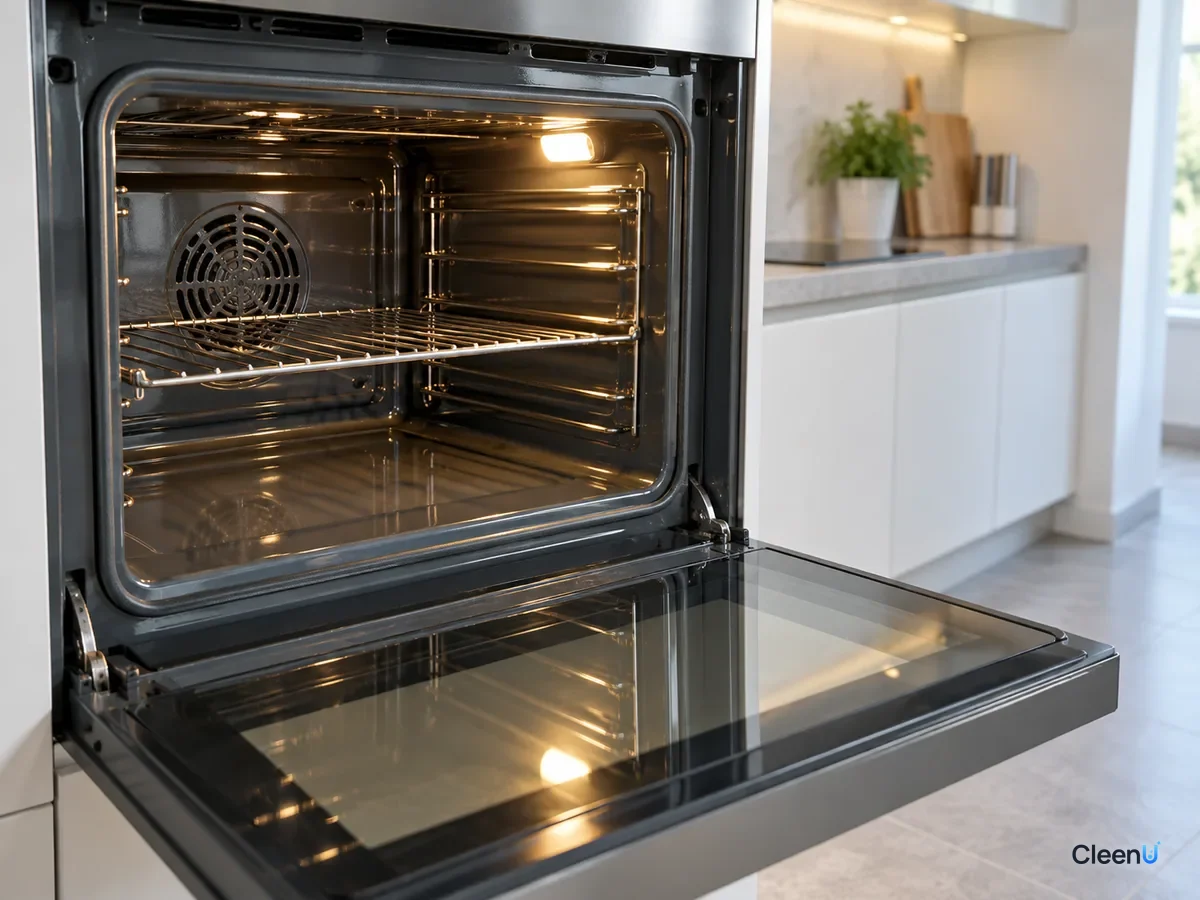
Before you clean the oven, make sure
- The oven is off, unplugged and completely cool
- It is not the liner of a self-cleaning (pyrolytic) oven
- You are wearing rubber gloves and safety glasses, and the kitchen is ventilated
- The heating elements, fan, temperature probe and door gasket won't be sprayed
- You have plenty of clean water and clean cloths for the final rinse-wipe
How to keep baked-on grease from building up again
Catch drips with a baking sheet or foil, especially under roasts and pizzas. Don't lay foil directly on the oven floor, though; it can interfere with airflow and bottom heating.
After each use, once the oven is warm but no longer hot, wipe off obvious splatters and spills with a damp cloth. They haven't carbonized yet and come off easily.
Deep clean every one to two months instead of letting the crust build for years. It is a much easier job that way. For the order to clean a whole kitchen, see how to clean a kitchen.
Stop if you notice any of these
Cleaner gets in your eyes or stings your skin; the oven lining blisters, peels or changes color; a heating element or fan gets sprayed. Stop right away and flush eyes or skin with plenty of water, and get medical help if irritation continues. If a component got wet, let it dry completely before turning the power back on, and contact the manufacturer if anything seems wrong.
Written for: Standard enamel home ovens with baked-on grease on the walls, floor and inside of the doorNot for: The liner of a self-cleaning (pyrolytic) oven; aluminum liners or parts; an oven that is still warm
Oven cleaning questions people ask first
How long should oven cleaner sit?
Usually 15 to 30 minutes. Light grease softens in about 15 minutes; years of buildup need the full 30, and any spots still hard get a second application.
Can I use steel wool inside the oven?
No. Steel wool scratches the enamel lining, and scratched enamel collects grime faster. Let the cleaner soften the crust, then use a plastic scraper and a damp cloth.
Can I use oven cleaner in a self-cleaning oven?
Not on the liner of a self-cleaning (pyrolytic) oven; it can damage the special coating. Run the self-clean cycle as the manual describes.
Will my oven smell after cleaning?
Wipe away the residue several times with clean water, air the oven out, then run it empty for about 10 minutes and the smell will clear.
How do I get the burnt black crust off the oven bottom?
Sweep out the loose bits, spray and wait the full 30 minutes, then push the crust up with a plastic scraper at a low angle. Repeat if needed.
How often should I deep clean my oven?
Every one to two months for an oven used regularly. Wiping splatters while the oven is still warm cuts down on buildup a lot.
Can I turn the oven on to make oven cleaner work faster?
No. Use oven cleaner only in a cold oven. Heat dries the alkaline gel onto the surface, makes it harder to wipe off and makes the fumes worse. Let the oven cool, spray while avoiding the heating element, fan, temperature probe and door gasket, and keep the oven off while it sits. For heavy buildup, give it more time, then scrape and wipe clean with water.
Can I use oven cleaner on dishes or pots?
No. Oven cleaner is a strongly alkaline gel (pH 12.5 to 13.5) made for baked-on carbon in oven cavities, racks, sheet pans and the inside of the door. Keep it off aluminum and nonstick pans. Wash dishes and cookware with regular dish soap, and rinse any oven pan you treated thoroughly with water.
For an oven cleaner that clings to walls and ceilings and softens baked-on grease so it wipes out, try Oven Cleaner & Degreaser.
Baked-on oven grease is fat and food juice that has polymerized and carbonized at high heat into a hard crust dish soap can't handle. Once the oven is cool and the racks are out, spray oven cleaner while keeping clear of the elements and fan, give it 15 to 30 minutes to soften, lift the crust with a plastic scraper and a damp cloth, then rinse-wipe well and air the oven out. Wear gloves and eye protection, skip self-cleaning oven liners, and wipe spills while the oven is still warm to keep the crust from coming back.