
How-to
How to Clean Glass Without Streaks: Windows, Mirrors, Oven and Fireplace Glass
Direct answer
Match the cleaner to the grime. Use a fast-drying, low-residue glass cleaner for dust and fingerprints on windows, mirrors and tables. Use a mildly acidic bathroom cleaner for hard water and soap scum on shower glass. Oven and fireplace glass need alkaline cleaners made for them. Use less product, wipe in one direction and dry the glass.
Glass is the most honest surface in the house. One ray of sunlight shows exactly how well you cleaned it. Plenty of people clean a window only to find streaks and haze once it dries, so they spray and wipe again and make it worse. The problem is rarely effort. It comes down to two things: whether the cleaner matches the grime on the glass, and whether your technique leaves residue behind.
Four kinds of grime on household glass
Dust, fingerprints and oily smudges. These are the usual culprits on windows, mirrors and glass tables. Fingerprints are skin oil, toothpaste specks and skincare splatter on a mirror are mixes of oil and water, and windows add dust and mud spots from rain. None of it grips hard, but it contains oil, so plain water just smears it. You need a glass cleaner that dissolves oily, watery grime, evaporates quickly and leaves nothing behind.
Hard water and soap scum. This is the white haze on shower doors and bathroom partitions. Hard water deposits are minerals left behind as water evaporates. Soap scum is lime soap formed when soap reacts with calcium and magnesium. Both need a mildly acidic bathroom cleaner to dissolve them; ordinary glass cleaner barely touches them.
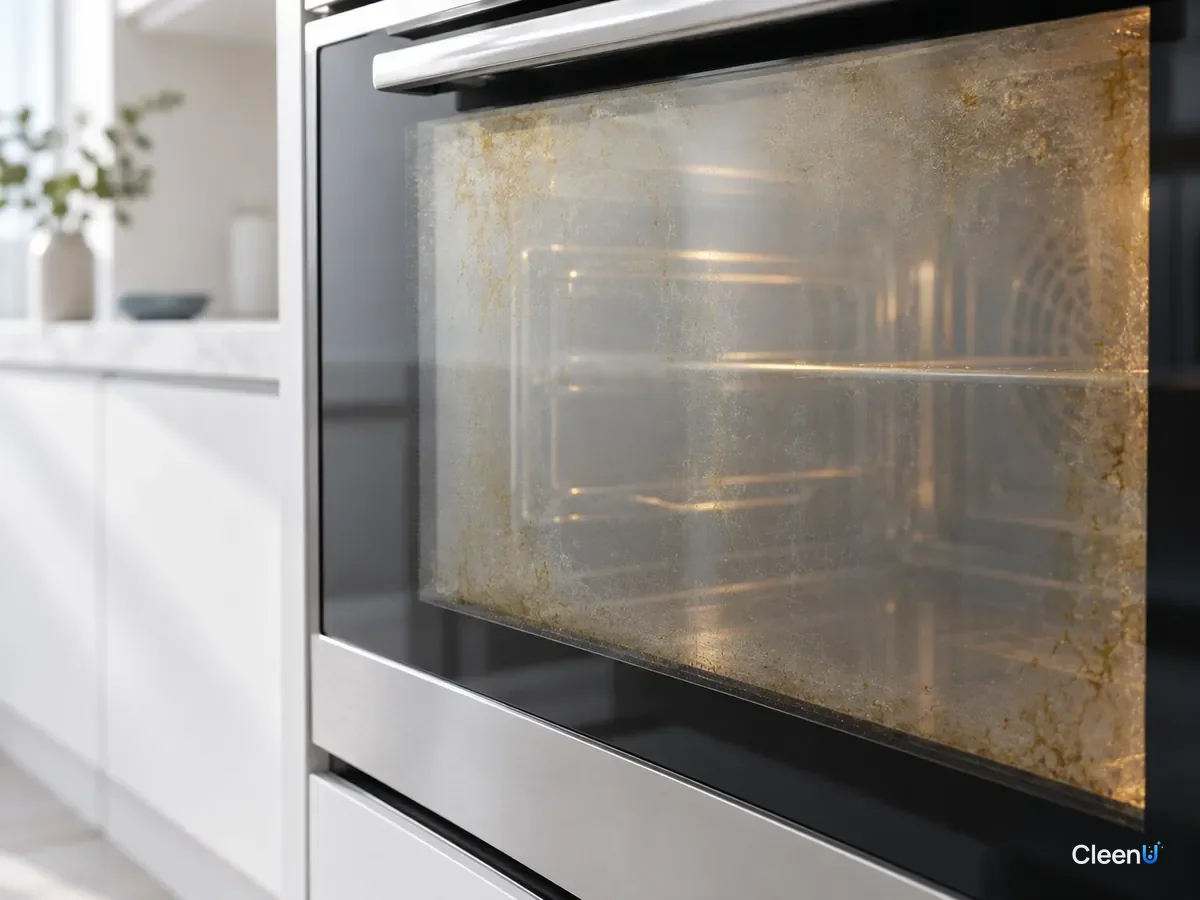
Baked-on grease. This is the yellow-brown film and dark spots on oven doors, microwave doors and air fryer windows. Heat oxidizes and polymerizes the grease so it bonds to the glass. An alkaline cleaner softens it, then a scraper lifts it off.
Soot and creosote. Wood stoves and fireplaces coat the inside of their glass doors with black soot and brown wood tar from combustion. Gas fireplaces can leave a white haze instead. These also call for an alkaline formula to soften the tar and loosen the soot.
Once you know these four types, it is clear why a spray-bottle glass cleaner never quite gets a shower door or an oven window clean.
Three keys to streak-free glass: less product, one direction, dry finish
Use less. The more cleaner you use, the more residue it leaves as it dries, and residue is the main cause of streaks. For mirrors and small panes, spraying the cloth makes it easier to control the amount. For large windows, mist a thin coat directly on the glass.
Wipe in one direction. Rubbing in circles pushes loosened grime around until it settles back on the glass. Wipe top to bottom in an S pattern, or go horizontal first and then vertical, so each stroke moves the grime off the glass.
Finish dry. After cleaning, buff with a second clean, dry microfiber cloth, or squeegee from top to bottom and dry the corners with a cloth. Water left to air-dry leaves fresh mineral spots from the tap water.
One more detail people miss: do not clean glass in direct sun or when the glass is hot. The cleaner dries before you can wipe it, and streaks are guaranteed. Pick an overcast day or a time when that side of the house is in shade.
Glass by glass: how to clean each one
Six kinds of household glass, six methods
Windows and glass doors
Dust first, mist lightly and squeegee in an S pattern
Brush or wipe dust off the frame and glass. Mist on a thin coat of fast-drying glass cleaner, then squeegee from top to bottom in an S pattern, wiping the blade after each pass and finishing the edges with a dry cloth.
Caution:Do not lean out to clean upper-story exterior windows; use a professional or a safe extension tool.
Bathroom mirrors and glass tables
Remove thick spots first, then spray the cloth and wipe one way
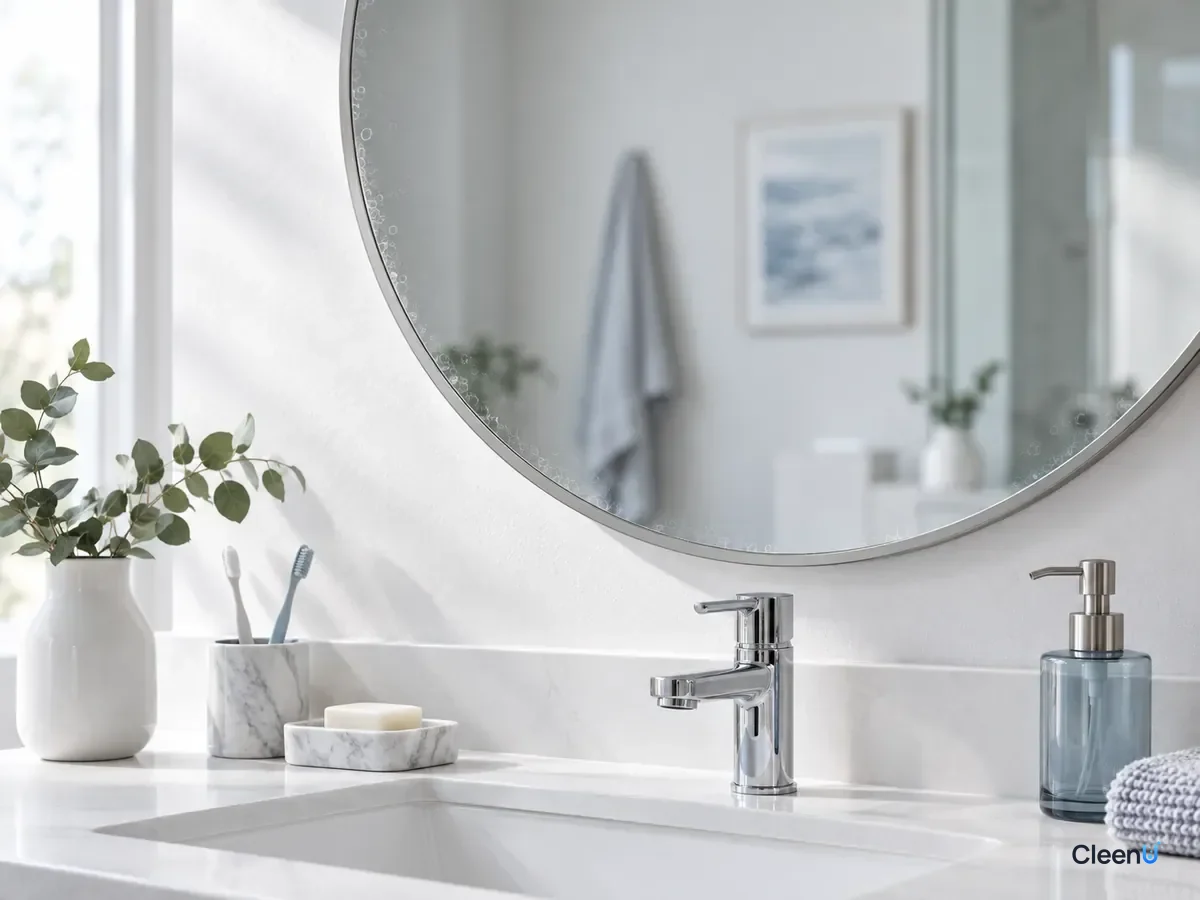
Wipe off thick toothpaste with a damp cloth. Mist the mirror or a microfiber cloth with a thin layer of glass cleaner and immediately wipe top to bottom in an S pattern with a dry microfiber cloth, then buff the corners. Treat glass coffee and dining tables the same way, and clean both sides.
Caution:Keep liquid out of the mirror edges; moisture behind the glass damages the silver backing and turns it black.
Shower glass
Dissolve scale with a mildly acidic bathroom cleaner, then rinse and squeegee
Wet the glass with the showerhead, spray a mildly acidic bathroom cleaner on the scale and soap scum, and wait 2 to 5 minutes. Scrub with a sponge, rinse, and squeegee dry. A quick squeegee after every shower keeps scale from building up.
Oven and microwave door glass
Power off, let it cool, apply an alkaline glass cleaner and scrape
With the oven off and fully cool, open the door flat and put on gloves. Spray oven glass cleaner on the film and dark spots and wait 5 to 10 minutes without letting it dry. Scrape at a low angle with a glass scraper or plastic blade, wipe twice with a damp cloth and clean water, and buff dry.
Fireplace and wood-stove doors
Wait until the glass is cold, spray and wipe away the loosened soot
Once the fire is out and the glass is cool to the touch, lay a cloth under the door to catch drips. Spray the inside of the glass, wait 1 to 2 minutes (up to 5 on heavy tar at the corners), wipe the loosened soot with a damp cloth, switch to a clean side, and buff dry.
Caution:Never spray cleaner on hot glass.
Car windows and tinted glass
Use an ammonia-free cleaner applied to the cloth
For the inside of car windows and glass with window film, use an ammonia-free glass cleaner sprayed onto the cloth rather than the glass, then buff dry. Follow the film manufacturer's care guidance.
Choosing tools that do not leave streaks
With the wrong tools, even a good cleaner will streak.
Microfiber cloths are the first choice for glass. The fine fibers grab skin oil and dust without shedding lint. Keep two: one to clean and one to buff dry. Wash them in plain water or a little mild detergent and never use fabric softener, which coats the fibers with an oily film that ends up as streaks on the glass. Replace cloths once they feel stiff and stop picking up grime.
Paper towels and newspaper are old standbys with drawbacks. Paper towels shed lint and pill when wet, which shows on large panes. Newspaper works, but the ink can rub off on light-colored frames. They are fine in a pinch, but microfiber is more consistent.
A squeegee is the tool for large windows and shower doors. The rubber blade should be straight and nick-free. Wipe the blade after every stroke, or the dirty water on it will leave a line on the next pass. Squeegees always leave a thin water line at the edges, so finish those with a dry cloth.
A glass scraper is for hard glass with baked-on spots, such as oven doors and glass cooktops. Hold it at a low angle and push, with a sharp, rust-free blade; a dull blade or a steep angle is what causes scratches. Do not use a blade on regular windows or tinted glass.
A soft brush clears dust and grit out of window frames and sliding-door tracks before you start. Skip it and you will drag that grit across the glass.
A quick self-check: after cleaning, put your face close to the glass and look along it toward the light. Curved arcs mean you wiped in too many directions. An even haze means too much cleaner or a dirty cloth. Small white dots mean water was left to dry on the glass. Adjust accordingly and the next round will come out better.
Why each kind of glass needs its own cleaner
Grime on windows, mirrors and glass tables is mostly oily smudges and dust. The goal is a cleaner that dissolves it, dries fast and leaves nothing behind. CleenU Bathroom Mirror Cleaner is built that way. It blends fast-evaporating alcohols such as isopropyl alcohol with low-residue surfactants, contains no ammonia, and has a pH of 6.5–8.0. Spray, wipe immediately and it dries in seconds, with no rinse. It was designed for bathroom mirrors, and it works just as well on windows, glass doors, and glass coffee and dining tables. The alcohols evaporate quickly and dissolve oily, watery grime, and the low solids content means little is left once they flash off. That is what streak-free cleaning depends on.
Shower door scale and soap scum are minerals. Alcohols and surfactants cannot dissolve them; they need a mild acid.
Baked-on oven grease needs an alkali to soften the oxidized, polymerized fat. CleenU Oven Glass Cleaner is an alkaline formula (pH 11.0–12.5), thickened so it clings to vertical glass and free of abrasives. It softens the film so a scraper can lift it without scratching.
Fireplace soot and creosote also need an alkaline formula. CleenU Fireplace Glass Cleaner (pH 10.5–12.0) combines alkaline builders, a glycol ether solvent and nonionic surfactants to soften tar and loosen soot on cold glass.
Alkaline cleaners work hard, so wear gloves, use them only on cool glass, and wipe with clean water afterward.
Why glass streaks
Too much cleaner. This is the most common cause. The residue dries into a film that shows as haze and streaks in the light. Use less, and spray the cloth.
A dirty cloth or fabric softener. A cloth that has wiped grease, or a towel washed with fabric softener, carries oil and residue onto everything it touches. Keep one clean microfiber cloth just for glass and wash it without softener.
Cleaning in the sun. The cleaner dries faster than you can wipe, and it will streak.
The wrong cleaner. Ordinary glass cleaner will never clear shower-door scale no matter how many times you wipe, and an oily cleaner leaves a film on mirrors.
Damaged glass. Shower glass that has been attacked by minerals for years can etch. It looks clear when wet, turns white when dry and feels rough. That is not grime, and cleaning cannot restore it. Black edges on a mirror come from moisture corroding the silver backing, which is also beyond cleaning.
After cleaning glass, check these
- No streaks or haze in side light or backlight
- Corners and frame edges dried with a cloth
- No liquid seeping into mirror edges
- Oven and fireplace glass wiped with clean water and fully dry
- Alkaline cleaners and gloves put away
Stop if any of these happen
Stop if you are working on a hot oven door or fireplace glass, if an alkaline cleaner gets on your skin or in your eyes, or if window film starts to bubble or discolor. If cleaner splashes on skin or in eyes, flush with plenty of water and follow the first-aid directions on the label.
Written for: Homes that want windows, mirrors, shower doors, glass tables, oven doors or fireplace glass clear and streak-freeNot for: Upper-story exterior windows (hire a professional), and etched shower glass or desilvered mirrors (that is damage, not dirt)
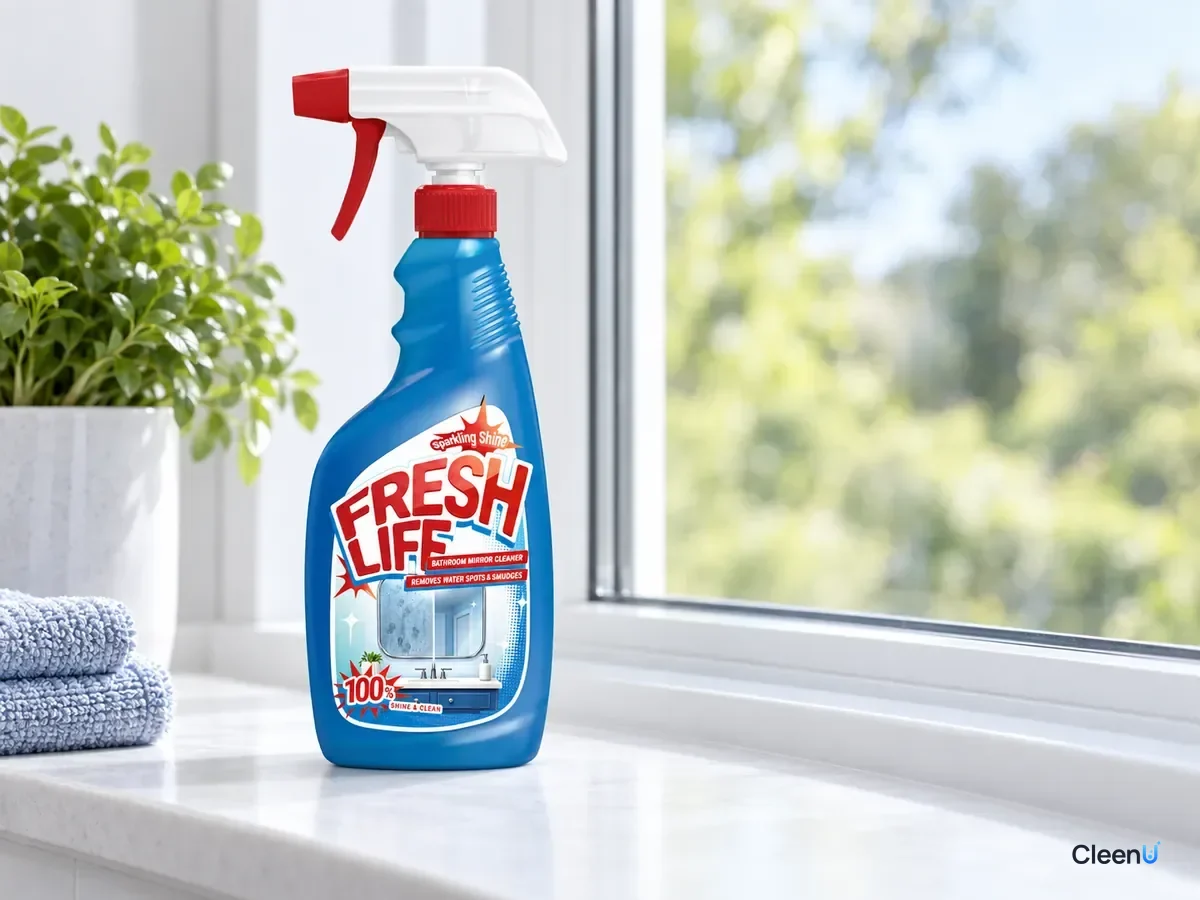
For windows, mirrors, glass doors and glass tables, reach for our fast-drying, ammonia-free Bathroom Mirror Cleaner.
For other glass jobs, Oven Glass Cleaner handles baked-on grease, Fireplace Glass Cleaner handles soot and creosote, and Bathroom Cleaner takes care of shower scale. You can also browse the full glass cleaner line. For the rest of the bathroom, see how to clean a bathroom.
Glass still streaky? Common fixes
Should I spray the glass or the cloth?
Mist large windows directly. For mirrors, framed glass and glass near electronics, spray the cloth so liquid does not run into gaps.
Why does my glass have streaks after cleaning?
Three causes are most common: too much cleaner, a dirty cloth and cleaning in direct sun. Use less, switch to a clean microfiber cloth, clean in the shade, wipe in one direction and buff dry.
Can regular glass cleaner remove the haze on my shower door?
Not well. That haze is hard water and soap scum, and it needs a mildly acidic bathroom cleaner to dissolve it.
Can vinegar and water replace glass cleaner?
Vinegar helps a little with light water spots but does poorly on fingerprints and grease, and it smells. A dedicated glass cleaner cuts oil better and dries faster.
Can I use glass cleaner on my TV or computer screen?
It is not a good idea. Screens have anti-glare coatings, so use a screen cleaner free of ammonia and alcohol.
How do I clean grease between the panes of an oven door?
Getting between the panes means removing the door as your manual describes. If you are not sure how, do not force it; clean the inside and outside surfaces instead.
How do I clean a bathroom mirror without streaks?
Spray a fast-drying mirror cleaner onto a microfiber cloth, not the mirror, wipe in one direction, then buff with a second dry cloth. Too much product and a dirty cloth cause most streaks. Keep liquid away from the mirror's edges and back, where it can damage the silvering.
How do I clean black soot off fireplace glass?
Wait until the glass is completely cool, brush off loose soot, then use a cleaner made for fireplace glass with a soft cloth and finish with a damp, then dry, wipe. Ordinary glass cleaner struggles with tarry soot. Never spray a hot door, and skip steel wool.
Clear glass comes from matching the cleaner to the grime. Use a fast-drying, low-residue glass cleaner for dust and fingerprints, a mildly acidic bathroom cleaner for shower scale, and alkaline cleaners for oven and fireplace glass. Use less product, wipe in one direction, dry the glass and stay out of direct sun, and it will stop streaking.