
How-to
How to Clean a Bathroom Mirror Without Streaks
Direct answer
To clean a bathroom mirror without streaks, soften toothpaste and hairspray spots with a damp cloth first. Then spray glass cleaner onto a cloth, not the mirror, wipe from top to bottom, and buff dry with a clean microfiber cloth. Keep cleaner away from the edges so it can't seep behind the glass.
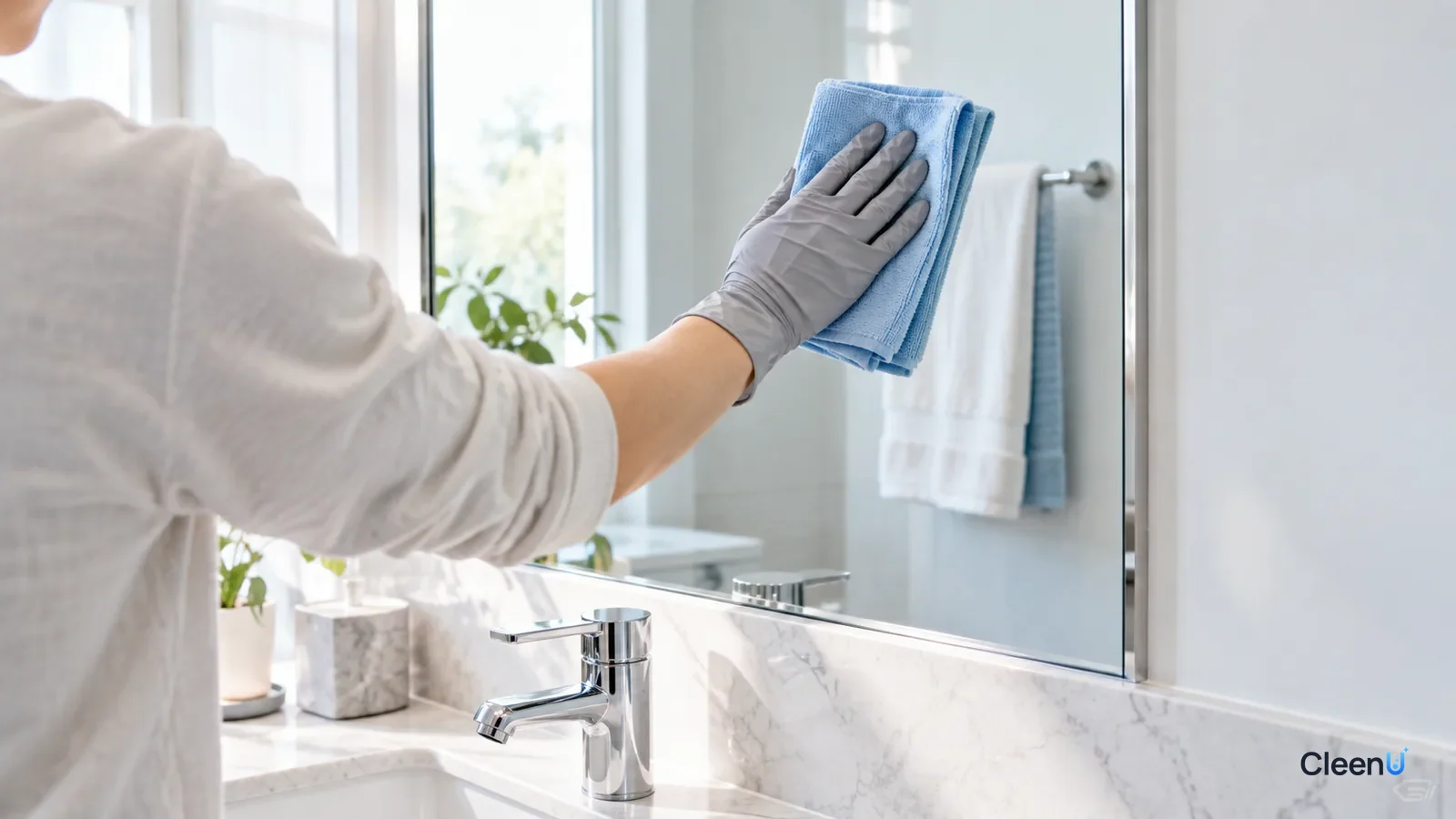
The mirror over the bathroom sink is the most visible surface in the room, and one of the fastest to get dirty. Toothpaste flecks dry into little white dots. Splashes from washing your face and hands leave rings of water spots. Hairspray and makeup settle into a fine haze. Then a hot shower fogs the glass and makes every mark look worse.
Most people have had this experience: the mirror looks clean right after wiping, then the lights come on or you glance at it from the side and see curved streaks everywhere, with faint rings where the toothpaste spots were. Getting a streak-free mirror comes down to doing three things in the right order.
What's actually on your bathroom mirror?
Toothpaste spots: toothpaste contains mild abrasives, surfactants and thickeners. Once a fleck dries on the mirror, it becomes a hard, chalky white dot. Wipe it dry and the powder smears into a hazy patch.
Water spots: tap water carries dissolved minerals like calcium and magnesium. When a droplet evaporates, the minerals stay behind as a white ring. Splashes of soapy water or face wash also dry into spots with an oily film.
Hairspray, styling products and makeup: these contain film-forming resins and oils that leave a tacky, uneven layer on the glass. A damp cloth alone struggles to wipe it evenly.
Fingerprints and skin oil: oily marks from hands and from leaning in close, which easily get pushed into a greasy haze.
Each of these behaves differently. Toothpaste and water spots need to be softened with water first. Oily films and hairspray need a cleaner to loosen and break them up. And at the end, any cleaner and water left on the glass need to dry fast without residue, or they turn into streaks.
Why does the mirror keep streaking?
There are four usual reasons:
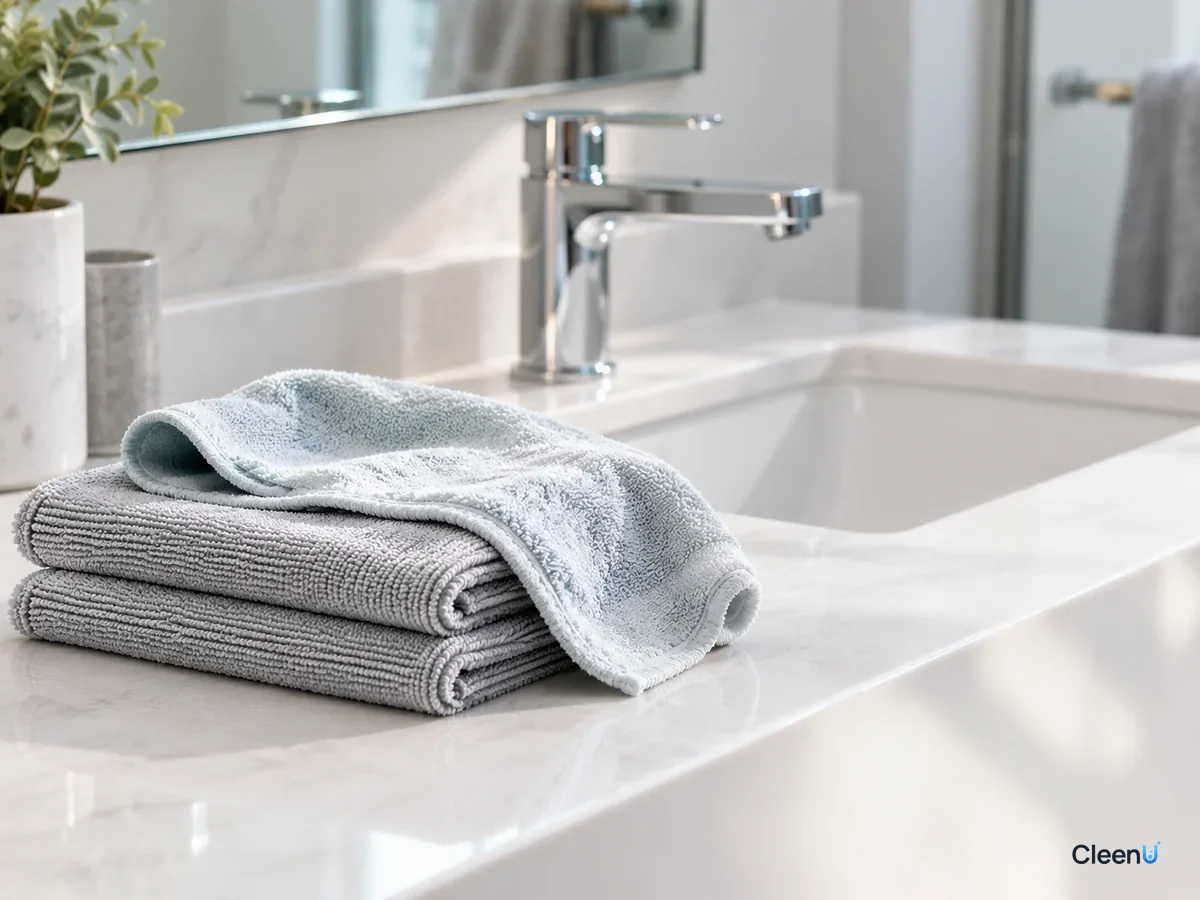
The cloth is dirty or the wrong kind. A used hand towel or paper towel leaves fibers and oil behind, and paper sheds lint.
Too much cleaner. Spraying the whole mirror leaves more than you can wipe off, and the leftover surfactant dries into a haze.
Wiping dried toothpaste spots dry. The powder smears into a patch that looks like haze that won't come off.
Skipping the final buff. A thin film of water left on the glass evaporates and leaves its minerals and cleaner behind.
A fast-drying, low-residue mirror and glass cleaner suits a bathroom mirror well. CleenU Bathroom Mirror Cleaner is one example. It blends isopropyl alcohol and other fast-evaporating alcohols with low-residue surfactants, contains no ammonia, has a pH of 6.5 to 8.0, and is ready to use with no dilution. The alcohols help dissolve oily films like hairspray and skin oil and let the glass dry quickly, and there is no need to rinse afterward.
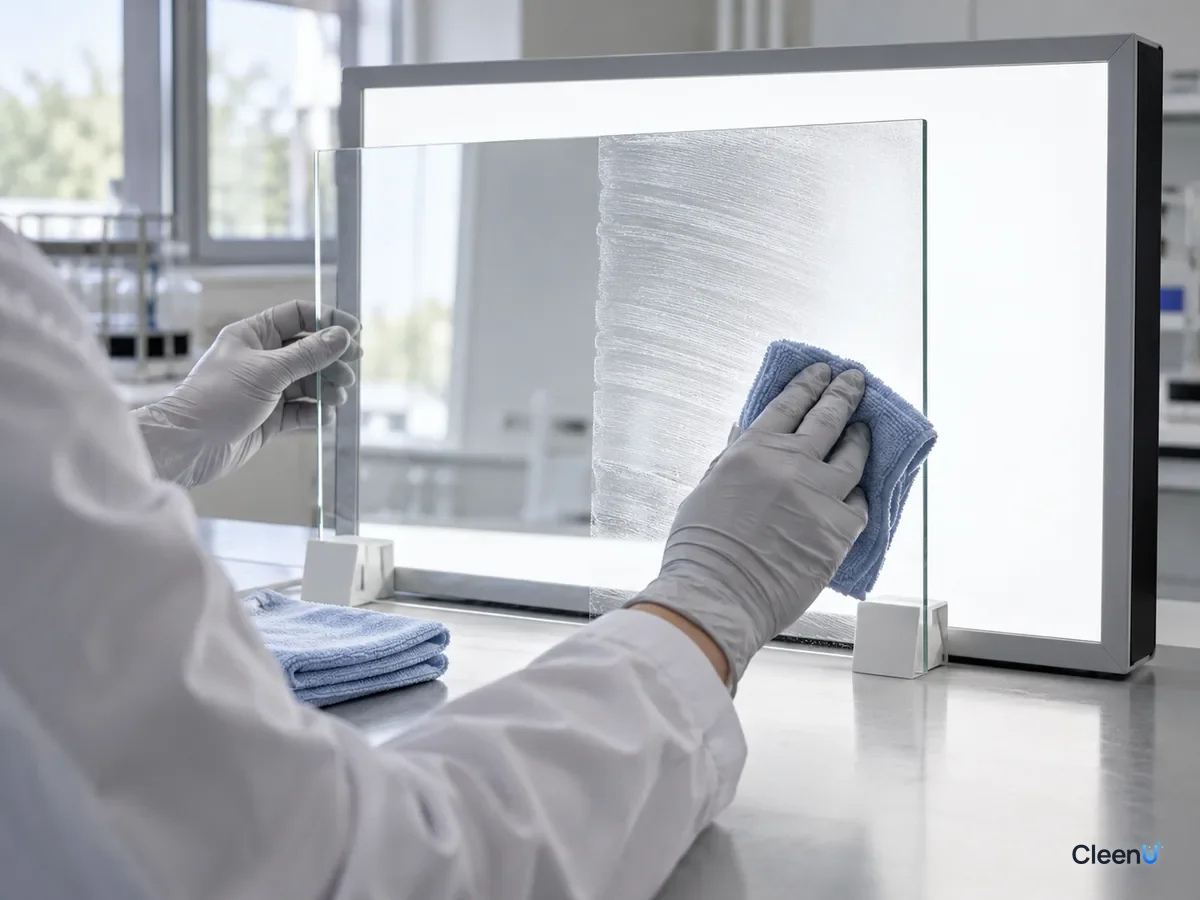
Step by step: clean a bathroom mirror without streaks
Soften, wipe, buff: three steps to a streak-free mirror
Soften toothpaste and hairspray spots with a damp cloth
Wet a soft cloth with warm water and wring it until it doesn't drip. Hold it on toothpaste and hairspray spots for a few seconds so the dried residue absorbs water and softens, then wipe them away gently. This step is only for the spots, not the whole mirror.
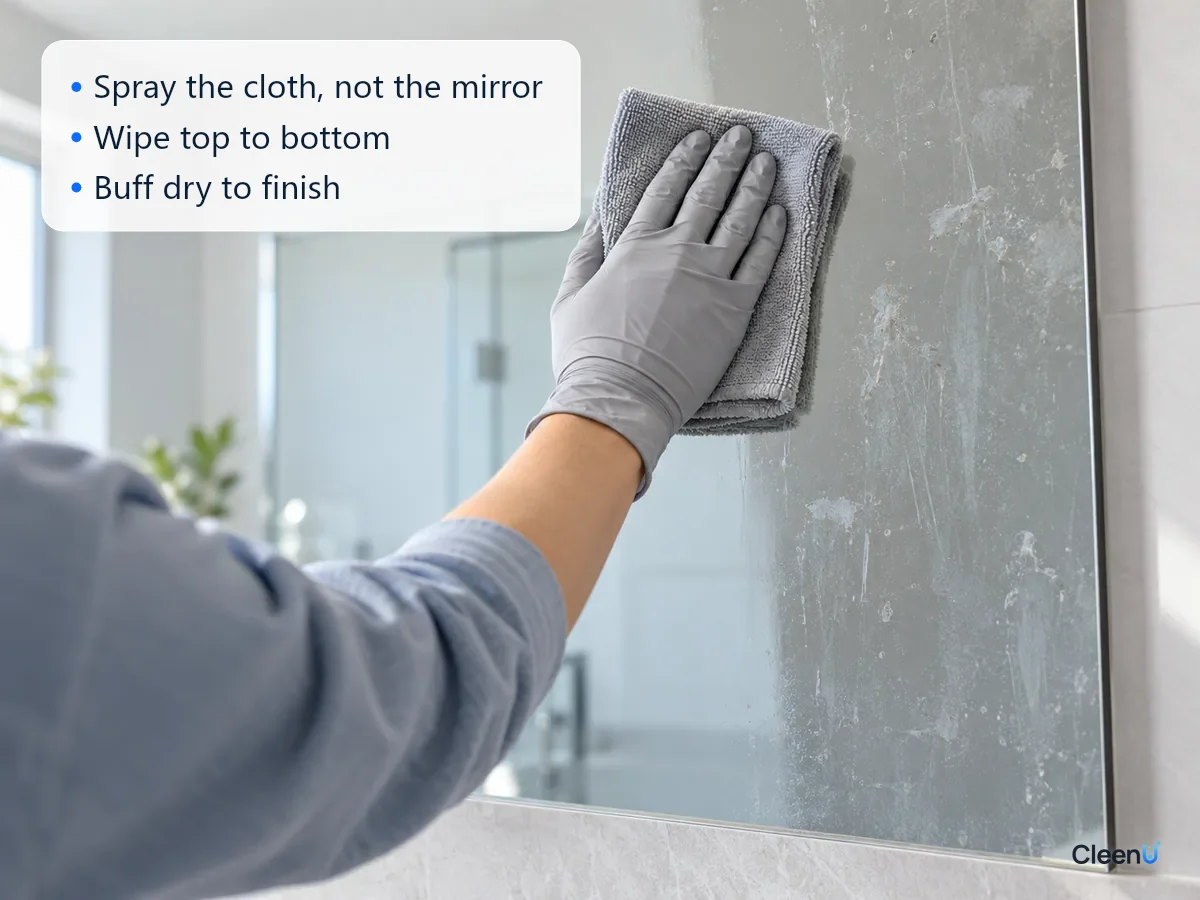
Spray the cloth and wipe from top to bottom
Spray glass cleaner onto a clean microfiber cloth until it is just damp. Start at the top of the mirror and work down row by row, or in an S pattern, finishing at the bottom edge so anything that runs down gets picked up.
Caution:Don't spray the whole mirror directly, and never spray the edges or the bottom. Liquid that seeps into the frame and behind the glass corrodes the silver backing and causes black edges.
Buff dry
Switch to a clean, dry microfiber cloth and buff the mirror quickly from top to bottom to pick up any remaining moisture and residue. Press a corner of the cloth into the corners and along the edges to soak up any liquid collected there.
Check from another angle
Turn on the bathroom lights and look at the mirror from the side. If you spot a streak, buff just that area with the dry cloth; don't spray more cleaner.
How to tell the mirror is really clean
With the lights on, your reflection looks sharp from the front, with no white dots or hazy patches. From an angle, there are no curved streaks. Run a fingertip lightly across the glass and it feels dry and smooth, not draggy or tacky.
If hazy patches remain, you probably used too much cleaner or the cloth was too wet; buff again with a dry cloth. If white spots won't come off and feel gritty, they may be long-standing hard water deposits that need a method made for mineral buildup. For more on why glass streaks, see why glass streaks after cleaning.
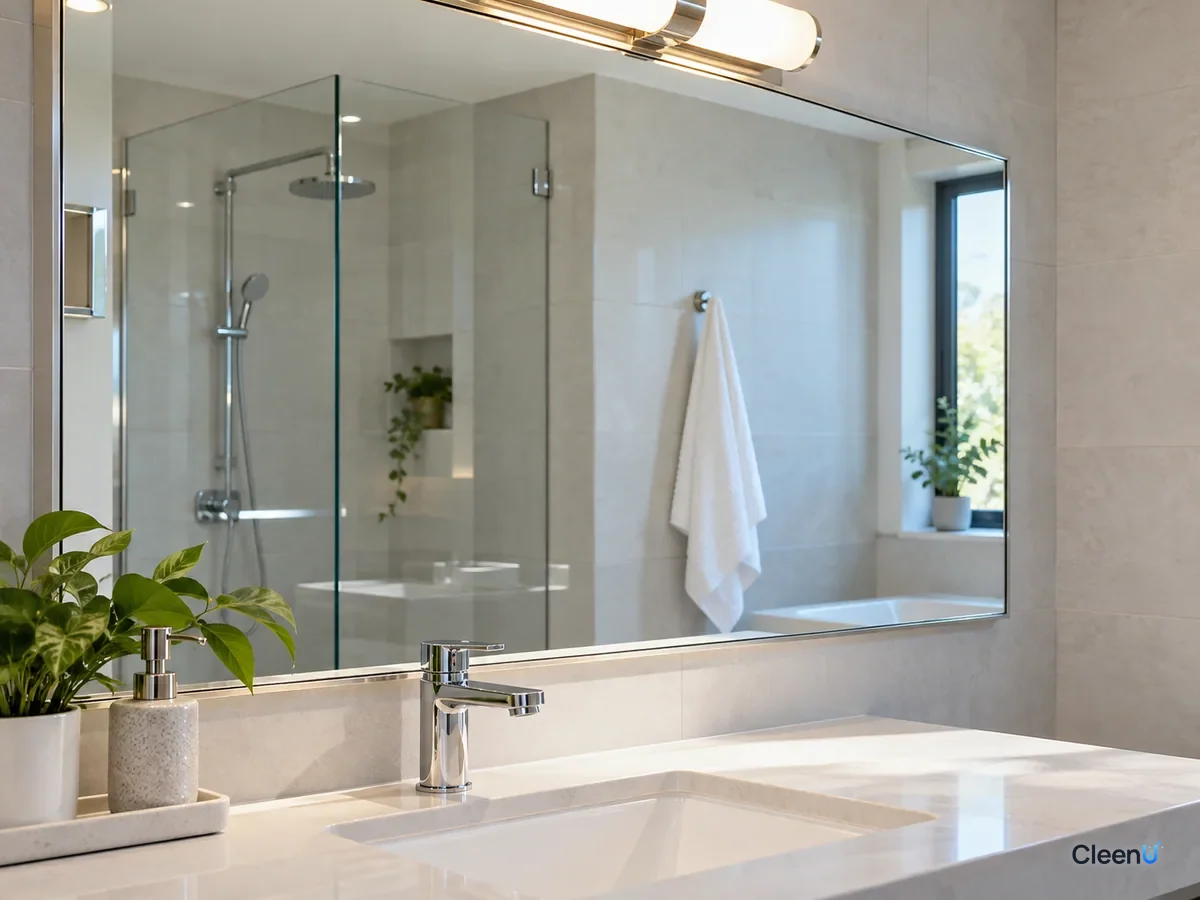
Before you clean the bathroom mirror, make sure
- You have two clean microfiber cloths, one for wiping and one for buffing
- Toothpaste and hairspray spots get softened with a damp cloth, not wiped dry
- The cleaner goes on the cloth, not sprayed across the mirror
- No liquid goes on the edges or bottom, and you blot them dry afterward
- The bathroom is ventilated, and you close the door only after the mirror is dry
Why do mirror edges turn black?
After a few years, many bathroom mirrors develop a black band or dark blotches along the edges. It looks like dirt, but no amount of wiping removes it, because it isn't dirt. It is corrosion of the silver backing.
A standard mirror is a sheet of glass with a thin silver layer on the back, covered by protective paint. In a humid bathroom, water and cleaner that run down the edges collect between the frame and the back of the mirror. Over time they eat through the paint and the silver, turning the edges black, and the damage creeps inward. Cleaning can't undo it.
Prevention is simple: spray cleaner onto the cloth, not the mirror; blot the edges and bottom dry after cleaning; and run the exhaust fan after showers so the mirror and the wall dry quickly.
Different mirrors and frames, different care
Frameless mirrors: the edges are fully exposed, so they take on water most easily. Wipe from the edges inward, and always press all four edges dry with a dry cloth when you finish.
Metal frames: aluminum and stainless frames stand up to wiping, but the seam between frame and glass collects hard water and soap scum. Run a barely damp cloth along the seam, then dry it.
Wood and painted frames: wood doesn't like water, so keep cleaner and water off the frame entirely. Wipe painted frames with a dry or well-wrung damp cloth, and skip scouring powder.
Anti-fog, lighted and smart mirrors: the glass may have an anti-fog film or a heating layer, and the frame hides LED strips and touch controls. Turn off the power, spray cleaner onto the cloth, wipe gently without scraping, and keep liquid out of the frame. Follow the maker's instructions.
Magnifying makeup mirrors: they sit close to your face and collect makeup and foundation fastest. Clean them the same way and buff thoroughly at the end; tiny traces of residue look much bigger when magnified.
How often should you clean a bathroom mirror?
After brushing your teeth each day, give the mirror a quick wipe with a dry microfiber cloth to catch splashes and toothpaste flecks. It takes a minute and saves most of the deep cleaning.
Do a full clean with glass cleaner once a week, or twice a week in a busy bathroom or one where a lot of makeup and hairspray get used.
When the mirror fogs up after a shower, don't rush to wipe it. Run the fan or open the door, and it will clear on its own. Wiping it while it is still wet tends to leave water marks. For windows and shower glass, see how to clean windows like a pro.
Stop if you notice any of these
Black edges or dark spots that are spreading inward; cracks or a peeling coating on the glass; cleaner in your eyes or skin irritation. Damage to the mirror backing can't be fixed by cleaning, so stop using liquid near the edges. Rinse eyes with water if cleaner gets in them and see a doctor if discomfort continues. Keep alcohol-based cleaners away from open flames, and use them with ventilation.
Written for: Households that want to remove water spots, toothpaste flecks and haze from a bathroom mirror without leaving streaksNot for: Mirrors whose backing has already turned black or failed; mirrors with anti-fog films, touch controls or built-in lighting (follow the maker's instructions)
Bathroom mirror questions people ask most
How do I get toothpaste spots off a mirror?
Hold a wrung-out damp cloth on them for a few seconds so they soften, wipe them off gently, then clean and buff the whole mirror.
Why does my mirror have streaks after I clean it?
Buff it top to bottom with a clean, dry cloth. Streaks usually come from too much cleaner, a cloth that is too wet or a cloth that isn't clean.
Can I clean a mirror with paper towels?
Better not. Paper towels shed lint and smear once they pick up oil. A clean microfiber cloth works best.
Why shouldn't I spray cleaner directly on the mirror?
The liquid runs down to the edges and seeps behind the glass, where it slowly corrodes the silver backing and leaves black edges that won't wipe off.
What if white water spots won't wipe off?
They may be old hard water deposits. Hold a warm, damp cloth on them for a bit, then wipe; if they still stay, use a method made for mineral buildup.
Can I clean a lighted smart mirror the same way?
Turn off the power first, spray cleaner onto the cloth, and keep liquid away from the lights and touch areas. Follow the mirror maker's instructions.
Can rubbing alcohol remove hard water spots from a mirror?
No. Hard water spots are calcium and magnesium mineral deposits, and alcohol does not dissolve them; it only helps with greasy film, skincare splatter and toothpaste. Soften light spots with a warm, damp cloth first. Thick, gritty scale needs a dedicated hard-water treatment, and keep any liquid away from the mirror's edges and back.
For a fast-drying, ammonia-free mirror and glass spray that needs no rinsing, try Bathroom Mirror Cleaner.
A streak-free bathroom mirror comes down to order: soften toothpaste and hairspray spots with a damp cloth, wipe top to bottom with glass cleaner sprayed onto a cloth, then buff dry with clean microfiber. Keep cleaner off the edges and blot the corners dry so nothing seeps behind the glass and causes black edges, and a quick daily wipe keeps the mirror clear between full cleanings.