
Troubleshooting
Why Does Glass Streak After Cleaning?
Direct answer
Glass usually streaks because there is too much cleaner on it, the cloth carries oil or fabric softener, or you cleaned in direct sun and the spray dried before you wiped it off. Switch to a clean microfiber cloth, spray less, wipe in one direction, and buff with a dry cloth.
Check these five things to find where the streaks come from
- Did you spray so much that it runs down the glass?
- Has the cloth been used elsewhere, or washed with fabric softener?
- Were you cleaning in direct sun, or was the glass warm?
- Did you remove the dust and greasy film before using cleaner?
- Did you wipe in circles and skip a final dry buff?
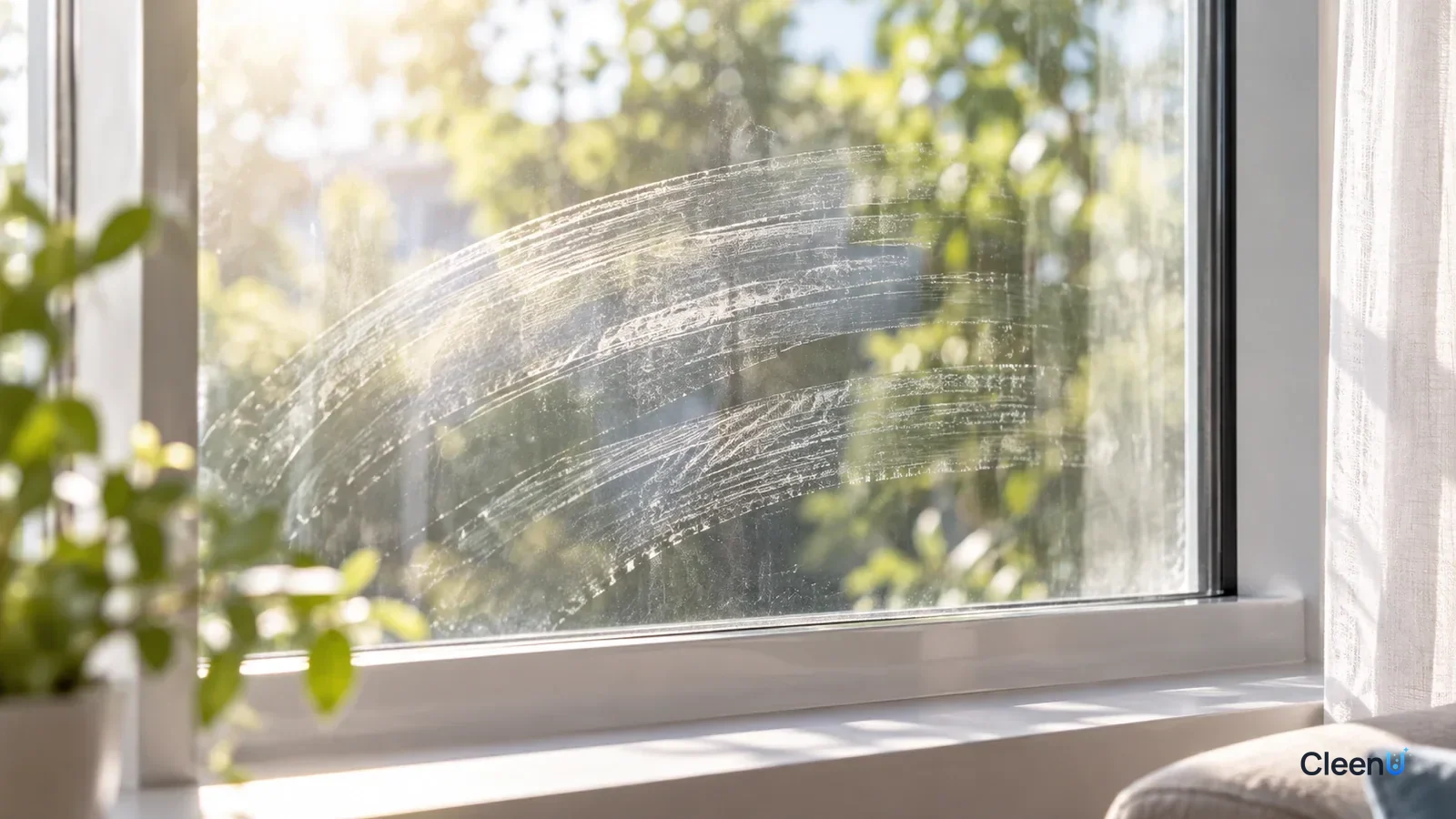
Cleaning glass might be the most discouraging chore in the house. You wipe carefully, and the moment the sun hits the window it is covered in curved streaks, or the whole pane looks foggy, worse than before you started.
Glass is the most honest surface there is. It is smooth, clear, and absorbs nothing, so even a trace of anything left on it shows up in the light. Every streak and every haze comes down to the same thing: something stayed on the glass after you wiped. Work out what it is, and you know what to change.
What leaves streaks, and what leaves haze?
The first culprit is the cleaner itself. The surfactants in glass cleaner wet the surface and loosen oily film and dust. At a normal amount, the cloth carries them away and what is left is too little to see. Spray too much and the cloth cannot absorb it all. The extra surfactant dries on the glass as shiny streaks.
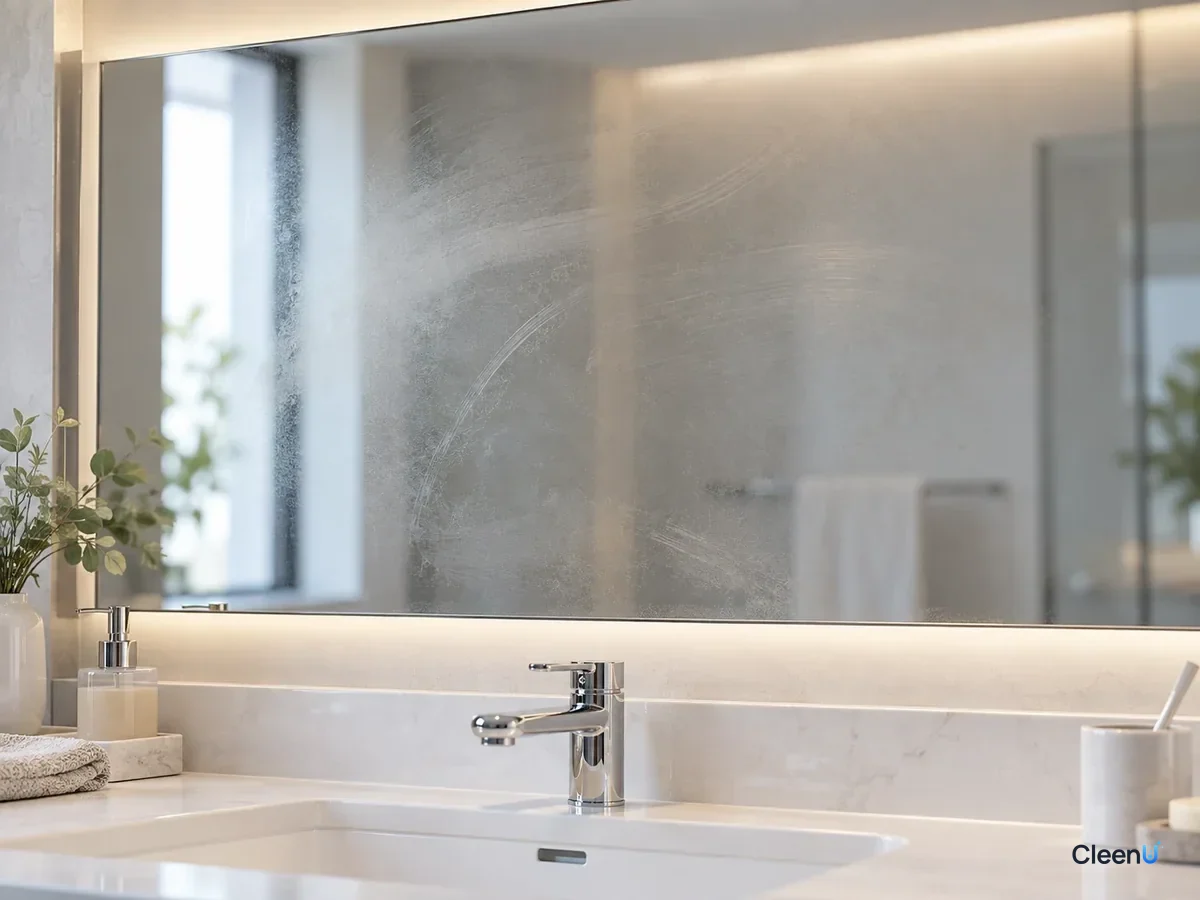
The second is oil that gets spread around instead of removed. Kitchen windows collect cooking grease; bathroom mirrors collect skin care, toothpaste spatter and fingerprints; the inside of a car windshield collects an oily film given off by interior plastics. If that film does not come off first, the cloth just thins it out evenly, and the whole pane goes cloudy.
The third is the cloth. Cotton towels and paper towels shed lint. A cloth washed with fabric softener carries an oily softener coating in its fibers, which moves onto the glass the moment it gets damp. A cloth that already wiped the counter or the stove carries grease of its own; using it on glass means painting grease onto the window.
The fourth is what is in the water. Wipe glass with tap water, or leave cleaner on it without buffing, and as the water evaporates, calcium and magnesium stay behind as white spots and rings. Hard-water areas see it most.
Why does glass streak more in the sun?
Cleaner needs a moment to dissolve grime, and it has to be wiped off while it is still wet. In direct sun, or on warm glass, it dries in seconds, before you can spread and remove it, and what dries in place is a streak.
Light is the other reason. Traces you cannot see with the light behind you jump out when the light comes through the glass or from the side. Clean glass on an overcast day, early or late in the day, or when that side of the house is in shade. Then check it again from an angle with light on it.
Causes and fixes, side by side
The list runs from most to least common. Change one thing, wipe a small area, and compare. It is the fastest way to find the cause.
Common causes of streaky or cloudy glass, and what to do
| Cause | What you see | Fix | Prevention |
|---|---|---|---|
| Too much cleaner | Shiny streaks that stay after wiping | Buff off the excess with a clean, dry cloth | Mist a thin layer, or spray the cloth instead |
| Oil or softener in the cloth | The whole pane goes hazy; more wiping makes it worse | Start over with a clean microfiber cloth | Keep glass cloths for glass only; no fabric softener |
| A cloth that sheds lint | Tiny fibers stuck to the glass | Buff with microfiber | Don't use cotton towels or paper towels on glass |
| Direct sun or warm glass | Spray dries instantly and leaves streaks | Clean again once the glass is shaded or cool | Clean on overcast days, early, late, or in shade |
| Grease and dust not removed first | Foggy film, gray corners | Wipe off heavy grease and dust with a damp cloth, then use cleaner | Pre-clean kitchen windows and bathroom mirrors |
| Minerals in tap water | White spots and rings | Remove the spots with cleaner, then buff dry right away | Always finish with a dry cloth |
| Circular wiping, no dry buff | Arc-shaped streaks | Wipe top to bottom in an S pattern, then buff with a dry cloth | Work with two cloths: one damp, one dry |
How to get glass truly clear in one go
Deal with the visible mess first. If there is heavy grease, dried toothpaste, bird droppings or mud, wipe it off with a well-wrung damp cloth. Spraying cleaner straight onto it only dissolves it and spreads it around.
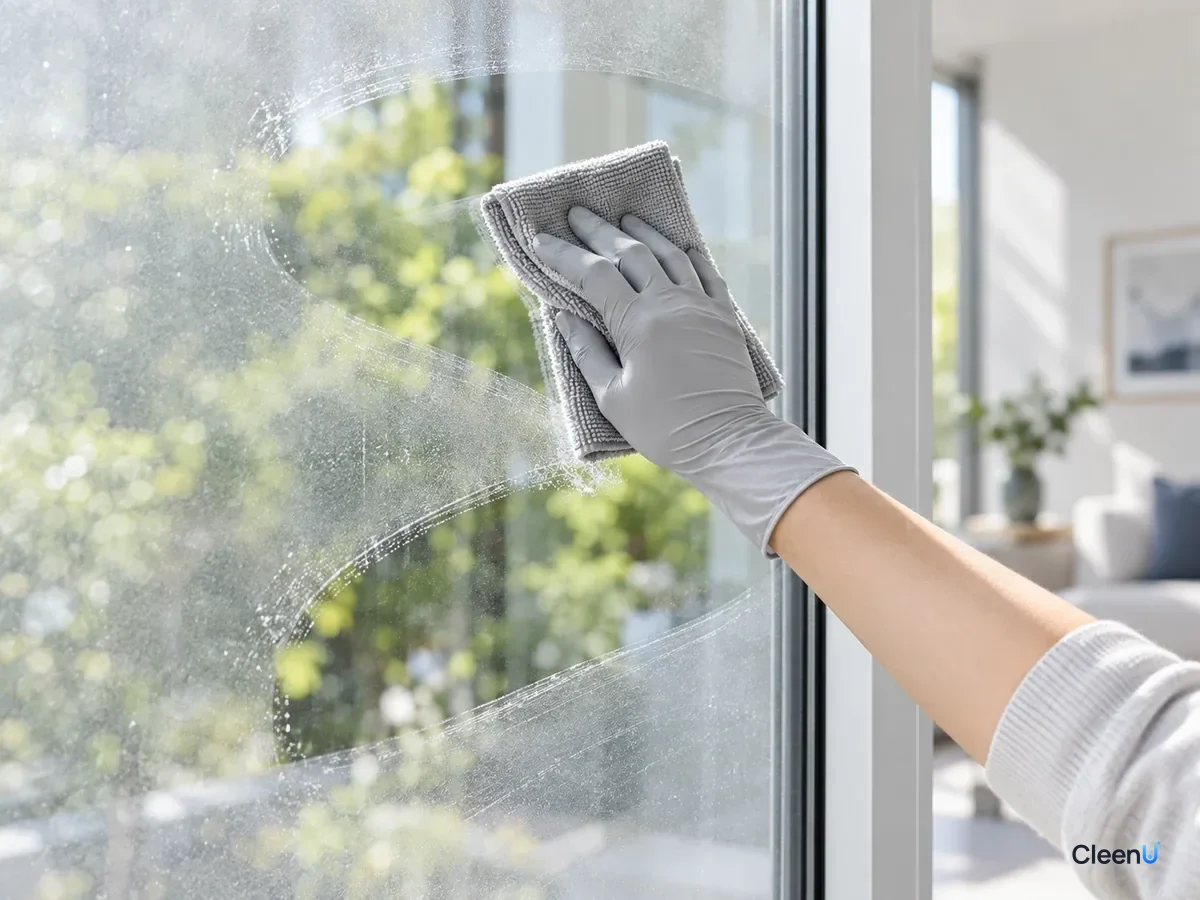
Then mist a thin layer of cleaner on the glass, or spray it straight onto a microfiber cloth. Right away, wipe it out with a clean microfiber cloth from top to bottom in an S pattern, each pass overlapping the last, never in circles. When a section is done, switch to a completely dry cloth and buff the whole pane again, paying extra attention to the four corners and along the frame, where liquid tends to collect.
Finish by looking from a different angle: step to the side, or wait until there is light on the glass. If you find a streak, buff just that spot with the dry cloth instead of re-spraying the whole pane.
CleenU Bathroom Mirror Cleaner is one example of how this is designed to work. It is a fast-drying mirror and glass spray made with isopropyl alcohol and other fast-evaporating alcohols blended with low-residue surfactants, ammonia-free, pH 6.5 to 8.0, ready to use with no dilution and no rinsing. The alcohol helps carry off mixed oily and watery grime and makes the moisture flash off quickly, so a thin mist is all you need. Spray it on, wipe it right away, and it dries in seconds. More spray only makes streaks more likely.
Different glass, different things to watch
Bathroom mirrors: steam, skin care and toothpaste make a classic oily-watery mix. Wipe off toothpaste spots with a damp cloth first, then mist a fast-drying cleaner and wipe. Don't clean right after a shower while the mirror is still steamed up; the cleaner gets diluted and leaves water marks. Wait for the steam to clear.
Windows: outside panes collect dust; inside panes collect fingerprints and cooking film. Knock the loose dust and mud off the outside with a damp cloth first. On large panes, a squeegee is faster and leaves fewer streaks; our glass cleaning guide covers the technique.
Glass shower doors: the white film there is often mineral deposits and soap scum, not just oily film. If regular glass cleaner leaves the door white and cloudy, find out whether soap scum or hard water stains are the cause; it takes a different method.
Car windshields, inside: the oily film from interior plastics fogs the glass. Wipe that film off with a clean cloth first, then clean as usual. For tinted or coated auto glass, follow the car maker's or the tint installer's instructions.
How to keep glass from streaking day to day
The cloth is half the result. Wash microfiber cloths on their own, by hand with plain water or a little detergent, not with towels or clothes that shed lint onto them. Skip the fabric softener, let them air-dry, and keep them out of a hot dryer; high heat stiffens the fine fibers so they stop grabbing grime. When a cloth feels stiff or starts leaving lint, replace it.
For bathroom mirrors and shower glass, the easiest habit is a quick finish after showering. Once the steam clears, pull the water off from top to bottom with a squeegee or a dry microfiber cloth. Water never gets the chance to evaporate slowly on the glass, so minerals don't build up, and a real cleaning is needed far less often.
Windows can run on two schedules. Wipe fingerprints and cooking film on the inside whenever they show; clean the outside every season or so. After wind or rain, wait: let the rain rinse the dust off and the glass dry completely before you clean. It saves a lot of effort.
Make the amount of cleaner a habit too. On mirrors and small panes, mist a thin layer or spray the cloth. If you see cleaner running down the glass, you used too much; use less next time.
Stop if you see any of these
Window film, coatings or anti-fog layers turning white, wrinkling or peeling after cleaning; the backing at a mirror's edge turning dark; stinging on your skin. Stop, wipe the area with plain water, and check the instructions for the film or the product. Keep alcohol-based cleaners away from open flames and heat, and use them with good ventilation.
Glass-streak questions people ask most
Does streaky glass mean my glass cleaner is bad?
Don't blame the cleaner yet. The most common causes are spraying too much and using a dirty cloth. Spray less and switch to a clean microfiber cloth before you judge the product.
What is the best cloth for cleaning glass?
A clean microfiber cloth used only for glass. One slightly damp cloth to wipe and one dry cloth to buff beats doing it all with a single cloth.
Can I clean glass with paper towels?
It is not a good idea. Paper towels shed lint that sticks to the glass, and on large areas they tend to leave it streaky.
Why does glass streak when I clean it in the sun?
The sun and the warm glass dry the cleaner before you can wipe it away, so it dries on the glass. Clean in shade, early or late in the day.
How do I get rid of haze that won't wipe off?
It is almost always oily film that was not removed first. Wipe the oil off with a well-wrung damp cloth, mist cleaner, wipe, then buff dry.
Why is my shower glass still white after cleaning?
That is usually mineral deposits and soap scum, not ordinary dirt. It needs a cleaner made for scale, left on long enough to soften it; regular glass cleaner won't remove it.
For a fast-drying, low-residue glass cleaner with no rinsing, try Bathroom Mirror Cleaner.
Glass streaks because something stays on it: extra cleaner, oil that got spread instead of removed, softener or lint from the cloth, or minerals from the water. Remove heavy grime first, mist cleaner lightly, wipe top to bottom in an S pattern with clean microfiber, buff with a dry cloth, and stay out of direct sun. That is how glass ends up clear.