
Comparison
Soap Scum vs. Hard Water Stains: How to Tell Them Apart
Direct answer
Soap scum is a dull gray-white film of lime soap and body oil that feels slick or tacky, mostly on shower walls and around the tub. Hard water stains are rough white mineral spots where water dries, on faucets, showerheads and drip trails. Use a mildly acidic bathroom cleaner on soap scum and a stronger descaler on heavy scale.
How to choose
-
A dull gray-white haze on shower glass, the lower wall tile or the tub, slick or slightly tacky to the touch
Choose A mildly acidic bathroom cleaner
The mild acid breaks up lime soap and the surfactants lift the body oil in it, so soap scum and light water spots come off together.
-
Hard white crust on faucet bases, showerhead faces or drip trails down the tile, rough and impossible to scratch off
Choose An acidic descaler
Hard water scale is almost entirely calcium carbonate and similar minerals, so it needs a stronger acid and a longer dwell to dissolve.
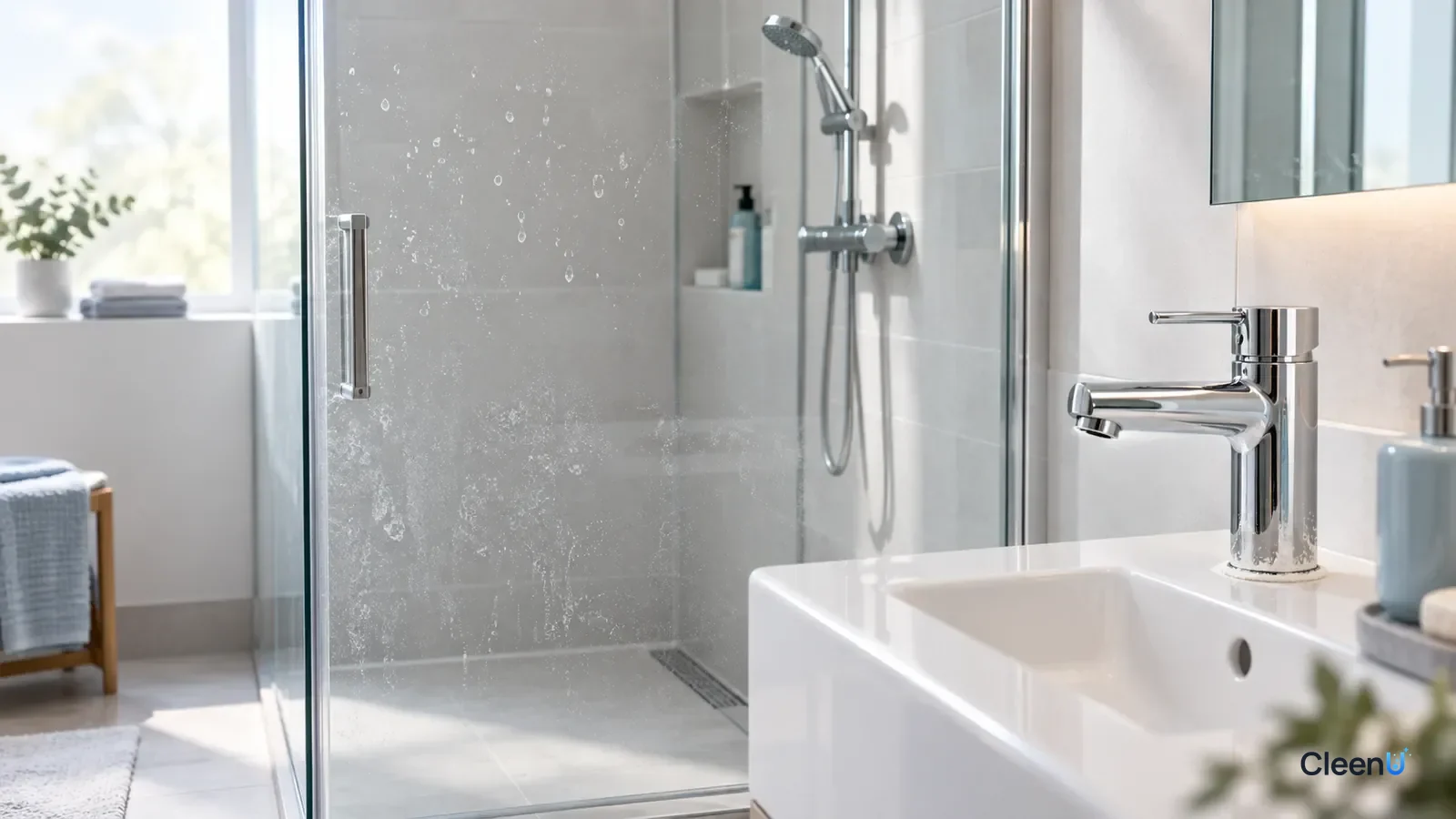
Most people call every white deposit in the bathroom "hard water," but there are really at least two different things there: soap scum and hard water scale. Both look white, but they are made of different stuff, form in different places and respond to different cleaners. Confuse them and you get results like "this spray works great on the glass but does nothing on the faucet," or "the descaler made the faucet shine, but the glass is still cloudy."
What soap scum is
Bar soap, body wash and shampoo contain fatty acid salts (soaps) and other surfactants. As they run down shower glass, tile and the tub, they meet the calcium and magnesium dissolved in tap water and react to form an insoluble compound called lime soap. Lime soap then traps flakes of skin, body oil and oil from hair, and the result is a dull, gray-white, semi-translucent film.
Signs it is soap scum: the color is grayish and hazy. It feels slightly slick and slightly tacky at the same time. It shows up wherever shower water splashes: the lower half of the glass, wall tile within about three feet of the floor, the waterline inside the tub, and under the shelf where the body wash sits. It contains both minerals (calcium and magnesium) and oils (body oil), which makes it a mixed soil.
What hard water scale is
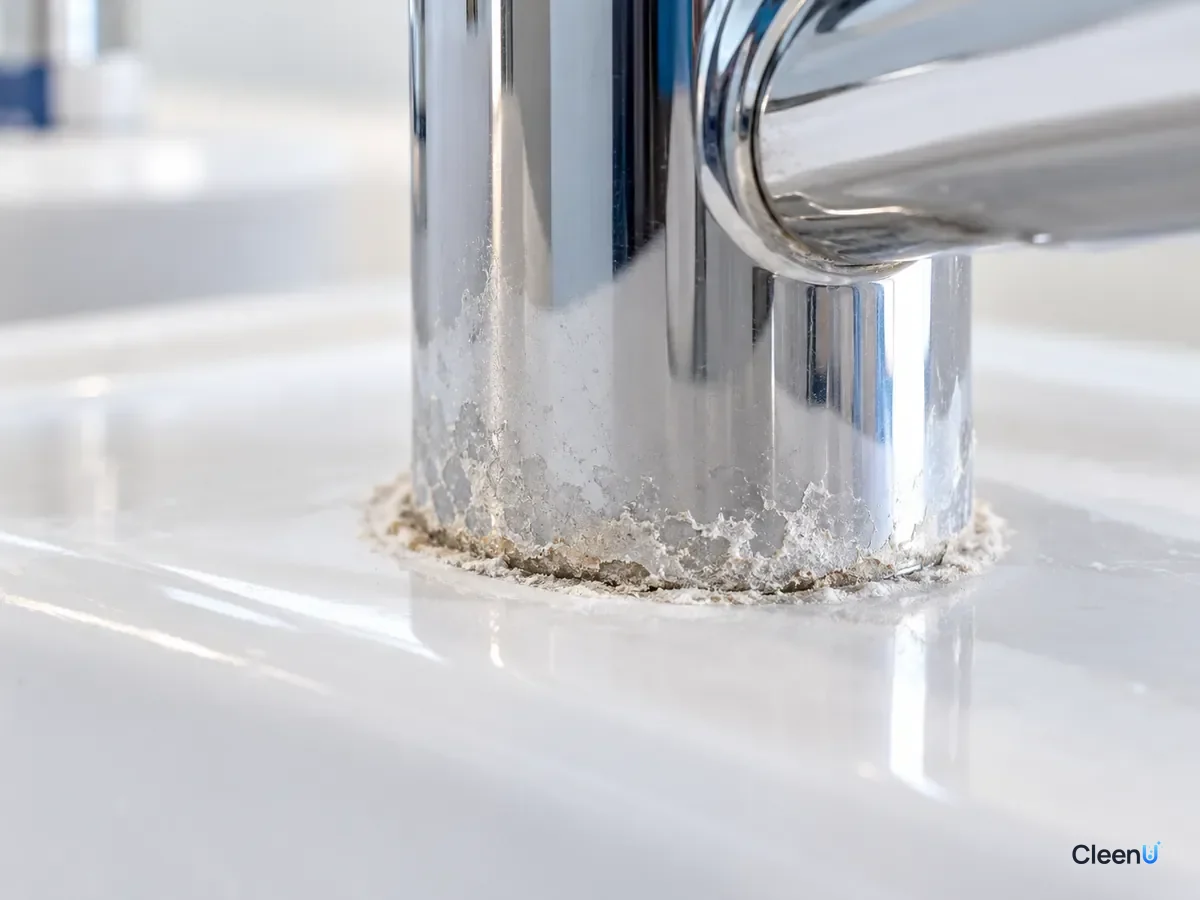
Tap water carries dissolved calcium and magnesium bicarbonates. When a drop sits on a surface and slowly evaporates, those compounds break down and leave white crystals of calcium and magnesium carbonate. The harder the water, the longer drops sit and the more often they dry in the same spot, the thicker and harder the scale becomes.
Signs it is hard water scale: the white is purer and chalkier. It feels rough and hard, and a fingernail will not scrape it. It forms where water flows or drips and dries last, such as faucet bases, spouts, showerhead faces, vertical drip trails on tile and scattered spots on shower glass. It is almost pure mineral, with very little oil.
Soap scum vs hard water scale, side by side
| What to compare | Soap scum | Hard water scale |
|---|---|---|
| What it is | Lime soap (soap + calcium and magnesium) plus body oil and skin flakes | Calcium and magnesium carbonate crystals |
| Color | Gray-white, semi-translucent haze | Bright white spots and streaks |
| Feel | Slick and slightly tacky | Rough and hard |
| Where you find it | Lower shower glass, low wall tile, tub waterline, under shelves | Faucet bases, spouts, showerhead faces, drip trails |
| How it forms | Soap reacts with hard water, then traps body oil | Minerals left behind when water evaporates |
| What removes it | Mildly acidic bathroom cleaner (acid + surfactants) | Acidic descaler; heavy scale needs a longer dwell |
| How to prevent it | Rinse and squeegee after showers; less product residue | Keep surfaces dry; wipe faucets after use |
Why hard-water areas get more of both
Soap scum and scale look like separate problems, but both trace back to the calcium and magnesium in your water. The harder the water, the more of those minerals there are. Soap in body wash and shampoo binds with them more readily, so soap scum builds faster. At the same time, every drop that evaporates leaves more mineral behind, so scale builds thicker. That is why, with the same cleaning schedule, a bathroom in a hard-water area turns white much faster than one with soft water.
It also explains why prevention beats cleaning. You cannot change how hard your tap water is, but you can shorten how long water sits on your surfaces. Squeegeeing glass and tile after every shower and running the exhaust fan cuts off the conditions both deposits need to form. Rinsing a few extra seconds after using soap or body wash also leaves less soap on the walls to react in the first place.
Three quick ways to tell them apart at home
Look at where it is. Broad areas where shower water splashes, low on the walls, are usually soap scum. Faucets, showerheads, drip trails and scattered droplets are usually scale. Many shower doors have both: a soap scum haze on the lower half and scattered scale spots higher up.
Feel it. Run a finger over it. Slick, tacky or slightly oily means soap scum. Rough, sandpapery and too hard to scrape with a fingernail means scale.
Test it. Dab a small amount of a mildly acidic cleaner on the deposit. Soap scum visibly fades within a few minutes and wipes away. Thick scale changes slowly and needs a longer dwell or a stronger descaler.
Why each one needs a different cleaner
Soap scum is a mixed soil. Acid breaks up the lime soap and releases the calcium, but the body oil in it still has to be emulsified by surfactants before it will wipe away. So the ideal soap scum cleaner combines a mild acid with surfactants. CleenU Bathroom Cleaner is built that way: citric and other organic acids with nonionic surfactants, pH 2.5–4.0. Spray it, let it sit 2 to 5 minutes, scrub from top to bottom and rinse, then squeegee the glass and tile. It rinses clean without leaving a haze. It is gentle on glazed tile, glass and chrome and handles everyday soap scum and light water spots on its own.
Hard water scale is almost pure mineral, and once it builds up it is very hard, so a mild acid works slowly. That is the job for a stronger descaler that clings to vertical surfaces for a longer dwell. CleenU Bathroom Wall Tile Scale Remover blends inorganic and organic acids at pH 1.5–3.0, with a wetting agent that helps it cling to walls and a corrosion inhibitor to reduce the effect on chrome fixtures. Wet the wall and grout first, spray the scale and wait 5 minutes (10 for heavy buildup); fine bubbles mean it is working. Then scrub and rinse thoroughly.
Using a descaler on soap scum is not wrong, but with fewer surfactants it can leave the oily part behind as a thin film once dry. Using regular glass cleaner on hard water scale does almost nothing, because it has neither enough acid nor any dwell time.
When you have both, which comes first?
Start with a mildly acidic bathroom cleaner to clear the soap scum and light surface spots. Rinse, then look again. Whatever hard white crust remains is heavy scale, so spot-treat it with a descaler. That keeps the stronger acid to the smallest possible area, which is easier on fixtures and grout.
After either job, the finish matters most. Rinse with plenty of water, squeegee from top to bottom and dry the faucets with a cloth. A dry surface gives soap scum and scale very little chance to come back.
Using acidic cleaners safely
Marble, limestone and other natural stones contain calcium carbonate, which acid etches into dull spots, so neither soap scum cleaners nor descalers belong on those surfaces. Cement-based grout slowly erodes with repeated acid contact, so wet the grout before using a descaler. Never mix acidic products with chlorine-based mold removers or bleach, or use them back to back, because the combination releases harmful chlorine gas. Wear gloves and run the exhaust fan or open a window.
Which one fits your bathroom
-
Routine cleaning, with a gray-white haze on shower glass and tile
Choose A mildly acidic bathroom cleaner
It clears soap scum and light water spots together and is gentle on glass, tile and chrome.
-
Hard-water areas with thick white drip trails on tile and crust on faucet bases
Choose An acidic wall and tile descaler
Stronger acid and a clinging formula made to dissolve heavy scale.
-
Both problems, and you want it all clean in one session
Choose Bathroom cleaner first, then spot-treat with descaler
Clear the soap scum and surface layer first, then focus the stronger acid only on the scale that is left.
Written for: Anyone who is not sure what the white buildup in their bathroom is, or whether to buy a bathroom cleaner or a descalerNot for: Bathrooms with marble, limestone or other natural stone (no acidic products), and shower glass that is already etched (that is damage, not dirt)
To clear soap scum and light water spots in one step, use our mildly acidic Bathroom Cleaner.
For heavy scale on walls and faucets, see Bathroom Wall Tile Scale Remover. For the rest of the room, read how to clean a bathroom, and for shower glass technique, see how to clean glass without streaks.
Still seeing white buildup? More answers
Is the white film on my shower glass soap scum or hard water?
A broad, gray-white haze that feels slick is usually soap scum. Scattered white dots that feel rough are hard water. Most glass has both, so start with a mildly acidic bathroom cleaner and follow with a descaler on any hard spots that remain.
Does vinegar remove soap scum and hard water?
Vinegar is a mild acid and helps a little with light scale, but it does little for the oily part of soap scum, runs off vertical surfaces and smells strong. Products with surfactants and wetting agents work more reliably.
Why does the white buildup come back so quickly?
Because the surfaces were rinsed but not dried. Water left behind evaporates and leaves fresh scale. A squeegee after every shower and a running exhaust fan are the best prevention.
Will a descaler damage my faucets?
Used for the label time, then rinsed and dried, it is generally fine. Do not let acidic products sit on chrome for long, and never soak fixtures overnight.
How do I reduce scale in a hard-water area?
Squeegee glass and tile after showers, wipe faucets dry, maintain surfaces weekly with a bathroom cleaner, and deal with buildup before it gets thick.
What's the difference between water spots and hard water scale?
Water spots are thin marks left as water dries, and they usually wipe off with a damp cloth followed by a dry one. Hard water scale is layered calcium and magnesium that feels gritty and won't wipe away; it needs a mildly acidic cleaner to soften it. If a drop of acidic cleaner fizzes or softens the film, it's scale.
Soap scum and hard water scale both look white, but soap scum is a gray-white film of lime soap and body oil, while hard water scale is a hard white mineral crust. Location and feel usually tell you which is which. Use a mildly acidic bathroom cleaner with surfactants on soap scum, a clinging acidic descaler on heavy scale, and handle both in that order when you have both. Rinse, squeegee and dry, and they will have a much harder time coming back.