
How-to
A 30-Second Daily Shower Routine to Prevent Soap Scum
Direct answer
While the glass and walls are still wet after a shower, squeegee them top to bottom, mist on a daily shower spray, and run the fan or open a window for 20 to 30 minutes. Those three steps take 30 seconds to a minute and dramatically cut down soap scum and hard-water buildup.
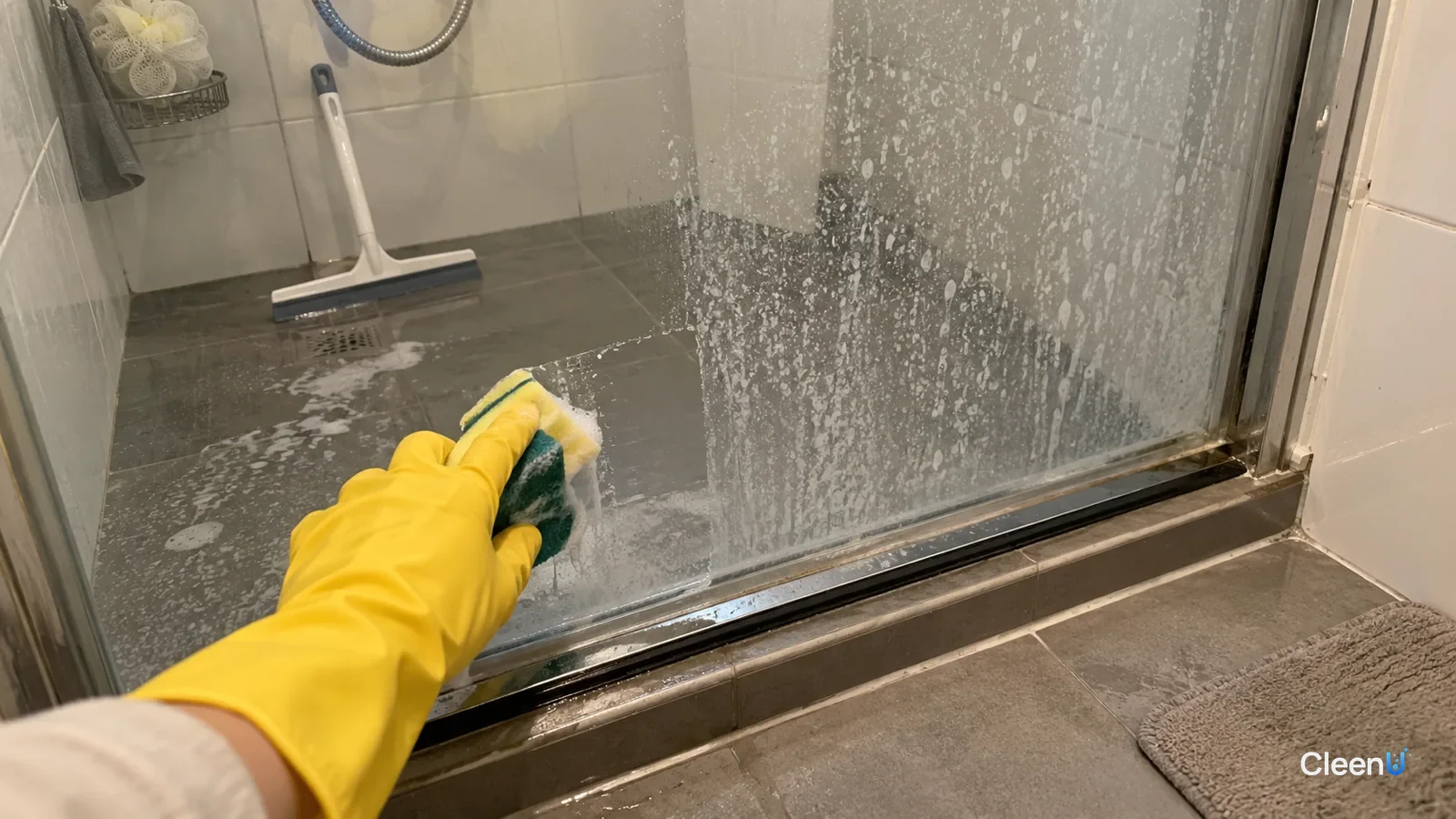
New shower glass is crystal clear. A few months later it's hazy, there's a white line along the bottom, and the tile has a gritty gray film. By the time you get around to it, it's a half-hour job with descaler and a scrub brush.
Soap scum and scale don't appear overnight. They're the tiny bit left behind by every shower, stacked up day after day. Catch them while they're still a thin film and they never build into a hard crust. The 30 seconds to a minute right after you shower is the easiest time to do that.
How soap scum and scale build up, layer by layer
Every shower leaves two kinds of residue on glass, tile, and the shower pan.
One comes from your products. Fatty-acid salts in body wash, bar soap, and shampoo react with calcium and magnesium in tap water and form insoluble calcium and magnesium soaps, the main ingredient in soap scum. Skin oil, conditioner, and styling products mix in and make it stickier and more likely to cling to glass.
The other comes from the water itself. Dissolved calcium bicarbonate breaks down into calcium carbonate as droplets evaporate and stays on glass and tile as white scale. The harder your water, the more you get.
Right after a shower, all of that is still dissolved in a thin film of water, soft and easy to remove. Let the drops evaporate on their own and the minerals and scum stay put, and the next shower adds another layer. The oily part of soap scum glues minerals together, and the minerals make the scum harder. A few weeks later, you've got a gray-white film no brush wants to touch.
So prevention isn't about scrubbing harder. It's about not letting water evaporate on the glass.
Why the squeegee does the most work
A squeegee pulls the whole film of water, with its dissolved scum and minerals, off the glass before it can evaporate. No water, nothing left behind.
That's why so many hotels hang a squeegee in the shower. A towel helps too, but it gets soaked quickly and ends up spreading the water around. A squeegee pulls the glass nearly dry in one pass.
Timing matters. Squeegee right after you turn off the water, while the glass is still wet and the film is continuous. Once it breaks into beads or starts drying, it works much less well.
What a daily shower spray adds
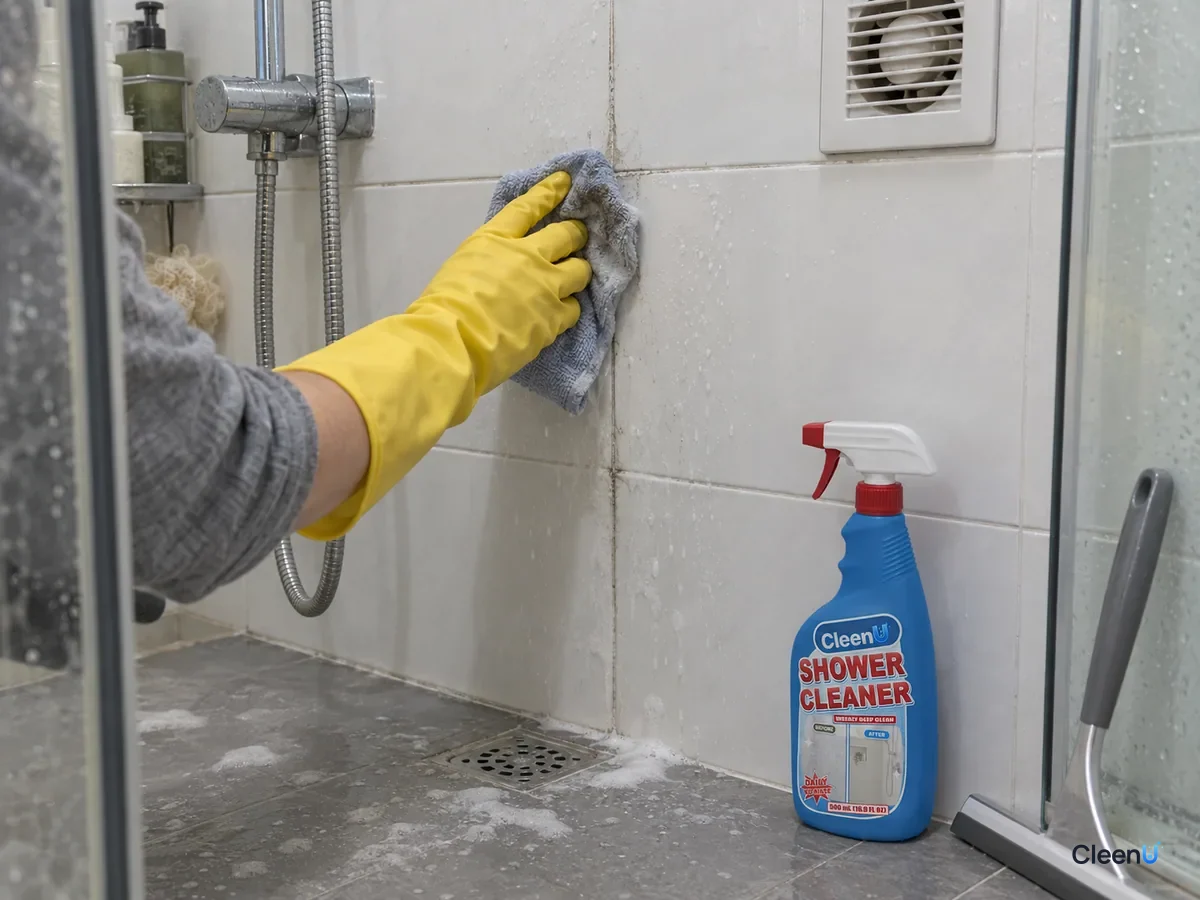
A squeegee gets most of the water, but corners, grout lines, and the area around fixtures always hold some. A daily shower spray handles that.
Take CleenU Shower Cleaner as an example. It's a mildly acidic daily shower spray, pH 3.0 to 4.5 as supplied, made with organic acids, nonionic surfactants, and a wetting agent, with no chlorine and no abrasives. The organic acids react with the calcium and magnesium in fresh, thin scale and scum and dissolve them again. The surfactants emulsify skin oil and the oily part of soap scum. The wetting agent helps the liquid spread evenly on glass so it dries without leaving droplet marks.
For daily use, spray after you squeegee and leave it; no rinse needed. For a weekly deep clean, let it sit 3 to 5 minutes and rinse. It's made for glass doors, shower wall tile, shower pans, and fixtures. It isn't for natural stone shower walls or pans, shouldn't sit on coated fixtures for long, and must never be mixed with chlorine bleach. If the glass already has heavy scale, descale it first; the daily spray is for maintenance after that.
Five steps for the 30-second habit
Every time you shower
Turn off the water and don't walk out yet
When the water stops, there's still a continuous film on the glass and walls, and that's the best time to squeegee. Hang the squeegee inside the shower within arm's reach and put it back after each use.
Squeegee the glass top to bottom
Hold the blade against the glass, start at the top, and pull down, overlapping each stroke slightly, all the way to the bottom. Do both sides of the door if water splashed out, and push water toward the drain.
Caution:Keep the rubber blade clean and free of nicks, or it leaves water lines on the glass.
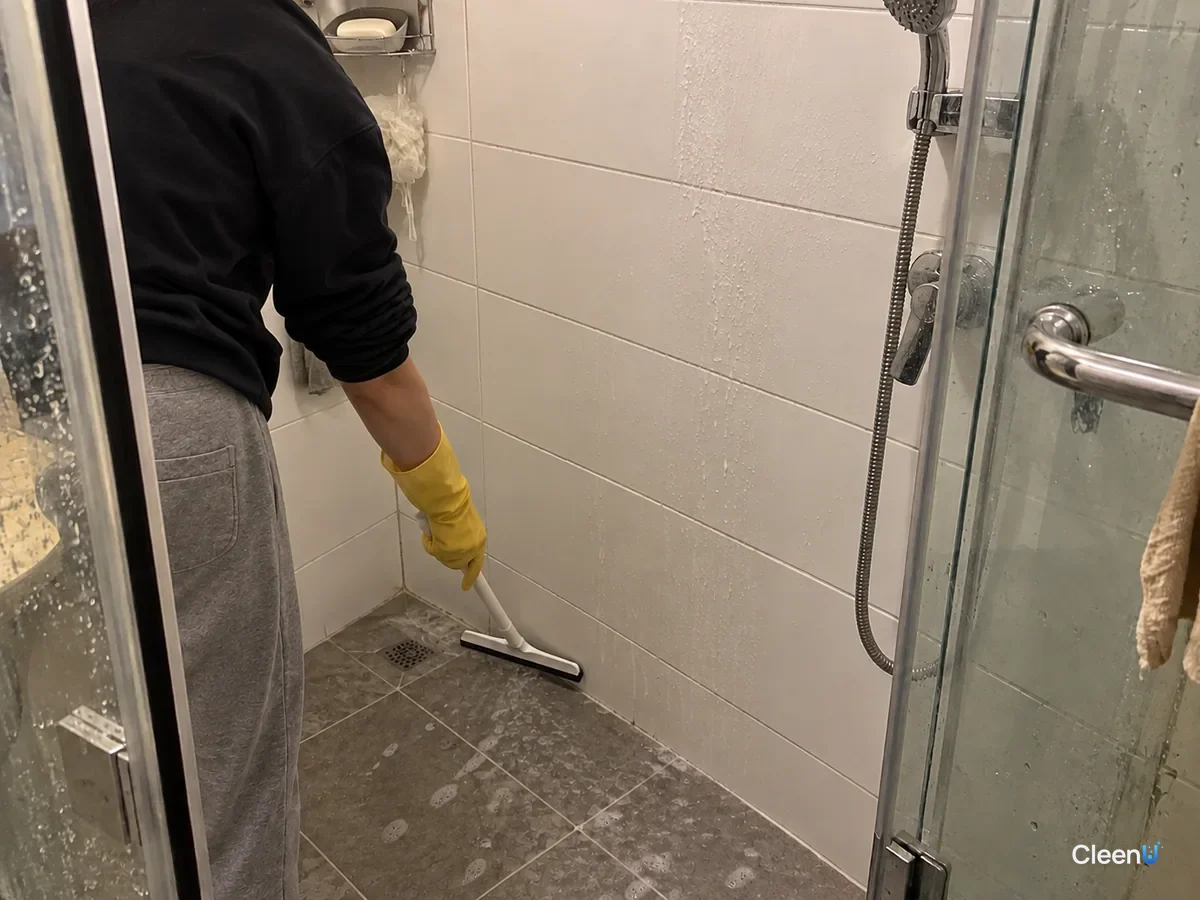
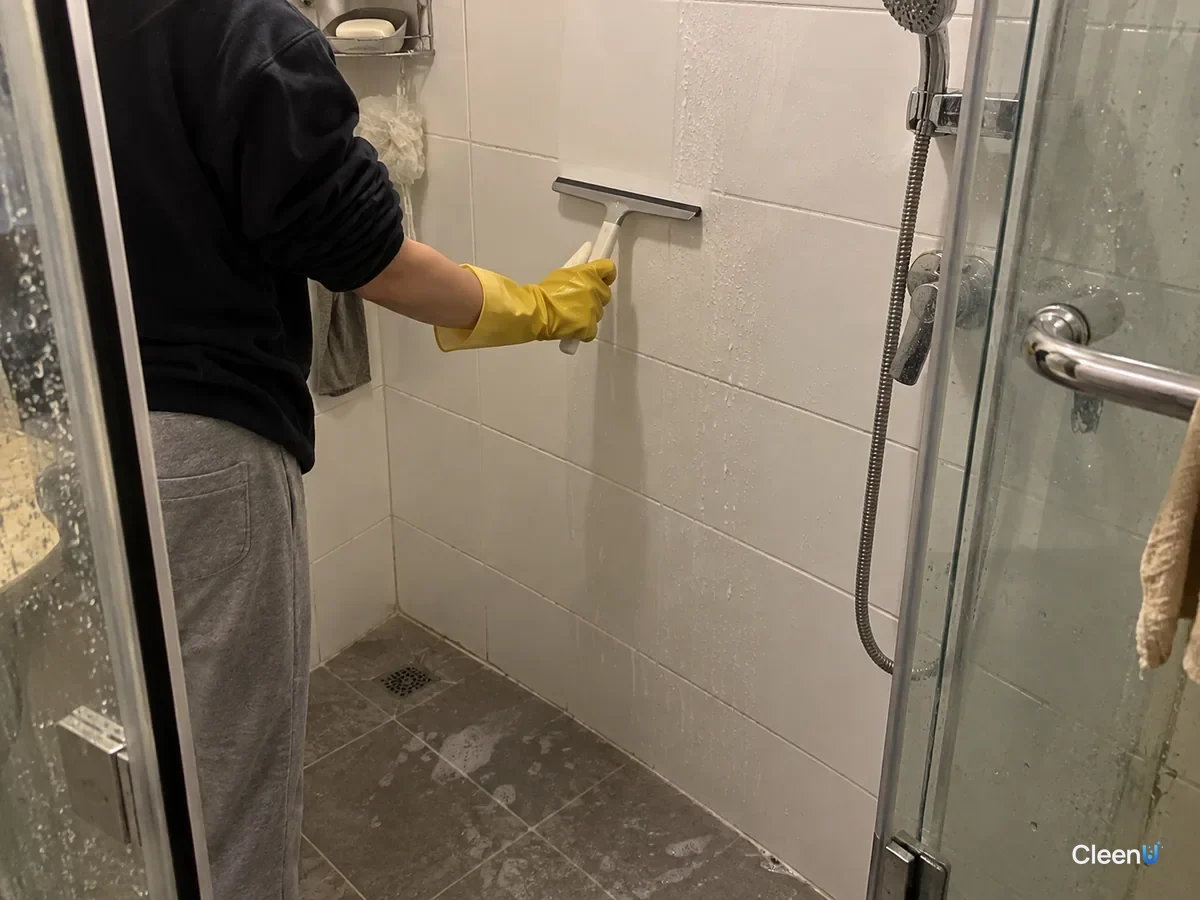
Do the tile and pan too
Squeegee the tile top to bottom, especially the wall the showerhead faces, and push water in the pan toward the drain. Grout lines the blade can't reach get covered in the next step.
Mist on a daily shower spray
Spray evenly over glass, tile, and fixtures and let it air-dry; no rinse needed. Hit the door frame and tracks the squeegee can't reach.
Caution:Don't use a mildly acidic spray on natural stone walls or pans.
Open a window or run the fan
Humidity is high after a shower. Run the fan or open a window for 20 to 30 minutes so moisture clears fast, and leave the shower door cracked for airflow.
What to do once a week
With the after-shower habit in place, the weekly clean gets much easier, but it's still worth a quick deep clean.
Spray shower cleaner on glass, tile, the pan, and fixtures, wait 3 to 5 minutes, wipe with a sponge or soft cloth, rinse, and squeegee.
Clear hair from the drain cover and check the door track and bottom seal for standing water or black spots.
If the showerhead nozzles have white crust or the bottom of the glass has a hard white edge, scale has gone beyond what daily maintenance can handle. Descale that area separately. For removing existing water spots on glass doors, see How to remove water spots from glass shower doors, and for the whole room see How to clean a bathroom.
Extra steps for hard water
Hard water has more calcium and magnesium, so scale forms faster and soap scum forms more easily. If your kettle grows a white crust in a few weeks, step up your shower routine.
Never skip the squeegee. In hard-water areas it matters most.
Use the daily spray every time, with extra attention to the bottom of the glass and the door track.
After the weekly clean, dry the glass with a cloth instead of just squeegeeing.
Consider a whole-house or water-heater softener to cut minerals at the source.
Habits that don't help, or make it worse
Drying glass with a bath towel: towels hold limited water, smear it around, and leave lint behind.
Closing the door after a shower: trapped humidity keeps glass wet longer and helps mold grow.
Scraping scale with steel wool or a rough scrub pad: it leaves fine scratches where scale builds up faster.
Mixing acidic cleaners with chlorine products: it releases harmful chlorine gas.
Using acidic sprays on natural stone shower walls: it etches dull spots that can't be repaired.
Keep the squeegee and spray in shape
A squeegee blade gets stiff and nicked over time. Once it leaves streaks of water behind, those lines are exactly where new scale shows up first, so replace the blade when it feels hard or has chips. The spray nozzle can also clog with dried residue; running warm water through it usually clears it.
What changes in a hard-water home
The harder your water, the faster minerals build up between weekly cleanings. If glass turns cloudy within a few days, squeegee after every shower rather than most of them, and add a quick wipe of the bottom track and the faucet base, where water pools. A weekly pass with an acidic scale remover on chrome and glass can handle what the daily routine misses; keep it off natural stone, and rinse well afterward.
Signs the routine is working
After two or three weeks of the 30-second habit, the glass should stay clear from one weekly clean to the next, water should run off rather than dry in spots, and grout lines shouldn't feel slick. If cloudiness returns within a day or two, the most likely gaps are skipped squeegeeing, poor ventilation or a worn blade. Run the exhaust fan for 15 to 20 minutes after each shower so surfaces dry faster. If the glass still clouds up even with a steady routine, test a corner with a scale remover: haze that wipes away is fresh mineral film, while haze that stays may be etching in the glass itself, which cleaning cannot reverse.
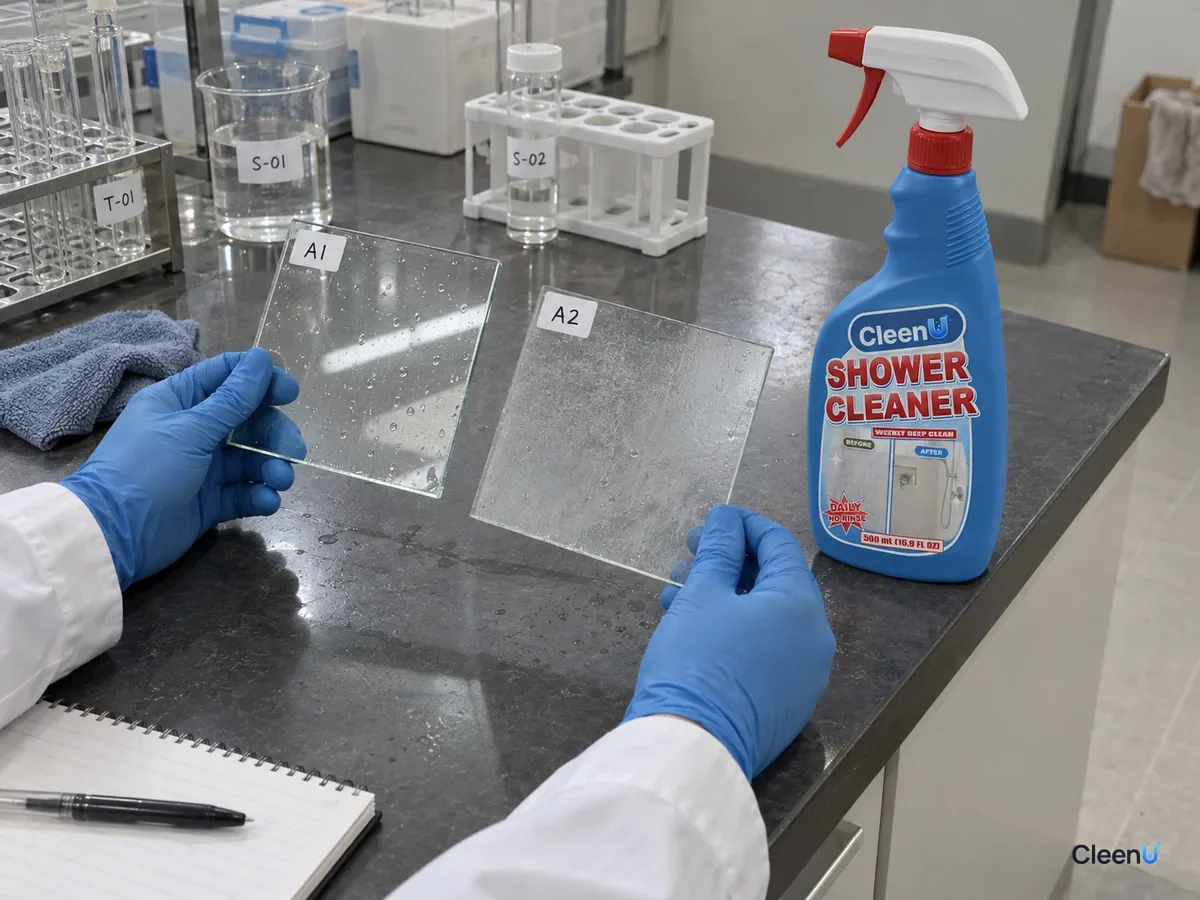
Stop if you see this
If the glass gets scratched, darkens, or a coating starts peeling, stop using your current product. If cleaner gets in your eyes, rinse with plenty of water. Never mix with chlorine bleach, keep acidic products off natural stone, and don't let them sit on coated fixtures. In a poorly ventilated bathroom, turn on the fan before spraying.
Preventing soap scum and scale: common questions
Does squeegeeing after a shower really help?
Yes, it's the single most effective step. Soap scum and scale form when water evaporates on the glass; remove the water and nothing gets left behind.
Do I need to rinse after a daily shower spray?
Not for daily use. Spray and let it air-dry. For the weekly deep clean, let it sit 3 to 5 minutes, then rinse.
My glass is already cloudy. Will a daily spray clean it?
No. Existing heavy scale needs a descaler first; the daily spray keeps it from coming back.
What kind of squeegee should I buy?
One with a soft, nick-free rubber blade of a comfortable width, hung where you can reach it inside the shower. Replace the blade when it stiffens.
Will spraying every day damage the glass?
Using a mildly acidic daily shower spray on glass and tile per the label is normal use. Natural stone and coated fixtures are the exceptions.
My bathroom has no window. What should I do?
Run the exhaust fan for at least 20 to 30 minutes after each shower, leave the shower door cracked, and never skip the squeegee.
For a daily shower spray you mist on after you squeegee, no rinse needed, to lift fresh soap scum and water spots, take a look at our Shower Cleaner.
Soap scum and scale build up as water evaporates on glass and walls after every shower. The key to prevention is not leaving water behind: squeegee the glass and tile top to bottom right after you shower, mist on a daily shower spray, and run the fan or open a window for 20 to 30 minutes. Once a week, spray, wait, wipe, and rinse. In hard-water areas, never skip the squeegee. Make those 30 seconds a habit and your shower never builds up the crust that takes half an hour to scrub off.