
How-to
How to Remove Water Spots from Glass Shower Doors
Direct answer
To remove water spots from a glass shower door, spray a mildly acidic cleaner made for mineral scale, let it sit a few minutes to soften the deposits, wipe with a soft sponge, rinse, and squeegee dry. Fresh spots come off far more easily than old ones, and a quick squeegee after every shower keeps the haze from coming back.
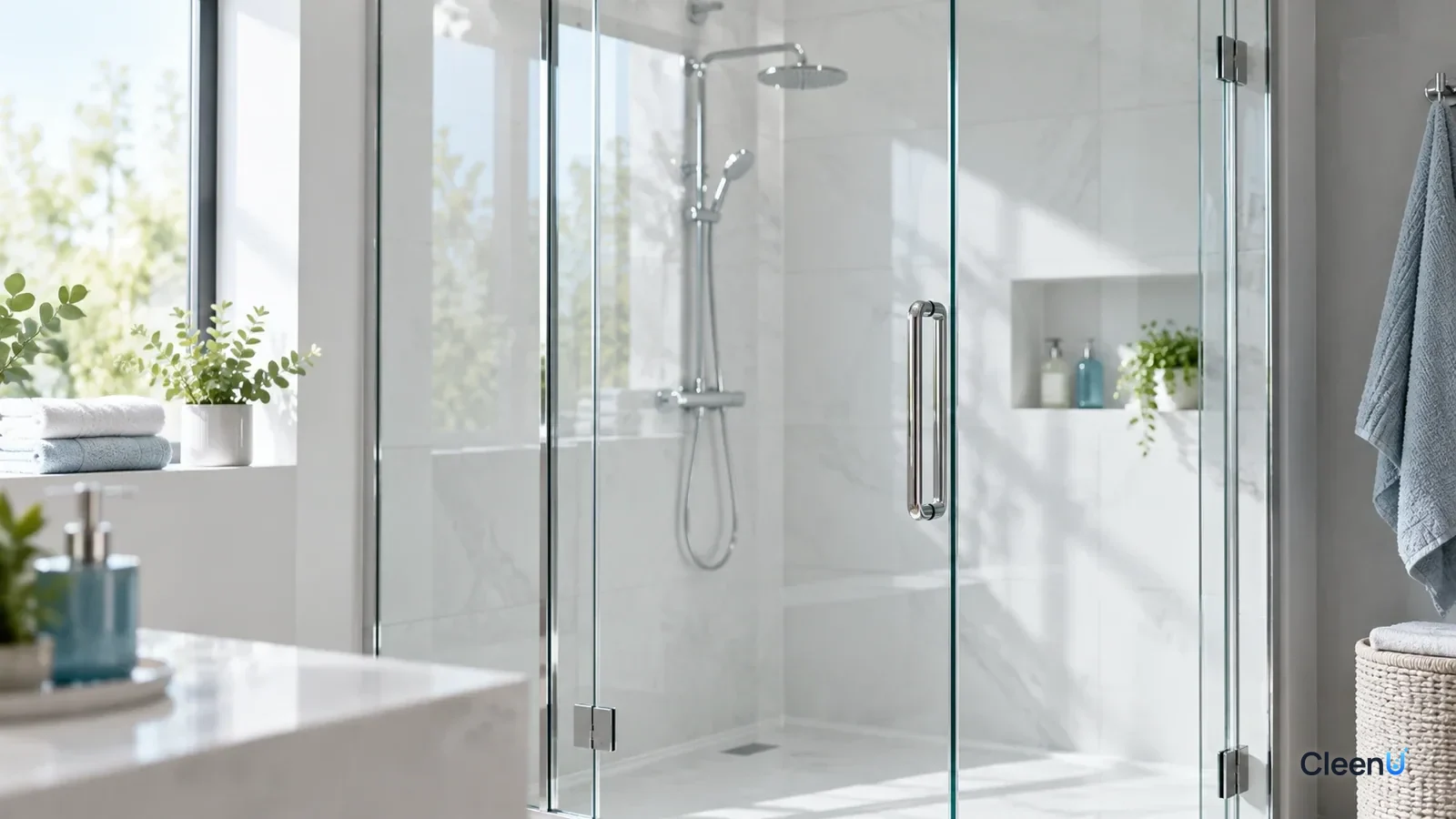
A glass shower door is crystal clear the day it goes in. A few months later it has a white haze, and the lower half is covered in rings of white spots. Regular glass cleaner seems to help for a moment, and then the spots are back as soon as the glass dries.
That is because the "water spots" on shower glass are not ordinary dust and oily film. They are mostly mineral scale and soap scum, and scrubbing harder with the wrong product just scuffs the surface.
What is the white haze on shower glass?
The first layer is mineral scale. Tap water carries dissolved calcium and magnesium. Every time water splashes the glass and dries, those minerals stay behind as white spots and rings. Each shower adds another layer, and it builds faster in hard-water areas.
The second is soap scum. Ingredients in bar soap and body wash combine with the calcium and magnesium in the water to form an insoluble "lime soap," which mixes with skin oils and body-care products into a grayish, slightly tacky film. It usually sits on top of the mineral spots and gives the whole door a foggy look.
The third is different: etched glass. When scale sits on glass for a long time, it slowly attacks the glass itself and leaves tiny pits. That haze is no longer something stuck on the surface, and no cleaner will remove it. If the glass still feels rough after cleaning and some areas stay white no matter what, that is likely what you are seeing. Regular upkeep keeps it from getting worse.
Why won't regular glass cleaner remove it?
Regular glass cleaner is good at oily film and dust; its surfactants and solvents dissolve and lift them. Mineral scale is calcium and magnesium carbonate, essentially stone, and surfactants can't do much with it. The lime soap in soap scum doesn't dissolve in water either, so ordinary cleaner struggles to loosen it from the glass.
What dissolves scale is acid. Acid reacts with calcium carbonate and turns hard deposits into salts that dissolve and rinse away, and it also weakens the grip soap scum has on the glass. That is why shower glass needs a mildly acidic cleaner made for scale, and why it needs a few minutes of contact time to react.
CleenU Shower Cleaner is one example: a mildly acidic daily shower spray made with organic acids, nonionic surfactants and wetting agents, pH 3.0 to 4.5, with no chlorine and no abrasives, ready to use. For daily use, spray it after you shower and there is no need to rinse. For a weekly deep clean, spray the glass door, walls, shower pan and fixtures, let it sit 3 to 5 minutes, then scrub and rinse.
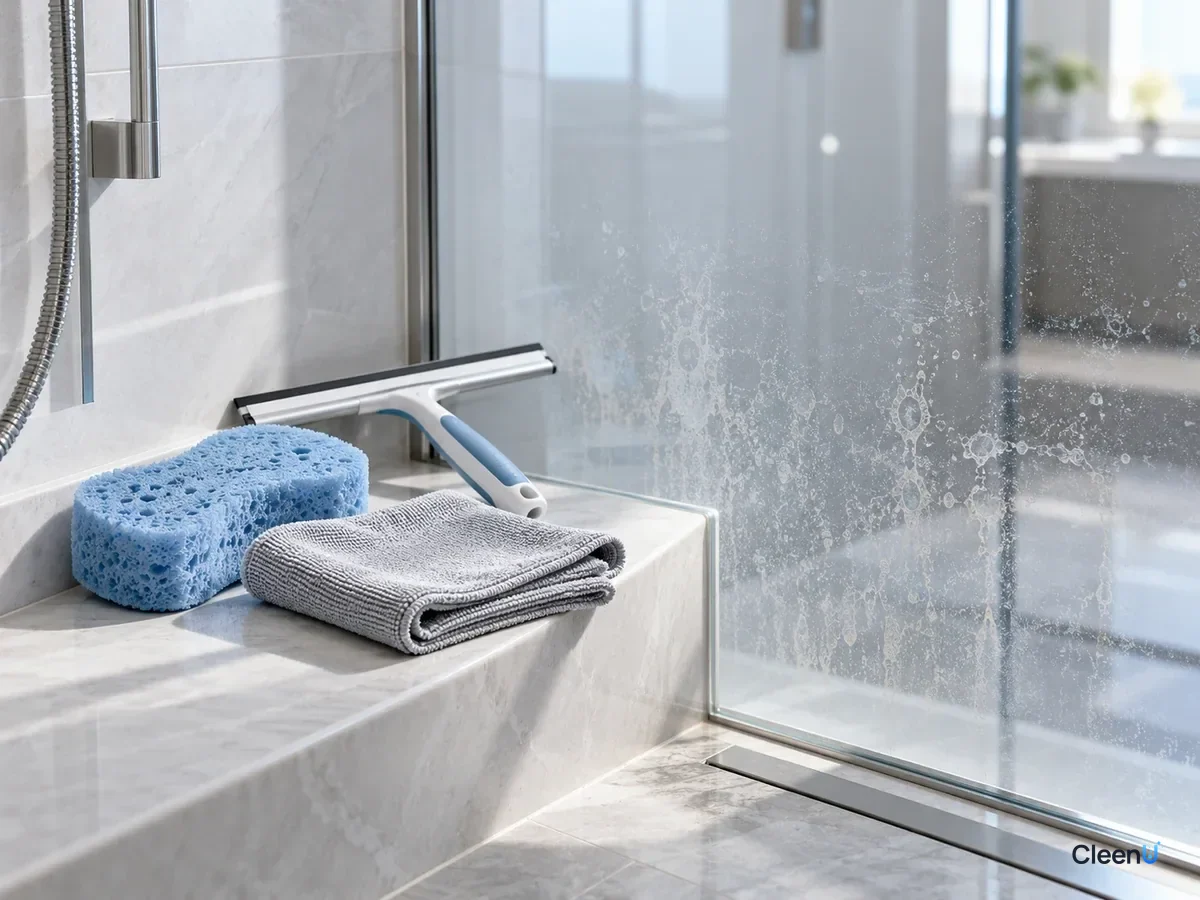
Deep clean: removing water spots step by step
The first time you tackle spots that have built up for a while, do one full deep clean.
From pre-wetting to squeegeeing, clean the shower door this way
Ventilate and protect yourself
Turn on the exhaust fan or open a window, and put on gloves. Check for natural stone around the shower, such as marble or travertine, and keep the acidic cleaner off it.
Caution:Natural stone etches and dulls when it meets acid. Cover it with a towel or work around it.
Wet the glass with warm water
Rinse the whole door with warm water from the shower head. That knocks off loose dust and some soap residue and keeps the glass wet so the cleaner doesn't dry on contact.
Spray the cleaner and let it sit 3 to 5 minutes
Spray from top to bottom, with extra on the lower half and along the frame where spots collect. Let it sit 3 to 5 minutes so the acid has time to react with the scale; don't wipe right away.
Caution:Don't let the cleaner dry on the glass. If it starts to dry, mist a little more to keep it wet.
Wipe gently in small circles with a soft sponge
Work over the spotted areas with a soft sponge or microfiber cloth in small circles, and run a soft brush along the frame and seals. Skip steel wool and hard scrub pads; they scratch glass.
Rinse clean
Rinse the glass from top to bottom with warm water until all the cleaner and dissolved grime are gone.
Squeegee dry and finish the edges
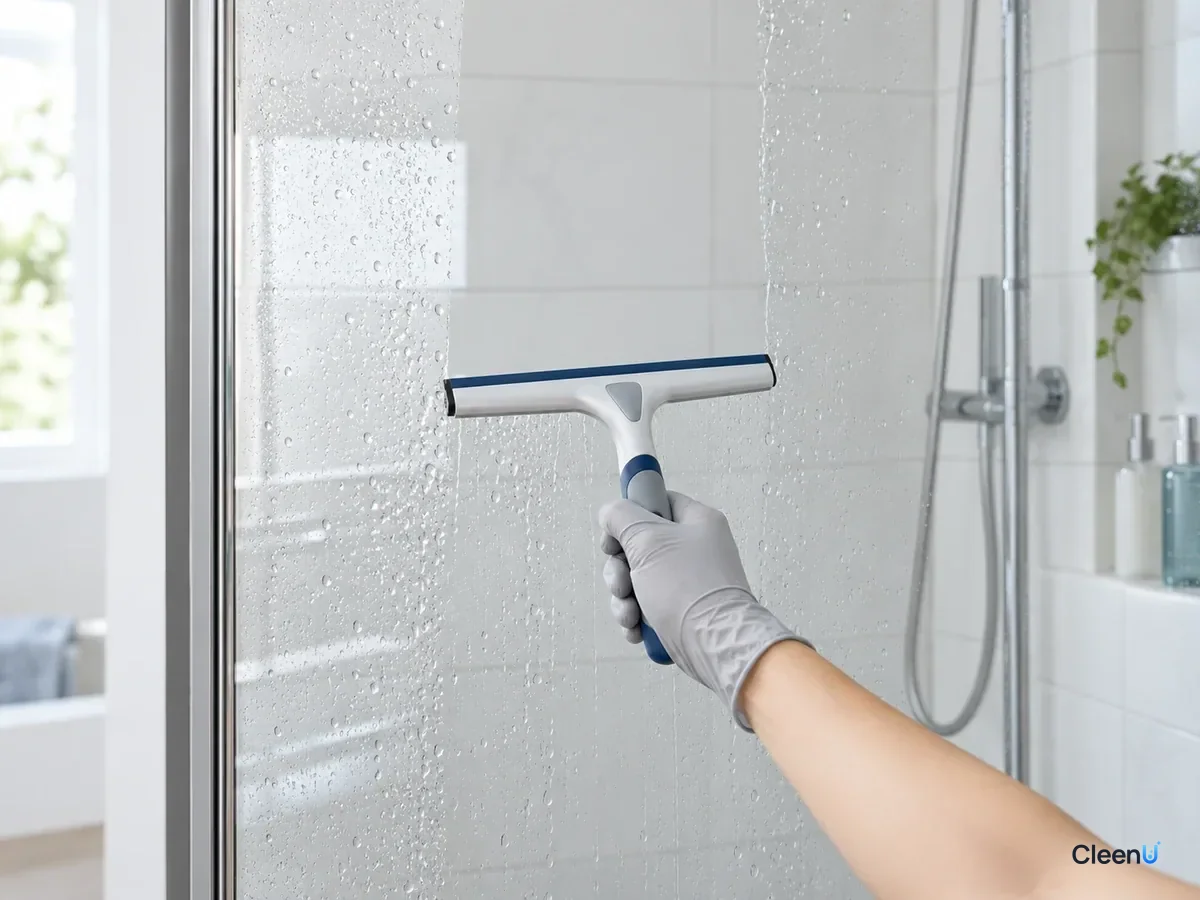
Squeegee from top to bottom in overlapping strokes, wiping the blade after each one. Finish the frame and corners with a dry microfiber cloth. Only glass that is dried off stays free of new water marks.
Where water spots build up most, and how to handle each spot
The lower half of the glass: it takes the most splash, water running down from above collects there, and it dries last, so it usually has several times the spots of the upper half. Spray it more heavily and give it a little more dwell time during a deep clean, and squeegee it thoroughly every day.
The frame and seals: water runs down the frame and sits in the gaps along the rubber seals, where soap scum and scale get thickest. Work a soft brush dipped in cleaner along those gaps, rinse, and blot the water out of the seals with a dry cloth. If a seal has already turned black, that is usually mold, which needs its own treatment.
Handles, hinges and other fixtures: scale makes chrome look cloudy and lose its shine. Wrap the fixture in a cloth sprayed with cleaner, let it sit briefly, then wipe; it keeps overspray off the surrounding surfaces. Finishes vary in how much they tolerate, so try an inconspicuous spot first.
Glass with an easy-clean coating: some shower doors ship with a water-repellent, easy-clean coating that makes droplets roll off faster. Be especially careful with these: no steel wool, no abrasive pastes, no hard scrubbing. Clean gently and follow the shower maker's care instructions.
Hard-water areas: with more minerals in the water, scale builds up fast. Besides squeegeeing after every shower, you can shorten the deep-clean cycle to once or twice a week. If your home has a water softener or a filtered shower head, you will see noticeably fewer spots.
Daily upkeep: one minute after every shower
After one deep clean, keeping the glass clear has less to do with how strong your cleaner is and more to do with not letting water dry on the glass.
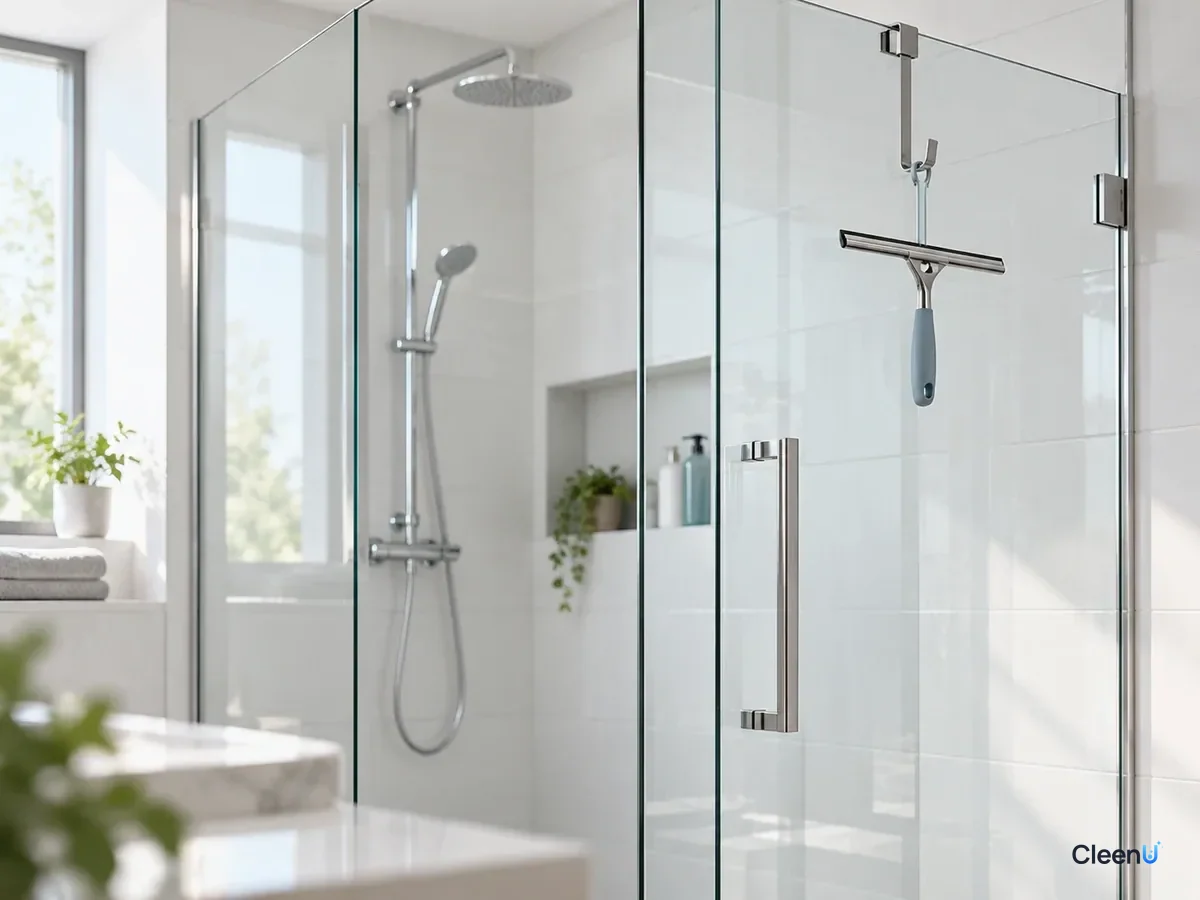
Right after you shower, while the glass is still wet, squeegee the water off from top to bottom. It takes about a minute and removes most of the droplets that would otherwise turn into scale. For even less work, mist a daily shower cleaner on first; it carries off freshly deposited minerals and soap before they harden into scale, and it doesn't need rinsing.
Then keep the bathroom ventilated so the remaining moisture clears quickly. Add a weekly deep clean using the steps above, and the door stays clear.
For other bathroom surfaces, see our complete bathroom cleaning guide. If you are not sure whether you are looking at soap scum or mineral scale, see soap scum vs. hard water stains.
Stop if you see any of these
Cleaner landing on marble, travertine or other natural stone and leaving it white or dull; fixtures showing discoloration or spots; stinging or redness on your skin. Rinse the affected area with plenty of water, stop using the product, and check the label. Never mix an acidic cleaner with chlorine bleach; the combination releases toxic gas.
Written for: Households with water spots, white dots or haze on glass shower doors or panels who want to clean them and keep them clearNot for: Natural stone walls and counters (no acidic cleaners); glass that is already etched and feels rough (cleaners can't restore it)
Shower-glass questions people ask first
Can I use white vinegar on shower door water spots?
It can remove some fresh scale, but it smells strong, works inconsistently, and must never touch natural stone. A scale-targeting shower cleaner with a short dwell time takes less effort.
How long should shower cleaner sit on the glass?
For a deep clean, 3 to 5 minutes so the acid can react with the scale. For daily after-shower use, no dwell time and no rinse are needed.
Why is my shower glass still white after cleaning?
Heavy scale may need a second application and dwell. If the glass still feels rough after cleaning, it may be etched, and no cleaner can restore that.
Does a squeegee really make a difference?
Yes. Pulling the water off while the glass is wet means the droplets never evaporate and leave minerals behind. It is the single most effective daily habit.
Can I clean the shower fixtures at the same time?
Yes, after a spot test. Finishes differ in how much they tolerate, so test an inconspicuous spot first and follow the cleaner's label and the fixture maker's guidance.
Can I scrub scale off shower glass with steel wool?
It is not a good idea. Steel wool and hard scrub pads scratch glass, and scratches hold scale, making the door harder to clean over time.
What do professionals use to clean glass shower doors?
Pros typically use a mildly acidic shower cleaner, a non-scratch pad and a squeegee. The acid softens soap scum and mineral spots, the pad lifts them without scratching, and squeegeeing after the rinse keeps new spots from forming. Skip steel wool and powdered abrasives on glass.
Can hard water stains on shower glass become permanent?
Yes. Left for a long time, mineral deposits can etch the glass, and etching can't be cleaned away. Remove buildup while it's still a film: a mildly acidic cleaner, a few minutes of dwell time, a soft pad, then rinse and squeegee. Regular wipe-downs keep it from reaching that stage.
For a daily after-shower spray that prevents buildup and a weekly deep clean for water spots, try Shower Cleaner.
Water spots on a glass shower door are mostly mineral scale and soap scum. Let a mildly acidic shower cleaner sit 3 to 5 minutes, wipe with a soft sponge, rinse, and squeegee dry. Squeegee for a minute after each shower, keep the room ventilated and deep clean weekly, and the door stays clear. Natural stone and etched glass need to be handled differently.