
How-to
How to Clean a Bathroom: Soap Scum, Hard Water, Mold, Grout, and the Toilet
Direct answer
Identify the soil first. Soap scum and hard water need a mildly acidic bathroom cleaner or descaler. Mold needs a dedicated mold remover, grimy grout an alkaline grout cleaner, and toilet rings an acidic clinging gel. Work top to bottom and dry to wet, and never mix acidic cleaners with bleach.

The bathroom holds more kinds of grime than any other room in the house. A cloudy film on the shower glass, white streaks down the tile, dark lines in the grout and a yellow ring in the toilet all look like "dirty," but each has a different cause. Scrub the whole room with one bottle and some surfaces stay dirty while others get damaged.
The five kinds of bathroom soil
Soap scum. Fatty acid salts from bar soap and body wash react with calcium and magnesium in tap water to form an insoluble "lime soap." Mixed with skin oil and dead skin, it coats shower glass, wall tile and the tub edge in a dull gray-white film that feels slightly slick or chalky. Because soap scum contains both minerals and oils, you need a mild acid to break up the lime soap and surfactants to lift the oily part.
Hard water deposits. As water evaporates, dissolved calcium bicarbonate turns into calcium carbonate and leaves hard white spots and drip trails on showerheads, faucets and tile. These deposits are almost pure mineral, so scrubbing alone will not remove them; an acid has to dissolve the calcium carbonate. Thicker, older buildup needs more dwell time.
Mold and mildew. In a room that stays damp, mold grows on caulk, grout and window seals and leaves black spots. The color comes from pigments that have soaked into porous caulk and grout, so scrubbing will not lift it. You need a product that breaks down the pigment through oxidation.
Grimy grout. Grout is porous cement, much rougher than the tile around it. Soap scum, skin oil, dust and a little grease work their way in and slowly turn the lines gray or black. This grime is mostly organic, so an alkaline grout cleaner and a narrow brush work best. Dark grout is not always mold, though; how to tell the difference comes later.
Toilet rings. Calcium salts and other components in urine build up at the waterline and under the rim as yellow-brown scale, often mixed with hard water deposits. This is mostly mineral too, so it needs an acidic cleaner, and because it sits on a vertical surface, a gel that clings is the better choice.
Soap scum, hard water and toilet rings are mineral-heavy and respond to acids. Organic grout grime responds to alkaline cleaners. Mold calls for a chlorine-based oxidizer. That is why most bathrooms need two or three different cleaners rather than one all-purpose spray.
Cleaning order: top to bottom, dry to wet
When you clean the whole room at once, the order you work in matters. Top to bottom, because dirty water runs down, so cleaning the floor first means doing it twice. Dry to wet, because picking up hair and dust before you wet anything keeps you from making mud.
A practical sequence looks like this. Open a window or switch on the exhaust fan and pick up hair and clutter. Start the long-soak jobs first (mold, the toilet and heavy hard water) so they can work while you do the rest. Then clean the shower glass and tile and the vanity. Finish by scrubbing the toilet and washing the floor, then rinse everything and squeegee off the water.
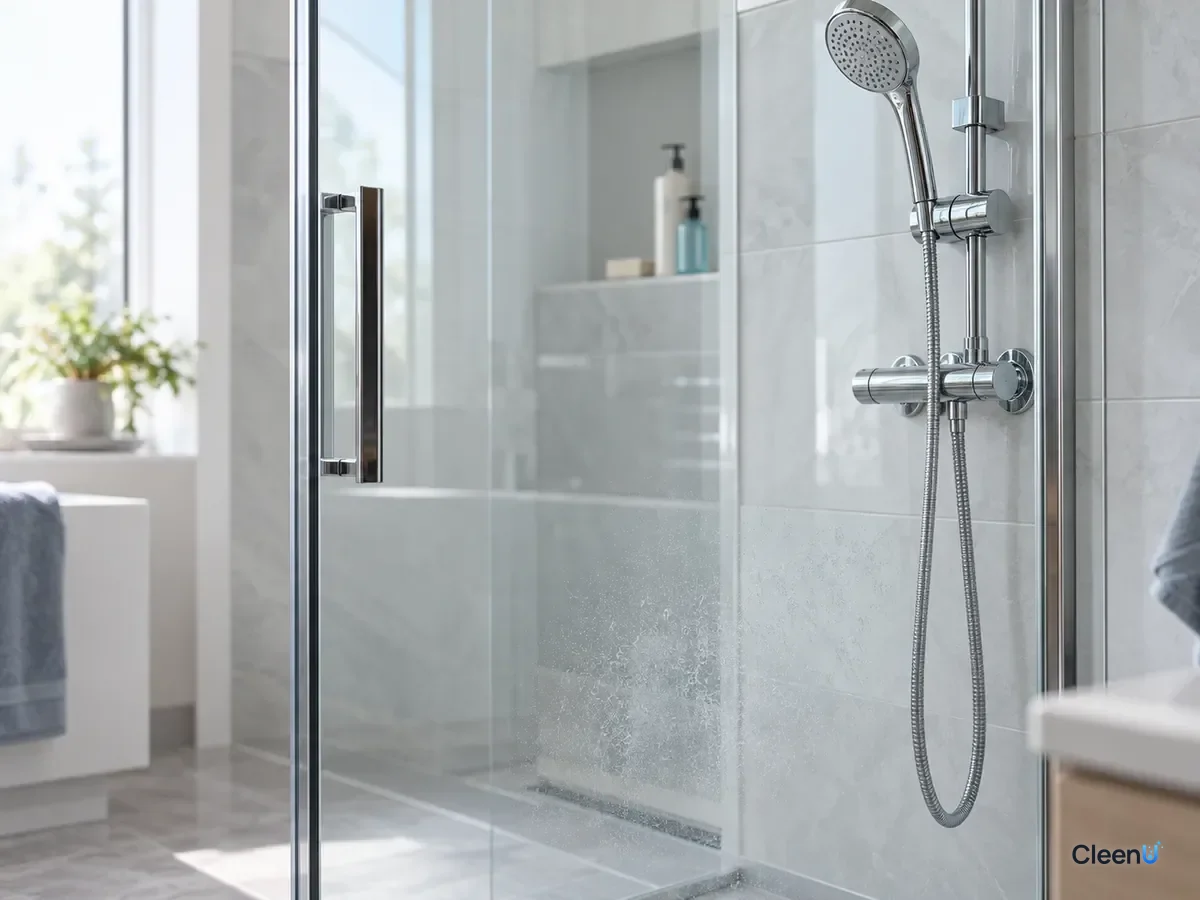
Zone by zone: shower, walls and grout, toilet, vanity
Four zones, in this order
Shower glass and tile
Wet the surfaces, then spray a mildly acidic bathroom cleaner
Rinse the glass and tile with the showerhead to wash away hair and suds. Spray a mildly acidic bathroom cleaner on the soap scum and water spots and let it sit 2 to 5 minutes without drying.
Scrub top to bottom, rinse and squeegee
Wipe from the top down with a sponge, rinse with clean water, and squeegee the glass and tile. That last step decides whether new water spots form as it dries.
Caution:Never use acidic cleaners on natural stone such as marble walls or vanity tops; acid etches and dulls them.
Hard water on walls and grout
Wet the wall first, then apply descaler to heavy buildup
For white drip trails and thick scale, soak the wall and grout with water first so the grout absorbs water instead of acid. Spray the descaler, leave it 5 minutes (10 for heavy buildup), scrub and rinse thoroughly.
Treat grout with an alkaline cleaner and mold separately
Apply an alkaline grout cleaner along gray or dark grout lines, wait 5 to 10 minutes, then scrub with a grout brush and rinse. Dotted black spots that will not brush away are usually mold, so switch to a mold remover.
Caution:Mold removers contain chlorine. Use them apart from acidic descalers and toilet cleaners, rinse thoroughly between products and keep the room ventilated.
Toilet
Run clinging gel under the rim, wait, then brush
Squeeze an acidic toilet gel around the underside of the rim with the angled nozzle so it runs down the bowl. Leave it 10 minutes (30 for a heavy ring), then brush the waterline and under the rim and flush.
Vanity and fixtures
Spray, wipe, rinse and dry the chrome
Treat soap scum and water marks on the sink and counter edge with the mildly acidic cleaner, then rinse. Wipe chrome faucets dry with a cloth to slow new scale.
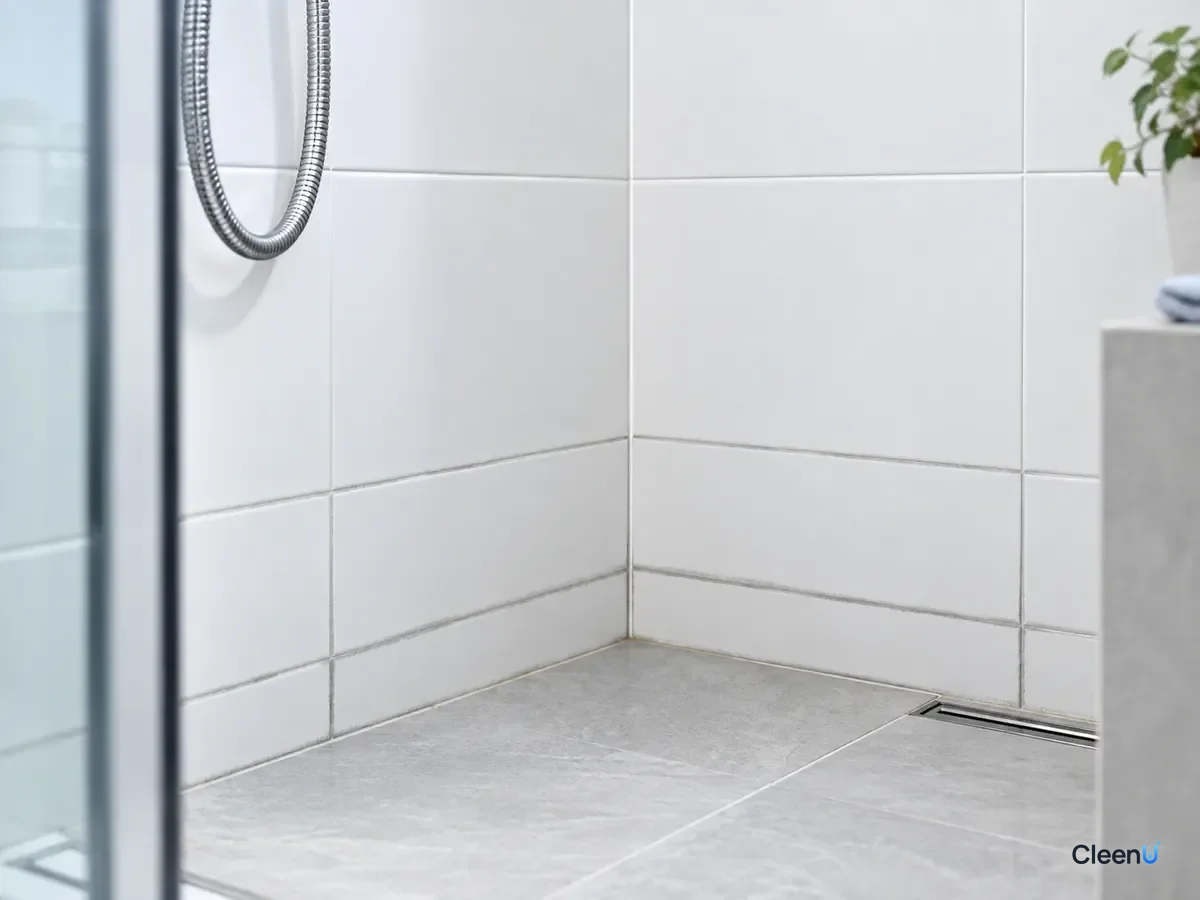
Dark grout: mold or just dirt?
The answer decides which product you reach for. Surface grime usually shows up as an even gray-black line that lightens noticeably after one scrub with an alkaline grout cleaner. Mold tends to appear as dots and patches concentrated in the dampest corners, near the floor or in the lower half of the shower, and it comes back soon after you clean it.
If it is mold, use a dedicated mold remover. Spray it on and let it sit so it can oxidize the pigment; do not scrub hard. CleenU Mold Mildew Stain Remover is a chlorine-based spray: leave it 10 to 15 minutes, or up to 30 for stubborn spots, and rinse once the color fades. Open a window, run the fan, wear gloves and eye protection, and wear old clothes, since it will bleach fabric.
If mold has grown deep into the caulk and returns quickly after cleaning, the caulk itself is colonized. Cleaning will not fix that. Cut out the old caulk and re-caulk.
Bathroom surfaces that need extra care
The same cleaner can behave very differently depending on the surface. Here is how the common bathroom materials hold up.
Glazed tile and glass. These are the most forgiving surfaces, and mildly acidic bathroom cleaners and descalers work well on both. CleenU Bathroom Cleaner, for example, combines citric and other organic acids with nonionic surfactants at a pH of 2.5–4.0. It is gentle on glazed tile, glass and chrome: spray, wait 2 to 5 minutes, scrub and rinse.
Chrome and stainless fixtures. Acids remove scale from faucets, but too much time or too strong a product can dull the plating. Stick to the label time, never leave cleaner on fixtures overnight, and dry them right after rinsing. Stronger wall descalers usually include a corrosion inhibitor to protect chrome, but long soaks are still a bad idea.
Grout. Cement-based grout is slowly eaten away by acid, which leaves it rough and quicker to trap dirt. That is why you wet the wall and grout before using a descaler: grout that is already saturated with water absorbs less acid. For cleaning the grout itself, an alkaline grout cleaner is the better choice.
Acrylic tubs and cultured marble. These surfaces are relatively soft. Steel wool and abrasive powders leave fine scratches that hold even more grime. Use a sponge and a non-abrasive cleaner, and let it sit before you wipe.
Natural stone. Marble, limestone and other stones that contain calcium carbonate etch and lose their shine on contact with acid, and the damage is permanent. If your bathroom has a marble vanity or walls, use only a neutral cleaner made for natural stone, and keep descalers and toilet cleaners well away from it.
Silicone and caulk. These are porous and stay damp, which makes them mold's favorite spot. A mold remover can bleach the pigment on the surface, but it cannot repair caulk that mold has penetrated. When caulk turns black, cracks or pulls away, replace it.
When you are not sure a product suits a surface, test it on a small, hidden spot at the label strength and time. Wipe it off, let it dry and check in good light for dullness, discoloration or roughness before you treat the whole area.
White spots after cleaning: what went wrong
It is frustrating to clean the shower and then find the glass covered in white spots once it dries. The cleaner usually did its job. The finish did not.
After a bathroom cleaner dissolves scale and soap scum, the loosened minerals and leftover cleaner need to be rinsed away with plenty of water. If the rinse is incomplete, they redeposit as the surface dries. More often, the rinse is fine but nobody removes the water afterward. Tap water left on glass and tile evaporates and leaves a fresh layer of calcium and magnesium. So after rinsing, always squeegee from top to bottom and dry the corners with a cloth.
If the glass still has a white haze after rinsing and drying, and it feels rough and will not wipe off, it may no longer be scale at all. It could be etching, where years of mineral deposits have damaged the glass surface, and cleaning cannot reverse that.
How often: daily, weekly, monthly
The easiest way to keep a bathroom clean is to never let grime build up to deep-clean levels.
Daily. After showering, while surfaces are still wet, squeegee the glass and tile or mist them with a daily shower spray (no rinse needed). Run the exhaust fan for at least 15 minutes to pull out humidity.
Weekly. Spray, wipe and rinse the shower and vanity with a mildly acidic cleaner. Treat the toilet with clinging gel once. Clear hair from the drain.
Monthly. Tackle wall scale, grout and mold spots on caulk. Descale the showerhead face and check the base of the faucets for mineral buildup.
Before you leave the bathroom
- Glass and tile rinsed and squeegeed, with no cleaner left behind
- Surfaces rinsed thoroughly between acidic and chlorine products
- Exhaust fan or window left open until the room is dry
- Toilet flushed and brush rinsed and left to dry
- Cleaners capped and stored out of children's reach
Stop immediately if this happens
Mixing acidic cleaners (descalers, toilet bowl cleaners) with chlorine products (mold removers, bleach), or using them back to back, releases harmful chlorine gas. If you notice a sharp smell or your eyes or throat sting, stop, leave the bathroom and ventilate it. If cleaner gets in your eyes or on your skin, flush with plenty of water as the label directs.
Written for: Anyone who wants a system for cleaning the whole bathroom, cannot tell soap scum from hard water or mold, or is not sure which cleaners to buyNot for: Bathrooms with marble or other natural stone surfaces (no acidic products; use a neutral stone cleaner), and bathrooms with active leaks or loose tile that need repair rather than cleaning
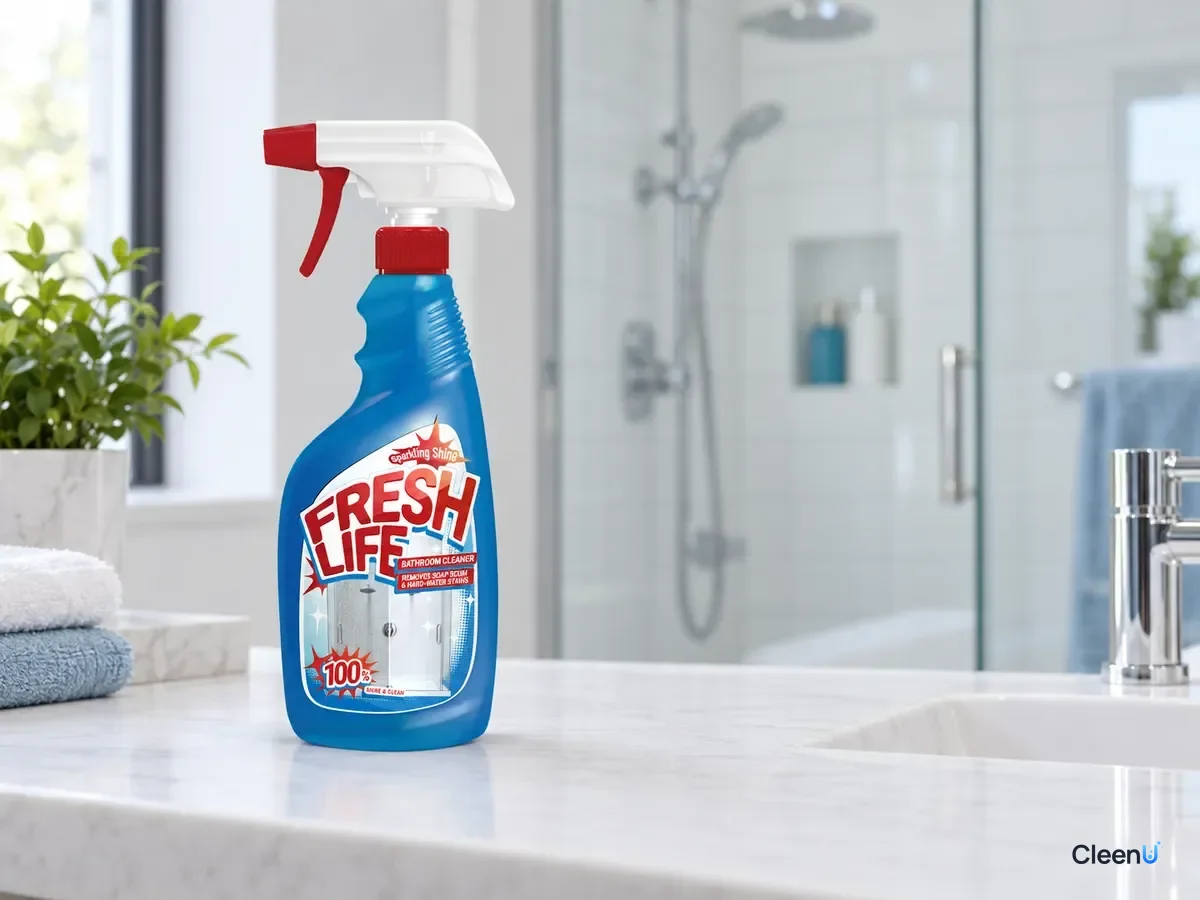
Let a mildly acidic cleaner handle soap scum and water spots in the shower and on the vanity. Try our Bathroom Cleaner.
Match the product to the soil: for daily shower upkeep, Shower Cleaner; for heavy wall scale, Bathroom Wall Tile Scale Remover; for grout, Grout Cleaner; for mold, Mold Mildew Stain Remover; and for the toilet, Toilet Bowl Cleaner. If you are not sure whether you are looking at soap scum or hard water, start with how to tell soap scum from hard water stains.
Bathroom cleaning questions, answered
Can one bathroom cleaner handle the whole room?
For routine upkeep, a mildly acidic bathroom cleaner handles soap scum and water spots. Mold, heavy scale, grout and toilet rings have different causes, and dedicated products do a better job on each.
Why let bathroom cleaner sit for a few minutes?
The acid needs time to dissolve scale and break up lime soap. Wipe too soon and it has not worked yet, but do not let it dry on the surface or it becomes harder to rinse.
Can I use toilet bowl cleaner and a mold remover together?
Never. Acidic cleaners combined with chlorine products release chlorine gas. Use them separately, rinse thoroughly in between and keep the room ventilated.
Can I use a bathroom descaler on a marble vanity top?
No. Marble is mostly calcium carbonate, and acid etches dull spots into it. Use a neutral cleaner made for natural stone.
How do I cut down on hard water buildup?
Squeegee the glass and tile after showers, run the exhaust fan and wipe faucets dry. Scale forms when water evaporates, so a dry surface stays cleaner.
The grout turns black again soon after cleaning. Why?
Recurring dark spots are usually mold. Improve ventilation, treat it with a mold remover, and if it has grown deep into the caulk, re-caulk.
What removes hard water stains from shower tile and fixtures?
Use a mildly acidic bathroom cleaner: spray, let it sit a few minutes so the mineral film softens, scrub with a non-scratch pad, and rinse. Acid dissolves calcium scale that soap alone won't touch. Keep it off marble, limestone and other natural stone, and never mix it with bleach.
How do I get yellow stains out of a toilet bowl?
Apply an acidic toilet bowl cleaner under the rim, let it sit several minutes, brush, and flush. Yellow rings are usually urine scale mixed with hard-water minerals, so acid works better than scrubbing alone. Repeat once or twice for old buildup instead of using steel wool, and never combine it with bleach.
The key to cleaning a bathroom is knowing what you are cleaning. Acids handle soap scum, hard water and toilet rings; alkaline cleaners handle organic grout grime; mold needs a dedicated remover. Work top to bottom and dry to wet, start the long-soak jobs first, and never mix acidic products with bleach. Squeegee and ventilate daily, spray and wipe weekly, and tackle scale, grout and mold monthly so nothing gets out of hand.