
Troubleshooting
Shower Glass Still Cloudy After Cleaning? Buildup vs Etching
Direct answer
If a descaler softens the white film and it wipes away clear, it's scale and soap scum, and repeat treatments will improve it. If the glass still feels rough afterward and looks clear only when wet, turning white again as it dries, the glass is etched. Cleaning can't restore it; a professional can polish it, or it needs replacing.
What you see
After a few years, the glass shower door is cloudy all over. You've tried bathroom cleaner, descaler, and vinegar compresses; it looks a little better, then dries white again. It feels gritty in places, and when the shower runs and the glass is wet, it turns clear.
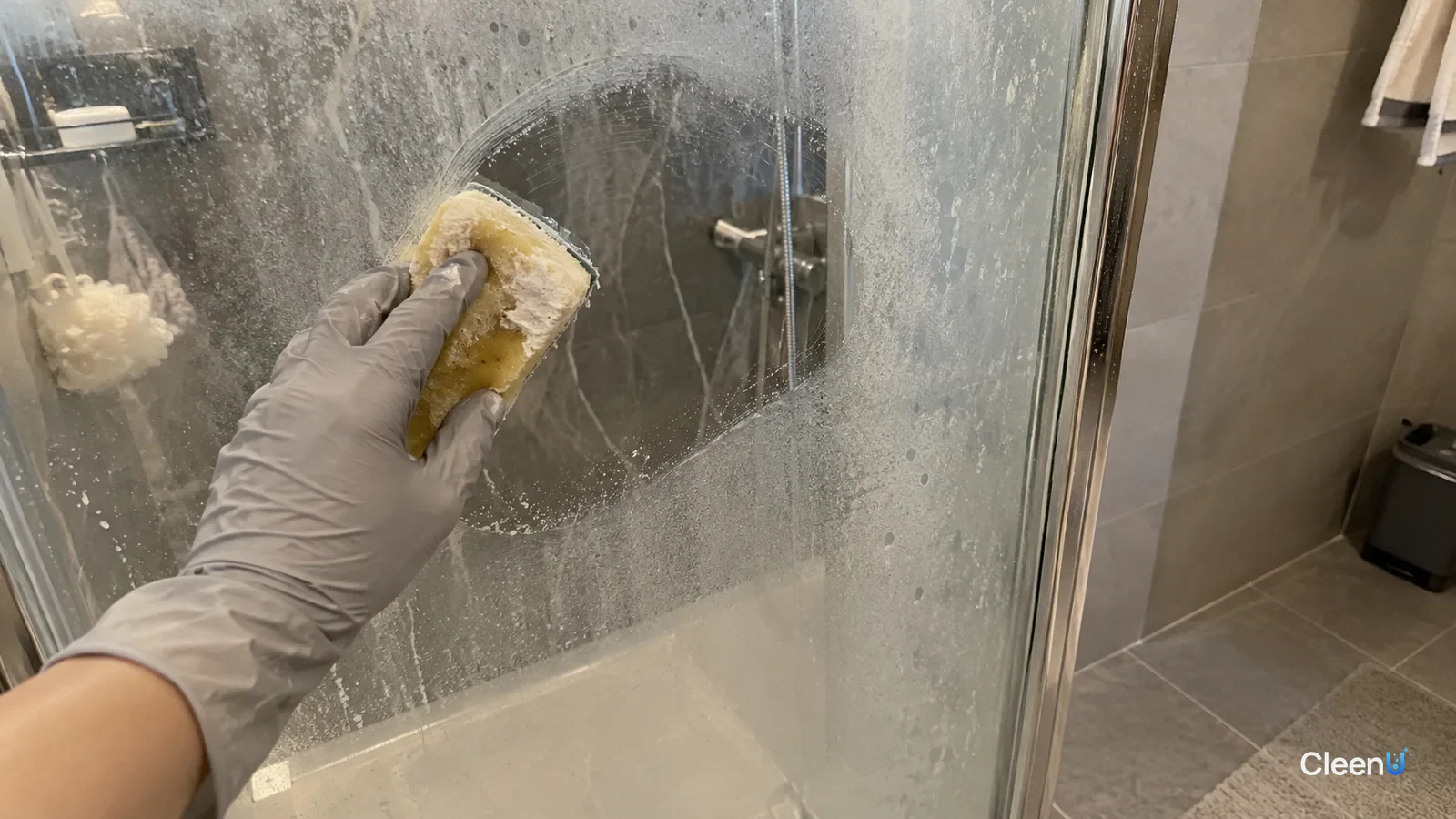
Cloudy shower glass has two very different causes. Either something is built up on the glass, which cleaning can remove, or the glass itself is damaged, which no amount of cleaning will fix. Telling them apart saves a lot of wasted scrubbing.
Cause one: thick scale and soap scum
Every shower, water evaporates on the glass and leaves calcium carbonate and other minerals. Fatty-acid salts in body wash and shampoo combine with calcium and magnesium in the water into calcium soap that clings to the glass. Together they form a gray-white film.
At first it's thin and a daily spray wipes it away. After months or years it becomes a thick, hard crust. A mild daily spray doesn't stay on long enough to cut through it, so it removes only the top layer and the glass looks "a little better but still white."
The telltale signs: the surface feels gritty or raised, a descaler compress softens the white so it scrapes or wipes off, and treated areas turn noticeably clear.
Cause two: etched glass
Glass is mostly silica. It's very stable in neutral and acidic conditions, but long exposure to damp, alkaline conditions slowly attacks the surface. On shower glass, mineral scale sitting on the surface creates a locally alkaline environment, and with hot water and constant wet-dry cycles, the surface structure is gradually broken down into microscopic pits that make it rough.
A rough surface scatters light, so the glass looks white and hazy. When it's wet, water fills the pits and light passes through again. "Clear when wet, cloudy when dry" is the classic sign of etching.
That's a change in the glass itself. Cleaners can't remove it or repair it.
Five steps to tell them apart
Buildup or etching? Find out in five steps
-
Step 1 Run a finger over the cloudy area. Does it feel raised or gritty, like a hard crust?
- Yes
- It's probably thick scale and soap scum. Keep going and treat it with a descaler.
- No
- Go to the next check
-
Step 2 After a descaler compress for a few minutes, does the white soften so it scrapes off with a plastic scraper or wipes away?
- Yes
- It's scale. Treat it in several rounds as described below until the glass is clear.
- No
- Go to the next check
-
Step 3 When the glass is fully wet, does the cloudy area turn clear and then go white again as it dries?
- Yes
- The glass is likely etched. Cleaning can't restore it, so stop repeated strong-acid treatments.
- No
- Go to the next check
-
Step 4 Does the area feel smooth but show an oily sheen from the side?
- Yes
- It may be soap scum or residue from body products. Scrub with bathroom or shower cleaner, then rinse and dry.
- No
- Go to the next check
-
Step 5 Still cloudy and rough after several treatments?
- Yes
- It's almost certainly etching. A professional can polish light etching; for heavy etching, consider replacing the glass or applying a decorative film.
- No
- Keep up regular maintenance and keep an eye on it.
Removing thick scale
Thick scale needs acid and enough contact time.
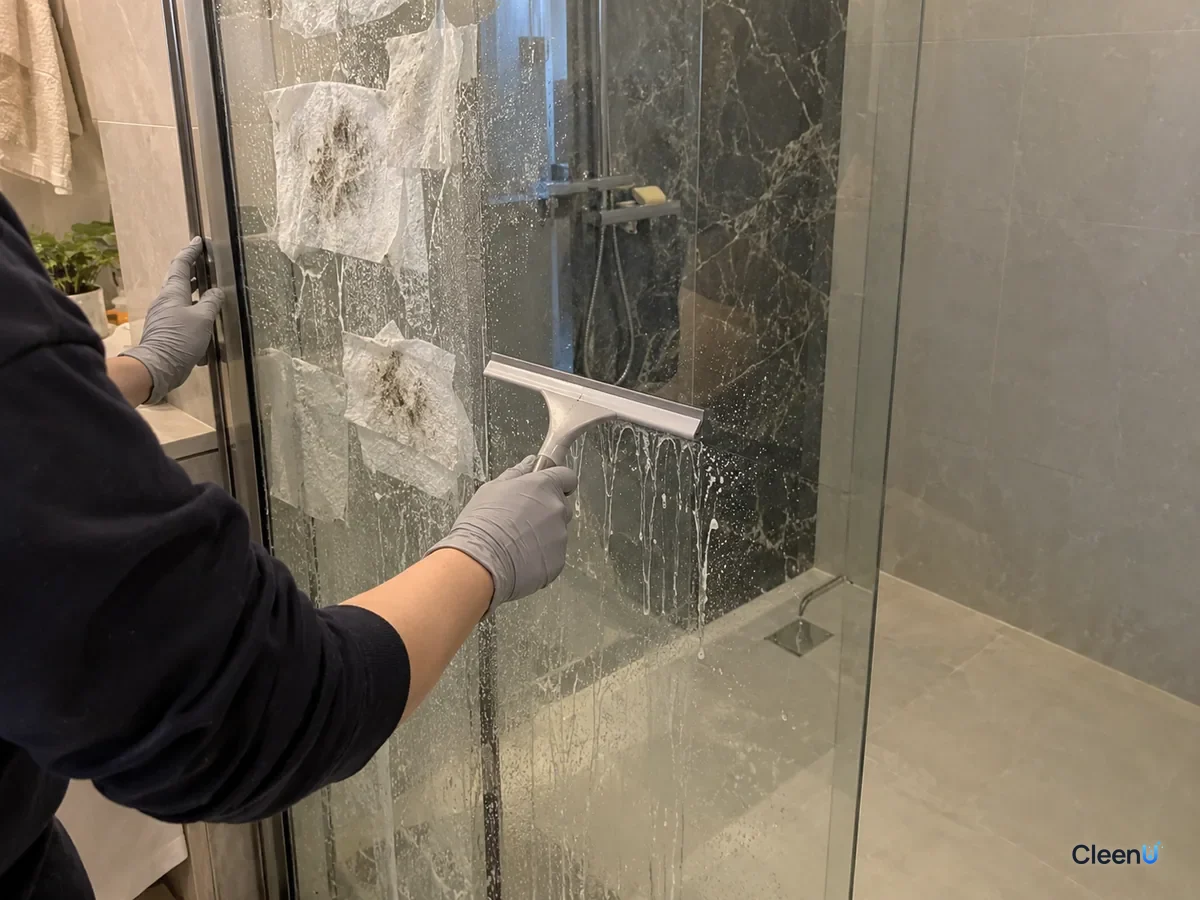
Soak paper towels in a bathroom descaler or diluted white vinegar and press them onto the glass as a compress; sprays run right off vertical glass, but towels keep it wet. Leave it for the label time. You can extend it a little for heavy scale, but don't exceed the label.
Wipe off the softened scale with a plastic scraper or soft sponge. No steel wool or razor blades, which scratch the glass.
Rinse, squeegee, and dry the edges with a cloth.
If heavy scale doesn't all come off, treat it again the next day. Two or three rounds are safer than one long soak in strong acid.
Keep acid off marble or stone shower walls and counters, never mix it with chlorine products, and don't let it sit on aluminum frames or coated fixtures.
Keeping the glass from clouding again
Once the heavy scale is gone, the key is not letting it build back up, which is also the best way to prevent etching.
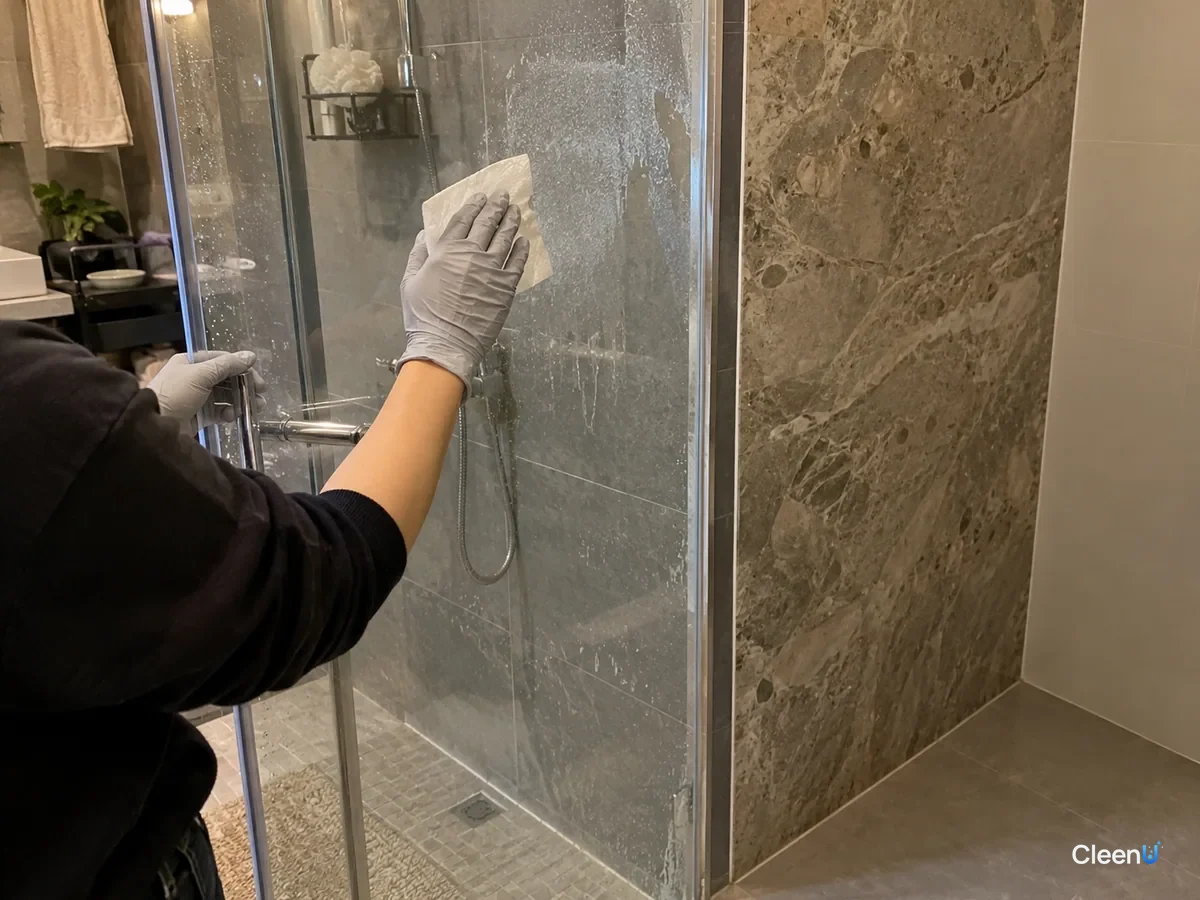
Squeegee the glass after every shower.
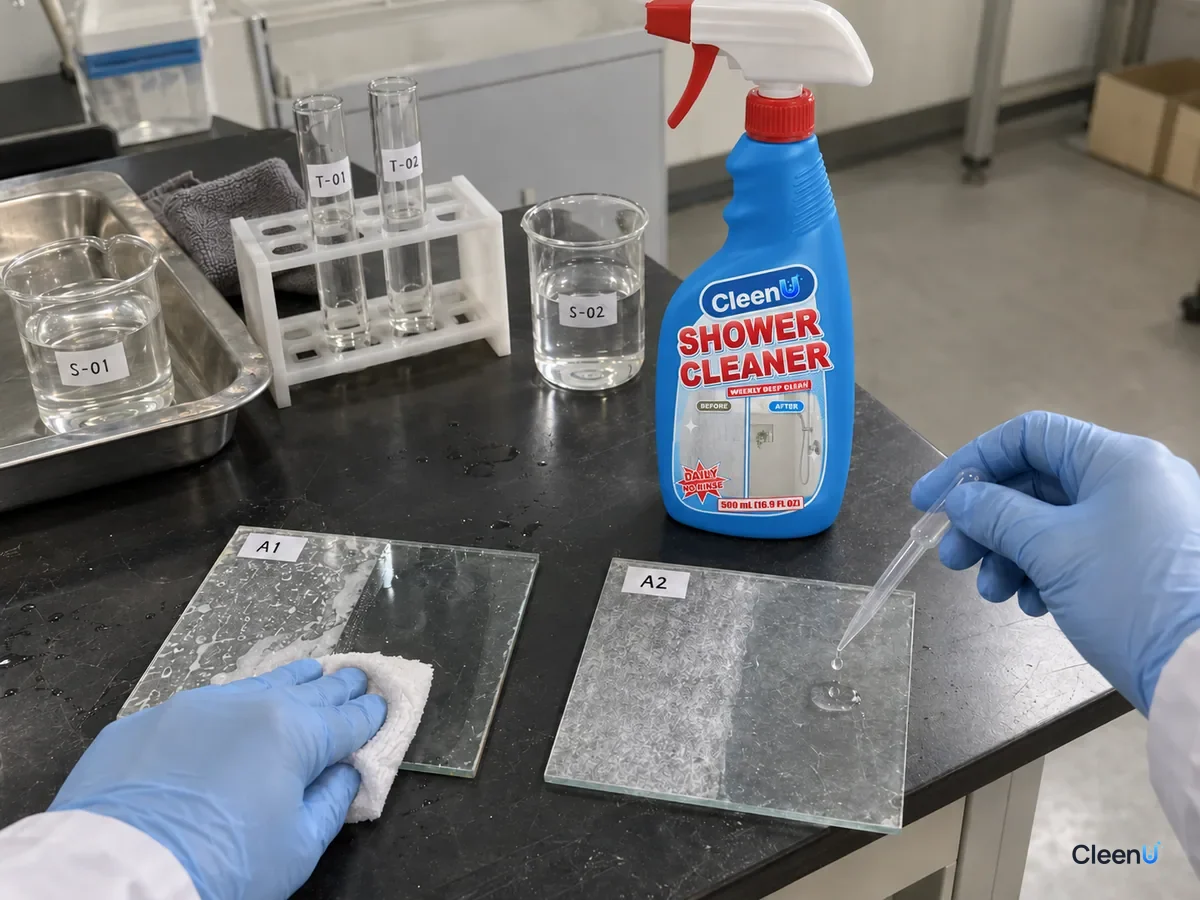
Then mist on a daily shower spray. Take CleenU Shower Cleaner as an example. It's a mildly acidic daily shower spray, pH 3.0 to 4.5 as supplied, made with organic acids, nonionic surfactants, and a wetting agent, with no chlorine and no abrasives. For daily use, spray and leave it with no rinse; for a deep clean, let it sit 3 to 5 minutes and rinse. The organic acids dissolve fresh, thin scale and soap scum, and the wetting agent spreads the liquid evenly so it dries without droplet marks. It's made for glass shower doors, shower wall tile, shower pans, and fixtures. It isn't for natural stone walls or pans, shouldn't sit on coated fixtures for long, and must never be mixed with chlorine bleach. Remove heavy existing scale with a descaler first.
Run the fan or open a window so the shower dries quickly.
In hard-water areas, consider a water softener to cut scale at the source.
For everyday water spots on glass doors, see How to remove water spots from glass shower doors. To tell soap scum from scale, see Soap scum vs. hard water stains.
What the acid is actually dissolving
A descaler compress softens scale because the acid reacts with the calcium carbonate in it, forming water-soluble calcium salts and carbon dioxide, so the hard mineral layer loosens from within. Lime soap also breaks down under acidic conditions into fatty acids and soluble calcium salts and loses its grip. The reaction only happens in the layer the acid can reach, which is why thick scale takes rounds: the first compress dissolves the outer layer, you scrape it off to expose the next one, and you repeat. One very long soak doesn't help much, because the acid at the surface gets used up, and the extra time mostly raises the risk of acid running onto frames, fixtures, and the floor.
Etching is a different story. The silica structure of the glass surface itself has been damaged, and acid won't put it back. Treating etched glass over and over with strong acid just keeps you thinking "one more round will do it," delays the right diagnosis, and can damage the aluminum frame and caulk around it. That's why steps two and three of the diagnosis are separate: if acid softens it, it's scale. If acid changes nothing and the glass only clears when wet, it's time to stop.
Judging the result: light and dryness matter
A lot of people judge the glass right after wiping it. It's still damp and looks clear, then it dries cloudy again and they decide the product didn't work. Instead, rinse and squeegee after treatment, wait until the glass is completely dry, and check it in side light. A phone flashlight held flat against the glass works well. Leftover scale shows up as raised white specks or patches; etching looks like an even frosted haze and feels like fine sandpaper under your fingertip.
One more look-alike: glass that once had a water-repellent film or an easy-clean coating can cloud unevenly as that coating ages and wears off. This kind of haze often has visible edges, smooth in some areas and draggy in others. It isn't scale and isn't quite etching, and acid won't fix it either. Check with the glass supplier or installer about removing the old coating before deciding on next steps.
If you're unsure, photograph the same spot in the same side light before and after each round. Scale fades from one photo to the next; etching looks the same every time, which is a clear sign to stop treating it and look at polishing or replacement instead.
Stop if you see this
If the glass is cracked or chipped, or shows the spreading crack pattern of tempered glass failure, stop using the shower and call a professional. Don't scrape glass with steel wool or blades or soak it in strong acid for long periods. Keep acid off stone, aluminum frames, and coated fixtures, and never mix it with chlorine products. Once you've confirmed etching, stop repeated strong-acid treatments.
Cloudy shower glass: common questions
Why won't the white film on my shower glass come off?
It's either very thick scale or etched glass. If a descaler compress softens it so it wipes away, it's scale; if it's clear when wet, cloudy when dry, and rough, it's etching.
Can etched shower glass be fixed?
Not with cleaning. A professional can polish light etching; for heavy etching, consider new glass or a decorative film.
How can I tell if my shower glass is etched?
Wet it completely. If the cloudy area turns clear and goes white again as it dries, and the surface feels rough, it's almost certainly etched.
What removes thick hard-water scale from glass?
A descaler or diluted white vinegar applied as a compress for the label time, then wiped off with a plastic scraper, repeated in rounds, and finished with a rinse and dry.
How do I keep shower glass from etching?
Don't let scale sit on it: squeegee after every shower, use a daily shower spray, and keep the bathroom ventilated.
Can I use steel wool on hard-water stains on glass?
No. It scratches the glass, and scratches collect scale faster. Use a plastic scraper and a soft sponge.
For a no-rinse daily shower spray you mist on after squeegeeing to keep scale and soap scum from building up on glass, take a look at our Shower Cleaner.
If shower glass is still cloudy after cleaning, figure out which of two causes you're dealing with. If it feels gritty and a descaler compress softens it so it wipes away, it's thick scale and soap scum, and a few rounds of compressing, scraping, and rinsing bring it back. If it's clear when wet, cloudy when dry, and rough to the touch, the glass is etched; cleaning can't restore it, and you'll need professional polishing or replacement. After removing scale, squeegee after every shower, use a daily shower spray, and run the fan so scale never builds up again.