
How-to
How to Clean Windows Like a Pro: Squeegee Technique
Direct answer
To clean windows with a squeegee, dust the frame and glass first, wet the glass with a light mist of cleaner or a scrubber, then pull the squeegee from top to bottom in an S pattern, wiping the blade after every stroke. Dry the edges with microfiber, and work in shade for the fewest streaks.

Cleaning windows looks like the easiest chore in the house, but getting them truly clear is another matter. When the sun hits, the glass is full of curved streaks and there is a gray border along the edges that never got cleaned. Professional window cleaners are fast and streak-free, and it isn't because of an expensive cleaner. It is the tools and the technique.
Window grime comes in three main kinds: dust on the outside, mud spots and water marks left by dried rain, and fingerprints, cooking film and household dust on the inside. None of it is stuck on very hard. The hard part isn't getting it off; it is getting it off without leaving anything behind. That is exactly what a squeegee does: it pulls the dirty water off the glass in one pass instead of letting it dry there.
Why does a squeegee get glass clearer than a cloth?
When you wipe a window with a cloth, the cloth absorbs some of the water and leaves a thin film behind that dries slowly. The dust, cleaner and minerals dissolved in that film stay on the glass as streaks. The wetter and dirtier the cloth, the more it leaves.
A squeegee's rubber blade sits tight against the glass and pulls off nearly all the water in one stroke. What is left is so little that it dries in seconds, with no time to leave marks. That is why a squeegee is so much faster and clearer than a cloth on large panes.
Spray bottle or bucket?
For small windows, the inside of windows and mirrors, a glass cleaner spray is the easiest option: mist a thin layer, then wipe it out with a cloth or squeegee it dry. CleenU Bathroom Mirror Cleaner is one example: a fast-drying mirror and glass spray made with isopropyl alcohol and other fast-evaporating alcohols blended with low-residue surfactants, ammonia-free, pH 6.5 to 8.0, ready to use with no dilution. Wipe or squeegee it off right after spraying; no rinsing needed.
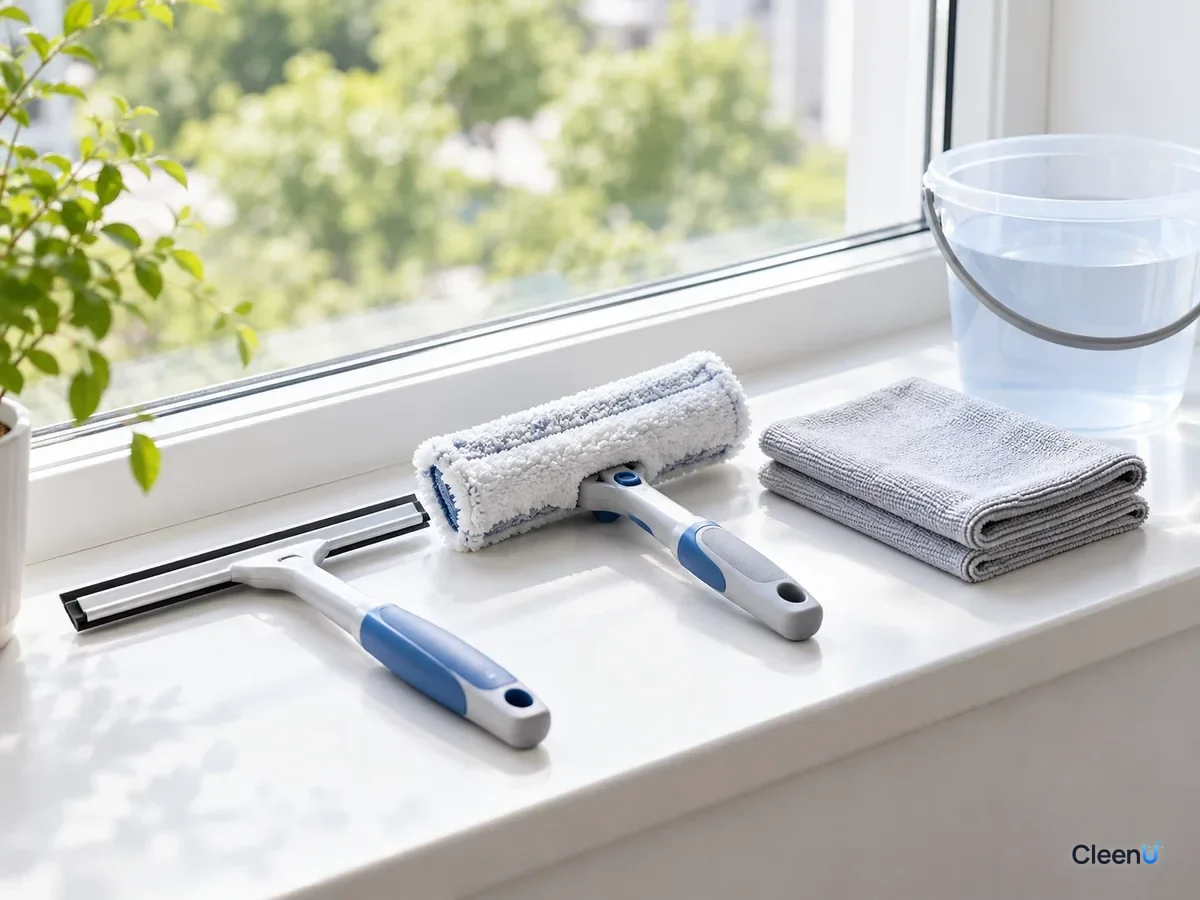
For large exterior windows and sliding glass doors, a bucket and scrubber usually work better. Add a few drops of dish soap to a bucket of water, use a scrubber or sponge to wet the whole pane and loosen dust and mud spots, then squeegee it dry. You get enough water to carry off outdoor grime, and you avoid patches that dry before you get to them.
The two work well together: bucket and squeegee outside, spray and cloth inside.
Step by step: squeegee windows streak-free
From dusting to detailing the edges, squeegee a window this way
Clean the frame, the tracks and the screen first
Brush or vacuum dust, bugs and grit out of the frame and tracks, and take the screen out to rinse separately. Skip this and the water you squeegee down turns track dust into mud that runs back onto the glass.
Wet the glass to loosen dust and spots
On large windows, run a scrubber dipped in the cleaning solution over the glass from top to bottom, going over mud and bird droppings a few extra times. On small windows or the inside, mist a thin layer of glass cleaner. Wet the whole pane evenly, not in patches.
Caution:Don't clean in direct sun or on hot glass. The solution dries on contact and leaves streaks.
Wipe a dry starting strip along the top
Use a dry microfiber cloth to wipe a strip about 1 to 2 inches wide along the top edge. Starting the squeegee there keeps a line of water from collecting at the top.
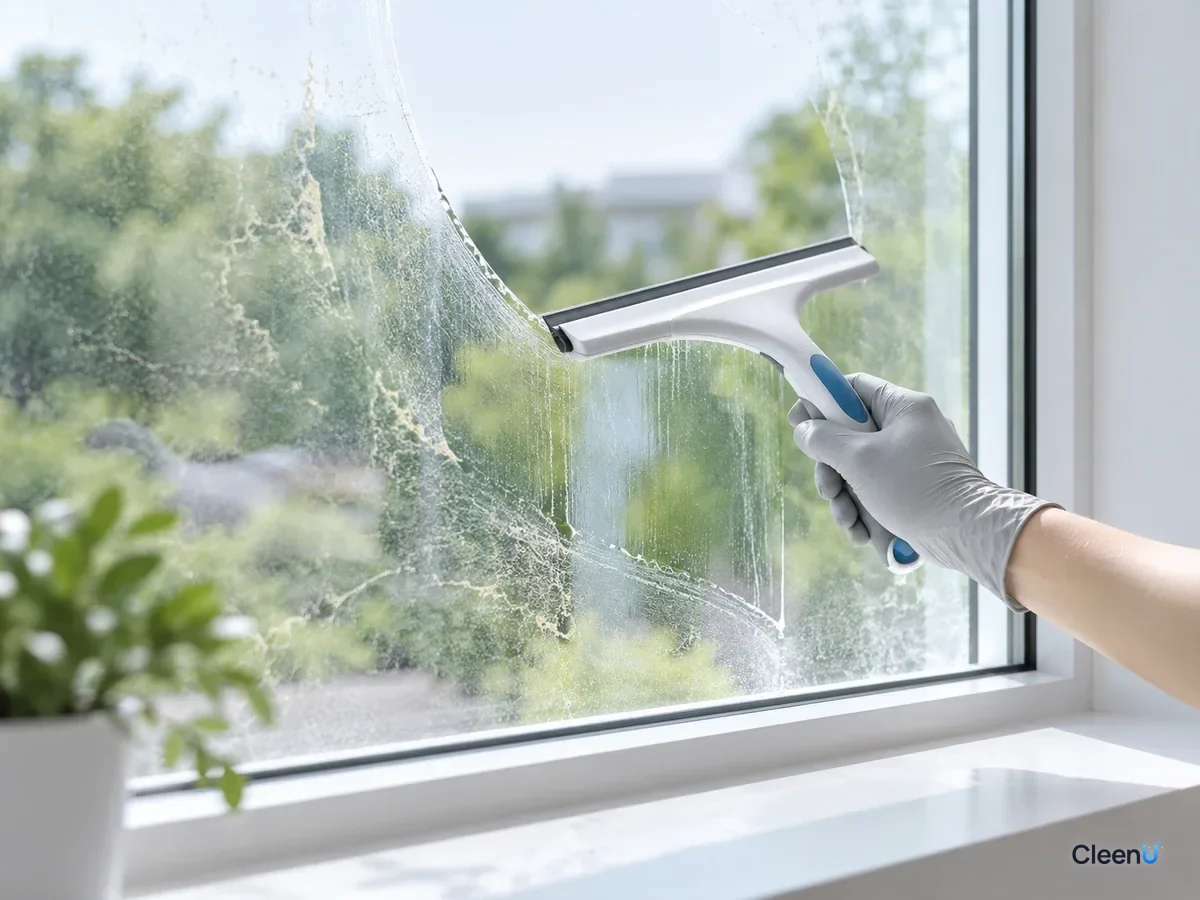
Squeegee from top to bottom in an S pattern
Hold the blade at about 30 to 45 degrees, tight against the glass. Start in one top corner, turn your wrist and fan the squeegee down the pane in an S pattern in one continuous pass. Or pull straight vertical strokes, overlapping each one by an inch or two.
Caution:Wipe the blade with a cloth after every stroke. Dirty water left on the blade becomes a streak on the next pass.
Dry the edges and corners
Press a dry microfiber cloth around the border and into the corners the squeegee can't reach to soak up the water. Wipe the frame too, so the water doesn't run back onto the glass.
Check from another angle and touch up
Step to the side or look from an angle with light on the glass. If you find a streak, buff just that spot with a dry cloth rather than wetting the whole pane again.
Squeegee details that make or break the result
The blade matters most. Over time a rubber blade gets nicks, hardens or warps, and a single nick leaves a thin line on every stroke. Run a finger along the edge before you start and replace it if it isn't smooth. After cleaning, rinse it, let it dry, and store it so the blade isn't pressed against anything hard.
Keep the angle and pressure steady. Too steep an angle makes the blade skip and leave water lines; too shallow and it doesn't seal against the glass. Hold 30 to 45 degrees and pull with even pressure in one smooth motion, without stopping midway.
Wipe the blade after every stroke. It is the step people skip most, and it matters most. Dirty water on the blade gets painted right back onto the glass on the next stroke, so keep a dry cloth in your pocket and wipe the blade each time.
Pick the right time. Overcast days, early morning, late afternoon, or a window on the shady side of the house keep the glass cool so the solution doesn't dry before you squeegee it. That is when windows come out best.

Before you start on the windows, make sure
- The frame and tracks have been dusted first
- The squeegee blade is smooth, with no nicks
- The glass isn't in direct sun and isn't hot to the touch
- You have at least two clean microfiber cloths ready
- You are standing securely for exterior glass; no leaning out, no standing on the sill
How often should you clean windows?
Wipe fingerprints and cooking film off the inside whenever they show; windows near the kitchen may need it weekly. The outside usually needs cleaning about once a season, with a thorough job when the seasons change.
Some situations call for more: in spring, pollen coats the outside glass in a yellow-green film fast; windows facing a busy street or a construction site collect dust and exhaust particles quickly; and in coastal homes, sea spray dries into white salt spots on the glass.
After rain, don't rush. Wait until the rain has rinsed off the loose dust and the glass is completely dry; it is less work, and water trapped in the frame won't run down and dirty the glass again. Check the forecast before you start and skip days when rain is on the way.
How to clean outside windows safely
However clear you want the glass, safety comes first. On the ground floor, stand outside and use a squeegee on an extension pole. On upper floors, never lean out and never stand on the sill or a chair. Tilt-turn and casement windows that open inward can often be swung around so you clean the outside from indoors. For outside panes you can't reach, use a double-sided magnetic window cleaner or hire a professional high-rise window service.
Outside glass often carries water marks and mud spots from dried rain. Let the scrubber soak those a little longer to soften them before you squeegee. Long-standing hard-water scale may not come off with an ordinary solution and needs a method made for mineral deposits.
For windows, mirrors, shower glass and oven doors, see our glass cleaning guide.
Stop if you see any of these
Window film, solar film or coated glass wrinkling, turning white or peeling after cleaning; losing your balance while working up high; cleaner splashing into your eyes. Stop, and for filmed glass follow the installer's care instructions. Keep alcohol-based cleaners away from open flames and heat, and use them with good ventilation.
Written for: Households that want to clean their own windows and sliding glass doors to a streak-free shineNot for: The outside of upper-floor windows (hire a professional); glass with special coatings or film that the maker says needs different care
Window-cleaning questions people ask first
What is the best tool for cleaning windows?
A squeegee plus microfiber cloths. The squeegee pulls the water off in one pass and the cloth finishes the edges; it is faster and clearer than a cloth alone.
Why does my squeegee leave thin lines?
Replace the blade and wipe it after every stroke. Thin lines come from a nicked blade or one carrying dirty water.
When is the best time to clean windows?
Overcast days, early morning, late afternoon, or when the glass is in shade. In direct sun the solution dries before you can remove it.
How do I clean outside windows I can't reach?
Swing inward-opening sashes around and clean them from inside. Otherwise use an extension pole or a magnetic double-sided cleaner, and hire a pro for upper floors. Never lean out.
What should I put in the window-cleaning water?
For large exterior panes, plain water with a few drops of dish soap is enough. For small areas and the inside, a glass cleaner spray is more convenient.
How do I clean dirt out of window tracks?
Vacuum or brush out the dry dirt first, then wipe with a barely damp cloth and dry it, so no muddy water runs back onto the glass.
For the inside of windows and small to medium panes, a fast-drying, low-residue, no-rinse glass spray: Bathroom Mirror Cleaner.
Clear windows come down to tools and technique: clean the frame and tracks first, wet the whole pane, squeegee from top to bottom in an S pattern while wiping the blade every stroke, dry the edges with microfiber, then check from another angle. Use a bucket and squeegee for large exterior panes and a glass spray inside, avoid direct sun, and put safety first on outside windows.