
Q&A
Can You Use Oven Cleaner in a Self-Cleaning Oven?
Direct answer
Check your manual and what kind of interior you have. Never use a heavy-duty alkaline oven cleaner on catalytic liners, the gray, slightly rough panels, because it clogs and damages them. Most makers of high-heat self-cleaning ovens advise against it too. Standard enamel interiors and removable racks and pans are usually fine per the label.
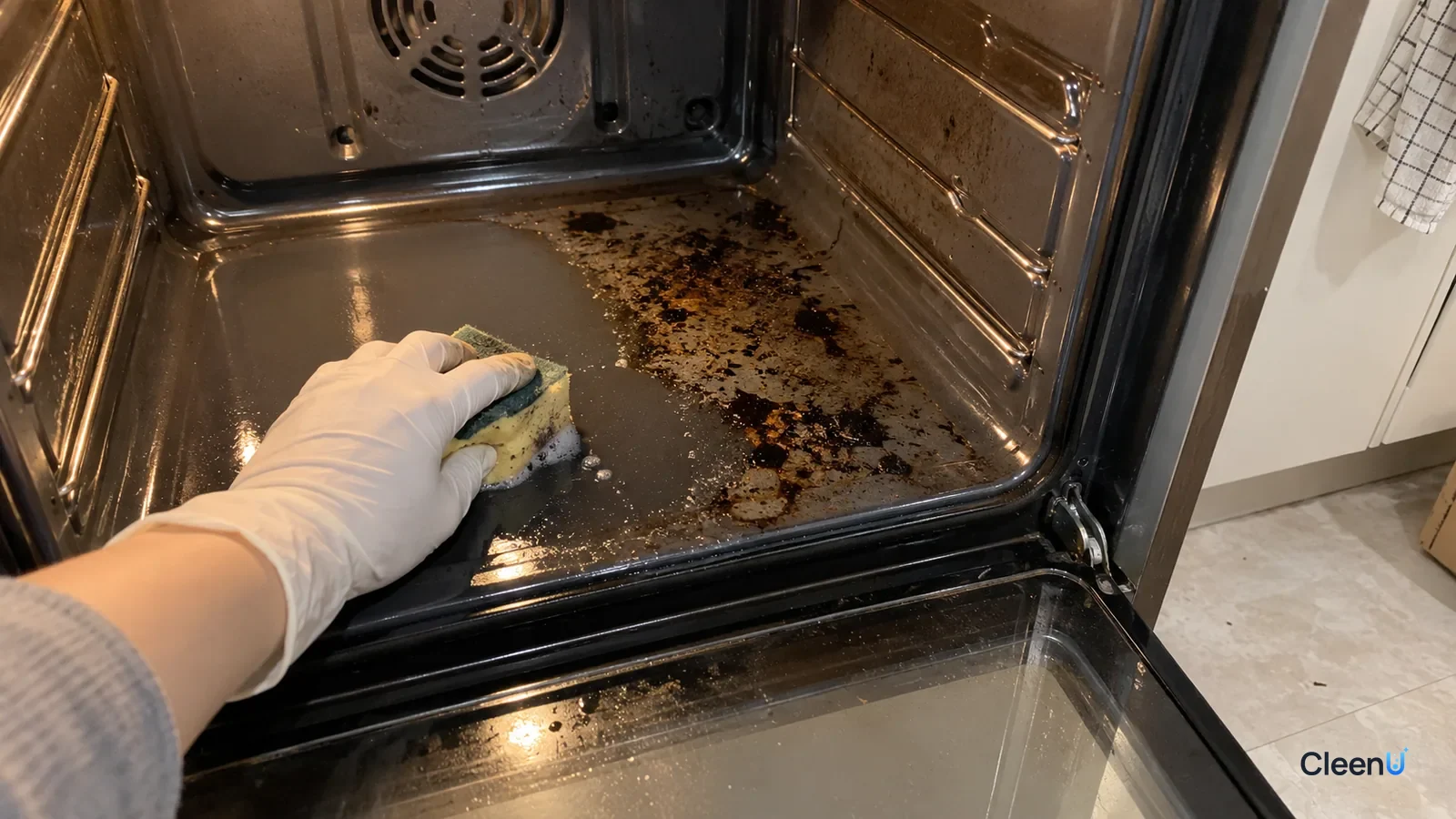
Self-cleaning ovens and oven cleaner: the questions people ask most
Can I use oven cleaner in a self-cleaning oven?
It depends on the type. Never on catalytic liners. Most manufacturers of high-heat (pyrolytic) self-cleaning ovens also say not to use it on the interior. Follow your manual.
How do I know which kind of self-cleaning oven I have?
Check the manual and the interior. Removable gray, matte, slightly rough panels usually mean catalytic liners. A self-clean cycle that locks the door and heats very high is pyrolytic.
How do I clean dirty catalytic liners?
Run the oven empty at high heat for the time your manual gives, and the liners break down absorbed grease. No alkaline cleaners, steel wool, or scrapers; replace heavily saturated liners per the manual.
How often should I run a self-clean cycle?
Per your manual and how much you cook, usually when grease is visible. Take out racks and accessories first, and wipe out the ash once it cools.
Can I use oven cleaner on the racks and pans from a self-cleaning oven?
Removable metal racks and enamel pans can usually be cleaned per the label. Nonstick and aluminum pans can't take strong alkaline cleaners.
I accidentally sprayed oven cleaner on a catalytic liner. What now?
Wipe it off right away with a damp cloth, then wipe several more times with clean water. If the liner changes color or turns smooth, contact the manufacturer.
Plenty of new ovens say "self-cleaning." Some people take that to mean they never need cleaning; others reach for heavy-duty oven cleaner out of habit. In reality, "self-cleaning" covers different technologies with very different rules, and the wrong cleaner can ruin the self-cleaning feature.
The main types of self-cleaning ovens
Home ovens usually fall into three categories.
Catalytic self-cleaning. The side walls, back, and sometimes top are fitted with liner panels that are usually gray or dark gray, matte, and slightly rough, like fine sandpaper. The coating is a porous ceramic containing metal oxides that catalyze oxidation. Grease that splatters on gets absorbed into the pores and, at normal cooking temperatures (typically above about 400°F), is oxidized and broken down into water and carbon dioxide.
Pyrolytic (high-heat) self-cleaning. The oven has a dedicated self-clean cycle that locks the door and heats the interior to around 800 to 900°F, burning grease to ash that you wipe out once it cools. These interiors are usually high-temperature enamel.
Steam clean. You add water to the bottom of the oven and run a low-temperature steam cycle that softens light grease so you can wipe it out by hand. Strictly speaking, that's an assist, not true self-cleaning.
Many ovens simply have a standard enamel or stainless interior with no self-cleaning feature at all.
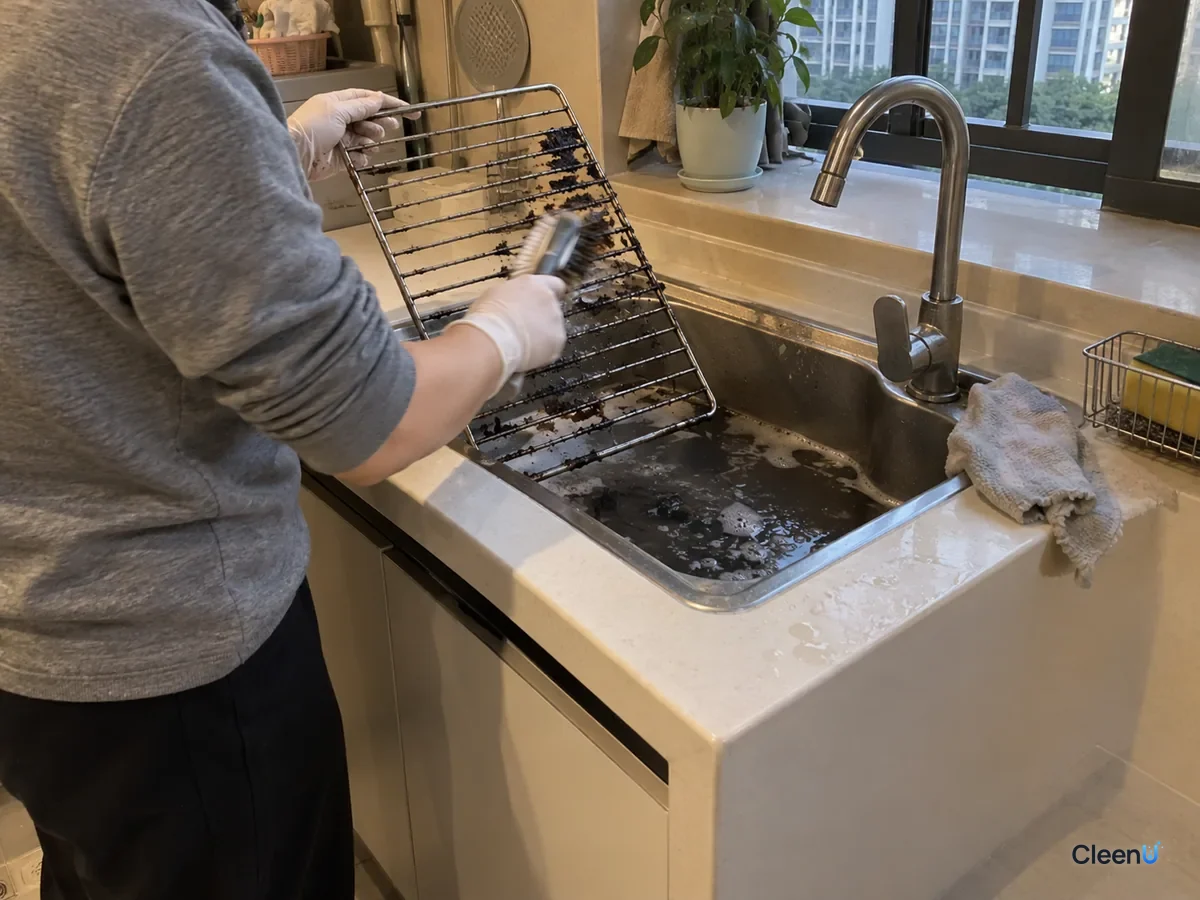
Why catalytic liners and oven cleaner don't mix
Heavy-duty oven cleaners rely on strong alkalis like sodium hydroxide, usually above pH 12. They saponify and break down carbonized grease, which works well on standard enamel. On catalytic liners, they cause problems.
Strong alkali reacts with the ceramic and catalyst and breaks down the porous structure, so the liner stops working well or at all.
Thickeners and surfactants in the cleaner can soak into and clog the pores. Clogged pores can't absorb grease, so self-cleaning stops working.
Scrapers, steel wool, and stiff brushes polish the rough surface smooth, which also kills the function.
Damaged liners look smooth, discolored, or blotchy, and they can't be repaired; you usually have to replace the panels.
That's why nearly every catalytic oven manual says not to use oven cleaner or abrasive tools on the liners.
Why high-heat self-cleaning ovens are also off-limits
Pyrolytic ovens have enamel interiors that handle alkalis better than catalytic liners. Manufacturers still generally advise against oven cleaner inside, because residue can smoke and smell during the high-heat cycle, leftover alkali can dull the enamel at those temperatures, and the cycle already takes care of the grease.
The door gasket, temperature probe, and heating elements should never get oven cleaner on them.
How to clean a self-cleaning oven, then
Catalytic liners: after cooking, you can run the oven empty at high heat for the time and temperature your manual specifies to help the liners break down absorbed grease. Wipe the liners only with a damp cloth, no cleaner. If they're saturated, shiny, and blotchy, order replacement liners per the manual.
Pyrolytic ovens: run the self-clean cycle regularly per the manual, taking out racks, pans, and accessories first. Once it's done and fully cool, wipe out the ash with a damp cloth. The inside of the door glass and the door frame edges aren't always covered by the cycle, so wipe those separately.
The oven floor: in many catalytic ovens only the sides and back are lined, and the floor is standard enamel. Clean it however the manual allows. When in doubt, use a damp cloth and a mild cleaner, not a strong alkali.
Racks, pans, and standard interiors can take oven cleaner
Removable metal racks, enamel pans, and standard enamel interiors without self-cleaning liners can handle a heavy-duty alkaline oven cleaner when carbonized grease builds up.
Take CleenU Oven Cleaner & Degreaser as an example. It's a heavy-duty alkaline oven cleaning gel spray, pH 12.5 to 13.5 as supplied, made with a strong alkali, thickener, alkali-stable surfactants, and solvent. It's unscented and ready to use. The alkali saponifies and breaks down carbonized grease, the thickener keeps the gel on vertical walls and racks so it works longer, and the solvent and surfactants help it penetrate and emulsify. Leave it on a cold oven for 15 to 30 minutes, longer for heavy buildup, then scrape and wipe clean with water.
Its label is explicit: not for hot ovens; heating elements, fans, temperature probes, or door gaskets; catalytic self-cleaning liners; aluminum or nonstick pans; painted exteriors or countertops; and never mixed with acidic products. So for racks and pans from a self-cleaning oven, take them out and clean them in the sink or outdoors. In a standard enamel oven, keep it off the elements and gasket.
For tackling a standard oven interior, see How to clean the inside of an oven, and for the rest of the kitchen, see How to clean a kitchen.
How to tell what you have
The manual is the most reliable source, and you can usually find a PDF by searching the model number. It will spell out the interior material, whether there's a self-cleaning feature, and which cleaning methods are allowed.
Without the manual, look for clues. Removable gray, matte, slightly rough panels on the walls usually mean catalytic liners. A "Self Clean" or "Pyro" cycle on the control panel that locks the door means pyrolytic. Smooth, glossy, evenly colored walls are usually standard enamel.
If you're not sure, use only a damp cloth and a mild cleaner rather than reaching for a strong alkali first.
How a strong alkaline cleaner loosens the black crust
Once the racks and pans are out of a self-cleaning oven, they're dealing with the same soil as any other oven's. Grease that drips during cooking oxidizes and polymerizes into a sticky, varnish-like layer, and repeated heating cross-links it into a hard, shiny black film. Sugars and proteins from drippings and sauces char and get trapped inside. At that point it isn't really grease anymore, and dish soap's emulsifying action barely touches it.
A strong alkaline oven cleaner works through saponification and swelling. The alkali breaks the ester bonds in fats, turning big molecules into water-soluble fatty acid salts and glycerin. Material that hasn't fully carbonized absorbs water, swells, and loses its grip on the metal. Pure carbon doesn't dissolve, but once the greasy layer underneath it breaks down, the char has nothing to hold onto and can be scraped off. All of this needs time and moisture, which is why a gel has to cling and sit. Once it dries, it mostly stops working.
Cleaning removable racks and pans, start to finish
Take the racks and pans out and work on a balcony, outdoors, or at a sink lined with newspaper, not inside a coated oven cavity. Put on gloves and eye protection.
Scrape off any char that's already lifting with a plastic scraper so the cleaner has less to get through. Then spray the cold racks and pans evenly, heavier where the crust is thick, until the gel fully covers the black buildup. Seal racks in a large trash bag, or cover pans with plastic wrap. Either way, the point is to keep the cleaner wet.
Let it sit for 15 to 30 minutes, or longer for heavy buildup, per the label. Then test a small spot with a plastic scraper or nylon brush. If the crust has softened and comes off in sheets, scrub the whole piece. If it's still hard, add a little more cleaner and wait. Rinse thoroughly afterward, paying extra attention to the joints of the rack wires and the rolled edges of pans, since those spots hide leftover alkali. Dry everything before it goes back in the oven.
You're done when the metal doesn't feel slippery or tacky and a damp cloth wiped across it comes away clean, with no brown. A few stubborn black specks can get a second round. But if an enamel pan starts to look dull or chalky, or the plating on a rack starts to flake, stop using a strong alkaline cleaner on that piece and stick to gentler routine cleaning.
Common mistakes
Getting cleaner on catalytic side panels while cleaning an enamel oven floor. In many catalytic ovens the liners come out. Remove them first, per the manual, then clean the floor. If they don't come out, don't use a strong alkaline cleaner inside the cavity at all.
Spraying while the oven is still warm. Heat dries the gel too fast to work and releases harsh fumes, and alkali on warm enamel is more likely to dull the finish.
Running a pyrolytic cycle with cleaner residue still on the racks. Leftover alkali and surfactant smoke and smell at those temperatures. Rinse and dry racks well after cleaning them, and if you're running the high-heat cycle that day, take all racks and accessories out as the manual says.
Treating post-cycle ash as stubborn soil. A pyrolytic cycle leaves a white or gray powder that wipes up with a damp cloth. It doesn't need any cleaner.
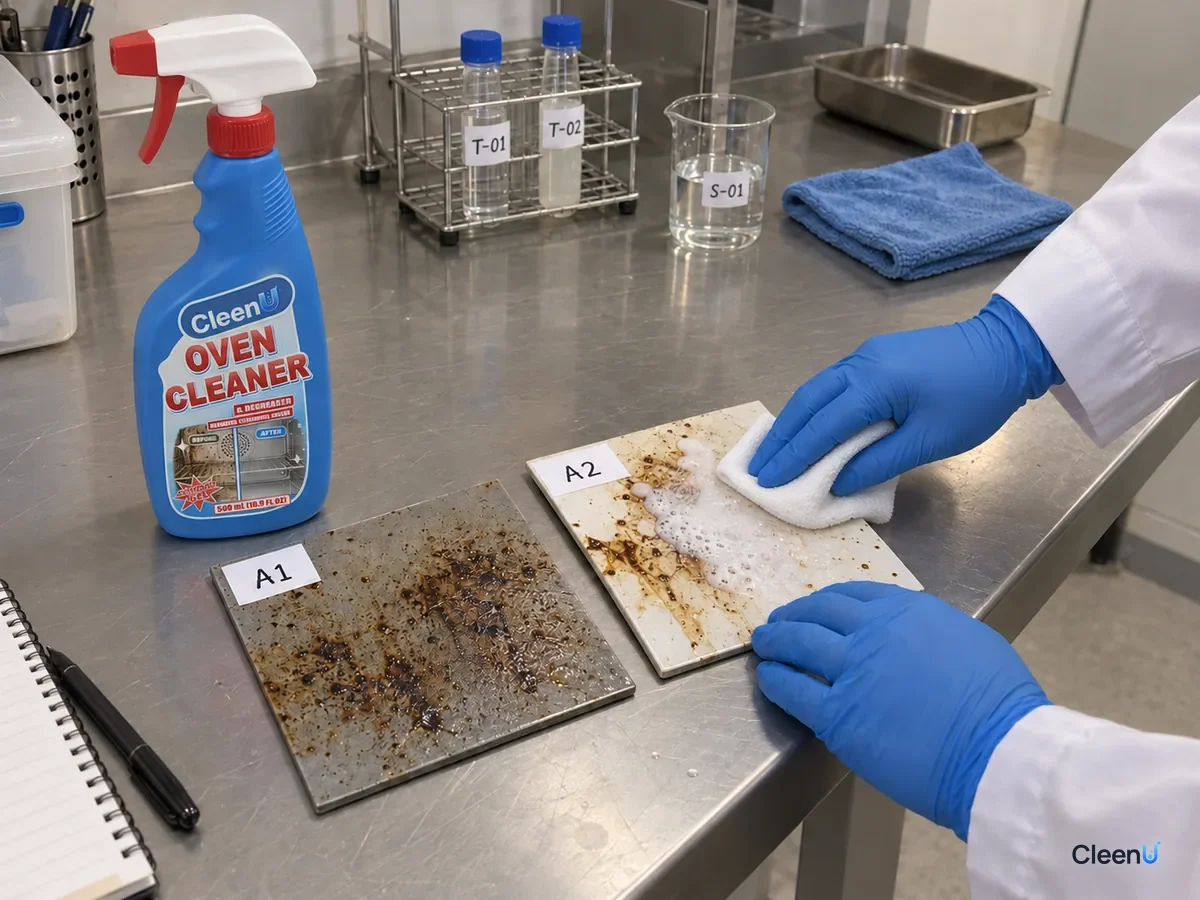
For an oven cleaning gel spray that clings to vertical surfaces and breaks down carbonized grease on standard enamel interiors and racks while the oven is cold (not for catalytic liners), take a look at our Oven Cleaner & Degreaser.
Whether you can use oven cleaner in a self-cleaning oven depends on the type. Never use a strong alkaline oven cleaner or abrasive tools on catalytic liners; they clog and damage the coating and stop it from working. Most manufacturers of high-heat self-cleaning ovens also advise against it on the interior; run the cycle and wipe out the ash instead. Removable metal racks, enamel pans, and standard enamel interiors without liners can be cleaned with a heavy-duty oven cleaner per the label. Check the manual first, and when in doubt, stick to a damp cloth and mild cleaner.