
Q&A
Which Cookware Should Never Touch an Alkaline Degreaser?
Direct answer
Keep alkaline degreasers away from all three. Strong alkali darkens and corrodes aluminum, damages nonstick coatings, and strips the seasoning off cast iron. Wash these pans with warm water, mild dish soap, and a soft sponge, and check any cleaner's label for materials it shouldn't be used on.
Can this cookware take an alkaline degreaser?
Yes
- Stainless pans, stainless stovetops, tile backsplashes, and range hood exteriors (per the label, then wipe with water)
No
- Aluminum pans, steamers, trim, and baking sheets: strong alkali darkens and pits aluminum
- Nonstick (PTFE or ceramic coated): alkali damages the coating, and peeling coatings lose their release
- Cast iron: alkali strips the seasoning, so the pan rusts and sticks
It depends
- Enameled cookware: enamel tolerates alkali, but don't let it sit on chips where iron shows
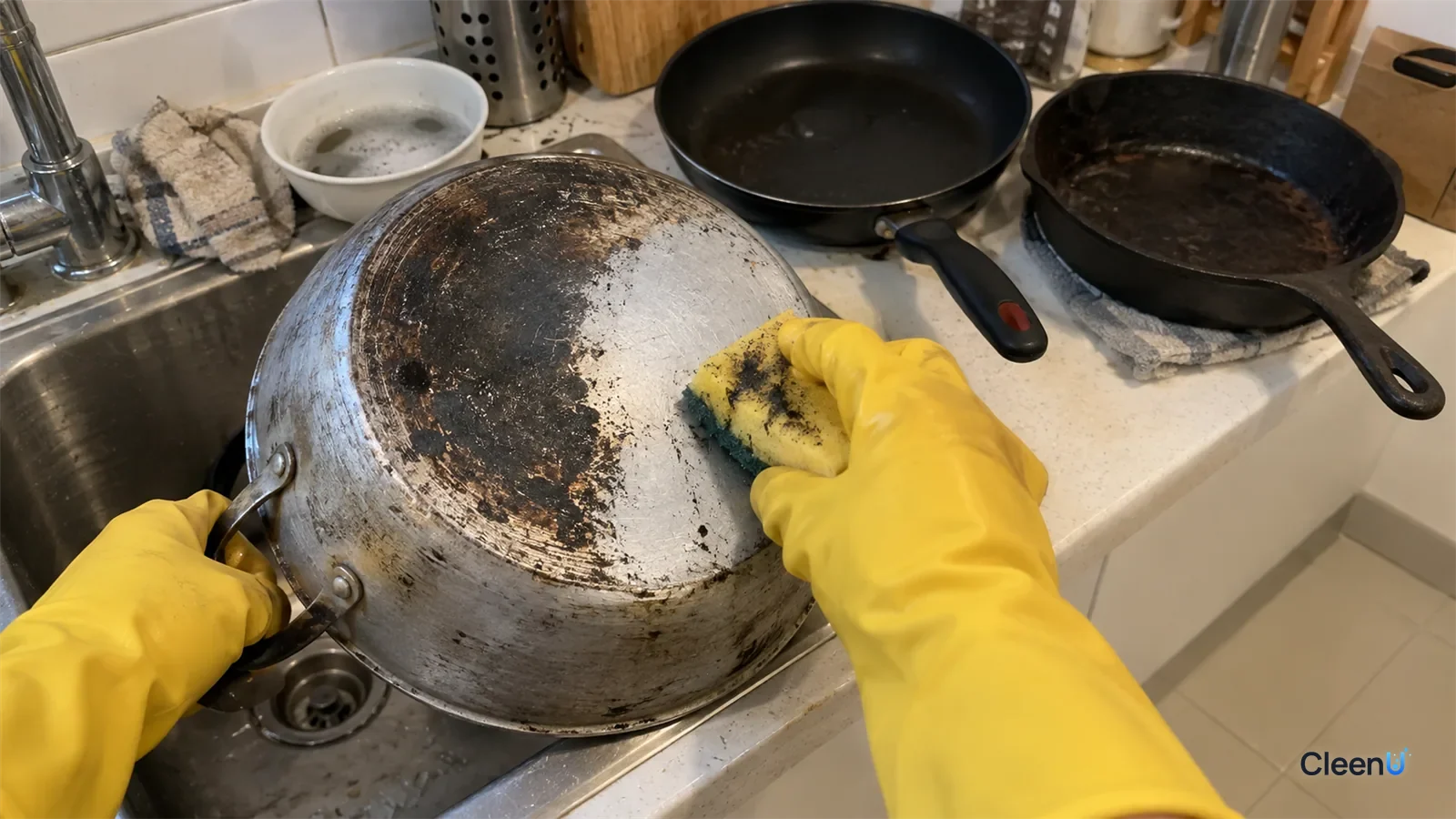
Kitchen degreasers work so well that people reach for them to wash cookware: black buildup on an aluminum pan bottom, grease in a nonstick skillet, scorch marks on cast iron. Then the aluminum gets darker, the nonstick starts sticking, and the cast iron rusts. That's what happens when the material and an alkaline cleaner don't get along.
Why alkaline degreasers cut grease so fast
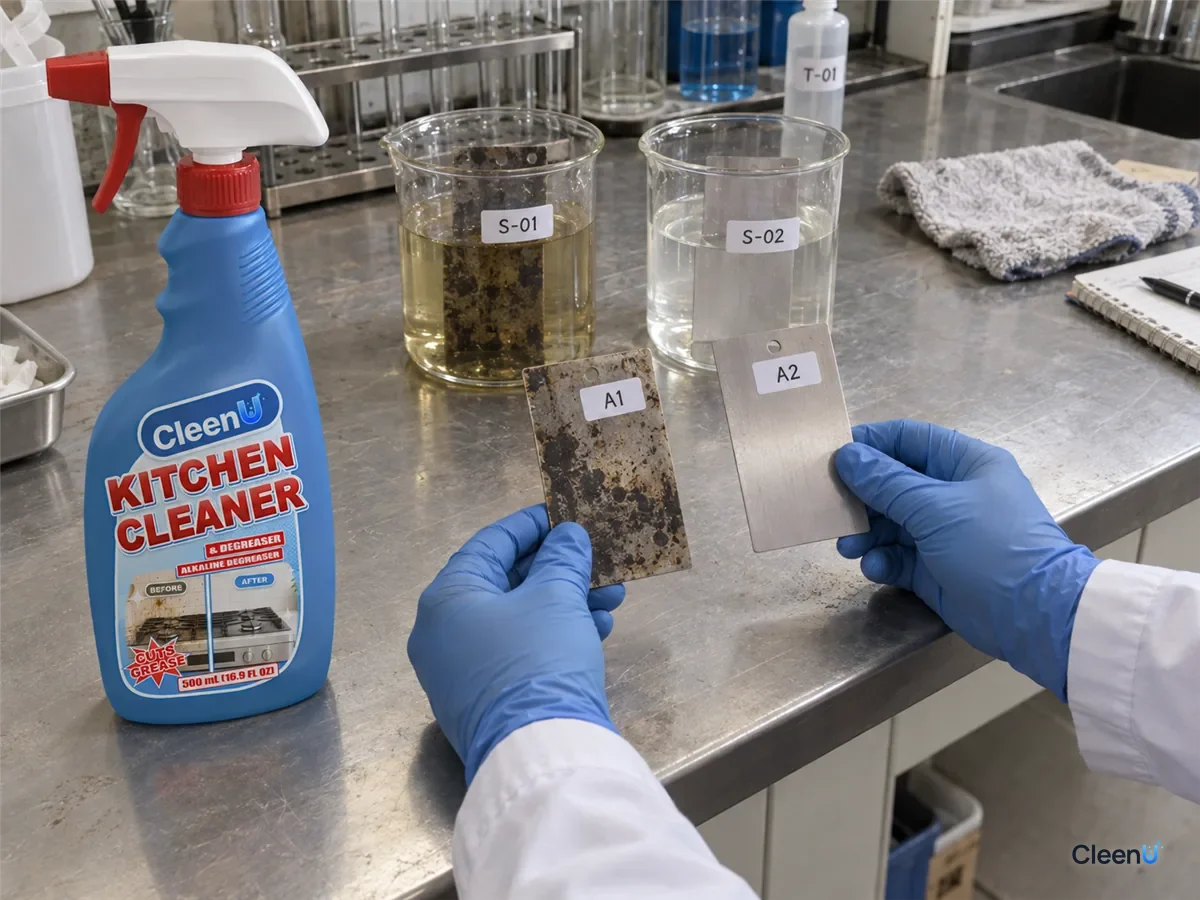
Most kitchen degreasers are alkaline. Take CleenU Kitchen Cleaner & Degreaser as an example. It's an alkaline kitchen degreasing spray, pH 10.0 to 11.5 as supplied, made with alkaline builders, nonionic surfactants, and glycol ether solvent, with no chlorine and no abrasives. The builders saponify grease by breaking its ester bonds, the solvent swells sticky layers, and the surfactants emulsify what's loosened.
That combination is very effective on old grease on stovetops, range hoods, backsplashes, and cabinet doors. But alkalinity also affects certain materials. The label clearly lists what it's not for: aluminum cookware and trim, unsealed wood cabinets, natural marble, hot stovetops, carbonized oven crust, and mixing with acidic or chlorine cleaners.
Why aluminum can't handle alkali
Aluminum is a very reactive metal. It looks stable only because it naturally forms a thin protective layer of aluminum oxide in air. That layer holds up in neutral conditions, but it's amphoteric: it dissolves in strong acid and strong alkali alike.
When an alkaline degreaser touches aluminum, it first dissolves the oxide layer, then reacts with the metal underneath, forming aluminates and hydrogen gas. You see the surface lose its shine and turn dark or gray and blotchy, and in bad cases it pits. Plenty of people see a darkened aluminum pan, assume it isn't clean, and use more degreaser, which makes it darker.
For aluminum that's already darkened, go gentle: simmer diluted white vinegar or lemon water in it, or use an aluminum cleaning paste, then wash with mild dish soap. From then on, wash aluminum with warm water, mild dish soap, and a soft sponge.
Why nonstick can't handle alkali
Nonstick performance comes from the coating, usually PTFE or ceramic, typically over a primer that bonds it to the pan.
Repeated contact with strong alkali can roughen ceramic coatings so they lose their release, and can weaken the bond between coating and pan so it blisters or peels. Steel wool, the rough side of a scrub sponge, and scouring powder scratch the coating directly. Once the coating is damaged, it doesn't release food as well, and the pan should be replaced.
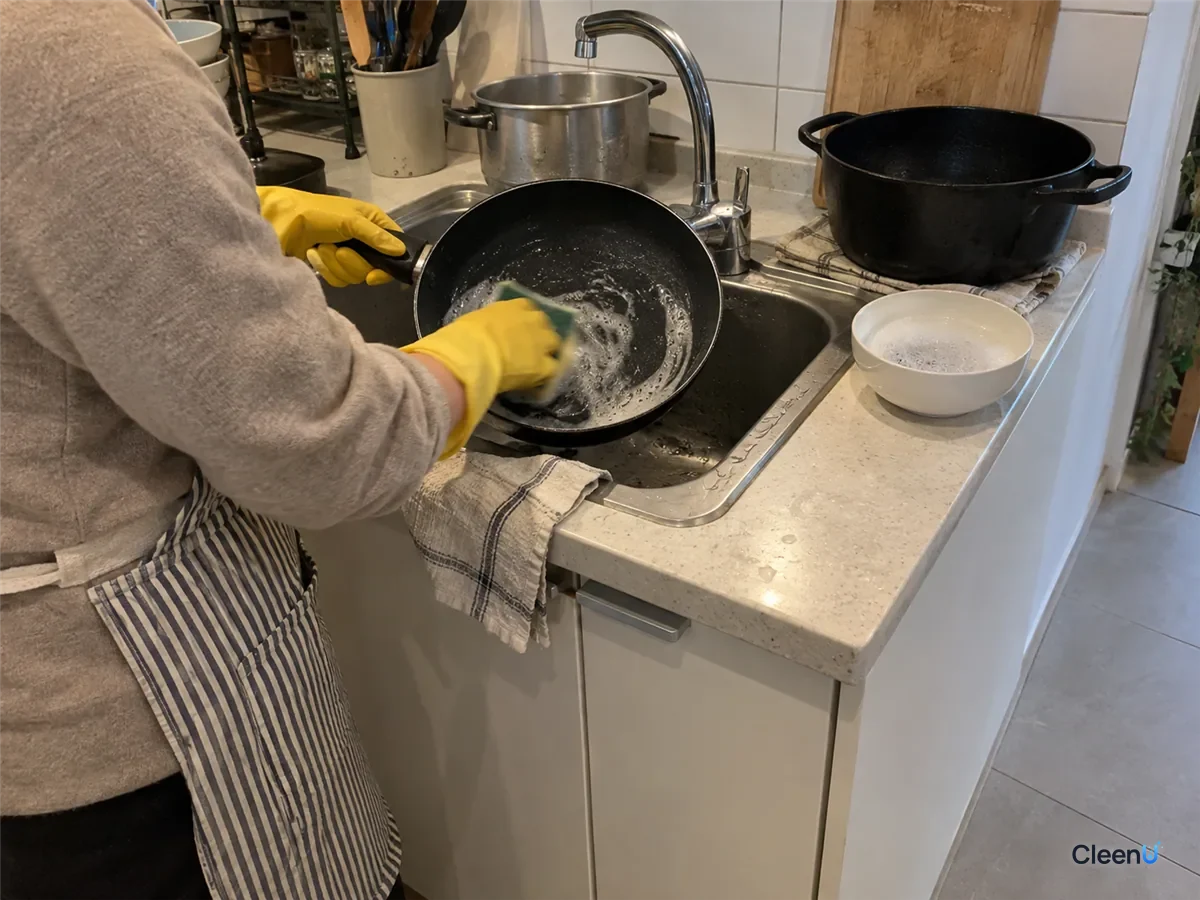
To clean nonstick: let the pan cool to warm, add warm water and a little dish soap, and wipe with a soft sponge. For stuck-on bits, soak in warm water first. No steel wool, stiff brushes, or alkaline degreasers.
Why cast iron can't handle alkali
The black, slick surface on cast iron is seasoning built up by initial seasoning and years of cooking: oil polymerized by heat into a coating bonded to the iron. It keeps food from sticking and the pan from rusting.
Breaking down polymerized oil is exactly what an alkaline degreaser does. Use one on cast iron and you strip away the seasoning layer by layer, exposing bare iron that sticks and rusts.
To clean cast iron: while it's still warm, scrub off food with hot water and a brush; a little dish soap now and then is fine. Dry it right away, heat it briefly on the stove, and rub on a thin coat of oil. If it rusts, scrub the rust off with steel wool and re-season it.
Where an alkaline degreaser is fine
Grease on the outside of stainless pans, stainless stovetops, tile backsplashes, range hood exteriors in stainless or painted finishes (test first), and the outside of intact enameled cookware can all be treated with an alkaline degreaser per the label. Always wipe off the residue with plain water afterward, and dry stainless along the grain.
For the inside of cookware that touches food, dish soap is enough day to day. Degreasers are mainly for the hard surfaces around the stove; see How to clean a kitchen and How to clean grease off a backsplash.
What that black crust on an aluminum pan bottom really is
What most people want to blast with degreaser is the dark brown, hard ring on the bottom of an aluminum pot or kettle. It's usually two things layered together. One is carbonized grease from boil-overs and splatter that the burner flame has baked again and again. The other is the aluminum's own oxide layer, which thickens and darkens with heat and steam. The first is something stuck to the pan. The second is a change in the metal itself.
Carbonized grease isn't really grease anymore, so an alkaline degreaser doesn't do much to it, and its label says as much. Meanwhile the alkali goes to work on the oxide layer and the aluminum. The usual result is that very little crust comes off, while the clean aluminum around it gets etched first. A physical approach is safer. Soak the area in warm water to soften it, then work it with a stainless steel cleaning paste or an aluminum cleaning paste and a soft cloth, rubbing in one direction. The outside bottom never touches food, so a slightly rougher scrub pad is OK there, but not inside the pan. If you can live with a darker pan bottom, you don't need to get it back to new. Stop once nothing dark flakes off and the surface no longer feels greasy.
Your dishwasher is an alkaline bath too
Plenty of people never put degreaser on aluminum and still end up with darkened pans. The dishwasher is often why. Most dishwasher detergents are alkaline, and combined with hot water spraying for a long cycle, the effect on aluminum is a lot like an alkaline degreaser. Aluminum pots, steamers, measuring cups, and knives with aluminum handles should be hand-washed unless the manual says they're dishwasher-safe.
Hard-anodized aluminum is a little different. Its surface has been treated electrochemically to build an oxide layer far thicker than the natural one, so it's more durable than plain aluminum. Most makers still say to avoid strong alkali and the dishwasher, though. Once alkali dissolves that anodized layer, there's no restoring it at home, so follow the manufacturer's care instructions closely.
If it already happened, how to tell whether there's damage
Aluminum: if the degreaser was only on it briefly, you rinsed right away, and the surface is still silver, there's usually no real harm. If you see gray or dark blotches, the oxide layer has been dissolved. Simmering diluted white vinegar or lemon water in it can even out the surface, but any small pits that formed are permanent.
Nonstick: rinse it, then fry an egg. If the egg still slides freely, the coating probably wasn't meaningfully damaged. If food starts to stick in spots, or the coating feels draggy or looks lighter in color, it's been affected. Use a bit more oil from now on, and replace the pan once the coating starts to peel.
Cast iron: after rinsing, a gray surface or bare iron showing through means some seasoning came off. Dry it right away, heat it on the stove, rub in a thin coat of oil, and heat it until it just starts to smoke, then turn it off. Two or three rounds rebuild the seasoning. Of the three, cast iron is the only one you can fully restore at home.
Before you use any cleaner, read the "not for" list
Most cleaning labels list the materials and situations they aren't meant for. Degreasers usually exclude aluminum, raw wood, and marble. Descalers usually exclude marble, aluminum, and coated fixtures. Chlorine products usually exclude fabrics and metal. A few seconds reading the label prevents most material damage.
Not sure what a pan is made of? Aluminum is light and silver-gray. Stainless is heavier and shiny, and a magnet usually sticks (though not to every grade). Cast iron is very heavy and black. When in doubt, treat it as alkali-sensitive and use mild dish soap.
Stop if you see this
If aluminum darkens or spots, stop using the alkaline degreaser and rinse with water. If a nonstick coating blisters, peels, or is badly scratched, stop using the pan and replace it. Don't use alkaline degreasers on hot cookware or stovetops or mix them with acidic or chlorine products. If your skin stings, rinse with water; if it gets in your eyes, rinse continuously and seek medical care.
Degreaser and cookware: common questions
Can I wash aluminum pans with kitchen degreaser?
No. Strong alkali dissolves aluminum's protective oxide layer and darkens and pits the metal. Wash aluminum with warm water and mild dish soap.
My aluminum pan turned black. What now?
Simmer diluted white vinegar or lemon water in it, or use an aluminum cleaning paste, then wash with mild dish soap, and avoid alkaline products going forward.
Can I use degreaser on nonstick pans?
We don't recommend it. Alkali and abrasive tools damage the coating. Use warm water, dish soap, and a soft sponge.
Can I use dish soap on cast iron?
A little, occasionally, is fine, but never an alkaline degreaser, which strips the seasoning. Dry it, heat it, and oil it right after washing.
Can I use degreaser on stainless pans?
On grease on the outside and on stainless stovetops, yes, per the label; wipe with water and dry afterward. Dish soap is enough for the inside.
How can I tell if a pan is aluminum?
Aluminum is light and silver-gray. If you're not sure, treat it as alkali-sensitive and use mild dish soap.
For an alkaline kitchen degreasing spray made for old grease on stovetops, range hoods, backsplashes, and cabinet doors (not for aluminum, raw wood, or marble), take a look at our Kitchen Cleaner & Degreaser.
Aluminum, nonstick, and cast iron cookware shouldn't touch an alkaline degreaser. Strong alkali dissolves aluminum's oxide layer and leaves it dark and pitted; nonstick coatings are damaged by alkali and abrasive tools; and cast iron seasoning is polymerized oil that a degreaser strips right off, leaving the pan to rust. Wash these with warm water, mild dish soap, and a soft sponge, and dry and oil cast iron afterward. Save alkaline degreasers for alkali-tolerant hard surfaces like stainless stovetops, tile, and range hood exteriors, wipe with water afterward, and always read the label's "not for" list first.