
OEM/ODM
Private-Label Kitchen Degreaser: Heavy-Duty or Everyday Formula First?
Direct answer
Pick the first SKU by channel. An everyday formula is mildly alkaline, used daily, and drives repeat sales. A heavy-duty formula tackles range hoods and old buildup with stronger alkalinity and dwell time. Your alkali, chelator, and surfactant choices decide what the label can claim.
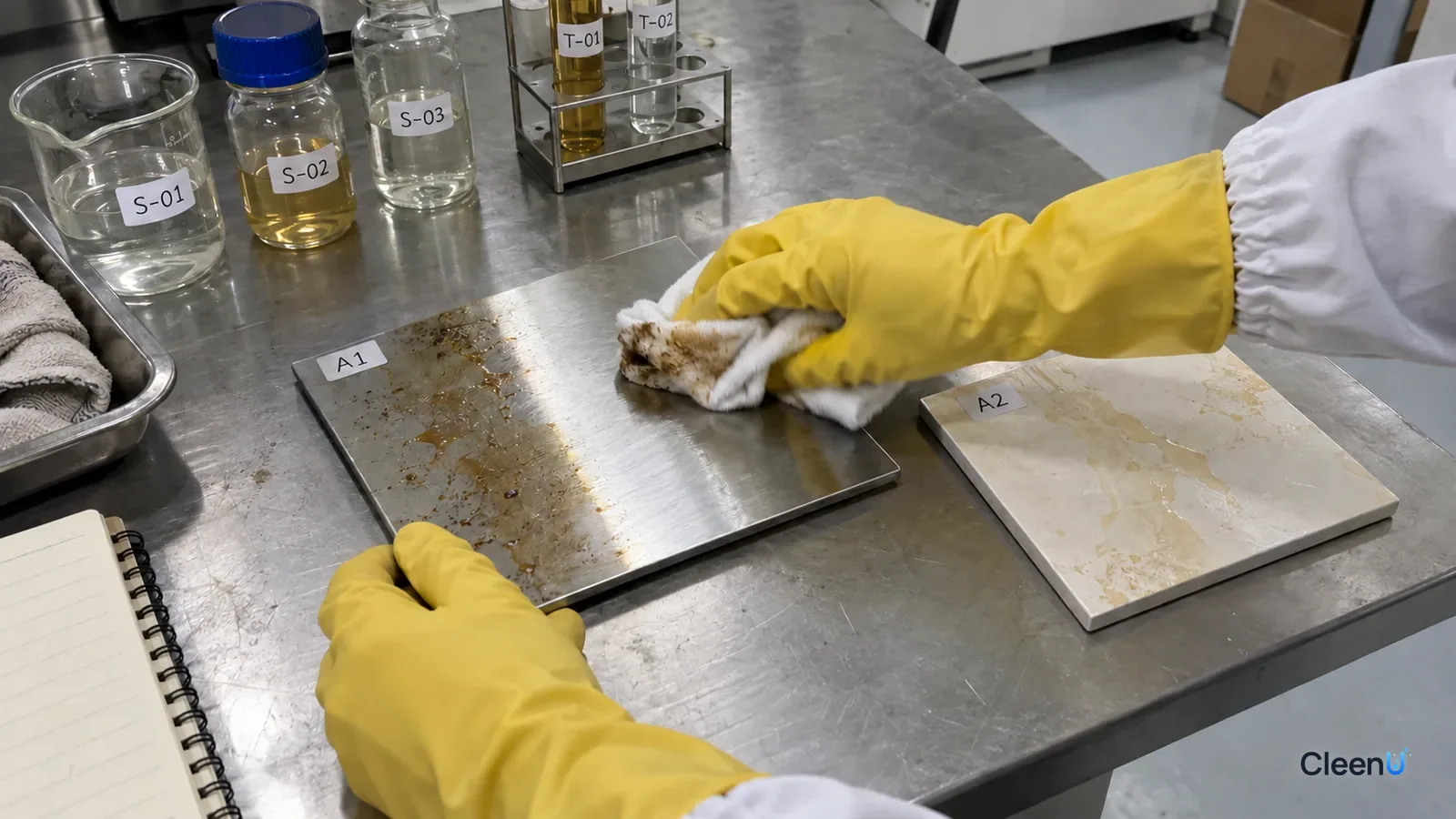
Kitchen degreaser is one of the most consistent categories in household cleaning; nearly every home has a grease problem. But "degreasing" spans a huge range, from a daily wipe of the counter to a range hood that hasn't been cleaned in a year, and the formula requirements are completely different. Decide which job your first product will do, then settle four chemistry questions with your manufacturer: where the alkalinity comes from, how the formula handles hard water, which surfactants match the sprayer, and how it's preserved. Those four answers are what the label and product page will stand on.
Grease strength determines formula strength
Fresh splatter and everyday film: grease on stovetops, counters, and backsplashes that's still soft within a few days. A mild alkaline formula with surfactants wipes it off, people can use it daily, and it's surface-friendly.
Moderate film: weeks to months of buildup that's starting to yellow and get tacky. It needs an alkaline formula with solvent, sprayed and left a minute or two before wiping.
Heavy, old grease: range hood exteriors and filters, backsplash tile near the stove, cabinet tops, where grease has oxidized and polymerized into a hard film. It needs stronger alkalinity and more solvent, several minutes or more of dwell time, and a brush.
Baked-on carbon: hard black crust inside ovens, on baking sheets, and on stove grates. That's a separate product, an oven and grill cleaner, usually above pH 12, and should be kept apart from general degreasers.
The more alkaline the formula, the better it cuts heavy grease, and the more care the surface list needs: aluminum darkens, unsealed wood raises and discolors, natural marble can be damaged, and skin irritation is more noticeable. Those trade-offs get handled when you choose the alkali, and they end up on the label.
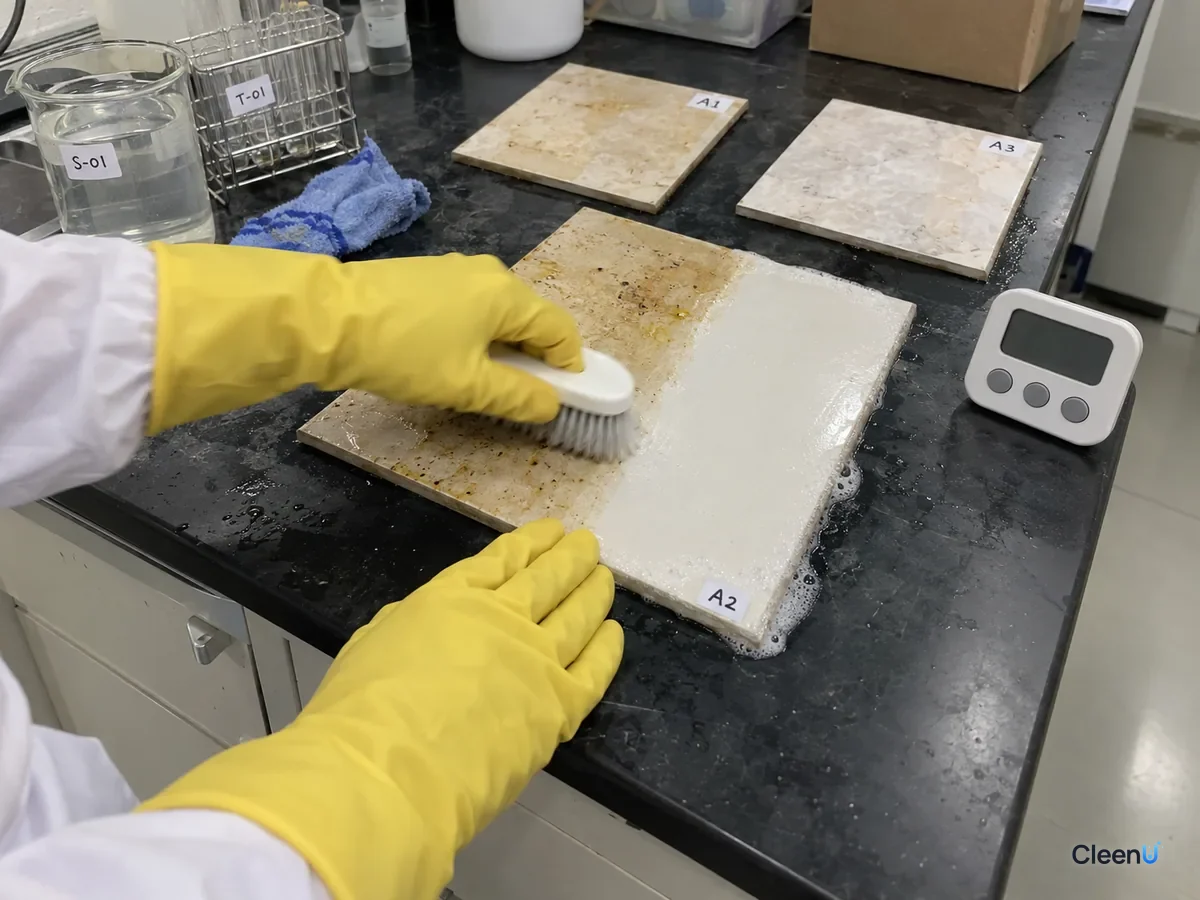
Everyday or heavy-duty first?
Everyday formula: used often, repurchased quickly, mildly alkaline, broadly compatible, and steady in reviews. It suits mass retail and general e-commerce as a long-term volume product. It doesn't feel as dramatic, so differentiate on the experience: sprayer, scent, streak-free finish.
Heavy-duty formula: strong pain point and dramatic results. Videos of grease running off a range hood work great for content-driven e-commerce, and demand peaks around holidays and seasonal deep cleans. Stronger alkalinity calls for prominent safety directions (wear gloves, avoid eyes, not for aluminum or marble), and a clear surface list is what keeps customers using it in the right places. It's repurchased less often.
Our suggestion: brands built on content-driven e-commerce and hero products can lead with heavy-duty to build awareness through results, then add an everyday formula for repeat purchase. Brands focused on mass retail, general e-commerce, and repeat sales should lead with the everyday formula. Make the two clearly different in alkalinity, scent, and packaging so customers don't grab the wrong one.
Starting points from our line
CleenU Kitchen Cleaner & Degreaser is an alkaline kitchen degreasing spray, pH 10.0 to 11.5 as supplied, made with alkaline builders, nonionic surfactants, and glycol ether solvent, with no chlorine and no abrasives. It's left 1 to 3 minutes (5 for sticky grease) and wiped clean, and it's made for stovetops, range hood exteriors, backsplashes, cabinet doors, and counters, sitting in the moderate-to-heavy position. Our All-Purpose Cleaner is a mildly alkaline spray at pH 9.0 to 10.5, low-residue with no rinse needed for daily wiping of counters, tables, cabinet doors, and appliance exteriors, closer to an everyday formula. Our Oven Cleaner & Degreaser and Oven & Grill Cleaner are strong alkaline products above pH 12 for baked-on carbon. Any of these can be a starting point, with alkalinity, solvent level, scent, and packaging adjusted to your positioning.
These tiers differ by more than "a little stronger" or "a little milder." The alkali source, solvent, surfactant system, and chelator all shift, and each shift changes what the label can say. The sections below take them one at a time.
How an alkaline degreaser actually removes grease
Kitchen grease is mostly triglycerides from cooking oil. It starts out liquid, but heat and air slowly oxidize and polymerize the unsaturated fats, turning the oil tacky and gummy and eventually into a hard yellow film. That film sticks to stainless, tile, and painted panels through the oil's own adhesion, and it traps dust and smoke particles as it builds, so it gets thicker and smears more the longer it sits.
Two different things get called "degreasing" here, and it pays to keep them apart: saponification and emulsification.
Saponification is a chemical reaction. Alkali hydrolyzes the ester bonds in triglycerides, producing fatty acid salts (soap) and glycerol. Fully saponifying triglycerides takes a strong alkali such as sodium or potassium hydroxide plus heat or long contact time, which is exactly why oven and grill cleaners sit above pH 12. In a kitchen degreaser at pH 10 to 11.5, the alkali mainly neutralizes the free fatty acids in oxidized film, turning them into water-soluble soap, with some ester hydrolysis on top, and that loosens the hard film.
Emulsification involves no reaction. Surfactant molecules have one oil-loving end and one water-loving end; they line up at the oil-water interface and break loosened grease into tiny droplets or pull it into micelles, which the cloth or brush carries away. How well that works depends on matching the HLB (hydrophilic-lipophilic balance) to the oil. Kitchen grease is a mixture, so a blend of surfactants covers it better than a single one. Pairing anionic and nonionic surfactants also lowers the critical micelle concentration, so less total surfactant does the same job. That's the case for a well-built blend over one high-dose ingredient.
Between the two sits swelling. Glycol ether solvents work into the polymerized film, softening it and weakening its grip on the surface. The difference between an everyday and a heavy-duty formula comes down to how hard each stage pushes: the alkalinity level, the solvent ratio, and the dwell time.
That explains why heavy-duty products need dwell time. Saponification and swelling both take a few minutes, and wiping right after spraying only takes off the top layer. It also explains the water wipe at the end. Leftover alkali and emulsified grease dry into a hazy, tacky film that actually attracts new grease faster. And soap formed on the surface reacts with hard water to form calcium and magnesium soaps, which is the chelator's job, covered below.
Same pH, different alkali, different product
The pH on a spec sheet tells you how alkaline the concentrate is at that moment. It doesn't tell you how well it degreases. Two products at about pH 10 can perform very differently because of their surfactants and solvents, and different alkali sources behave differently on metal, in hard water, and in the nose. Kitchen degreasers typically draw on four.
Sodium carbonate: a moderate alkali that supplies alkalinity and buffering. Buffering means that as free fatty acids in the grease consume the alkali, the pH doesn't immediately drop, so the product keeps working through that minute or two of dwell. It's inexpensive and common in everyday and moderate formulas.
Sodium silicate: also supplies alkalinity and buffering, and it gives some corrosion protection for aluminum and zinc. It shows up in degreasers that need to be kinder to metal parts; more on that in the next section.
Amines (monoethanolamine, triethanolamine): moderate alkalis, typically pH 10 to 11.5, strong enough for everyday grease and gentler on surfaces and skin than strong caustic. They have an odor that needs fragrance, which narrows your scent options.
Sodium or potassium hydroxide: strong alkalis at pH 12 to 14 that can saponify baked-on fat. They're the backbone of oven and grill cleaners. They corrode aluminum, zinc, plated parts, some paints, and polished natural stone, and in the U.S. and EU they need corrosive labeling under GHS/CLP. Most general kitchen degreasers don't go this route; baked-on carbon is clearer as its own product.
So when you compare two samples, don't stop at the color of a pH strip. Ask what the alkali source is, whether the system is buffered, and which surfactants and solvents it uses, then compare both on the same aged-grease panel.
Aluminum and soft metals: what silicate can do
Alkali reacts with aluminum, releasing hydrogen and leaving the surface dark and dull, and the stronger the alkali, the more obvious it gets. Zinc and plated parts are sensitive too. Kitchens are full of these materials: aluminum pans and trim, and the aluminum filters and accents on some range hoods.
In an alkaline system, sodium silicate gives some corrosion protection for aluminum and zinc and is often used to reduce a degreaser's effect on them. "Some" is the key word. It slows corrosion, and the protection gets harder to hold as alkalinity, dwell time, and temperature rise. So even with silicate in the formula, whether the label can say "safe on aluminum" depends on an aluminum panel tested at the label dwell time. Until that test is done, keep aluminum cookware and trim on the "do not use on" list.
CleenU Kitchen Cleaner & Degreaser (pH 10.0 to 11.5) lists aluminum cookware and trim as unsuitable surfaces for exactly this reason. If you want "safe on aluminum range hood filters" as a selling point, raise it at the sampling stage. The alkali source, alkalinity, and recommended dwell time all need to be tuned for it, then verified on aluminum panels.
Hard water: the chelator decides whether surfaces dry hazy
Calcium and magnesium in tap water do three things. They bind anionic surfactants and weaken them; LAS (linear alkylbenzene sulfonate) is especially sensitive. They combine with the soap formed during saponification into calcium and magnesium soaps that dry white and feel rough. And they deposit as scale when heated. When a sample shines in a soft-water lab and then draws "doesn't wipe clean, leaves a white film" feedback in a hard-water region, the root cause is usually the chelating and building system, not the surfactant level.
Chelators lock up calcium and magnesium so they stop interfering. The common options:
Sodium citrate: mild, readily biodegradable, moderate chelating strength. A good fit for everyday and gentle positioning.
GLDA- and MGDA-type chelators: readily biodegradable, strong, and stable in alkali. They're the mainstream replacement for EDTA and cost more, which suits products built for hard-water markets or a greener positioning.
EDTA and its sodium salts: strong and inexpensive, but poorly biodegradable and restricted in some markets and eco-labels.
Phosphonates: inhibit crystal growth at low levels, but they contain phosphorus, which some markets watch closely.
Your chelator choice directly changes what you can say. "No white film, even in hard water" needs a wipe comparison under your target market's water hardness. A term like "readily biodegradable" refers only to the ingredients described, so check it against your target market's advertising rules (in the U.S., the FTC Green Guides) before it goes on the label.
Surfactants and sprayers: wetting, cling, and atomizing go together
Degreasing starts with wetting: the liquid has to spread out and work into the grease film and the surface texture. Nonionic alcohol ethoxylates cut grease well, foam low to moderate, ignore hard water, and tolerate acid and alkali, so they carry most kitchen degreasers. Anionics like LAS and AES cut fast and foam more, and blending them in boosts degreasing and foam. Alkyl polyglucosides are mild and alkali-tolerant, a fit for gentler positioning.
The sprayer sets how the system is built.
Foam trigger: the foam clings to vertical surfaces like range hoods and backsplash tile, extending contact time, and it shows the user exactly where the product landed. Stable foam needs foaming and foam-stabilizing ingredients (anionics, amine oxides, and the like). Get the balance wrong and the foam collapses right after spraying and the liquid runs down the wall.
Mist trigger: viscosity has to be low enough to atomize, and the nozzle orifice has to match it. Mist covers counters and large areas quickly. If you want a little cling from a mist, you can thicken slightly, but thickeners such as xanthan gum can be broken down by microbes, which raises the bar for preservation.
How much a product foams depends on the surfactant type, not on its cleaning power. A foam that "looks strong" and a mist that "barely bubbles" can degrease equally well; the difference is contact time and what the user sees. So claims like "clings to vertical surfaces" need a measured hang time and runoff test on a vertical panel, and "powerful degreasing" needs a side-by-side on the same grease panel.
Residue and rinsing: what's left after the wipe
A hazy, tacky, or streaky finish comes from solids left behind as the surface dries: alkaline salts, surfactants, fragrance and solubilizer, and polymers. High-foam anionic systems are harder to rinse, and the more fragrance you add, the more solubilizer it takes, so residue climbs along with it.
Everyday and heavy-duty formulas take different paths here. An everyday formula can be designed for low residue by lowering total solids, choosing easy-rinsing surfactants, and keeping fragrance in check, so daily wiping needs no rinse. CleenU All-Purpose Cleaner is built for low residue. A heavy-duty formula carries more alkali and solvent, and leftover alkali and emulsified grease leave a hazy, tacky film, which is why CleenU Kitchen Cleaner & Degreaser's directions say to wipe clean, then wipe again with water.
That settles one key line on the label and product page: whether to say "no rinse needed." Back it with a dried-residue and feel comparison against a plain-water wipe. On counters near food, keep "wipe with clean water after use."
Stability and preservation: is it the same bottle a year later?
A private-label product goes through warehousing, shipping, and summer and winter temperature swings before the last spray. When stability falls short, the usual signs are haze or crystals in winter (anionic surfactants lose solubility sharply below their Krafft point), separation in summer heat (nonionic surfactants separate from water above their cloud point), fragrance oiling out, viscosity changes, and pH drift.
A typical stability check at the sampling stage: store at 113 to 122°F (45 to 50°C) for 4 weeks as a rough proxy for about a year at room temperature (a rough guide, not an exact conversion, and no substitute for real-time stability); cycle three times between 5 to 14°F (−15 to −10°C) and room temperature, checking for separation, crystals, haze, and viscosity; and watch appearance, odor, pH, package deformation, sprayer function, label adhesion, and leaks throughout.
Pick the preservative to match the pH. A water-based cleaner is a growth medium for microbes, and weak preservation shows up as yellowing, off-odors, thinning (xanthan broken down by microbes), and swollen bottles. Sodium benzoate and potassium sorbate only work below pH 5, so they're out for an alkaline degreaser. BIT-type preservatives tolerate alkali and heat and are usually paired with others. MIT is a strong sensitizer; the EU requires sensitizer labeling at 15 ppm and above in mixtures, and many brands keep it low on their own. Mainstream brands also avoid formaldehyde-releasing preservatives. Adding a preservative doesn't prove it works; a challenge test does.
Packaging is part of stability too. PET and HDPE tolerate solvents and oily ingredients differently, and strong alkali and some solvents can stress-crack certain bottles or defeat a sprayer's seal. Leaks are the biggest shipping risk for liquids, so ask for an inner seal under the cap, plus drop and leak tests on the final packaging. Shelf life is 24 months unopened.
Every formula choice changes what the label can say
Every line on the label and product page should trace back to the formula and a test. Here's how the choices above map to claims.
Alkali source and strength: the stronger the alkalinity, the more complete the precautions need to be. Spell out "wear gloves, avoid contact with eyes and skin, ventilate" plus first-aid directions. Strong caustic products also need corrosive labeling under GHS/CLP in the U.S. and EU.
Silicate: it supports developing toward "kinder to aluminum," but write "safe on aluminum" only after aluminum panel testing. Without it, aluminum cookware and trim stay on the "do not use on" list.
Chelator: with a GLDA- or MGDA-type chelator, you can build toward "made for hard water," backed by a hard-water wipe comparison.
Solvent: ethylene glycol butyl ether penetrates grease film well but carries toxicity and VOC concerns, and California and some other markets restrict it. Dipropylene glycol methyl ether and propylene glycol n-butyl ether are milder. d-Limonene dissolves aged grease strongly but brings odor and flash-point issues. For markets with VOC limits, run a VOC calculation on the formula.
Sprayer and surfactants: "powerful degreasing" is fine to say. "Clings to vertical surfaces" needs a vertical hang test. Phrases like "instantly clean" or "no wiping needed" set up a gap with real results; use verifiable directions like "let sit a few minutes, then wipe clean."
Residue: "no rinse needed" needs a residue comparison. On counters near food, keep "wipe with clean water after use."
Preservative and fragrance: MIT sensitizer labeling and fragrance allergen declarations follow your target market's rules.
Finally, list unsuitable surfaces in full: aluminum cookware and trim, unsealed wood cabinets, natural marble counters, nonstick coatings, hot stovetops, and no mixing with acidic or chlorine products. When that list is clear, customers use the product in the right places, and reviews stay steady.
Validating samples against realistic grease
Plenty of degreaser samples look great in the lab on fresh oil and then perform differently in real kitchens because the test soil wasn't realistic. Prepare two kinds of panels. One gets fresh cooking oil, for judging how the everyday formula wipes and what residue it leaves. The other gets oil that's baked and left to age, which is much closer to what's on a real range hood or backsplash, for judging dwell time and the number of brushing passes the heavy-duty formula needs.
Run controls on surfaces the product shouldn't touch, too. Spray aluminum, unsealed wood, and natural marble samples, wipe them after the label dwell time, and look for darkening, whitening, or dulling. Those results decide how long your "do not use on" list needs to be. Compare foam and mist triggers on vertical panels as well: how long the foam clings, and whether runoff drips onto the cooktop or floor.
If your target market has hard water, add a hard-water control and check for a white film after drying, and run the stability checks above in parallel. Read the results together, and the choice of alkali source, whether to add silicate, and which chelator to use stops being guesswork.
Adjusting for channel and market
Chinese-style cooking produces a lot of grease, so heavy-duty demand is concentrated there. In most U.S. and European home kitchens, grease is lighter, everyday and multi-surface formulas are an easier sell, and shoppers care more about whether a rinse is needed and whether the product is fine near food-prep areas. Restaurant and hotel kitchen buyers focus on speed and cost per use, so a 33.8 fl oz (1 L) refill or a bundle with brushes can make sense. For cross-border sales, prepare safety directions and unsuitable-surface wording to match each target market's labeling expectations, and check solvent VOC limits and preservative sensitizer labeling at the same time.
Documents such as the SDS are provided per project after you inquire.
Building the line after the first product
Once the first product is selling, the next step usually follows from customer feedback. If reviews for an everyday spray keep mentioning range hoods, that's the signal for a heavy-duty companion. If heavy-duty buyers ask for something gentler for daily wipe-downs, add the everyday formula. Keep the two clearly separated by alkalinity, color, and bottle design.
Whichever tier comes first, draft the label from the strongest formula you plan to sell. Starting with the full precaution set and surface list, then trimming it for the milder product based on test results, is far easier than adding warnings after launch.
How the project runs
Define the brief: channel, target market and local water hardness, cleaning strength for the first product, sprayer, packaging, and budget.
Sampling: we adjust the alkali source, solvent, surfactants, and chelator to your brief; free samples take about 3 days.
Validation: test on target surfaces like range hood exteriors, tile, stainless, and stovetops, with both fresh grease and oxidized film, for speed and surface safety, while watching stability.
Production after packaging and label approval: the minimum order is 500 bottles, and bulk orders ship in about 7 days. Final pricing is confirmed in the formal quote.
For consumer education content, see How to clean a kitchen and How to clean a range hood filter.
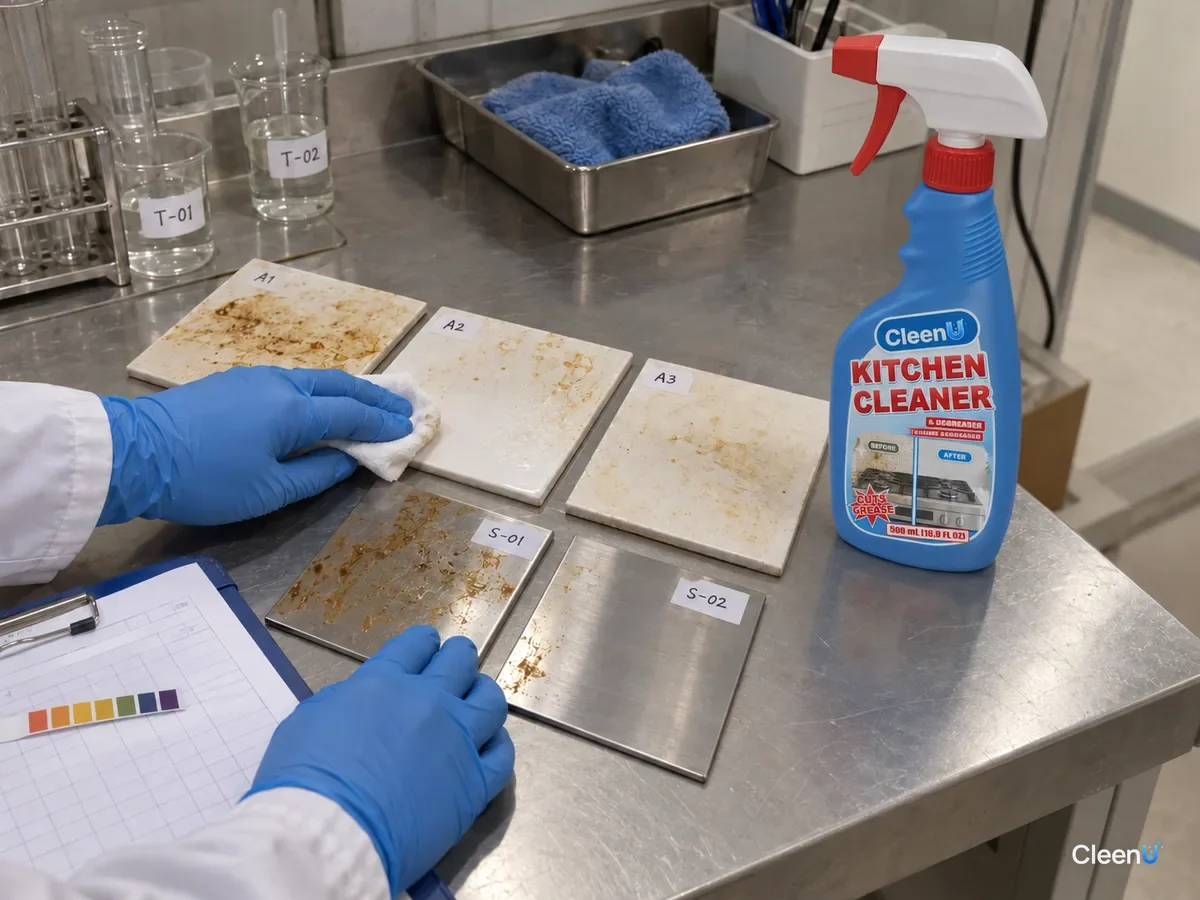
To start your private label from an alkaline, solvent-boosted degreaser that softens sticky grease in a few minutes, take a look at our Kitchen Cleaner & Degreaser.
Kitchen degreaser formulation questions brand owners ask
Does a higher pH mean a kitchen degreaser cuts grease better?
No. pH tells you how alkaline the concentrate is, not how well it degreases. Two products near pH 10 can perform very differently because of their surfactants, solvents, and alkali source, so compare samples on the same aged-grease panel and ask whether the alkali is buffered.
What does it take to put safe on aluminum on a degreaser label?
Choose the right alkali source, then test on aluminum panels before you make the claim. Silicate gives some corrosion protection for aluminum and zinc, but it gets harder to hold as alkalinity and dwell time rise. Without aluminum panel results, keep aluminum cookware and trim on the do-not-use list.
What should change in a degreaser formula for hard-water markets?
Strengthen the chelator. Calcium and magnesium weaken anionic surfactants and form calcium soaps that dry white. GLDA- and MGDA-type chelators are alkali-stable and readily biodegradable, a good fit for these markets, and sampling should include a hard-water wipe comparison.
For a private-label kitchen degreaser, tier your products by grease strength and frequency of use. An everyday formula is mild, used daily, and drives repeat sales in mass retail and general e-commerce. A heavy-duty formula is more alkaline with dramatic results, suited to content-driven e-commerce and deep-clean seasons. Baked-on carbon belongs to a separate oven and grill product. Choose the first product by channel, then lock in the key formula decisions: the alkali source and its buffering set staying power and surface behavior, silicate matters for aluminum, the chelator decides whether hard-water regions see a white film, surfactants and sprayer set wetting and cling, and the preservative has to match the pH. Each one maps to a line on the label, so validate on target surfaces and realistic grease before production.