
Q&A
Skin Stinging After Using a Degreaser: What to Do
Direct answer
Rinse right away with plenty of running water for at least 15 minutes, stop contact, and follow the first-aid directions on the label. Don't try to neutralize it with vinegar. Stinging isn't a sign of a "strong" product working; wear gloves next time. Get medical care for lasting redness, blisters, white or hardened skin, or anything in your eyes.
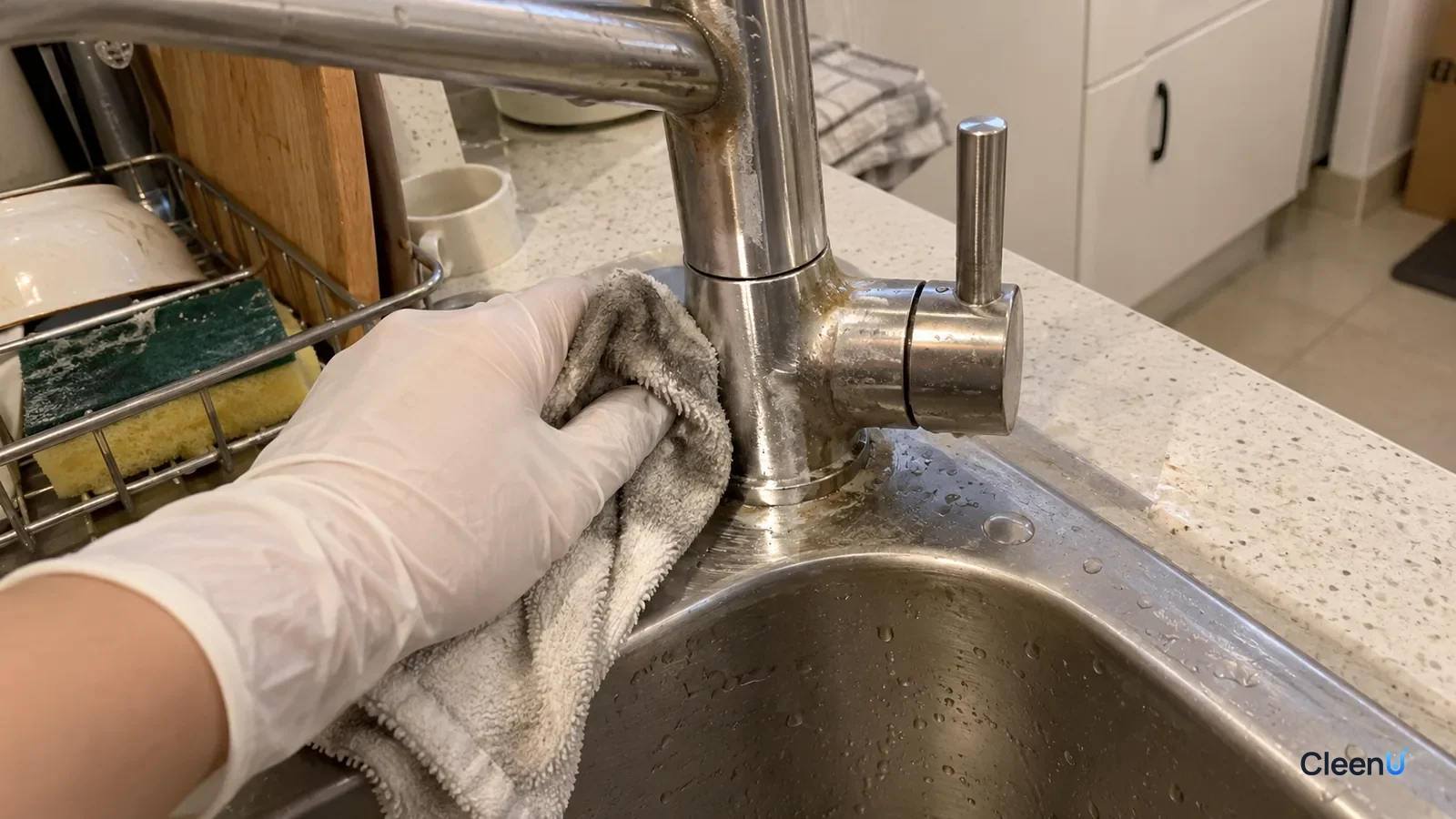
You've just wiped down the range hood with a kitchen degreaser. Your hands feel slippery, and a little later they start to burn, turn red, and sting; in worse cases the skin turns white or peels. A lot of people figure it just means the product is strong, rinse briefly, and move on. Really, it's your skin telling you it's been irritated. How you handle it, and how you protect yourself next time, both matter.
Why degreasers irritate skin
Most kitchen degreasers are alkaline. Alkali saponifies grease, turning it into something water can rinse away. That's how they work.
The trouble is that skin has its own protective layer of oil, and skin is naturally slightly acidic. An alkaline cleaner dissolves that oil and breaks down the skin barrier. The stronger the alkali and the longer the contact, the more irritation you get: burning, stinging, redness, cracking. Very high-pH products, like some oven cleaners, can cause chemical burns with prolonged contact.
Solvents in degreasers also strip oil from the skin, leaving it drier and more vulnerable.
So stinging isn't a sign of effectiveness. It's a sign of harm.
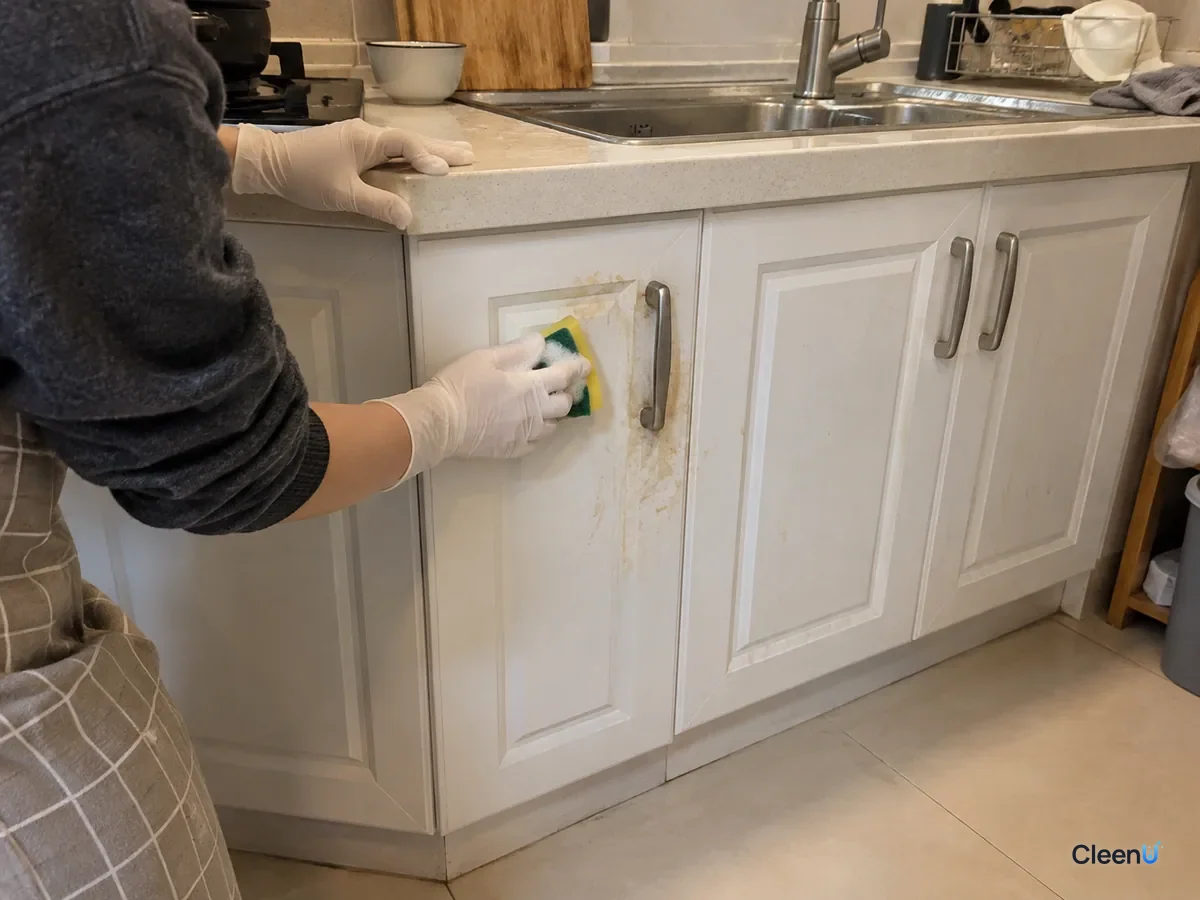
What's actually happening to your skin
An alkaline degreaser cuts kitchen grease through a few things working at once. The alkali saponifies fats, turning the fatty-acid esters in cooking oil into water-soluble soap. Nonionic surfactants lower the tension between oil and water so the grease film breaks into tiny droplets that a cloth can carry off. Glycol ether solvent soaks into thick, aged grease and softens it.
Put that same mix on your hands and the same chemistry runs on your skin. The outer layer of skin is held together by its own lipids, and those lipids get dissolved by the solvent and lifted away by the surfactant just like grease on a range hood. Then the alkali makes the outer layer swell with water, the barrier loosens, and irritants travel deeper. That's why so many people say their hands just felt slippery at first and only started burning ten or fifteen minutes later. The slick feeling is your skin's own oil being saponified and emulsified; the sting shows up once the irritant reaches more nerve endings.
It also explains why alkalis can be sneakier than many acids. An acid on skin usually stings right away, so you rinse. An alkali often doesn't hurt much at first, so you keep cleaning and the contact time gets longer.
What makes irritation more likely
Two people can use the same degreaser and only one ends up red. The difference is usually in the conditions:
- Small cuts, hangnails, or cracked skin already have gaps in the barrier.
- Wrapping a wet rag around your fingers keeps soaked cleaner pressed on your skin like a compress.
- Wiping a range hood with your arm raised sends liquid running down your wrist and into your sleeve, often without you noticing.
- Hands that were just in hot dishwater have a softened, water-logged outer layer.
- A glove with liquid inside is worse than no glove at all, because it seals the cleaner against your skin.
What to do, step by step
Stop contact and rinse the area under plenty of running water for at least 15 minutes. Remove rings, watches, and bracelets as you rinse so no cleaner stays trapped underneath.
Don't use vinegar or lemon juice to "neutralize" it. The acid-base reaction releases heat, can worsen irritation, and delays rinsing.
After rinsing, pat dry gently with a clean towel; don't rub.
Check the product label's first-aid directions and follow them.
If redness and pain persist after rinsing, or you see blisters, white or hardened skin, or a large affected area, see a doctor promptly and bring the product container so they know what it is.
If it splashes in your eyes, rinse immediately with plenty of water for at least 15 minutes, holding your eyelids open; remove contact lenses first, then get medical care right away. Eyes are especially sensitive to alkali, so don't wait.
If someone swallows it, don't induce vomiting; call Poison Control (1-800-222-1222 in the U.S.) or emergency services right away, with the product container in hand.
Why a full 15 minutes of rinsing
Rinsing works by diluting and carrying the alkali away, not by neutralizing it. Once it has soaked into the outer skin layer, a quick splash only clears the surface while the rest keeps working. A steady stream of running water keeps pulling out whatever seeps back up, so time matters more than water pressure or temperature.
A few details help. Use cool or room-temperature water, not hot; heat opens blood vessels and makes the sting worse. The flow doesn't need to be strong, just continuous. Rings, watchbands, and the spaces between your fingers trap the most liquid, so open them up under the water. If a sleeve got splashed, take it off or roll it up, because a wet cuff keeps the cleaner pressed against your wrist.
If your skin still feels slippery after rinsing, there's residue left; keep going. You can stop when the slippery feel is gone and the sting has clearly eased and isn't getting worse.
How to prevent it next time
Wear gloves. Use nitrile or rubber gloves with any kitchen degreaser, and especially with stronger ones.
Spray the cloth, or apply and use a brush, so your hands touch less liquid.
Don't wipe with bare hands or let cleaner sit on your skin.
Wash up afterward: rinse your hands after taking off the gloves and use some hand cream.
Read the label so you know the product's pH and precautions.
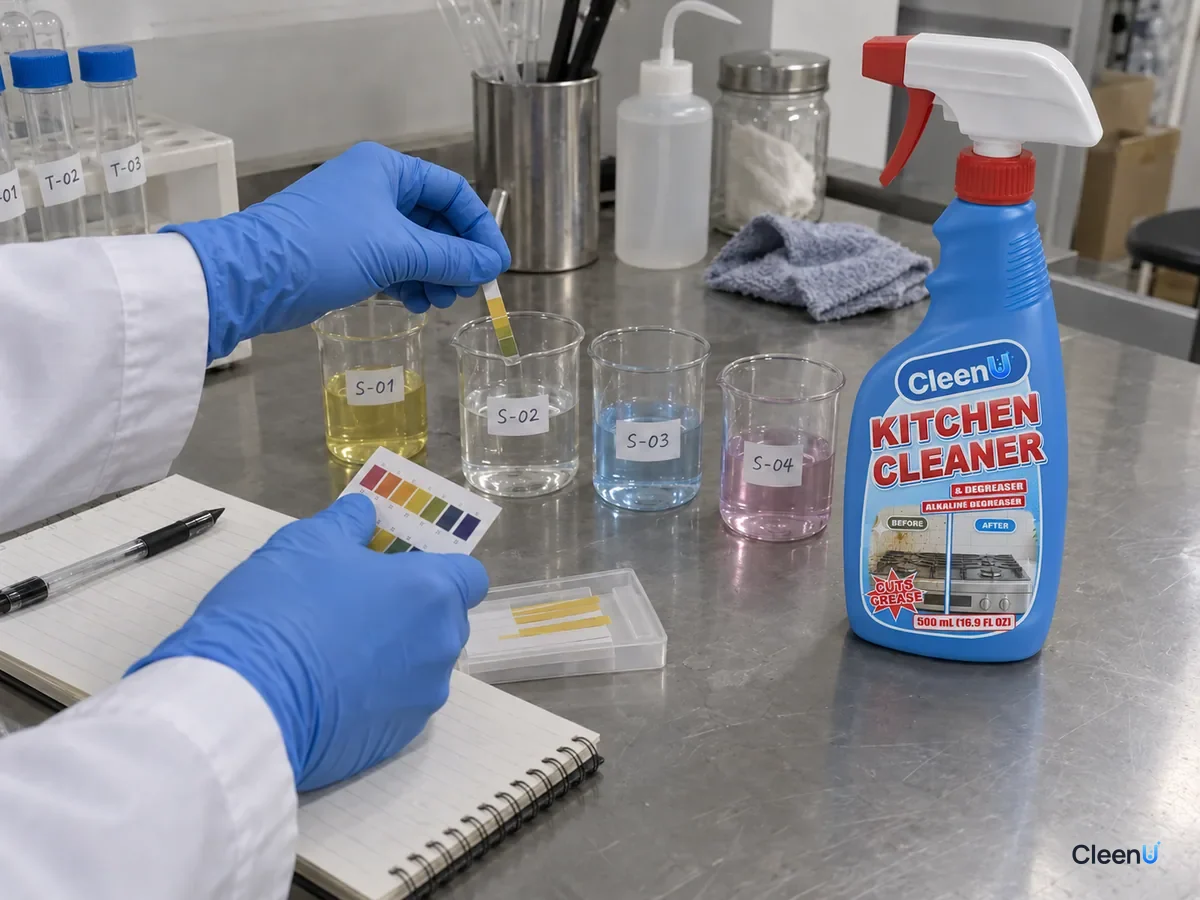
Take CleenU Kitchen Cleaner & Degreaser as an example. It's an alkaline kitchen degreasing spray, pH 10.0 to 11.5 as supplied, made with alkaline builders, nonionic surfactants, and glycol ether solvent, with no chlorine and no abrasives. That alkalinity cuts sticky kitchen grease effectively, and it also means you should wear gloves and avoid prolonged skin contact. It's made for stovetops, range hood exteriors, backsplashes, cabinet doors, and counters. It isn't for aluminum, unsealed wood, natural marble, or hot stovetops, and must never be mixed with acidic or chlorine cleaners.
If you have kids or family members with sensitive skin, split the work: a gentle everyday cleaner for light grease, a degreaser for sticky buildup, with gloves and good ventilation throughout. For different ways to tackle kitchen grease, see How to clean a kitchen.
Choosing and wearing gloves so they actually help
Nitrile holds up well to alkali and grease and suits most kitchen degreasers. Latex resists oils and solvents less well and tends to soften during a long range-hood session. Thin disposable gloves are fine for quick spot cleaning; for big jobs, use thicker household gloves with longer cuffs.
How you wear them matters too. When you're cleaning overhead, fold the cuff outward once to make a drip catcher so runoff doesn't reach your wrist. If a glove has a hole or feels slick on the inside, cleaner has gotten in: take it off, rinse your hand, and grab a fresh pair. Peel gloves off from the cuff, turning them inside out, so the outer surface never touches bare skin.
The right technique cuts skin contact a lot
Much of the irritation people get comes down to technique. With an alkaline kitchen spray, a sensible routine looks like this. Spray the surface or the cloth, then let it sit 1 to 3 minutes so it can loosen the grease film, or about 5 minutes for sticky buildup. Wipe the loosened grease off with a cloth or brush, turning to a clean side often instead of smearing the grease around. Finish with a wrung-out cloth dampened with plain water to pick up what's left.
That last wipe protects your hands later, too. Cabinet pulls and range hood buttons get touched every day, and if degreaser residue stays on them, every touch is a small dose. When the surface feels neither slick nor squeaky-tacky after the water wipe, the residue is mostly gone.
When to switch to something milder
Not every kitchen mess needs a strong alkali. Fresh splatter on the stovetop after tonight's dinner usually comes off with a neutral or mildly alkaline everyday cleaner and warm water. Only grease that has sat for days and turned yellow and tacky really calls for a degreaser above pH 10.
If you find yourself reaching for the heavy-duty product every time, the cleaning gaps are probably too long. Clean a little more often with a gentler product and save the strong one for weekly or monthly deep cleans, and your hands will meet strong alkali far less often. That split makes even more sense if someone at home has sensitive skin or eczema, or if older relatives or kids help with chores.
When you shop, check that the label clearly lists the pH range, which surfaces it's for and not for, and first-aid and protective directions. If a product leaves out that basic information, it's hard to judge the risk when you use it, and it's not worth buying.
Storing cleaners safely
Close caps tightly and store cleaners up high or in a locked cabinet out of reach of kids and pets.
Never pour them into drink bottles or unlabeled containers.
Keep acidic, chlorine, and alkaline products separate so they don't get mixed by mistake.
For degreasing backsplashes and range hoods, see How to clean grease off a backsplash.
Degreaser and skin: the questions people ask most
Degreaser got on my hands and they're burning. What's the first step?
Rinse immediately under plenty of running water for at least 15 minutes, removing rings and watches as you go. Don't wipe or apply anything first.
Can I neutralize it with vinegar or lemon juice?
No. Neutralizing an alkali releases heat and can make irritation worse. Lots of water is the safest approach.
My skin is still red and sore after rinsing. Now what?
For lasting redness, blisters, white or hardened skin, or a large area, see a doctor promptly and bring the product container.
What if degreaser splashes in my eyes?
Rinse your eyes with plenty of water for at least 15 minutes, holding the lids open and removing contact lenses, then get medical care right away with the product container.
Does stinging mean the degreaser works well?
No. Stinging means your skin is being irritated; it has nothing to do with how well it cuts grease. Wear gloves.
Which degreasers are most likely to irritate skin?
The more alkaline the product, the more irritating it is, such as heavy-duty and oven cleaners. Wear gloves with all of them.
For a kitchen degreaser that clearly lists its alkalinity, suitable surfaces, and precautions, and cuts grease efficiently when used with gloves, take a look at our Kitchen Cleaner & Degreaser.
Burning or stinging after using a degreaser means alkaline ingredients and solvents have damaged your skin's barrier; it's not a sign the product is working better. Rinse right away under plenty of running water for at least 15 minutes, remove rings and watches, skip vinegar, and follow the label's first aid. For lasting redness, blisters, white skin, or eye exposure, get medical care with the container. From now on, wear gloves with any kitchen degreaser, apply it with a cloth or brush, wash and moisturize your hands afterward, and store cleaners out of children's reach.