
How-to
How to Clean Gas Stove Grates and Burners
Direct answer
With the stove off and cool, remove the grates and burner caps, apply degreaser and let it sit or soak them in hot water, then scrub, rinse, and let them dry completely before reassembling. Wipe the cooktop with a cloth sprayed with degreaser, follow with plain water, and keep liquid out of the igniter and burner ports.
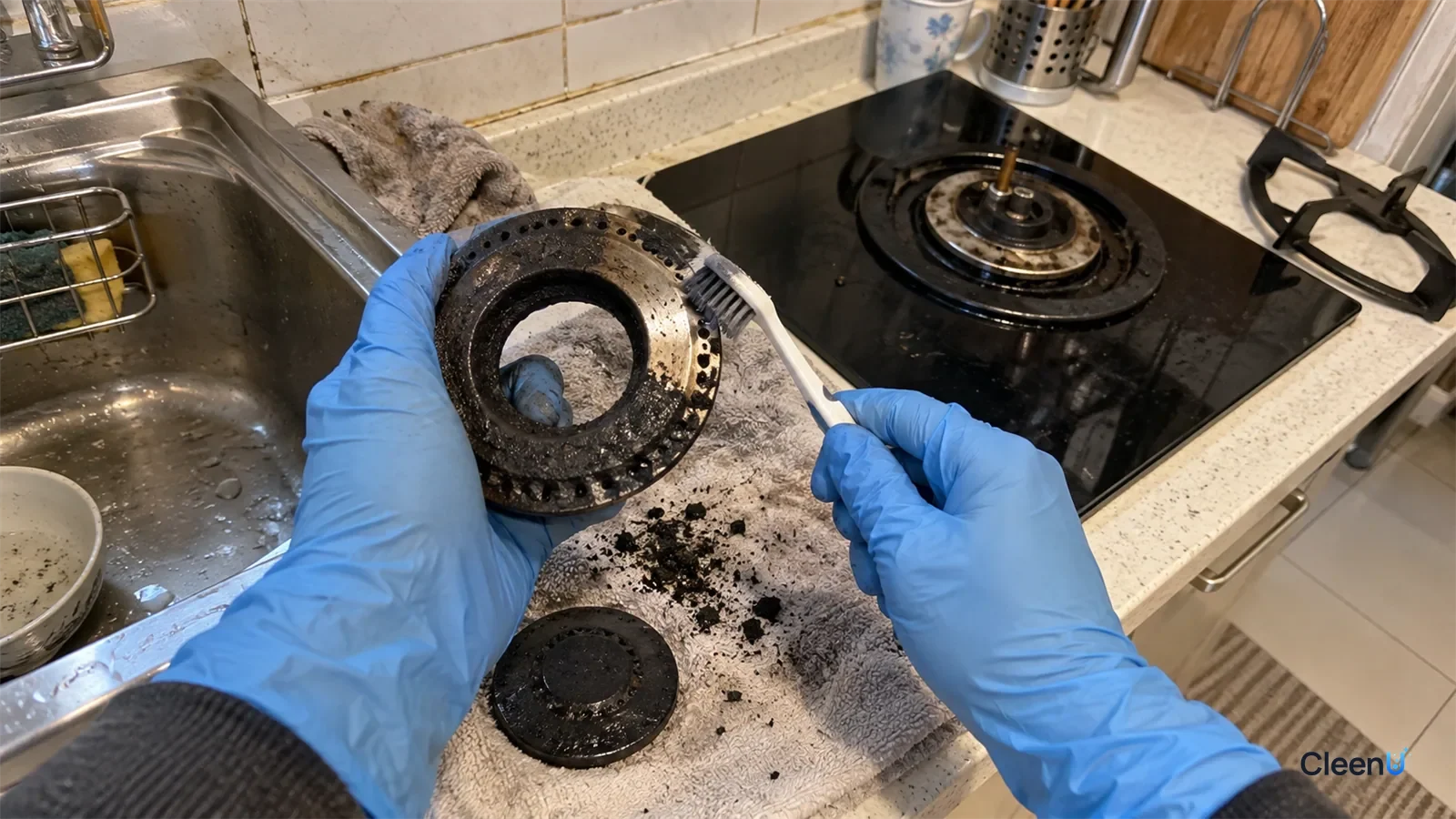
The gas stove is the greasiest spot in the kitchen: grates crusted with dark brown buildup, burner caps ringed with burnt spills, grease rings on the glass or stainless cooktop, and black grime around the igniter. Over time it's not just unsightly; clogged burner ports make flames uneven and yellow.
Two things matter when cleaning a gas stove: take it apart and clean the pieces separately, and keep liquid out of the gas and ignition parts.
The kinds of grease on a stove
Cooktop splatter: oil that lands while you cook stays tacky for a few days and wipes off easily.
Black crust on grates: the grates sit right over the flame, so splattered oil and spills get baked again and again. They oxidize, polymerize, and partly carbonize into a hard dark brown shell, like baked-on enamel.
Burnt residue in burner caps and heads: boil-overs run into the burner and burn dry, clogging the ports.
Grime around the igniter: grease and spills on the igniter and the flame-safety sensor (thermocouple) can keep the burner from lighting or make it go out after a moment.
Why grate grease gets harder the longer it sits
Fresh splatter is liquid triglyceride oil, and a damp cloth takes it right off. But grates get heated by the flame every day. The unsaturated fats in that oil react with oxygen at high temperature and polymerize, linking into a sticky, varnish-like network. Keep heating it and it dehydrates and partly carbonizes into a hard black shell. Cast iron also has fine pores and pits that polymerized oil works its way into, so it grips like a primer coat. That's why fresh grease wipes away while grates left for months need soaking, brushing, and several rounds.
Match your approach to the state of the grease. Tacky, fresh grease comes off after a minute or two of dwell. Hard, glossy polymerized grease needs about 5 minutes with the surface kept wet so the alkaline builders and solvent can work in, followed by firm back-and-forth brushing. Fully carbonized black flakes don't respond much to chemistry; they come off mainly with brush and scraper. If one round doesn't finish the job, rinse and do another rather than leaving the product on longer or reaching for something harsher.
How a degreaser helps here
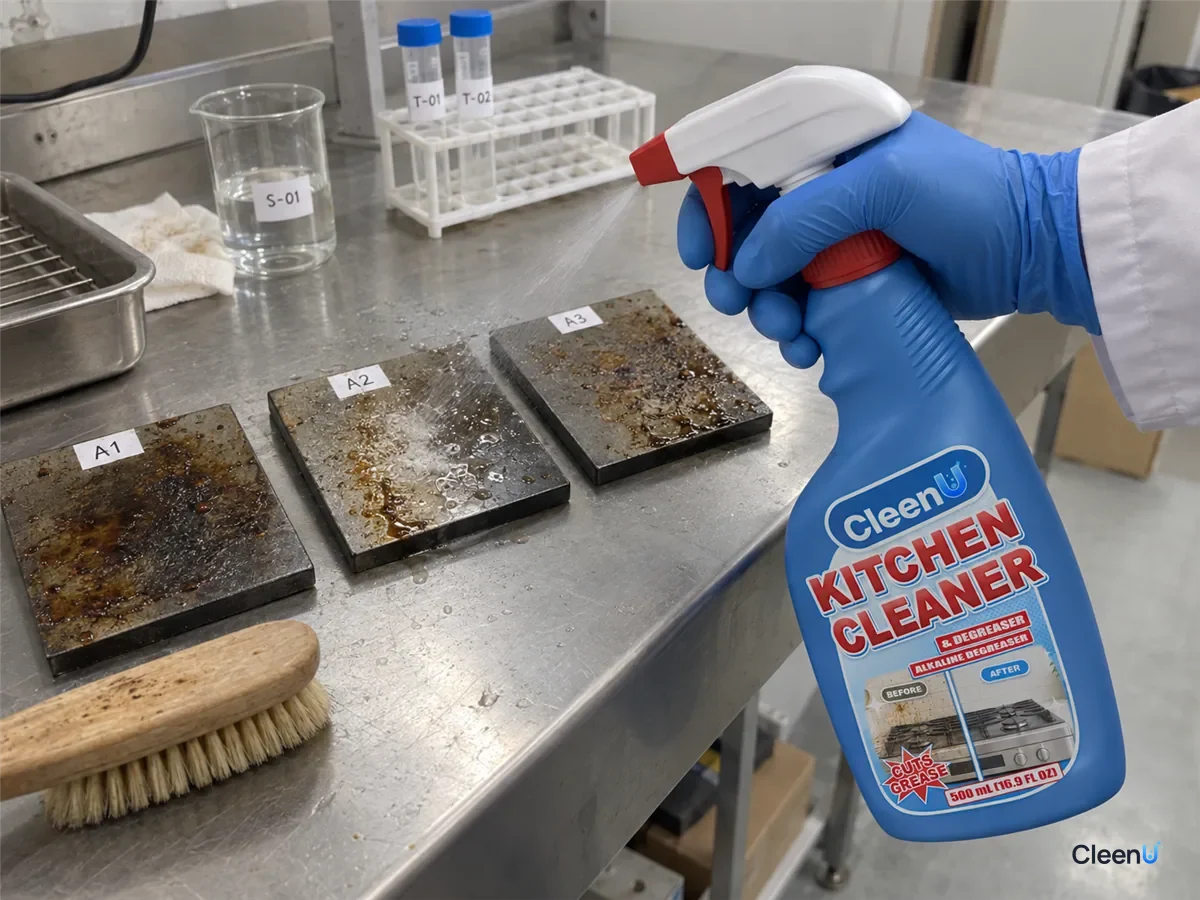
Take CleenU Kitchen Cleaner & Degreaser as an example. It's an alkaline kitchen degreasing spray, pH 10.0 to 11.5 as supplied, made with alkaline builders, nonionic surfactants, and glycol ether solvent, with no chlorine and no abrasives. It's ready to use: let it sit 1 to 3 minutes, 5 for sticky grease, wipe, and follow with plain water. The builders saponify and loosen polymerized grease, the solvent swells hard film, and the surfactants emulsify what's loosened so the brush and cloth can remove it.
It's made for stovetops, range hood exteriors, backsplashes, cabinet doors, and counters. It isn't for aluminum cookware or trim, unsealed wood, natural marble, hot stovetops, or carbonized oven crust, and must never be mixed with acidic or chlorine cleaners. Two takeaways: always wait until the stove is completely cool, and don't soak aluminum burner caps (some stoves have them) in a strong alkaline degreaser; use hot water and dish soap instead.
On grates with heavy carbonized crust, a degreaser softens the greasy part, but the carbon itself takes brushing and several rounds. For very thick buildup, a dedicated heavy-duty grill and oven cleaner used per its label works better.
Six steps to clean a gas stove
From disassembly to reassembly in six steps
Turn off the gas and let it cool completely
Turn off the burners, and ideally the gas shutoff valve, and wait until the grates and cooktop are completely cool.
Caution:Don't spray cleaner on a hot cooktop, and don't run cold water over hot grates or a hot glass top.
Remove the grates and burner caps
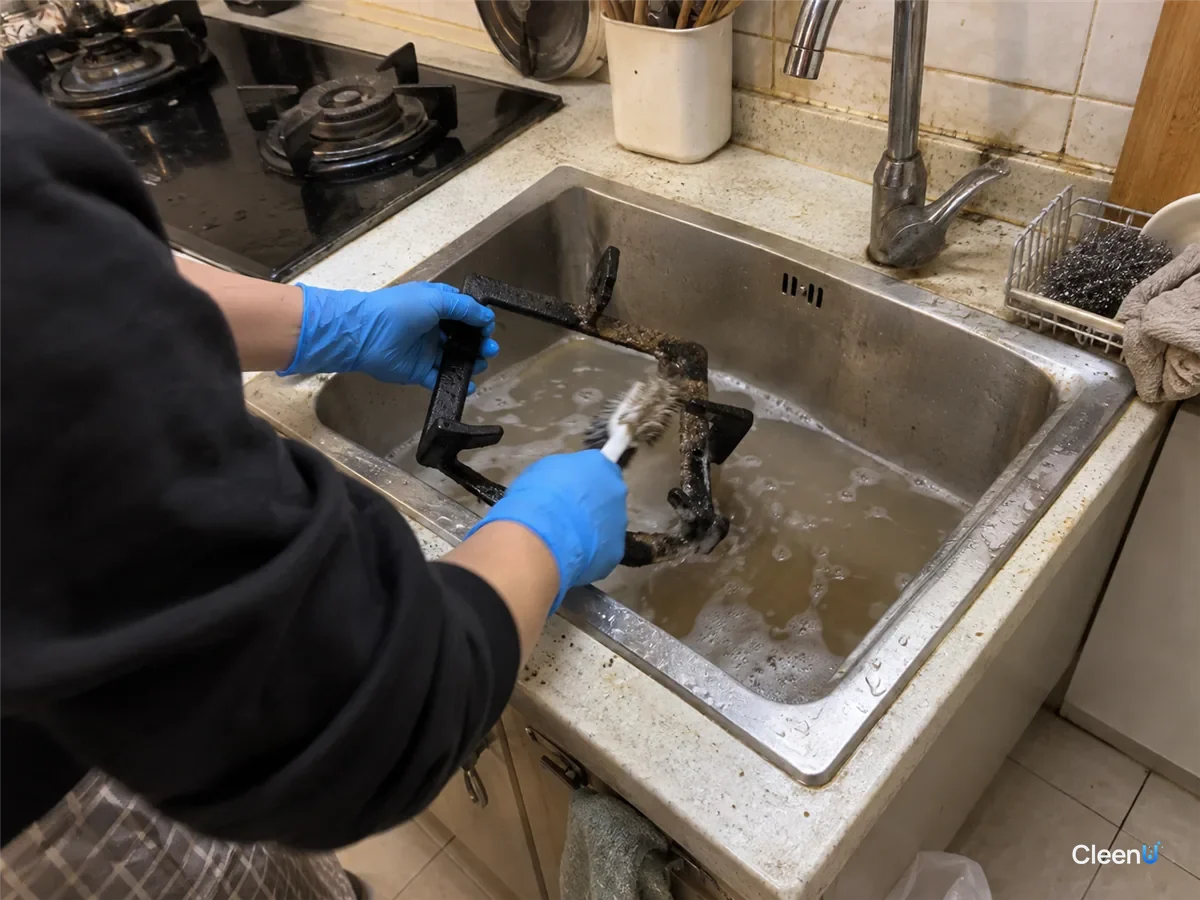
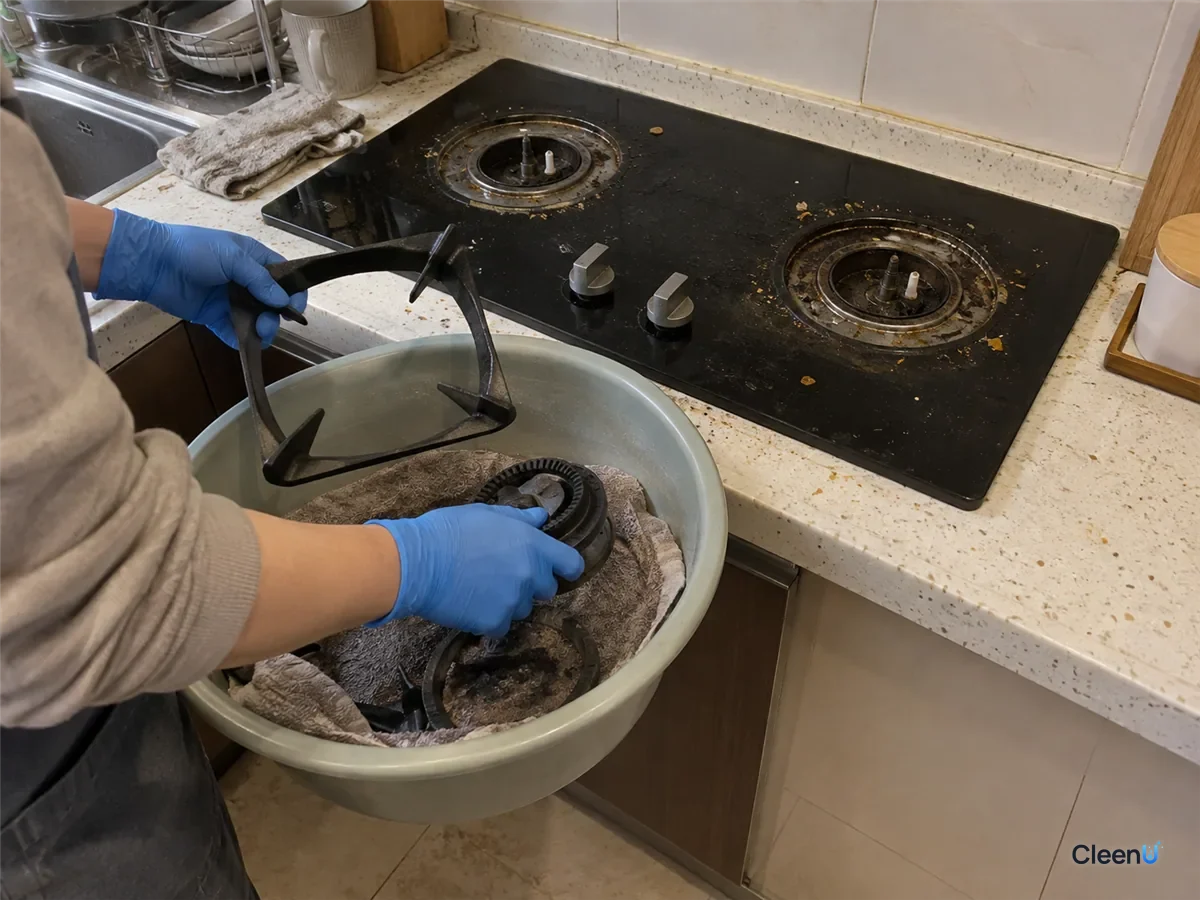
Lift off the grates, burner caps, and burner heads and put them in the sink or a large tub. Snap a photo first so reassembly is easy.
Degrease the grates and caps
For cast iron, stainless, or enameled grates, spray degreaser and let it sit about 5 minutes, or soak in hot water with a little dish soap for 20 to 30 minutes, then scrub with a stiff brush. Don't soak aluminum burner caps in degreaser; use hot water, dish soap, and a soft brush. Clear clogged ports gently with a toothpick or pin.
Wipe the cooktop
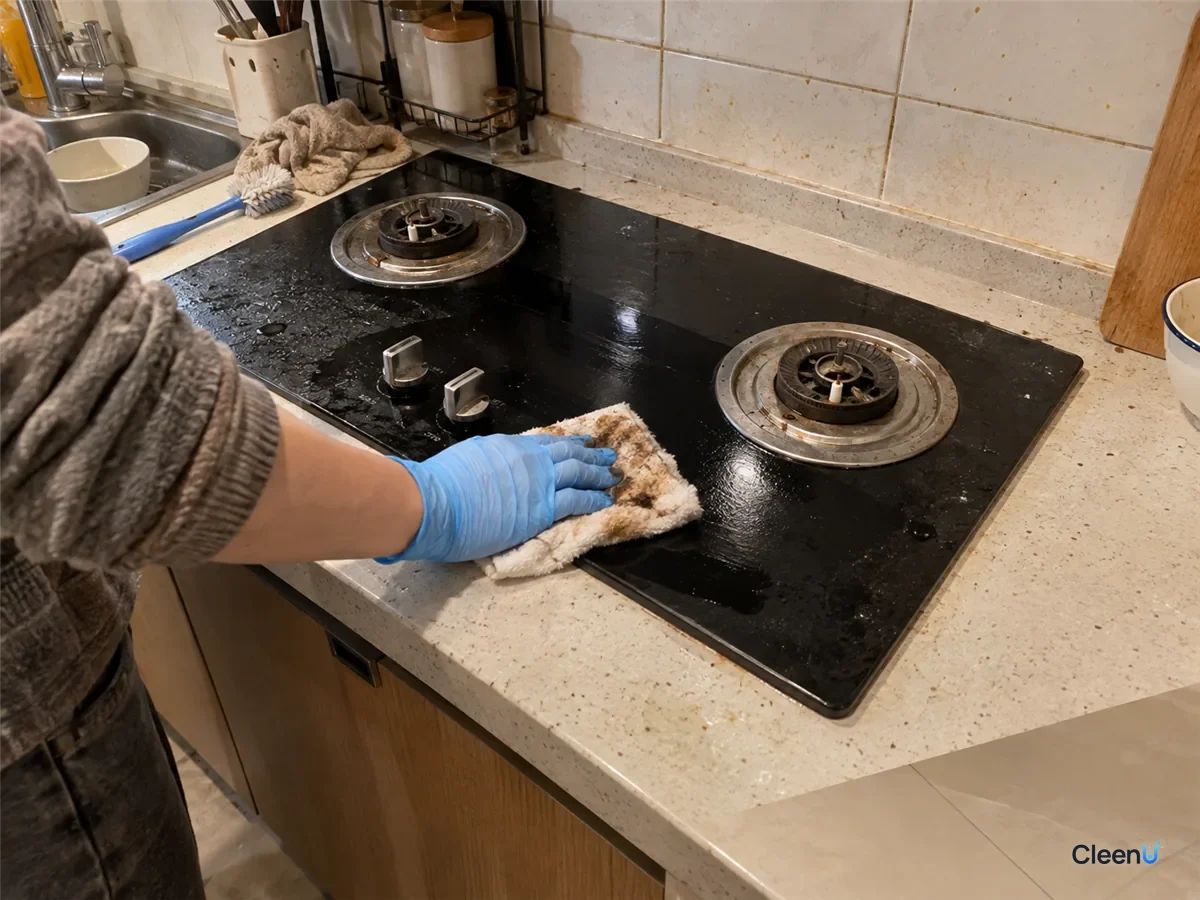
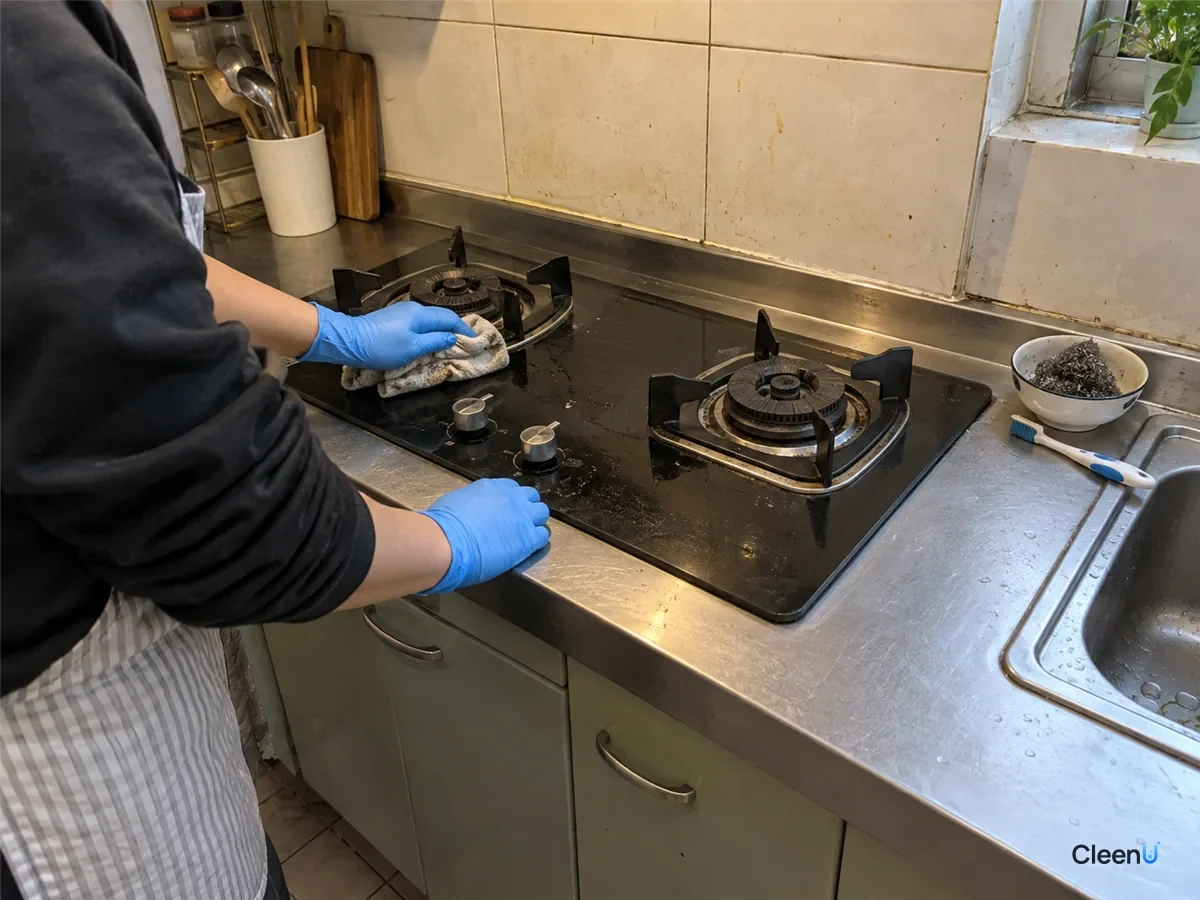
Spray degreaser onto a cloth and wipe the cooktop, glass or stainless. For heavy spots, hold the cloth on them a minute before wiping. Around the igniter and flame sensor, use only a wrung-out damp cloth or an old toothbrush, never spray.
Caution:Keep liquid out of the burner air intakes, the base of the igniter, and the gaps around the knobs.
Wipe with plain water
Wipe the cooktop once or twice with a wrung-out damp cloth to remove degreaser residue. Dry stainless along the grain and buff glass with a dry cloth. Rinse the grates and caps thoroughly.
Dry completely before reassembling
Make sure the grates, caps, and burner heads are completely dry, especially the ports and inside the caps; water there causes ignition trouble and uneven flames. Reassemble, turn the gas back on, and light each burner to check for an even blue flame.
How to tell the grates are clean, and when to stop
After rinsing, run a finger over the grate. Clean cast iron feels dry and slightly rough, not tacky or slick, and a white paper towel wiped across it shouldn't pick up yellow-brown grease. Enameled grates should get their original sheen back with no gray film.
If the surface is no longer sticky but still looks dark, that's usually the natural color of cast iron or long-term oxidation, not removable soil, and more scrubbing only wears off the finish. If enamel has chipped and bare metal shows, stop using a stiff brush on that spot; just dry it well to prevent rust. On the cooktop, rainbow streaks on stainless just mean the final wipe wasn't even. Wipe again along the grain with a clean damp cloth and dry it.
One more habit helps: once cast iron grates are clean and fully dry, put them back right away rather than leaving them wet in the dish rack, where surface rust can start overnight.
Yellow flames or no ignition after cleaning
After cleaning, flames should be even and blue. If not:
Some ports don't light or the flame leans to one side: the ports aren't fully clear or the cap isn't seated. Clean and reseat it.
It clicks but won't light: the igniter may be wet or greasy. Wipe it clean, let it dry, and try again.
It lights but goes out when you let go of the knob: the thermocouple may be dirty or out of the flame. Wipe its surface gently with a soft cloth or very fine sandpaper without moving it.
Yellow flames or soot: the cap may be misaligned, or the air shutter or gas-air mix may be off. If cleaning and reassembly don't fix it, call the stove manufacturer or your gas utility, and don't take apart gas lines yourself.
Keeping the stove from building up grease
After cooking, once the cooktop is cool, give it a quick wipe with a damp cloth; fresh grease comes right off.
When something boils over, turn the heat down and clean the burner cap as soon as it's cool.
Degrease the cooktop weekly and remove and wash the grates and caps monthly.
Run the range hood while cooking to cut down on grease mist.
For backsplashes and range hoods, see How to clean grease off a backsplash and How to clean a range hood filter. For the whole kitchen, see How to clean a kitchen.
Stop if you see this
If you smell gas, shut off the valve, open windows, don't touch electrical switches or light anything, leave, and call your gas utility. If flames are abnormal or burners keep going out, call for service; don't take apart gas lines or valves yourself. Keep degreaser off hot cooktops and aluminum burner caps, and never mix it with acidic or chlorine products. If your skin stings, rinse with water.
Cleaning a gas stove: common questions
How do I get black crust off stove grates?
Remove them, spray degreaser and let it sit a few minutes, or soak in hot soapy water, then scrub with a stiff brush. Do very heavy carbon in several rounds or use a grill and oven cleaner.
Can I soak burner caps in degreaser?
Cast iron and enameled caps, yes. Don't soak aluminum caps in strong alkaline degreaser; it darkens and corrodes them. Use hot water and dish soap.
My burner won't light after cleaning. What now?
Let it dry first; the igniter or cap is most likely still wet. Let everything dry completely and try again; if it still won't light, call for service.
Can I spray degreaser directly on the cooktop?
Spray the cloth instead; that way liquid doesn't run into the igniter, burner intakes, or knob gaps.
How often should I clean my gas stove?
Wipe it after each use once cool, degrease the cooktop weekly, and wash the grates and caps monthly.
How do I unclog burner ports?
Ease a toothpick or pin into each port without enlarging it, then rinse and let the cap dry completely before reinstalling.
What cuts years-old grease around the stove?
An alkaline kitchen degreaser: spray, let it sit a few minutes to soften the film, scrub with a stiff brush or scraper, and wipe with a damp cloth. For black, baked-on crust on grates, use a grill and oven cleaner in rounds, and keep strong alkali off aluminum burner caps.
For an alkaline kitchen degreasing spray that softens grease on stove grates and cooktops in a few minutes and finishes with a plain-water wipe, take a look at our Kitchen Cleaner & Degreaser.
Clean a gas stove by taking it apart and protecting the gas and ignition parts. Turn off the gas, let everything cool, and remove the grates and caps: spray or soak cast iron, stainless, and enameled parts and scrub, use only hot soapy water on aluminum caps, and clear clogged ports with a toothpick. Wipe the cooktop with degreaser on a cloth, use only a damp cloth around the igniter, and finish with plain water. Dry every part completely before reassembling and check for an even blue flame. If you smell gas, shut it off and ventilate. Wipe after cooking and deep clean monthly.