
How-to
How to Clean a Greasy Range Hood Filter
Direct answer
Turn the hood off, let it cool, and pull the filter. Let degreaser sit on stainless baffles; soak aluminum mesh in hot soapy water. Brush, rinse, and dry completely. For the hood, spray degreaser onto a cloth, never onto the motor or controls, then wipe with plain water.

The range hood collects more grease than any other spot in the kitchen. Every time you sear or stir-fry, the fan pulls cooking vapor through the filter. Some of the oil is caught in the mesh; the rest settles on the canopy, the underside, and around the buttons. At first it is a thin film. Leave it a few months and it turns into a yellow, tacky layer that strings when you touch it, and the filter holes clog until the fan barely pulls.
Most range hood cleaning problems are not about grease that won't come off. They are about damage: aluminum filters that come out of a soak dull gray or chalky, painted hoods that start to peel, a motor that gets wet and starts to rattle. Nearly all of that comes from using the wrong method for the material. Below you will find why hood grease gets so stubborn, which cleaner fits which part, and the exact steps.
Why does range hood grease get harder to clean over time?
Cooking oil gets hot enough that tiny droplets rise with the steam. When they first land on the filter and the hood, they are still liquid, and warm water with dish soap lifts them easily.
Time is what changes things. Heat, air, and the metal surface slowly oxidize the oil, and the molecules link into larger networks. The grease goes from runny, to gummy, to a hard amber varnish. It is a lot like paint drying. Fresh oil can be emulsified by surfactants and rinsed away; polymerized grease no longer dissolves easily, and it traps dust and soot along the way, so it keeps getting darker.
That means two things matter most. The cleaner needs enough contact time to soak into the buildup and soften it. And the method has to carry that softened grease out of the mesh and off the surface, instead of just smearing the top layer around.
Degreaser vs. dish soap: which one for which job?
Dish soap is a neutral cleaner. Its surfactants emulsify fresh grease, it is gentle on almost every material, and it is the right choice for routine washing and for aluminum parts. Against old, sticky buildup, though, dish soap alone means long soaks and a lot of scrubbing.
An alkaline degreaser works differently. The alkaline ingredients react with fatty acids in the grease (saponification), turning hard-to-dissolve fat into something water can carry off. Paired with surfactants and solvents, that softens the buildup and releases it faster. CleenU Kitchen Cleaner & Degreaser is an example: an alkaline, ready-to-use kitchen spray with a pH of 10.0 to 11.5, made with alkaline builders, nonionic surfactants, and a glycol ether solvent, with no chlorine and no abrasives. On typical grease you let it sit 1 to 3 minutes, on sticky buildup about 5 minutes, wipe it off, then wipe again with plain water.
The stronger the alkali, the faster it cuts grease, and the harder it is on certain materials. That is why the next step is to find out what your filter is made of.
First, check what your filter is made of
Before you pull the filter, look at the manual or the marking on the filter frame. You will usually find one of three types:
- Stainless steel baffle filters: smooth, heavier panels with angled slots. They handle alkaline cleaners well, so you can spray them with degreaser, let it sit, and scrub.
- Aluminum mesh filters: light, with several layers of fine mesh, common on many under-cabinet and European-style hoods. Aluminum reacts with strong alkali; the surface can turn dark or chalky and even thin out. Don't soak aluminum in a strong alkaline degreaser. Use hot water with dish soap instead, and if one spot is extremely heavy, test a small corner first.
- Charcoal (carbon) filters: used on recirculating, ductless hoods to absorb odors. They cannot be washed. Replace them on the schedule in your manual.
If your manual says the filter is dishwasher-safe, the dishwasher is fine. Aluminum can still discolor in a dishwasher, so use a gentle cycle the first time. If the manual gives different instructions, follow the manual.
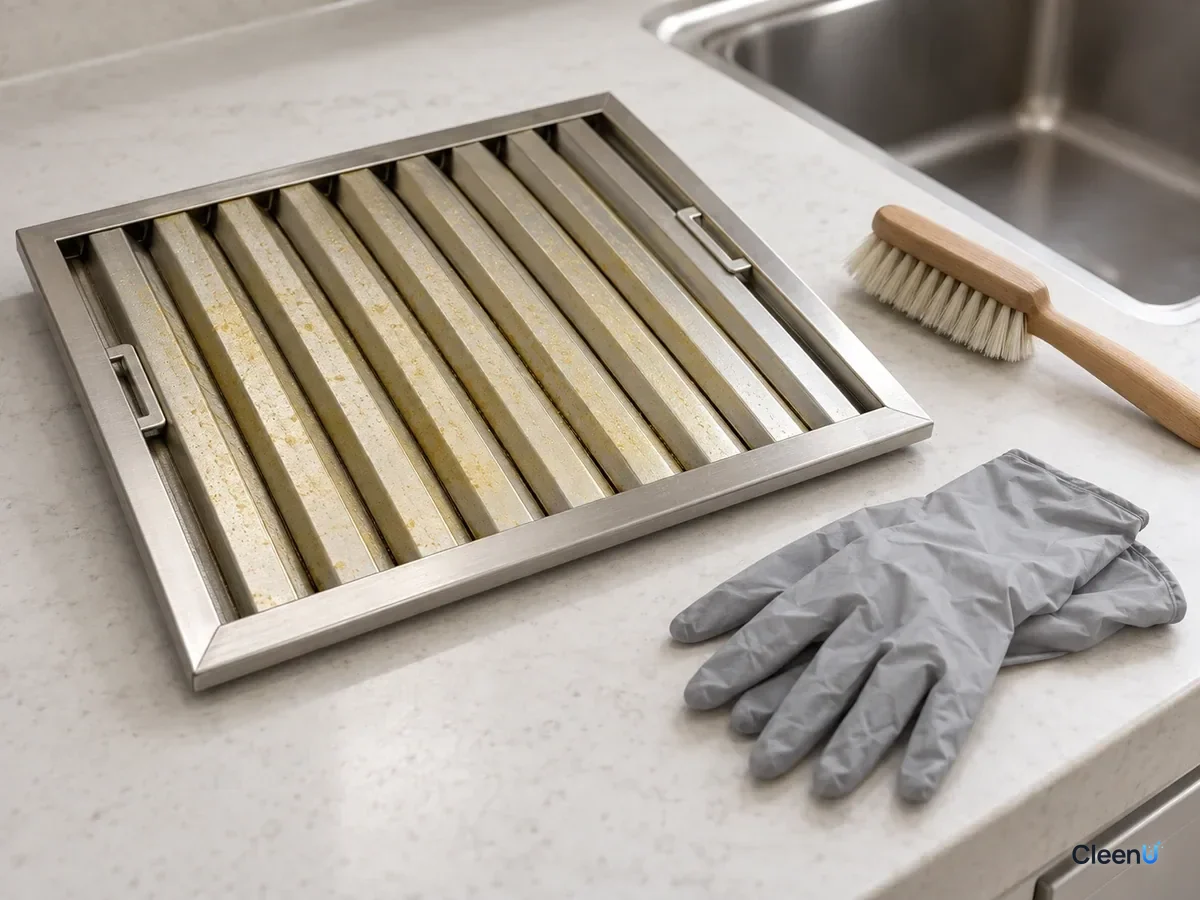
Step by step: cleaning the filter and the hood
Do the filter first, then the hood, then finish. The whole job happens with the power off and the metal cool.
From removing the filter to drying it, in this order
Cut the power and let everything cool
Turn the hood off and unplug it or switch off its breaker. Right after cooking, the filter and canopy are hot, and any cleaner that touches them flashes dry into streaks that are hard to remove. Wait until the metal is cool to the touch.
Caution:Never wipe around the controls or the light cover while the hood is powered or the light is on.
Remove the filter and the grease cup
Take the filter out the way the manual shows; most release with a latch and drop down. Empty the grease cup into a trash bag, not down the drain. Grease hardens as it cools and clogs pipes.
Soak or pre-treat according to the material
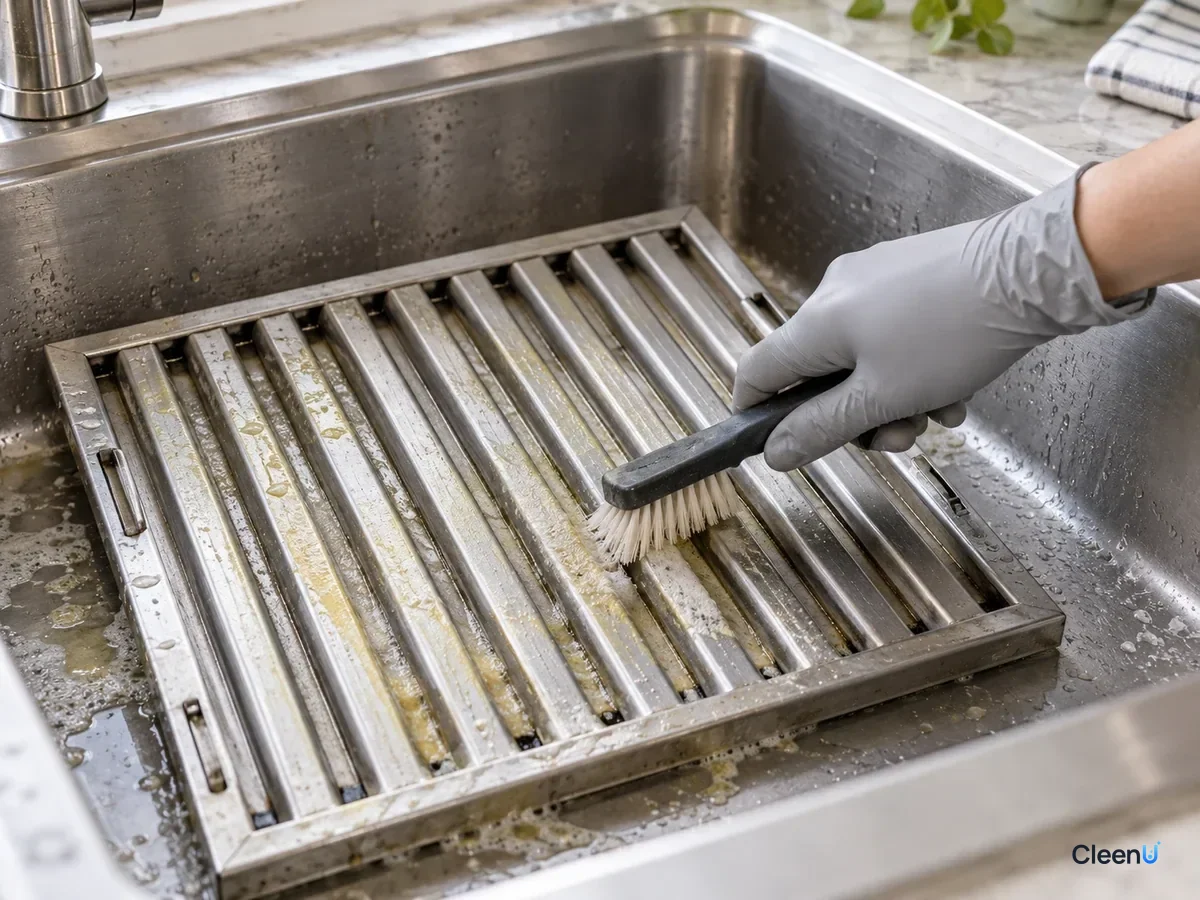
Set stainless baffles in the sink or a tub, mist them evenly with degreaser, and let it sit about 5 minutes until the heavy grease turns cloudy and soft. Soak aluminum mesh in hot water (about 120 to 140°F / 50 to 60°C) with dish soap for 15 to 20 minutes; the heat alone softens a lot of the buildup.
Caution:Don't leave aluminum mesh sitting in a strong alkaline degreaser; it can darken and corrode.
Brush along the holes or slots
Scrub with a soft brush in the direction of the mesh or the baffle slots to push the softened grease out. Skip steel wool; it scratches stainless and bends aluminum mesh. If some yellow remains after one pass, pre-treat that spot again rather than scrubbing harder.
Rinse and dry completely
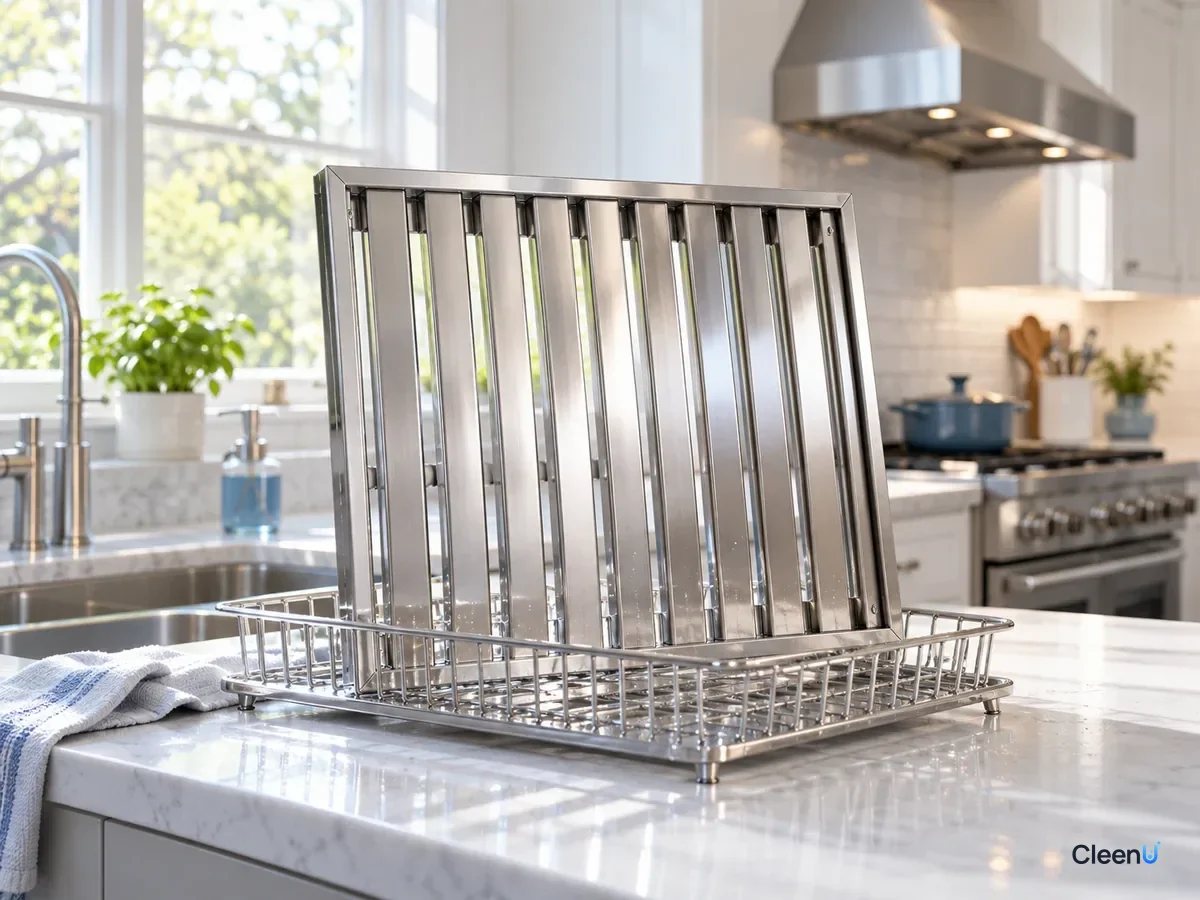
Rinse both sides with warm water until no cleaner is left in the holes, then stand the filter up to air-dry or blot it with a dry towel. Reinstall it only when it is fully dry; a damp filter picks up new grease fast.
Hood and control panel: spray the cloth, not the hood
Don't spray the canopy directly. Mist degreaser onto a microfiber cloth and wipe from top to bottom. On stainless, follow the grain. Where the grease is thick, lay the damp cloth on it for a minute or two, then wipe. Around buttons, the light cover and the vents, use only a well-wrung cloth.
Caution:Keep cleaner out of the motor, the circuit board, button gaps and the light socket.
Wipe with plain water, then buff dry
After an alkaline cleaner, always go over the hood with a cloth dampened in plain water to lift the residue, then buff with a dry cloth. Skip this and the leftover cleaner leaves the surface tacky, leaves white hazing, and attracts new grease faster.
How do you know it is really clean?
Check four things. Hold the filter up to the light: the holes should be open, not bridged with yellow film. Run a finger over the filter and the hood: they should feel dry, not tacky or stringy. Look at a stainless hood at an angle: no white streaks or water marks. Turn the hood back on: the suction and the sound should be about what you remember, with no new rattles.
If the hood still feels a little tacky, that is usually cleaner residue, not leftover grease; one more wipe with plain water fixes it. If one patch of the filter stays yellow no matter what, it is long-polymerized grease. Pre-treat it longer next time, or clean more often, rather than trying to force it off.
Stop if you see any of these
Aluminum or painted surfaces turning dark, chalky, blistered or peeling after contact with cleaner; stinging or redness on your skin; a burning smell, new noise or a tripped breaker when you turn the hood back on. If any of these happen, stop, rinse the affected area with water, ventilate, and check the hood per the manual or call for service. Never mix an alkaline degreaser with chlorine bleach.
How often should you clean a range hood filter?
It depends on how you cook. If you stir-fry, sear, or deep-fry often, wash the filter about once a month. If you mostly steam, boil, or cook lightly, every two to three months is fine. Wipe the canopy and the control panel about once a week while the spots are still fresh; they come off with a cloth before they have a chance to polymerize into something sticky.
Two other signs tell you it is time: the filter starts to look yellow and shiny and feels tacky, or the suction drops and the kitchen smells of cooking longer than it used to.
If you are cleaning the cooktop, backsplash and other kitchen surfaces at the same time, our complete kitchen cleaning guide breaks the job down by soil and surface.
Written for: Households with a ducted range hood whose filter and canopy have built up heavy grease and who want to clean them at homeNot for: Charcoal filters on recirculating hoods (replace only); deep cleaning of the motor or fan wheel (have a service technician do it)
Range hood cleaning questions people ask first
Can I soak an aluminum range hood filter in degreaser?
Not for long. A strong alkaline degreaser can darken and corrode aluminum mesh. Soak aluminum in hot water with dish soap, then brush it.
Can a range hood filter go in the dishwasher?
Yes, if the manual says it is dishwasher-safe. Aluminum can still discolor, so use a gentle cycle the first time and put it on the bottom rack by itself.
Can I spray degreaser directly on the hood?
No. Spray it onto a cloth and wipe, so the cleaner cannot run into button gaps, the light socket or the motor.
Why does the hood still feel sticky after cleaning?
It is almost always leftover cleaner. After an alkaline degreaser, wipe with a cloth dampened in plain water, then buff dry.
Can a charcoal filter be washed?
No. It works by absorbing odors, and water ruins it. Replace it as the manual directs.
What if old grease won't come off?
Pre-treat that spot again and give it time to soften before brushing. Don't switch to steel wool; it scratches the surface.
How do I clean a greasy range hood?
Turn off the power, let it cool, and remove the filters. Spray the exterior and stainless baffle filters with a kitchen degreaser, let it sit a few minutes, wipe or brush, then wipe down with clean water. Soak aluminum mesh filters in hot water and dish soap instead of strong degreaser.
For sticky grease on stainless baffle filters, hoods and cooktops, try Kitchen Cleaner & Degreaser.
To clean a range hood, cut the power, let it cool, and identify the filter. Degrease and scrub stainless baffles, soak aluminum mesh in hot soapy water, and replace charcoal filters. Wipe the hood with degreaser on a cloth, then plain water, then a dry cloth. Wash the filter every one to three months and wipe the hood weekly, and the grease never gets the chance to harden.