

Product and application illustrations. Follow the product label and written use guidance.
CleenU product solution
Range Hood Degreaser
Clinging foam · Yellow grease wipes right off · Private label
Range hood sticky to the touch and filters caked with yellow grease? Unplug, pull the filters and grease cup, foam them, wait 5–10 minutes, scrub with a sponge, and rinse; wipe the housing with a damp cloth, then dry. Factory-direct private label.
- Cooking vapor condenses on the canopy, panels, and filters, then heats and oxidizes over and over, turning clear droplets into sticky yellow film that eventually hardens and darkens. Ordinary sprays run right off. This foam clings to vertical surfaces and filters while alkali and solvent keep working, so after a few minutes the grease wipes off.
- Always unplug first, and keep foam out of the motor, switches, lights, and wiring; wipe the housing with a damp cloth and dry it. Many filters are aluminum, which darkens with long alkaline contact, so keep dwell under 3 minutes and rinse promptly; stainless filters can sit 5–10 minutes. Wear gloves and ventilate.
- MOQ
- 500 bottles
- Free samples
- Free samples in 3–5 days
- Bulk lead time
- Scheduled with the order after packaging and labels are approved

Product value
What parts is it for?
CleenU Range Hood Degreaser foams onto sticky hood grease.
View product detailsProduct summary
- Product type
- Foaming range hood degreaser
- Core use
- Sticky grease film, yellow buildup, and filter grease on range hood housings, canopies, stainless and tempered glass panels, filters, and grease cups
- Formula focus
- Alkaline builders with foaming surfactants, solvent, and corrosion inhibitor, pH 11.0–12.5; light lemon; ready-to-use foam.
- Best for
- Kitchen care brands, Appliance cleaning services, Ecommerce sellers

Before & after
Before and after (illustration)
Before: a slim-line range hood not cleaned in a year, with a yellow film on the tempered glass panel, stainless filters caked in grease, and a half-full grease cup. After: unplugged, filters and cup removed, foamed 8 minutes, scrubbed, rinsed, and the panel wiped and dried, the filters are open and the panel shines.
- Before: yellow film, caked filters
- Unplugged, foamed 8 minutes, scrubbed, rinsed
- Open filters, shiny panel

How it works
Why foam suits range hoods
Hood grease is oxidized, polymerized triglyceride clinging to vertical and overhead surfaces. Foaming surfactants make a stable foam that holds the actives in place instead of running off; alkaline builders saponify the fat, glycol ether solvent swells the polymerized film, nonionic surfactants emulsify it so it rinses away, and a corrosion inhibitor films the metal.
- Unplug, remove filters and cup
- Foam them
- Wait 5–10 minutes
- Saponify and swell grease
- Scrub, rinse, dry housing
Usage guidance
Use guidance
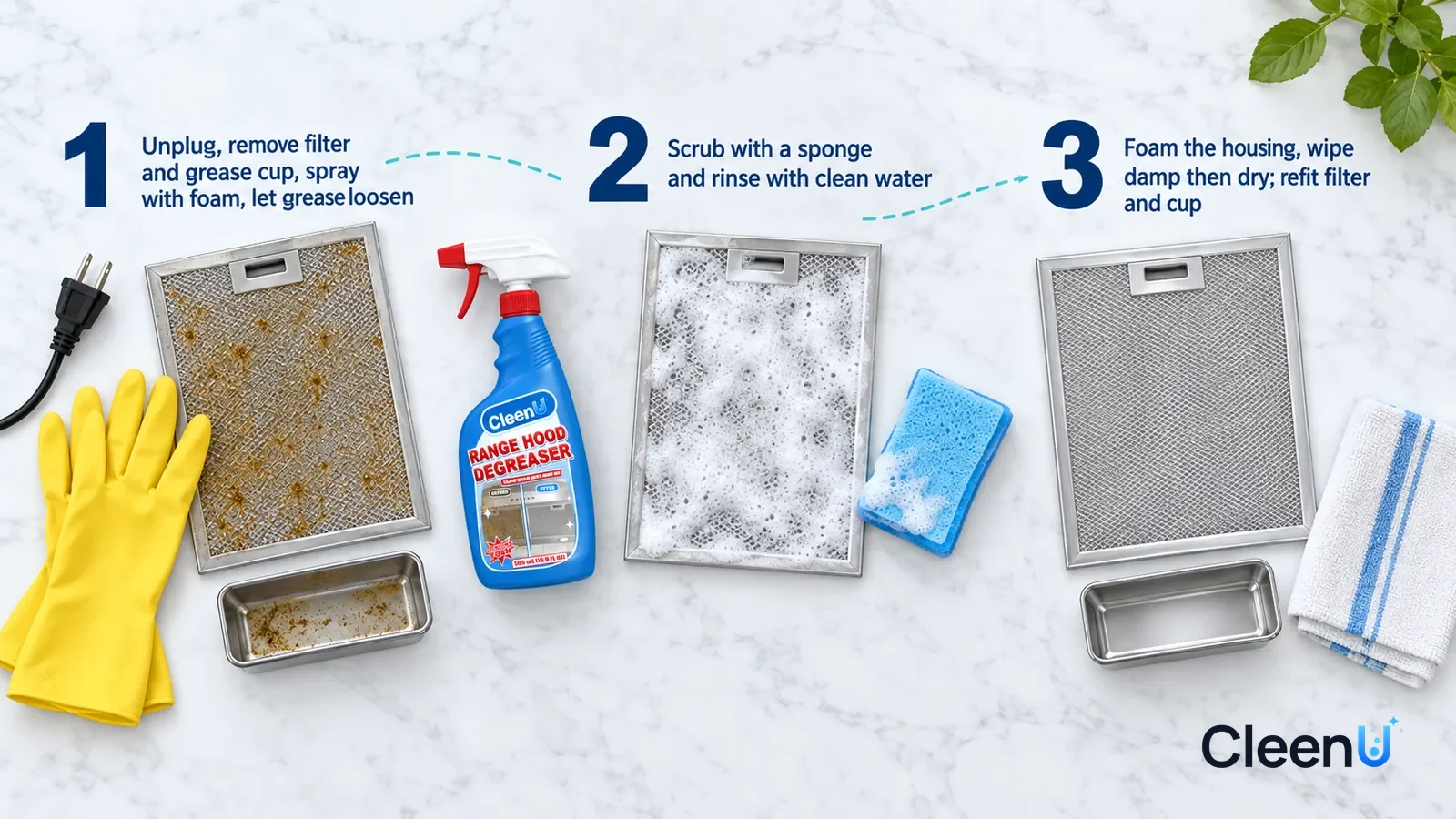
- Unplug, remove the filters and grease cup, foam them, and wait 5–10 minutes (under 3 for aluminum).
- Scrub with a sponge and rinse.
- Foam the housing, wipe with a damp cloth, dry with a dry cloth, and reinstall.
Before you use it
Important notes
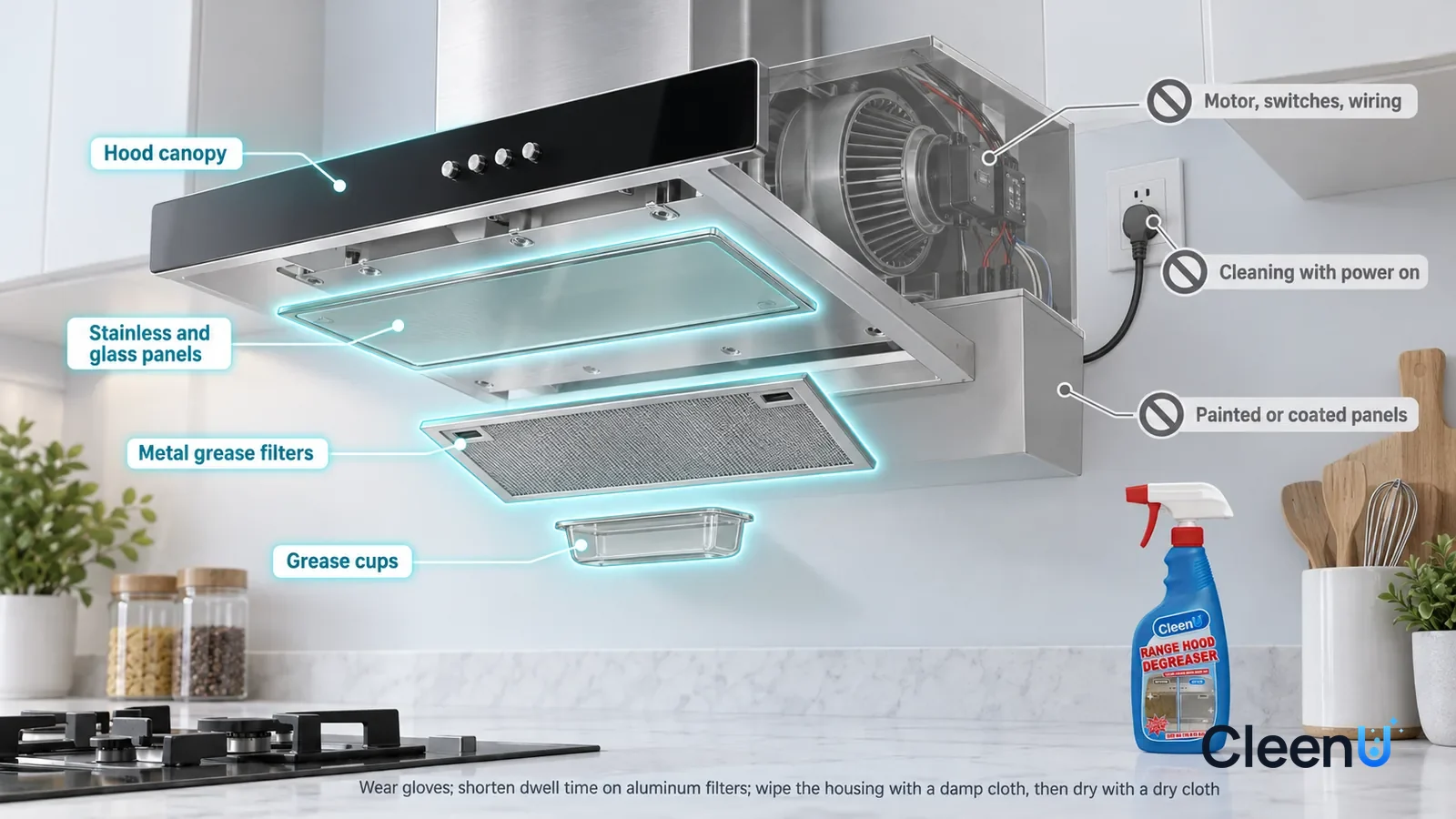
- Not for: Motors, switches, and wiring
- Not for: Long dwell on aluminum filters
- Not for: Cleaning while powered
- Not for: Long dwell on painted or coated panels
- Test first for special materials, special equipment, or sensitive scenarios.
Product comparison
How to choose a Range Hood Degreaser
Use Range Hood Degreaser on home range hoods, Kitchen Cleaner on counters and backsplashes, and Stainless Steel Cleaner & Polish to brighten stainless.
View product comparison
| Decision point | Range Hood Degreaser | Dish soap |
|---|---|---|
| Vertical surfaces | Foam clings | Runs off |
| Hard yellow grease | Alkali plus solvent | Won't dissolve |
| Filter buildup | Rinses off after dwell | Endless scrubbing |
| Time | Minutes | Ages |
Where Range Hood Degreaser stands out
Why hood grease is so sticky
Cooking vapor condenses on the canopy, panels, and filters, then heats and oxidizes over and over, turning clear droplets into sticky yellow film that eventually hardens and darkens. Ordinary sprays run right off. This foam clings to vertical surfaces and filters while alkali and solvent keep working, so after a few minutes the grease wipes off.
Careful with aluminum filters and wiring
Always unplug first, and keep foam out of the motor, switches, lights, and wiring; wipe the housing with a damp cloth and dry it. Many filters are aluminum, which darkens with long alkaline contact, so keep dwell under 3 minutes and rinse promptly; stainless filters can sit 5–10 minutes. Wear gloves and ventilate.
Who it's for, where it's used, and when not to use it
For
End-use scenarios
When not to use it
Product Specifications and Custom Options
Key product details and custom options for your project.
Product specifications
Product type, cleaning scope, and format.
| Product type | Foaming range hood degreaser |
| Surfaces | Range hood housings, canopies, stainless and tempered glass panels, filters, and grease cups |
| Applications | Hood filters and grease cups, Hood canopies and glass panels, Kitchen deep cleans |
| Main soils | Sticky grease film, yellow buildup, and filter grease on range hood housings, canopies, stainless and tempered glass panels, filters, and grease cups |
| How to use | Unplug, remove filters and cup, foam 5–10 minutes (under 3 on aluminum), scrub, rinse, wipe and dry housing |
| Not for / avoid | Motors, switches, and wiring; Long dwell on aluminum filters; Cleaning while powered; Long dwell on painted or coated panels |
| Size & packaging | 500 mL foaming trigger bottle |
| pH | pH 11.0–12.5 (25°C) |
| Scent | Light lemon |
| Shelf life & storage | 24 months unopened; store sealed in a cool, dry, ventilated place away from heat, sun, and freezing |
B2B custom options
Private label, packaging, MOQ, samples, and delivery.
| OEM/ODM & private label | We run Range Hood Degreaser private-label projects from positioning and samples to packaging, production, and delivery. |
| Packaging & labels | Fill size, refill, scent, and kits available |
| Case pack | 12 × 500 mL per case |
| OEM/ODM and private label | Available for project discussion |
| Packaging and labels | Fill size, refill, scent, and kits available |
| MOQ | 500 bottles |
| Sample time | Free samples in 3–5 days |
| Bulk lead time | Scheduled with the order after packaging and labels are approved |
| Documents | SDS/MSDS, TDS, and batch COA provided with quotes |
OEM/ODM project process
Move from product direction and sample review to packaging, production, and delivery for Range Hood Degreaser.
Define the buyer and plan
Choose foaming trigger or refill, scent, and whether to bundle with kitchen cleaner as a deep-clean kit.
Free samples
Free samples are usually ready in 3–5 days for project review.
Packaging and labels
Set fill size, label language, and directions on unplugging, motors and wiring, aluminum dwell under 3 minutes, and gloves.
Production and delivery
Standard MOQ is 500 bottles; production is scheduled after packaging and labels are approved.
Why choose CleenU for Range Hood Degreaser?
From product positioning and samples to packaging and repeat supply, CleenU supports OEM/ODM projects built around Range Hood Degreaser.
Stable foam
Foaming and foam-stabilizing systems are tuned to hold longer on vertical surfaces and filters.
Appliance cleaning channel
1 L refills for appliance cleaning and home service companies.
Sample testing that means something
We plan sample evaluation on stainless and tempered glass panels and stainless and aluminum filters: degreasing, dwell time, and aluminum surface effects.
Labels and documents ready
Bilingual label copy, SDS/MSDS, TDS, and batch COAs, with warnings and directions prepared for your target market.
Consistent reorders
Every batch is retained and issued a COA, so reorders match on color, scent, and feel.
Formula discussion
Discuss formula direction based on product positioning, target market, and channel selling points.
Packaging and labeling options
Plan packaging format, label language, and shelf presentation around Range Hood Degreaser and your target channel.
Show packaging and label options
Packaging options
Main size: 500 mL foaming trigger. Also available: 1 L refill, kitchen deep-clean kits, and channel case packs, with labels and cartons in your branding.
Supporting Documents and Materials
Purchasers usually confirm whether the materials are complete before formal cooperation. Preparing documents in advance helps with quoting, sampling, and channel review.
Show available documents
Project documents
SDS/MSDS, TDS, batch COA, label directions, and packaging files are provided per project after inquiry.
Related products, solutions, and articles
Explore related cleaning products, application guidance, and OEM/ODM resources for Range Hood Degreaser.
Frequently asked questions (FAQ)
Find practical answers about Range Hood Degreaser, private label, samples, MOQ, documents, and delivery.
Product, use, and procurement
How often should I clean the range hood?
Wipe the exterior weekly and clean the filters monthly, or every two to three weeks with frequent high-heat cooking.
Can I clean the blower inside myself?
The blower involves disassembly and wiring, so have a technician do it. This product is for the exterior, panels, and removable filters and cups.
How fast can we get samples and a first order?
Free samples ship in 3–5 days. MOQ is 500 bottles, and production is scheduled once packaging and labels are approved.
Product usage questions
How do I use it?
Turn off the power, remove the filters and oil cup, foam them, wait 5–10 minutes, scrub with a sponge, and rinse; wipe the hood body with a damp cloth and dry it.
When shouldn't I use it?
Keep it out of the motor, switches, and electrical parts; limit dwell on aluminum filters to 3 minutes; wear gloves.
Can I clean the blower wheel inside?
The blower and motor are internal; leave disassembly to an appliance cleaning pro.
How often should I clean the hood?
Filters and cup monthly; wiping panels weekly keeps hard buildup from forming.
Can I use it on the stovetop and tile?
Yes. Let it sit 2–3 minutes and wipe; not on natural marble.
My aluminum filter is already dark. Now what?
That's surface oxidation no cleaner can reverse; keep dwell shorter from now on.
Can I use it on glass canopy panels?
Yes. Foam, wipe, and buff dry.
Does it work in open-plan kitchens?
Yes. Open kitchens generate more grease, so clean more often.
How do I dispose of grease cup oil?
Pour it into a sealed bag or bottle for the trash, never down the drain.
Should I open a window while cleaning?
Yes. Ventilate and wear gloves.
How long should I let it sit on greasy range hood filters?
Let the foam sit 5–10 minutes on stainless filters, then scrub with a sponge and rinse. On aluminum filters, keep it to 3 minutes or less, because longer contact can darken aluminum. If heavy grease is still there, rinse and do a second short round instead of leaving it on longer.
How do I clean sticky grease off the outside of a range hood?
Turn off the power, apply it to the greasy panels, then wipe with a damp cloth and dry with a clean one. Keep spray away from the motor, switches, and other electrical parts. A weekly wipe keeps the film from hardening, so you won't face heavy scrubbing later.
OEM/ODM customization questions
What can we customize?
Formula direction, scent, pack size and format, label design and language, and ecommerce bundles.
What paperwork comes with a private-label order?
Documents such as SDS/MSDS, TDS, COA, and label copy for your target market are prepared per project. We confirm which ones your order includes when we quote.
Launching your own range hood degreaser?
Send us your market, sizes, kit plans, and estimated volume. We'll build it out with you.