
How-to
How to Clean Burnt Baking Sheets and Oven Racks
Direct answer
Check the material first. For stainless or chrome racks and enamel pans, spray oven and grill cleaner once they're cool, seal them in a large trash bag for 10 to 30 minutes, then scrub and rinse. Nonstick and aluminum pans can't take strong alkali or steel wool; soak them in hot soapy water and use a soft sponge.
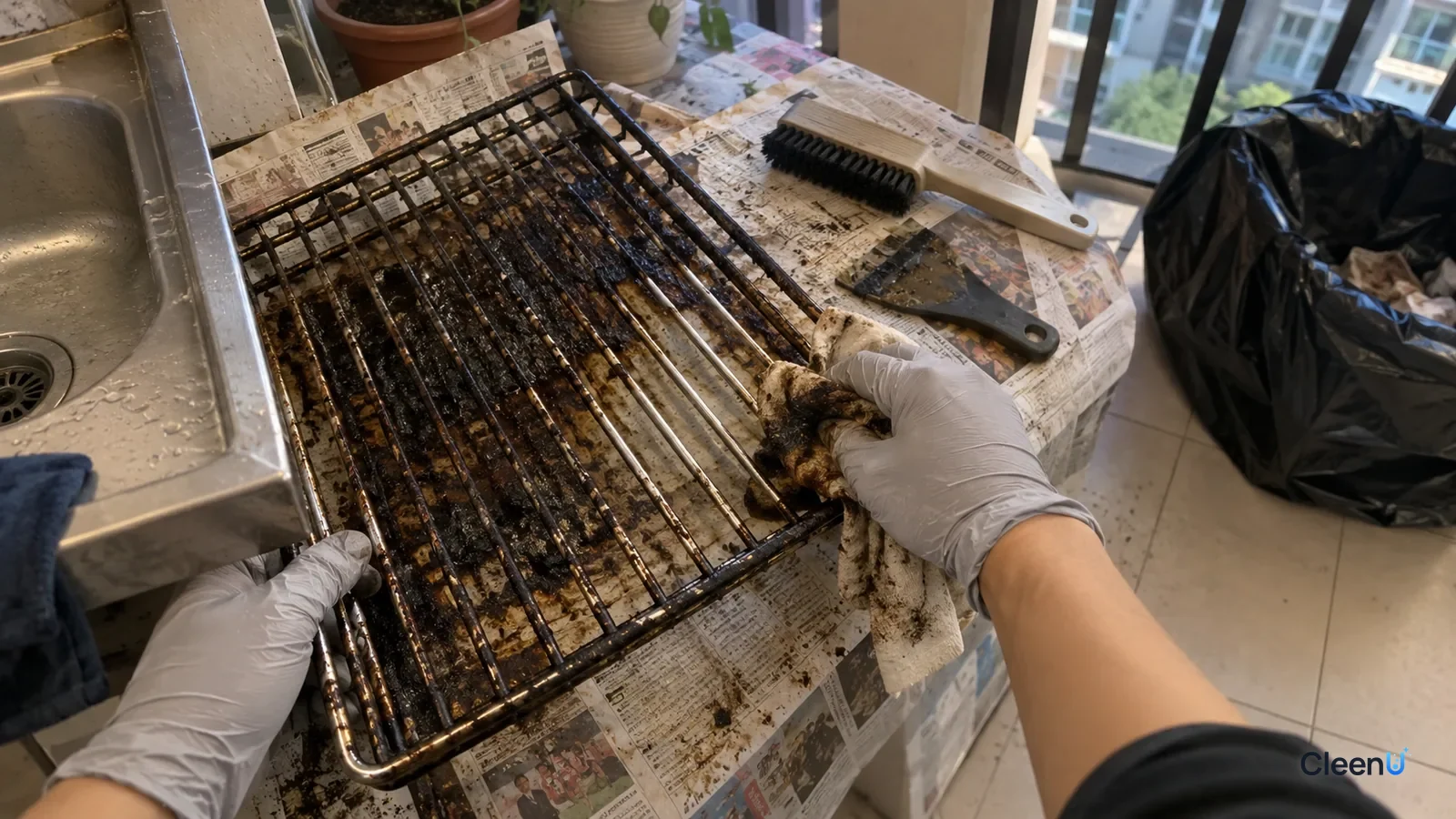
After enough roasts, oven racks are coated in black crust, baking sheets have shiny dark burn marks in the corners, and grill grates have buildup thick as paint. Soak in dish soap, scrub with steel wool, and after all that work only a little comes off.
That black buildup is hard to remove because it isn't grease anymore. It's carbonized residue that's been baked over and over. Here's what it is, then how to clean it with the least effort, material by material.
What the black crust on oven racks is
When you roast meat or wings, fat and juices drip onto racks and pans. Above about 400°F, the fat oxidizes and polymerizes, turning from liquid to sticky resin to a hard, cross-linked film, while proteins and sugars in the juices char into black bits. Each time you bake, that layer is reheated and carbonizes further, getting darker and harder until it's bonded to the metal like baked-on enamel.
Dish soap emulsifies fat, which works great on fresh grease but does almost nothing to polymerized, carbonized crust. Loosening it takes a strong alkali, which saponifies the polymerized fat by breaking its ester bonds into water-soluble compounds and weakens the bond between the char and the metal. That takes time, so dwell time is everything.
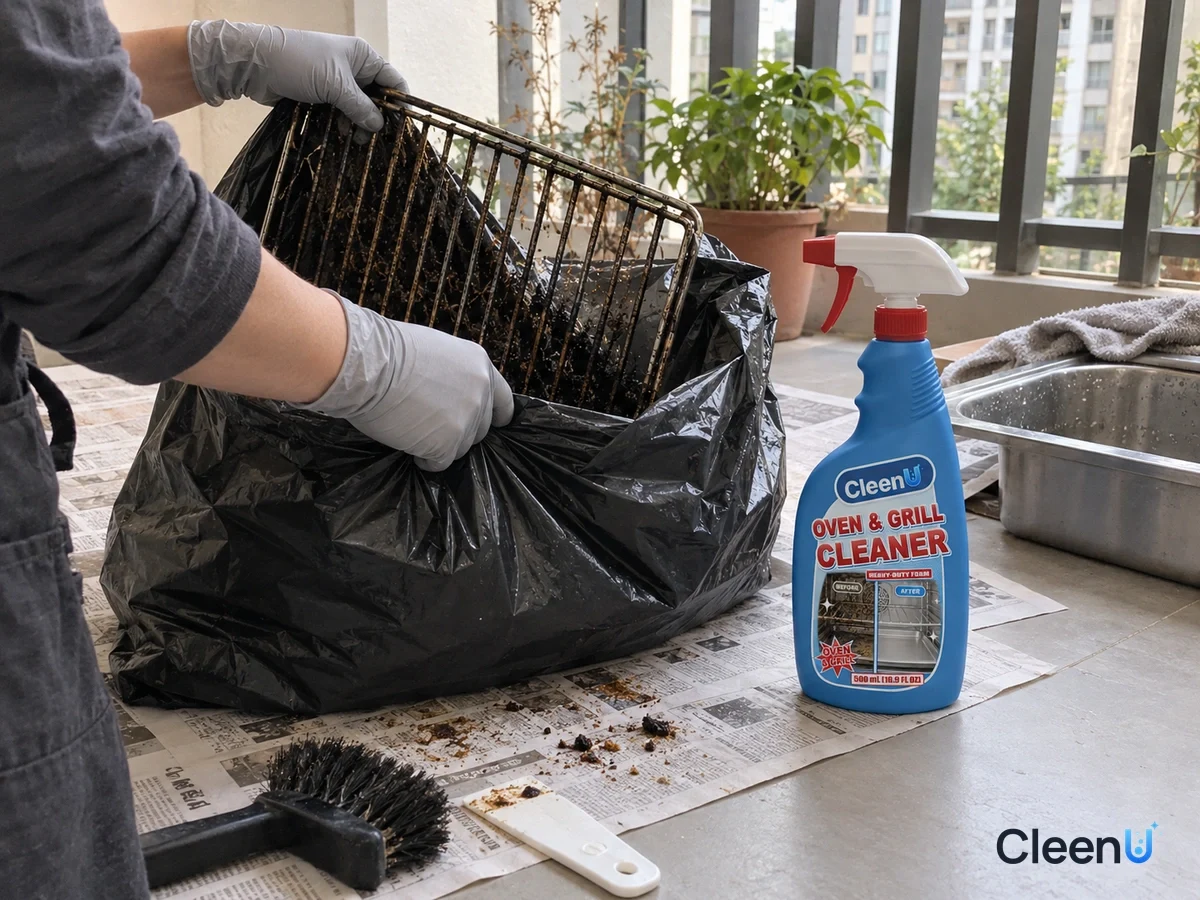
Why seal them in a bag?
Racks are a grid of metal bars. Cleaner sprayed on them runs off or dries before it has time to work. Spraying the rack inside a large trash bag and tying it closed solves several problems at once.
The cleaner stays trapped against the crust instead of running off.
Humidity inside the bag keeps the cleaner from drying, so the reaction keeps going.
Fumes and mist stay sealed in the bag instead of filling your kitchen.
You don't have to spread everything out in the oven or sink, so there's less mess and less chance of splashing your skin.
How an oven and grill cleaner works
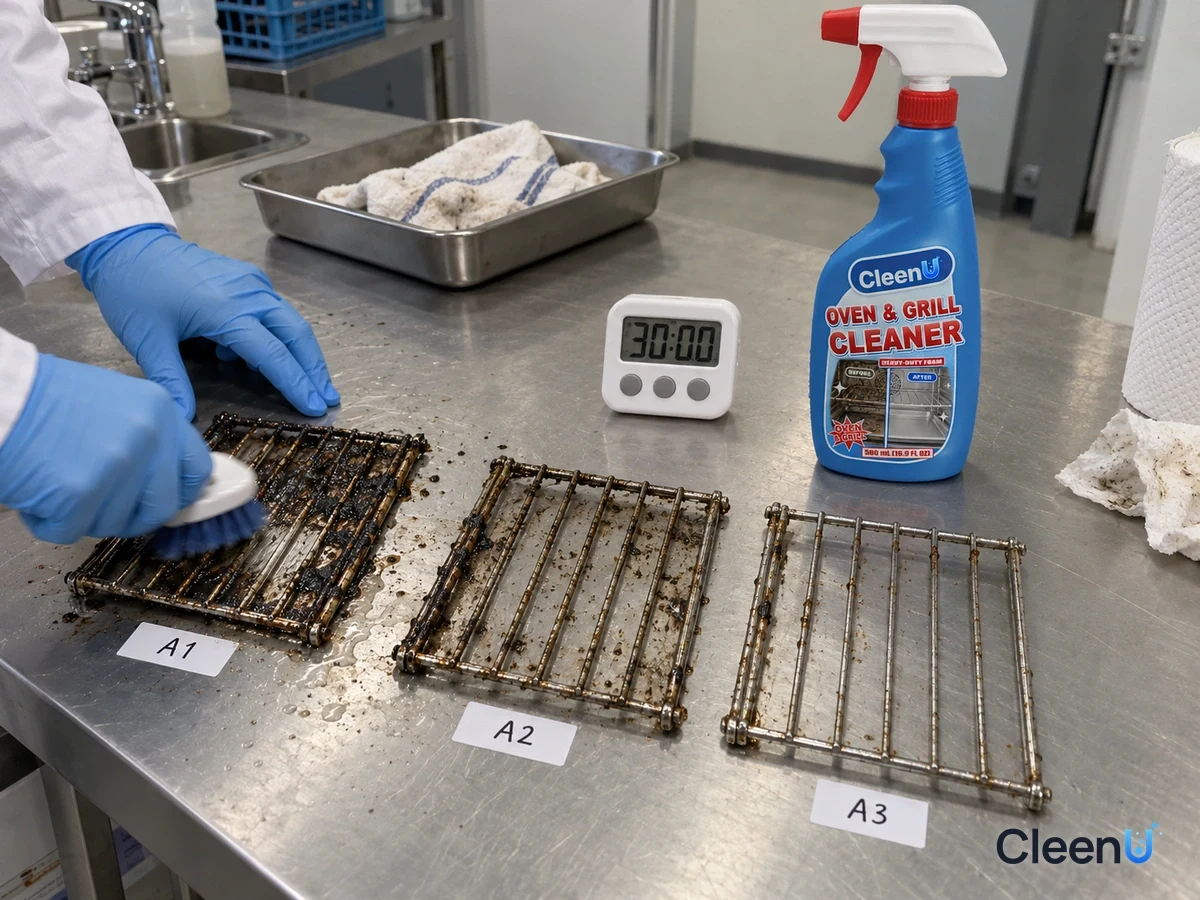
Take CleenU Oven & Grill Cleaner as an example. It's a heavy-duty alkaline cleaner for ovens and grills, pH 12.0 to 13.5 as supplied, made with a strong alkali, alkali-stable surfactants, a foaming agent, and solvent, in a ready-to-use foaming spray. The alkali saponifies and breaks down carbonized grease, the solvent helps it soak into polymerized layers, the surfactants wet and emulsify, and the foaming agent turns it into a foam that clings to rack bars instead of running off. Leave it on cool surfaces 10 to 20 minutes, 30 for heavy buildup, then scrub and rinse.
It's made for oven interiors, grill grates, baking pans, griddles, and stove grates. It isn't for hot surfaces; heating elements, gas burners, or igniters; aluminum or nonstick; painted exteriors; or catalytic self-cleaning liners, and it must never be mixed with acidic products.
Six steps to clean oven racks and pans
From prep to rinse in six steps
Check the material and let everything cool
Figure out whether you have stainless, chrome-plated, cast iron, enamel, nonstick, or aluminum. Skip this method for nonstick and aluminum and use the separate method below. Let racks and pans cool completely; hot metal makes the cleaner dry fast and can give off irritating fumes.
Caution:Strong alkali darkens and corrodes aluminum and ruins nonstick coatings.
Gear up and set up your space
Put on nitrile gloves and eye protection and work by an open window, on a balcony, or outdoors. Spread newspaper and open a heavy-duty trash bag.
Scrape off loose chunks
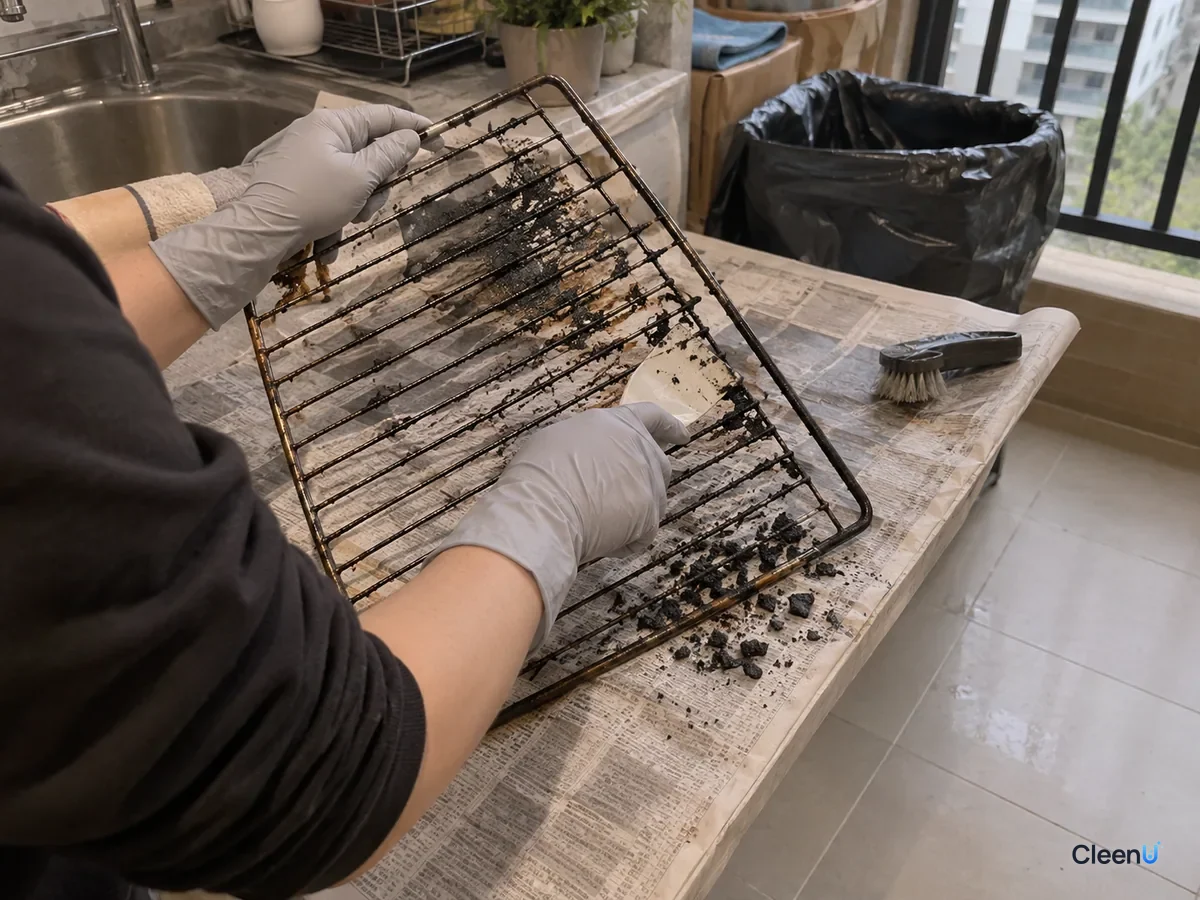
Use a plastic scraper to knock off charred bits that are already loose or lifting, so the cleaner has less to work through.
Bag it, spray it, seal it
Put the rack in the bag, spray the black buildup evenly on both sides, squeeze out the air, tie it closed, and lay it flat. For a baking sheet, spray the surface directly and cover it with plastic wrap.
Wait 10 to 30 minutes
Give normal buildup 10 to 20 minutes and heavy crust 30. You can flip the rack through the bag partway through so the cleaner coats evenly.
Scrub, rinse, and dry
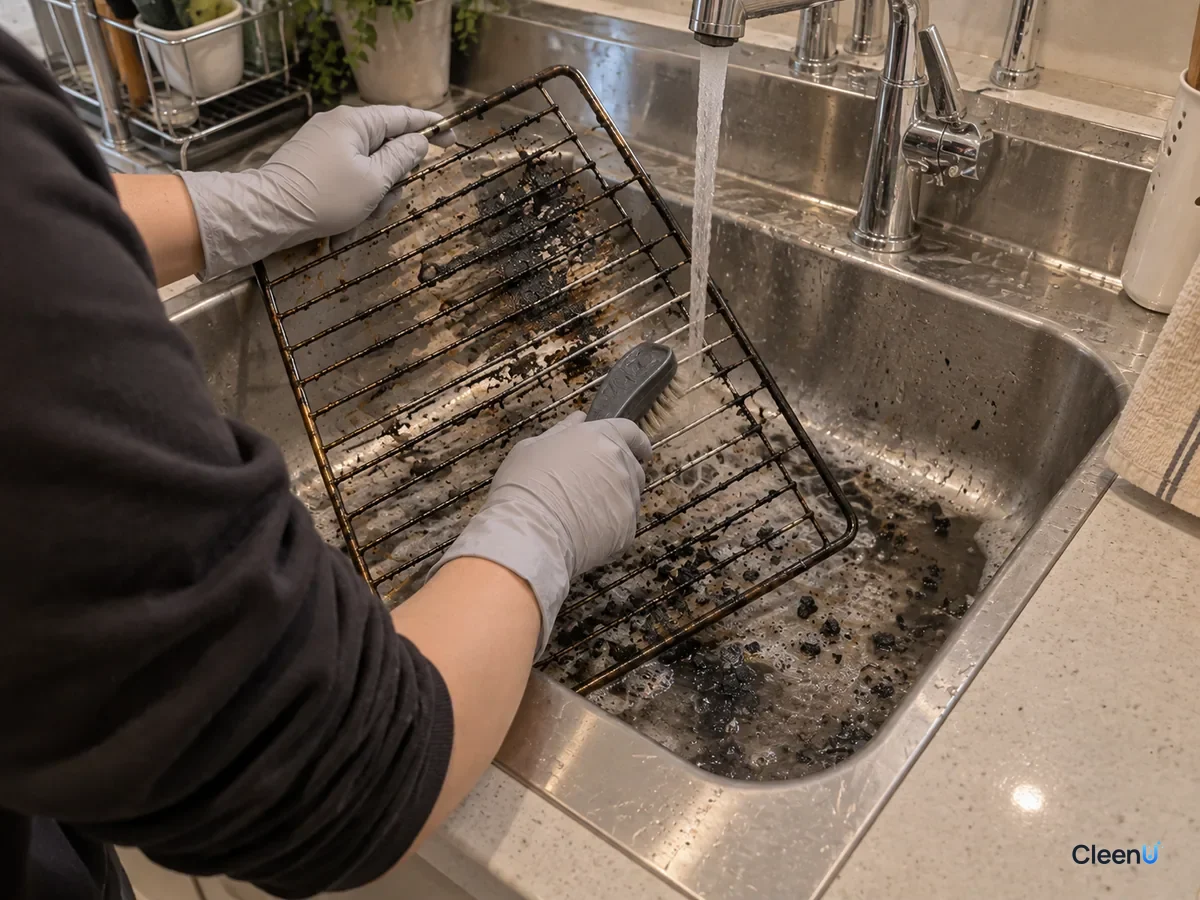
With gloves on, open the bag with your face turned away, and scrub along the bars with a stiff brush in the sink or outdoors; the crust should come off in flakes. Rinse thoroughly so no cleaner remains, then dry with a towel. Repeat once if heavy buildup didn't all come off.
Caution:Rinse the sink afterward too so no strong alkali is left on the sink or counter.
Cleaning nonstick and aluminum pans
Nonstick coatings, usually PTFE or ceramic, don't tolerate strong alkali, steel wool, or stiff brushes, and once scratched or peeling they can't be fixed. Aluminum darkens and corrodes in strong alkali.
For these pans:
While the pan is still warm but not hot, fill it with hot water and a little dish soap and soak for 30 minutes to an hour to soften the burnt bits.
Wipe gently with a soft sponge or nylon brush, using an old toothbrush in the corners. No steel wool or the rough side of a scrub sponge.
For stubborn marks, sprinkle a little baking soda and rub gently in circles with a damp sponge, then rinse.
If the nonstick coating is badly scratched or peeling, it's time to replace the pan.
Keeping racks from building up again
Line pans with foil or parchment when roasting to catch drips.
After each use, once the rack is cool enough to handle, scrub it with hot water and dish soap. Fresh grease comes off easily; carbonized crust doesn't.
Deep clean with oven and grill cleaner every month or two.
For outdoor grills, brush stainless or cast iron grates with a grill brush while they're still warm, then wipe on a thin coat of oil to prevent rust.
For the oven interior, see How to clean the inside of an oven, and for the rest of the kitchen, see How to clean a kitchen.
Different metals look different when you're done
The same alkaline cleaner leaves different metals looking different. Knowing what to expect keeps you from mistaking a normal result for damage, or damage for leftover dirt.
Stainless steel racks handle alkali well and are the best fit for this method. They come out back to bare metal color. Welds and crossing points may keep a faint golden or bluish tint. That's heat tint, an oxide that forms after years of heating. It isn't dirt, cleaner won't remove it, and it doesn't affect use.
Chrome-plated racks have a thin chrome layer over steel. With intact plating, cleaning is fine. Where the plating is already scratched or flaking, strong alkali and hard scrubbing can widen the damage, and exposed steel rusts quickly. Brush those areas lightly and don't keep working them with a stiff brush.
Cast iron grates and griddles usually carry seasoning, which is itself polymerized oil, so a strong alkaline cleaner strips it along with the crust. Clean cast iron looks gray. Dry it immediately, wipe on a thin coat of cooking oil, and heat it to reseason, or you'll see flash rust within hours.
Enamel pans have a glassy coating that tolerates alkali reasonably well, but long, concentrated contact can dull it. Stick to the label's dwell time and don't soak overnight.
What clean looks like, and why rinsing matters
Check three things. A gloved hand slides along the bars without a slippery feel. A damp white cloth wiped across them shows no brown or black. And there's no leftover foam in the joints or corners.
That slippery feel is alkali and saponified residue still on the metal. Keep rinsing until it feels squeaky. This isn't only about looks. Racks touch food and get heated again, and leftover alkali can give the next batch an off taste and dull the surface faster. Rolled pan edges and hollow rack tubes trap water, so tip them to drain before drying.
If one round leaves only a thin layer of crust, don't pile on more product or leave it overnight. A second round done the same way is more reliable. If the crust is gone but the metal still looks dark or mottled, that's usually oxidation of the metal itself or aging plating. That's the point to stop, because more scrubbing only damages the surface.
The rinse water is strongly alkaline. Pour it down the drain and follow with running water, not onto the lawn or into plant pots. Tie off the used trash bag with any leftover cleaner inside before you throw it out.
Stop if you see this
If cleaner gets on your skin, rinse right away with plenty of water. If it gets in your eyes, rinse for at least 15 minutes and seek medical care. Stop if your skin stings or turns red. Don't use it on hot surfaces, aluminum, or nonstick, and never mix it with acidic products. If you're working indoors with poor ventilation, move to a balcony or outdoors.
Burnt oven racks and baking sheets: common questions
What gets burnt-on crust off oven racks?
For stainless or chrome racks, a strong alkaline oven and grill cleaner, sealed in a bag for 10 to 30 minutes, then scrubbed and rinsed. Dish soap barely touches carbonized crust.
Can I use oven cleaner on a nonstick baking sheet?
No. Strong alkali damages nonstick coatings. Soak in hot soapy water, wipe with a soft sponge, and use a little baking soda on stubborn spots.
How do I clean a blackened aluminum pan?
Not with a strong alkaline cleaner, which darkens aluminum further. Soak in warm water with a mild detergent and wipe gently.
Why put racks in a trash bag?
The bag keeps the cleaner against the crust so it doesn't run off or dry out, which extends the working time, and it contains the fumes.
Can I use steel wool on oven racks?
A wire brush is fine on stainless and cast iron grates. Repeated steel wool can wear through chrome plating, and it's a no on nonstick and aluminum.
How often should I deep clean oven racks?
Scrub with hot soapy water after each use once cool, and deep clean with oven and grill cleaner every month or two.
For a foaming oven and grill cleaner that clings to rack bars and lifts carbonized crust in flakes after a sealed-bag soak on cool metal, take a look at our Multi-Purpose Oven & Grill Cleaner.
The black crust on oven racks and baking sheets is fat and meat juices oxidized, polymerized, and carbonized by repeated high heat. Dish soap barely touches it; it takes a strong alkali and enough time to saponify and break it down. For stainless or chrome racks and enamel pans, spray oven and grill cleaner once cool, seal them in a trash bag for 10 to 30 minutes, then scrub, rinse, and dry, wearing gloves and eye protection with good ventilation. Keep strong alkali and steel wool away from nonstick and aluminum; soak those in hot soapy water and wipe gently. Line pans with foil and scrub after each use, and crust won't build up.