

Product and application illustrations. Follow the product label and written use guidance.
CleenU product solution
Fireplace Glass Cleaner
Alkaline soot remover · Wipe when cool · Private label
Stove glass so brown-black with soot and tar you can’t see the fire? Once it’s cool, spray, wait 1–2 minutes, wipe with a damp cloth, and buff dry to see the firebox again. Alkaline formula—no razor needed. Private label from 500 bottles.
- When wood burns incompletely it produces soot and creosote, a sticky mix of phenols and resins. Both condense on the relatively cool glass door. Soot is loose carbon, but creosote cools into a tar that glues the soot to the glass as a brown-black film. The alkaline components in this cleaner react with the phenols and resin acids, softening and dissolving the tar so the soot loses its glue and wipes off with a damp cloth.
- Fireplace glass handles heat, but spraying hot glass flashes the cleaner off, can burn marks into it, and risks thermal stress. Always wait until the fire is out and the glass is cool. Spray, wait 1 to 2 minutes, wipe off the loosened tar and soot with a damp cloth or crumpled newspaper, and buff dry. The white haze on gas fireplace glass is combustion mineral deposit and wipes off the same way.
- MOQ
- 500 bottles
- Free samples
- 3–5 days
- Bulk lead time
- Scheduled with the order

Product value
What does Fireplace Glass Cleaner clean?
Fireplace Glass Cleaner cleans the heat-resistant glass doors of wood-burning, pellet, and gas fireplaces, removing black soot, brown creosote film, and the white haze gas flames leave.
View product detailsProduct summary
- Product type
- Alkaline soot and creosote glass cleaner
- Intended use
- Soot, creosote film, and gas haze on fireplace and stove glass
- Formula
- Alkaline builders with glycol ether solvent and nonionic surfactants, pH 10.5–12.0; no abrasives; ready to use.
- For
- Cleaning product brands, fireplace and heating brands and dealers, hardware and home channels, ecommerce sellers

Before & after
Before and after (use illustration)
Before: most of the stove’s glass door is coated in brown-black soot with thick tar at the corners, hiding the firebox. After: cooled, sprayed, left briefly, wiped, and buffed, the glass is clear and the firebox and logs are fully visible.
- Before: most of the inner glass coated in brown-black soot
- After: clear glass with the firebox and logs in view
- No razor—wipe with a damp cloth and buff

How it works
How Soot Film Comes Off
Fireplace glass buildup is carbon soot bound by creosote. The phenols and resin acids in creosote are weakly acidic, so the alkaline cleaner converts them into soluble salts and the tar softens and dissolves. Surfactants then disperse the freed soot particles into the liquid, a damp cloth or newspaper soaks up the dissolved tar and soot, and a dry cloth removes the last moisture for streak-free glass.
- Alkali softens creosote
- Surfactants disperse soot
- Damp-cloth lift
- Dry buff

Usage guidance
Use guidance
- Wait until the fire is out and the glass is cool to the touch; lay a cloth under the door to catch drips.
- Spray the soot on the inside of the glass and wait 1 to 2 minutes, up to 5 on thick tar at the corners.
- Wipe off the loosened soot with a damp cloth or crumpled newspaper, switch to a clean area, and buff dry.
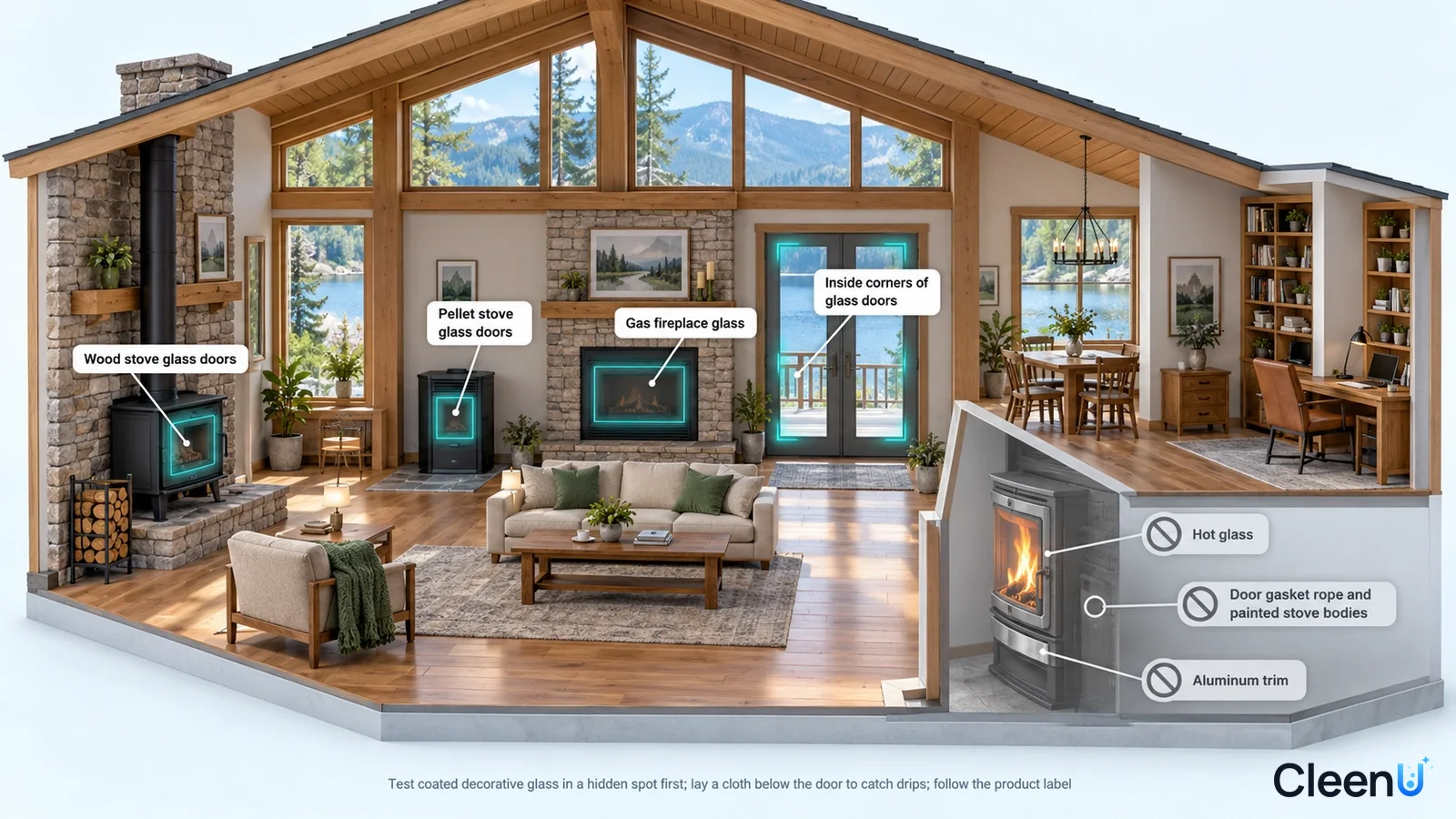
Before you use it
Important notes
- Not for: Hot glass
- Not for: Door gasket rope and painted stove bodies
- Not for: Aluminum trim
- Not for: Coated decorative glass that hasn’t been tested
- Test first for special materials, special equipment, or sensitive scenarios.
Product comparison
How to choose a Fireplace Glass Cleaner
Soot and creosote on fireplace glass: Fireplace Glass Cleaner. Smoke stains on the natural stone surround and hearth: Natural Stone Hearth Cleaner. Baked grease on oven door glass: Oven Glass Cleaner.
View product comparison
| Decision point | Fireplace Glass Cleaner | Regular glass cleaner |
|---|---|---|
| Creosote | Softened and dissolved by alkali | Won’t budge |
| Soot | Dispersed and wiped off | Smears into grey haze |
| Gas haze | Wipes off | Limited |
| Blade needed | No | Often |
Where Fireplace Glass Cleaner stands out
The Brown Layer Is Creosote, and Glass Cleaner Can’t Touch It
When wood burns incompletely it produces soot and creosote, a sticky mix of phenols and resins. Both condense on the relatively cool glass door. Soot is loose carbon, but creosote cools into a tar that glues the soot to the glass as a brown-black film. The alkaline components in this cleaner react with the phenols and resin acids, softening and dissolving the tar so the soot loses its glue and wipes off with a damp cloth.
Cool Glass Only, Then One Damp Wipe
Fireplace glass handles heat, but spraying hot glass flashes the cleaner off, can burn marks into it, and risks thermal stress. Always wait until the fire is out and the glass is cool. Spray, wait 1 to 2 minutes, wipe off the loosened tar and soot with a damp cloth or crumpled newspaper, and buff dry. The white haze on gas fireplace glass is combustion mineral deposit and wipes off the same way.
Who it's for, where it's used, and when not to use it
For
End-use scenarios
When not to use it
Product Specifications and Custom Options
Key product details and custom options for your project.
Product specifications
Product type, cleaning scope, and format.
| Product type | Alkaline soot and creosote glass cleaner |
| Surfaces | Heat-resistant glass doors on wood-burning, pellet, and gas fireplaces and stoves |
| Use scenarios | Weekly in wood-burning season; Rentals and cabins; Annual gas-fireplace service |
| Target soils | Soot, creosote film, and gas haze on fireplace and stove glass |
| Directions | Ready to use, no dilution; on cool glass, 1–2 min dwell, then wipe |
| Not for | Hot glass; Door gasket rope and painted stove bodies; Aluminum trim; Coated decorative glass that hasn’t been tested |
| Size and packaging | 500 mL trigger spray bottle |
| pH | pH 10.5–12.0 at 25°C |
| Scent | Fresh citrus scent |
| Shelf life and storage | 24 months unopened; keep tightly closed in a cool, dry, well-ventilated place. Protect from heat, direct sunlight, and freezing |
B2B custom options
Private label, packaging, MOQ, samples, and delivery.
| OEM/ODM and private label | From product direction and sample review to packaging, production, and delivery for your Fireplace Glass Cleaner project. |
| Packaging and labels | Mist trigger / foam trigger, fill size, labels, and retail sets can be customized |
| Case pack | 12 × 500 mL per case |
| MOQ | 500 bottles |
| Sample time | Free sample: 3–5 days |
| Bulk lead time | Scheduled with the order after packaging and label approval |
| Documents | SDS/MSDS, TDS, and batch COA provided per project on inquiry |
OEM/ODM project process
Move from product direction and sample review to packaging, production, and delivery for Fireplace Glass Cleaner.
Confirm market and season
Confirm the size of the fireplace and wood-stove market and plan stock ahead of the autumn-winter season.
Free sample
A free sample is usually ready in 3–5 days for project review.
Packaging and labels
Set fill size, trigger type, label language, the warnings your market requires, and use-on-cool-glass and keep-off-gasket instructions.
Bulk delivery
Standard MOQ is 500 bottles; bulk orders are scheduled after packaging and labels are approved. Fireplace products sell in autumn and winter, so finish sampling and stock in summer.
Why choose CleenU for Fireplace Glass Cleaner?
From product positioning and samples to packaging and repeat supply, CleenU supports OEM/ODM projects built around Fireplace Glass Cleaner.
Formula by fuel type
Wood stoves leave creosote, gas fireplaces leave mineral haze. We can make one universal version or split wood and gas versions.
Foam suits vertical glass
A foam trigger clings to the glass door and works longer; mist is also available.
Sample reviews with clear criteria
Review samples on your heat-resistant glass panels with soot and creosote against clear points: soot and creosote removal, wipe passes, and clarity after cleaning.
Citrus fresh
Fireplaces are indoors, so citrus masks the alkaline smell; unscented is also available.
Labels and documents
We supply bilingual labels, SDS/MSDS, TDS, and batch COAs, with use-on-cool-glass and keep-off-gasket instructions on the label, and can arrange third-party testing for your market.
Consistent supply and reorders
Each batch is retained and ships with a COA, so reorders match in color, scent, and feel.
Packaging and labeling options
Plan packaging format, label language, and shelf presentation around Fireplace Glass Cleaner and your target channel.
Show packaging and label options
Packaging options
Core size: 500 mL trigger spray bottle. Also available: 1 L household refill, channel case packs, and ecommerce bundles with cloths and a hearth cleaner. Mist trigger or foam trigger options, with labels and cartons made to your brand.
Supporting Documents and Materials
Purchasers usually confirm whether the materials are complete before formal cooperation. Preparing documents in advance helps with quoting, sampling, and channel review.
Show available documents
Project documents
When you inquire, we provide SDS/MSDS, a TDS, batch COAs, label directions, and packaging files for your project.
Related products, solutions, and articles
Explore related cleaning products, application guidance, and OEM/ODM resources for Fireplace Glass Cleaner.
Frequently asked questions (FAQ)
Find practical answers about Fireplace Glass Cleaner, private label, samples, MOQ, documents, and delivery.
How to use
Why does fireplace glass turn black and brown?
Incomplete combustion produces soot and creosote, which condense on the cooler glass door. Wet wood, small fires, and a closed-down air control all make it worse.
Can I clean the glass while it’s still warm?
No. Wait until it’s fully cool; spraying hot glass flashes the cleaner off, can leave marks, and the temperature shock is a risk.
How do I keep the glass from blackening?
Burn seasoned wood below 20% moisture, get a hot fire going, and keep the air control open. Many stoves have an airwash; keeping it unobstructed keeps the glass clean longer.
What's the best way to clean wood-stove or fireplace glass?
Let the glass cool fully, mask off the door gasket and painted stove body, then spray the inside of the glass and let the soot and creosote loosen. Wipe with a damp cloth, go over it again with a clean damp cloth, and buff dry. Repeat on stubborn corners with a plastic scraper—never a metal blade or steel wool.
Surfaces and common questions
Can it remove white haze on gas fireplace glass?
Yes. It’s mineral and sulfur deposit from combustion; spray, wait 1 to 2 minutes, and wipe. Gas fireplace glass usually comes off per the manual, which makes it easier.
Should I scrape it with a blade?
Usually not; once the tar softens, a damp cloth takes it off. For very thick corners, use a plastic scraper, not a metal blade.
Will it damage the door gasket?
Alkaline liquid can stiffen the rope gasket. Shield the gasket and stove body before spraying and wipe off any contact right away with a damp cloth.
There are white streaks after cleaning.
That’s loosened tar and product left behind. Wipe again with a clean damp cloth and buff dry with a dry cloth or newspaper. Spraying less and working in sections cuts streaking.
How often should I clean the stove glass?
Every 3–5 fires during the burning season, while soot is thin and wipes right off. Wait until the glass is black and the tar will be baked on and need several applications.
There’s a white haze on the inside that won’t come off.
Gas-fireplace white haze responds to this. On a wood stove, haze from long-term high heat can be etching—damage to the glass surface itself—which no cleaner removes; the glass would need replacing.
Can I use a regular glass cleaner like Windex on fireplace glass?
It won't cut baked-on creosote. Fireplace buildup is an oily, partly cooked tar film, while household glass cleaners are made for fingerprints and dust. CleenU Fireplace Glass Cleaner pairs alkaline builders with a glycol-ether solvent to soften that film so it wipes off. CleenU is not affiliated with Windex.
Can I use it on the glass doors of an open-fireplace screen?
Yes, if the doors are heat-resistant glass. Mask aluminum trim and painted frames before you spray, and test decorative or coated glass on a corner first.
Buying and private label
What should we decide first for a private-label fireplace glass cleaner?
Three things: whether your market has a strong wood-stove base (North America, Europe, Australia); spray or foam (foam clings to vertical glass); and whether to bundle with a hearth cleaner and cloths as a winter kit. It’s seasonal, so stock up in autumn.
What are the sample, MOQ, and lead-time terms?
Free samples are usually ready in 3–5 days. Standard MOQ is 500 bottles, and bulk orders are scheduled after packaging and labels are approved.
What can be customized?
All of it: formula direction, scent, fill size (500 mL spray, 1 L refill, and more), mist or foam trigger, label design and language, and ecommerce bundles with cloths and a hearth cleaner.
Can we test samples first?
Yes, we ship samples first. Test them on heat-resistant glass panels with soot and creosote like the ones your customers handle, and record soot and creosote removal, wipe passes, and clarity after cleaning. That tells you more than a before-and-after photo.
Which documents can you provide?
We provide SDS/MSDS, a TDS, and batch COAs, plus bilingual label content for your target market. They aren’t posted publicly; we send them per project on inquiry.
How is private-label pricing quoted?
Pricing is tiered by packaging, trigger or cap, label, and order quantity, starting at the 500-bottle MOQ. Send your target quantity, fill size, and packaging needs, and we’ll quote unit prices by volume tier with sample and lead-time details.
Launching your own Fireplace Glass Cleaner?
Send us your market, wood or gas users, packaging, and estimated volume. We will plan the product around the autumn-winter season with you.