

Product and application illustrations. Follow the product label and written use guidance.
CleenU product solution
Furniture Polish
Wax emulsion shine · Silicone-free · Private label
Dull wood furniture that grabs dust and water rings? Spray a soft cloth, wipe with the grain, and buff for a clean surface with a thin wax layer that deepens the grain. Silicone-free, factory-direct private label.
- Over time, finishes pick up fine wipe marks and lose their glow, dust clings, and every glass leaves a ring; wiping with soapy water slowly strips the sheen. This polish turns carnauba and microcrystalline wax into an emulsion that cleans while leaving a very thin wax layer, deepening the grain and helping dust slide off.
- Many furniture polishes use silicone for quick gloss, but it soaks into the finish and causes fisheyes when the piece is refinished or touched up. This polish is silicone-free, friendlier to furniture that will be repaired. Don't use it on wood floors, which it makes slippery, or on unfinished or oiled wood, which absorbs it and darkens; use a matching oil there.
- MOQ
- 500 bottles
- Free samples
- Free samples in 3–5 days
- Bulk lead time
- Scheduled with the order after packaging and labels are approved

Product value
Which furniture is it for?
CleenU Furniture Polish cleans and shines finished wood furniture.
View product detailsProduct summary
- Product type
- Wax emulsion wood furniture cleaner and polish
- Core use
- Dust, fingerprints, and dullness on finished wood furniture, veneer, piano finishes, and wood doors
- Formula focus
- Carnauba and microcrystalline wax emulsion with mild surfactants, silicone-free, pH 7.0–8.5.
- Best for
- Furniture brands, Home cleaning brands, Home retail and ecommerce channels, Cross-border sellers

Before & after
Before and after (illustration)
Before: a years-old solid wood dining table with a dull finish, fine wipe marks, faint glass rings, and dust that settles fast. After: wiped with the grain and buffed, the top has a warm glow, the grain is clearer, and the wipe marks are much less visible.
- Before: dull finish, fine marks, glass rings
- After wiping and buffing: warm glow
- Clearer grain, marks much less visible

How it works
How the shine comes back
A dull finish scatters light because of fine scratches and leftover grime. Mild surfactants remove dust and fingerprint oil first; the carnauba and microcrystalline wax emulsion breaks as you wipe, the wax spreads into fine scratches, and buffing leaves an even thin film that reflects light cleanly and lowers surface energy so dust settles less.
- Dust first
- Spray a soft cloth
- Wipe with the grain
- Wax fills fine marks
- Buff dry
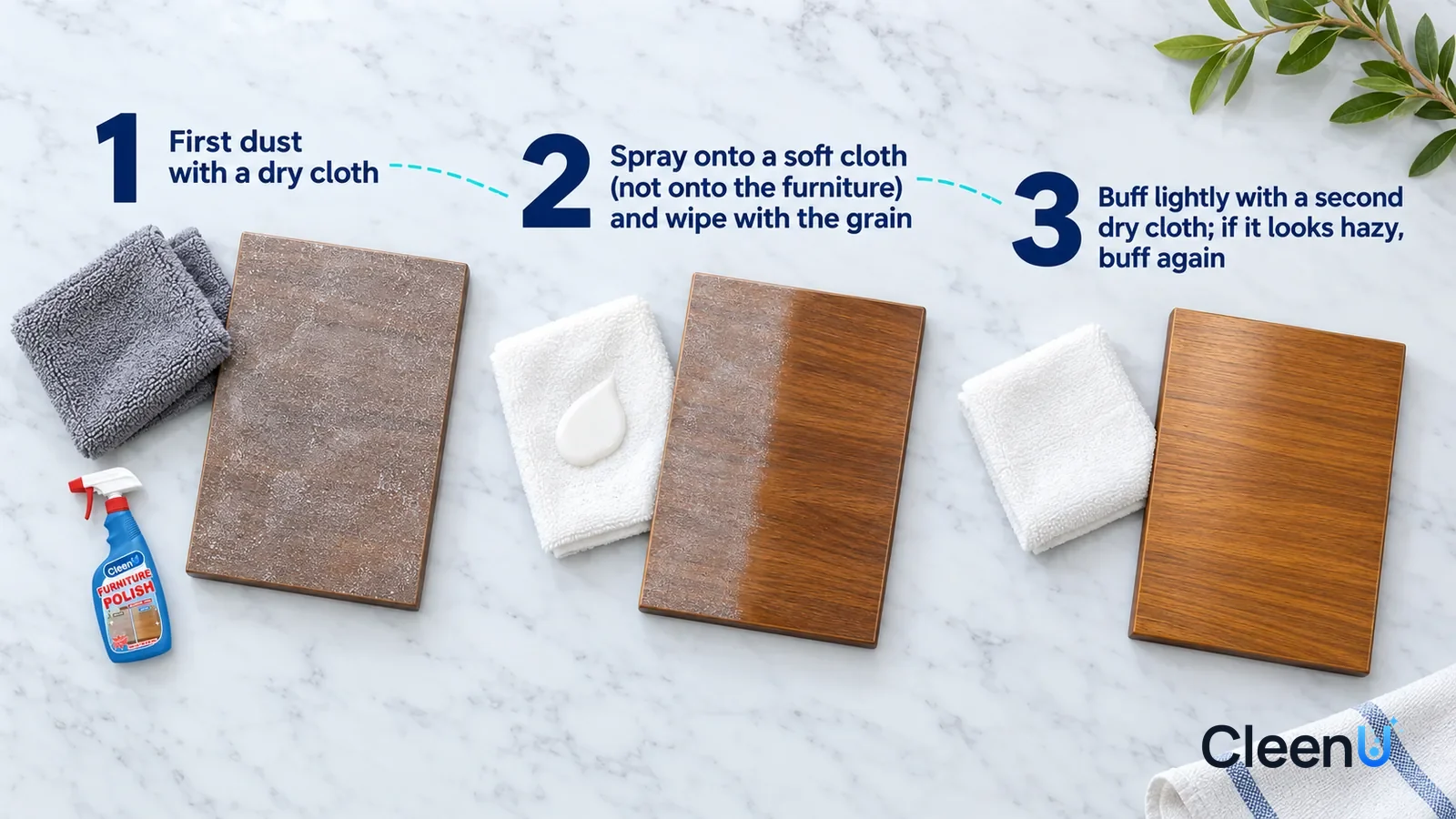
Usage guidance
Use guidance
- Dust with a dry cloth.
- Spray the polish onto a soft cloth, not the furniture, and wipe with the grain.
- Buff with a second dry cloth. Every two to four weeks; a hazy finish means too much product, so buff again.

Before you use it
Important notes
- Not for: Wood floors (slippery)
- Not for: Unfinished or oil-finished wood
- Not for: Glass tabletops
- Not for: Spraying heavily straight onto furniture
- Test first for special materials, special equipment, or sensitive scenarios.
Product comparison
How to choose a Furniture Polish
Use Furniture Polish to clean and shine finished wood, Wood Cleaner & Restorer to refresh weathered wood, and Desk & Tabletop Cleaner for routine desk cleaning.
View product comparison
| Decision point | Furniture Polish | Silicone furniture polish |
|---|---|---|
| Shine | Warm, natural | Glossy but greasy |
| Refinishing | Unaffected | Prone to fisheyes |
| Dust | Settles less | Can attract more |
| Feel | Dry | Can feel tacky |
Where Furniture Polish stands out
Why wood furniture dulls
Over time, finishes pick up fine wipe marks and lose their glow, dust clings, and every glass leaves a ring; wiping with soapy water slowly strips the sheen. This polish turns carnauba and microcrystalline wax into an emulsion that cleans while leaving a very thin wax layer, deepening the grain and helping dust slide off.
Why we keep it silicone-free
Many furniture polishes use silicone for quick gloss, but it soaks into the finish and causes fisheyes when the piece is refinished or touched up. This polish is silicone-free, friendlier to furniture that will be repaired. Don't use it on wood floors, which it makes slippery, or on unfinished or oiled wood, which absorbs it and darkens; use a matching oil there.
Who it's for, where it's used, and when not to use it
For
End-use scenarios
When not to use it
Product Specifications and Custom Options
Key product details and custom options for your project.
Product specifications
Product type, cleaning scope, and format.
| Product type | Wax emulsion wood furniture cleaner and polish |
| Surfaces | Finished or sealed wood furniture, veneer and laminate, piano finishes, and wood doors |
| Applications | Routine dining and coffee table care, Shining piano and lacquered cabinets, Holiday home prep |
| Main soils | Dust, fingerprints, and dullness on finished wood furniture, veneer, piano finishes, and wood doors |
| How to use | Spray a soft cloth, wipe with the grain, buff dry, every 2–4 weeks |
| Not for / avoid | Wood floors (slippery); Unfinished or oil-finished wood; Glass tabletops; Spraying heavily straight onto furniture |
| Size & packaging | 500 mL trigger spray bottle |
| pH | pH 7.0–8.5 (25°C) |
| Scent | Lemon scent |
| Shelf life & storage | 24 months unopened; store sealed in a cool, dry, ventilated place away from heat, sun, and freezing |
B2B custom options
Private label, packaging, MOQ, samples, and delivery.
| OEM/ODM & private label | We run Furniture Polish private-label projects from positioning and samples to packaging, production, and delivery. |
| Packaging & labels | Spray or paste, wax level, scent, labels, and kits available |
| Case pack | 12 × 500 mL per case |
| OEM/ODM and private label | Available for project discussion |
| Packaging and labels | Spray or paste, wax level, scent, labels, and kits available |
| MOQ | 500 bottles |
| Sample time | Free samples in 3–5 days |
| Bulk lead time | Scheduled with the order after packaging and labels are approved |
| Documents | SDS/MSDS, TDS, and batch COA provided with quotes |
OEM/ODM project process
Move from product direction and sample review to packaging, production, and delivery for Furniture Polish.
Define the buyer and plan
Choose spray emulsion or paste wax, scent, and whether to lead with silicone-free.
Free samples
Free samples are usually ready in 3–5 days for project review.
Packaging and labels
Set wax level, fill size, label language, and directions on wood floors and spraying the cloth.
Production and delivery
Standard MOQ is 500 bottles; production is scheduled after packaging and labels are approved.
Why choose CleenU for Furniture Polish?
From product positioning and samples to packaging and repeat supply, CleenU supports OEM/ODM projects built around Furniture Polish.
Adjustable wax level
We tune wax content and emulsion to the sheen your market prefers.
Silicone-free
Friendlier to furniture that will be repaired or refinished, and a good fit for furniture brands to sell alongside.
Sample testing that means something
We plan sample evaluation around gloss, satin, and veneer wood panels: sheen after buffing, fingerprints and dust pickup, and water rings.
Labels and documents ready
Bilingual label copy, SDS/MSDS, TDS, and batch COAs, with warnings and directions prepared for your target market.
Consistent reorders
Every batch is retained and issued a COA, so reorders match on color, scent, and feel.
Formula discussion
Discuss formula direction based on product positioning, target market, and channel selling points.
Packaging and labeling options
Plan packaging format, label language, and shelf presentation around Furniture Polish and your target channel.
Show packaging and label options
Packaging options
Main size: 500 mL trigger spray. Also available: paste wax tin, channel case packs, and ecommerce bundles with microfiber buffing cloths, with labels and cartons in your branding.
Supporting Documents and Materials
Purchasers usually confirm whether the materials are complete before formal cooperation. Preparing documents in advance helps with quoting, sampling, and channel review.
Show available documents
Project documents
SDS/MSDS, TDS, batch COA, label directions, and packaging files are provided per project after inquiry.
Related products, solutions, and articles
Explore related cleaning products, application guidance, and OEM/ODM resources for Furniture Polish.
Frequently asked questions (FAQ)
Find practical answers about Furniture Polish, private label, samples, MOQ, documents, and delivery.
Product, use, and procurement
How is furniture polish different from a cleaner?
A cleaner just wipes off dust and fingerprints. Polish cleans and leaves a very thin wax layer that brings out the grain, helps repel dust, and resists water rings.
What furniture can I use it on?
Sealed or finished wood, veneer, laminate, and lacquered pieces like piano finishes. Unfinished or oil-finished wood will soak up the wax and can darken; use a matching oil finish for those.
How often should I polish?
Dust with a dry cloth day to day and polish every two to four weeks; weekly for a dining table that gets wiped a lot.
What should we decide first for a private-label furniture polish?
Format, scent, and silicone. A spray emulsion or a paste wax (spray is quicker, paste lasts longer), lemon, cedar, or unscented, and whether to go silicone-free, which matters to people who refinish or repair furniture.
How fast can we get samples and a first order?
Free samples ship in 3–5 days. MOQ is 500 bottles, and production is scheduled once packaging and labels are approved.
How does furniture polish work?
It cleans off dust and fingerprints and leaves a very thin wax layer on the finish. That layer evens out tiny scuffs so light reflects more uniformly, which is why the grain looks richer, and it helps resist water rings. It's meant for sealed or finished wood, not raw wood.
Product usage questions
How do I use it?
Dust first, spray the polish onto a soft cloth rather than the furniture, wipe with the grain, and buff with a second dry cloth.
Can I use it on wood floors?
No. Polish makes floors slippery and dangerous. Use a dedicated wood floor cleaner and floor care product.
It looks hazy and shows fingerprints. What happened?
Too much product. Buff again with a clean dry cloth and use less next time.
Can I use it on glass tops or metal?
Glass will smear, so use a glass cleaner. A little is fine on stainless, but a stainless steel polish works better.
Can I use it on leather furniture?
No. Use a leather conditioner on leather.
Can I use it on a piano?
Use a dedicated piano care product on piano lacquer.
How soon can I put things back?
About 10 minutes after buffing.
Does furniture polish attract dust?
Used sparingly, it does the opposite and helps repel dust. Dust sticks when too much product is left on the surface, which is also what causes haze and fingerprints. Spray onto the cloth, not the furniture, and always finish by buffing with a second dry cloth.
Can I use it on granite or stone countertops?
No. Stone isn't one of the surfaces it's made for, and a wax film on a countertop just smears. Use a cleaner made for stone on granite and marble.
OEM/ODM customization questions
What can we customize?
Formula direction (wax level, with or without silicone), scent, fill size (500 mL spray, paste tin, and more), label design and language, and kits with microfiber buffing cloths.
How should we test samples?
Use gloss, satin, and veneer wood panels, and record sheen after buffing, fingerprints and dust pickup, and water rings from a glass. That tells you more than a before-and-after photo.
What paperwork comes with a private-label order?
Documents such as SDS/MSDS, TDS, COA, and label copy for your target market are prepared per project. We confirm which ones your order includes when we quote.
Launching your own furniture polish?
Send us your market, spray or paste, scent, and estimated volume. We'll build it out with you.