
Q&A
Bathroom Cleaner Fumes Making You Cough: Normal or Not?
Direct answer
A mild scent is normal. Coughing, watery eyes, chest tightness, or dizziness isn't. It usually means poor ventilation, too much product, a harsh formula, or cleaners that got mixed. Leave the room, open windows, and stop mixing products. Get medical care if symptoms don't ease.
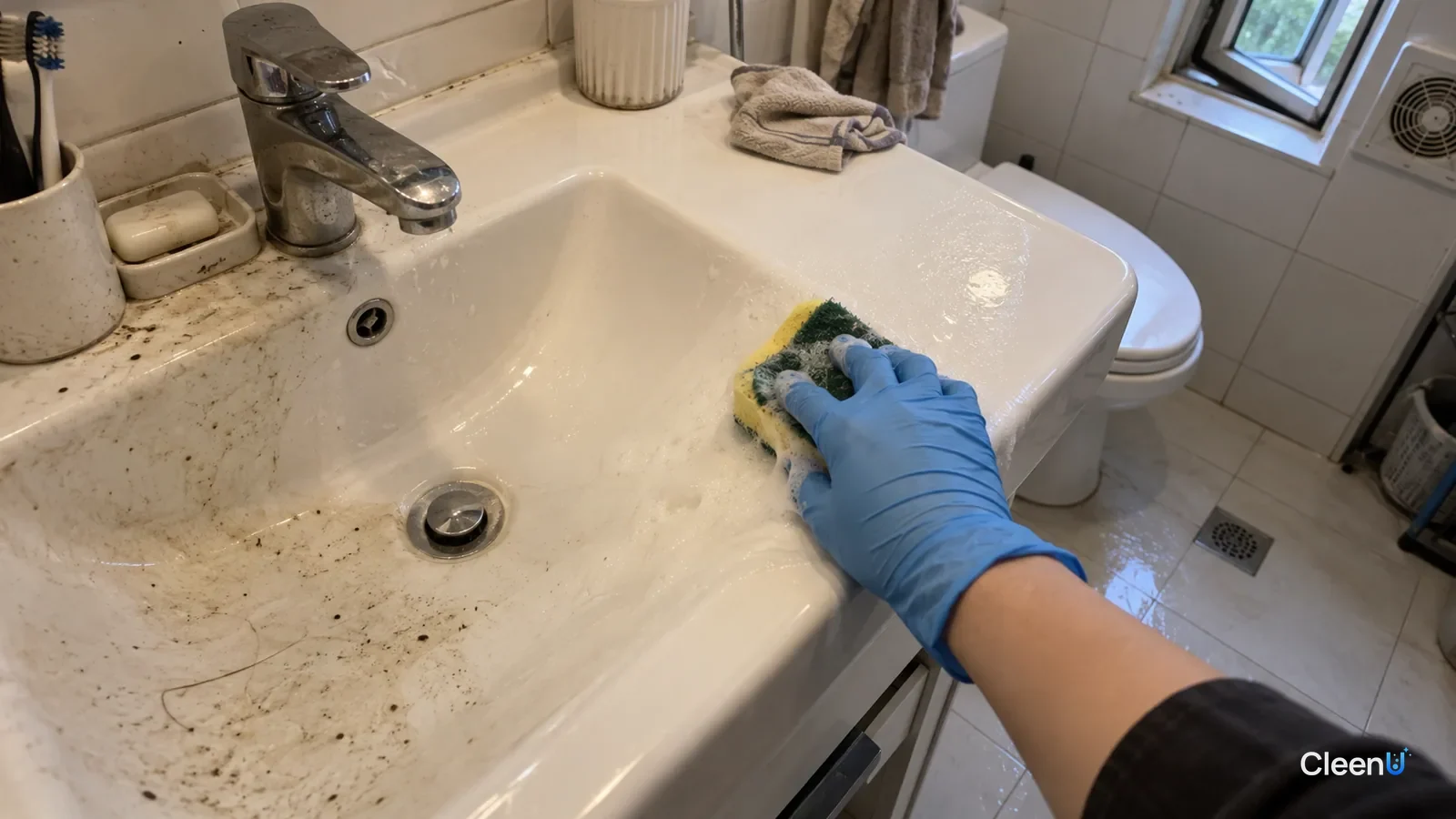
Bathroom cleaner fumes: common questions
Is it normal for bathroom cleaner to have a smell?
A light fragrance or a slight sour note from an acidic cleaner is normal. A sharp smell that makes you cough, tear up, feel tight-chested, or dizzy isn't.
I started coughing and couldn't catch my breath while cleaning. What should I do?
Stop right away, get out of the bathroom into fresh air, and open windows and the fan. If symptoms persist or worsen, get medical care and bring the product containers.
Which cleaners should never be mixed?
Never mix chlorine bleach products with acidic products (toilet bowl cleaner, descaler, vinegar) or ammonia products. They release harmful gases.
Does using two cleaners one after another count as mixing?
Yes. If the first product isn't rinsed off and you spray the second on top, they mix on the surface. Rinse thoroughly and ventilate between products.
How can I cut down on harsh fumes while cleaning?
Open a window and run the fan, use the label amount, spray close up or onto a cloth, avoid heavy misting in a small closed space, and wear a mask and gloves.
I have asthma or I'm sensitive to smells. What bathroom cleaner should I pick?
Look for a ready-to-use product without chlorine or ammonia and with a mild scent, ventilate well, and ask someone else to clean if needed.
A few sprays into the shower and your nose stings, your eyes water, and you can't stop coughing. It's natural to wonder whether the cleaner is too strong, and whether it's safe to keep using.
The smell itself doesn't necessarily mean danger, but irritation symptoms are your body telling you the concentration of irritants in the air is too high.
Why bathroom cleaning is so easy to overdo
Small room, poor airflow: in a few square yards, fine spray droplets hang in the air and the concentration climbs quickly.
Spray is easy to inhale: trigger sprayers produce a fine mist, and when you spray a wall heavily, some of it drifts to breathing height.
Heat and steam: cleaning right after a shower means warm, humid air that carries smells faster.
The product itself: chlorine products have a strong bleach smell that irritates airways, ammonia products are pungent, and some acidic or solvent-based cleaners are irritating too.
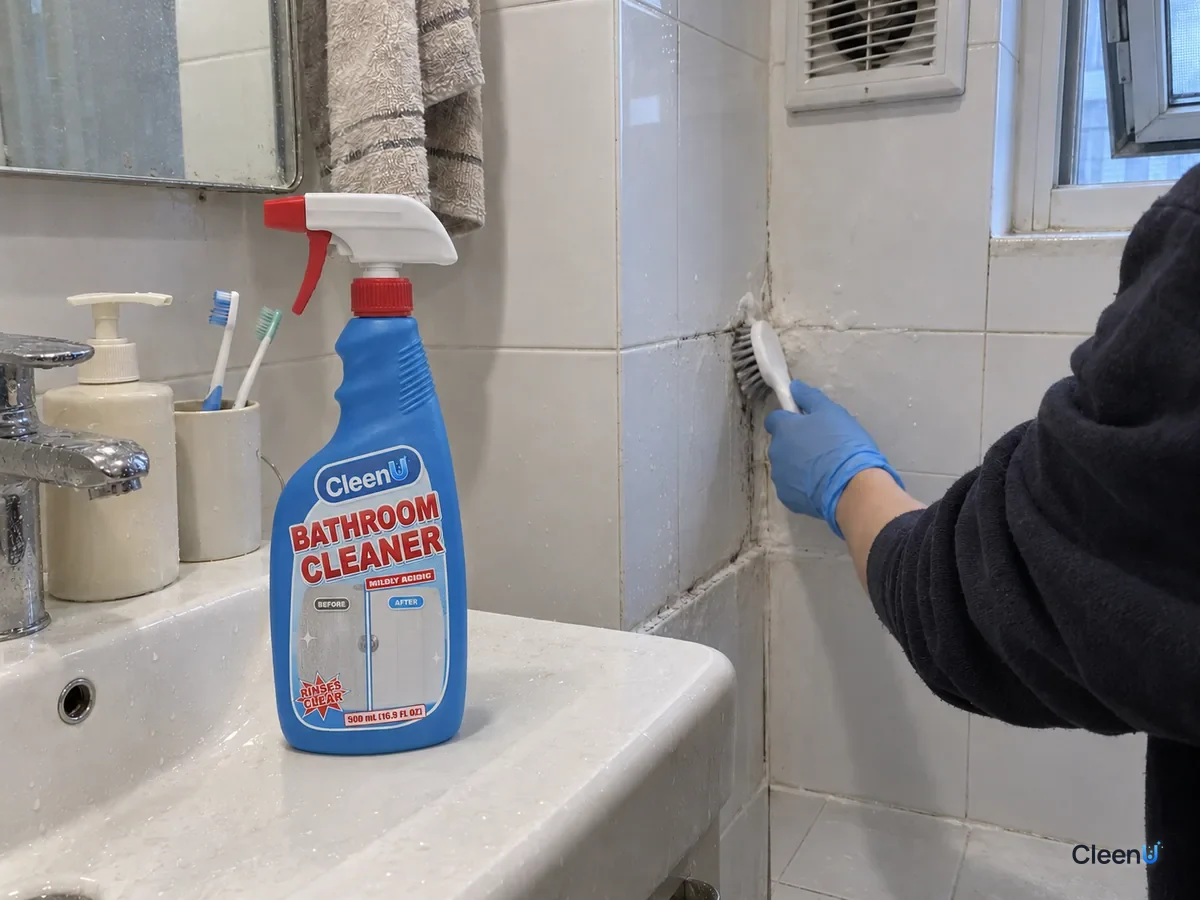
The biggest danger: mixing
Several common bathroom cleaners react with each other.
Chlorine bleach plus acid: hypochlorite releases chlorine gas when it meets acid. Chlorine gas is highly irritating and can cause coughing, chest tightness, and trouble breathing. Toilet bowl cleaner, descaler, and vinegar are all acidic.
Chlorine bleach plus ammonia: produces irritating chloramine gases. Some glass cleaners contain ammonia, and so does urine.
A lot of mixing happens without people noticing: scrubbing the toilet with bleach and adding toilet bowl cleaner before rinsing, or spraying a chlorine mold remover on caulk and then wiping the tile with an acidic bathroom cleaner.
The rule: in a single cleaning session, use chlorine products and acidic products at separate times, rinsing with clean water and ventilating for at least half an hour in between. Better still, give mold removal its own day.
Using cleaners more safely
Open the window and run the fan before you start, and keep it running for half an hour after.
Use the label amount; more spray doesn't mean cleaner.
Spray close to the surface, or spray a cloth and wipe, to keep mist out of the air.
Wear gloves, and a mask if you're sensitive to smells.
Use one product at a time and rinse before switching.
Keep cleaners in their original containers, never in unlabeled bottles.
Take CleenU Bathroom Cleaner as an example. It's a mildly acidic bathroom spray, pH 2.5 to 4.0 as supplied, made with citric and other organic acids and nonionic surfactants. It's ready to use: let it sit 2 to 5 minutes, then scrub and rinse. It has a fresh, clean scent. It contains no chlorine, but because it's acidic it must never be used together with chlorine bleach, and it isn't for natural stone like marble or for prolonged contact with aluminum. Ventilate and use the label amount with it, too.
If you have symptoms
Mild nose sting or a brief cough: stop, leave the bathroom for fresh air, and open the window. It usually passes quickly.
Persistent coughing, chest tightness, trouble breathing, dizziness, or nausea, or you know chlorine and acid got mixed: leave right away and get medical care, bringing the product containers. In the U.S., you can also call Poison Control at 1-800-222-1222.
Cleaner in your eyes: rinse with plenty of water for at least 15 minutes, then get medical care.
For the right order to use different products in a deep clean, see How to clean a bathroom.
Is it the smell, or the mist?
Most people assume whatever they're breathing is a gas coming off the cleaner. In a bathroom, the thing that makes you cough is often one of two very different things. One is truly volatile ingredients: the chlorine smell from bleach products, the sharp smell of ammonia, some solvents, and fragrance. The other is the fine droplets a trigger sprayer throws into the air.
Organic acids like citric acid barely evaporate, so on paper they don't smell like much. But spray a shower wall a dozen times and the fine mist hangs in a small bathroom for a minute or two. What you inhale is acidic droplets, and your throat tightens and itches just the same. That's why one person says a mildly acidic bathroom spray has no smell and another says it's harsh. The difference is usually how it was sprayed and how well the room was ventilated, not that the product got stronger.
Knowing which one you're dealing with changes the fix. Volatile odors are controlled with ventilation and by never mixing products. Mist is controlled by spraying less, spraying closer, or spraying onto a cloth.
How you spray matters more than how much
A stream setting, or spraying from close range, makes bigger droplets that fall quickly, so less of it floats. A fine-mist setting from a foot away covers more area but drifts more. For large surfaces like tile walls and glass doors, work one small section at a time. For small areas like mirrors, faucets, and sink rims, spray the cloth and wipe; that creates almost no airborne mist.
Don't spray straight up at high tiles or the ceiling. Whatever comes down lands right at breathing height. For high spots, spray a long-handled brush or a cloth and wipe instead.
Step out while it sits
A mildly acidic bathroom cleaner typically needs 2 to 5 minutes of dwell time. During that time the acid dissolves the calcium and magnesium soaps in soap scum along with hard-water deposits, and the surfactant wets the film so it lets go. You don't need to stand there while that happens. Spray, leave the fan and window going, step outside, and come back when the time is up to scrub and rinse. You'll breathe in far less mist and odor.
Rinse with cool or lukewarm water from the showerhead, not very hot water. Hot rinsing makes a cloud of steam that carries leftover cleaner and fragrance into the air. Afterward, squeegee or towel the walls and glass so moisture and odor clear out faster.
You'll know the rinse is done when the tile feels smooth rather than slick, water sheets off the glass evenly, and the sour note in the air fades within a few minutes of running the fan. If the surface still feels slippery, there's cleaner left on it; rinse that section again before you call it finished.
Still smells the next day? Look for another cause
If you rinsed well and ventilated and the bathroom still smells sour or sharp the next day, check these in order:
- Puddles that never got rinsed in corners, by the drain, or along the glass door's seal; spots behind the toilet or under the vanity that got sprayed but not wiped.
- The drain itself. Sewer odor is often blamed on cleaner. Pour some water into the floor drain to refill the trap and see whether the smell goes away.
- Leftover bleach-based mold remover on the caulk from the day before. Chlorine odor can linger, and spraying an acidic product on top of it creates a mixing risk.
What makes a bathroom cleaner easier to live with
Whether a bathroom cleaner is easy to use safely has little to do with how nice it smells. Look at the label. Does it state the pH range and product type (acidic, alkaline, chlorine-based)? Does it say what it must never be mixed with? Does it give a dwell time and rinse instructions? Does it list which surfaces it's for and not for?
Heavy fragrance only covers other smells, and it can make things worse for people who are sensitive to scent. A faint smell doesn't mean low irritation either, and the danger of chlorine products has nothing to do with their scent. For family members with asthma or allergies, a better plan is to use a chlorine-free, ready-to-use mildly acidic product for routine soap scum and water spots. Schedule mold and bleach jobs separately, have someone who isn't sensitive do them, and ventilate well before others use the room.
If you manage housekeeping at a hotel or short-term rental, bathrooms often have weaker ventilation and staff clean many in a row. Standardize the products and the order: one acidic bathroom product per floor, chlorine products only during a set window, and "spray the cloth" and "step out while it sits" written into the cleaning procedure.
For a chlorine-free, mildly acidic bathroom spray with a fresh scent whose label clearly lists its pH and what not to mix it with, take a look at our Bathroom Cleaner.
A mild smell from bathroom cleaner is normal, but coughing, watery eyes, chest tightness, or dizziness means there are too many irritants in the air. The usual causes are a small, poorly ventilated room, too much product, or a harsh formula, and the most dangerous is mixing chlorine bleach with acidic or ammonia products. Run the fan and open a window, use the label amount, spray close up or onto a cloth, use one product at a time, and rinse and air out before switching. If you have trouble breathing, get to fresh air, and get medical care if symptoms persist or you suspect products were mixed.