
Q&A
How Long Should You Leave Toilet Bowl Cleaner In? Is Longer Better?
Direct answer
Follow the label. A typical acidic clinging gel needs about 10 minutes, then scrub and flush. Longer isn't better: extra time removes little more grime and can harm the glaze and fittings. Treat a thick ring in several rounds.
Toilet bowl cleaner dwell time: common questions
How long does toilet bowl cleaner usually need to sit?
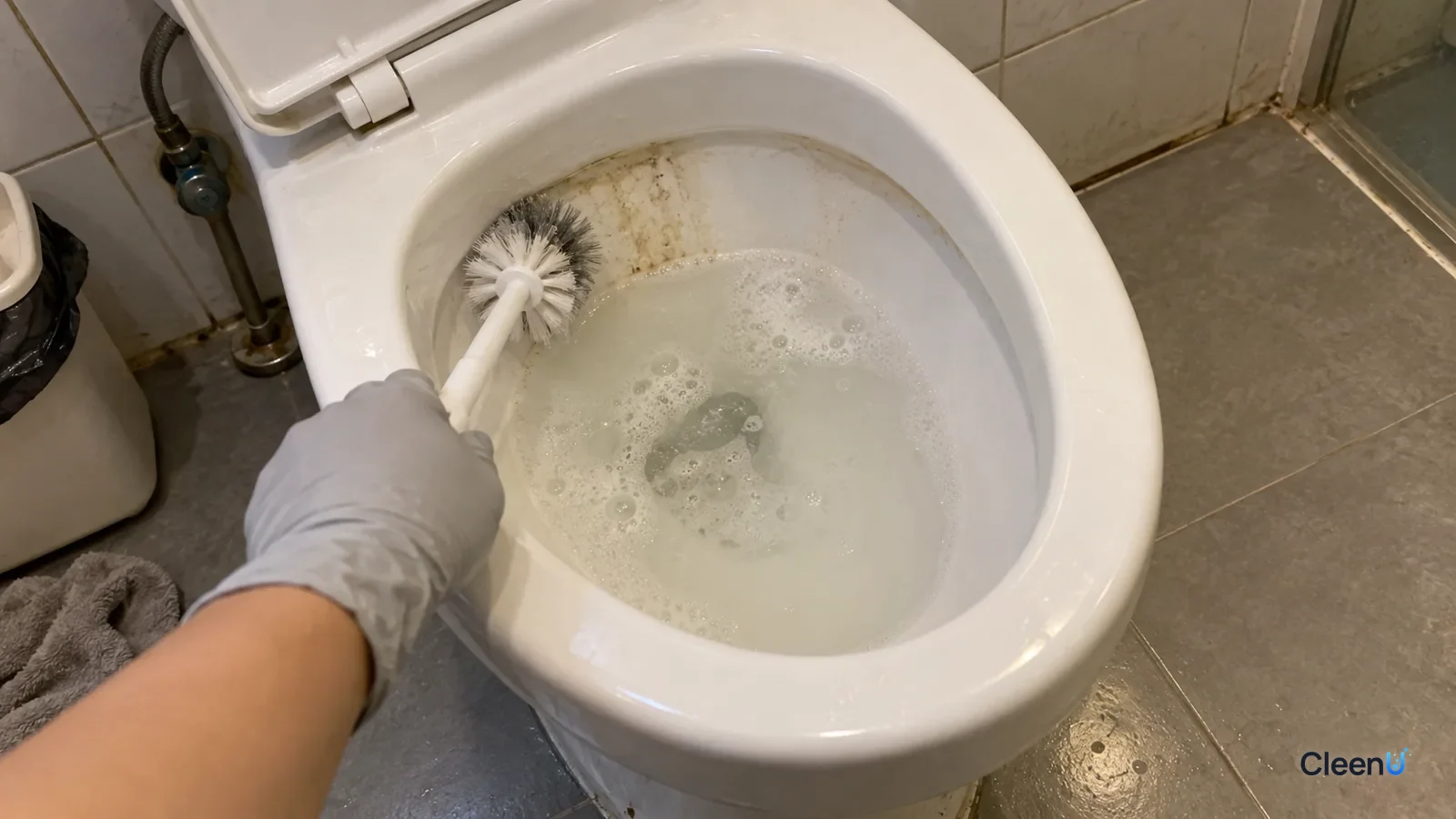
Go by the label. Acidic clinging gels usually need about 10 minutes, then scrub with a toilet brush and flush.
Can I leave toilet bowl cleaner in overnight?
We don't recommend going past the label time. Acid left on for hours can dull glaze and harm metal parts and seals, and the gel slowly drains into the water and gets diluted, so it doesn't keep working harder.
Can I just flush without scrubbing?
For light stains, maybe, but scrubbing carries away the softened buildup and works much better, especially under the rim and at the waterline.
The waterline ring is still there after soaking. Now what?
Lower the water level so the cleaner touches the ring directly, let it sit for the label time, scrub, and repeat the next day. Work in rounds.
Can I use toilet bowl cleaner with bleach?
No. Mixing an acidic toilet bowl cleaner with chlorine bleach releases harmful gas. Use them separately, rinsing and ventilating in between.
What happens if I don't let it sit long enough?
The acid doesn't have time to dissolve the scale, so only the top layer comes off and the ring still looks yellow after scrubbing.
Some people squeeze cleaner around the bowl, scrub right away, and flush. Others squeeze it in at bedtime, leave it overnight, and flush in the morning. Which is right?
Neither, really. Toilet bowl cleaner needs some time to work, but more time isn't always better.
Why it needs to sit
The toughest grime in a toilet is the yellow waterline ring, brownish urine scale under the rim, and hard-water scale. They're mostly calcium and magnesium carbonates and phosphates plus minerals from urine, often mixed with organic stains.
Acidic toilet bowl cleaner dissolves that mineral scale, and chemistry takes time. The acid has to soak into the deposit and loosen it layer by layer before a brush can carry it away. Scrub right after squeezing and the acid hasn't had time to react, so only the very surface comes off.
Clinging gels are thicker than plain liquids so they run slowly down the bowl and stay on vertical surfaces longer, precisely to give the acid enough contact time.
Why longer isn't better
The reaction slows down: acid gets used up as it dissolves scale, and the gel gradually slides into the water at the bottom and gets diluted. Past a certain point, very little extra scale dissolves.
It can harm materials: strong acid left on for a long time can dull glaze, corrode metal fittings and flush parts, and affect seals.
It raises the risk of mixing: during an overnight soak, someone else in the house might pour a bleach product into the toilet.
So let it sit for the label time, scrub, and flush. If it doesn't all come off, do it again the next day. That's more effective and safer than one long soak.
How to use it
Put on gloves and turn on the fan.
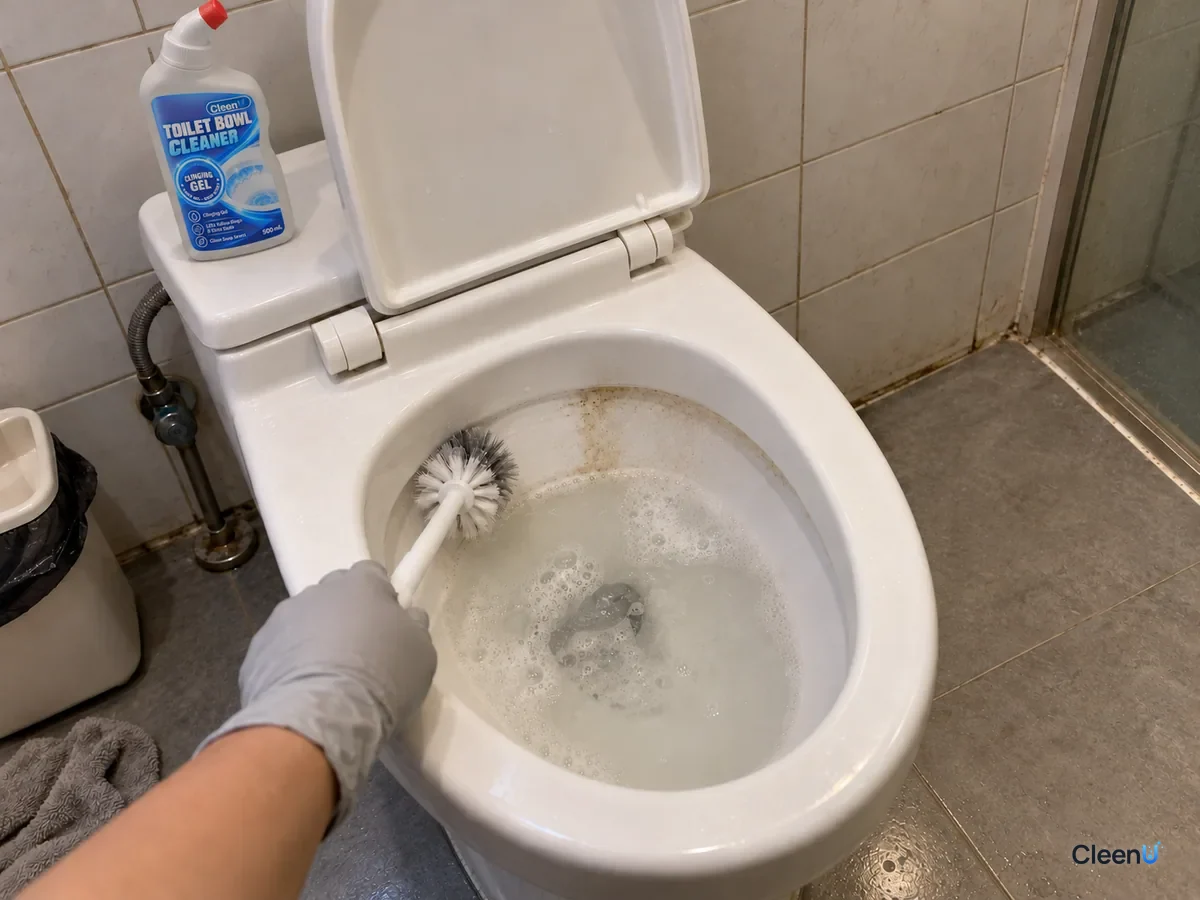
Aim the nozzle under the rim and squeeze gel all the way around so it runs down and covers the waterline.
Let it sit for the label time.
Scrub the bowl, under the rim, and the waterline with a toilet brush.
Flush.
Take CleenU Toilet Bowl Cleaner as an example. It's an acidic clinging toilet bowl gel, pH 1.0 to 2.5 as supplied, made with inorganic and organic acids plus thickener and surfactants, with no chlorine, and ready to use. Squeeze it around the rim, let it sit 10 minutes, scrub, and flush. It's made for ceramic toilet bowls, the rim jets, the waterline, and urinals, targeting waterline rings, urine scale, and brownish stains. Never mix it with chlorine bleach, and don't use it on toilet seats, metal fixtures, natural stone floors and counters, or coated or colored-glaze tubs and sinks.
Dealing with a thick ring
Lower the water first: shut off the supply valve and flush, or push water down with the toilet brush, so the ring is exposed and the cleaner isn't diluted.
Apply the gel, let it sit for the label time, and scrub.
If it doesn't all come off, repeat the next day, two or three rounds in total.
If the stain is still there and the surface feels rough after several rounds, the glaze may be worn and the stain has soaked in. We don't recommend sanding it or scrubbing with steel wool.
For the order to clean the rest of the bathroom and which products go together, see How to clean a bathroom. For the difference between scale and soap scum, see Soap scum vs. hard water stains.
Why the ring always forms at the waterline
The waterline in a toilet bowl is where water, air, and porcelain meet. Water keeps evaporating there, so calcium and magnesium dissolved in it slowly come out of solution as a thin layer of scale. Floating organic matter also collects at the surface, and that band is where microbes most easily settle into a film. Scale gives organic stains a rough surface to grip, and the organic film makes the next layer of minerals deposit more easily. Layer by layer, you get a yellow-brown ring.
The buildup under the rim is a little different. Urine contains urea, phosphates, and calcium. As urea breaks down, conditions turn alkaline, which makes calcium and phosphate more likely to settle out as hard, often yellowish urine scale. Around the rim jets, water flows and then dries over and over, so scale slowly narrows the openings and the flush gets weaker.
There's one more thing to tell apart. In some areas the water carries more iron or manganese, which leaves a reddish or orange-brown tint at the waterline. When that tint is mixed in with scale, an acidic cleaner can usually take care of part of it. If the color has soaked into glaze that's already worn, though, more dwell time won't fix it.
What the acid does during those 10 minutes
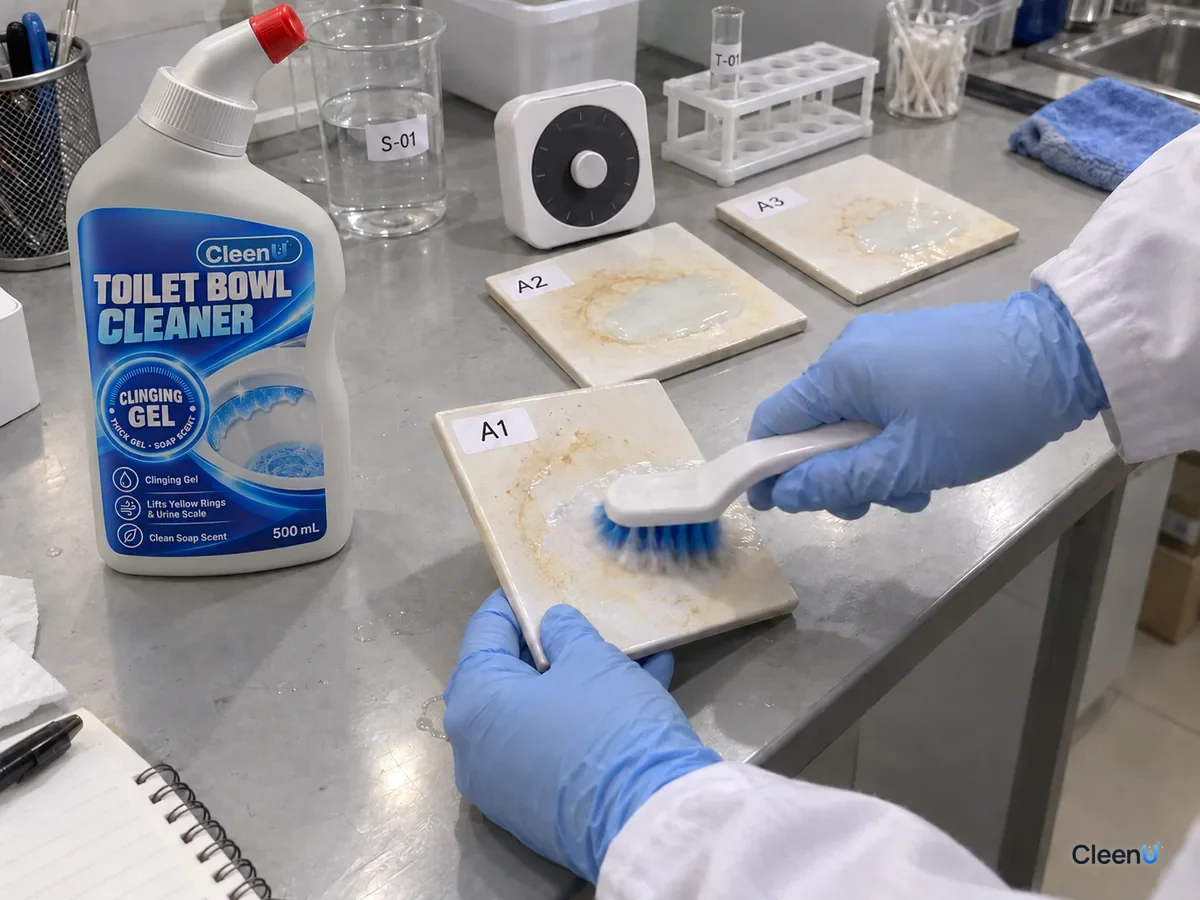
The acid in a toilet gel reacts with the calcium and magnesium carbonate in scale, forming soluble salts and releasing carbon dioxide. That's the fine fizzing you often see right after you apply it. Calcium phosphate in urine scale dissolves more slowly and needs steady contact. The surfactant wets the deposit so acid can work into the gaps where organic film and minerals are layered together, and the thickener keeps the gel clinging to the sloped bowl instead of sliding straight into the water and getting diluted.
So the dwell time exists for penetration and dissolving. When the fizzing has mostly stopped, the gel has thinned out, and the gel near the waterline has slid into the water, that round of reaction is largely done and it's the right time to scrub. Waiting longer adds little, because most of the acid has been used up or diluted.
Temperature affects the pace too. A cold bathroom in winter slows the reaction, so the same 10 minutes may remove less than in summer. Rather than stretching it to hours, finish the labeled time and do another round the next day.
How to tell whether you need another round
After scrubbing and flushing, run a gloved fingertip along the waterline and under the rim. If it feels smooth, the same as the glaze next to it, the deposit is gone. Any faint color left is usually stain in the surface layer, and further treatment won't do much. If you still feel a rough, gritty band, there's scale left; lower the water level and treat it again the next day.
Check the rim jets with a small mirror. If you see white or yellow crust around the holes, squeeze gel right onto them, let it sit, then scrub along the openings with a small brush or old toothbrush. Once they're clear, the flush runs noticeably better and rinses the bowl walls more evenly, which slows the next buildup.
Keep the brush moving in short strokes along the curve of the bowl rather than one big swirl. Short strokes concentrate the bristles on the deposit, and they keep loosened scale from simply being smeared back over a spot you already cleaned. Rinse the brush in the flush water as you go.
How often matters more than how long
A waterline ring builds up gradually. Treat it weekly for the labeled time and the layer stays thin enough that 10 minutes plus scrubbing clears it. Let it go two or three months and the scale thickens and alternates with organic staining, so it takes several rounds and may never fully return to the original look. In hard-water areas, busy households, or heavily used toilets, shorten the interval.
You can also slow the buildup day to day. Flush promptly so urine doesn't sit. In a bathroom that rarely gets used, flush every few days so the water doesn't evaporate down and leave a ring.
What to look for when you buy
Clinging gels, regular liquids, and drop-in or rim products work differently. Gels are for periodically tackling an existing ring; their thickness buys contact time. Liquids run off fast and suit routine cleaning. Tank and rim products release a small amount with each flush and mainly slow buildup; they don't do much for a thick ring that's already there.
Check whether the label says the product is acidic and whether it contains chlorine. Look for clear dwell, scrub, and flush directions, and for a list of surfaces to avoid, such as seats, metal hardware, natural stone, and colored or coated glazes. Make sure the nozzle can reach under the rim. For hotels and public restrooms buying in bulk, also consider whether an angled squeeze bottle is easy to use one-handed and whether staff can follow the same dwell-and-scrub timing every time.
For a chlorine-free clinging gel you squeeze around the rim and leave 10 minutes before scrubbing away rings and urine scale, take a look at our Toilet Bowl Cleaner.
Toilet bowl cleaner needs to sit so the acid can soak into the scale and dissolve the minerals, but longer isn't better. Let it sit for the label time, typically about 10 minutes for an acidic gel, then scrub and flush for the best and safest result. An overnight soak removes little extra grime, can harm glaze and fittings, and raises the risk of someone adding bleach. For a thick ring, lower the water and work in several rounds, and never mix an acidic toilet bowl cleaner with chlorine products.