
How-to
How to Clean Bathroom Grout Without Damaging It
Direct answer
Spray grout cleaner into the lines, let it sit 5 to 10 minutes, scrub along each line with a narrow stiff-bristle brush, then rinse and dry. Skip wire brushes, spot-test colored grout first, and regrout lines that are cracked or crumbling.
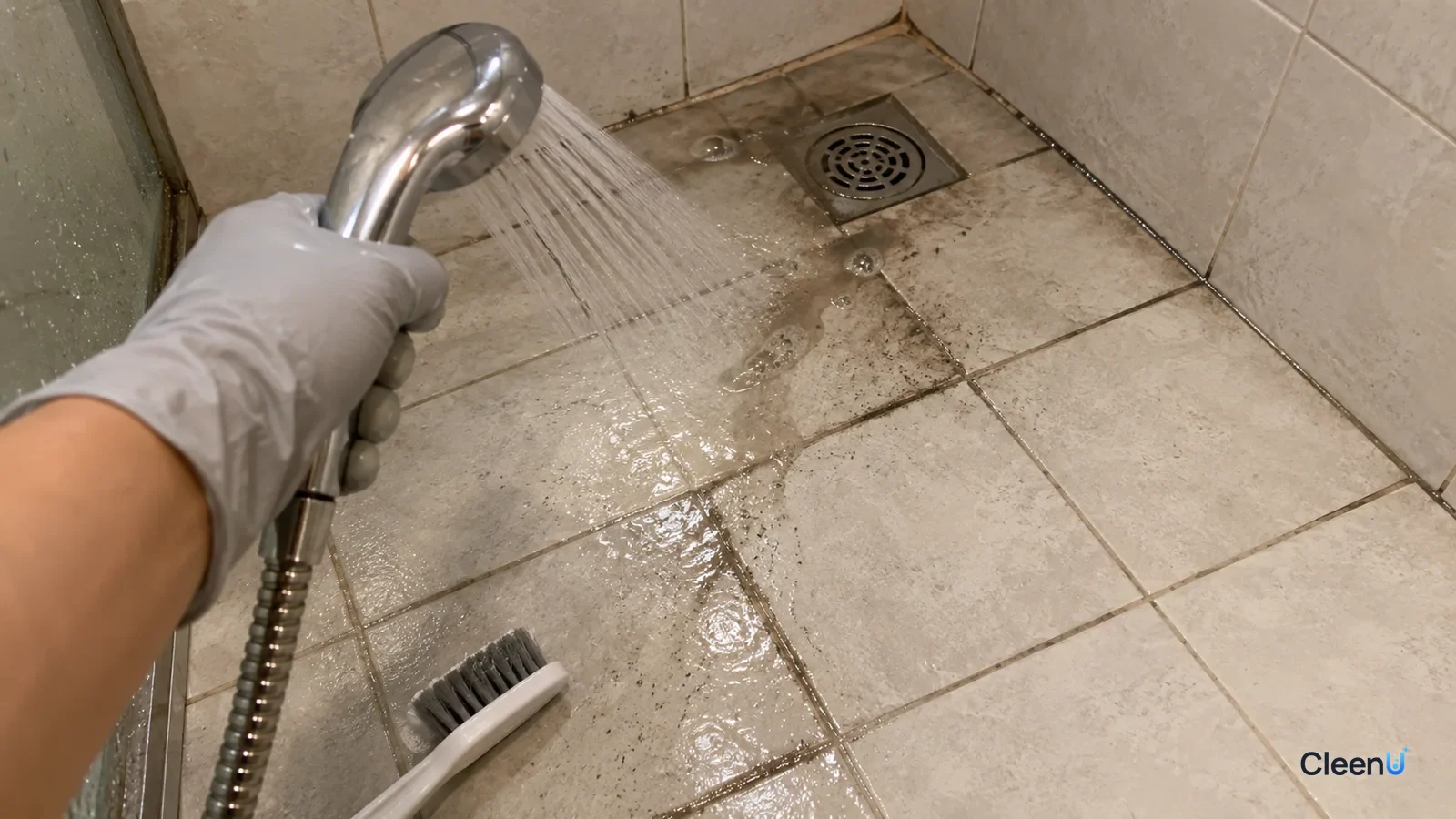
Grout that has gone gray, yellow, or black is one of the most common bathroom complaints. The tile wipes clean in seconds, but the lines between stay dark no matter how hard you scrub. That's not a technique problem. Grout is a different material from tile: it's porous, and the grime isn't sitting on top of it. It's inside it.
This guide covers why grout is hard to clean, which tools and cleaner to use, the step-by-step method, and how to keep it from getting dark again. You'll also learn which stains will scrub out and which mean the grout itself is failing and needs to be redone.
Why grout is harder to clean than tile
Ceramic and porcelain tile has a fired glaze on top: dense and smooth, so dirt can only sit on the surface. Grout is usually cement-based, or on newer jobs an epoxy or urethane product. Cement grout is full of tiny capillary pores, like a very hard sponge. Epoxy is much denser, but even it develops fine surface wear over time.
Bathroom grime is exactly the kind that works its way into those pores. Fatty-acid salts from body wash and shampoo react with calcium and magnesium in tap water and form insoluble calcium soap, better known as soap scum. Skin oil and hair products mix in and make it stickier. As water evaporates, calcium carbonate drops out and binds the scum and dust into a gray-white film. In spots that stay damp, mold and bacteria feed on the organic material in that film and grow inside the pores, shifting the color from gray to tan to black.
So dirty grout is usually three things at once: soap scum and oil as the glue, mineral scale as the framework, and microbes and their pigments darkening the whole thing. Plain water moves none of it. Acid alone loosens the scale but leaves the oily scum. Dish soap foams up but doesn't reach the bottom of the joint. That's why grout needs dwell time and a brush, not a quick spray-and-wipe.
It helps to know which kind of black you're dealing with. Dark lines that lighten as you scrub are mostly scum and dirt. Spotty patches that come back fast are usually mold.
How a grout cleaner actually works
Take CleenU Grout Cleaner as an example. It's an alkaline oxygen formula, pH 9.5 to 11.0 as supplied, built from alkaline builders, an oxygen-based ingredient, and nonionic surfactants, with no chlorine. Each part handles a different job.
The alkaline builders go after soap scum and oil. In alkaline conditions, calcium soap and skin oil are partly saponified and emulsified, so a sticky film turns into something water can carry away. It's the same idea as a kitchen degreaser, tuned for grout.
The oxygen ingredient goes after color. Many tan and gray-black stains are organic pigments. Oxidation breaks the part of the molecule that gives the color, so the stain fades. It works differently from chlorine bleach and doesn't leave a chlorine smell.
The nonionic surfactants help it get in. They lower surface tension so the liquid soaks into the grout's pores instead of beading on top. If the cleaner can't get in, it can't loosen anything.
Dwell time is what lets all three happen. Spray and scrub right away, and the cleaner hasn't reached the pores. Give it 5 to 10 minutes and the grime softens enough that the brush lifts it out. Don't let it sit until it dries, though; that just leaves residue behind.
Alkaline and oxygen ingredients can fade colored or dark grout, and natural stone shouldn't sit under them for long, so always spot-test the first time. If you're dealing with a thick, hard white crust of scale, an alkaline cleaner won't move it; that's a job for an acidic descaler. Never use the two at the same time or back to back. Rinse thoroughly with water in between.
Six steps to clean bathroom grout
From prep to finish in six steps
Ventilate, glove up, and clear the surface
Turn on the exhaust fan or open a window and put on nitrile gloves. Clear hair from around the drain, move bottles off the shower shelf, and rinse the tile with water first so you aren't grinding loose dust and hair into the lines.
Spot-test in a corner
The first time, or on colored or dark grout, spray a short section behind the door or in a corner. Let it sit, scrub, rinse, and let it dry. If there's no fading or whitening, move on to the rest.
Caution:Don't let an alkaline grout cleaner sit for long on natural stone such as marble or limestone.
Spray along the lines and wait 5 to 10 minutes
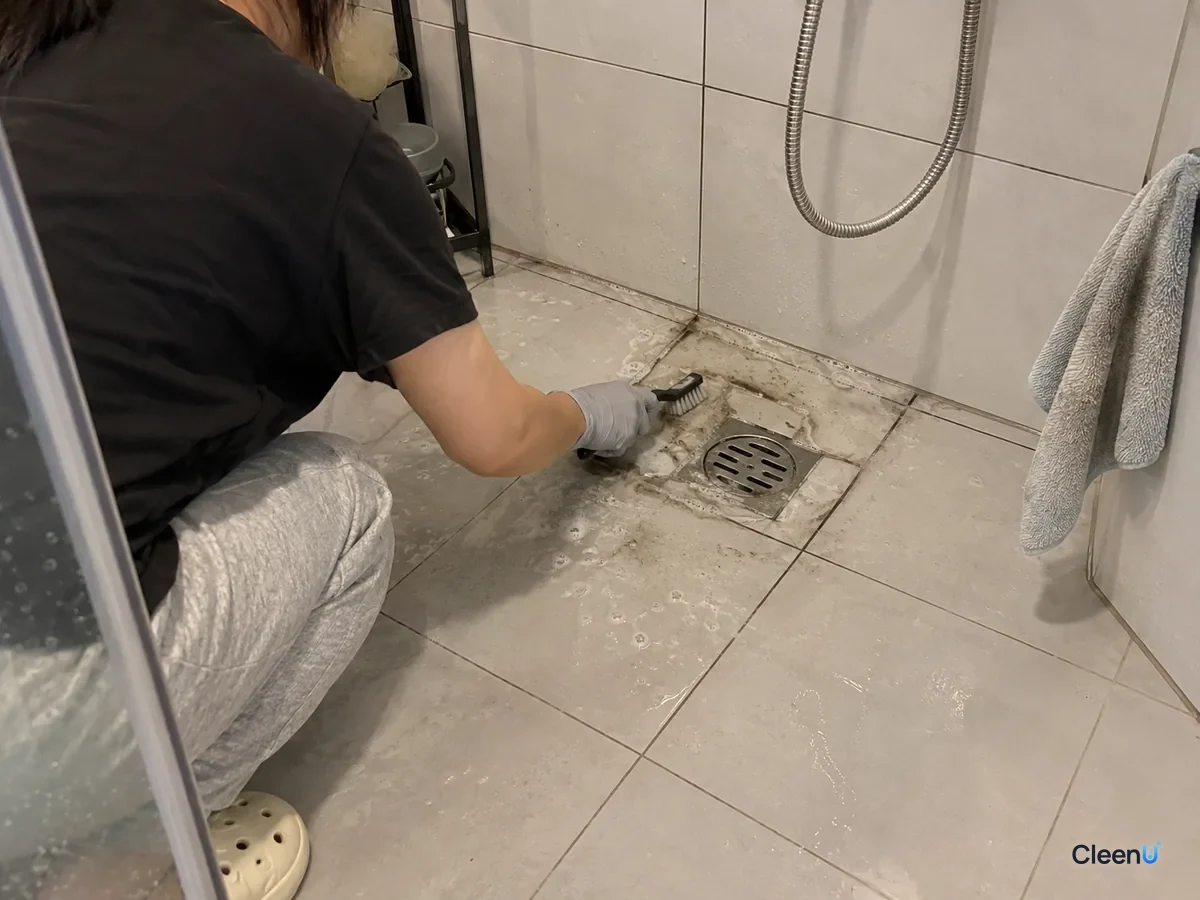
Aim at the grout and cover each line; you don't need to soak the whole tile. Work top to bottom, one wall or floor section at a time, so every section gets enough dwell time without drying out.
Scrub back and forth along each line
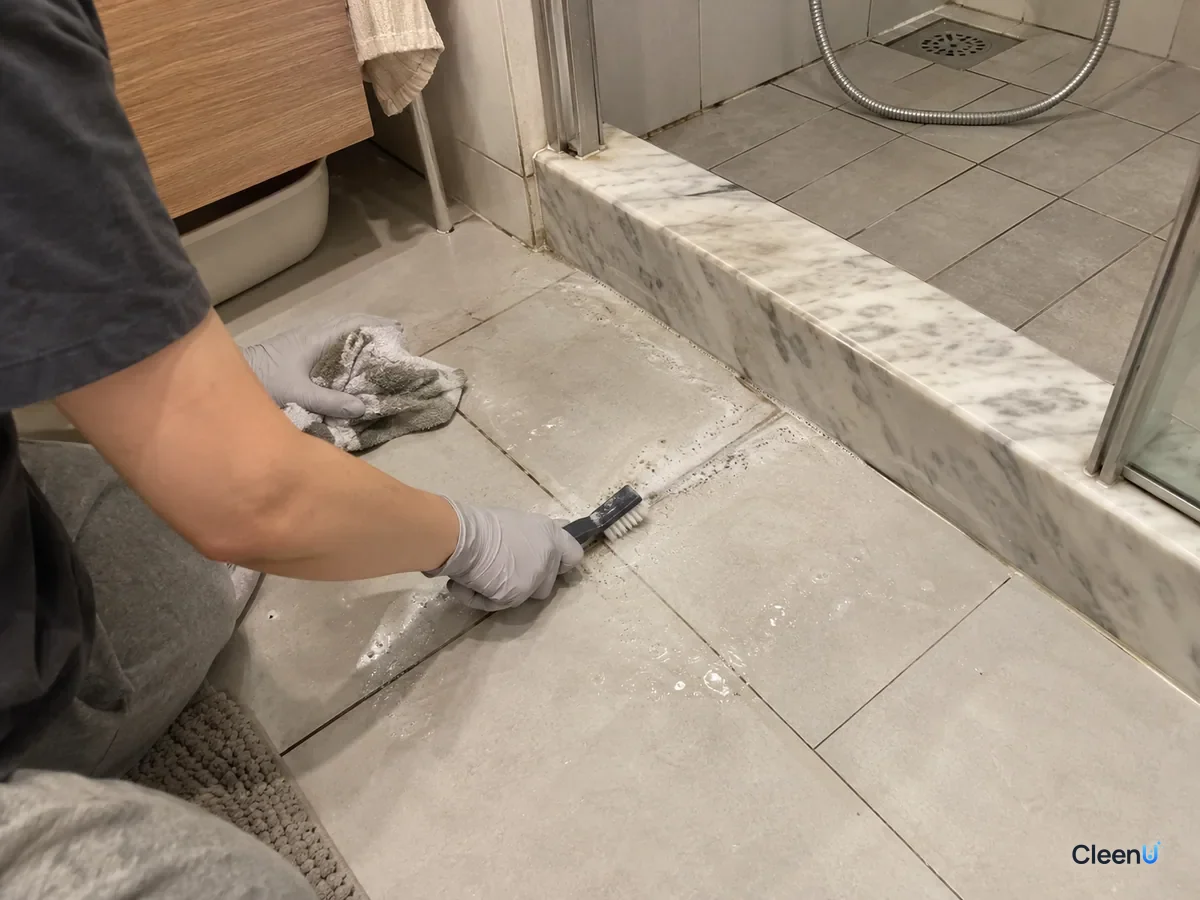
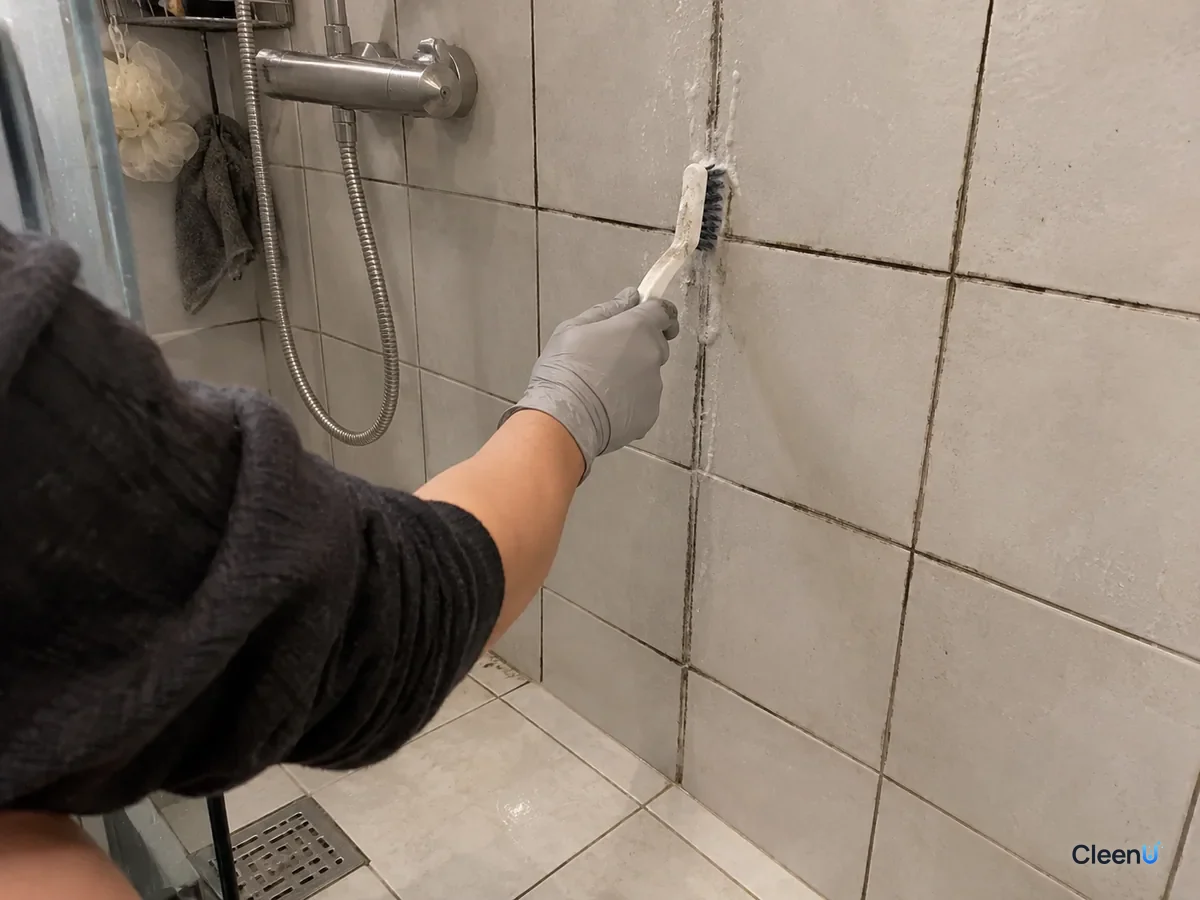
Use a grout brush or an old toothbrush with stiff, non-metal bristles. Keep the tip in the line and scrub along it, giving intersections a few extra strokes. For heavy buildup, spray again and scrub a second time.
Caution:Never use a wire brush, steel wool, or a blade. They gouge the grout, and gouged grout traps more dirt.
Rinse well and blot dry
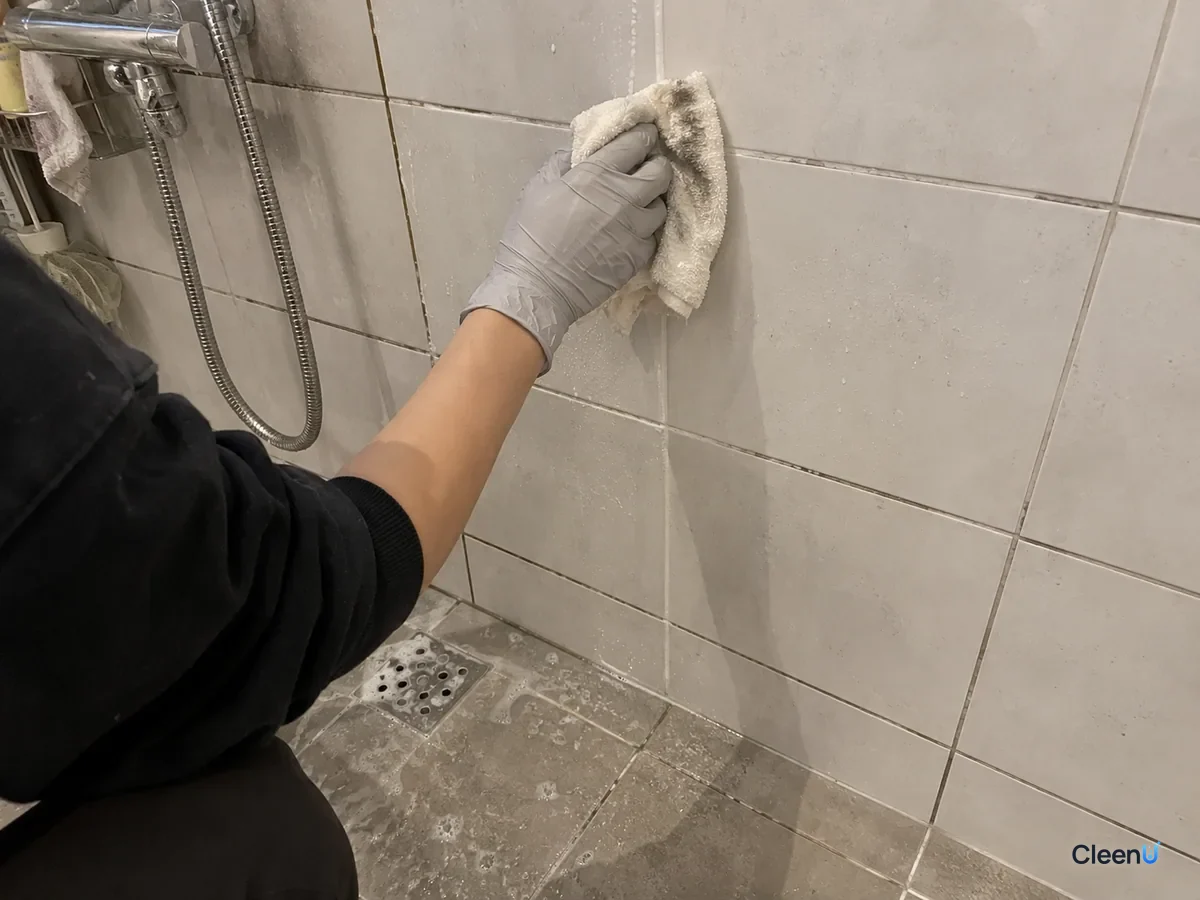
Rinse thoroughly with a handheld shower or spray bottle so no cleaner stays in the joints. Rinse walls top to bottom and floors toward the drain. Then blot the lines dry with an absorbent cloth; this alone slows how fast scale and mold come back.
Check once it's dry and decide what's next
Judge the result only after the grout is fully dry; wet grout always looks darker. If a few spots are still dark, treat them again. If the grout is cracked, powdery, or sunken, or black spots go deep and won't lighten, it's time to remove and regrout.
Choosing the right brush
The brush is the most underrated part of grout cleaning. Soft bristles never reach the bottom of the joint; they just polish the surface. Metal bristles grind cement grout away layer by layer. The sweet spot is a stiff nylon or polypropylene brush with a narrow head about the width of the grout line, ideally angled. An old electric toothbrush with a firm head works well on small areas, too.
Any spray pattern works as long as you can aim it. With a trigger sprayer, twist the nozzle to a narrow stream so less lands on the tile.
And don't skip the drying step. Leave a puddle in the lines and the white edge of hard-water scale is back within days.
Should you seal or regrout after cleaning?
If you have standard cement grout that comes back to its original color with no damage, you don't need to rush into anything. Weekly upkeep will keep it looking good. Many pros recommend applying a penetrating grout sealer to clean, fully dry cement grout so it absorbs less water and grime; follow the sealer's own directions.
Cleaning won't fix these, and regrouting is the better use of your time: grout that's cracked, sandy, or shedding powder when scrubbed; joints that have worn into deep grooves where dirt keeps collecting; or black spots that have grown into the grout and stay dark after cleaning. Before any regrouting, clean the old lines as above and let them dry for a few days, or the new material won't bond well.
Epoxy or urethane grout is denser and absorbs very little water, so dirt has a harder time getting in and day-to-day cleaning is easier.
How to keep grout from going dark again
Grout darkens because of moisture plus something to feed on, so upkeep targets both.
After every shower, squeegee the walls and glass, push floor water toward the drain, and run the exhaust fan for another 20 to 30 minutes. Lower humidity means slower mold growth.
Once a week, spray the shower with a bathroom cleaner to remove fresh soap scum before it hardens. Fresh scum wipes off; month-old scum needs a brush.
Once a month, clean the grout in the corners that stay wet: around the drain and where the wall meets the floor. That's far easier than one big scrub a year. For a full schedule of what to clean when, see How to clean a bathroom.
Stop and rethink if you see this
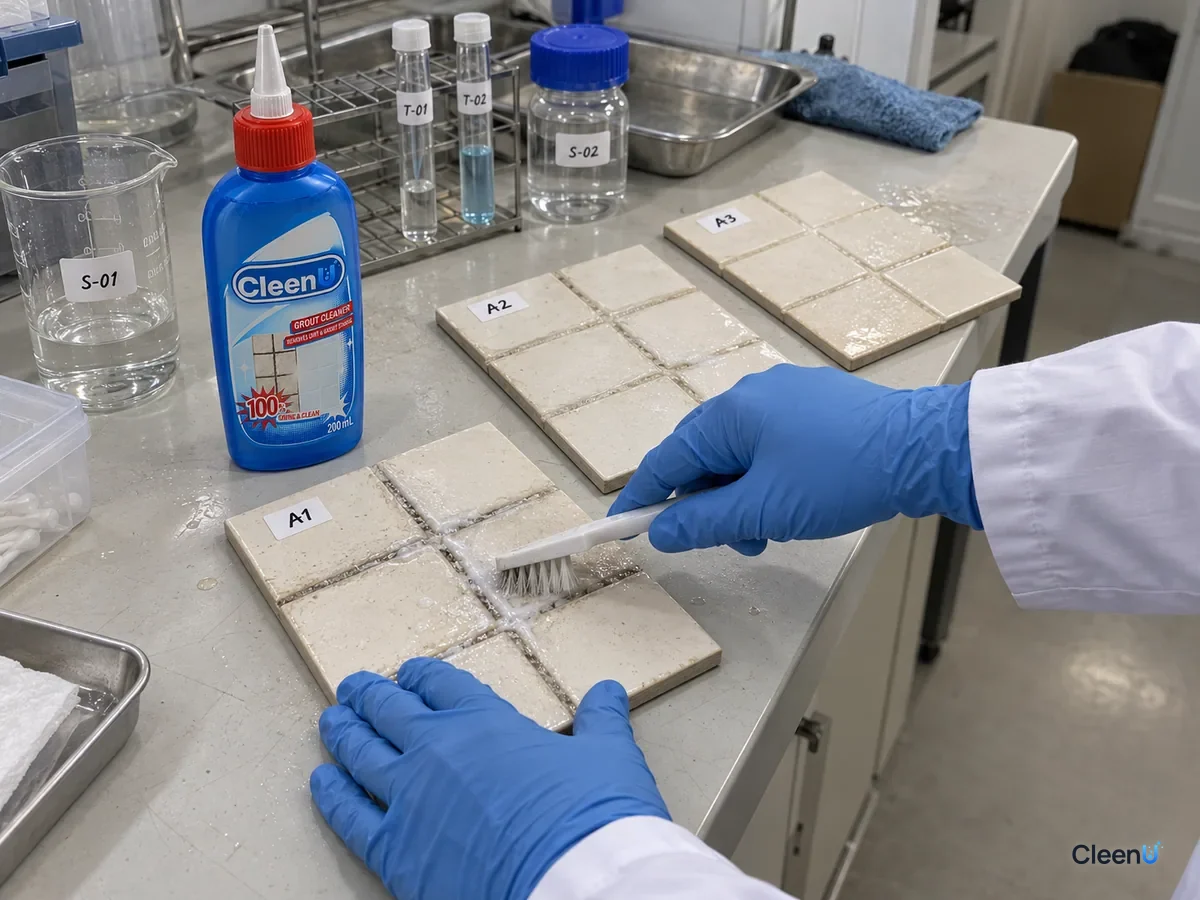
If skin turns red or stings, rinse right away with plenty of water. Stop if colored grout or stone starts to fade, whiten, or lose its shine. If you also need to tackle hard-water scale, never use an acidic descaler together with or right after an alkaline grout cleaner or chlorine bleach. In a small bathroom with poor airflow, open a window or run the fan before you start.
Bathroom grout cleaning: common questions
Can I clean grout with baking soda or toothpaste?
In a pinch, yes, but it's slow. Both rely on mild abrasion, which handles surface dirt but does little for scum and stains inside the pores, and they can leave white powder behind.
What kind of grout brush should I use?
A stiff nylon or polypropylene brush with a narrow head about the width of your grout lines. Avoid wire brushes; they gouge the grout.
How long should grout cleaner sit?
Usually 5 to 10 minutes; follow the label. Too short and it can't soak in, too long and it dries in the joint and leaves residue.
My grout is still dark after cleaning. Did I miss something?
Wait until it's completely dry before you judge. If dry grout still has spotty dark patches that won't lighten, mold has likely grown into it or the grout is aging. Consider regrouting.
Can I use grout cleaner and toilet bowl cleaner together?
No. Alkaline and acidic cleaners neutralize each other, and acid mixed with chlorine products releases a harmful gas. If you need both, rinse thoroughly with water in between.
Does epoxy grout still need cleaning?
Yes, but it's much easier. Epoxy absorbs very little water, so a weekly wipe with bathroom cleaner usually keeps it clean without deep scrubbing.
For a chlorine-free grout cleaner that soaks into the lines to break down soap scum and oil, so you just spray, wait a few minutes, and scrub, take a look at our Grout Cleaner.
Grout is hard to clean because it's porous, and soap scum, scale, and mold get inside it. The fix: spray grout cleaner, wait 5 to 10 minutes, scrub along each line with a narrow stiff brush, rinse, and blot dry. Spot-test colored grout and stone, skip wire brushes, and never combine with acidic or chlorine cleaners. If the grout is cracked, sunken, or still spotted after cleaning, regrout. Squeegee and ventilate daily and wipe the shower weekly, and the lines will stay lighter much longer.