
Troubleshooting
Black Grout: Mold or Just Dirt? How to Tell Before Choosing a Grout Cleaner
Direct answer
Scrub a short stretch with a stiff brush and plain water. If the black lightens right away, it's soap scum, body oil and dirt, and a grout cleaner will lift it. If it's spotty, sits in damp corners and comes back after you wipe it, it's usually mold, which also needs a mold remover and better ventilation.
What you see
The grout in the shower and along the floor has turned dark, worst near the floor, in the corners and under the showerhead. Wiping it seems to help a little, then a few days later it looks the same again.
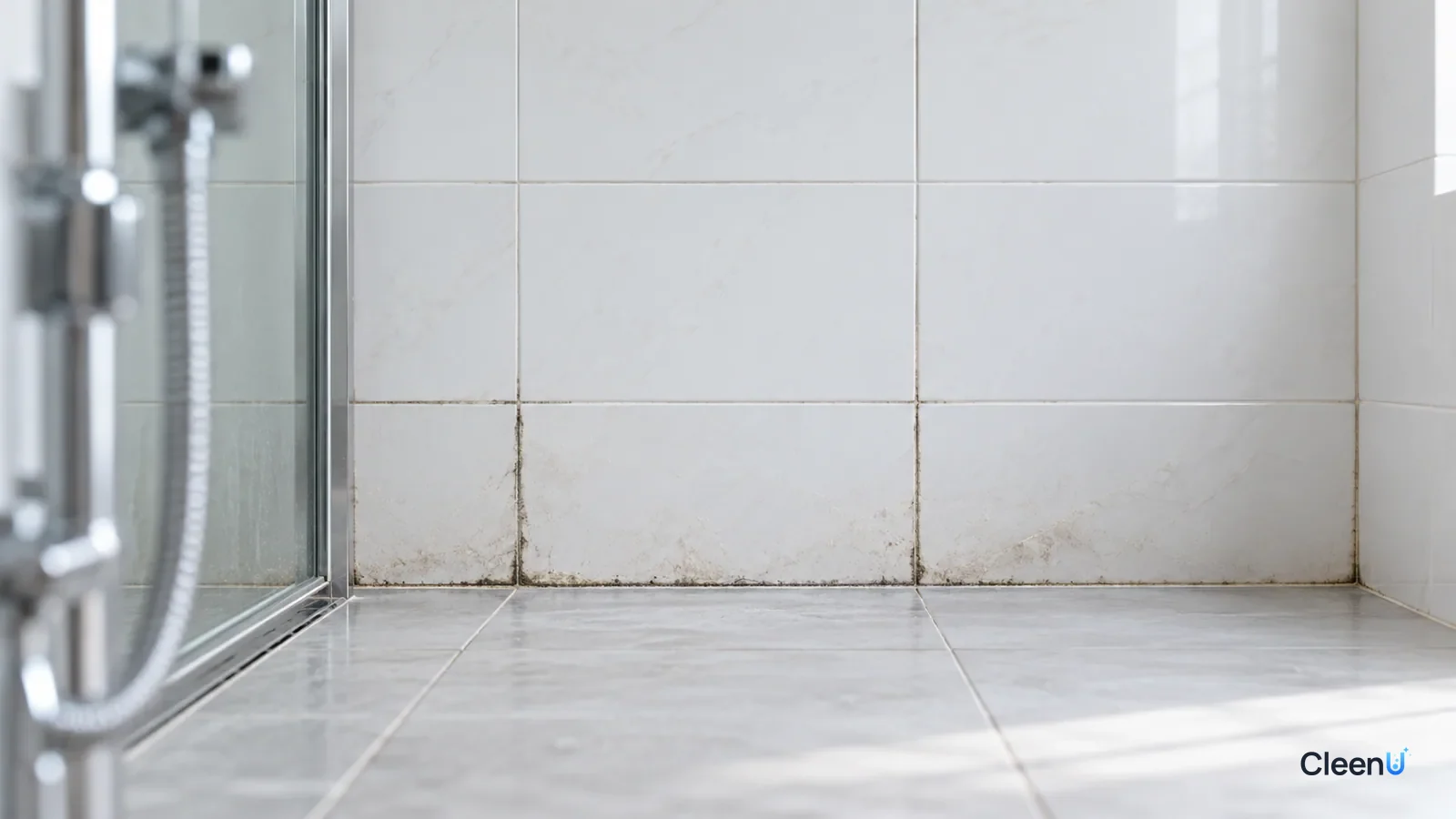
Bathroom tile is smooth and doesn't absorb much, so it wipes clean easily. The grout is where the trouble is. Grout that was white or light gray when it went in often turns gray, then black, within a year or two, especially near the floor, in the corners and in the shower. From across the room it looks like someone outlined the tiles with a marker.
The first question most people ask is whether the grout is just dirty or actually moldy. The two look alike, but they are handled differently. Guess wrong and you either throw a mold product at plain buildup, which doesn't do much, or scrub mold like dirt, which lightens it for a week or two before it grows right back.
Why does grout turn black so much faster than tile?
Most grout is cement-based, though some is epoxy or a urethane or polymer blend. Cement grout is full of tiny pores you can't see, a lot like a very fine sponge.
Every shower sends water carrying soap scum, body oil, shampoo residue and dust across the grout. The pores soak some of it up, and when the water evaporates the grime stays behind, layer after layer, getting darker each time. Grout also sits slightly below the tile surface, so water and grime settle in the lines and are harder to reach with a cloth.
A bathroom that stays damp and poorly ventilated keeps the grout wet for hours, and the skin flakes and soap scum in it give mold something to feed on. Mold threads grow into those pores and show up as black or dark green spots.
So black grout has two main causes: grime packed into the pores, and mold growing in them. A third, less common cause is the grout itself breaking down, getting crumbly, cracked or sandy, and darkening in a way no amount of cleaning will fix.
Three checks to tell dirt, mold and failing grout apart
Work through these three checks to find out why your grout is black
-
Step 1 Scrub a short stretch of dark grout with a stiff brush and plain water. Does it get noticeably lighter?
- Yes
- It is mostly soap scum, body oil and dirt in the grout. A grout cleaner and a scrub brush will bring back the original color.
- No
- Go to the next check
-
Step 2 Is the black made of small spots clustered in areas that stay damp, such as corners, the floor and under the showerhead, and does it come back within a week or two after you wipe it?
- Yes
- It is most likely mold. Pair cleaning with a mold remover and improve ventilation so the grout dries faster.
- No
- Go to the next check
-
Step 3 Is the whole grout line evenly dark, and does it crumble, feel sandy under a fingernail, or show cracks and gaps?
- Yes
- The grout is breaking down, and cleaning won't restore it. Consider removing the old grout and regrouting.
- No
- It may be a stain that soaked in, such as hair dye or rust. Test a short stretch with a cleaner, and if it doesn't improve, consider regrouting.
Other differences between dirt and mold
Pattern: dirt follows the path of the water. It is darkest under the showerhead, on the shower floor and on the lower part of the walls, and it tends to discolor a line evenly. Mold shows up as individual dots or small clusters, concentrated in corners, near windows and along caulk lines, wherever air moves least and water dries slowest.
Color: dirt is usually gray, charcoal or yellow-brown. Mold often has a greenish or blue-black cast with irregular edges.
How fast it returns: once you clean away dirt, it takes months of normal use to build back up. Mold in a bathroom that stays damp comes back in the same spots within a week or two.
Smell: a bathroom with a lot of mold often has a stale, musty smell, especially after the door has been closed for a while.
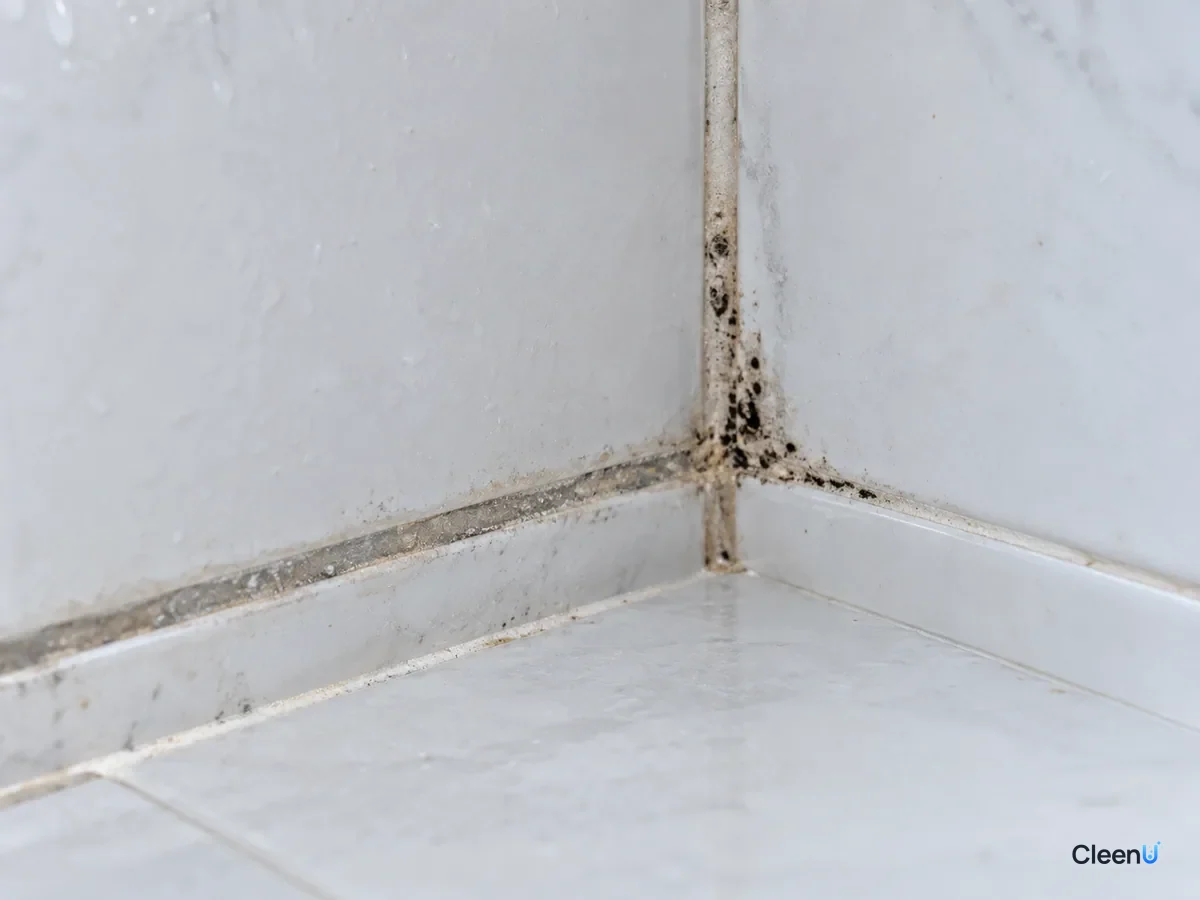
Where the black shows up says a lot
Shower floor: rinsed every day and walked on, it collects the most soap scum, skin flakes and hair, and it drains slowly. It is where both grime and mold are usually worst. It tends to go gray overall first, then black spots appear near the drain and in the corners.
Shower walls: the area the showerhead hits, and the lower half of the walls, get washed with shampoo and body wash again and again, so the grout there usually grays evenly from grime. The upper walls near the ceiling and window collect condensation and dry slowly, so spotty mold is more common there.
Backsplash behind the sink: toothpaste, face wash and makeup splash onto it. Grout here is often yellow-brown, and it is almost always grime that lightens as soon as you scrub it.
Floor around the toilet: besides dust and grime, urine can soak into the grout, so it turns yellow or dark. Clean it together with the base of the toilet.
Window ledges, corners and caulk lines: these get the least air and the most condensation. Black here is usually mold, and it tends to come back.
Knowing where the grout is darkest often tells you the likely cause before you even start. The three checks above confirm it.
How to clean grime out of grout
If it is grime, a dedicated grout cleaner works better than an all-purpose bathroom spray. Grout is porous and the grime is inside the pores, so the cleaner has to stay put and soak in. A regular spray on a vertical grout line runs down before it can do much.
CleenU Grout Cleaner is one example. It is a clinging formula that stays on vertical grout lines instead of running off. Its surfactants strip oily grime and body oil, chelating agents dissolve lime soap (the main ingredient of soap scum), and oxidizing stain-lifters break down the organic pigment soaked into the pores so dark lines turn lighter and brighter.
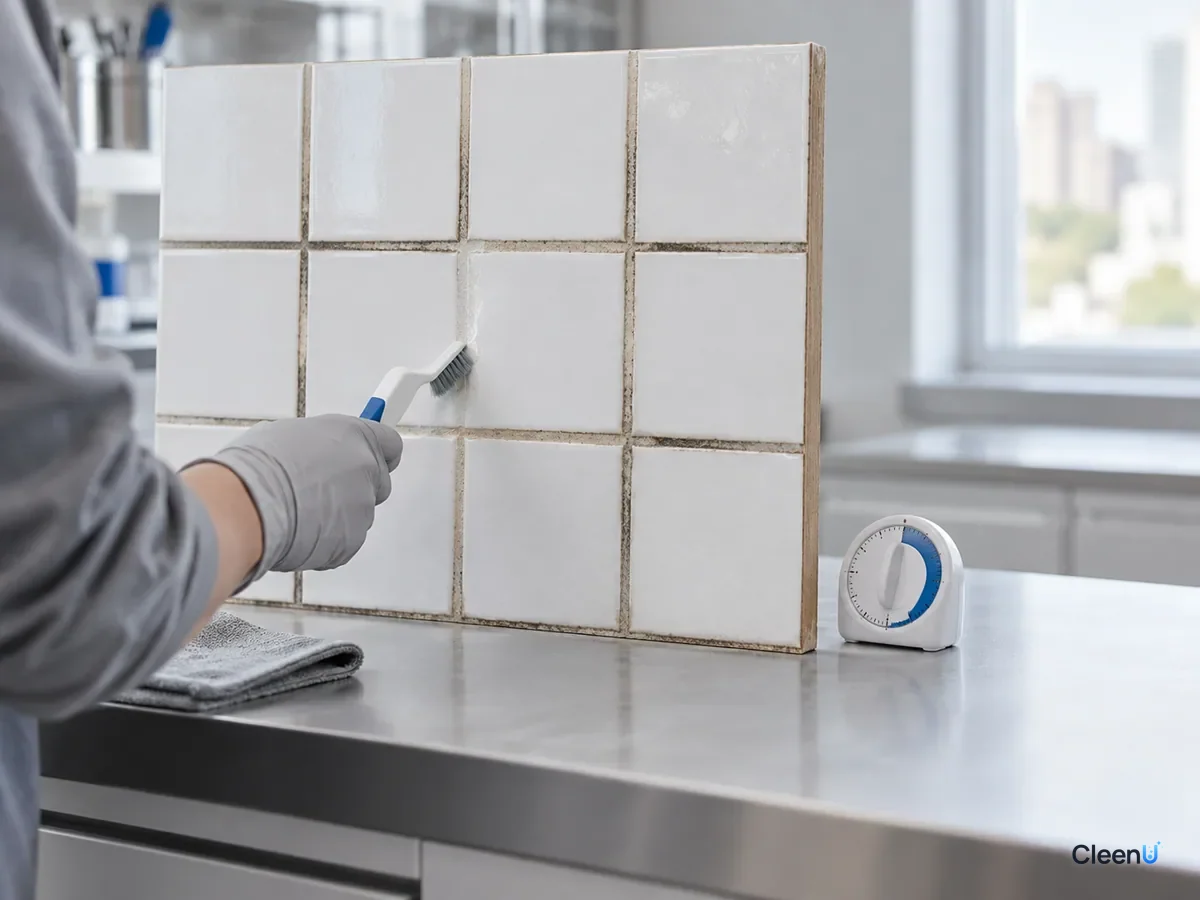
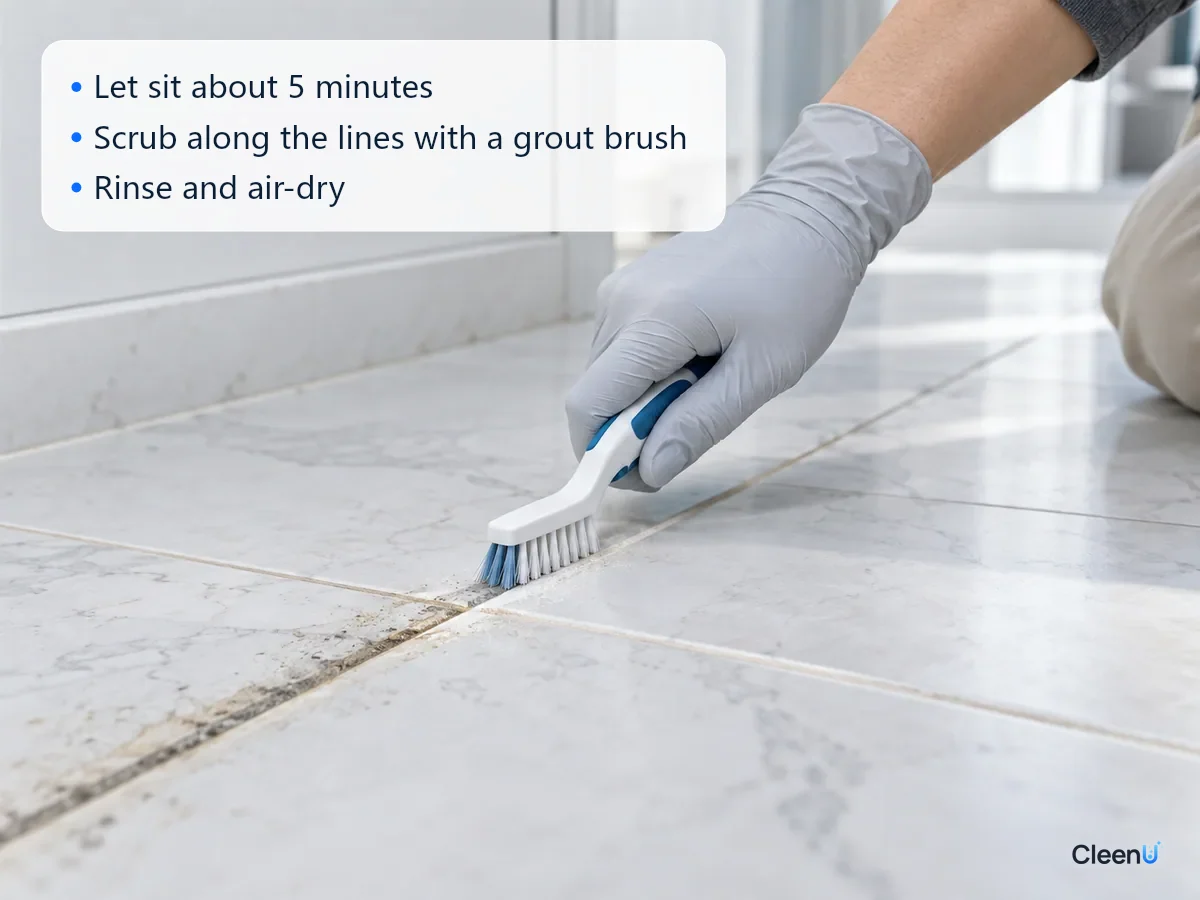
Open a window or turn on the fan and put on gloves. Spray directly onto the grout and let it sit for about 5 minutes to soak in. Scrub back and forth along the lines with a narrow grout brush, rinse with water, and keep the room ventilated while the grout dries. If a faint shadow remains, the stain went deep; spray again, wait another 5 minutes and scrub once more, and it will lighten noticeably.
A few cautions: don't leave it on colored grout for long, and test a short, hidden stretch first. Don't use it on natural stone. Never mix it with bleach or acidic cleaners, which can release harmful gases.
How to deal with mold in grout
If it is mold, scrubbing alone usually isn't enough. Use a product whose label specifically says it removes mold and is suitable for tile and grout, follow its contact time and ventilation instructions exactly, and rinse thoroughly afterward.
Getting the grout to dry matters just as much. After each shower, squeegee the walls and glass, and run the exhaust fan for at least 15 to 30 minutes. Every few days, wipe the corners and window ledges that never seem to dry. A bathroom that dries fast gives mold much less chance to come back.
If the mold is in silicone caulk and the black has soaked into the caulk itself, cleaning rarely removes it. The lasting fix is to cut out the old caulk, clean and dry the joint, and recaulk. For telling soap scum from hard water stains, see soap scum vs. hard water stains, and for the order to clean a whole bathroom, see how to clean a bathroom.
Stop if you notice any of these
A sharp smell or irritation in your eyes or throat while cleaning; grout that crumbles, turns sandy, goes white or looks blotchy; fading on natural stone or colored grout. Stop, ventilate the room and rinse the area with water. See a doctor if irritation continues. Never mix different cleaning products.
Written for: Households with dark or gray bathroom grout who want to identify the cause before choosing how to clean itNot for: Grout between natural stone tiles; grout that is already crumbling or missing and needs regrouting
Black grout questions people ask most
Does black grout always mean mold?
No. Most black grout is soap scum, body oil and dirt packed into the lines, and it lightens as soon as you scrub it. Spotty black that keeps coming back is more likely mold.
There is still a faint shadow after using grout cleaner. What now?
The stain went deep. Spray again, let it sit 5 minutes and scrub once more, and it will lighten noticeably.
Can I just use bleach on my grout?
Not as a reflex. Bleach has harsh fumes, must never be mixed with acidic cleaners, and can fade colored grout. For mold, choose a product labeled for mold on tile and grout.
How often should I clean shower grout?
Scrub it about once a month. Squeegeeing and running the fan after every shower keeps it clean much longer.
Does sealed or epoxy grout still turn black?
Less easily, because the surface is denser than cement grout. In a bathroom that stays damp, grime and mold can still build up on the surface, so it still needs regular cleaning and ventilation.
How do I keep mold out of grout?
Squeegee after showers and run the fan so the grout dries quickly, and clean out soap scum and skin flakes regularly so mold has less to grow on.
Why does my floor grout get darker after I mop?
Dirty mop water is usually the cause. Grout sits below the tile surface, so dust, soap scum and grease carried by a dirty mop settle into the joints and dry there. Switch to a clean pad and less water, then scrub a short stretch with plain water. If it lightens, it is grime; spots that keep coming back in damp areas point to mold.
What kind of cleaner works best on black grout?
Match the cleaner to the cause. For grime that lightens with a water scrub, use an alkaline, chlorine-free oxygen grout cleaner such as CleenU Grout Cleaner: spray, wait 5 to 10 minutes, scrub with a stiff brush and rinse. Spot-test colored or dark grout first, regrout cracked or crumbling joints, and never combine it with bleach or acidic cleaners.
For a clinging grout cleaner that stays on vertical lines and scrubs dark grout back to a light color, try Grout Cleaner.
When grout turns black, scrub a short stretch with plain water first. If it lightens, it is soap scum, body oil and dirt in the pores, and a grout cleaner that clings and soaks in will bring it back. If it shows up as spots in damp corners and keeps returning, it is likely mold, which calls for a mold remover plus squeegeeing and ventilation to keep the grout dry. If the grout crumbles, it is failing and needs regrouting. Identify the cause first, then pick the method.