
Troubleshooting
Moldy Shower Caulk: Can It Be Cleaned or Must It Be Replaced?
Direct answer
Surface mold can be cleaned: lay a mold stain remover on the caulk, leave it 10 to 15 minutes (30 for stubborn spots), then rinse and dry. If the caulk is still black afterward, mold has grown into it and cleaning won't remove it. Cut out the old caulk, let the joint dry completely, and recaulk.
What you see
The white caulk along the bottom of the shower, the edge of the tub, or where the vanity meets the wall has developed little black dots that are joining into a black line. Scrubbing and dish soap don't change it. In some spots the edge has pulled away and it's black underneath too.
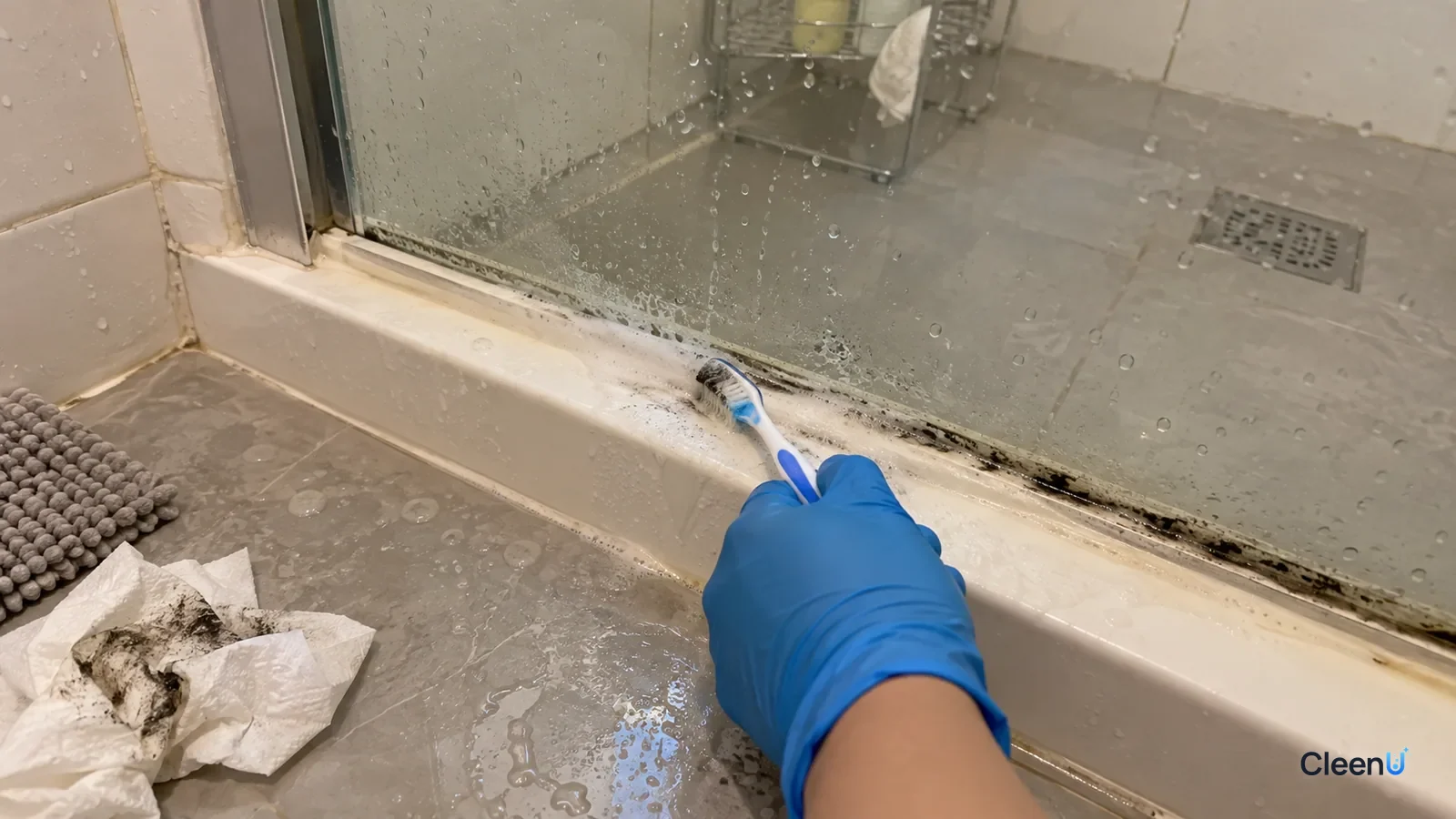
Bathroom caulk, usually silicone sealant, is one of mold's favorite places: it stays wet, its surface has tiny ridges, and it gets a steady supply of soap scum and skin oil from every shower. How dark it has gotten tells you whether it can be cleaned.
Why caulk gets moldy so easily
Silicone caulk is soft and rubbery, and its surface isn't perfectly smooth. It has tiny pores and texture. After a shower, water, soap scum, and skin oil collect in the low spots, especially along the shower pan and tub edge where the joint is flat or nearly flat and water doesn't drain off.
Mold spores, common ones like Cladosporium and Alternaria, are everywhere in the air. Given moisture, food, and the right temperature, they sprout on the caulk surface. Their threadlike hyphae grow into the caulk's pores and work deeper over time, and the dark pigments in hyphae and spores turn scattered black dots into a fully black bead.
A lot of bathrooms are caulked with standard silicone that has no mold inhibitor. Even mold-resistant caulk loses its protection gradually with age and repeated cleaning.
Whether it cleans up depends on how deep the mold goes
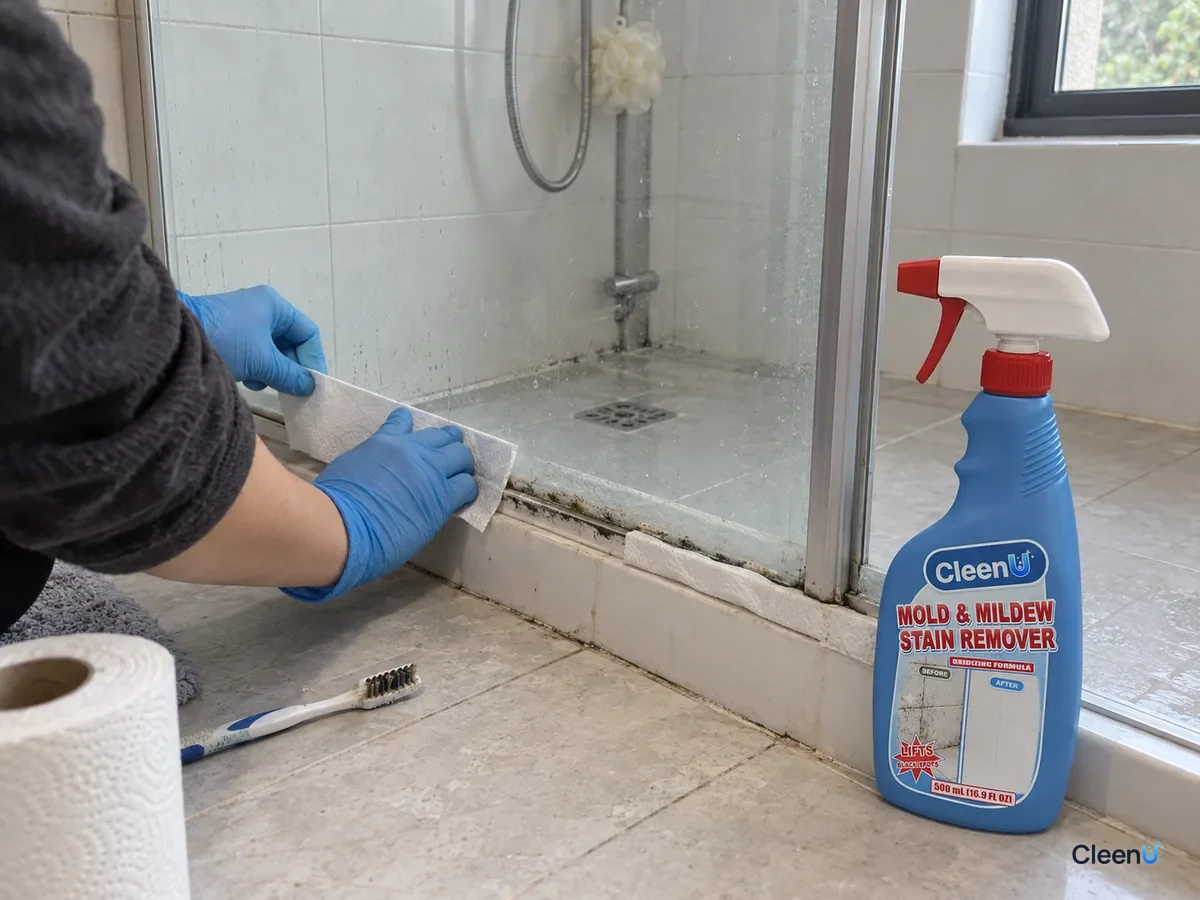
New, lighter black dots usually sit on the surface or just below it. Treat them with a mold stain remover, the pigment oxidizes, and the caulk returns to white or close to it.
If the bead has been black for years, the hyphae have grown into the caulk. You can bleach the surface, but the mold inside still shows through the translucent silicone. Treating it over and over won't fix that and can make the caulk stiffen and crack.
There's one more case: the caulk has pulled away from the tile or tub, water has gotten behind it, and mold is growing back there. You can't reach that from the front. It has to come out.
Five steps to decide what to do
Decide whether your caulk can be cleaned in five steps
-
Step 1 Is the caulk cracked, lifting, or pulling away from the tile or tub?
- Yes
- Water has gotten behind it, and cleaning won't fix that. Cut out the old caulk, clean and dry the joint, and recaulk.
- No
- Go to the next check
-
Step 2 Is it scattered small black dots or light gray patches, with the bead still mostly white?
- Yes
- The mold is on the surface or just below. Treat it with a mold stain remover as described below, then rinse and dry.
- No
- Go to the next check
-
Step 3 Is the whole bead black but still intact, with no cracks?
- Yes
- Try one treatment with a mold stain remover at the stubborn-stain dwell time, rinse, and let it dry before judging.
- No
- Go to the next check
-
Step 4 After one or two treatments, is it still largely black, or can you see black inside the caulk?
- Yes
- Mold has grown deep into the caulk. Cleaning won't remove it. Cut it out, clean and dry the joint completely, and recaulk with mold-resistant silicone.
- No
- Go to the next check
-
Step 5 Did it come clean but start turning black again within a few weeks?
- Yes
- The bathroom is too humid or water sits on the caulk. Improve ventilation, dry the caulk after showers, and consider mold-resistant caulk.
- No
- Problem solved. Keep it that way with the routine below.
How a mold stain remover works
Take CleenU Mold & Mildew Stain Remover as an example. It's a chlorine-based mold and mildew stain spray, pH 11.5 to 13.0 as supplied, made with sodium hypochlorite, an alkaline stabilizer, and chlorine-stable surfactants. It's ready to use with no dilution.
Sodium hypochlorite is a strong oxidizer. It breaks down melanin and other mold pigments so the black fades. The alkaline stabilizer keeps the hypochlorite stable in the bottle. The chlorine-stable surfactants help the liquid wet the caulk and grout and soak into surface pores. The dwell time is the time the oxidation needs: typically 10 to 15 minutes, 30 for stubborn stains, then a thorough rinse.
It's made for bathroom tile walls, grout, shower silicone, and window-frame sealant. Because it contains chlorine, its limits matter. Never mix it with acidic or ammonia-based cleaners; that releases harmful gases. Keep it off fabric, carpet, and wood, which it will bleach. It can fade colored grout. It isn't for natural stone. Don't leave it on metal fixtures for long, and don't use it in a closed, poorly ventilated space.
How to treat moldy caulk
Open a window and run the fan, and put on gloves, a mask, and ideally eye protection. Make sure no acidic cleaner, such as toilet bowl cleaner or descaler, is in use or was just used. If one was, rinse and ventilate for at least half an hour first.
Wipe the caulk dry and lightly brush off surface soap scum with an old toothbrush so the remover touches the mold directly.
Apply with a compress: spray the caulk. On vertical joints or where you need a longer dwell time, lay a strip of paper towel or a cotton pad on the bead first, then soak it with spray so the liquid stays in contact and doesn't run off.
Leave it 10 to 15 minutes, 30 for stubborn spots. Leave the bathroom while it works and keep the air moving.
Remove the strips, rinse the caulk and surrounding tile with plenty of water, and dry with a cloth.
Check the result. If it isn't fully white after one round, treat it again the next day. If it's still black after two rounds, plan to recaulk.
When and how to recaulk
If the caulk is cracked, lifting, or separated from the surface, still black after two treatments, or stiff and no longer flexible, recaulking works better than more cleaning.
Remove it: score both sides of the bead with a utility knife, peel or scrape it out, and clean off residue with a caulk remover or blade.
Clean and treat: use mold stain remover on any mold left in the joint, then rinse.
Dry it completely. This is the most important step. Let the joint and surrounding area dry at least 24 hours, ideally 48, without showering. Any moisture left in the joint keeps new caulk from bonding and lets mold come right back.
Recaulk: use a bathroom silicone labeled mold-resistant and let it cure per the label, usually no water for 24 hours.
Keeping caulk from molding again
After showers, squeegee or towel the water off the caulk, especially along the shower pan and tub edge.
Run the exhaust fan for at least 20 to 30 minutes after every shower.
When you clean the bathroom each week, wipe the caulk with bathroom cleaner to remove soap scum so mold has nothing to feed on.
Treat new black dots right away instead of waiting for the whole bead to turn. For an overall bathroom schedule, see How to clean a bathroom, and for dark grout, see Black grout: mold or dirt?.
Checking the new bead after re-caulking
In the first few weeks after re-caulking, watch three things: the bead stays bonded to the tile and tub without lifting at the edges, the surface is smooth with no dips that hold water, and it dries within about half an hour after a shower. A stretch that stays wet is where mold will return first, usually because the bead is concave or the slope sends water toward it. Fixing it early is easier than redoing the whole line later.
Why bleach-based cleaners only go so deep
Chlorine-based mold cleaners oxidize the dark pigment and organic matter they can reach on the surface. Silicone is soft and slightly porous, though, and once mold grows into the bead or behind it, the cleaner can't reach the roots. That's why a spot can fade and come back in the same shape within weeks. If that happens twice, re-caulking is the real fix.
Stop if you see this
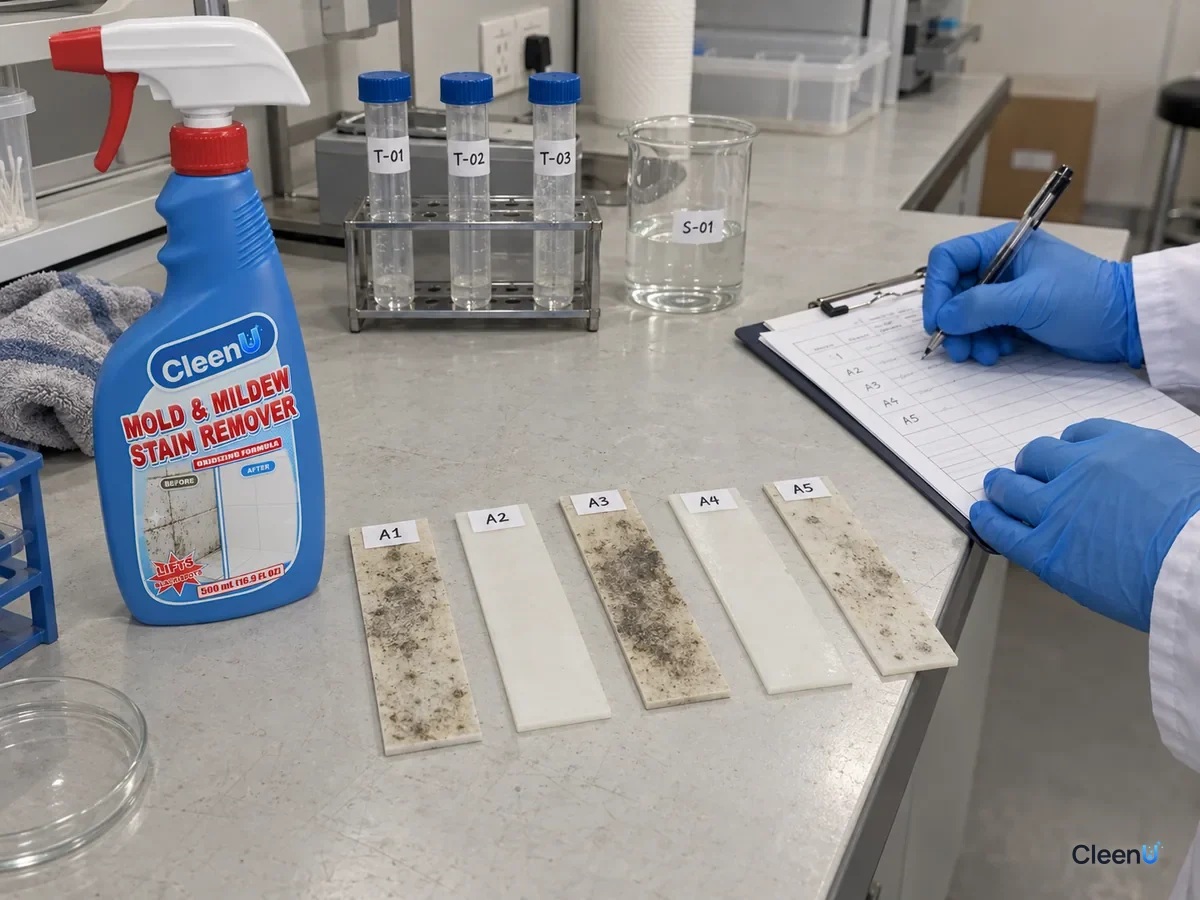
If you smell something sharp, start coughing, or your eyes sting, leave the bathroom and open windows. Never mix or follow a chlorine mold remover with toilet bowl cleaner, descaler, vinegar, or other acidic or ammonia-based products. Keep it off fabric, wood, natural stone, and colored grout, and rinse metal fixtures promptly. If it gets on your skin or in your eyes, rinse with plenty of water and see a doctor if your eyes stay irritated. People with asthma or other breathing conditions should stay out of the room.
Moldy shower caulk: common questions
What removes black mold from caulk?
For surface mold, lay a chlorine mold stain remover on it for 10 to 15 minutes, 30 for stubborn spots, then rinse. If the mold has grown into the caulk, cleaning won't remove it and you'll need to recaulk.
Can I use mold remover and toilet bowl cleaner together?
Never. Chlorine mold removers mixed with acidic cleaners release toxic chlorine gas. Use them at different times with a rinse and ventilation in between.
Why is my caulk still black after treating it?
Mold hyphae have grown inside the caulk. You can clean the surface, but the black inside shows through the translucent silicone. The only fix is to recaulk.
What do I need to do before recaulking?
Remove all old caulk and residue, treat and rinse any mold in the joint, let it dry completely for 24 to 48 hours, then apply mold-resistant silicone.
How often should shower caulk be replaced?
There's no set schedule. Replace it when it cracks, lifts, hardens, or keeps turning black. Good ventilation and drying it after showers make it last longer.
Will baking soda or toothpaste remove caulk mold?
They help a little with surface grime but do almost nothing to mold pigment. Mold stains need an oxidizing mold remover.
For a mold stain spray that fades black mildew on shower silicone and grout after a 10 to 15 minute compress (chlorine-based: use it on its own and ventilate), take a look at our Mold & Mildew Stain Remover.
Whether moldy caulk can be cleaned depends on how deep the mold goes. Scattered dots and shallow staining improve a lot with a chlorine mold stain remover left 10 to 15 minutes, 30 for stubborn spots, then rinsed and dried. If the caulk is cracked or lifting, or still black after two treatments, the mold is inside or behind it: cut it out, dry the joint completely, and recaulk with mold-resistant silicone. Always ventilate when using chlorine products and never mix them with acidic or ammonia cleaners. Drying the caulk after showers and running the fan longer are the best ways to keep mold from coming back.