
Troubleshooting
Mold on Bathroom Ceiling and Wall Corners: Clean and Prevent
Direct answer
Ventilate and put on gloves, a mask, and goggles. On tile and caulk, apply a mold stain remover, let it work, then rinse and dry. Don't spray chlorine products across a painted ceiling; spot-treat small areas and repaint with mold-resistant paint if it's widespread. The real fix is lowering humidity.
Check these five things first
- Exhaust fan: Do you run it during showers? Is it pulling well, or is the cover clogged with dust?
- Where the mold is: tile, caulk, painted wall, panel ceiling, or drywall
- How much: a few spots, or patches spreading past about 10 square feet
- Signs of a leak: yellow stains or bubbling on the ceiling, bulging walls, a bathroom upstairs
- Anyone in the home with asthma, allergies, or a weakened immune system
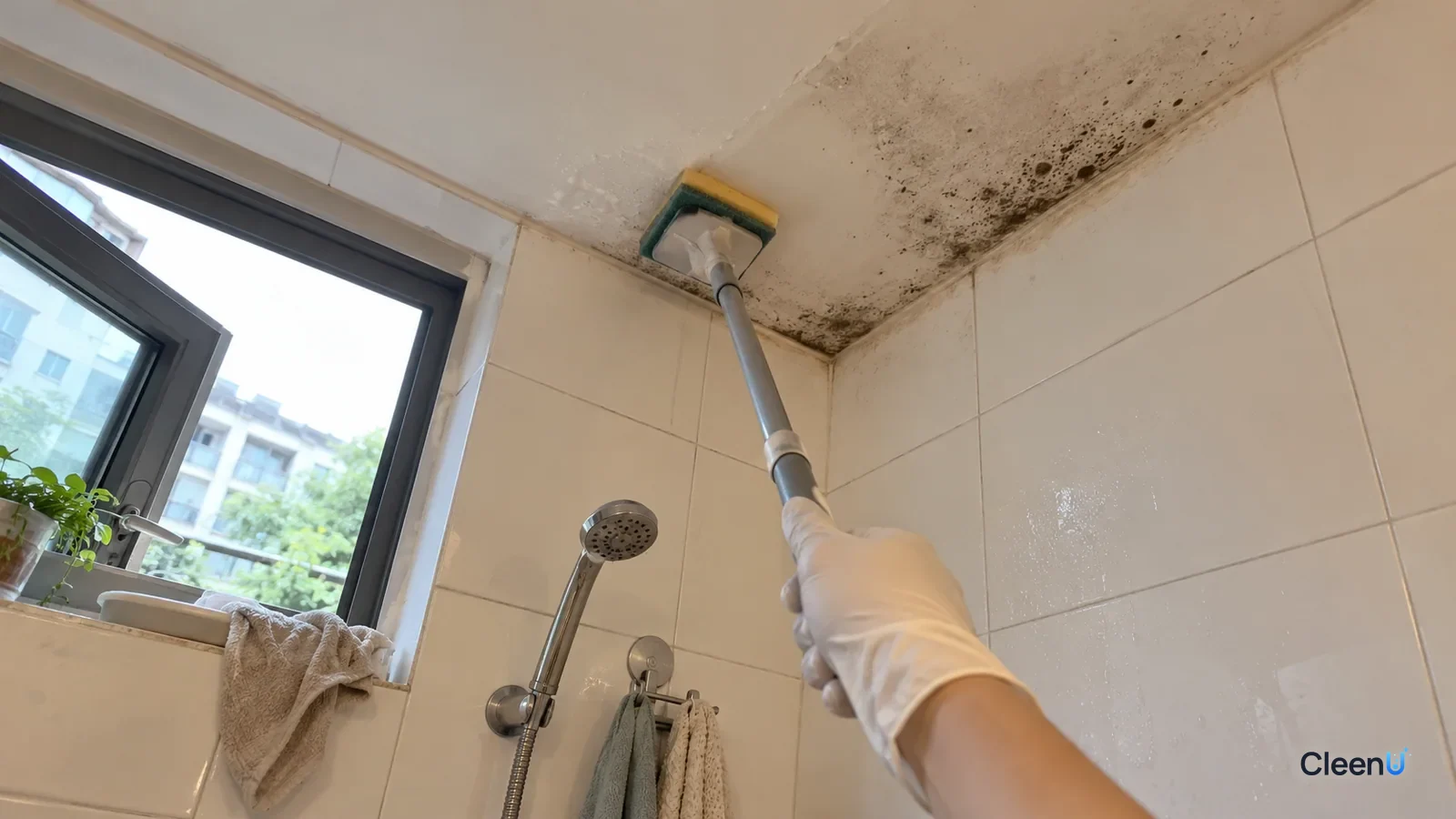
There's a patch of gray-black dots in the corner of the bathroom ceiling, a dark line where the tile meets the ceiling, black in the seams of the panel ceiling, and spots on the wall behind the mirror cabinet. You wipe it off and it's back in a few weeks.
Bathroom mold has one root cause: too much moisture that doesn't dry fast enough. Cleaning removes what has already grown, but if you don't fix the humidity, it will come back. Here's how to find the cause, treat each surface correctly, and prevent it.
Why mold shows up on ceilings and in corners
During a shower, warm steam rises and condenses on the coldest surfaces in the room. Ceilings, exterior-wall corners, around the window, and tile near an outside wall are usually the coldest, so water condenses there over and over.
Mold spores are everywhere. Give them a surface that stays damp and a little organic matter to eat (dust, skin flakes, soap scum, organic components in latex paint) and they sprout. Their hyphae grow into the material and produce dark pigment, which shows up as gray-black patches. Corners and ceilings get the least airflow and stay wet the longest, so they mold first.
How deep mold goes depends on the material. Glazed tile doesn't absorb water, so mold stays on the surface and in the grout. Caulk has fine pores, so mold grows into it. Latex paint and drywall are porous, and hyphae can grow into the paint film and even the board, so a surface that looks clean can still have mold inside.
Different surfaces, different treatment
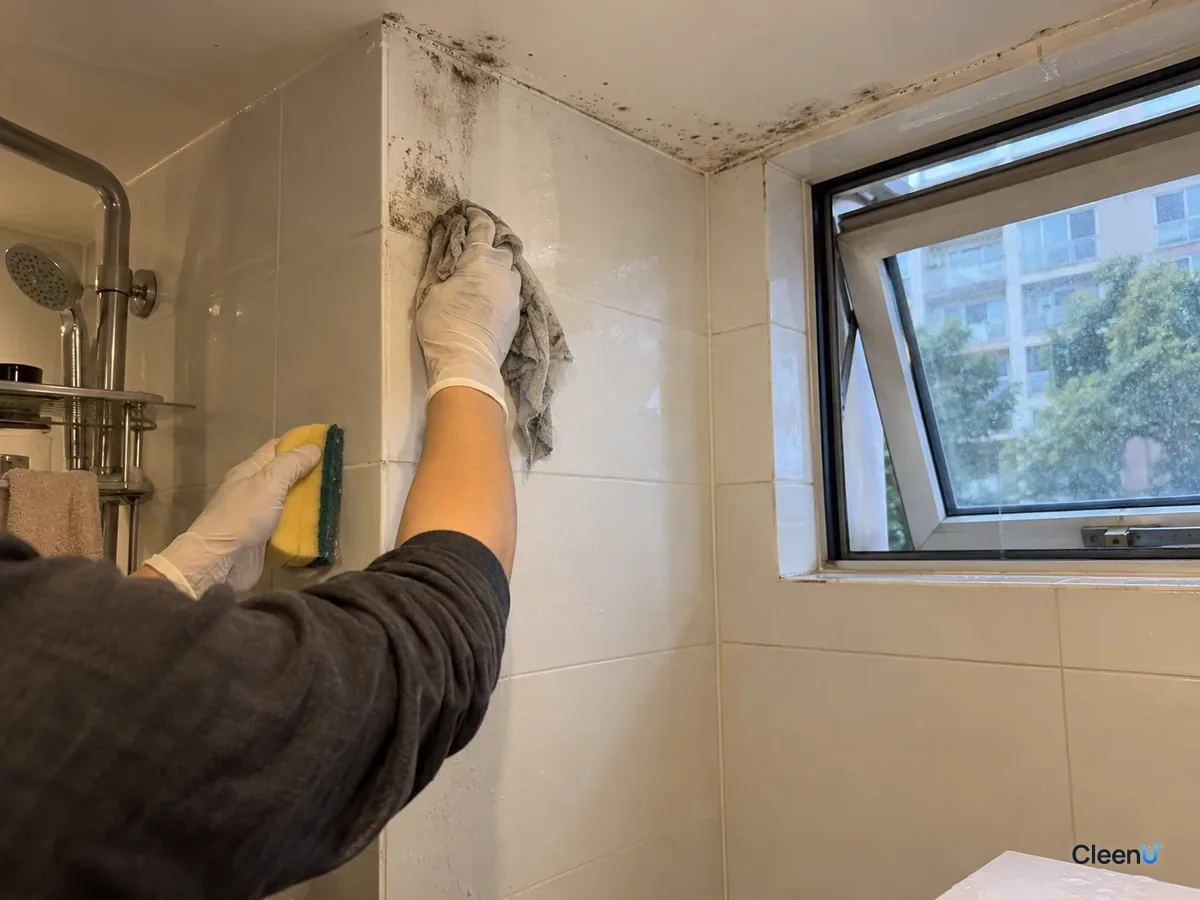
Tile walls and grout: surface mold can be treated with a mold stain remover, left to work, then rinsed off. For grout that's been dark a long time, see Black grout: mold or dirt?.
Caulk: treat surface mold with a mold remover compress. If mold has grown into the caulk and it's still black after two treatments, cut it out and recaulk.
Painted ceilings and walls: don't spray a chlorine mold remover across large areas. Chlorine can fade or yellow paint, drips can get in your eyes, and mold has often grown into the paint, so it comes back quickly. For small spots, wipe with a cloth lightly dampened with diluted remover, or use a product made for painted surfaces. For large or recurring mold, scrape off the affected paint, treat the surface, and repaint with mold-resistant paint.
Panel ceilings (aluminum or PVC): you can wipe the faces, but mold in the seams or on the back means the space above is damp. Open it up and check ventilation and leaks.
Drywall that's moldy, bubbling, or soft: that's water damage. Cleaning won't fix it; it needs replacing.
How a mold stain remover works
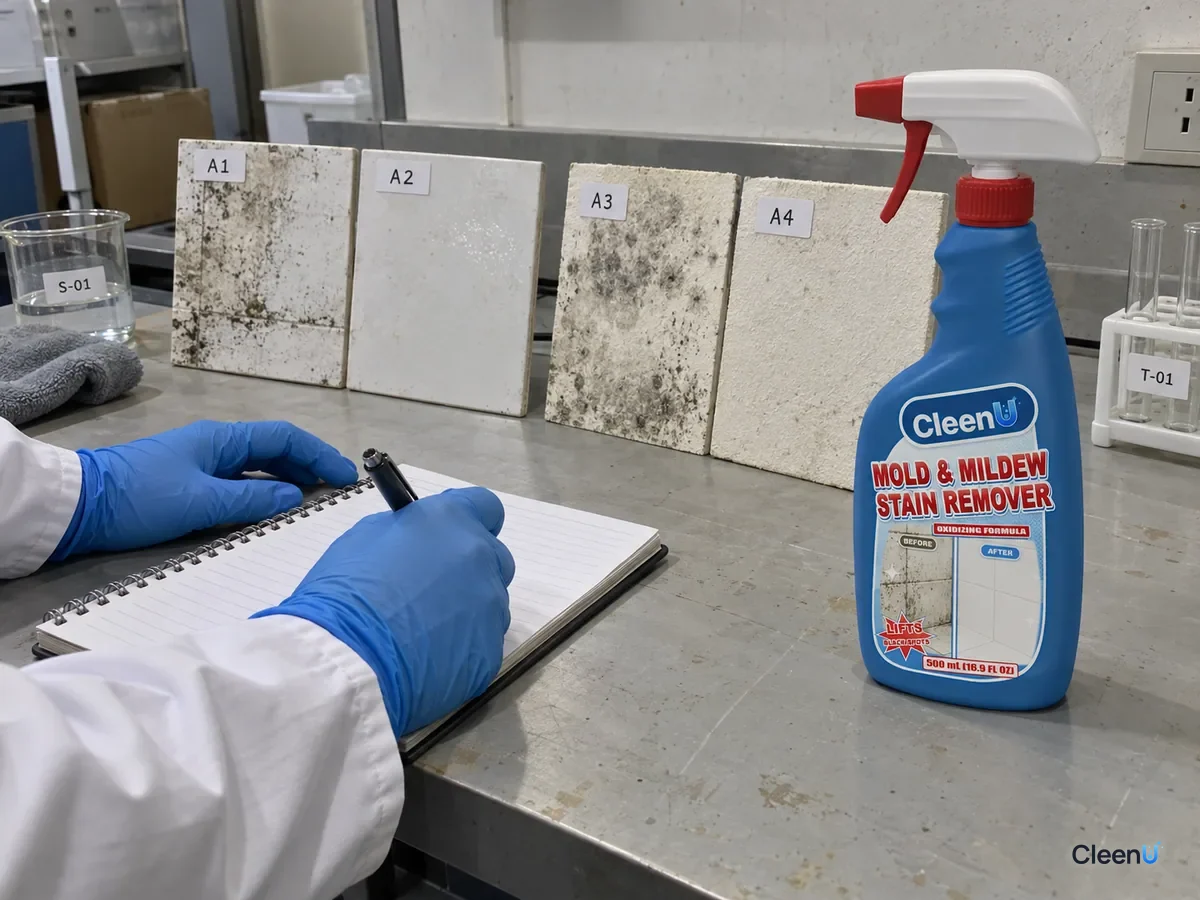
Take CleenU Mold & Mildew Stain Remover as an example. It's a chlorine-based mold and mildew stain spray, pH 11.5 to 13.0 as supplied, made with sodium hypochlorite, an alkaline stabilizer, and chlorine-stable surfactants. It's ready to use, no dilution. Sodium hypochlorite is a strong oxidizer that breaks down melanin and other mold pigments so stains fade, and the surfactants help it wet grout and caulk and soak into surface pores. Leave it 10 to 15 minutes, 30 for stubborn stains, then rinse with water.
It's made for bathroom tile walls, grout, shower caulk, and window-frame sealant. It must not be mixed with acidic or ammonia-based cleaners, and it isn't for fabric, carpet, wood, colored grout, natural stone, long contact with metal fixtures, or closed, poorly ventilated spaces. Painted walls and ceilings are outside its intended use.
Common situations: cause, what you see, fix, prevention
| Cause | What you see | Fix | Prevent it |
|---|---|---|---|
| Shower steam condensing on cold corners | Gray-black dots in ceiling corners and on exterior-wall corners | Treat tile with mold remover and rinse; spot-wipe painted areas or repaint with mold-resistant paint | Run the fan during and 20 to 30 minutes after showers |
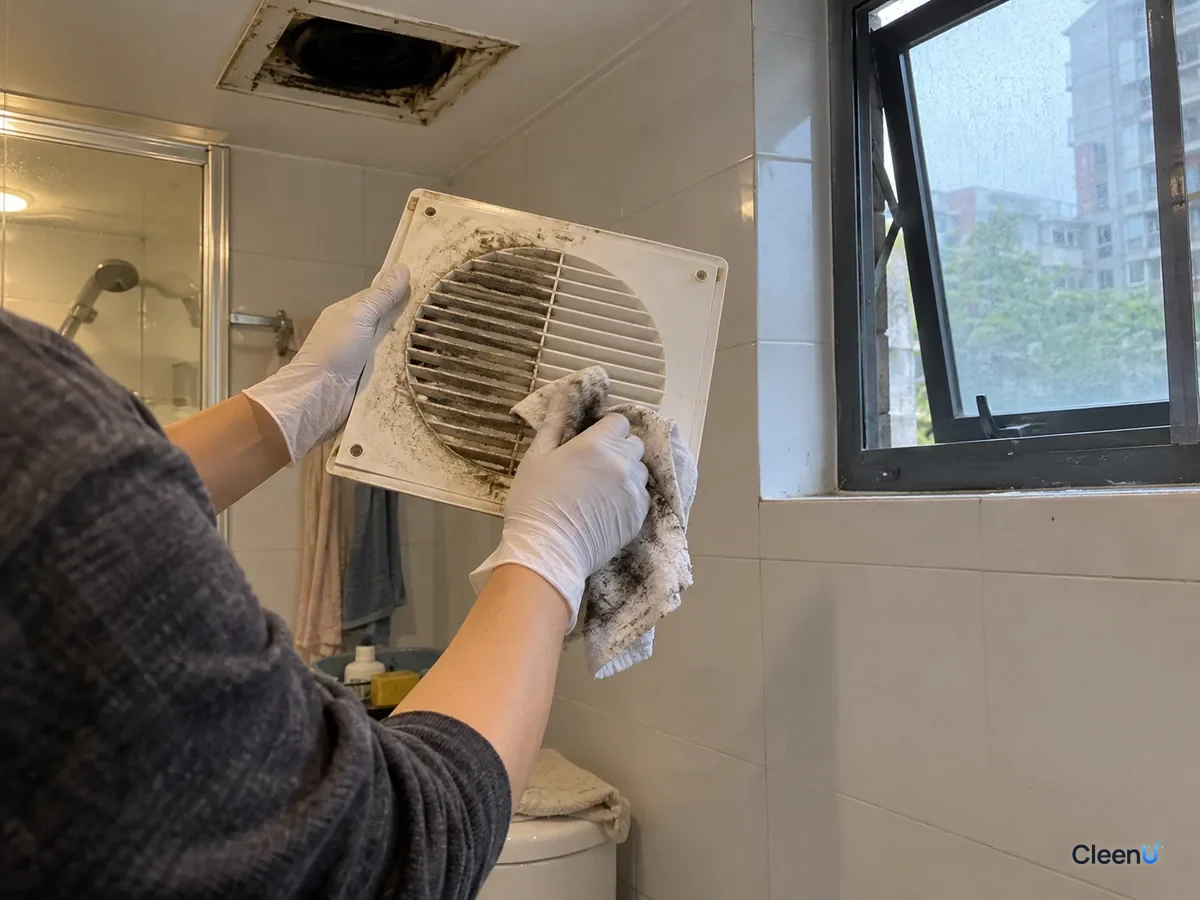
| Weak or clogged exhaust fan | Steam lingers long after showering | Clean the fan cover, check the duct, upgrade the fan if needed | Dust the fan cover monthly |
| Water sitting on caulk | Black line along the shower or tub | Mold remover compress; recaulk if it won't clear | Dry caulk after showers |
| A leak from upstairs or a pipe | Yellow stains, bubbling, mold that keeps returning | Find and fix the leak first, then treat mold and damaged materials | Check the ceiling for water stains periodically |
| Damp space above a panel ceiling | Black in panel seams and edges | Open the ceiling and check ventilation and leaks | Keep it ventilated; connect the fan duct properly |
Treating bathroom mold safely
Open a window and run the fan so air moves. Both spores and the remover's fumes need to go somewhere.
Wear rubber gloves, a mask (ideally a particulate respirator), and goggles. Drips are likely when you work on a ceiling, so eye protection matters.
Make sure no acidic cleaner (toilet bowl cleaner, descaler, vinegar) or ammonia product is in use or was just used. If one was, rinse and ventilate for at least half an hour.
Tile and caulk: spray the remover on the mold. On vertical surfaces or where you need a longer dwell time, lay a paper towel on first and soak it. Leave it 10 to 15 minutes, 30 for stubborn spots, and stay out of the room while it works.
Rinse thoroughly with water or wipe repeatedly with a damp cloth, then dry.
Painted ceilings: for small spots, wipe gently with a cloth lightly dampened with remover rather than spraying overhead so nothing drips. Ventilate and let it dry. Call a professional for large or recurring mold.
Afterward, bag and toss used rags and paper towels, and wash your hands and face.
Prevention: lowering humidity is the real fix
Turn the fan on when you start your shower and leave it running at least 20 to 30 minutes after; longer in a windowless bathroom.
Open the door or window after showering to let moisture out.
Squeegee glass and tile, and wipe water off caulk and corners with a dry cloth.
Dust the fan cover monthly, and check the duct or replace the fan if suction drops off.
Don't leave damp towels bunched up in the bathroom; hang them open or take them somewhere airy.
In winter, warm the room with a heat lamp or heater before showering so walls are warmer and less moisture condenses.
When remodeling, use mold-resistant paint on ceilings and walls, ventilate any dropped ceiling, and vent the fan duct directly outdoors.
For a cleaning schedule for the rest of the room, see How to clean a bathroom.
How to tell whether it's working
After a treatment, the spot should look lighter once the surface dries, and it shouldn't come back within a week or two if humidity stays under control. If the same shape returns quickly, the mold is likely growing inside the paint or drywall, or there's moisture behind the surface. A spot that keeps spreading, paint that bubbles or a ceiling that feels soft points to a leak or condensation problem, and cleaning alone won't fix that.
Ventilation details that make a real difference
Running the exhaust fan during the shower and for 15 to 20 minutes afterward clears much more moisture than switching it on only while you're in the room. Check that the fan actually pulls air: a sheet of tissue held near the grille should stick to it. Dust on the cover cuts airflow, so clean it every few months. Leaving the door slightly open after a shower and wiping water off walls with a squeegee help ceilings and corners dry faster. In a windowless bathroom, a small dehumidifier can help keep humidity down between showers.
Stop and call a professional if you see this
Mold covers more than about 10 square feet or is spreading fast; the ceiling is yellowing or bubbling or walls are bulging, which may mean a leak; drywall is soft or warped; or someone at home has asthma, severe allergies, or a weakened immune system. If you smell something sharp, start coughing, or your eyes sting while treating it, leave and ventilate. Never mix or follow chlorine products with acidic or ammonia products, and don't spray them straight overhead.
Bathroom ceiling and corner mold: common questions
What should I use on mold on a bathroom ceiling?
On a painted ceiling, wipe small spots with a cloth lightly dampened with a remover rather than spraying overhead. For large or recurring mold, scrape the affected paint, treat the surface, and repaint with mold-resistant paint.
Can I use a chlorine mold remover on painted walls?
Not across large areas. It can fade or yellow paint, and drips are a hazard. It's meant for tile, grout, and caulk.
Why does bathroom mold keep coming back?
The humidity hasn't come down. Run the fan during and after showers, dry corners and caulk, and check fan suction and for leaks.
The ceiling is yellow, bubbling, and moldy. Why?
Usually a leak from upstairs or a pipe. Find and fix it first, then treat the mold and replace damaged materials, or it'll keep happening.
What protection do I need to clean bathroom mold?
Rubber gloves, a particulate mask, and goggles, with the window open and fan running. Anyone with asthma should stay out.
How do I prevent mold in a windowless bathroom?
Use a properly sized fan, turn it on when you start showering and leave it on afterward, keep the door cracked, dry walls and caulk, and add a dehumidifier if needed.
For a mold stain spray that visibly fades black mildew on bathroom tile, grout, and caulk after a 10 to 15 minute dwell (chlorine-based: use it on its own and ventilate), take a look at our Mold & Mildew Stain Remover.
Bathroom ceiling and corner mold comes from shower steam condensing on the coldest surfaces and never fully drying. Treat it by surface: rinse tile and grout after a mold remover, recaulk caulk that won't clear, don't spray chlorine across painted ceilings (spot-treat or scrape and repaint with mold-resistant paint), and replace soft, damaged drywall. Ventilate and wear protection, and never mix chlorine products with acidic or ammonia cleaners. What actually keeps mold from returning is lower humidity: run the fan during and after showers, dry corners and caulk, and check for leaks.