
Formulation Science
Why Bathrooms Grow Mold: Humidity, Ventilation, and Surfaces
Direct answer
Mold needs moisture, food, and time, and bathrooms supply all three: hours of humidity after showers, soap scum and skin cells to feed on, and caulk and grout that hold water. Cutting how long surfaces stay wet is the most important step.
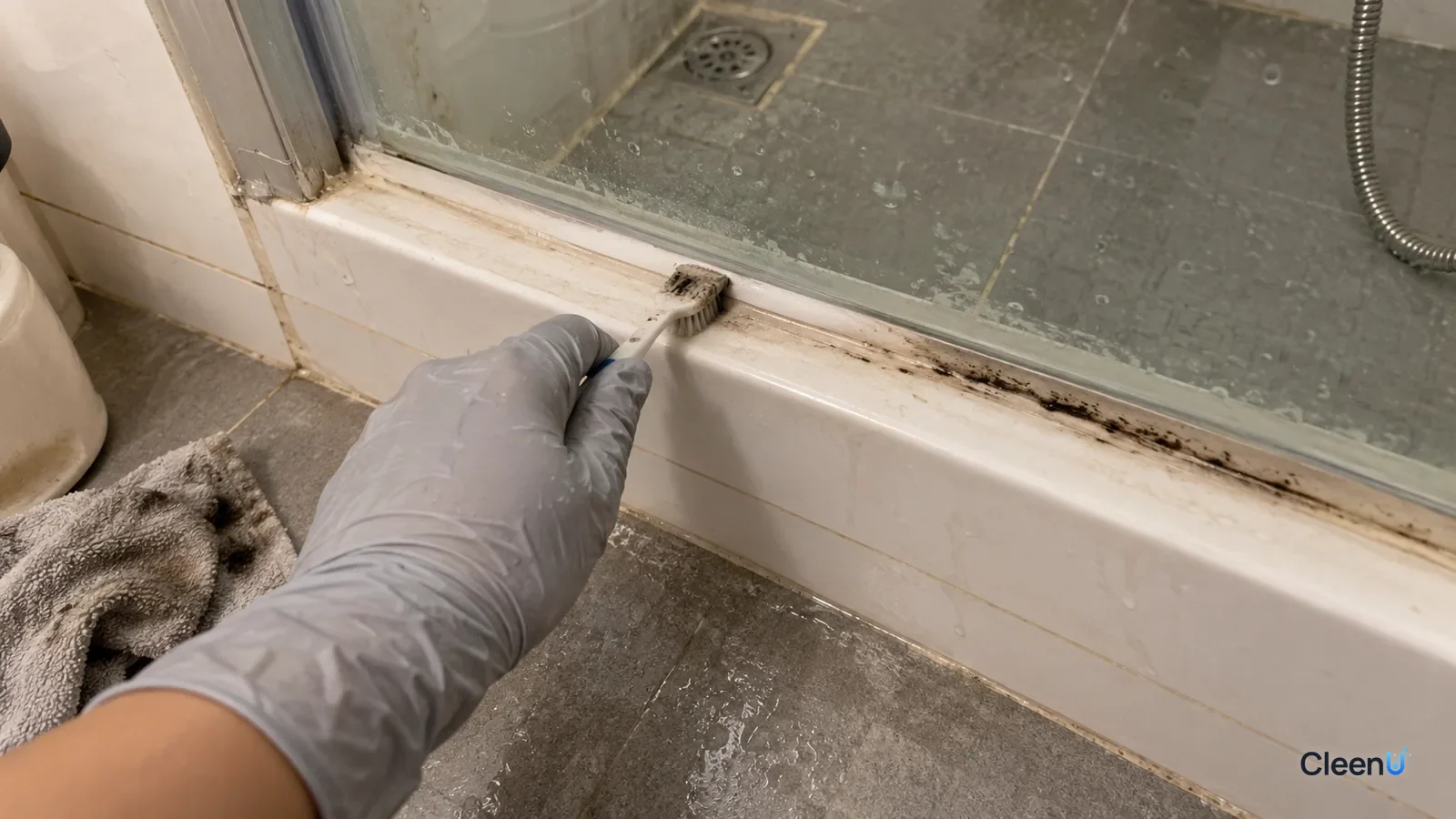
You scrub the shower caulk clean, and a few months later there's a black line again. The gray dots in the ceiling corner come back soon after you wipe them. Many people assume their cleaner isn't strong enough, but recurring mold usually isn't about cleaning. It's that the bathroom keeps giving mold the conditions it needs.
What mold needs to grow
Mold is a fungus, and its spores are almost everywhere in the air, ready to grow on any surface they land on. Whether a spore becomes a visible spot depends on three things.
Moisture: a surface that stays damp for a long time, or air that stays humid.
Food: mold can use many organic materials, including fatty acids in soap scum, skin cells, hair, dust, and even components of some building materials.
Time: going from spore to visible spot takes a surface staying wet, continuously or repeatedly, for a while.
In bathrooms, all three tend to be present at once.
What recurring black caulk tells you about bathroom mold
What you see
Shower and tub caulk gets a black line again a few months after cleaning, and it's harder to remove each time.
Why it happens
Caulk sits where water runs most and dries slowest, with soap scum and skin cells on its surface. Mold hyphae grow into the top layer of the silicone and pigment soaks into the material, so surface cleaning only reaches the shallow part.
What it means for use
A mold remover can handle surface stains, but as long as the caulk stays wet for hours every day, mold will return. Drying and ventilation are key, and deeply stained caulk should be replaced.
Black spots, pink film, and white crust aren't the same thing
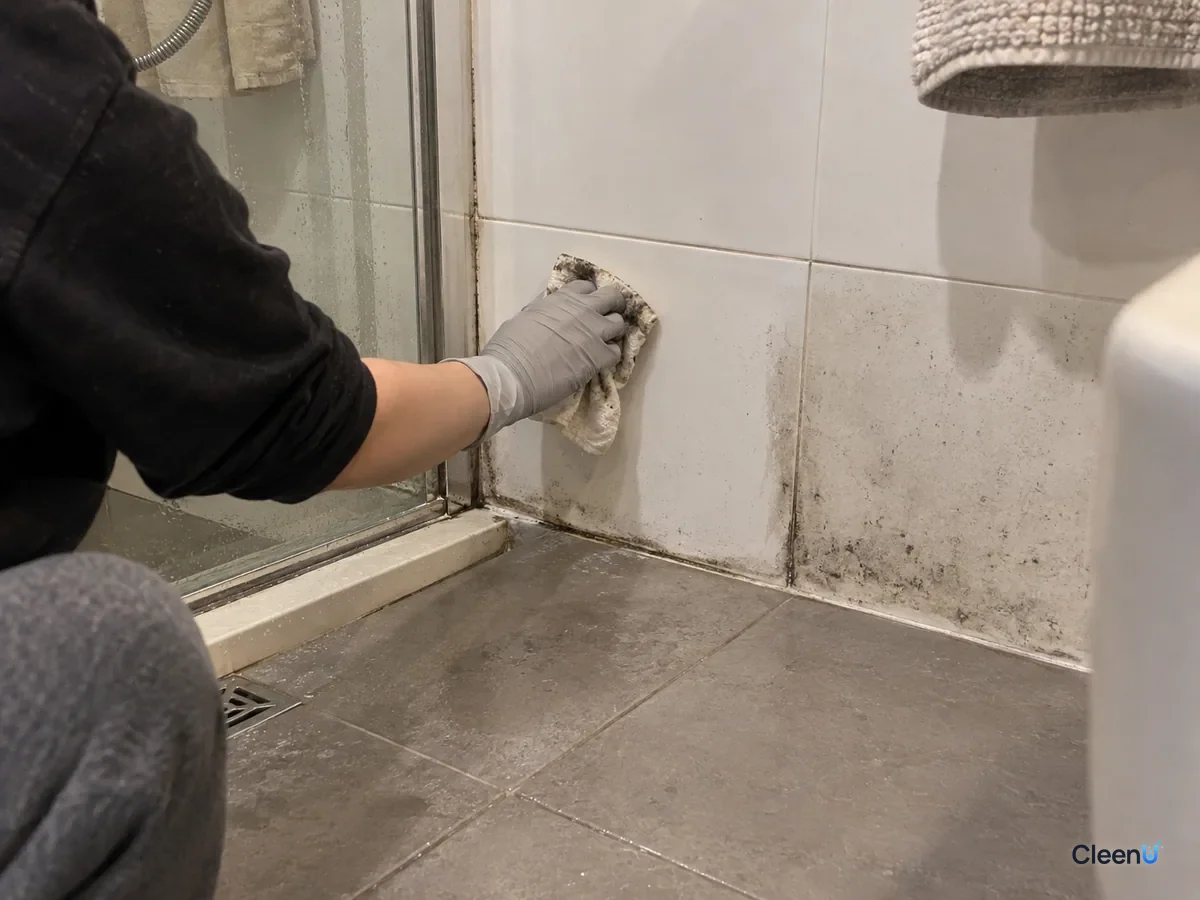
What looks like "mold" in a bathroom can actually be three different things, and each needs a different approach.
Black or dark green dots and lines. These show up on caulk, grout, and ceiling corners, and they're the classic mold stain. Mold grows thread-like hyphae into the tiny pores of silicone caulk and grout and produces dark pigment, which is why the color can stay in the material even after you clean the surface.
Pink or orange slime. You'll find it around shower drains, at the waterline in the toilet bowl, and in the bottom of toothbrush cups. In most cases, it's a biofilm formed by bacteria that thrive on moisture and soap residue, not mold. It grows quickly and feels slippery. Scrubbing with a bathroom cleaner, rinsing, and keeping the area dry cuts it back considerably.
Grayish-white, rough crust. That's soap scum and hard-water scale, formed when fatty acids from soap and body wash combine with calcium and magnesium in the water. It isn't mold, but it is one of mold's food sources, and it makes surfaces rougher and better at holding water. For the difference between the two, see soap scum vs. hard water stains.
Telling them apart keeps you from reaching for a chlorine mold remover to fight soap scum, a job it isn't well suited for and one where it just adds unnecessary fumes.
Why bathrooms stay so damp
A hot shower drives humidity up fast, and the vapor condenses on cooler walls, ceilings, mirrors, and windows. If the fan is too weak or off, or the door is shut right after showering, moisture lingers and corners and ceilings can take hours to dry.
North-facing, windowless bathrooms and those on cold exterior walls have it worse, because cold walls collect condensation more easily.
Why cold walls collect condensation
How much water vapor air can hold depends on temperature: the warmer the air, the more it holds. During a shower, the air is hot and humid. When it meets a cooler wall, ceiling, or window frame, the thin layer of air against that surface cools down, can't hold as much vapor, and the excess condenses into water. The temperature where that happens is the dew point. Exterior walls, window frames, and uninsulated ceiling corners are the coldest spots, so they fog up first and dry last. That's why mold tends to trace wall corners, window frames, and ceiling edges. Those spots aren't dirtier; they just stay wet longer.
Why some spots mold first
Caulk and grout are rough or porous, so they hold water and soap scum and dry slowest.
Ceiling corners and exterior wall corners are cooler with little air movement, so condensation lingers.
Painted drywall and drywall ceilings absorb water, and when they're damp inside, mold can show through from within.
Shower curtains, bath mats, and towels absorb water and stay wet when bunched up.
Materials make a difference
Not every bathroom surface responds the same way to moisture. Glazed tile is nearly waterproof, so mold on tile usually lives in the soap film on top and wipes away. Grout and silicone caulk are porous or slightly rough, hold water longer, and let growth work its way in, which is why they're the usual trouble spots. Painted drywall ceilings absorb moisture from behind as well as from the room, so a stain that keeps returning in the same patch may point to a leak or poor insulation rather than a cleaning problem. Fabric shower curtains, bath mats, and towels stay damp for hours when bunched up; spreading them out to dry matters as much as washing them.
If a stain keeps coming back in the same place within a few weeks of treatment, look for the moisture source before reaching for the spray again. A slow drip from a valve, a cracked caulk line that lets water behind the tile, or a fan that barely moves air will keep feeding the problem no matter how often the surface is cleaned. For a full cleaning sequence, see how to clean a bathroom.
Reducing mold at the source
Run the fan during the shower and for twenty to thirty minutes after, or open a window.
Squeegee glass and tile after showering and wipe caulk and corners dry to shorten wet time.
Remove soap scum regularly so mold has less to feed on.
Hang towels and curtains open so they dry quickly.
Check for leaks. A yellowed, bubbling ceiling or a wall that molds over and over may point to a leak from above or from pipes; fix that first.
A habit that takes a few minutes
The most effective mold prevention is usually quick. After a shower, squeegee the glass and tile walls, wipe the caulk lines and any puddled corners with a dry towel, and leave the fan running for another 20 to 30 minutes. Clear soap scum once a week. That shrinks the time surfaces stay wet from hours to minutes, and mold rarely gets enough time to take hold.
If mold is already there
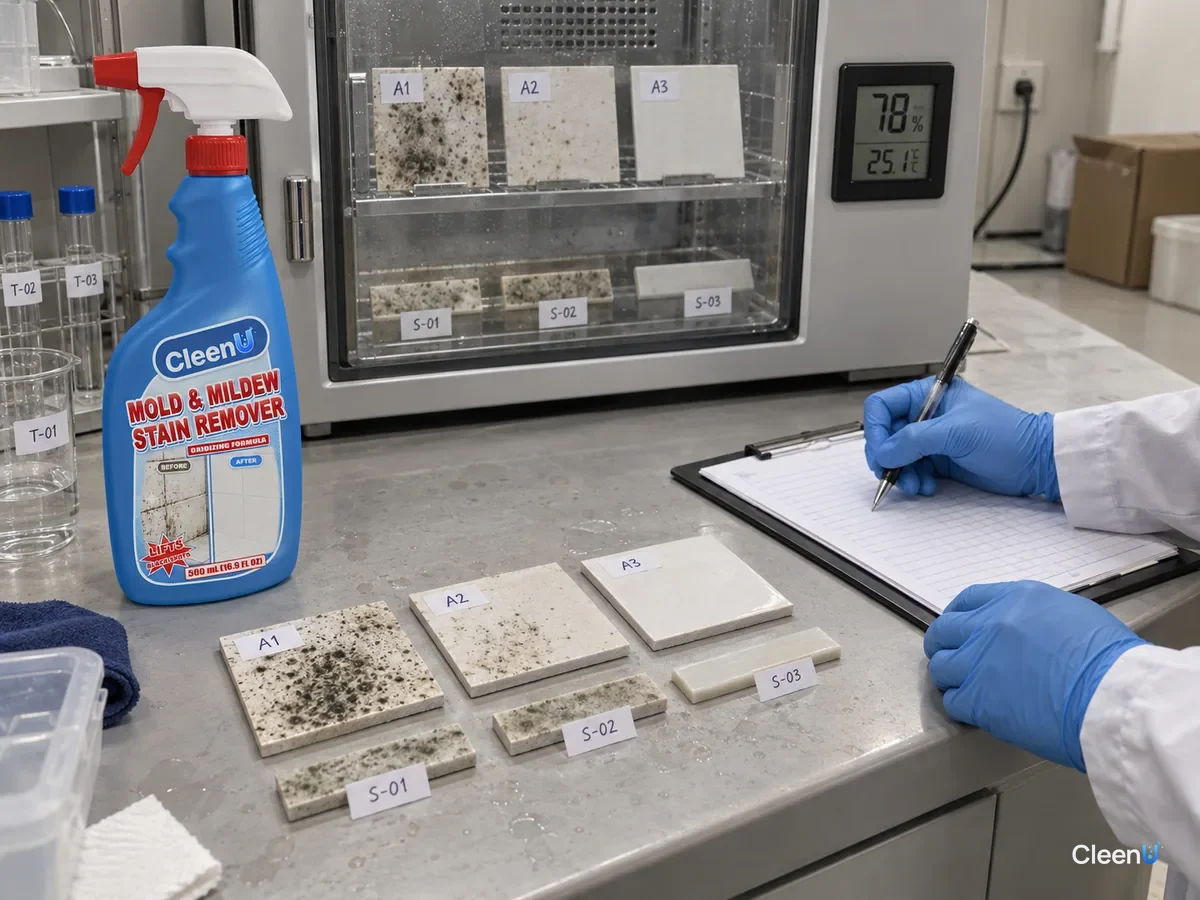
For mold on tile, grout, and caulk, a chlorine-based mold spray is the usual choice. Check the label: it should name tile, grout, and caulk, give a dwell time, and list what not to mix it with. CleenU Mold & Mildew Stain Remover is one example: spray, leave it 10 to 15 minutes, up to 30 minutes for stubborn stains, then rinse. Keep chlorine products off fabric, wood, colored grout, and natural stone, and keep the room ventilated while you work.
Keep in mind that a mold remover takes care of visible stains. If the moisture problem isn't fixed, mold comes back. For large areas, mold inside walls, or households with asthma or allergies, consider professional help.
To tell mold from dirt in grout, see Black grout: mold or dirt? For the full cleaning order, see How to clean a bathroom.
Where a chlorine mold remover does its work
The main active ingredient in a chlorine mold remover, sodium hypochlorite, is an oxidizer. It acts on the dark pigment in mold stains and lightens it through oxidation, while surfactants help wet the stain and the grime attached to it. It deals with the mold stain you can see. It doesn't stop new spores from landing, and it doesn't change the humidity in the room.
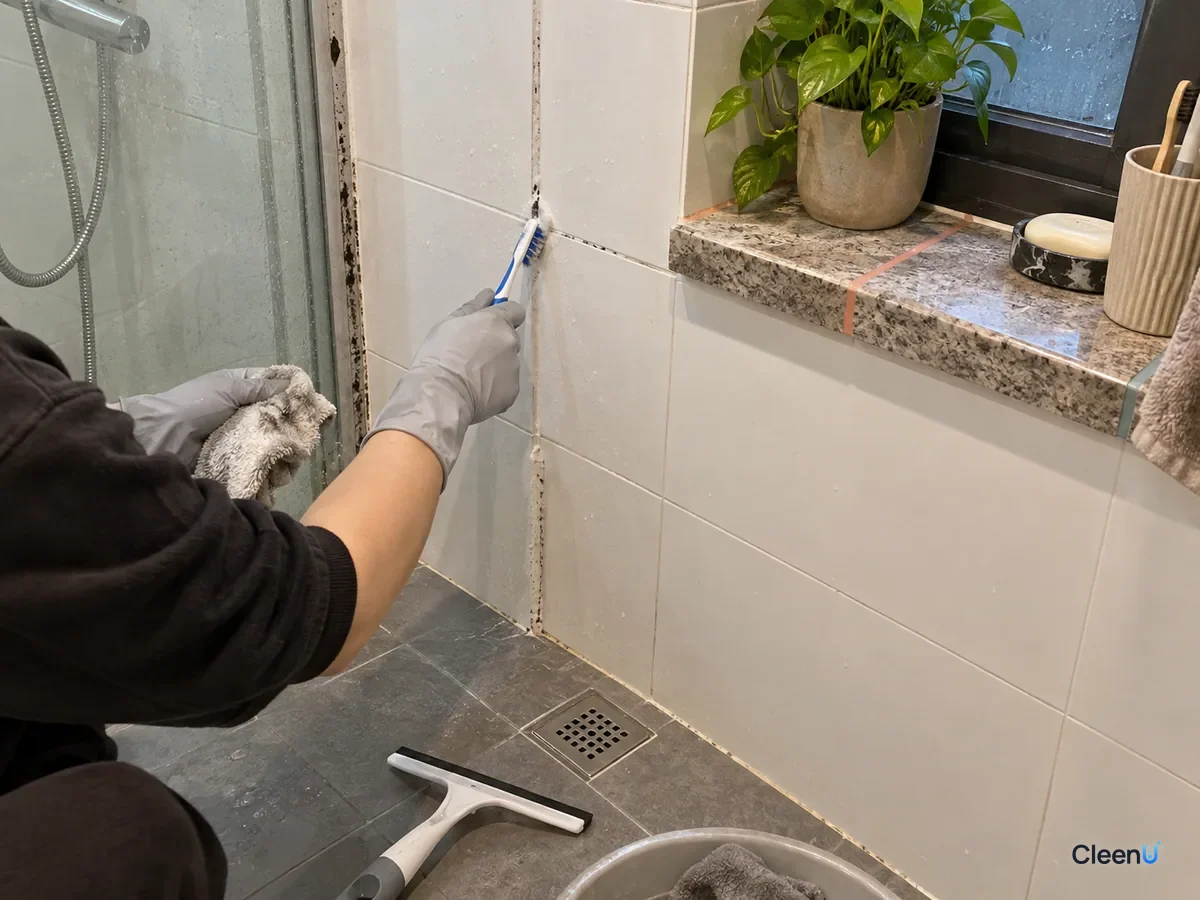
Here's how to use one properly. Ventilate first by turning on the fan or opening a window. Dry the area you're treating, because standing water dilutes the product. Spray the stain and leave it for 10 to 15 minutes, or up to 30 minutes for stubborn spots. Then rinse with clean water or wipe repeatedly with a damp cloth, and dry the surface. When the stain has clearly faded and matches the surrounding area, stop. If two or three treatments still leave dark specks in the caulk, the pigment and hyphae have grown into the material. More spraying won't change that; replacing that section of caulk is the real fix.
Never mix a chlorine product with acidic cleaners or anything containing ammonia, and don't use them back to back. The combination can release harmful gases. Colored grout may bleach, so test in an inconspicuous spot first.
Bathroom mold: common questions
Why does my bathroom keep getting moldy?
It stays damp for long stretches, and soap scum and skin cells give mold food. Ventilation and drying matter more than the cleaner.
What if mold on caulk won't come off?
Apply a mold remover as a compress for surface stains. If it's still black after treatment, cut out the old caulk and recaulk.
How long should I run the bathroom fan?
During the shower and twenty to thirty minutes after, until the mirror and walls no longer look steamy.
Can I use mold remover with toilet bowl cleaner?
No. Chlorine mold removers and acidic products release harmful gas when mixed. Use them separately and rinse and ventilate in between.
How do I prevent mold in a bathroom with no window?
Make sure the fan is strong enough and the duct is clear, run it longer after showers, squeegee and wipe dry, and use a dehumidifier if needed.
For a mold stain spray for grout, caulk, and corners whose label clearly lists dwell time and what not to mix it with, take a look at our Mold & Mildew Stain Remover.
Bathrooms grow mold because the moisture, food, and time mold needs all come together there: hours of humidity after showers, soap scum and skin cells to feed on, and caulk, grout, and corners that dry slowest. A mold remover clears visible stains, but what actually keeps mold from coming back is less moisture: run the fan during and after showers, squeegee and wipe dry, remove soap scum regularly, and check for leaks. Never mix chlorine mold removers with acidic or ammonia products, and call a professional for large infestations.