
OEM/ODM
Exporting Bathroom Cleaner to the US: What the Label and SDS Must Include
Direct answer
Prepare an SDS and English label under your target market's rules, covering product name, use, directions, hazard warnings, first aid, ingredient information, and the responsible party. Germ-killing claims trigger separate registration. Confirm specifics with current regulations and a compliance expert.
Private-label bathroom cleaner for export, from brief to production
-
Brief
Confirm target market (US, EU, and so on), sales channel (Amazon, Shopify, retail), positioning, and claim scope. CleenU works with you on a brief that spells out which claims to avoid.
-
Formula and samples
We confirm scent and packaging on our existing formula, and samples ship in about 3 days. You can pass samples and formula information to your compliance advisor for label and document review at the same time.
about 3 days
-
Documents and label approval
SDS and other documents are provided per project. The brand finalizes English label copy with its compliance advisor, and CleenU helps confirm that directions, pH, and exclusions match the formula.
-
Production and delivery
Once packaging and labels are approved, bulk production takes about 7 days. Final timing follows order confirmation.
about 7 days
For many Amazon and Shopify sellers taking a bathroom cleaner to the US for the first time, the biggest worry isn't the formula but the label and paperwork. What goes on the English label? What is an SDS and who provides it? What will the platform ask for?
This article outlines common areas to prepare so you can have informed conversations with your manufacturer and compliance advisor. US rules come from both federal and state levels and change over time, so check current regulations and a qualified compliance professional for specifics. This isn't legal advice.
Two different documents: label and SDS
The label is printed on the package for consumers. It tells them what the product is, how to use it, what the hazards are, and what to do if something goes wrong.
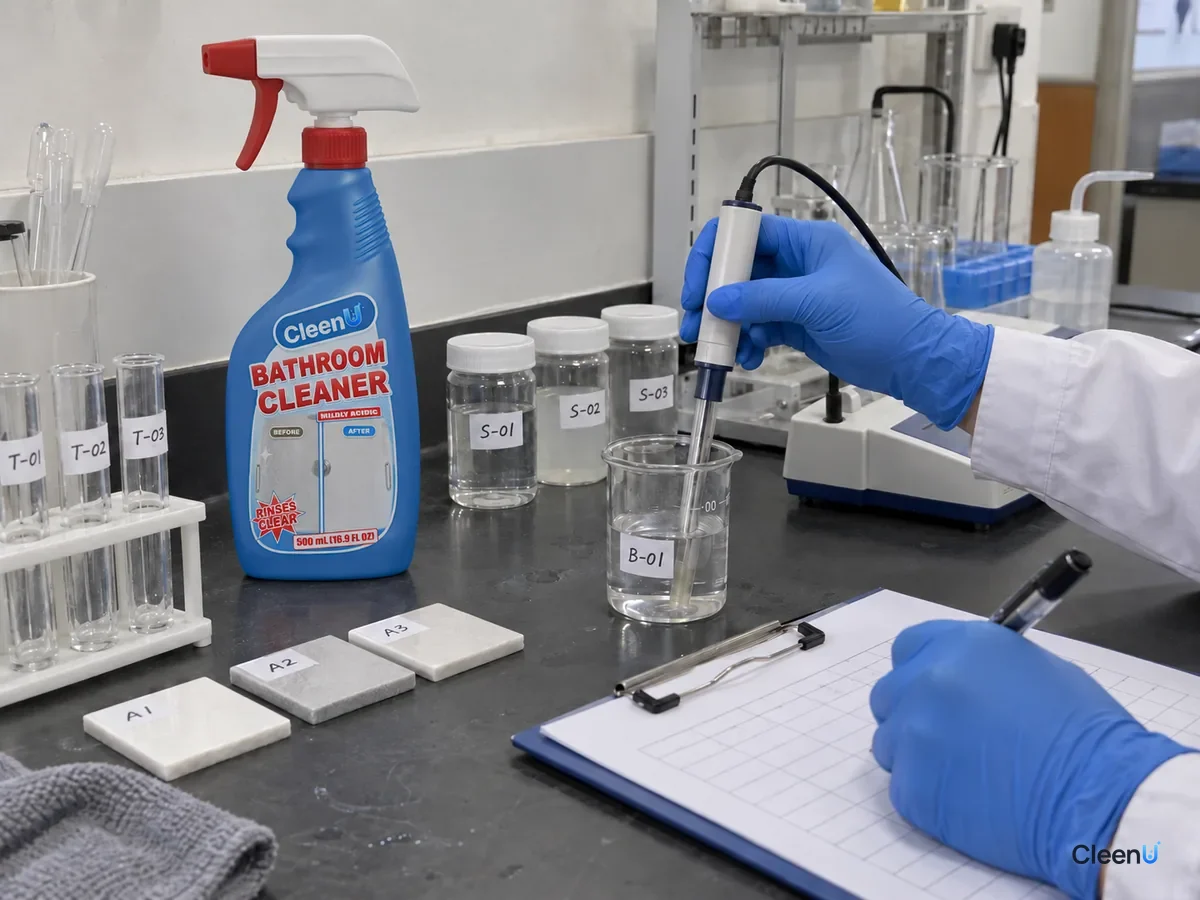
The SDS (Safety Data Sheet) is a technical document for shipping, warehousing, retailers, and workplace use, typically in the globally harmonized 16-section format covering composition, hazard identification, first aid, firefighting, spill response, storage, personal protection, physical and chemical properties, stability, toxicology, ecology, disposal, transport, and regulatory information. Platforms and logistics providers often require sellers to supply one.
What an English label commonly includes
Product name and use, stating clearly what it is and which surfaces it's for.
Directions: how to use it, how long to leave it, and whether to rinse.
Hazard warnings. For household products with hazards such as irritation, US rules generally call for a signal word such as CAUTION or WARNING, a statement of the hazard, and precautionary statements.
First aid for skin contact, eye contact, and swallowing.
Child safety statements such as "Keep out of reach of children."
Mixing warnings, for example that an acidic product must not be mixed with chlorine bleach.
Responsible party: the name and address of the manufacturer, packer, or distributor.
Net contents in units commonly used in the US.
Ingredient information. Some states, such as California, have ingredient disclosure requirements for cleaning products on the label or online.
Be very careful with germ-killing claims
In the US, a product claiming to kill bacteria, viruses, or other microbes is generally treated as an antimicrobial product that requires registration with the relevant agency, not as an ordinary cleaner. If your product is a cleaner, keep words like "kills germs," "disinfects," or "antibacterial" off the label, product page, and ads. This is a frequent reason for platform takedowns.
MOQ and lead time
MOQ is 500 bottles. Samples ship in about 3 days. After packaging and labels are approved, bulk orders take about 7 days. Final pricing follows the formal quote. SDS and other documents are provided per project after inquiry; for label compliance, rely on target-market regulations and a qualified compliance professional.
CleenU Bathroom Cleaner: base specifications
- Type
- Mildly acidic bathroom cleaning spray
- pH
- 2.5 to 4.0 (25°C)
- Formula
- Citric and other organic acids with nonionic surfactants
- Directions
- Ready to use, no dilution; leave 2 to 5 minutes, then scrub and rinse
- For
- Shower tile, sinks, tub edges, glass partitions, and other bathroom hard surfaces
- Not for
- Marble and other natural stone; use together with chlorine bleach; untested PVD or painted fixtures; prolonged contact with aluminum
- Scent and pack
- Fresh clean scent; 500 mL trigger spray bottle
Common pitfalls
Translating a domestic label word for word. Claims and formats from your home market may not suit the US, especially efficacy claims.
Product pages that say more than the label. Platforms review both, and "kills germs" on a product page causes the same trouble.
Inconsistent product information. pH, directions, and exclusions should match across the label, SDS, and product page.
For how to use bathroom cleaners, see How to clean a bathroom.
Write directions around the soil and the surface
Plenty of sellers pour their effort into the warning panel and then reduce the directions to "spray and wipe." In practice, vague directions cause more trouble than warning format does: the wrong surface, too long a dwell, no rinse, and then a one-star review or a return. Clear directions start with the brand understanding what the product is actually removing.
On bathroom hard surfaces, that's mostly soap scum and hard water deposits. Soap scum forms when fatty acids in soap combine with calcium and magnesium in tap water to make insoluble calcium soaps. It usually carries skin oil and body wash residue along with it and shows up as a gray-white, draggy film. Hard water spots are the calcium and magnesium carbonate left when hard water evaporates. Water is hard across much of the U.S., so both show up constantly on shower walls, glass doors, and around faucets.
A mildly acidic bathroom cleaner works through an acid-base reaction: organic acids dissolve those insoluble calcium and magnesium compounds into salts that water can carry away, while surfactants wet and disperse the loosened scum and oils. That's why three steps belong in the directions, and none of them is optional. Dwell gives the acid time to react. Scrubbing lifts what's been loosened. Rinsing carries off the dissolved salts and leftover product. A line like "Spray, let stand 2–5 minutes, scrub and rinse" gets far better results in a customer's hands than "Spray and wipe."
Why the do-not-use list matters so much in the U.S.
Natural stone is common in American bathrooms: marble vanities, travertine and limestone shower walls. Acid dissolves the calcium carbonate in that stone and leaves dull, etched spots, and many homeowners can't tell natural stone from engineered stone. Spelling out "Do not use on marble, limestone, travertine or other natural stone," along with "Test on a small, hidden area first," heads off a good share of surface complaints.
Mixing risk belongs up front too. Acidic products mixed with chlorine bleach release chlorine gas, and chlorine bleach is a staple in many U.S. homes. That warning should sit where people will see it, not at the bottom of the back panel.
Keep the listing, the label, and the SDS in sync
The most common real-world problem is three documents that each say something slightly different. Before finalizing, build a simple cross-check table and compare these points line by line:
- pH range. The label, the listing, and Section 9 (physical and chemical properties) of the SDS should match.
- Directions. Dwell time and whether to rinse should read the same on the label and the listing.
- Surfaces to use on and avoid. The listing can say more than the label, but never contradict it.
- Do-not-mix warning. It should appear on the label, the listing, and the SDS.
- Claims. The listing, image text, ad copy, and video captions should never go beyond the cleaning claims on the label.
That table is also the most useful tool for working with the factory. The factory confirms that formula-related facts are accurate; the brand and its compliance advisor decide how those facts are worded for the target market.
What a sample can help you verify
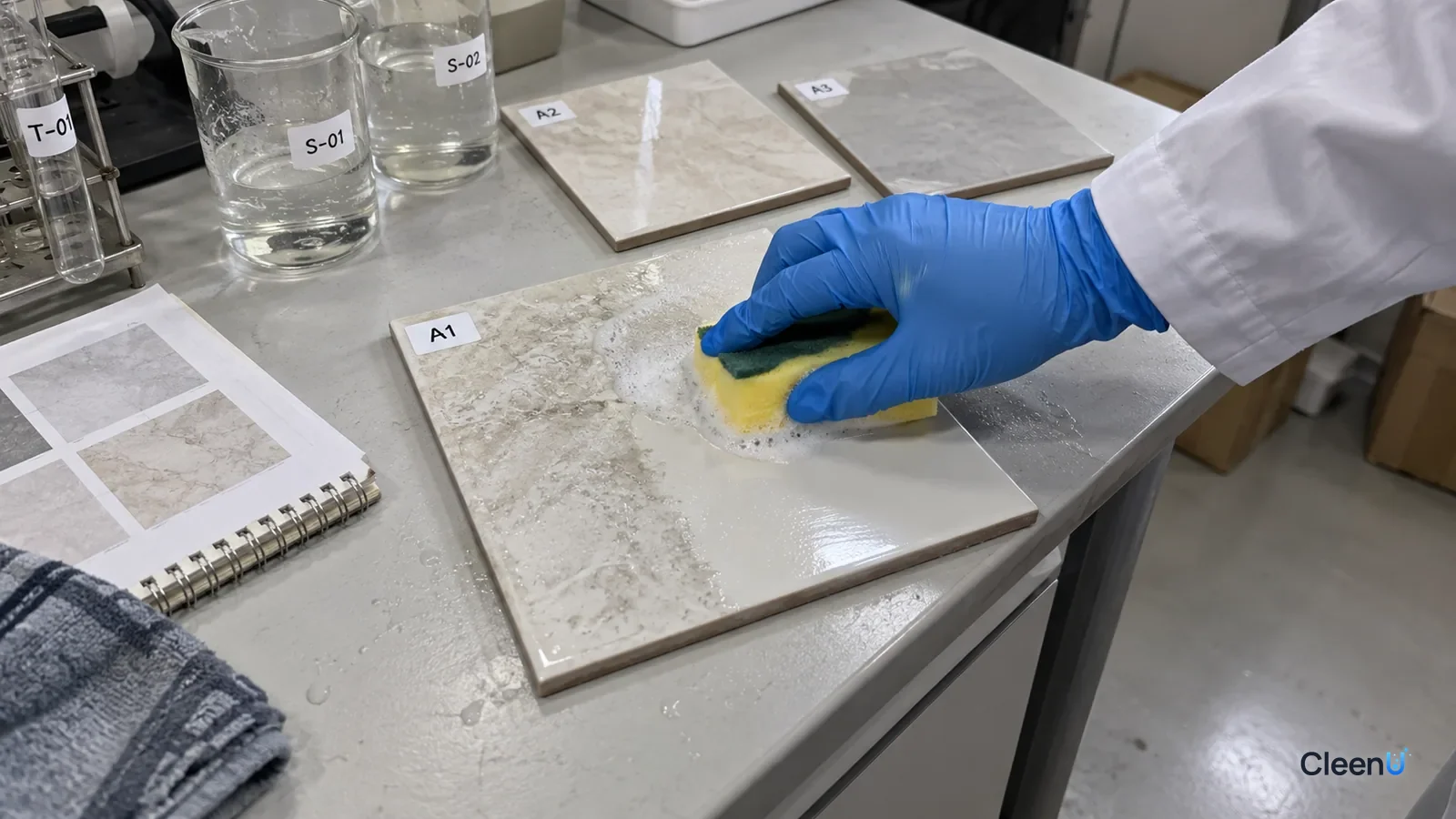
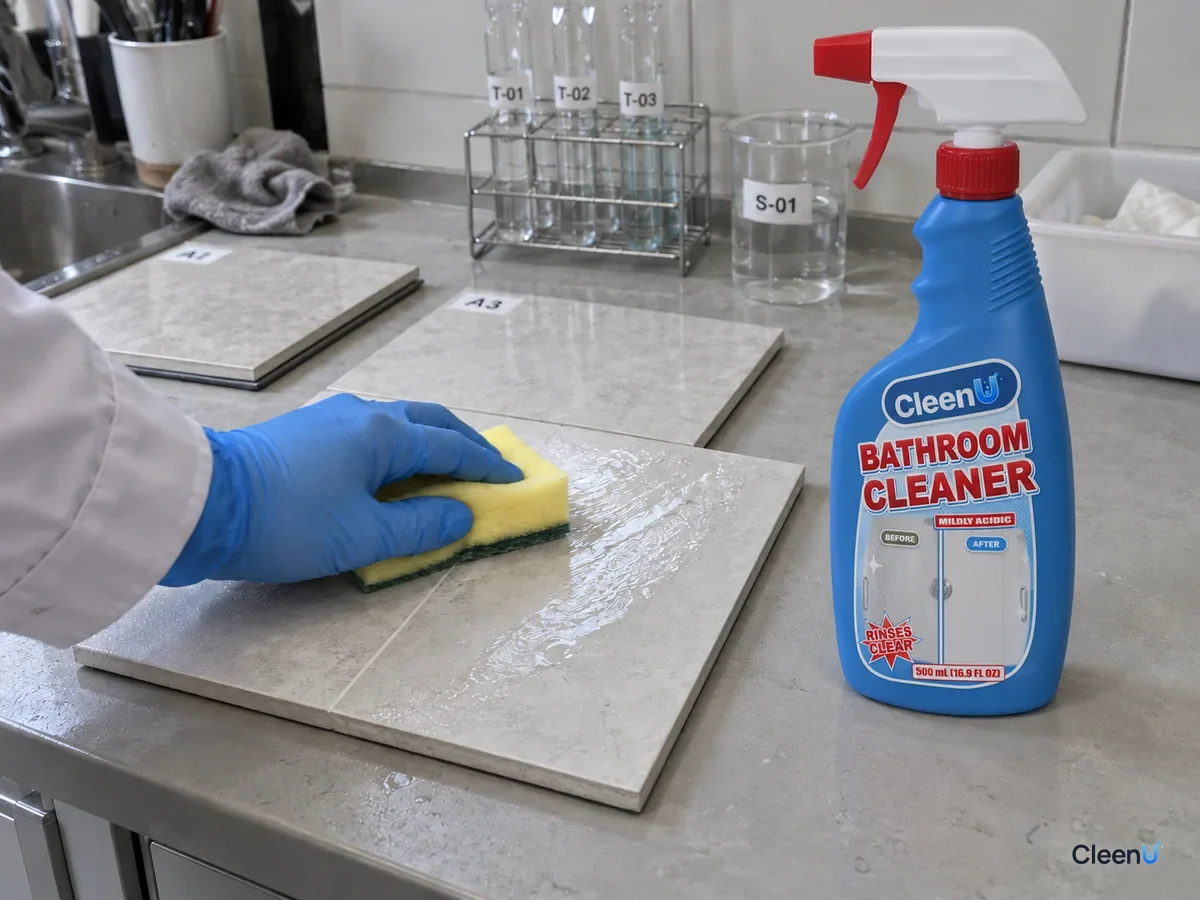
Once samples arrive, use them for more than a quick look at cleaning power. They can also back up what the label is about to say. On glazed tile and glass, follow the label time and check whether soap scum softens and wipes off within 2 to 5 minutes. On a chrome faucet, apply for the same time, rinse, dry, and look for any change in finish. Try a small spot test somewhere out of sight to confirm the "test first" instruction makes sense. All of this is work a brand can do in house, without waiting on outside reports, and it feeds straight into a better label.
Export labels for bathroom cleaner: questions brands ask
Does a cleaner exported to the US need an SDS?
Platforms, logistics providers, and retailers commonly ask for one; requirements depend on channel and regulations.
Can the label say it kills germs?
Products claiming to kill microbes generally need separate registration in the US. Keep germ-killing, disinfecting, and antibacterial claims off ordinary cleaners.
Who writes the English label?
The brand finalizes it with its compliance advisor, and the manufacturer helps confirm product information matches the formula.
Should the pH on the label match the pH on the SDS?
Yes, use the same range everywhere. The pH in SDS Section 9, on the product page, and on the label all come from the same formula data, and any mismatch tends to trigger extra questions in marketplace review.
Can you guarantee label compliance?
No, we can't replace a compliance review. We provide product information that matches the formula and documents such as the SDS; for label compliance, rely on target-market regulations and a qualified compliance professional.
To get samples of a mildly acidic bathroom spray, along with an SDS and other documents for your compliance advisor to review your English label, take a look at our Bathroom Cleaner.
When exporting a bathroom cleaner to the US, keep the label and the SDS straight. The English label is for consumers and commonly covers product name and use, directions, hazard warnings, first aid, child safety and mixing warnings, the responsible party, and net contents, with some states also requiring ingredient disclosure. The SDS uses the 16-section format for channels and logistics. Keep germ-killing claims off ordinary cleaners, and keep the label, SDS, and product page consistent. Confirm specifics with current regulations and a compliance professional. To get samples and an SDS for your compliance advisor to review, contact CleenU. The MOQ is 500 bottles, samples take about 3 days, and bulk orders take about 7 days once packaging is confirmed.