
Comparison
Foaming vs Spray Bathroom Cleaners: When Each Works Better
Direct answer
Foam clings to walls and tub sides and stays in contact longer, so it suits thick soap scum and vertical surfaces. Spray covers quickly and is easy to dose, so it suits daily upkeep, counters, and sinks. Choose by surface and soil, or use both.
How to choose
-
Thick soap scum or a waterline ring on tub sides and shower walls
Choose A foaming bathroom cleaner
Foam clings to vertical surfaces for 3 to 5 minutes, or 10 for heavy buildup, giving the acid time to dissolve scum.
-
Weekly upkeep and light water spots on counters, sinks, and around faucets
Choose A spray bathroom cleaner
It covers fast and is easy to dose; let it sit a few minutes, then scrub and rinse.
-
Soap scum and water marks on glass shower panels
Choose Foam on walls, spray for thin film on glass
Foam extends contact time, while spray is handy for quick routine cleaning.
-
Natural stone walls or counters
Choose Neither acidic product; use a stone-safe neutral cleaner
Acid etches marble and other calcium carbonate stone, leaving dull spots.
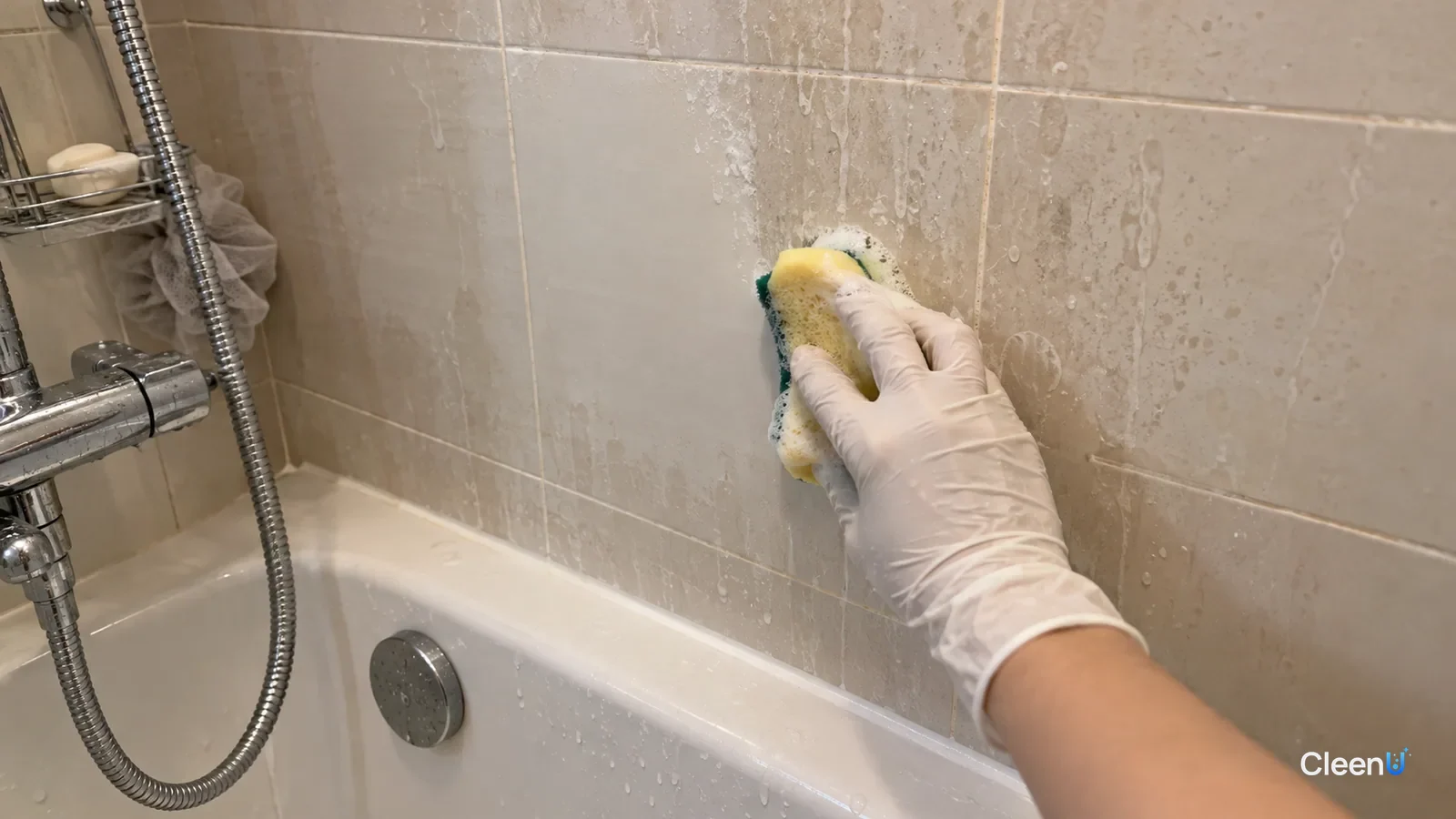
Bathroom cleaners come as sprays and as foams that come out in a thick layer. Foam looks more powerful and spray feels quicker. Which works better depends on what surface you're cleaning and what's on it.
What you're actually cleaning off
Before picking a format, it helps to know what's on the wall. Bathroom tubs and shower walls usually carry three kinds of buildup, and they tend to layer on top of each other.
Soap scum. Fatty acids from bar soap and some body washes combine with the calcium and magnesium in tap water to form calcium and magnesium soaps that don't dissolve in water. The result is a gray-white film that feels draggy, often mixed with skin oil and leftover body wash, so it can feel slightly tacky too.
Hard water scale. When hard water evaporates, it leaves calcium and magnesium carbonate behind. It starts as white spots and drip lines and gets harder the longer it sits.
Body wash and skincare residue. Surfactants, oils, and thickeners settle on the tub rim and lower wall. They're hard to see on their own, but they act like glue that holds dust and soap scum in place.
All three need the same two things: something to break them down and something to carry them away. In a mildly acidic cleaner, the organic acids react with the calcium and magnesium in soap scum and the carbonate in scale, an acid-base reaction that turns insoluble solids into salts that dissolve in water. The surfactants wet the surface and lift the loosened scum and oils so water can rinse them off. That reaction works from the outside in, layer by layer, so thicker buildup needs more contact time. Contact time is exactly where foam and spray part ways.
How foam and spray differ
The difference goes beyond how the product looks coming out. Foaming formulas contain foaming surfactants and foam stabilizers and use a foaming sprayer, producing a thick, stable layer that clings to vertical walls and tub sides for minutes without running.
Spray produces fine droplets that cover a large area and dry quickly, but run off vertical, smooth surfaces fast.
For the most common bathroom soils, soap scum and scale, acids need enough contact time to dissolve them. Foam stays put, so contact time is longer; spray runs off, so it's shorter. That's the core reason their results differ by situation.
Foaming vs spray bathroom cleaners
| Factor | Foaming | Spray |
|---|---|---|
| Contact on vertical surfaces | Clings for minutes without running | Runs off quickly |
| Best for | Heavy soap scum, tub rings, body wash residue | Light scum, water spots, routine upkeep |
| Best surfaces | Tub sides, shower walls, tile walls | Counters, sinks, around faucets, glass |
| Dosing | Comes out in a mound; uses more on large areas | Fine mist; easy to control |
| Rinsing | More foam to rinse thoroughly | Rinses quickly |
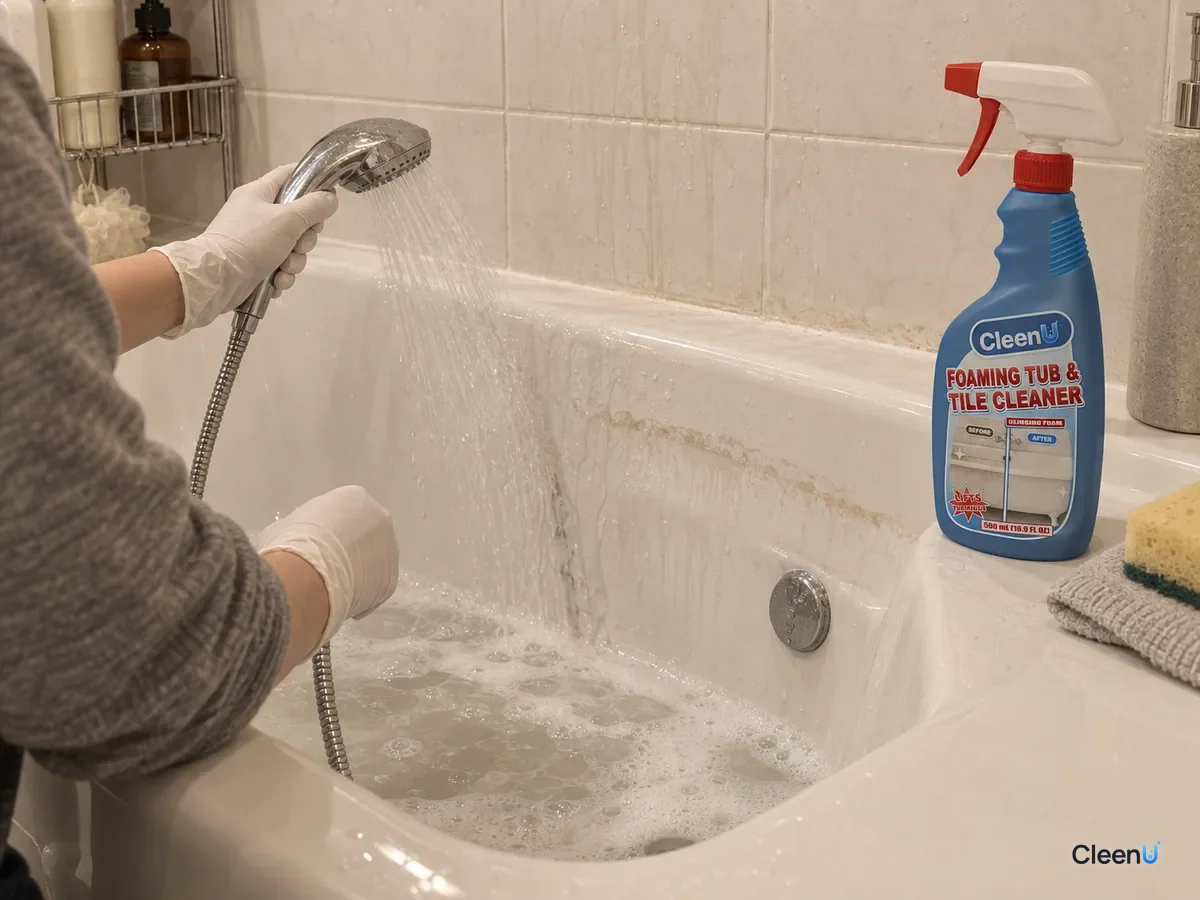
Same formula, very different results
On a flat counter, spray settles into a thin film and stays put, so it performs close to foam. On vertical tile or a sloped tub wall, it's a different story. Droplets merge into rivulets and reach the bottom of the wall within seconds, which means the scum near the top barely gets any contact time at all.
Foam packs the liquid into countless tiny bubbles. A foam stabilizer keeps the bubble walls from popping too quickly, and the foam layer has enough body to hold the liquid in place on a vertical surface for several minutes. As bubbles slowly break, they keep releasing liquid onto the buildup, so the surface stays wet and keeps getting fresh cleaner. That's why foam suits heavy scum and tub rings: the acid needs time to work through each layer, and foam buys it that time.
Foam has its downsides too. Each pump delivers a full dollop, which is easy to overuse on a small sink or around a faucet, and all that foam takes extra rinsing. On flat surfaces like counters and sinks, a spray already stays where you put it, so there's little reason to reach for foam.
Tips for foaming cleaners
Cover the soil with foam; there's no need to pile it on. Follow the label time and don't let foam dry on the surface, which makes it harder to rinse.
After it sits, scrub with a soft sponge or brush, rinse the foam off completely with clean water, then squeegee and dry.
Foam that runs from the tub or walls onto the floor can make it slippery after rinsing, so take care.
Tips for spray cleaners
Spray close to the surface to keep mist out of the air, and open a window or run the fan.
If it runs off a vertical surface too fast, spray it onto a sponge or cloth and wipe instead.
If either format is acidic, keep it off natural stone and never mix it with chlorine products.
When you pick a foam, look for a label that says mildly acidic, chlorine-free, and non-abrasive, and lists acrylic and enamel tubs and tile walls. CleenU Foaming Tub & Tile Cleaner is one example: let the foam sit 3 to 5 minutes, or 10 for heavy soap scum, then scrub and rinse. Keep acidic products off natural stone walls and counters and damaged enamel on cast iron tubs, and don't let them sit long on coated fixtures.
To tell soap scum from scale, see Soap scum vs. hard water stains. For the full cleaning order, see How to clean a bathroom.
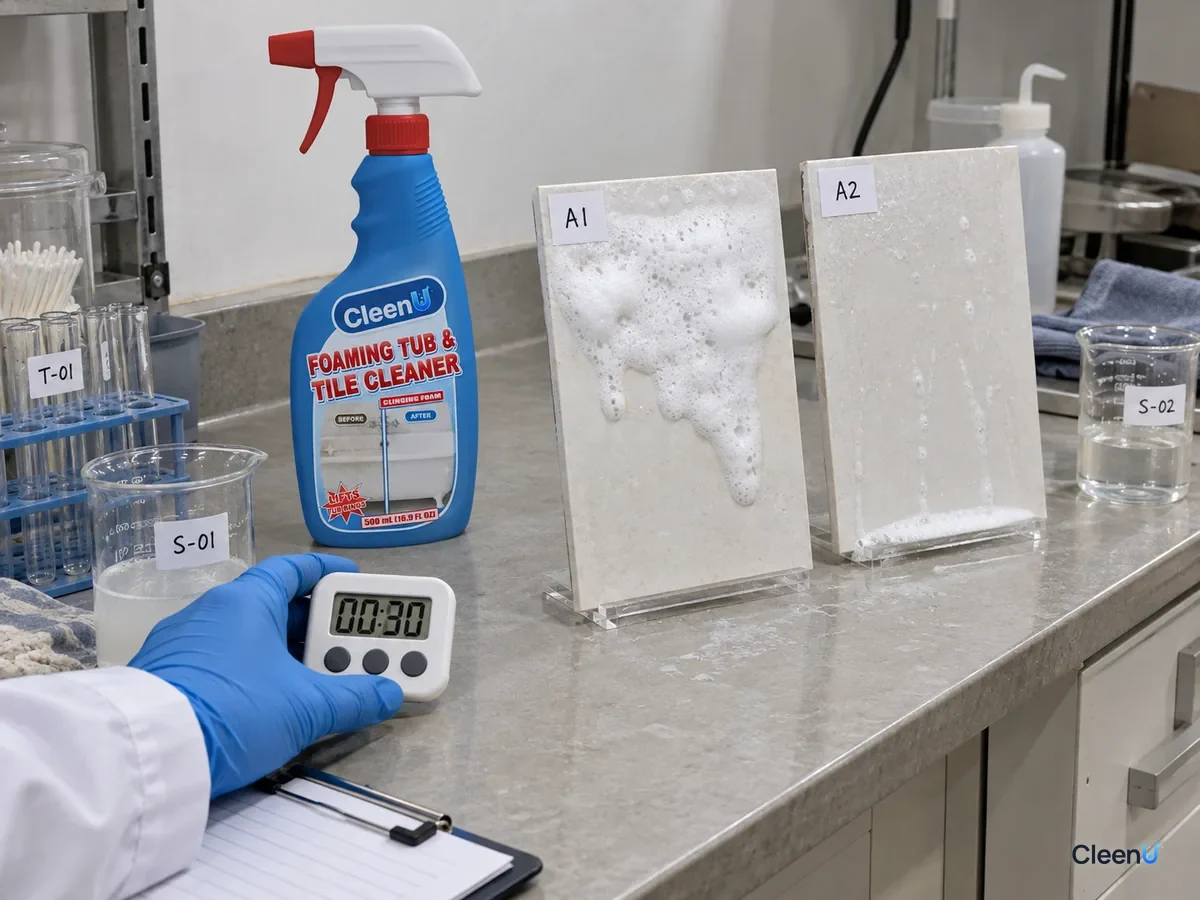
How to clean a tub with foam, start to finish
Rinse the tub and walls with warm water first to clear hair and loose dust. A damp surface lets foam spread evenly instead of soaking into dry buildup the moment it lands.
Work top to bottom. Foam the highest scum on the wall first, then the tub walls, then the waterline ring. Cover the buildup and stop; a thick pile doesn't help. Let it sit 3 to 5 minutes, or up to 10 for heavy scum and tub rings. Keep an eye on spots that start to dry out and add a little more foam there. Don't let it dry on the surface.
When time is up, scrub top to bottom with a soft sponge or soft brush. On acrylic tubs, stick to a soft sponge. Steel wool and stiff scouring pads leave fine scratches, and scratched acrylic grabs soap scum faster next time. You'll feel the draggy patches turn smooth and see gray-white residue on the sponge.
Rinse top to bottom until the surface no longer feels slippery and no foam remains. Then squeegee the walls and glass and wipe the tub dry. Drying right after rinsing keeps the minerals in your tap water from drying back into spots.
How to tell whether one pass was enough
Once the surface is dry, run your hand over it. A draggy or gritty feel means scum or scale is still there. A smooth, frictionless feel means it's mostly gone. Hold a flashlight low against the wall and the tub and look for gray-white haze or rings.
If you used the full 10 minutes, scrubbed once, and a yellowish ring still sits at the waterline, do a second round rather than leaving foam on for half an hour. If two rounds change nothing, the mark may not be soap scum at all. It could be stain absorbed into worn glaze, or a thick scale crust that calls for a dedicated scale remover.
Splitting the job between the two
If you have a tub plus a tiled shower wall and scum builds up within a week, a practical setup is a foaming cleaner as the weekly workhorse for walls and tub, plus a spray by the sink for quick daily wipes. If you only have a shower and squeegee after every use, a spray covers most of it, and foam can be saved for a monthly deep clean.
Hotels and short-term rentals that turn rooms daily usually move faster with spray. But when a checkout leaves a ring in the tub, foam saves round after round of scrubbing.
Foam vs spray: common questions
Does a foamier cleaner clean better?
No, don't choose by foam. Foam mainly helps the product stay on the surface longer; the cleaning comes from the active ingredients.
Should I use foam or spray on a bathtub?
Use foam on a tub with thick scum or a waterline ring; for light routine cleaning, spray is fine.
Do foaming cleaners need rinsing?
Yes. After it sits and you scrub, rinse the foam off thoroughly with clean water.
Can I use foaming cleaner on marble?
Not an acidic one. Marble contains calcium carbonate, so acid dulls it and leaves pale etch marks; use a neutral cleaner labeled for stone.
Can I use foam and spray in different parts of the same bathroom?
Yes, by area: foam on walls and the tub, spray on counters and sinks, as long as neither contains chlorine and neither is mixed with chlorine products.
For a chlorine-free, mildly acidic foam that clings to tub sides and shower walls for minutes to dissolve heavy soap scum and waterline rings, take a look at our Foaming Tub & Tile Cleaner.
Neither foam nor spray is better across the board; the difference is how long they stay in contact. Foam clings to walls and tub sides, so it suits heavy soap scum, waterline rings, and vertical surfaces. Spray covers quickly and is easy to dose, so it suits routine upkeep, counters, and sinks. Use them together by area if you like. Keep acidic foams and sprays off natural stone, never mix them with chlorine products, and after scrubbing, rinse thoroughly with clean water.