
Comparison
Acidic vs Neutral Bathroom Cleaners: Which to Use Where
Direct answer
Match it to the grime and the surface. Use acidic cleaners for hard water, soap scum, and toilet scale, and neutral cleaners for everyday wiping and natural stone. Mold needs a chlorine mold remover; greasy grout needs an alkaline cleaner. Never put acid on marble, and never mix acidic and chlorine products.
How to choose
-
Everyday soap scum and water spots in the shower, sink, and tub
Choose A mildly acidic bathroom cleaner
One bottle handles soap scum and light scale and is gentle on glaze, glass, and chrome.
-
Your counters or floors are marble, limestone, or terrazzo
Choose A neutral cleaner labeled for natural stone
Acid etches dull marks; stone needs neutral products only.
-
Heavy scale on faucets, showerheads, or glass
Choose A dedicated acidic descaler used per the label
Everyday mild acid works slowly on thick buildup.
-
Mold on caulk or in corners
Choose A chlorine mold remover, used alone with ventilation
Mold pigment needs oxidizing; never mix with acidic products.
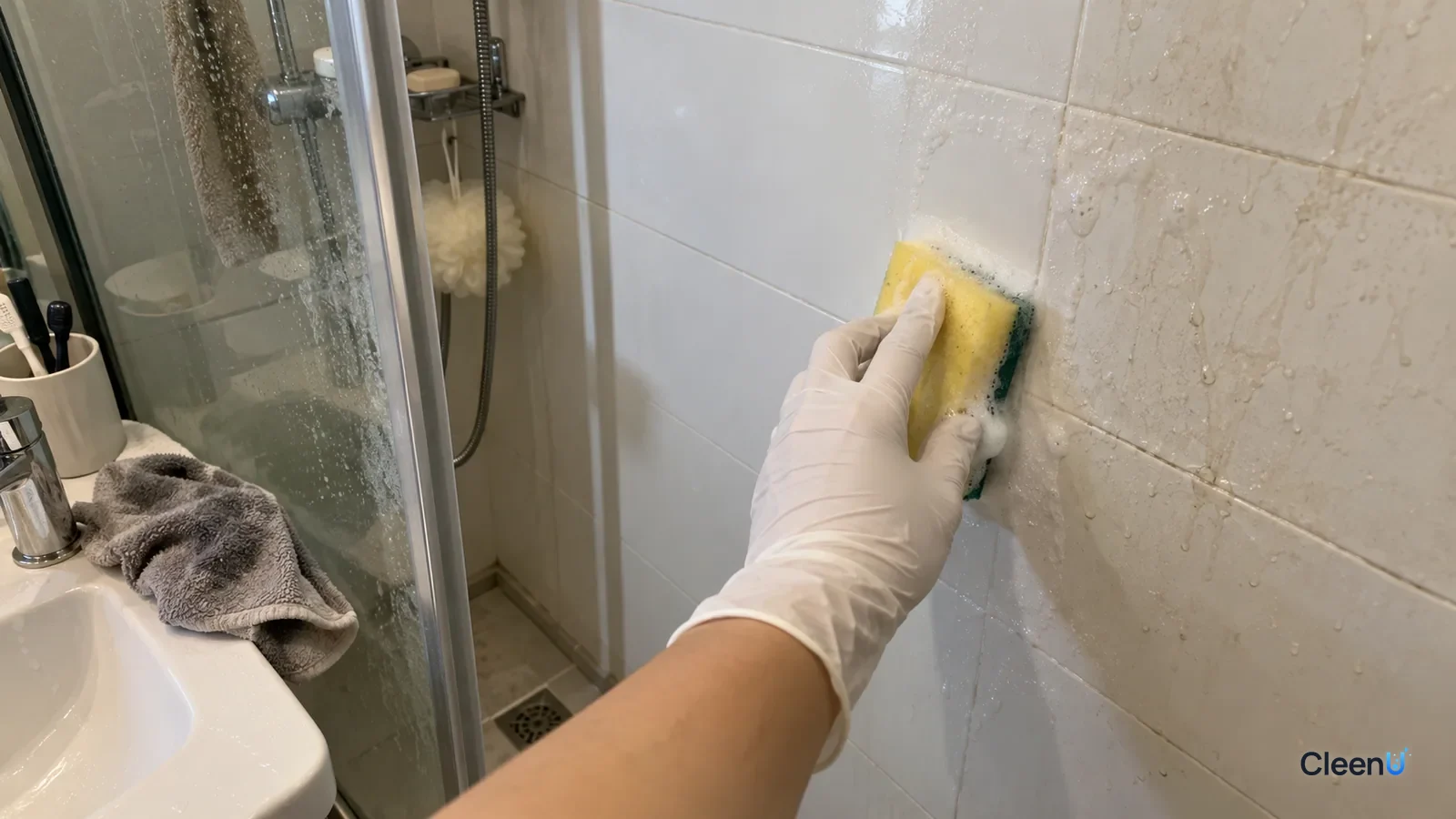
The bathroom cleaning lineup is confusing: bathroom cleaner, shower cleaner, descaler, toilet bowl cleaner, mold remover, grout cleaner. Some say "acidic," some say "neutral," and some say nothing. Use the wrong one and either the grime stays or you damage a counter or fixture.
Two questions sort it out: what kind of grime is it, and what is the surface made of?
Bathroom grime and pH
Hard-water scale: calcium and magnesium carbonate, an alkaline mineral deposit. Acid dissolves it; alkaline and neutral cleaners do almost nothing.
Soap scum: calcium soap formed when fatty-acid salts in body wash and bar soap meet calcium and magnesium in water, with skin oil mixed in. Acid breaks up the calcium and surfactants emulsify the oil, so mildly acidic bathroom cleaners work best.
Toilet urine scale: calcium, magnesium, and phosphate deposits, also an alkaline mineral that needs acid.
Skin oil, styling products, and skincare: oily, so surfactants handle them, in neutral or mildly alkaline formulas.
Mold: the fungus and its pigment need an oxidizing mold remover, usually chlorine-based. Acid and neutral cleaners do little for the color.
Greasy or organic stains in grout: alkaline oxygen cleaners work better.
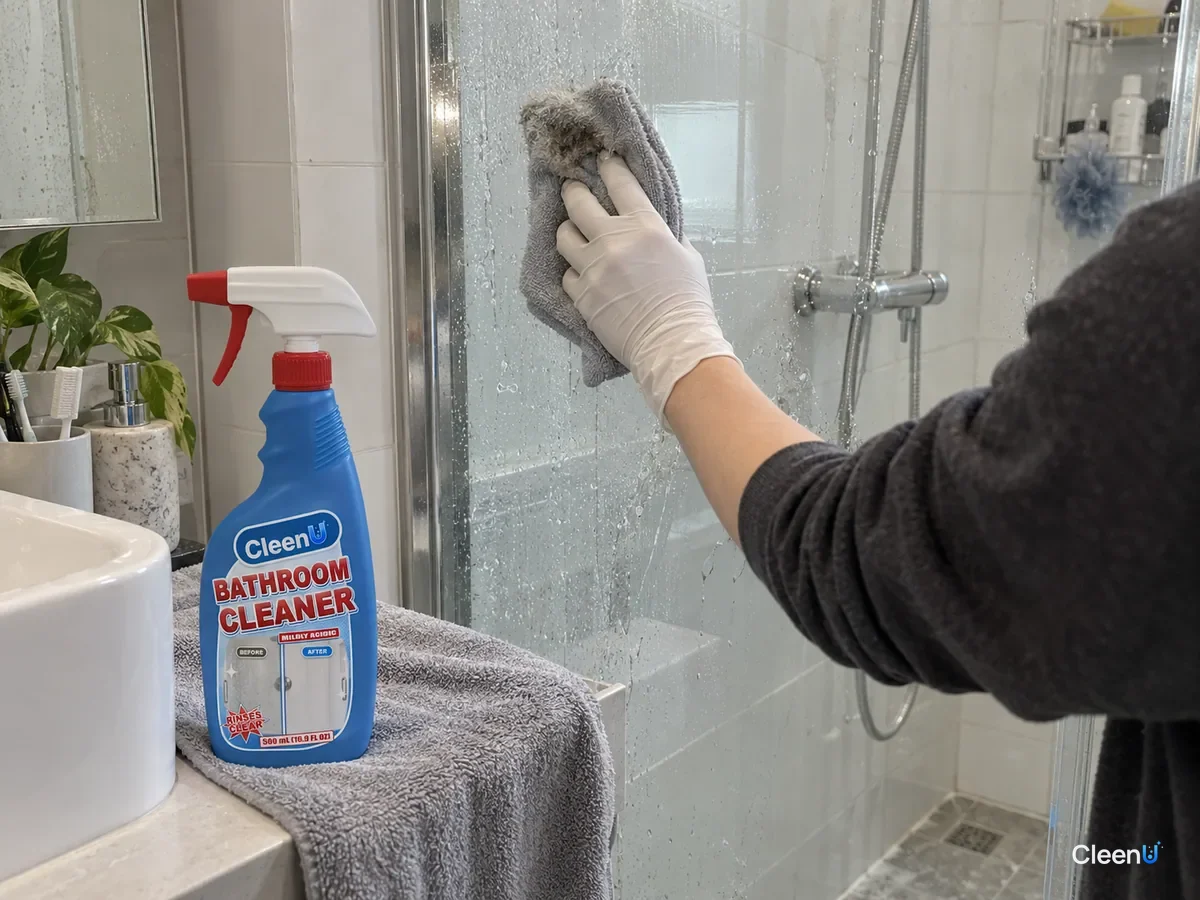
Bathroom surfaces and what they can't take
Glazed tile, porcelain fixtures, and glass: tolerate both acid and alkali, so most bathroom cleaners are fine.
Natural stone (marble, limestone, travertine, terrazzo): mostly calcium carbonate, the same family as limescale, so acid etches dull marks into it. Never use acidic products. Granite is more acid-resistant, but regular acid use still breaks down its sealer.
Chrome fixtures: generally fine with standard mildly acidic bathroom cleaners if you rinse; long soaks in strong acid can dull them.
Colored, PVD-coated, and brass fixtures: more sensitive to acid, so test first and keep contact short.
Aluminum: both acid and strong alkali corrode it.
Acrylic tubs and shower pans: avoid abrasives and strong solvents; mildly acidic or neutral non-abrasive cleaners are fine.
Side by side
Acidic, neutral, and alkaline or chlorine bathroom cleaners
| Factor | Acidic (mild to strong) | Neutral | Alkaline and chlorine |
|---|---|---|---|
| Best at | Hard water, soap scum, toilet scale | Daily wiping, fingerprints, light grime | Greasy grout and organic stains (alkaline oxygen); mold (chlorine) |
| On hard-water scale | Effective | Barely works | Barely works |
| Natural stone | Never | Choose one labeled for stone | Not recommended |
| Plated fixtures | Standard mild acid is fine if rinsed; test coated finishes | Safe | Chlorine can corrode metal |
| Watch out | Never mix with chlorine products | Won't remove heavy scale | Never mix chlorine with acid or ammonia; ventilate |
Which one for everyday cleaning?
In most bathrooms, the everyday jobs are soap scum and light scale in the shower, water spots on the sink, and grime along the tub. A single mildly acidic bathroom cleaner handles all of that.
Take CleenU Bathroom Cleaner as an example. It's a mildly acidic bathroom spray, pH 2.5 to 4.0 as supplied, made with organic acids such as citric acid and nonionic surfactants. It's ready to use: let it sit 2 to 5 minutes, then scrub and rinse. The organic acids dissolve light scale and break up the calcium in soap scum, the surfactants emulsify skin oil and the oily part of scum, and it's gentle on glazed tile, glass, and chrome. It's made for shower tile, sinks, tub edges, and glass enclosures. It isn't for marble, limestone, terrazzo, or other natural stone, must never be used with chlorine bleach, should be tested first on PVD or painted fixtures, and shouldn't sit on aluminum.
When to switch products
Thick scale or crusted faucets and showerheads: everyday mild acid is slow, so use a dedicated acidic descaler.
Toilet rings: use a clinging acidic toilet gel and lower the water level first.
Mold: use a chlorine mold remover on its own with ventilation, and never with acidic products.
Gray, greasy grout: use an alkaline oxygen grout cleaner, never at the same time as acidic or chlorine products.
Marble counters or stone floors: use a neutral cleaner labeled for natural stone.
Before you start: which grime are you looking at?
Picking the right product starts with identifying the grime. Several kinds often show up together in a bathroom, and you can usually tell them apart by touch, by sight, and with a drop of water.
Hard water scale is white or off-white and chalky when dry. It feels rough and hard, and it builds up around faucet bases, showerhead nozzles, and the bottom edge of glass doors, often in rings where water dried. Put a drop of water on it and the scale soaks it up and darkens.
Soap scum is a grayish-white film that feels slick but slightly gritty. You'll find it on shower walls below waist height, along the tub, and on glass panels, thickest where water splashes most. It's nearly invisible when wet and turns white as it dries.
Mold shows up as black, gray-green, or pink dots in caulk, grout, and corners that stay damp and get little airflow. It's not a film. It's spotty staining set into the caulk or grout, and an acidic or neutral cleaner barely changes its color.
Oily residue from skin care and hair products collects around the sink and on the vanity. It feels tacky or slick, and a neutral cleaner wipes it right off.
If a patch gets thinner or more see-through after one round of mildly acidic cleaner, it's mostly scale or soap scum, and you're on the right track. If the color doesn't budge, don't try to force it with more product and more pressure. Step back and consider whether it's mold, a stain, or damage to the surface itself.
Getting the most out of a mildly acidic cleaner
For acid to dissolve scale and break apart the calcium in soap scum, two things have to happen: the liquid has to stay in contact with the grime, and it has to stay there long enough. That's why you let it sit for 2 to 5 minutes instead of wiping right away. Keep the surface wet while it works. On vertical walls and glass, the liquid runs off quickly, so mist again after a minute or two.
Then scrub with a soft sponge or soft brush. You're just lifting off grime that has already loosened and dissolved, so you don't need much force. Small circles do the job.
Finish with a thorough water rinse. It does two things. It carries away the dissolved minerals and emulsified oils so they don't dry back onto the surface. And it keeps acid from sitting on chrome faucets, drains, and grout. Dry the glass and fixtures with a towel or squeegee afterward. Fewer drops left behind means scale comes back more slowly.
How to tell it's clean: when you rinse, water should sheet evenly across the tile and glass instead of beading up. Once dry, the surface should feel smooth, not draggy, and the faucet should look bright under the light, not hazy.
Why "stronger acid is better" is a myth
It's tempting to grab the strongest acid you can find for heavy buildup. In practice, everyday light scale and soap scum come off with a mildly acidic cleaner and enough dwell time. The stronger the acid, the more risk to the surfaces around it. Most grout is cement-based and contains calcium carbonate, too. Repeated strong acid slowly eats into it, leaving grout rough, dark, and quicker to trap grime and mold. Chrome left in strong acid can dull. A splash on a nearby marble counter leaves a dull etch mark.
The safer routine is a mildly acidic cleaner once a week so scale never gets thick, with a dedicated descaler only where heavy buildup really calls for it.
Where neutral cleaners fit
A neutral cleaner won't do much against scale that has already formed, but it still has a place in the bathroom. Use it for everyday cleaning of natural stone counters and floors, for fixtures with colored, painted, or PVD finishes, and for skin care residue on the vanity. In a bathroom with stone counters, a practical setup is two bottles: a mildly acidic cleaner for the shower, sink, and glass, and a neutral one for the stone. Store them apart and read the label before you spray.
How the choice shifts with your situation
Hard water: Scale builds faster, so you'll reach for a mildly acidic cleaner more often. Squeegeeing the glass after every shower does more to prevent scale than any cleaner.
Soft water or a water softener: There's less scale and more soap scum and oily residue. A mildly acidic cleaner still works well, but you can hand off some of the daily wiping to a neutral cleaner.
Hotels, vacation rentals, and cleaning crews: With lots of rooms and mixed materials, set a simple rule. Mild acid for showers and fixtures, neutral for stone counters, and mold handled separately. Keep each type in its own spot on the cart with color-coded labels so nobody grabs the wrong bottle. For private label or bulk orders, send an inquiry. MOQ starts at 500 bottles, samples take 3–5 days, and production is scheduled after packaging and labels are approved. Pricing follows a formal quote, and SDS and other documents are provided per project after you inquire.
The most important safety rule
Never mix acidic products (bathroom cleaner, descaler, toilet bowl cleaner) with chlorine products (bleach, chlorine mold removers), and don't use them back to back. Hypochlorite plus acid releases toxic chlorine gas. When switching product types, rinse with water and ventilate in between.
Use one product at a time, rinse, then decide whether you need another.
In a small or poorly ventilated bathroom, run the fan or open a window while you clean.
For what to clean when, see How to clean a bathroom. To tell scum from scale, see Soap scum vs. hard water stains.
Which should you use?
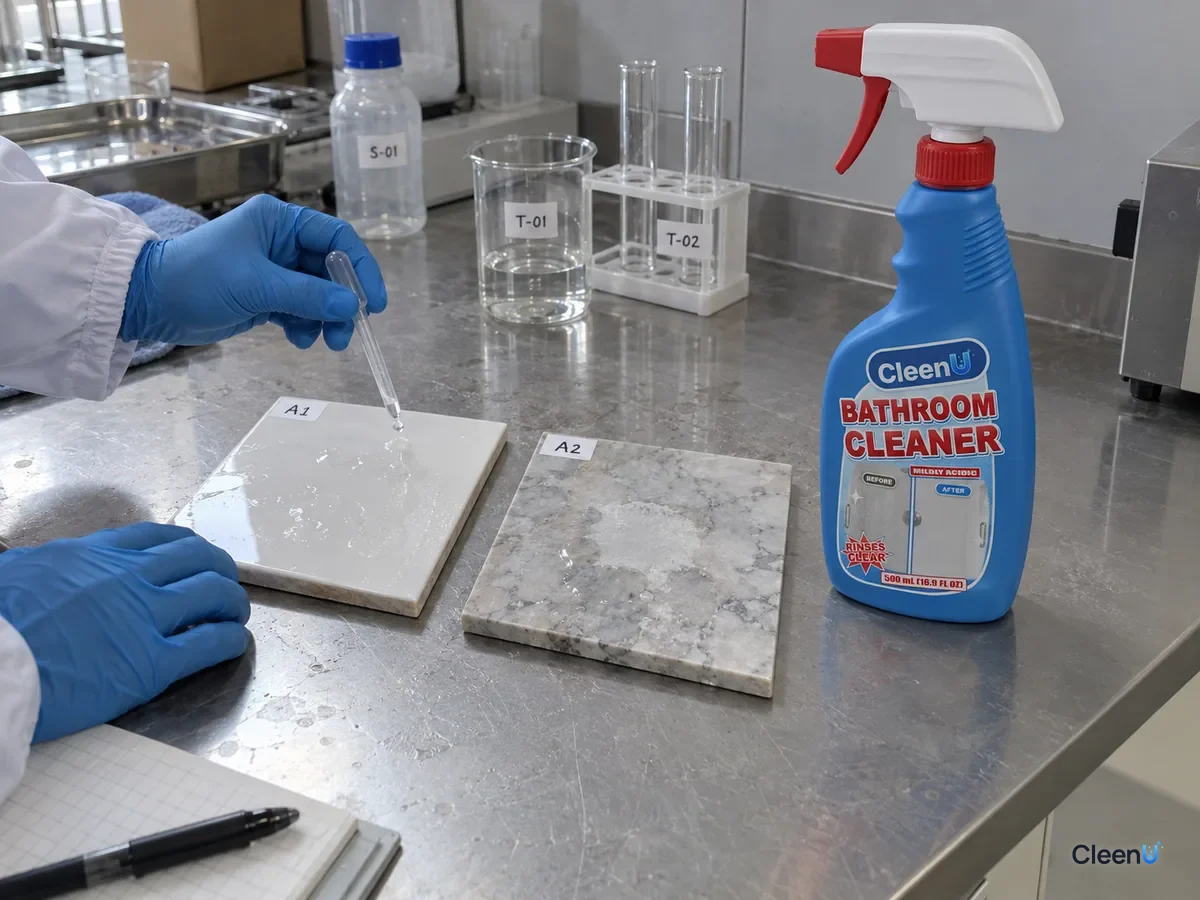
For a mildly acidic bathroom spray that is gentle on glazed tile, glass, and chrome, with pH and unsuitable materials clearly on the label, take a look at our Bathroom Cleaner.
Whether to use an acidic or neutral bathroom cleaner depends on the grime and the surface. Hard-water scale, soap scum, and toilet scale are alkaline minerals that need acid, and a mildly acidic bathroom cleaner is the easiest everyday choice. Fingerprints, light grime, and natural stone call for neutral products. Use a chlorine mold remover for mold and an alkaline oxygen cleaner for greasy grout. Never put acid on marble, limestone, or terrazzo, test coated fixtures, and keep it off aluminum. Above all, never mix or follow acidic and chlorine products; rinse and ventilate in between.