
Q&A
Why You Should Never Mix Bleach and Acidic Toilet Cleaners
Direct answer
Never mix them. When an acidic toilet bowl cleaner meets the sodium hypochlorite in bleach, it quickly releases toxic chlorine gas. Don't pour them together, and don't use one right after the other; flush and ventilate in between.
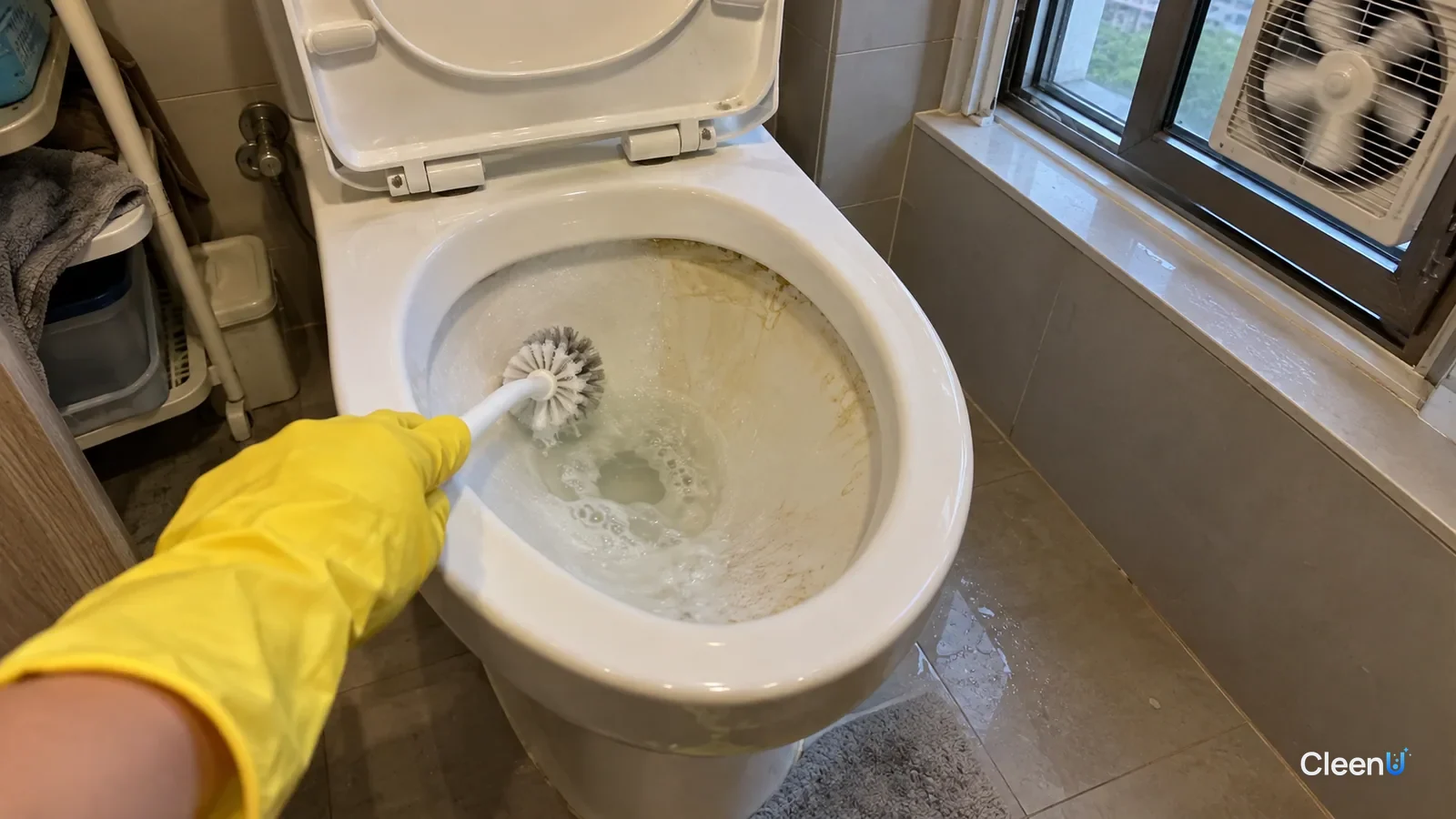
Mixing bleach and toilet cleaner: the questions people ask most
What happens if you mix bleach and toilet bowl cleaner?
It produces chlorine gas, a yellow-green toxic gas with a sharp smell. Breathing it irritates the eyes, nose, and airways, and at higher concentrations it can cause serious harm.
Can I soak the bowl with bleach, flush, and then use toilet bowl cleaner?
Only after flushing several times and ventilating. Leftover bleach in the bowl or on the brush still reacts with acid, so not waiting long enough is the same as mixing.
I want to use both. How should I do it?
Use them on different days if you can. If it has to be the same day, use one, flush at least three times, ventilate for 20 to 30 minutes, and make sure there's no smell before using the other.
I mixed them by accident and smell something sharp. What now?
Leave the bathroom right away, close the door, and open windows elsewhere in the house. Don't go back in to deal with it. If you have coughing, chest tightness, trouble breathing, or stinging eyes, get medical help.
How do I know which products are acidic and which contain chlorine?
Check the label. Toilet bowl cleaners, toilet gels, descalers, and vinegar are usually acidic. Bleach, some chlorine toilet tablets, and disinfecting tablets contain sodium hypochlorite or other chlorine compounds.
What else shouldn't be mixed with bleach?
Don't mix it with ammonia, which forms irritating chloramine vapors, and don't combine it casually with rubbing alcohol or other disinfectants. The simplest rule is: never mix cleaning products.
The toilet has a yellow ring, so you grab the toilet bowl cleaner; you're also worried about germs, so you add some bleach. Double the power, right? That habit causes avoidable accidents every year. Each product is fine on its own. The danger is the chemistry when they meet.
Why chlorine gas forms
The active ingredient in household bleach is sodium hypochlorite. It's most stable in alkaline conditions, which is why bleach itself is alkaline. Its disinfecting power comes from hypochlorous acid, which forms when it's in water.
Most toilet bowl cleaners are acidic, commonly with hydrochloric acid or other mineral acids, sometimes organic acids like citric acid. When hypochlorite meets acid, the pH drops fast, and hypochlorous acid reacts with chloride ions under acidic conditions to form chlorine gas, which bubbles out of the liquid. If the acid already contains chloride, as hydrochloric acid does, the reaction is even more direct and faster.
No heat is needed. It happens almost the moment they meet. Toilets, tubs, and drains are all low, bathrooms are small and often poorly ventilated, and chlorine is heavier than air, so it pools near the floor. When you bend over to scrub the toilet, your face is right where the gas is most concentrated.
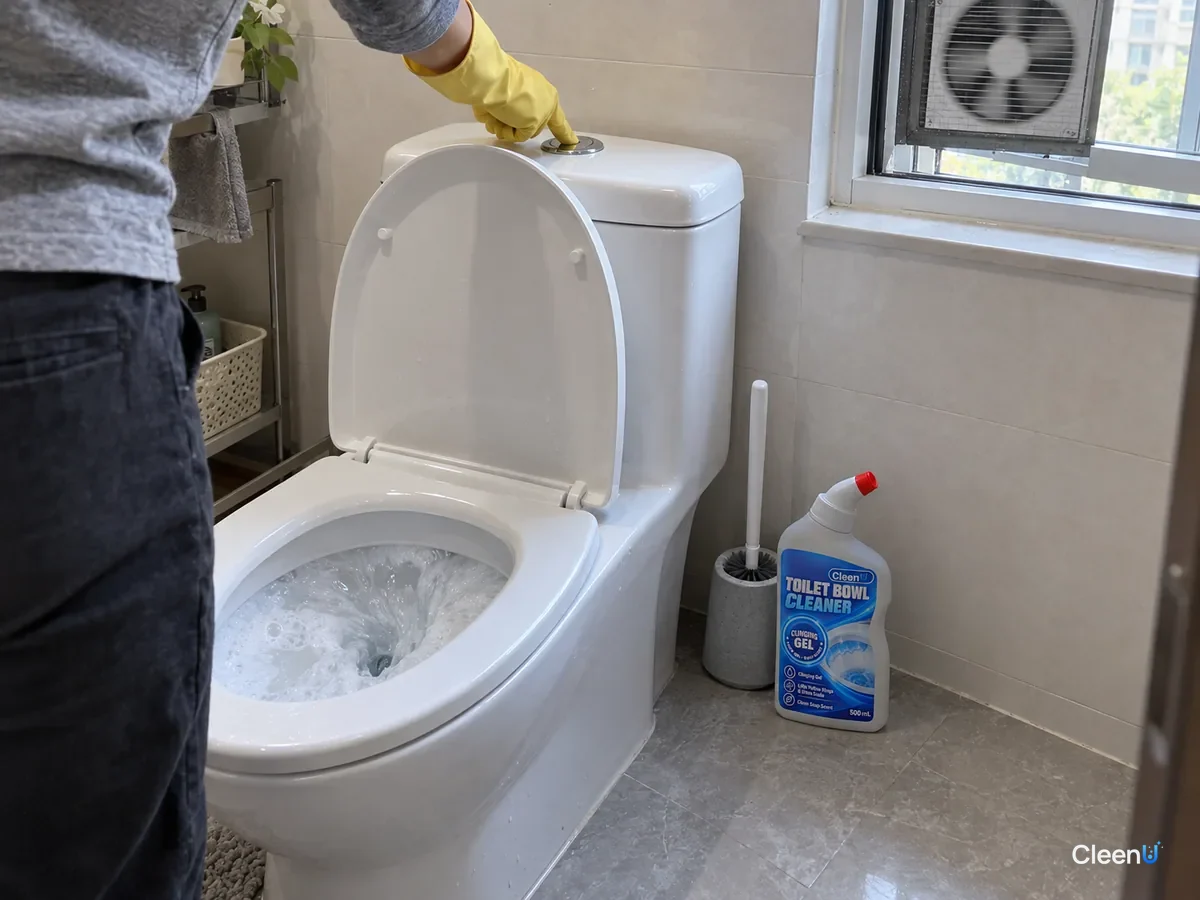
What chlorine gas does to you
Chlorine has a strong, sharp smell. On contact, it reacts with moisture on the eyes, nose, throat, and lungs and forms acids that irritate and damage those tissues. At low levels you get watery eyes, coughing, a burning throat, and chest tightness. At higher levels or longer exposure, it can cause trouble breathing that needs medical care. Older adults, children, pregnant people, and anyone with asthma or other lung conditions are more sensitive.
Pets are closer to the floor and can be affected more easily, too.
It's not only about pouring them together
Many accidents don't come from deliberate mixing. They come from using products back to back without enough time in between.
Pouring bleach into the bowl to soak, then squeezing in toilet bowl cleaner a few minutes later for the ring.
Using chlorine tank tablets, so the bowl always has chlorinated water, and then scrubbing with an acidic cleaner.
Dipping a brush that was just used with bleach straight into toilet bowl cleaner.
Disinfecting the bathroom floor with bleach, then wiping the drain and faucet with an acidic descaler.
Any time the two meet in the same space or container, they react. "Don't mix" means not at the same time, not back to back, and separate or thoroughly rinsed tools.
How our toilet bowl cleaner is designed
Take CleenU Toilet Bowl Cleaner as an example. It's an acidic clinging gel, pH 1.0 to 2.5 as supplied, made with mineral and organic acids, a thickener, and surfactants, with no chlorine. It dissolves urine scale and limescale at the waterline; you run a bead around the rim, let it sit about 10 minutes, then scrub and flush.
Because it's acidic, the label clearly lists "not for use with chlorine bleach." The same warning applies to other acidic toilet bowl cleaners. Removing a toilet ring doesn't need a disinfectant's help anyway. The ring is mineral scale, and acid is what removes it. For everyday cleaning, getting the grime out matters more than adding a disinfectant.
When you actually need bleach
Bleach is a disinfectant, not a cleaner. When someone at home has been vomiting or has diarrhea, or there's an illness and you want to disinfect the bathroom, bleach makes sense. Here's how.
Clean the toilet and floor with a cleaner and water first, then flush. Organic soil uses up bleach's active ingredient.
Dilute bleach according to the label, use it on its own, and leave it for the stated contact time.
Rinse or wipe with water and open the windows.
Don't use an acidic cleaner for the rest of the day. If you must, flush at least three times and ventilate for 20 to 30 minutes first.
If you mix them by accident
The moment you smell something sharp or see bubbling in the bowl, stop. Hold your breath, leave the bathroom, and close the door behind you so the gas doesn't spread.
Open windows in the rest of the house. Don't go back in to flush or clean up until the smell is gone.
If your eyes sting, rinse them with plenty of water. If coughing, chest tightness, or trouble breathing continues, get medical help and tell them you were exposed to bleach and an acidic cleaner. In the U.S., you can also call Poison Control at 1-800-222-1222.
Once the smell is completely gone, go back, flush several times, and rinse the brush thoroughly while wearing gloves.
Using cleaners safely in the bathroom
Use one cleaner at a time, flush, and then decide whether you need another.
Read the label for the type: acidic, alkaline, or chlorine-based. Store acidic and chlorine products in different places so you don't grab the wrong one.
Open a window or run the fan while you clean, and don't work for long in a small closed room.
Never pour cleaners into other bottles or make your own blends.
Keep toilet brushes and sponges separate by job, and rinse any brush used with bleach before using it again.
For what to use where in the bathroom, see How to clean a bathroom.
What that yellow ring actually is, and why acid alone handles it
A lot of people reach for bleach because they read a yellow toilet as "germy." The brown-yellow band at the waterline is mostly mineral. Calcium, magnesium and phosphate from urine, plus calcium carbonate from hard tap water, drop out of solution every time the waterline wets and dries. They pick up urine pigment and a little organic residue along the way and build into a hard crust, often called urine scale. Once the glaze under it is slightly rough, the next layer grabs on even faster.
That crust does not dissolve in plain water, and bleach does not dissolve it either. Sodium hypochlorite can fade some of the color, so the bowl looks a little lighter, but the calcium salts stay put and the stain comes back within days. What actually loosens the crust is acid. Acid reacts with carbonate and phosphate deposits and turns insoluble calcium salts into soluble ones, which the brush then scrubs loose and the flush carries away. In a clinging gel, the thickener keeps the acid on the bowl wall instead of sliding into the water and getting diluted. That is why the directions say to apply a ring and wait about 10 minutes.
A one-product routine, start to finish
Flush first so the bowl is wet and loose grime rinses off. If the ring sits under water, push the water down with the brush a few times to expose it.
Squeeze the gel in a ring under the rim, aiming at the area below the rim jets and along the waterline. Wait about 10 minutes, and don't add any other product to the bowl during that time.
Scrub along the waterline and under the rim, flicking upward with the side of the brush head below the jets. Flush and check: if the ring is clearly lighter and no longer feels gritty, you're done. If a hard edge is still there, the deposit is thick. Treat it again the next day rather than "boosting" it with a second product on the spot.
To finish, swish the brush in the flushing water, shake it out and put it back in a dry holder. Don't leave water or bleach sitting in the holder. That way there's nothing left over to meet the acid next time.
Common mistakes and why they're risky
"More is stronger, so I'll use extra." Doubling the acid only leaves more residue in the bowl, and the reaction is worse if a chlorine product shows up later.
"Hot water works better." Hot water drives any gas out of the bowl faster and makes the fumes more noticeable. Room-temperature water is fine.
"A tank tablet is a solid, so it doesn't count." Chlorine tank tablets keep releasing chlorine into every flush. If you use one, skip acidic bowl cleaners. If you want to use an acidic gel, take the tablet out and flush several times first.
"I'm only using vinegar, it's natural." Vinegar is still an acid. It releases chlorine gas from bleach just like any other acid. Natural doesn't change the chemistry.
How hotels, property managers and cleaning crews prevent mix-ups
When several people share one cart, accidents usually come from grabbing the wrong bottle or sharing tools. Keep acidic and chlorine products on different shelves of the cart and use different-colored labels on them. Assign separate brushes to each product, or require crews to rinse the brush in a running flush before switching. Note in the shift handover whether a bathroom got a chlorine treatment that day. Buyers can also put "never mix with chlorine products" on the job card, where crews actually see it, not just on the back of the bottle. Private-label brands can move that warning to the front label.
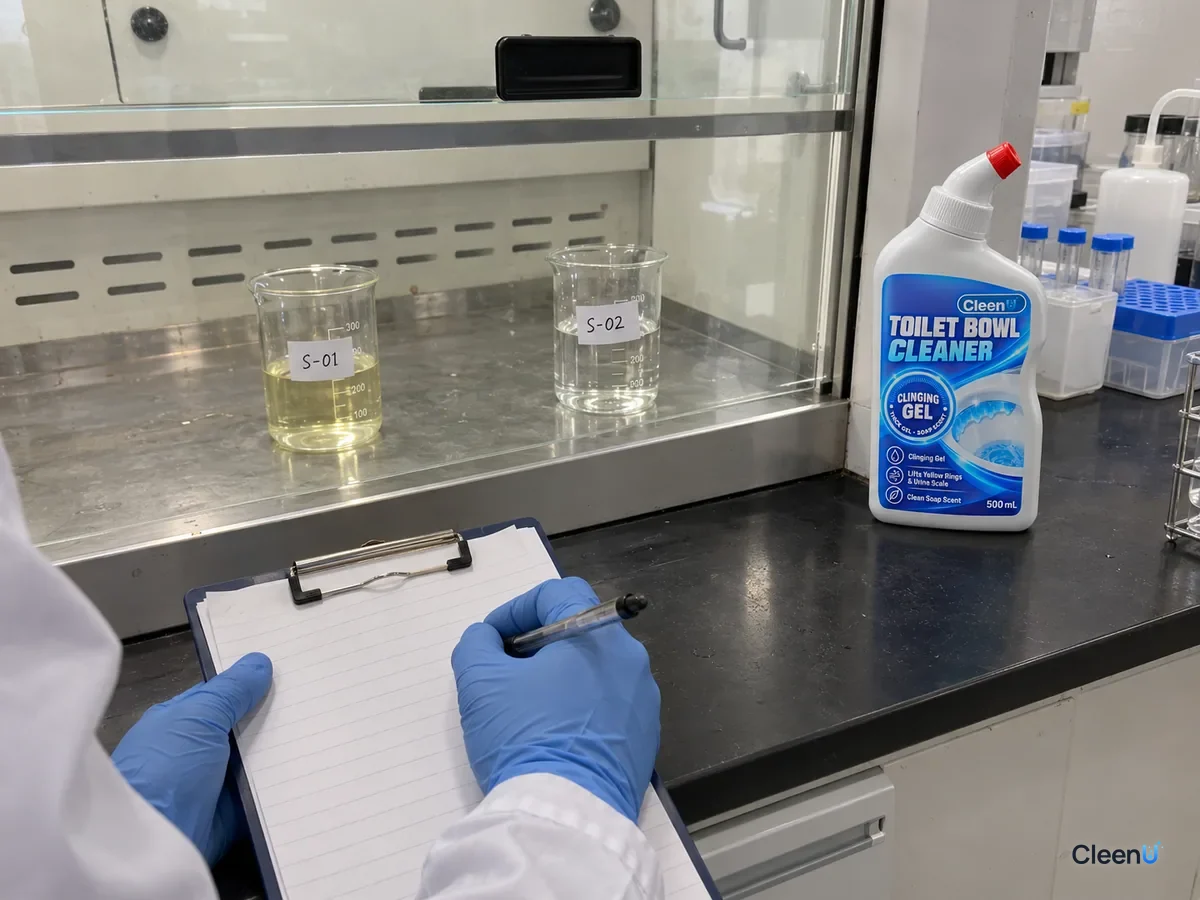
For a chlorine-free acidic gel that dissolves urine scale and limescale at the waterline on its own, take a look at our Toilet Bowl Cleaner.
Never mix bleach with acidic toilet bowl cleaners. The sodium hypochlorite in bleach reacts with acid and immediately releases toxic chlorine gas, which is especially dangerous in a small, poorly ventilated bathroom. Don't use them together or back to back; flush and ventilate between products, and keep tools separate or rinsed. Removing a toilet ring takes acid, not bleach. When you do need to disinfect, clean first, use bleach on its own, then rinse and ventilate. If they mix by accident, leave, close the door, open windows, and get medical help if you feel unwell.