
Comparison
Toilet Bowl Cleaner Gel vs Tablets vs Spray: What’s the Difference?
Direct answer
Removing scale and rings takes an acidic toilet bowl cleaner that clings and sits, like a liquid toilet bowl cleaner or gel. Tank tablets and rim blocks mostly provide light maintenance and fragrance with each flush and do little for rings that have already formed. Never use chlorine tablets together with acidic cleaners.
Who should choose what
-
Your toilet already has a visible ring or scale
Choose An acidic toilet gel: lower the water, run a bead along the ring, let it sit, and scrub
Only acid dissolves urine scale and limescale; tank tablets do almost nothing to existing deposits.
-
The ring is gone and you want to keep it that way
Choose A bead of toilet gel around the rim and a scrub once a week
Removing new deposits before they harden is far easier than tackling a thick ring.
-
You have hard water and scale builds fast
Choose Gel cleaning once or twice a week, with a chlorine-free tank tablet for maintenance if you like
Tablets only slow buildup; regular acidic cleaning is the key. Never use chlorine and acidic products together.
-
You mainly care about odor
Choose Clean the bowl and under the rim first, then add a rim block if you want
Most odor comes from grime and biofilm; freshener on top of dirt just makes a worse smell.
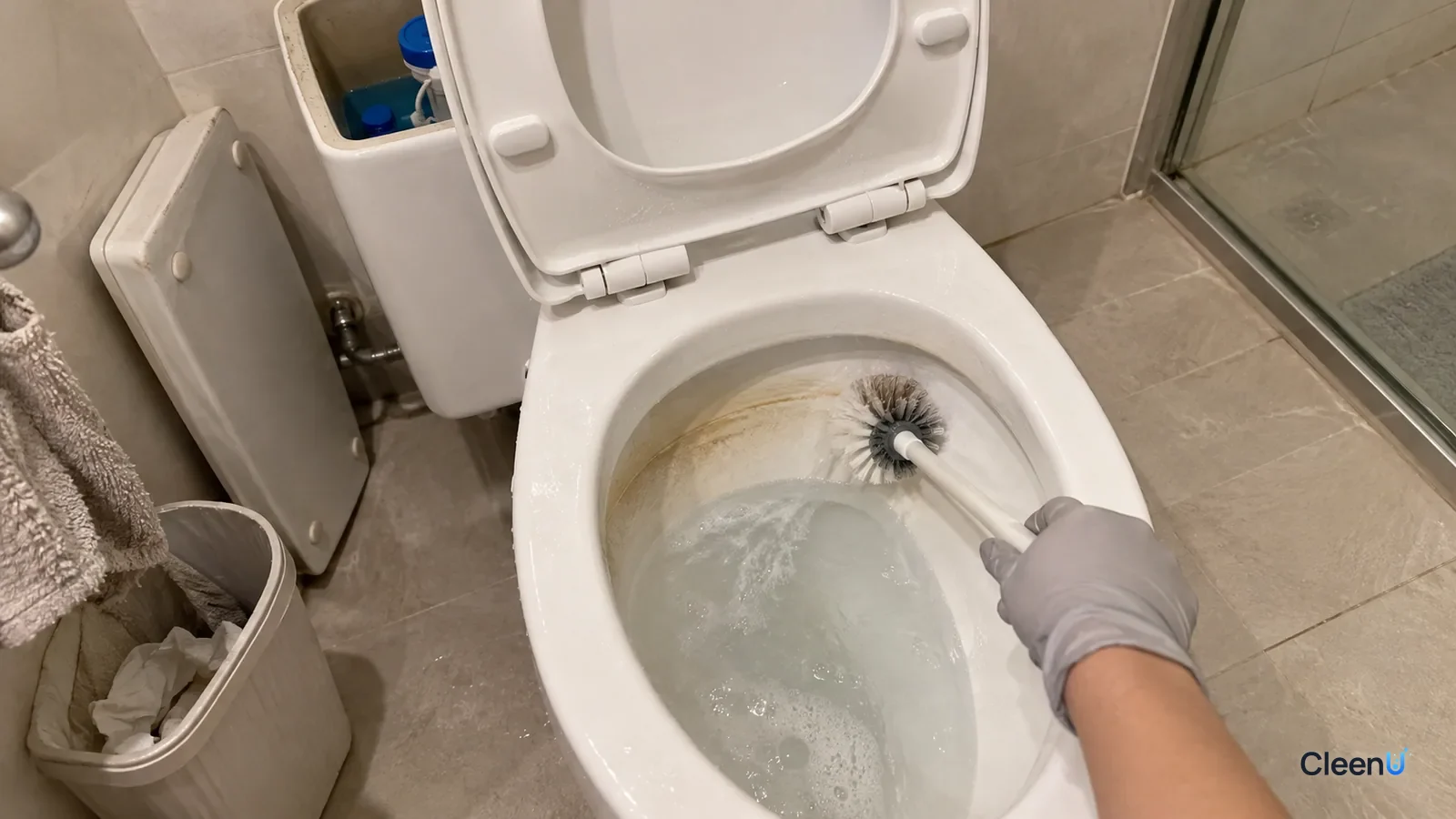
The toilet cleaning aisle has liquid toilet bowl cleaner, squeeze-bottle gel, sprays, blue tank tablets, rim blocks, disposable scrub heads, and more. The names blur together, but they do very different jobs. Buy the wrong one and either the ring stays, you waste money, or, worse, you mix products that release a harmful gas.
What you're actually cleaning in a toilet
Toilet grime falls into three groups.
Urine scale and hard-water scale. Calcium, magnesium, and phosphate from urine, plus calcium carbonate from tap water, build up in layers at the waterline and around the flush holes under the rim, forming hard yellow-brown deposits. This is the hardest part and it takes acid to dissolve.
Organic stains and biofilm. Leftover waste and organics from urine form an invisible film on the bowl that's one source of odor. Surfactants plus scrubbing remove it.
Odor. It comes from ammonia released as urea breaks down, bacterial byproducts, and sometimes a drain or a poorly sealed toilet base.
Different products target different problems.
Side by side
Toilet cleaning products compared
| Factor | Acidic toilet bowl cleaner (liquid or gel) | Tank tablets | Rim blocks and fresheners |
|---|---|---|---|
| Main job | Dissolves urine scale and limescale; removes rings | Releases a little cleaner with each flush for maintenance | Releases fragrance and a little cleaner when flushed |
| On rings and heavy scale | Effective with lowered water, dwell time, and scrubbing | Limited | Limited |
| On odor | Odor drops once scale and stains are gone | Some help | Mostly masks it |
| How it's used | Weekly bead around the rim or pour-in, wait, scrub | Dropped in the tank; lasts weeks | Clipped to the rim |
| Watch out for | Never mix with chlorine products | Some contain chlorine or strong oxidizers that can wear tank parts; don't use with acidic cleaners | Doesn't replace scrubbing |
Acidic toilet bowl cleaner: the ring remover
Liquid toilet bowl cleaners and toilet gels are mainly acid (mineral, organic, or both) plus surfactants. The acid dissolves the calcium salts in urine scale and limescale; the surfactants wet the bowl and carry off organic stains.
Liquids flow easily, so they slide into the water and get diluted quickly, which leaves little contact time above the waterline. Gels add thickener so they cling to the bowl and under the rim, staying in place longer and working in a more concentrated way.
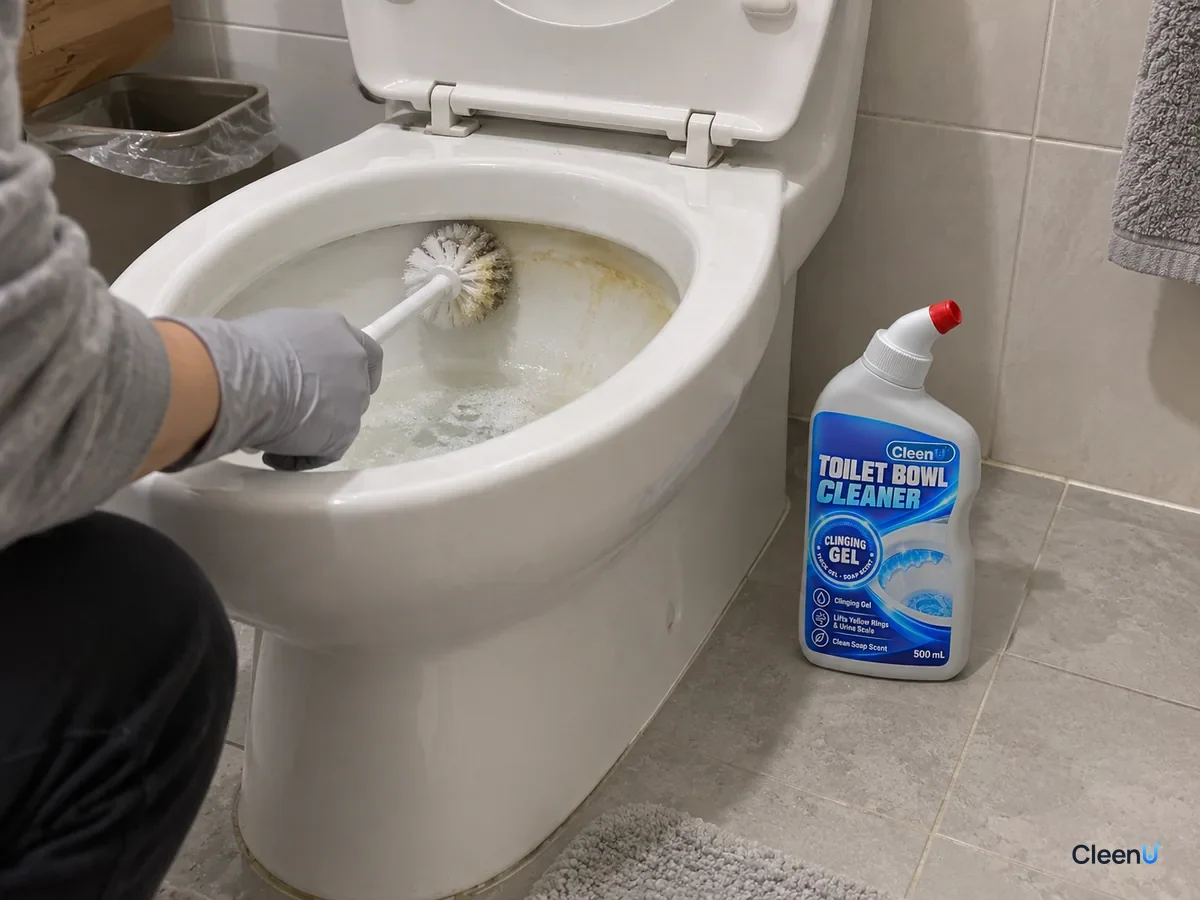
Take CleenU Toilet Bowl Cleaner as an example. It's an acidic clinging toilet gel, pH 1.0 to 2.5 as supplied, made with mineral and organic acids, a thickener, and surfactants, with no chlorine, in an angled-neck squeeze bottle. You run a bead around the rim, wait about 10 minutes, scrub, and flush. For a thick ring, lowering the water level first so the ring is exposed makes a big difference; see the toilet section of How to clean a bathroom. It must never be mixed with chlorine bleach and isn't for toilet seats, metal hardware, natural stone floors or counters, or coated and colored glazes on tubs and sinks.
Tank tablets: maintenance only
Tablets dropped in the tank slowly dissolve, so each flush sends water with surfactants, dye (that's where the blue comes from), and fragrance into the bowl, giving it a light clean and slowing down new stains.
Their limits are just as clear. Each flush releases very little active ingredient, and it only touches the bowl for the few seconds the water is running, so they do almost nothing to hard deposits that are already there. If you're hoping a tablet will remove a ring, you'll be disappointed.
A few more cautions. Some tank tablets contain chlorine or other strong oxidizers, and sitting in the tank for months they can speed up aging of rubber seals and plastic parts, which leads to leaks. Some toilet makers specifically advise against tank tablets, so check the manual. And a chlorine tank tablet combined with an acidic bowl cleaner creates harmful chlorine gas in the bowl.
There's also a timing problem. A tablet releases its ingredients only during the few seconds water rushes through the bowl, and then the bowl refills with plain water. Scale builds steadily between flushes, especially in hard-water areas, so a tablet can slow how fast a new ring forms but can't reverse one that's already there. If the ring keeps coming back within a week or two even with a tablet in the tank, that's a sign you need a regular acidic cleaning on a schedule, not a stronger tablet.
Rim blocks: mostly fragrance
A rim block or clip-on freshener releases fragrance and a little surfactant when water flows over it. It makes the bathroom smell nicer, but it mostly masks odor, has limited cleaning power, and can't replace scrubbing.
Liquid vs. gel: same acid, different contact time
Liquid bowl cleaners and toilet bowl gels remove scale the same way. The acid dissolves the calcium, magnesium, and phosphate salts in urine scale and hard-water deposits, turning them into soluble salts that flush away. What separates them is how long the acid actually stays on the deposit.
The two worst spots on most toilets are the waterline and the area under the rim around the flush holes. The waterline ring sits half underwater, so a thin liquid gets diluted by the water in the bowl almost immediately. Under the rim, the surface faces downward, and a thin liquid runs off it in seconds. That's why so many people pour in half a bottle and the ring only fades a little.
A gel is thickened, so it creeps slowly down the bowl and hangs on under the rim and above the waterline for several minutes. More contact time means more of the scale dissolves, and you usually use less product to get there.
The takeaway is that a stronger product isn't automatically a better one. What matters is whether the acid stays on the scale long enough, followed by a brush to knock off the softened layer.
Removing a heavy ring: lower the water, wait, scrub
A ring that has built up for months rarely comes off with one bead of gel. This sequence works better.
Lower the water first. Turn off the supply valve behind the toilet and flush once so the tank doesn't refill. Then plunge the toilet brush up and down a few times to push water into the trap. The ring below the normal waterline is now exposed.
Apply the gel. Run one bead under the rim and a second bead directly on the ring so the whole stained band is covered. Wait about 10 minutes and don't flush.
Scrub. Work the brush back and forth along the ring, and use the angled tip to reach the flush holes under the rim. Before flushing, check whether the ring looks lighter and feels softer or rougher than before.
Flush. Turn the valve back on and flush twice to clear the dissolved scale and leftover acid.
If the ring is only lighter, repeat with another bead and another wait. Two or three short rounds are typically easier to control than one long soak.
How to tell it's done, and when to stop
Run a gloved finger over where the ring was. Smooth glaze with no grit or ledge means the scale is gone. If color remains but the surface feels smooth, you're probably looking at staining in the glaze itself or pigment held in worn glaze. Acid won't remove that, so more product won't help.
If the glaze looks dull, gray, or rough in patches, it's already aged or been scoured. Skip the steel wool and abrasive powder. They make the surface rougher, and rough glaze picks up new scale faster.
What to look for when you buy
Match the product to the problem. For an existing ring and hard-water scale, choose an acidic gel that clings. If you only want a fresher smell when you flush, a rim block is fine, just don't expect it to remove scale.
Check the bottle. An angled neck lets you get gel under the rim, which a straight spout can't do well.
Check the label. If you also use bleach products at home, keep them separated from acidic cleaners and favor a chlorine-free bowl cleaner. A toilet bowl cleaner is a cleaning product, not a disinfectant, and shouldn't be bought or used as one.
Which combination makes sense
Safety: never mix acidic and chlorine products
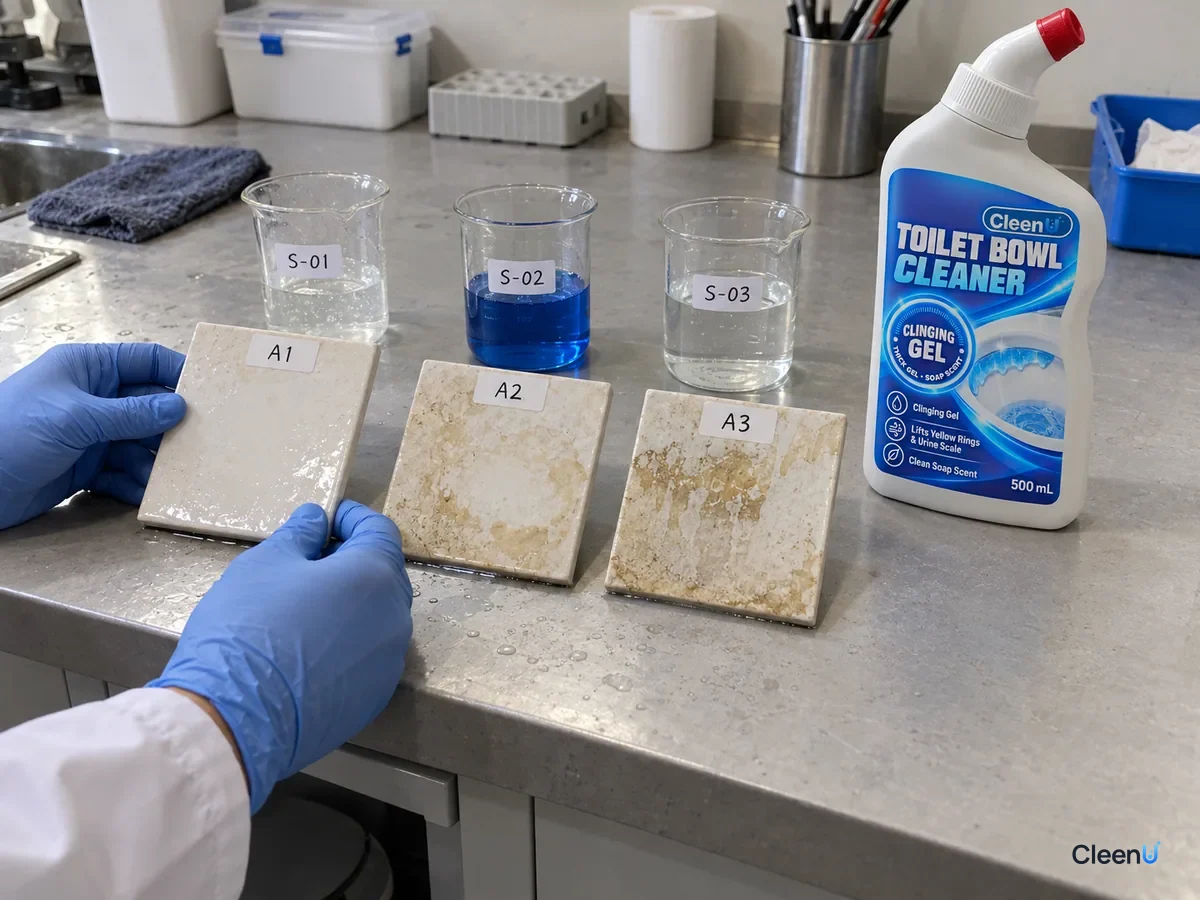
It's worth repeating: never mix acidic toilet bowl cleaners or gels with bleach, chlorine tank tablets, or chlorine cleaning tablets, and don't use them back to back. Hypochlorite plus acid releases toxic chlorine gas, which is especially dangerous in a small, poorly ventilated bathroom.
If you have a chlorine tablet in the tank, take it out, flush several times, and ventilate before using an acidic toilet bowl cleaner.
For a chlorine-free acidic toilet gel that clings to the bowl and under the rim and loosens urine scale and limescale in about 10 minutes, take a look at our Toilet Bowl Cleaner.
Toilet products each do one job. Liquid toilet bowl cleaners and gels are acidic and dissolve urine scale and limescale to remove rings; gels cling and stay put, so they work in a more concentrated way. Tank tablets provide light maintenance with each flush, do little for existing deposits, and some can wear tank parts. Rim blocks are mostly fragrance. If there's already a ring, lower the water, apply an acidic gel, let it sit, and scrub, then clean weekly to keep it away. Above all, never combine acidic products with chlorine products; remove chlorine tank tablets, flush, and ventilate first.