
How-to
How to Clean a Slippery Bathroom Floor
Direct answer
A slippery bathroom floor is usually soap scum, body oil, and bacterial biofilm. Spray a bathroom floor cleaner, wait 3 to 5 minutes, scrub with a floor brush, rinse, and squeegee the floor dry. Odor usually comes from hair and slime in the drain or a dried-out drain trap, so clean the drain regularly.
The bathroom floor feels slick underfoot, and you hold the wall to get through the shower. The texture on the non-slip tile has gone dark, there's a gray-yellow ring around the drain, and with the door closed you notice a sewer or musty smell. With kids or older adults at home, a slippery bathroom floor is a real safety risk.
The two problems usually go together: what makes the floor slippery also makes the bathroom smell.
Why bathroom floors get slippery
Soap scum: fatty-acid salts in body wash, shampoo, and bar soap combine with calcium and magnesium in water to form insoluble calcium soap. On tile it feels gritty when dry and slick when wet.
Body oil, conditioner, and lotion: oily residue rinsed off in the shower lands on the floor and forms a slippery film.
Biofilm: a constantly damp floor lets bacteria and mold feed on soap scum and body oil and grow on the tile and in the grout. They produce a slimy layer, that slick feeling underfoot, which builds up most in the texture of non-slip tile and around the drain, and looks gray or dark.
Scale: in hard-water areas, minerals left as water evaporates mix with soap scum and make the floor look white and blotchy.
Bit by bit, all of this fills in the texture of non-slip tile, and it grips less and less.
Where bathroom odor comes from
Hair and slime in the drain: hair, soap scum, and skin flakes tangle into a clump, and bacteria break down the organics inside, giving off sulfur smells.
A dry drain trap: the trap below the drain holds water that blocks sewer gas. In a rarely used shower or after you've been away, the water evaporates and sewer gas comes right up.
Biofilm and mold: floors and corners that stay damp have a musty smell.
How a bathroom floor cleaner works
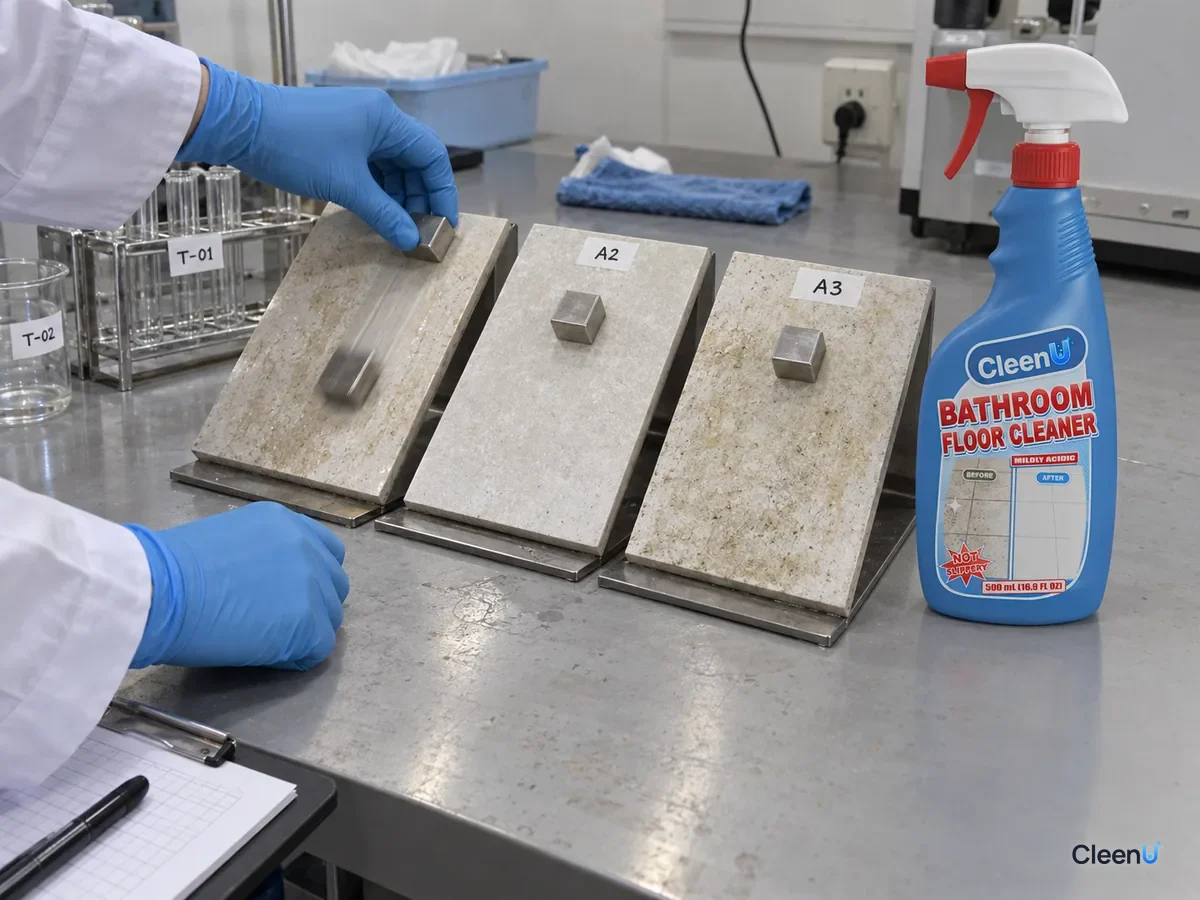
Take CleenU Bathroom Floor Cleaner as an example. It's a mildly acidic bathroom floor cleaner, pH 3.5 to 5.0 as supplied, made with organic acids and low-foam surfactants. Use it straight, or dilute 1:5 for larger areas; let it sit 3 to 5 minutes, then scrub and rinse. The organic acids break up the calcium in soap scum and dissolve light scale; the low-foam surfactants emulsify body oil and loosen biofilm, and low foam means it rinses clean without leaving a slick layer of suds behind.
It's made for ceramic bathroom floors, non-slip tile, and vinyl bath mats, for soap scum, dark grime, and water spots. It isn't for marble, terrazzo, limestone, or other natural stone, or for hardwood and laminate, and it must never be used with chlorine bleach.
Six steps to clean a bathroom floor
From the drain to a dry floor in six steps
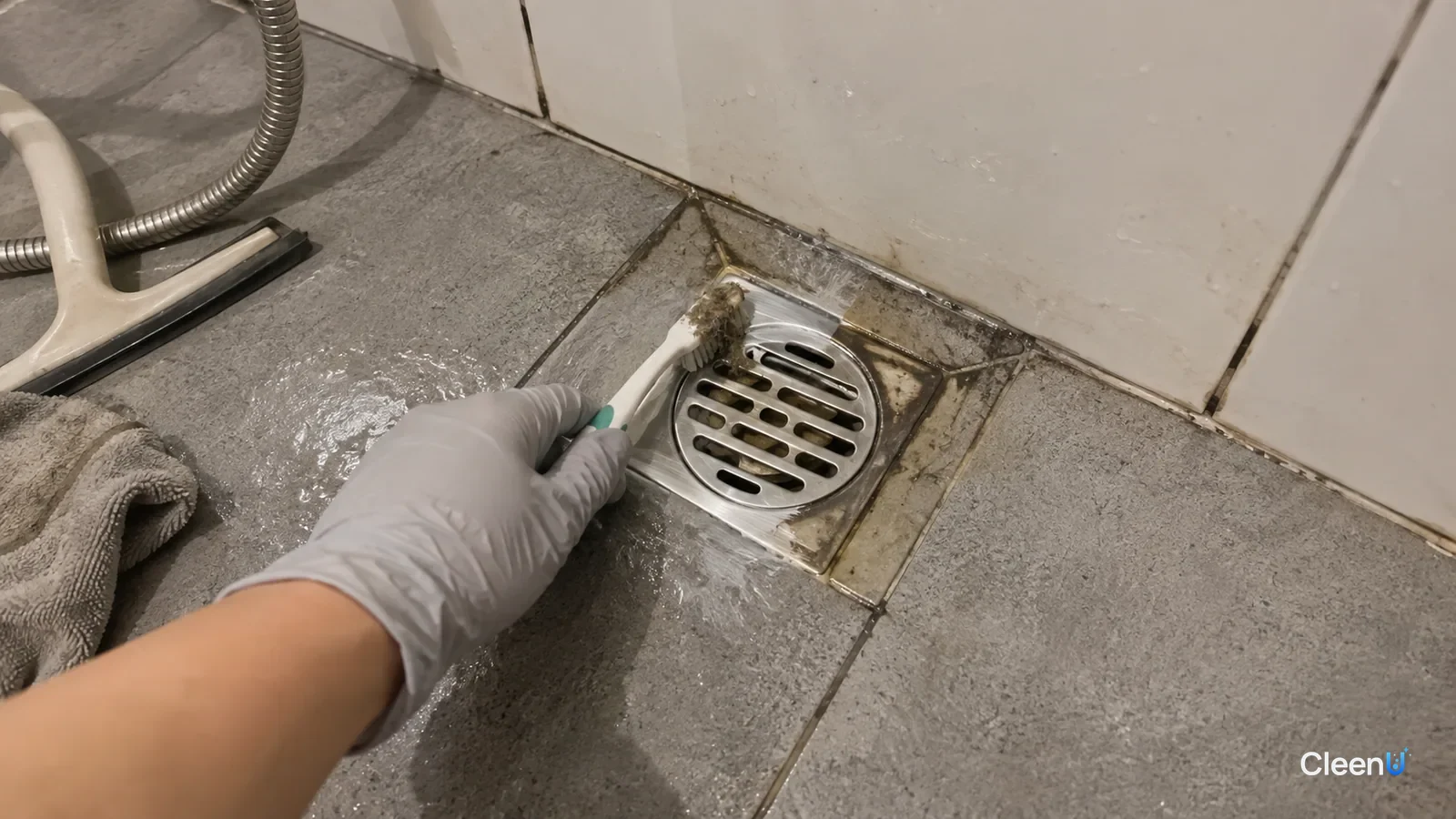
Clean out the drain first
Put on disposable gloves, lift the drain cover, and pull out the hair and slime. Scrub the cover and any odor-trap insert with an old toothbrush, rinse, and put them back.
Caution:Don't rinse hair down the drain; it causes clogs.
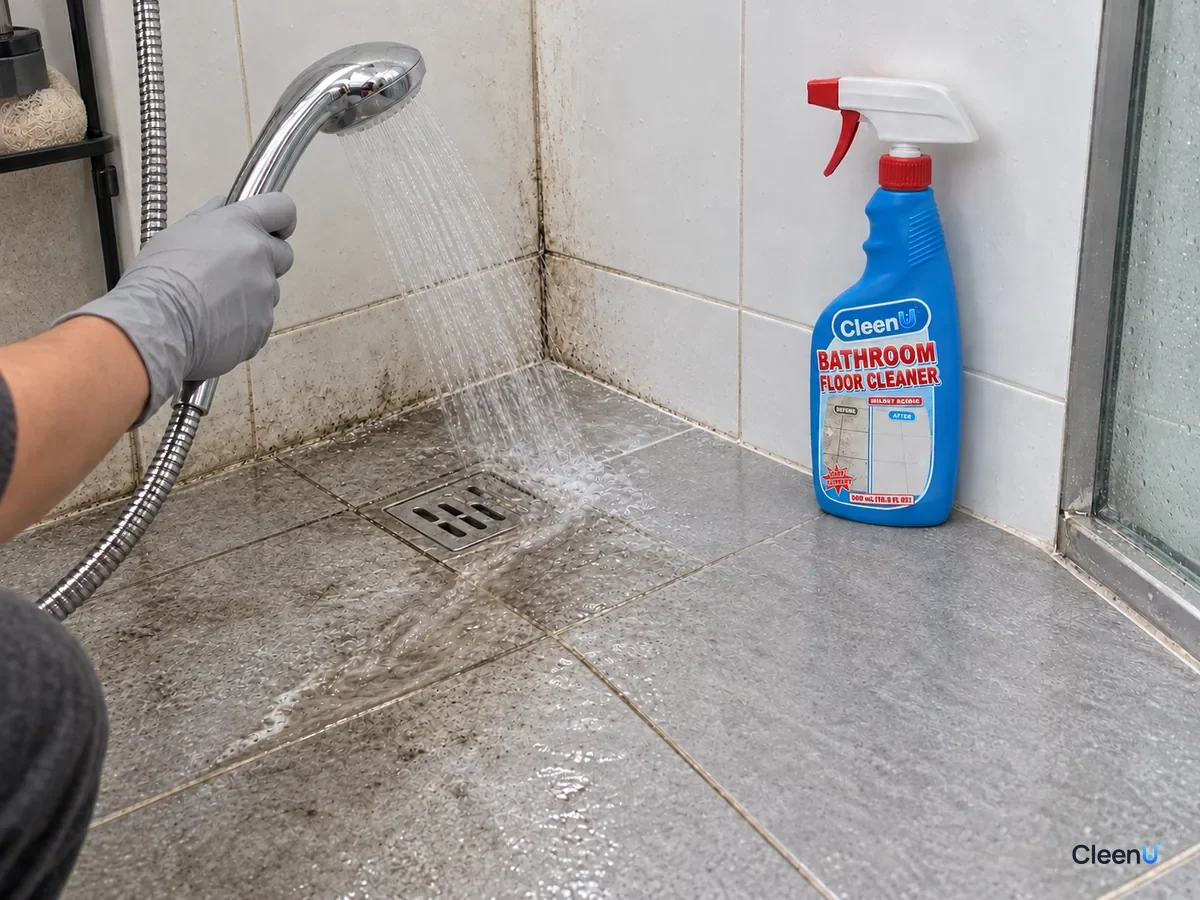
Rinse the floor
Wet the whole floor with the handheld shower to wash away loose hair and dust.
Spray cleaner and wait 3 to 5 minutes
Spray bathroom floor cleaner evenly across the floor, focusing on the shower area, around the drain and toilet, and the corners. For large areas, dilute 1:5 and spread it. Let it sit 3 to 5 minutes to soften soap scum and biofilm.
Caution:Don't use it on natural stone floors. Make sure no chlorine product is in use in the bathroom before you spray.
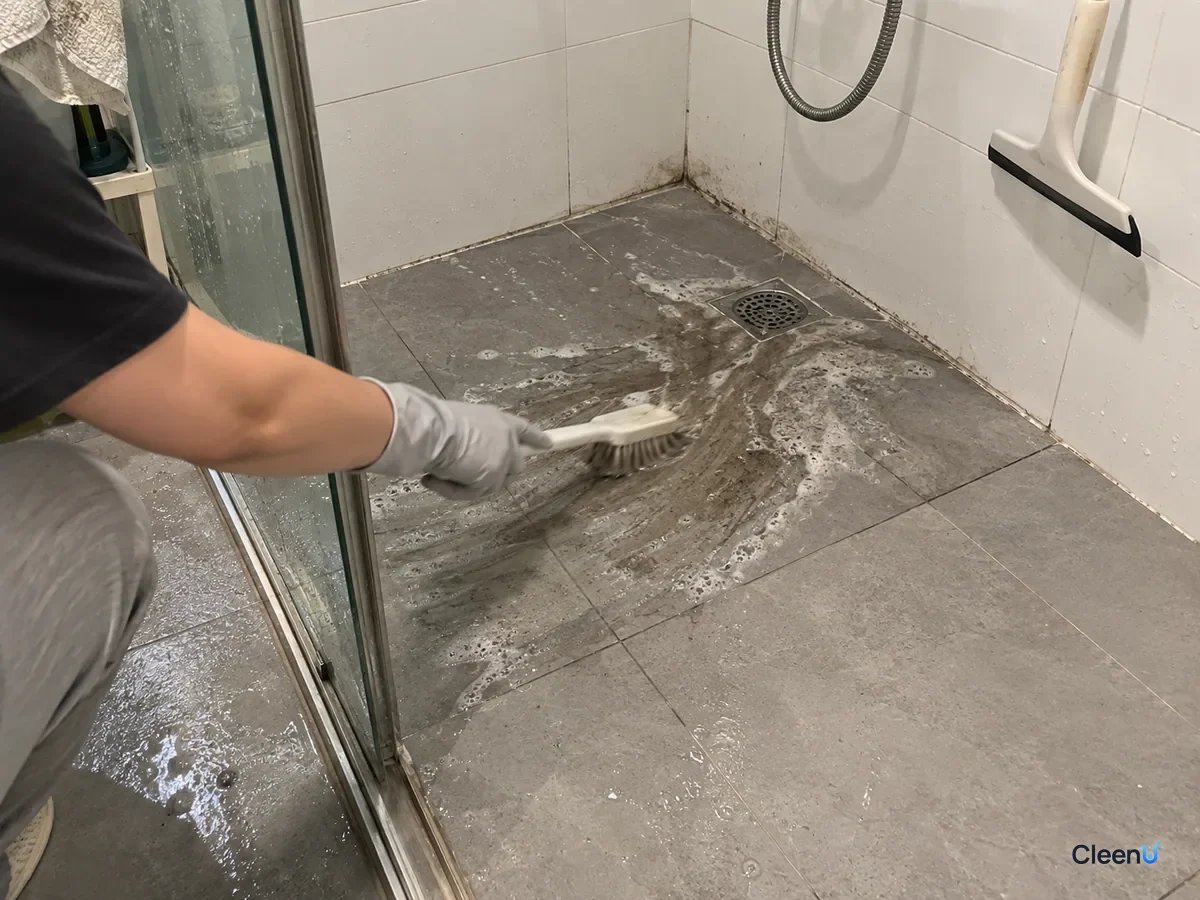
Scrub with a floor brush
Scrub back and forth with a floor brush or stiff brush, going over the texture of non-slip tile several times, and use an old toothbrush around the drain and in corners. You'll see gray-black water come up.
Rinse thoroughly
Rinse the floor completely with the handheld shower, sending the loosened grime and cleaner down the drain. When the floor no longer feels slimy, the biofilm is gone.
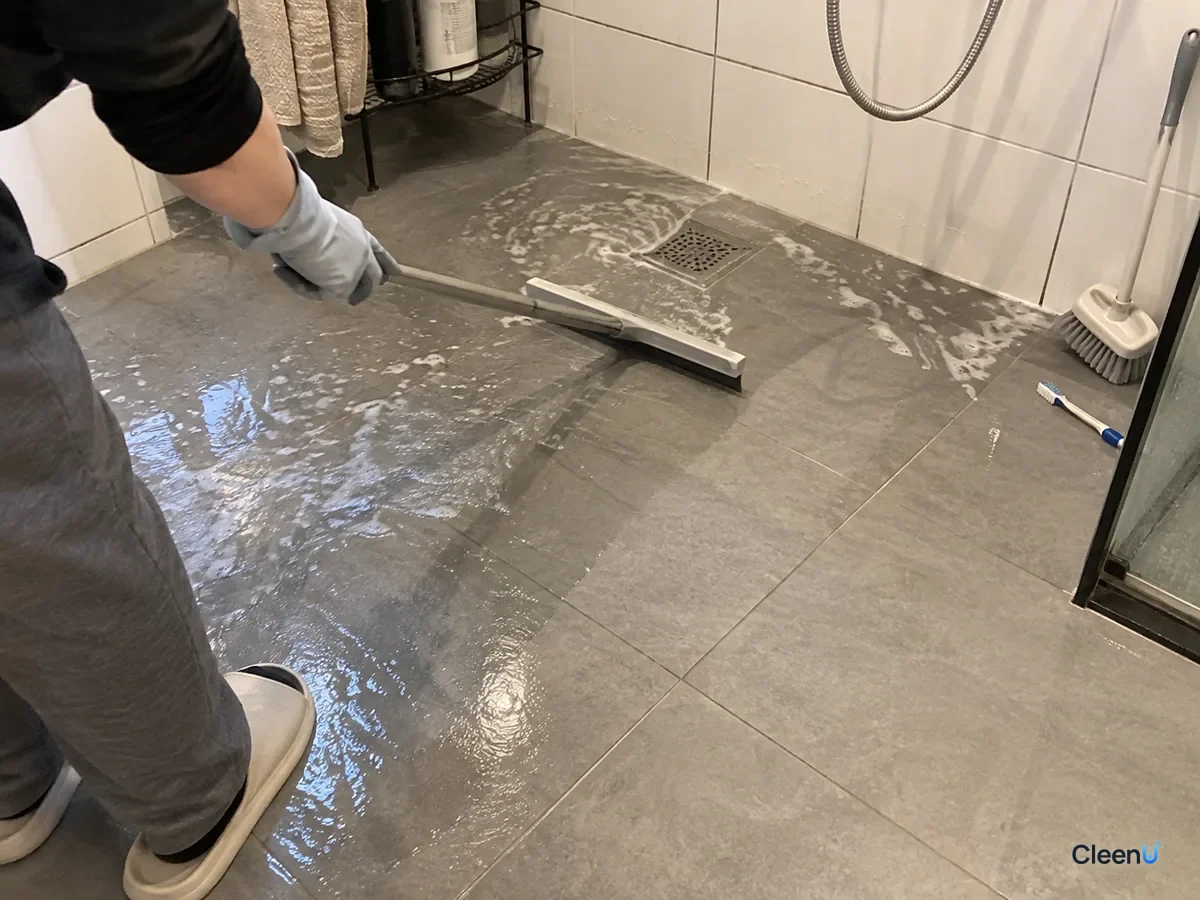
Squeegee dry and run the fan
Push the water into the drain with a squeegee and run the exhaust fan or open a window so the floor dries fast. A dry floor doesn't grow biofilm easily.
Why it takes acid, a brush, and a rinse together
The slick layer on a bathroom floor is several things stacked up. At the bottom is calcium soap and thin scale, acting like glue that holds everything else in the texture of the tile. In the middle is oily residue from body oil and conditioner. On top and in the crevices is biofilm, the sticky material bacteria produce that wraps around all of it.
Plain water or dish soap only lifts a bit of loose oil off the top. The calcium soap underneath doesn't budge, and the floor is slick again in a couple of days. A mildly acidic cleaner works in a different order. The organic acids grab the calcium in the calcium soap and break it apart, so the base layer gripping the tile loosens. The low-foam surfactants then emulsify the freed fatty acids and body oil while wetting and softening the biofilm. The 3-to-5-minute dwell is the time the acid and surfactants need to work through those layers. Keep the floor wet during that time and don't let the cleaner dry on the tile.
Chemistry only loosens things, though. Getting biofilm out of the grooves in non-slip tile takes a brush. That texture is three-dimensional. A mop or cloth only touches the high points, while the stiff bristles of a floor brush reach into the grooves and lift the loosened slime. Scrub in several directions: side to side, front to back, and on a diagonal. The final rinse carries the acid, the emulsified oil, and the scrubbed-up biofilm down the drain so none of it settles back onto the floor.
How to tell it's actually clean
After rinsing, run a gloved palm across the shower floor. Clean non-slip tile feels grippy and slightly rough, and your hand doesn't glide. If it still feels slick, there's biofilm left in the grooves, so spray that area again, let it sit, and scrub. Watch the rinse water too. It runs gray and murky while you scrub. When it runs clear and the tile color looks even, you can stop.
If after two or three rounds some grooves still hold fixed dark specks but the floor no longer feels slick, it may be mold pigment that has stained the grout or glaze, or simple wear on the tile. That isn't what makes the floor slippery, and repeated acid scrubbing will only rough up the grout.
When to adjust your approach
Vinyl bath mats grow biofilm too, mostly on the underside. Take the mat out, spray and scrub both sides, rinse it, and hang it to dry. Don't scrub the floor with the mat still in place.
Cement grout can get rough and powdery with long-term acid use. Rinse a mildly acidic cleaner off after the label dwell time and never leave it soaking overnight. Badly stained grout is a separate job.
For a floor that hasn't been cleaned in a long time, the biofilm and calcium soap are thick, and one round may not be enough. Scrub and rinse once, then spray a second time. That works better than one long dwell, because the first round removes the top layer and the second round reaches the bottom.
If it still smells
Sewer smell after cleaning the drain: check whether the trap has dried out and pour a cup of water down the drain. For drains you rarely use, pour water in weekly or install an odor-blocking drain insert.
Odor around the base of the toilet: the wax seal may be failing, or urine may have seeped into the floor around it. Clean the gap around the base; if the smell persists, have a plumber check the seal.
Musty smell in corners or the ceiling: humidity is too high. Ventilate more and treat any mold.
Keeping the bathroom floor from getting slippery
After every shower, squeegee floor water into the drain and run the fan for 20 to 30 minutes.
Clear hair from the drain weekly.
Scrub the shower floor with bathroom floor cleaner once a week.
If you use a non-slip mat in the shower, pick it up regularly to rinse and dry it, and don't let water sit trapped underneath.
If older adults live with you, install grab bars in the shower and by the toilet.
For the rest of the bathroom, see How to clean a bathroom. For dark grout, see Black grout: mold or dirt?.
Stop if you see this
The floor is slippery while you clean, so wear non-slip shoes and keep kids and older adults out. Never mix this with bleach or use them back to back, and don't use it on natural stone or wood floors. If the drain backs up, is clogged, or the toilet base is leaking, call a plumber. If cleaner gets in your eyes or stings your skin, rinse with water.
Slippery, smelly bathroom floors: common questions
Why is my bathroom tile getting more slippery?
Soap scum, body oil, and bacterial biofilm gradually fill in the texture of non-slip tile. Let a bathroom floor cleaner sit, scrub, and rinse, and the grip comes back.
What should I clean a bathroom floor with?
For tile and non-slip tile, a mildly acidic, low-foam bathroom floor cleaner. For natural stone floors, a neutral stone cleaner.
How do I get rid of a sewer smell in the bathroom?
Clear the hair and slime from the drain, then pour water in to refill the trap. If it still smells, have a plumber take a look.
Can I use bleach on the bathroom floor?
If you need to, dilute it per the label and use it on its own, never with or right after acidic cleaners. Rinse and ventilate afterward. A bathroom floor cleaner is a cleaning product, not a sanitizer.
How often should I clean a shower mat?
Pick it up weekly to rinse and dry it, and scrub the floor underneath so biofilm doesn't grow.
How often should I scrub the bathroom floor?
Once a week. Squeegeeing after showers and running the fan keeps it from getting slippery between cleanings.
For a mildly acidic, low-foam floor cleaner that rinses clean and lifts soap scum and dark grime from non-slip bathroom tile after a few minutes, take a look at our Bathroom Floor Cleaner.
A slippery bathroom floor usually means soap scum, body oil, and bacterial biofilm filling in the texture of the tile, and odor usually comes from hair and slime in the drain or a dried-out trap. Clean the drain first, then spray a mildly acidic, low-foam bathroom floor cleaner, wait 3 to 5 minutes, scrub, rinse, squeegee the floor dry, and run the fan. Keep acidic products off natural stone and never mix them with chlorine. Squeegee after every shower and clean the drain and scrub the floor weekly, and the floor stays safe and fresh.