Formula Tuning
Tune pH and dilution for scale or milk residue

A coffee machine descaler only handles scale; milk residue needs its own cleaner. The tank, boiler, heating element, and brew lines build up calcium and magnesium scale that an acid dissolves. Steam wands, frothers, and automatic milk systems build up dried milk protein and fat that acid can't touch and an alkaline cleaner breaks down. The two soils have opposite chemistry, so the wrong product works poorly and mixing them cancels both out. CleenU matches two coffee machine products to the soil and makes private-label and OEM/ODM versions for coffee machine and accessory brands, coffee channels, and online sellers.
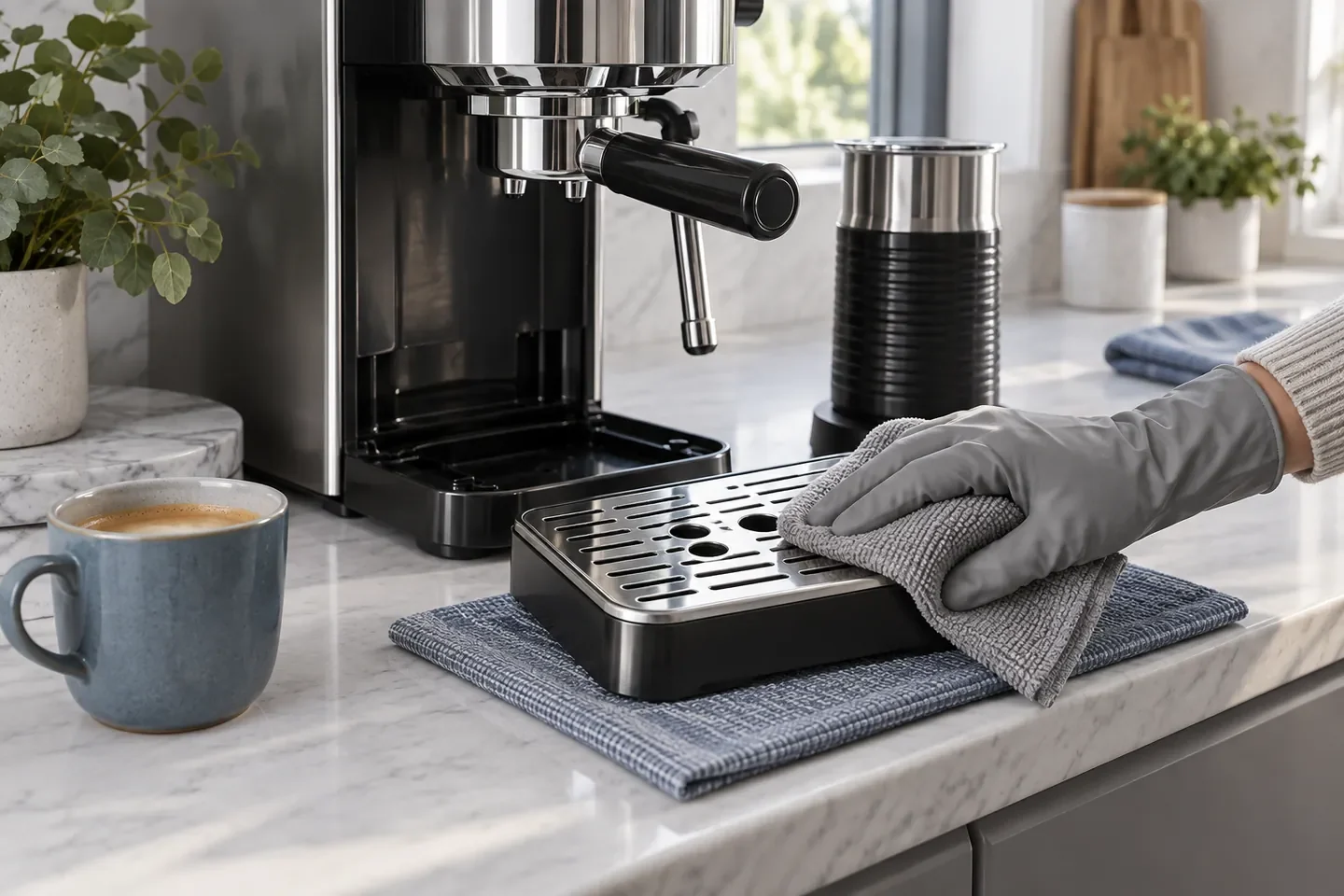
Tune pH and dilution for scale or milk residue
Samples are usually ready in 3–5 days
Bottles with measuring caps, single-use packs, kits, and label language
Private-label coffee machine descalers from 500 bottles
To descale the tank, boiler, and lines of home coffee makers, capsule machines, and espresso machines, mix the organic-acid coffee machine descaler 1:5 with water in the tank, run the machine's descaling cycle or let it sit 15–20 minutes and drain, then run two tanks of clean water; don't drink the output until rinsing is done. For milk residue in steam wands, frothers, and automatic milk systems, run the milk-system cleaning cycle with the milk cleaner at 1:10 and rinse 1–2 times, and soak removable parts and pitchers 10–15 minutes before scrubbing and rinsing. Never mix the two, keep the milk cleaner off aluminum, and follow your machine's manual.
Scale in the boiler and heating element: add the descaler at 1:5 to the tank, run the descaling cycle, then two tanks of clean water.
Brew lines are descaled along with the cycle; coffee oils on the brew head need a separate coffee-oil cleaner.
Milk residue in wand tips and frothers: soak them 10–15 minutes in the milk cleaner at 1:10, then scrub.
On super-automatics, run the milk-cleaning cycle with the cleaner at 1:10, then rinse 1–2 times.
Spot-test natural stone, coated, and wood surfaces in a hidden area first.
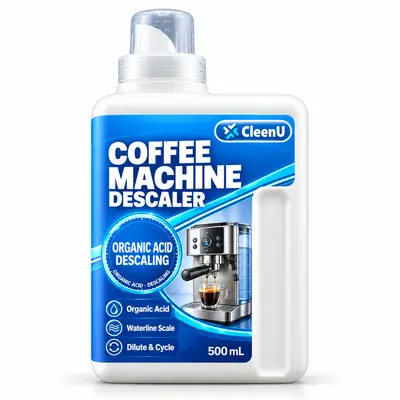
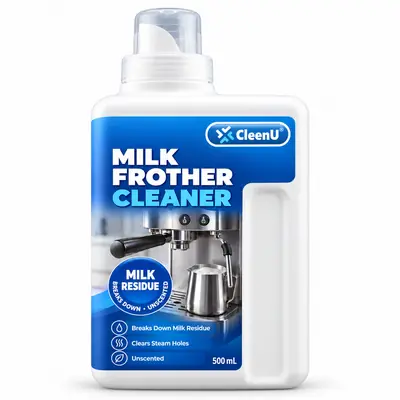
Tell us what you are cleaning, the surface, and how you clean it, and we will point you to the right product or formula.
Get Product AdviceWe tune pH, dilution, and rinse-off separately for scale and milk residue.
Free samples are usually ready in 3–5 days, then tuned for descaling speed, rinse residue, and odor based on your machine tests.
Bottles with measuring caps, single-use or multi-use packs, label design and language, and descale-plus-milk kits.
Each formula keeps batch retention samples and a COA, so color, scent, and feel stay consistent on reorders.
Three common coffee machine jobs, compared by product, pH, foam, and method. Brew-system scale takes an organic-acid descaler diluted and run through a descaling cycle; milk residue in lines and frothers takes an alkaline cleaner, run through the milk cycle or used as a soak. The chemistry is opposite, so always use them separately.
| Cleaning Job | Where | Strength | Foam | Method |
|---|---|---|---|---|
| Descaling | Tanks, boilers, heating elements, and lines | Acidic, pH 2.0–3.0 | None | Run the descaling cycle at 1:5, then two tanks of water |
| Milk Residue | Steam wands, frothers, and milk systems | Alkaline, pH 10.0–11.5 | Low | Run the milk cycle at 1:10, then rinse |
| Soaking Parts | Pitchers, frothers, and wand tips | Alkaline, pH 10.0–11.5 | Low | Soak 10–15 minutes at 1:10, then scrub |
Confirm which products are allowed, the descaling cycle, and the milk-cleaning method.
Handle scale and milk residue separately and never mix the two products.
1:5 for descaling and 1:10 for milk, with the right run or soak time.
Keep rinsing until the output tastes of neither acid nor alkali, then use as normal.
Common questions about how to use it, which surfaces are safe, and private-label orders.
It depends on your water and how much you use it. Most home machines need descaling every 1–3 months, more often in hard-water areas or with several cups a day. Descale when the machine prompts you or when the flow slows or the temperature drops, and follow your manual.
For automatic milk systems, run the milk-cleaning cycle with the milk frother cleaner at 1:10, then rinse 1–2 times. Soak the wand tip and removable frother parts 10–15 minutes, scrub, and rinse. Purging and wiping the wand after every use keeps residue from building up.
Citric acid is a common organic acid, but it's hard to get the concentration and residue right, and some manuals advise against homemade mixes. A ready-diluted coffee machine descaler is more reliable; rinse thoroughly with clean water either way.
No. The descaler is acidic and the milk cleaner is alkaline, so mixing them neutralizes both and neither gets clean. Use them separately and rinse with water in between.
It hasn't been rinsed enough. Run another tank or two of clean water until the output has no sour taste, then brew as normal.
Yes. Capsule machines heat tap water as well, so the tank and heating element build up scale; use the descaler at 1:5 with the machine's descaling cycle.
Settle four things: descaler only, milk cleaner only, or a kit; the compatible machines; single-use or multi-use packs and bottle with measuring cap; and your target market and label language. Then we'll arrange free samples, usually ready in 3–5 days.
We provide SDS/MSDS, TDS, and batch COA, and prepare label copy for your target market. These documents aren't posted for download; we send them on request after you inquire.
Standard projects start at 500 bottles. Free samples are usually ready in 3–5 days, and production is scheduled after packaging and labels are approved.
Coffee machine cleaning comes down to handling scale and milk residue separately: an organic-acid descaler at 1:5 run through the descaling cycle and rinsed well for the brew system, and an alkaline cleaner at 1:10 run through the milk cycle or used as a soak for steam wands, frothers, and milk lines. Never mix them, and keep alkali off aluminum. If you're a coffee machine or accessory brand launching your own cleaners, CleenU can start from these two formulas, with free samples first and a 500-bottle MOQ.
Tell us your target machines, market, and packaging ideas. Free samples are usually ready in 3–5 days.