

Product and application illustrations. Follow the product label and written use guidance.
CleenU product solution
Coffee Machine Descaler
Organic-acid descaler · Restores flow · Private label
Coffee maker running slow, not hot enough, or bitter? Mix 1:5 with water, run the descale cycle to dissolve scale in the boiler and lines, then two clean-water cycles and flow is back. Gentle on copper and seals; private label from 500 bottles.
- Scale is a poor conductor of heat. A layer of calcium carbonate on the boiler and element works like insulation: heating slows, water runs cooler, and under-extracted coffee tastes sour. Narrowed lines and shower screens slow and destabilize flow, which can over-extract and turn it bitter. Regular descaling restores flow and temperature so the coffee tastes consistent.
- Inside are copper boilers, stainless lines, and rubber seals. Strong mineral acids descale fast but can corrode copper and age seals. This descaler is built on citric-type organic acids with a corrosion inhibitor, so it clears scale thoroughly without harming the machine. Two clean-water flushes carry away dissolved salts and leftover acid, and the first cup afterward tastes clean.
- MOQ
- 500 bottles
- Free samples
- 3–5 days
- Bulk lead time
- Scheduled with the order

Product value
What does Coffee Machine Descaler clean?
Coffee Machine Descaler dissolves scale in the tank, boiler, heating element, and lines of drip machines, pod machines, and espresso machines.
View product detailsProduct summary
- Product type
- Organic-acid liquid descaler
- Intended use
- Scale in coffee machine tanks, boilers, heating elements, and lines
- Formula
- Citric and lactic organic acids with a corrosion inhibitor, pH 2.0–3.0 as supplied; colorless, unscented, phosphate-free; dilute 1:5.
- For
- Coffee machine and accessory brands, café and office coffee service buyers, small-appliance channels, ecommerce sellers
Before & after
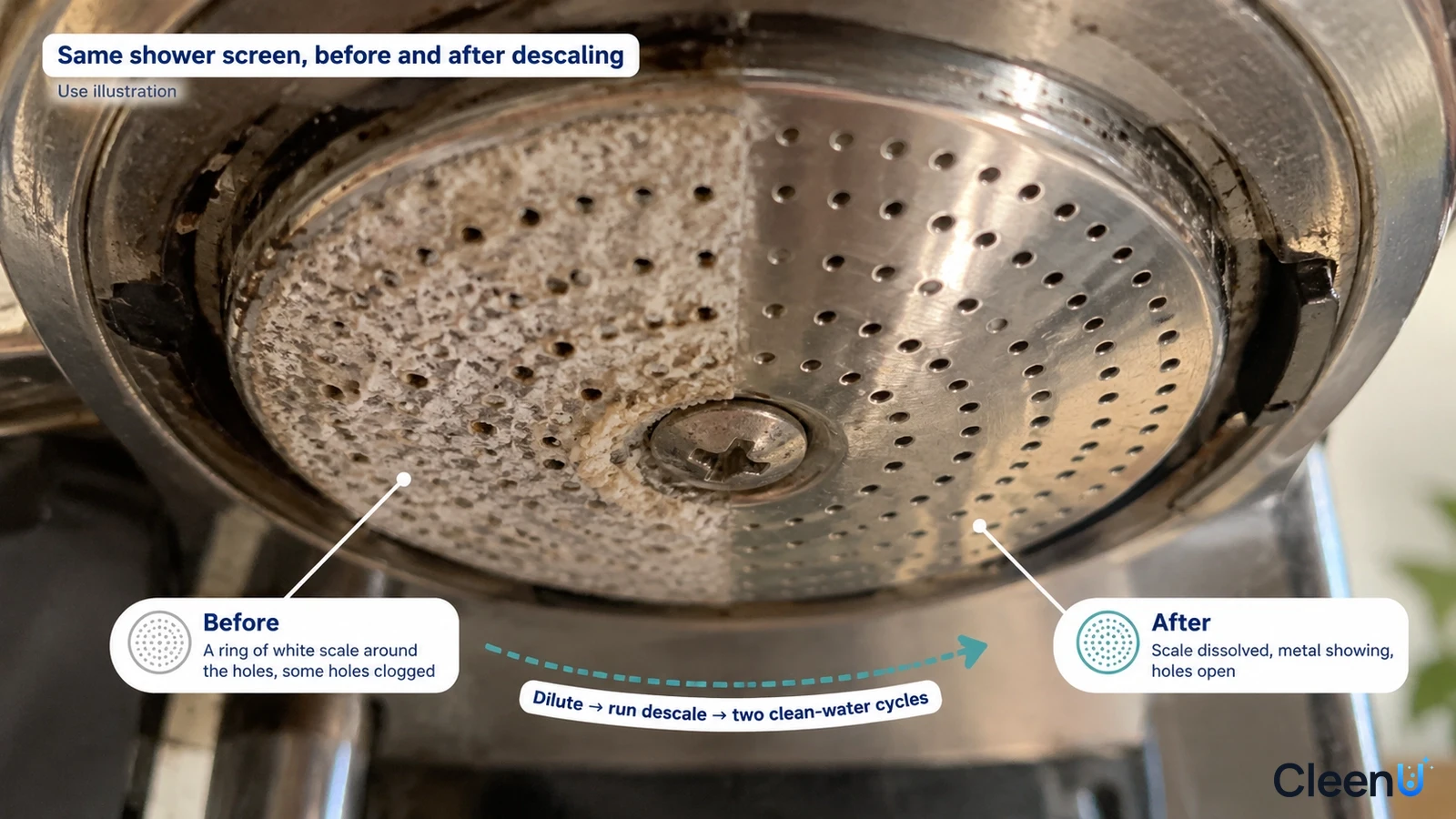
Before and after (use illustration)
Before: the heating element and shower screen are coated in rough white scale, with some screen holes blocked. After: descaled at 1:5 and flushed, the scale dissolves, the metal shows, and the screen holes are clear.
- Before: white scale crusted on the heating element and blocked shower-screen holes
- After: scale dissolved, bare metal, open holes
- Two clean-water cycles and flow and temperature return
How it works
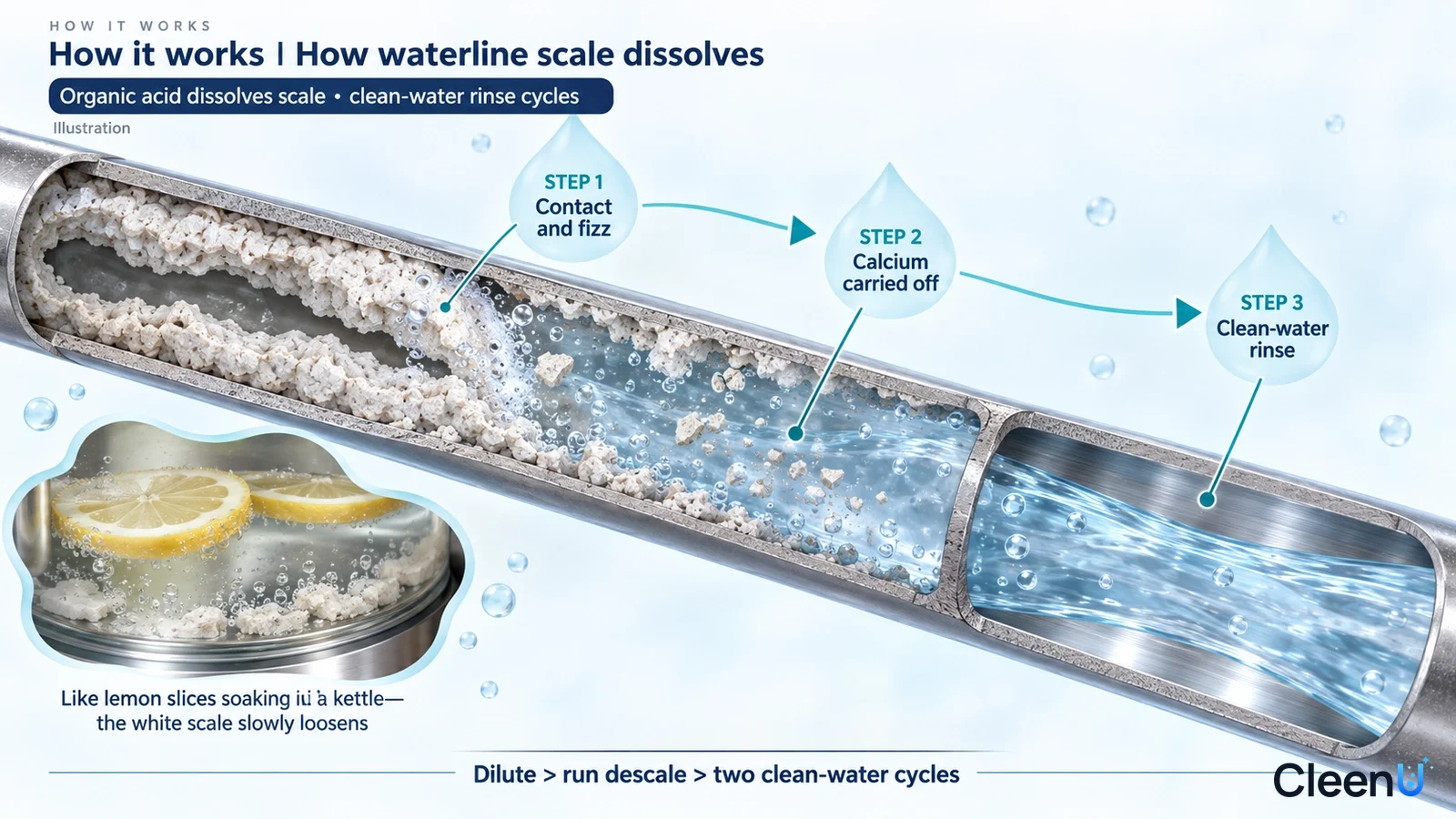
How Scale Dissolves
Coffee machine scale is mostly calcium and magnesium carbonate. Citric-type acids release hydrogen ions that react with carbonate to form carbon dioxide and water, and citrate chelates the calcium so it stays in solution instead of redepositing. The reaction speeds up as the machine heats. Clean-water flushes then carry the salts and acid out, while the corrosion inhibitor protects copper and stainless surfaces.
- Organic acid dissolves carbonate
- Chelates calcium
- CO₂ fizz
- Flush away
Usage guidance
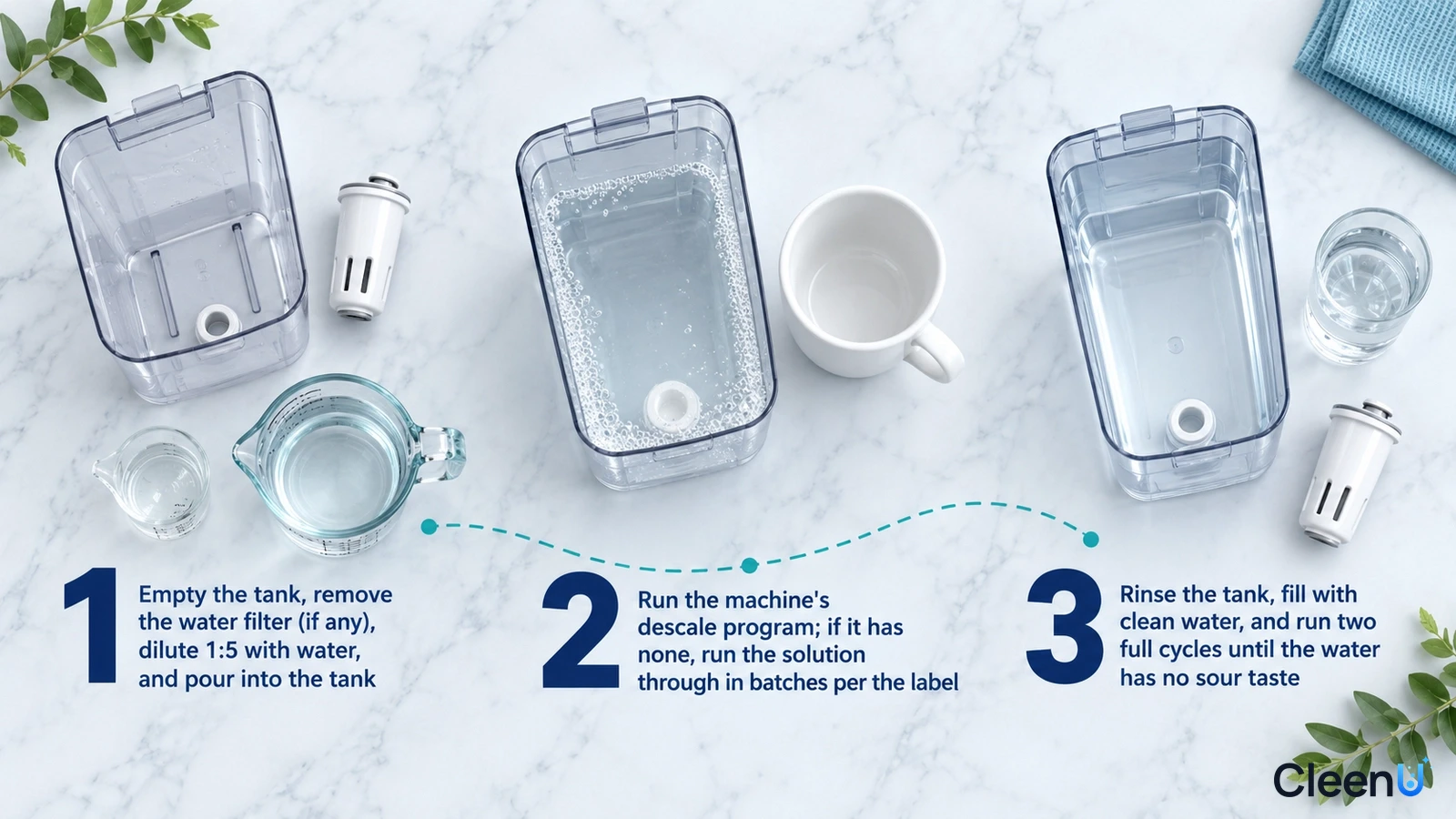
Use guidance
- Empty the tank and remove any water filter. Mix 100 mL descaler with 500 mL water in the tank (1:5).
- Run the descale program. Without one, run one cup through, wait 15 to 20 minutes, then run the rest in stages.
- Rinse the tank, fill with clean water, and run two full cycles until the water tastes neutral; refit the filter.

Before you use it
Important notes
- Not for: Drinking output before flushing
- Not for: Aluminum boilers not cleared by the manual
- Not for: Heating it undiluted
- Not for: Marble or wood trim on the machine
- Test first for special materials, special equipment, or sensitive scenarios.
Product comparison
How to choose a Coffee Machine Descaler
Scale in coffee machine boilers and lines: Coffee Machine Descaler. Milk residue in steam wands and milk lines: Milk Frother Cleaner. Irons and garment steamers: Steam Iron Descaler.
View product comparison
| Decision point | Coffee Machine Descaler | White vinegar |
|---|---|---|
| Speed | Fast, chelates to prevent redeposit | Slower |
| Seals and copper | Inhibited and gentle | Can age seals over time |
| Odor | Neutral after two flushes | Vinegar smell lingers |
| Maker guidance | Purpose-made descaler | Some makers advise against |
Where Coffee Machine Descaler stands out
Bad Coffee Often Means Scale Is Stealing Heat
Scale is a poor conductor of heat. A layer of calcium carbonate on the boiler and element works like insulation: heating slows, water runs cooler, and under-extracted coffee tastes sour. Narrowed lines and shower screens slow and destabilize flow, which can over-extract and turn it bitter. Regular descaling restores flow and temperature so the coffee tastes consistent.
Gentle Organic Acid, No Sour Taste After Two Flushes
Inside are copper boilers, stainless lines, and rubber seals. Strong mineral acids descale fast but can corrode copper and age seals. This descaler is built on citric-type organic acids with a corrosion inhibitor, so it clears scale thoroughly without harming the machine. Two clean-water flushes carry away dissolved salts and leftover acid, and the first cup afterward tastes clean.
Who it's for, where it's used, and when not to use it
For
End-use scenarios
When not to use it
Product Specifications and Custom Options
Key product details and custom options for your project.
Product specifications
Product type, cleaning scope, and format.
| Product type | Organic-acid liquid descaler |
| Surfaces | Water tanks, boilers, lines, and brew groups of coffee and espresso machines |
| Use scenarios | Home pod and drip machines; Espresso machines; Cafés and offices |
| Target soils | Scale in coffee machine tanks, boilers, heating elements, and lines |
| Directions | Dilute 1:5 (100 mL to 500 mL water) in the tank; run the descale cycle or let it sit 15–20 min, then 2 clean-water flushes |
| Not for | Drinking output before flushing; Aluminum boilers not cleared by the manual; Heating it undiluted; Marble or wood trim on the machine |
| Size and packaging | 500 mL measuring-cap grip bottle (diluted in the water tank) |
| pH | pH 2.0–3.0 at 25°C |
| Scent | Unscented |
| Shelf life and storage | 24 months unopened; keep tightly closed in a cool, dry, well-ventilated place. Protect from heat, direct sunlight, and freezing |
B2B custom options
Private label, packaging, MOQ, samples, and delivery.
| OEM/ODM and private label | From product direction and sample review to packaging, production, and delivery for your Coffee Machine Descaler project. |
| Packaging and labels | Measuring cap (not a spray), fill size, labels, and retail sets can be customized |
| Case pack | 12 × 500 mL per case |
| MOQ | 500 bottles |
| Sample time | Free sample: 3–5 days |
| Bulk lead time | Scheduled with the order after packaging and label approval |
| Documents | SDS/MSDS, TDS, and batch COA provided per project on inquiry |
OEM/ODM project process
Move from product direction and sample review to packaging, production, and delivery for Coffee Machine Descaler.
Define format and setting
Decide bottle or single-dose packs, home or café use. Format sets concentration and packaging line.
Free sample
A free sample is usually ready in 3–5 days for project review.
Packaging and labels
Set fill size, cap and dosing, label language, the warnings your market requires, and do-not-drink-until-flushed and 1:5 dilution instructions.
Bulk delivery
Standard MOQ is 500 bottles; bulk orders are scheduled after packaging and labels are approved.
Why choose CleenU for Coffee Machine Descaler?
From product positioning and samples to packaging and repeat supply, CleenU supports OEM/ODM projects built around Coffee Machine Descaler.
Descaling power balanced with machine safety
Acid type and strength set descaling speed; the inhibitor sets how kind it is to copper and seals. We tune to your target machines.
Bottles and sachets
A 500 mL measuring-cap grip bottle does 3 to 5 descales; 100 mL single-dose sachets or minis are also available.
Sample reviews with clear criteria
Review samples on your scaled coffee machine heating elements and shower screens against clear points: descaling speed, residual sour taste after flushing, and effect on copper and seals.
Unscented and colorless
It runs through the drinking-water path, so keep it unscented and colorless with nothing left after flushing.
Labels and documents
We supply bilingual labels, SDS/MSDS, TDS, and batch COAs, with do-not-drink-until-flushed and 1:5 dilution instructions on the label, and can arrange third-party testing for your market.
Consistent supply and reorders
Each batch is retained and ships with a COA, so reorders match in color, scent, and feel.
Packaging and labeling options
Plan packaging format, label language, and shelf presentation around Coffee Machine Descaler and your target channel.
Show packaging and label options
Packaging options
Core size: 500 mL measuring-cap grip bottle (diluted in the water tank). Also available: 1 L household refill, channel case packs, and ecommerce bundles with a water filter and machine brush. Measuring cap (not a spray) options, with labels and cartons made to your brand.
Supporting Documents and Materials
Purchasers usually confirm whether the materials are complete before formal cooperation. Preparing documents in advance helps with quoting, sampling, and channel review.
Show available documents
Project documents
When you inquire, we provide SDS/MSDS, a TDS, batch COAs, label directions, and packaging files for your project.
Related products, solutions, and articles
Explore related cleaning products, application guidance, and OEM/ODM resources for Coffee Machine Descaler.
Frequently asked questions (FAQ)
Find practical answers about Coffee Machine Descaler, private label, samples, MOQ, documents, and delivery.
How to use
What is the dilution ratio?
1:5, or 100 mL descaler to 500 mL water; scale up for bigger tanks.
Can I use vinegar instead?
Vinegar does descale, but slowly, the smell is hard to flush out, and over time it can age rubber seals; many manufacturers advise against it. A purpose-made descaler with an inhibitor is kinder to the machine.
How do I descale a coffee maker with no descale button?
Pour the 1:5 solution into the reservoir and brew the largest cup size repeatedly; halfway through, pause 15–20 minutes to let it work, then finish. Rinse by running two full reservoirs of clean water until there's no sour taste. Discard everything that comes out; don't drink it.
What's the best way to clean a Keurig or other pod machine?
Clean it in two parts: the removable parts and the water path. Wash the reservoir, drip tray, and pod holder in warm water with a little dish soap and let them dry, and clear coffee grounds from the entry needle with a straightened paper clip. The water path needs descaling: mix 1:5 with water in the reservoir, run the descale cycle as the machine prompts or the manual describes, then run two clean-water rinses. It's been tested in common machines such as Keurig and Nespresso; if your manual says otherwise, follow it.
How do I deep clean a coffee machine, and how often?
A deep clean is descaling plus cleaning the brew parts. Run a 1:5 descaling cycle (on a machine with no descale button, fill the tank, brew half of it, let it sit 15–20 minutes, then run the rest), followed by two clean-water rinses; on an espresso machine, also soak and scrub the shower screen and portafilter basket. Most home machines need it every 1–3 months, sooner with hard water or heavy daily use. Slower flow, cooler coffee, or a bitter taste means it's due.
Surfaces and common questions
The coffee tastes sour after descaling. What now?
It wasn’t flushed enough. Run one or two more full clean-water cycles until the water tastes neutral.
Is it OK for pod machines?
Yes. Enter the descale mode per the manual, run the mixed solution through, and don’t skip the flushes.
Can I use it in a kettle?
Use a descaler made for electric kettles. This product's ratio and steps are designed for coffee machine water lines.
The liquid coming out is yellow and cloudy. Is that normal?
Yes—that’s dissolved scale and old coffee oil. Keep cycling until it runs clear, then do two clean-water rinses. If the first rinse still has color, add another.
Can I descale the steam wand at the same time?
Yes. During the cycle, open the steam valve per your manual so some solution runs through the wand, then flush it with clean water afterward. Use a milk-system cleaner for milk residue inside the wand.
How often should I descale, and does water hardness matter?
Usually every 1–3 months; monthly in hard-water areas or if you make several cups a day. Descale when the machine’s indicator comes on—don’t wait until flow slows noticeably.
Does it work in Keurig and Nespresso machines?
Yes. It has been tested in common coffee makers such as Keurig and Nespresso: mix 1:5 with water in the reservoir, run the descale cycle as your machine prompts or the manual describes, then run two clean-water rinses before brewing. If your machine is under warranty or the manual specifies the maker's descaler, follow the manual and warranty terms first. CleenU is not affiliated with these brands; names are used only to show compatibility.
What can I use instead of the brand's descaling solution?
An organic-acid coffee machine descaler based on citric or lactic acid works: dilute as directed, run the machine's descale cycle, and rinse well. Don't rely on vinegar long-term, and never pour a kitchen or bathroom descaler into a coffee maker. If the machine is under warranty, check whether the manual requires the maker's own descaler.
Can I use it in a drip coffee maker?
Yes. Pour the 1:5 solution into the reservoir, set the empty carafe in place, and start a full brew; switch off halfway for 15 minutes, then let it finish. Run two carafes of clean water afterward, rinsing the carafe and filter basket too.
Buying and private label
What should we decide first for a private-label coffee machine descaler?
Three things: liquid bottle or single-dose sachets and tablets, home or café use, and whether to co-brand with a coffee machine or accessory brand. Descaler is a high-repeat item in the coffee accessory channel.
What are the sample, MOQ, and lead-time terms?
Free samples are usually ready in 3–5 days, and we recommend testing first on scaled heating elements and shower screens, recording descaling speed, any sour taste after flushing, and the effect on copper parts and seals. Standard MOQ is 500 bottles, and bulk orders are scheduled after packaging and labels are approved. SDS/MSDS, a TDS, batch COAs, and bilingual label content are sent per project on inquiry.
What can be customized?
All of it: formula direction, scent, fill size (500 mL bottle, 100 mL single dose, 1 L commercial, and more), cap or measuring cap, label design and language, and ecommerce bundles with a water filter and machine brush.
How is private-label pricing quoted?
Pricing is tiered by packaging, cap type, label, and order quantity, starting at the 500-bottle MOQ. Send your target quantity, fill size, and packaging needs, and we’ll quote unit prices by volume tier with sample and lead-time details.
Launching your own Coffee Machine Descaler?
Send us your market, format, home or commercial use, and estimated volume. We will build this high-repeat product with you from formula to packaging.