Formula Tuning
Tune acidity and dilution for kitchen steam appliances or irons

The right steam iron descaler depends on whether the appliance cooks or presses. Electric steamers, steam ovens, kettles, and rice cookers touch food, so they need a food-grade organic acid and two clean-water runs afterward. Steam irons and garment steamers have narrow steam channels where loosened scale sputters out as white flakes onto clothes, so they need a stronger descaler left to soak before steaming it out. Both heat tap water, and calcium and magnesium scale slows heating and weakens steam. CleenU matches two descalers to the appliance type and makes private-label and OEM/ODM descalers for small-appliance brands, home channels, and online sellers.
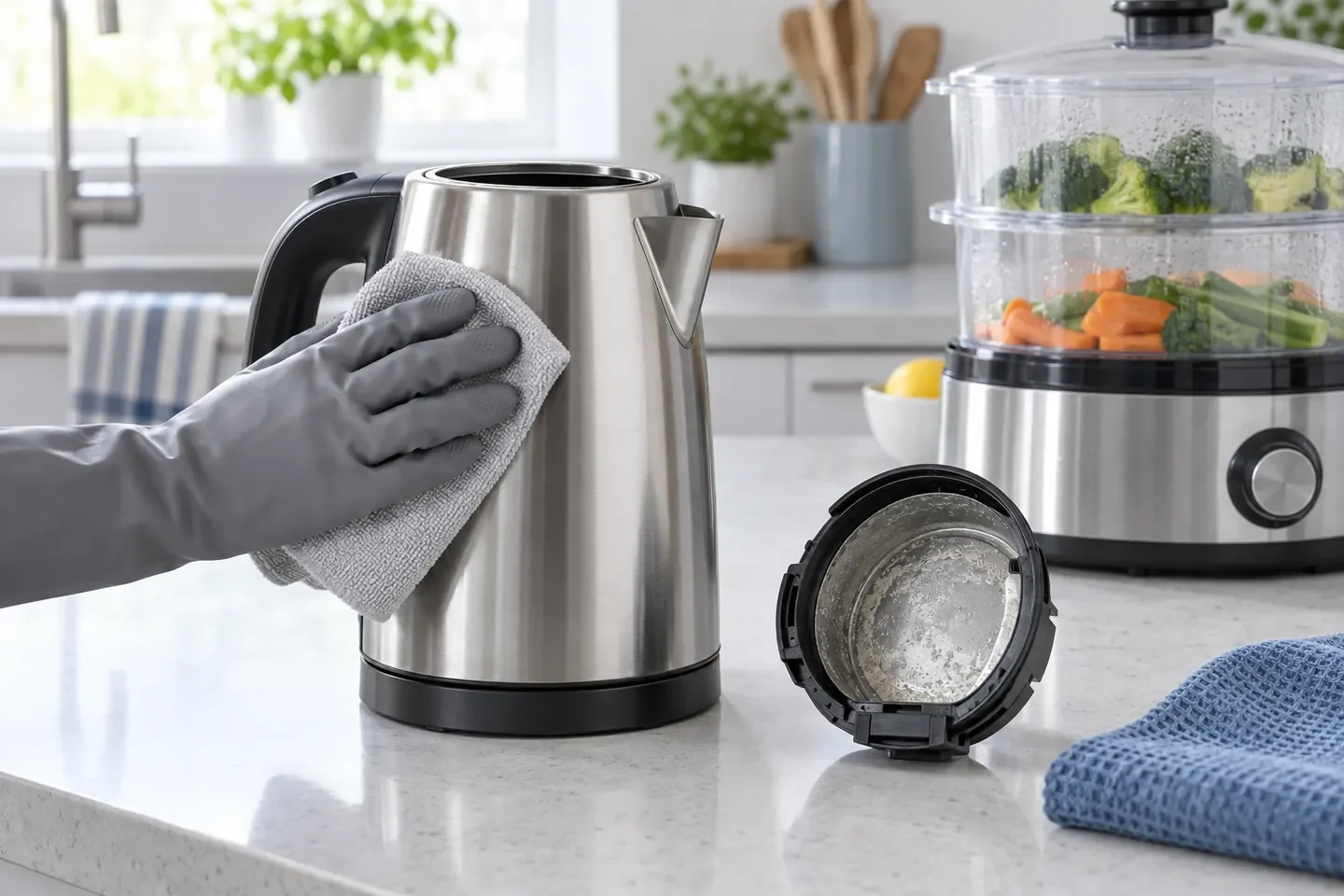
Tune acidity and dilution for kitchen steam appliances or irons
Samples are usually ready in 3–5 days
Measuring bottles, single-use packs, and label language
Private-label appliance descalers from 500 bottles
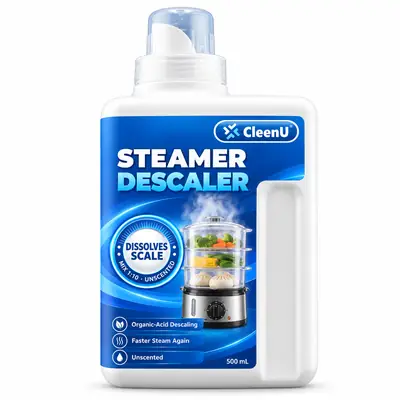
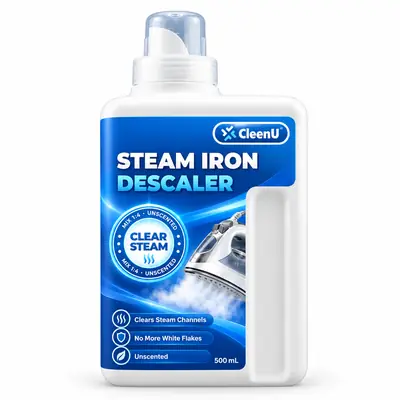
For white scale in electric steamers, steam ovens, combi steam ovens, kettles, and rice cooker steam trays, add the food-grade organic-acid steamer descaler at 1:10 to the tank or kettle, run a descaling or steam cycle for about 20–30 minutes, pour it out, and run clean water twice; keep food out while descaling. For steam irons, garment steamers, and steam-generator irons spitting white flakes, add the iron descaler at 1:4 to the tank, let it sit 30 minutes, heat and steam it out, then rinse twice with clean water, and test on an old cloth before ironing. Skip models whose manual forbids descalers, and don't use on cast iron or chipped enamel.
Scale in tanks and steam generators: run a descaling or steam cycle at 1:10, then clean water twice.
White scale on kettle bases and steam trays: heat at 1:10, let it sit, pour out, and boil clean water twice.
White flakes and weak steam: 1:4 in the tank for 30 minutes, steam it out, and rinse twice.
Scale in the tank and steam hose: 1:4, let it sit, steam it out, rinse, and test.
Spot-test natural stone, coated, and wood surfaces in a hidden area first.
Tell us what you are cleaning, the surface, and how you clean it, and we will point you to the right product or formula.
Get Product AdviceWe tune acidity, dilution, and rinse-off separately for kitchen steam appliances and pressing equipment.
Free samples are usually ready in 3–5 days, then tuned for descaling speed, rinse residue, and odor based on your machine tests.
Measuring bottles and cups, single-use or multi-use packs, label design and language, and small-appliance accessory kits.
Each formula keeps batch retention samples and a COA, so color, scent, and feel stay consistent on reorders.
Three common appliance descaling jobs, compared by product, pH, foam, and method. Food-contact kitchen steam appliances take a food-grade organic acid at 1:10 run through a cycle; irons and garment steamers take a stronger 1:4 descaler left to sit, then steamed out. Both need a thorough clean-water rinse.
| Cleaning Job | Where | Strength | Foam | Method |
|---|---|---|---|---|
| Steamers & Kettles | Steamers, steam ovens, kettles, and rice cookers | Acidic, pH 2.0–3.0 | None | Run a 20–30 minute cycle at 1:10, then water twice |
| Irons & Steamers | Steam irons and steam-generator irons | Acidic, pH 2.0–3.0 | None | 1:4 for 30 minutes, then steam it out |
| Garment Steamers | Upright and handheld garment steamers | Acidic, pH 2.0–3.0 | None | 1:4, sit, steam out, rinse, and test |
Confirm the appliance allows descalers and note the recommended cycle.
1:10 for kitchen steam appliances and 1:4 for irons and garment steamers.
Run the cycle or let it sit long enough, with no food inside.
Run or rinse clean water twice, and test the iron on an old cloth before normal use.
Common questions about how to use it, which surfaces are safe, and private-label orders.
The flakes are loosened scale. Add the steam iron descaler at 1:4 to the tank, let it sit 30 minutes, heat the iron and press the steam button to purge it, rinse twice with clean water, and test on an old cloth to make sure it's stopped. Follow the manual for models that forbid descalers.
Add the steamer descaler at 1:10 to the kettle, heat it once, let it sit, pour it out, and boil clean water twice, discarding it each time. The white scale on the bottom dissolves and rinses away. Don't drink the water until descaling is done.
Empty the tank and remove all food, add the steamer descaler at 1:10 to the tank, run the descaling or steam cycle for about 20–30 minutes, drain it, and run clean water twice. Follow your oven's manual.
It depends on your water and how often you use the appliance. In hard-water areas, kettles and steamers usually need it every 1–2 months; descale an iron as soon as it spits flakes or the steam weakens.
It's not recommended. The steamer descaler is food-grade at 1:10 for appliances that touch food; the iron descaler is stronger at 1:4 for pressing equipment and isn't for kitchen appliances.
Vinegar's acidity and lingering smell are hard to control, and some manuals advise against it. A ready-to-dilute descaler is more reliable, and you should rinse thoroughly either way.
Settle four things: kitchen steam appliances, pressing equipment, or both; compatible models; measuring bottles, single-use or multi-use packs; and your target market and label language. Then we'll arrange free samples, usually ready in 3–5 days.
We provide SDS/MSDS, TDS, and batch COA, and prepare label copy for your target market. These documents aren't posted for download; we send them on request after you inquire.
Standard projects start at 500 bottles. Free samples are usually ready in 3–5 days, and production is scheduled after packaging and labels are approved.
Descaling steamers, kettles, and irons comes down to choosing by appliance: a food-grade organic acid at 1:10 run through a cycle and followed by two clean-water runs for kitchen steam appliances, and a 1:4 descaler left 30 minutes and steamed out for irons and garment steamers. Skip models that forbid descalers, cast iron, and chipped enamel. If you're a small-appliance brand launching your own descaler, CleenU can start from these two formulas, with free samples first and a 500-bottle MOQ.
Tell us your target models, market, and packaging ideas. Free samples are usually ready in 3–5 days.