Formula Tuning
Tune alkalinity, shine, and scent for cooktops or stainless

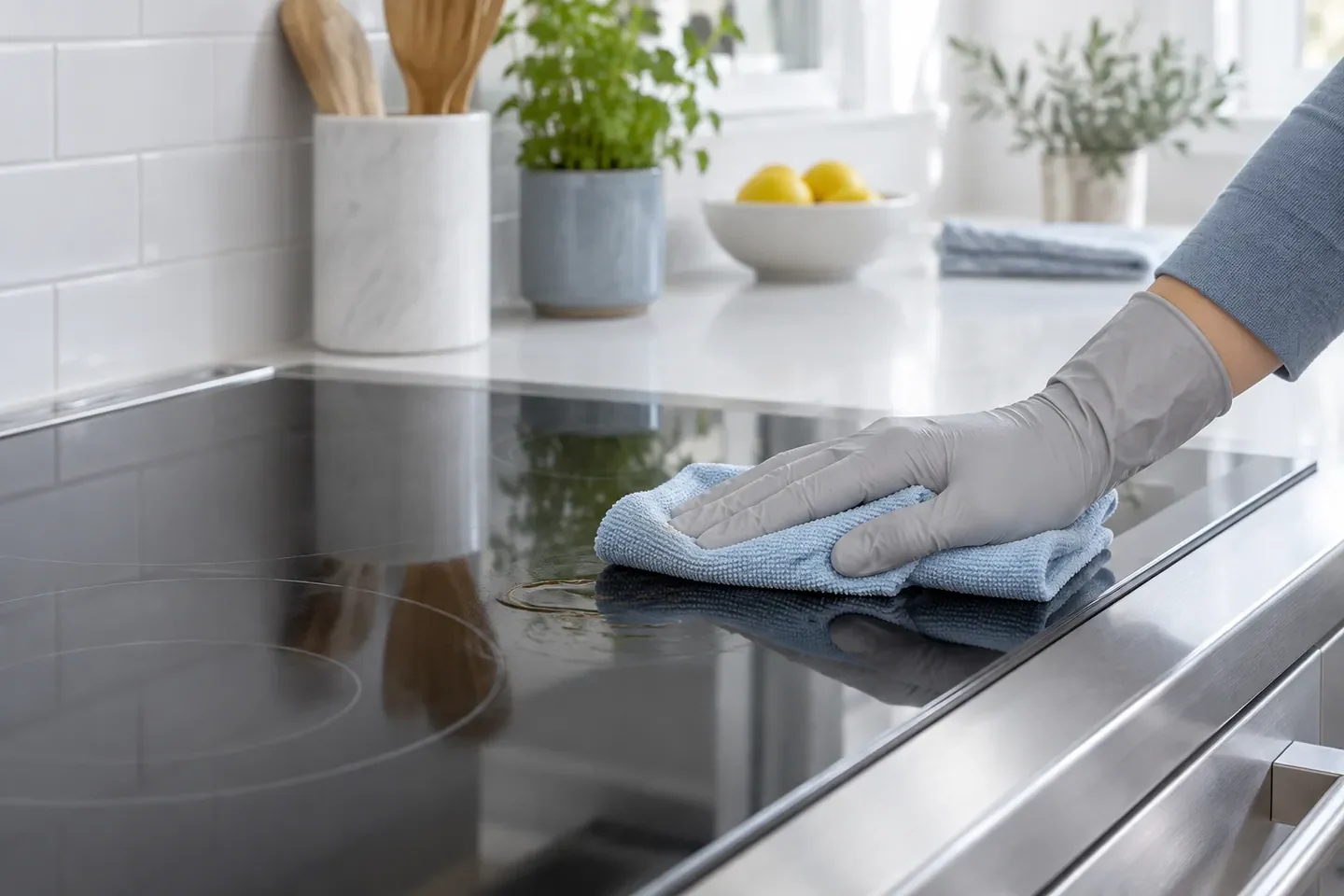
The right glass cooktop cleaner depends on the surface. Burnt rings and boil-over crust on a ceramic glass cooktop need a mild alkaline formula to soften them before you scrape, while fingerprints and smudges on stainless fridges, dishwashers, and range hoods only need a near-neutral polish wiped with the grain. Strong degreasers tend to leave streaks on stainless. CleenU matches cooktop, stainless, and kitchen degreaser formulas to the surface and makes private-label and OEM/ODM versions for brands, distributors, and online sellers.
Tune alkalinity, shine, and scent for cooktops or stainless
Samples are usually ready in 3–5 days
Trigger, bottle size, and scraper or cloth kits
Private-label cooktop and stainless cleaners from 500 bottles
For burnt rings and boil-over crust on a glass or induction cooktop, let it cool, spray a mild alkaline cooktop cleaner, wait 2–3 minutes, scrape with a cooktop scraper held flat, and buff. For fingerprints, smudges, and water marks on stainless fridges, dishwashers, and sinks, spray a near-neutral stainless polish onto a cloth, wipe with the grain, and buff the same way. For heavy grease on a range hood, remove it with a kitchen degreaser first, then finish with the stainless polish. Spot-test black stainless and coated panels first.
Burnt rings and boil-over crust: once cool, spray the Ceramic Glass Cooktop Cleaner, wait 2–3 minutes, scrape at a low angle, and buff.
Fingerprints and smudges on doors: spray the Stainless Steel Cleaner & Polish onto a cloth, wipe with the grain, and buff dry.
Sticky grease: remove it with the Kitchen Cleaner & Degreaser after 1–3 minutes, then finish with the stainless polish along the grain.
Water marks and smudges: wipe with the stainless polish, rinse with clean water, and dry.
Spot-test natural stone, coated, and wood surfaces in a hidden area first.
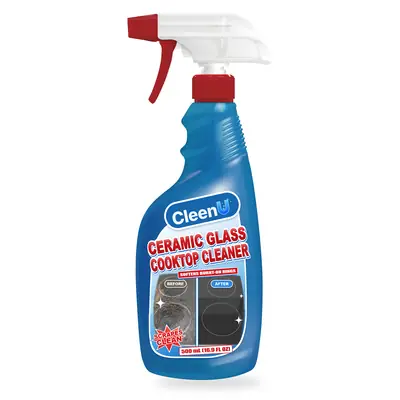
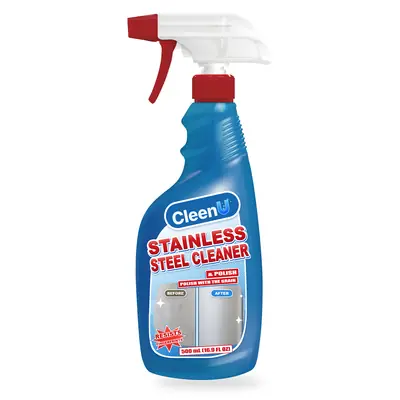
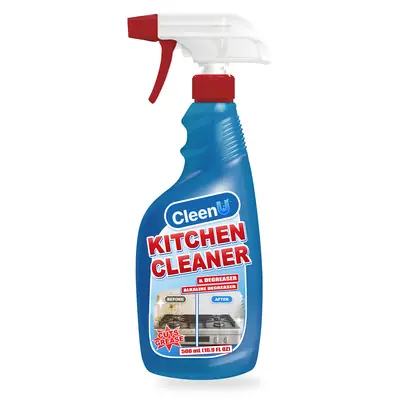
Tell us what you are cleaning, the surface, and how you clean it, and we will point you to the right product or formula.
Get Product AdviceWe tune alkalinity, shine, and scent separately for ceramic glass cooktops and brushed stainless.
Free samples are usually ready in 3–5 days, then tuned for scraping feel, shine, and scent based on your feedback.
Trigger, bottle size, label design and language, plus cooktop scraper and microfiber e-commerce kits.
Each formula keeps batch retention samples and a COA, so color, scent, and feel stay consistent on reorders.
Four common cooktop and stainless jobs, compared by product, pH, foam, and method. Burnt cooktop marks come off with a mild alkaline softener and a scraper, fingerprints and water marks with a near-neutral polish wiped with the grain, and only heavy grease needs a stronger kitchen degreaser.
| Cleaning Job | Where | Strength | Foam | Method |
|---|---|---|---|---|
| Burnt Cooktop Rings | Glass and induction cooktops | Mildly alkaline, pH 8.5–10.0 | Low-foam spray | Wait 2–3 minutes, then scrape |
| Stainless Fingerprints | Fridges, dishwashers, and oven doors | Near-neutral, pH 7.0–8.5 | Low-foam fine mist | Spray the cloth and wipe with the grain |
| Stainless Sink Spots | Stainless sinks and faucet surrounds | Near-neutral, pH 7.0–8.5 | Low-foam fine mist | Wipe, rinse with water, and dry |
| Greasy Range Hoods | Range hood exteriors and baffles | Alkaline, pH 10.0–11.5 | Mist or foam | Wait 1–3 minutes, then wipe |
Tell ceramic glass, brushed stainless, and coated panels apart before you pick a product.
Try a little on black stainless or coated panels in a hidden area and make sure nothing streaks or fades.
Wait for the cooktop to cool; on stainless, spray the cloth and wipe with the grain. Never mix cleaners.
Make sure burnt marks are fully scraped off and stainless has no streaks or water spots; buff again if needed.
Common questions about how to use it, which surfaces are safe, and private-label orders.
Once the cooktop is completely cool, spray the ceramic glass cooktop cleaner, wait 2–3 minutes to soften the marks, scrape with a cooktop scraper held at a low angle, then wipe and buff with a microfiber cloth. Treat thick rings in two passes instead of scrubbing with steel wool.
Spray the stainless steel cleaner and polish onto a microfiber cloth, wipe with the grain, then buff the same direction with a second dry cloth. Spraying heavily on the panel causes drips, and circular wiping against the grain leaves streaks.
Briefly, to cut heavy grease on a range hood, but wipe it off with clean water and finish with a stainless polish wiped with the grain. Everyday fingerprints and smudges don't need a strong degreaser; a near-neutral polish is enough and less likely to streak.
Yes. Both use a ceramic glass top, so the ceramic glass cooktop cleaner works on either. Don't soak the touch controls; spray the cloth and wipe that area instead.
Black stainless usually has a coating, so spot-test in a hidden area first and make sure it doesn't streak or fade. Avoid abrasive cleaners.
Yes. A sink is a food-contact area, so rinse it with clean water after wiping with the polish and dry it. That removes residue and cuts down on water spots.
Settle four things: cooktop, stainless, or a combined kit; trigger type and bottle size; scent; and your target market and label language. Then we'll arrange free samples, usually ready in 3–5 days.
We provide SDS/MSDS, TDS, and batch COA, and prepare label copy for your target market. These documents aren't posted for download; we send them on request after you inquire.
Yes. A common setup pairs the cooktop cleaner with a scraper and the stainless polish with a microfiber cloth as a kitchen e-commerce kit. Standard projects start at 500 bottles, with production scheduled with the order after packaging and labels are approved.
Cooktop and stainless cleaning comes down to the surface: a mild alkaline cooktop cleaner and scraper for burnt rings on ceramic glass, a near-neutral polish wiped with the grain for fingerprints, smudges, and water marks on stainless, and a kitchen degreaser only for heavy grease. Keep steel wool and abrasives off both. If you're launching your own cooktop or stainless cleaner, CleenU can start from these three formulas, with free samples first and a 500-bottle MOQ.
Tell us your target market, the surfaces you clean, and your packaging ideas. Free samples are usually ready in 3–5 days.