Formula Tuning
Tune formula and residue for tile, vinyl, or stone floors

The right tile floor cleaner starts with the floor. Tile and SPC vinyl handle water well, but too much cleaner leaves them sticky and slippery; sheet vinyl, LVT, and rubber mats don't like solvents or harsh pads and need a gentle resilient-floor formula; marble, granite, and other stone dull with acids and strong alkali and need a neutral formula. CleenU matches three neutral floor products to the material and makes private-label and OEM/ODM floor cleaners for brands, distributors, and online sellers.
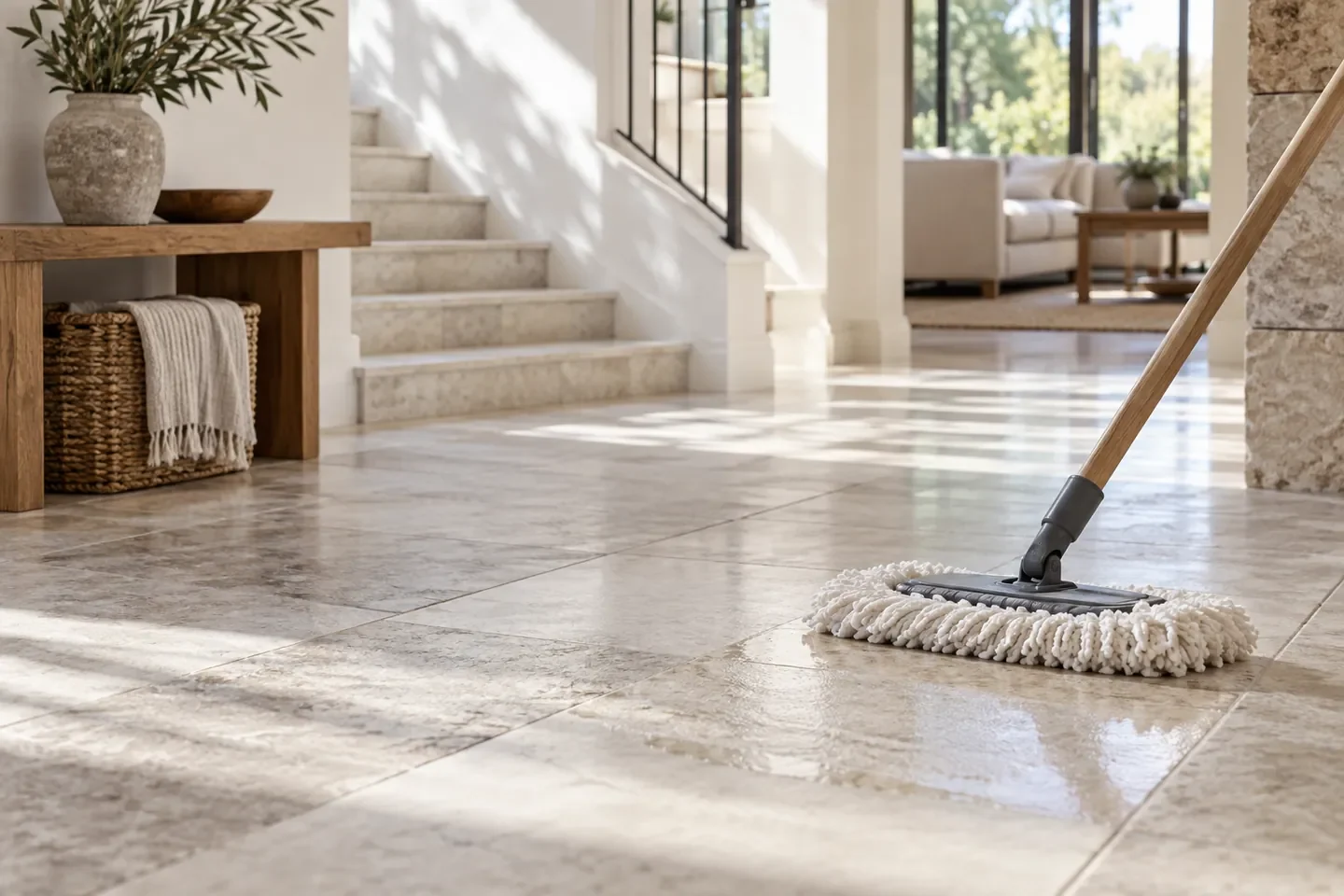
Tune formula and residue for tile, vinyl, or stone floors
Samples are usually ready in 3–5 days
Ready-to-use spray or concentrate, size, and label language
Private-label floor cleaners from 500 bottles
For everyday footprints and dust on tile, SPC, laminate, and sealed wood, sweep, spray a neutral no-rinse floor cleaner, and mop with a flat mop, or dilute 1:20 for large areas. For sheet vinyl, LVT, and rubber mats, mop with a resilient-floor concentrate at 1:20, and spot-clean scuffs with a drop of concentrate on a white pad. For marble, granite, and terrazzo, mop with a neutral tile and stone cleaner at 1:20. Sticky floors usually mean too much product, so stick to the dilution; none of the three needs a rinse.
Everyday footprints and dust: sweep, spray the Floor Cleaner, and flat-mop clean, or dilute 1:20 for large areas; no rinse.
Marble, granite, and terrazzo: mop with the neutral Tile & Stone Cleaner at 1:20 so the stone doesn't dull.
Scuffs, dull film, and tackiness: mop with the Vinyl & Plastic Floor Cleaner at 1:20, and spot-clean scuffs with concentrate on a white pad.
Grime in the texture: brush with the vinyl floor cleaner at 1:20, mop clean, and let dry.
Spot-test natural stone, coated, and wood surfaces in a hidden area first.
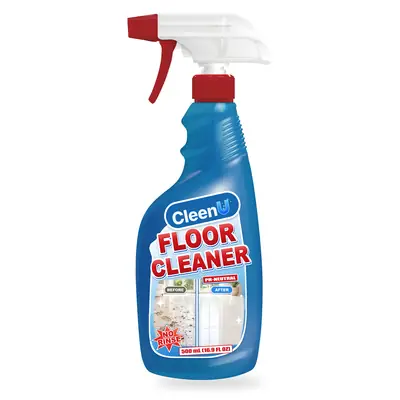
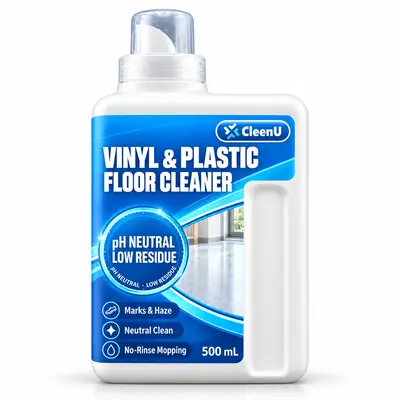
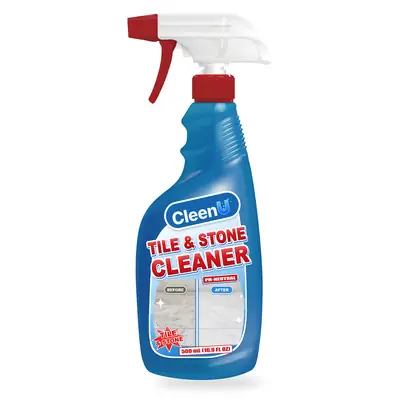
Tell us what you are cleaning, the surface, and how you clean it, and we will point you to the right product or formula.
Get Product AdviceWe tune formula, residue, and sheen separately for tile, vinyl, and stone floors.
Free samples are usually ready in 3–5 days, then tuned for dilution, cleaning power, and scent based on your mop tests.
Ready-to-use sprays or concentrates, bottle size, dilution directions, label design and language, plus mop bundles.
Each formula keeps batch retention samples and a COA, so color, scent, and feel stay consistent on reorders.
Three common hard floors, compared by product, pH, foam, and method. All three are neutral, diluted 1:20, and need no rinse; the difference is the material each suits: tile and SPC, resilient vinyl, or natural stone.
| Cleaning Job | Where | Strength | Foam | Method |
|---|---|---|---|---|
| Tile & SPC Floors | Tile, SPC, laminate, and sealed wood | Neutral, pH 7.0–8.5 | Low | Spray and mop or dilute 1:20, no rinse |
| Vinyl & Rubber | Sheet vinyl, LVT, and rubber mats | Neutral, pH 7.0–9.0 | Low | Mop at 1:20; spot-clean scuffs with concentrate |
| Stone Floors | Marble, granite, and terrazzo | Neutral, pH 7.0–8.5 | Low | Mop at 1:20, no rinse |
Tell tile and SPC, vinyl, rubber mats, and natural stone apart before you pick a product.
Stick to 1:20 rather than eyeballing it; this is the key to avoiding a sticky floor.
Wring the mop well, keep solvents and coarse pads off vinyl, and watch for slips until dry.
Once dry, feel the floor; if it's tacky, use less next time.
Common questions about how to use it, which surfaces are safe, and private-label orders.
Usually too much cleaner or the wrong dilution: leftover surfactant dries into a film that feels tacky. Dilute to the label, 1:20 (50 mL in 1 L of water), and wring the mop well. If the floor is already sticky, mop once with plain water and use less next time.
Mop with the vinyl and plastic floor cleaner at 1:20, no rinse, and spot-clean scuffs and black marks with a drop of concentrate on a white pad. Avoid solvents, coarse pads, and steel wool, which can leave vinyl tacky, scratched, or dull.
Yes. LVT and SPC can take the neutral no-rinse floor cleaner as a spray-and-mop, or the vinyl floor cleaner at 1:20; neither needs a rinse.
Use the neutral tile and stone cleaner at 1:20 and mop with no rinse; it won't dull the stone. Avoid acidic or strongly alkaline cleaners, and use a dedicated remover for rust or soaked-in oil.
It's not recommended. Floor cleaner foams and leaves residue that doesn't suit machine tanks and lines; use a low-foam robot mop solution.
Scrub or mop with the vinyl and plastic floor cleaner at 1:20, brush grime out of the texture with a soft brush, rinse or mop clean, and let dry.
Settle four things: tile, vinyl, or stone focus; ready-to-use spray or concentrate; scent and bottle size; and your target market and label language. Then we'll arrange free samples, usually ready in 3–5 days.
We provide SDS/MSDS, TDS, and batch COA, and prepare label copy for your target market. These documents aren't posted for download; we send them on request after you inquire.
Standard projects start at 500 bottles. Free samples are usually ready in 3–5 days, and production is scheduled after packaging and labels are approved.
Hard floor cleaning comes down to knowing the material and diluting correctly: a neutral no-rinse floor cleaner for tile and SPC, a resilient-floor concentrate for vinyl, LVT, and rubber mats, and a neutral stone cleaner for marble and other stone, all at 1:20 with no rinse. If it feels sticky, use less. If you're building a floor cleaning line, CleenU can start from these three formulas, with free samples first and a 500-bottle MOQ.
Tell us your target market, floor types, and packaging ideas. Free samples are usually ready in 3–5 days.