
How-to
How to Clean Every Type of Floor: Hardwood, Laminate, Tile, Vinyl, and Stone
Direct answer
Know your floor before you mop. On hardwood and laminate, use a low-moisture neutral wood cleaner and mop with the grain. On tile, use a diluted neutral floor cleaner. Keep wax and harsh solvents off vinyl plank, and use only neutral, acid-free products on marble and other natural stone.
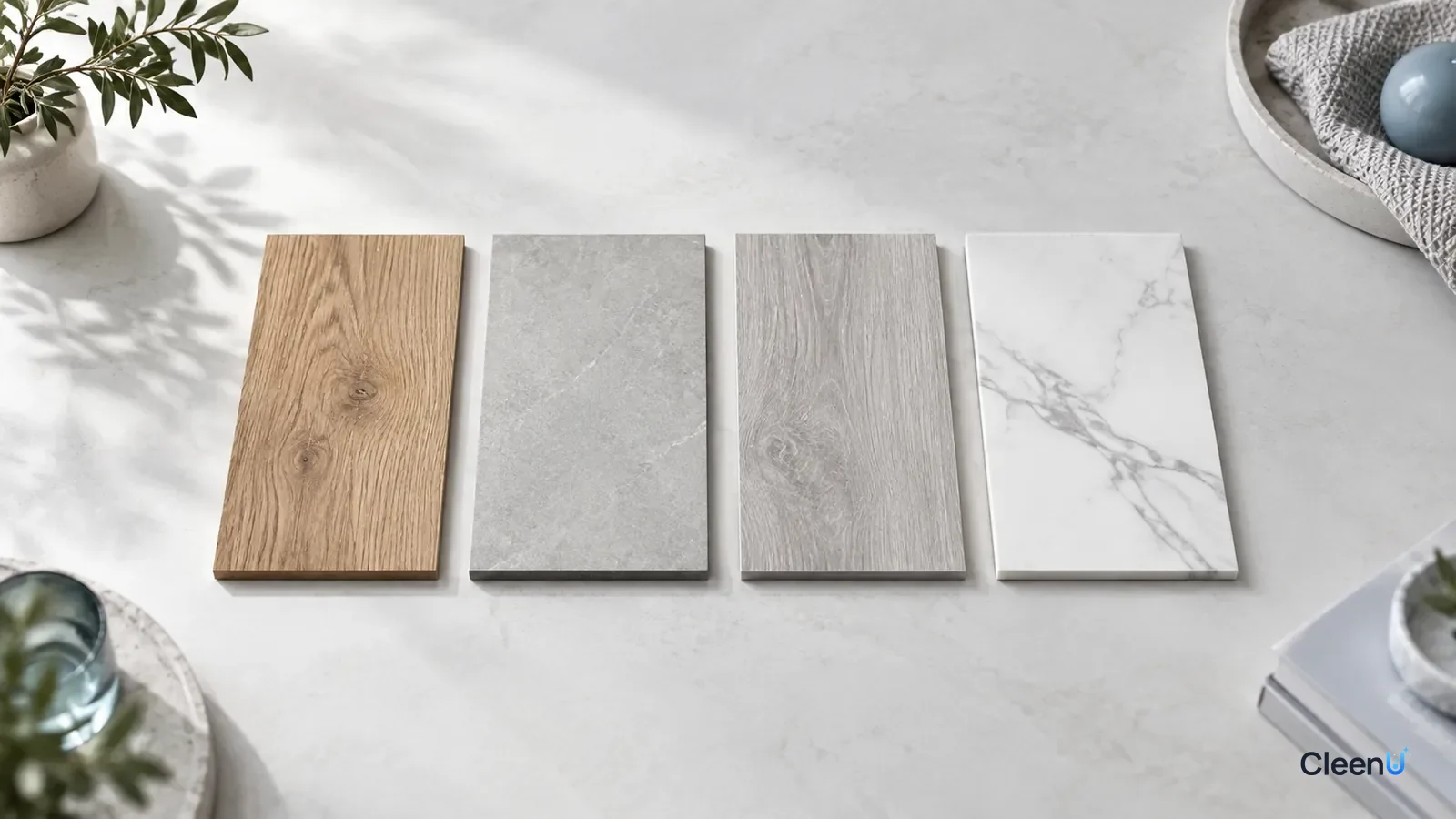
Mopping looks like the simplest chore in the house, yet almost every household has dealt with floors that turn sticky, streaky, cloudy or slick. Usually the problem is not how often you mop. It is a mismatch between the cleaner, the technique and the floor. Solid hardwood swells with water, laminate lifts when water gets into the seams, vinyl plank reacts to wax and solvents, marble etches in acid, and tile is tough but its grout soaks up grime.
What is on your floors
Household floors collect three kinds of soil. The first is grit and dust tracked in on shoes and blown in through windows. It is the main cause of scratches in wood finishes and tile glazes, so always sweep or vacuum before you mop. The second is footprints and body-oil film: the greasy marks left by bare feet and socks. Plain water only spreads them thinner; surfactants have to emulsify and lift them. The third is spot soil such as drinks, sauce, pet drool and greasy prints tracked from the kitchen. Once dry, these stick to the surface and need a cleaner to sit for a moment before you wipe.
A floor cleaner's job is to remove all that without leaving anything new behind. Leaving something behind is exactly where most floor cleaners go wrong. Surfactant residue makes floors tacky, and wax or conditioning agents build up layer by layer until floors feel slick and look dull. That is why low residue matters as much as cleaning power when you choose a floor cleaner.
The three things that decide how mopping turns out
The cleaner. For everyday floors, a neutral cleaner (pH close to 7) is the safe choice. It is gentle on wood finishes, the wear layer on vinyl and natural stone. Acidic or alkaline products are only for specific soils on specific surfaces, and only when the label lists that surface.
The amount of water. This is the most overlooked factor and the one that affects results most. The wetter the mop, the slower the floor dries and the more residue and water marks it leaves. Wood and laminate can also swell and warp if they stay damp. The rule is to use as little water as you can while still getting the floor clean. Ideally the floor dries within a minute or two.
The mop. A microfiber flat mop picks up soil well, releases little water and is easy to control, which suits most household floors. Change or rinse the pad as soon as it gets dirty. Mopping with a dirty pad just spreads dirty water evenly across the floor.
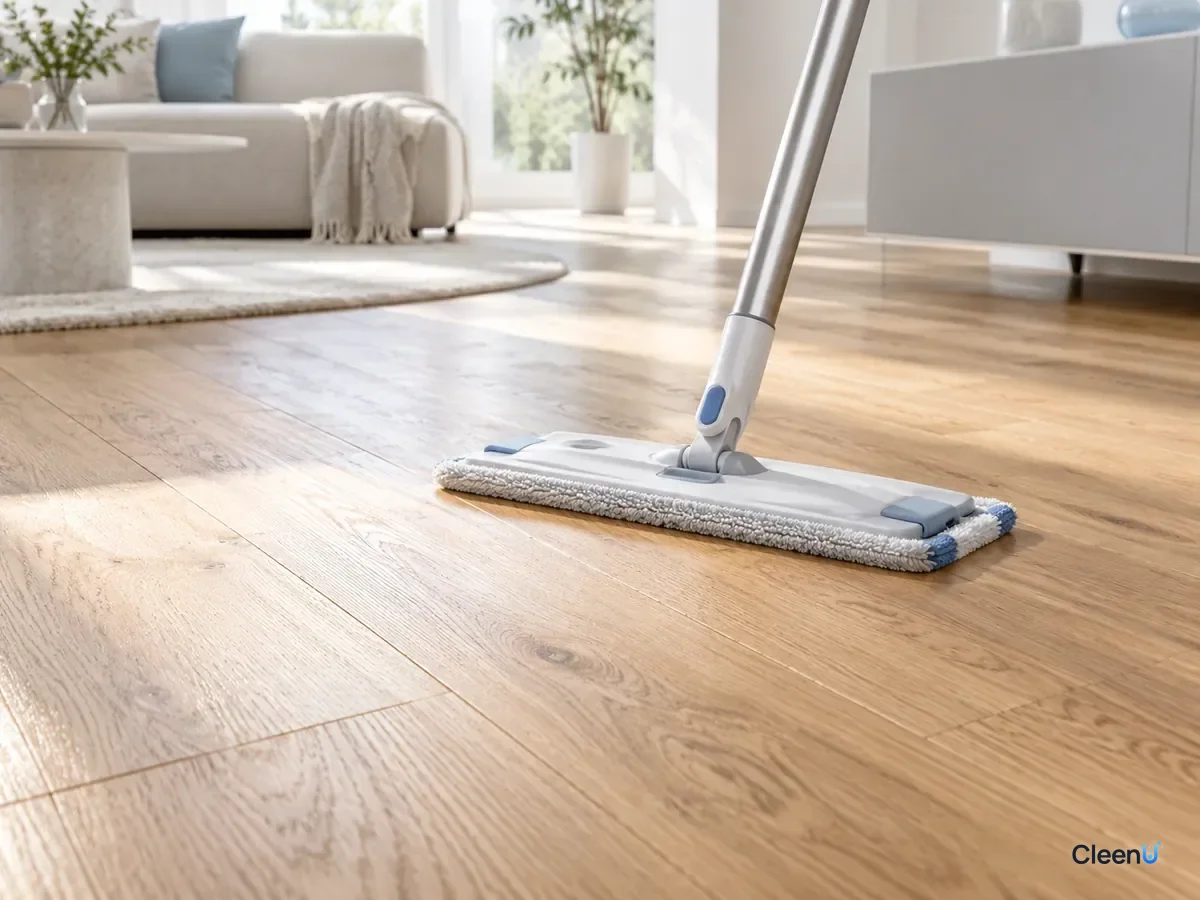
Floor by floor: how to mop each one
Four floor types, four routines
Solid hardwood, engineered wood and laminate
Vacuum first, then mist a wood floor cleaner lightly
Vacuum or sweep to remove grit that would scratch the finish. Mist about 10 square feet at a time with a light coat, or spray the mop pad directly. Never let water pool.
Caution:Do not wet-mop wood with open seams, cupping or no finish; vacuum and spot-clean with a barely damp cloth instead.
Mop with the grain and let it dry within a minute or two
Mop with a microfiber flat mop along the direction of the boards, swapping pads as they get dirty. The floor should dry in a minute or two and be ready to walk on, with no rinse needed.
Tile and polished porcelain
Mop with a diluted neutral cleaner and treat grout separately
Tile handles water well, so mop with a neutral floor cleaner diluted to the label ratio, or spray the floor and follow with a flat mop. When grout lines turn gray or dark, scrub them with a grout brush instead of mopping over and over.
Luxury vinyl plank, LVT and sheet vinyl
Mop with a diluted low-foam cleaner and spot-treat scuffs
Sweep or dust-mop the grit away, dilute the cleaner 1:20, wring the mop well and mop with no rinse afterward. For black scuff marks, apply the concentrate to a white scrub pad and rub lightly.
Caution:Skip wax, oil-based polishes and strong solvents; they make vinyl tacky and can discolor it.
Marble, granite and other natural stone
Use a neutral stone cleaner, then buff dry if you like
Vacuum grit first so it cannot scratch polished stone. Dilute a neutral, acid-free tile and stone cleaner 1:20, wring the mop well and let the floor air-dry. Polished stone can be buffed with a dry cloth afterward for extra shine.
Caution:Vinegar, citric acid and descalers etch marble and leave dull spots that cleaning cannot remove.
Why each floor type needs different treatment
Wood. Whether it is solid hardwood, engineered wood or laminate, the core issue is water. Solid wood absorbs water and swells, warps and gaps. Laminate's core is high-density fiberboard, and if water gets into the seams it swells, and that damage is permanent. So wood floor care comes down to low moisture, fast drying and a neutral pH. CleenU Laminate & Wood Floor Cleaner is built around that idea: pH 6.5–7.5, nonionic surfactants with a quick-dry solvent, no wax, no oil soap and no ammonia. Use about 5 to 8 mL per square meter, mist and mop, and it dries in a minute or two with no rinse. Being wax-free matters because wax builds up layer by layer, leaving wood looking dull and feeling slick and making future cleaning harder.
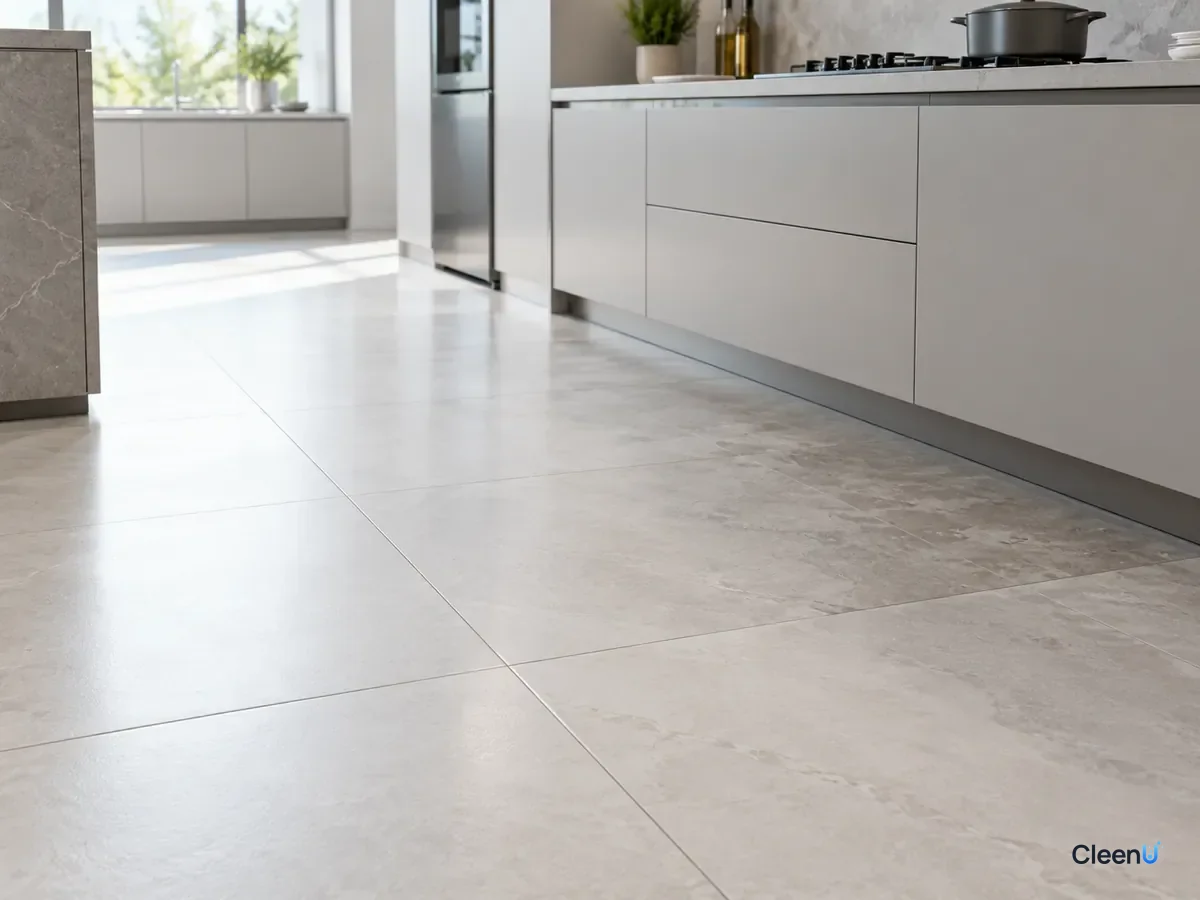
Tile. Glazed tile and polished porcelain stand up to water and cleaners well. Problems usually come from the grout and from residue. Grout is porous and slowly darkens as it absorbs dirty water. A cleaner that is too concentrated, or a mop that is too wet, dries into haze and streaks on shiny tile. A neutral, low-residue cleaner and a well-wrung mop prevent most of this.
Vinyl plank, LVT and sheet vinyl. These resilient floors have a wear layer on top that does not tolerate oily polishes, wax or harsh solvents. They leave the surface tacky and dust-attracting and can discolor it. Clean with a neutral, low-foam cleaner and spot-treat scuffs with concentrate. CleenU Vinyl & Plastic Floor Cleaner comes as a 500 mL concentrate (pH 7.0–9.0 undiluted) with low-foam nonionic surfactants and a chelating agent, no solvent and no chlorine. Dilute it 1:20 and mop, with no rinse needed.
Natural stone. Marble, limestone and terrazzo contain calcium carbonate, which reacts with acid. The surface etches into dull patches that only professional honing can fix. That is why cleaners for natural stone must be neutral and acid-free. Granite is more acid-resistant, but a neutral cleaner still protects its polish and any sealer.
Fitting the routine to your household
How often you mop matters more than how hard. For most homes, vacuuming or sweeping daily and wet-mopping two or three times a week is plenty. Wet-mopping every day keeps wood floors damp for too long and lets residue build up.
With pets, you get paw prints, drool marks and shed hair on top of the usual dirt. Vacuum up the hair before you mop, spot-wipe the food bowl area and entryway daily, and wet-mop the whole house about three times a week. Choose a mild-smelling, low-residue cleaner and let floors dry completely before pets come back.
With a crawling baby, the priority is minimal residue. Dilute to the low end of the label, follow with a plain-water pass, and open a window so floors dry quickly. Store cleaners out of reach.
The kitchen and the entryway are where most floor dirt starts. Greasy footprints travel from the kitchen into the living room, and grit from the entryway spreads through the whole house. A good absorbent mat at the door, a shoes-off habit and a quick daily spot-wipe of kitchen grease with a barely damp mop take a lot of pressure off the rest of your floors.
In humid weather, floors dry slowly. Cut back on wet mopping, use a dry mop or a very well-wrung pad, and run a dehumidifier. Wet-mopping a floor that is already sweating with humidity only makes residue and water marks more obvious.
What to look for in a floor cleaner
pH and approved surfaces. Choose neutral for everyday use, and make sure the label lists your floor type. For natural stone, confirm the product is acid-free.
No-rinse and low residue. A no-rinse formula saves a step, but only when you use it at the label ratio.
No wax or shine agents. Products that promise a glossy finish often contain wax. They look good at first, but over time the buildup turns floors dull and slick. For routine cleaning, go wax-free.
How it is diluted and packaged. Concentrates cost less per use and suit larger homes that mop often, as long as you measure carefully. Ready-to-use spray bottles are handy for spot cleaning and small areas.
Sticky, streaky or slippery floors: what to do
Sticky. The usual cause is too much cleaner or a mop that was not wrung out. Cut back to the label ratio, wring the mop until it is only damp, and mop once with plain water for comparison if needed. If floors are still sticky at the label dose, the product is leaving too much residue for your floor, so switch to a lower-residue formula.
Streaky or hazy. Most often a combination of residue, a dirty pad and hard water. Change pads more often, use less cleaner, and on shiny tile and stone, finish with a dry pad.
Slippery. First make sure the floor is actually dry. If it is still slick once dry, a lubricating film has built up, which is common with cleaners that contain wax or conditioners and often dulls the floor over time. Mop with plain water a few times, then switch to a wax-free neutral cleaner. This is a safety issue as well as a comfort one, since kids and older adults slip more easily.
Cloudy laminate. This can be residue and mineral deposits, or it can be swelling from water getting into the seams. Less cleaner and less water fix the first. The second is damage and needs repair.
After mopping, check these
- The floor dried within a minute or two with no standing water
- It feels dry, not tacky or slippery, under bare feet
- No obvious streaks or haze in raking light
- No water sitting in wood seams or along the baseboards
- The mop pad is washed and drying and the bucket is empty
Stop and check if you see any of these
If wood seams swell or boards start to lift, stone shows dull etched spots, or the floor is clearly slippery once dry, stop using the current cleaner. Clean with plain water and a dry mop until you know what is causing it.
Written for: Homes with wood, tile, vinyl or stone floors that want the right routine for each, and anyone trying to figure out why floors turn sticky, streaky or slipperyNot for: Floors that need waxing, refinishing or honing (that is restoration work), and homes that are mostly carpet
For everyday mopping on tile, vinyl, laminate and sealed wood, we recommend our neutral, no-rinse Floor Cleaner.
Match the product to the floor: for wood, Laminate & Wood Floor Cleaner; for vinyl, LVT and sheet vinyl, Vinyl & Plastic Floor Cleaner; for tile and natural stone, Tile & Stone Cleaner. If you mop with a robot, see the robot mop cleaning solution guide.
Mopping different floors: what people ask most
Can one floor cleaner handle every floor in the house?
A neutral, low-residue floor cleaner covers everyday cleaning on tile, vinyl, laminate and sealed wood. Check that it is acid-free for natural stone, and keep the water light on wood.
Do I need to rinse after using floor cleaner?
Check the label. No-rinse formulas used at the right ratio do not need it. If you used too much, the floor feels sticky, or a baby is crawling on it, a plain-water pass is a good idea.
Can I wet-mop hardwood?
Sealed hardwood is fine with a mop wrung until just damp, as long as it dries fast. Do not wet-mop gapped or unfinished wood.
Can I mop marble with vinegar?
No. Vinegar is an acid and etches marble into dull spots. Use a neutral stone cleaner.
Why do my floors get more slippery the more I mop?
Wax or conditioners in the cleaner are building up a film. Mop with plain water, then switch to a wax-free neutral cleaner.
How often should I mop?
Two or three times a week suits most homes, more often with pets, kids or a busy kitchen. Vacuuming daily matters more than wet-mopping daily.
Can I use a tile cleaner on natural stone shower tile?
Only if it's pH-neutral. Marble, limestone and travertine are etched by acids, including vinegar and many bathroom descalers. Use a neutral cleaner labeled for natural stone, wipe off the residue, and test a hidden spot first. Ceramic and porcelain tile tolerate a wider range of cleaners.
What's the best way to clean vinyl laminate (SPC) floors?
Use a pH-neutral floor cleaner with a damp, well-wrung mop. Avoid wax, oil soaps and harsh solvents, which can leave a film or dull the wear layer, and don't flood the seams. Wipe up spills promptly and let the floor dry fully.
Floor care starts with knowing the floor. Keep wood light on water and mop with the grain, dilute and wring for tile, keep wax and solvents off vinyl, and use only neutral products on natural stone. Vacuum before mopping, wring the mop well and choose a low-residue neutral cleaner, and you will avoid most sticky, streaky and slippery floors. If you see lifting boards, etched stone or a slick surface, stop and find the cause first.