
Q&A
Do You Need to Rinse After Using Floor Cleaner?
Direct answer
Follow the label. A no-rinse floor cleaner diluted at the label ratio doesn't need a rinse. Do a plain-water pass if you used extra cleaner, used it full strength on greasy spots, have a crawling baby or pets that lick the floor, or the floor already feels sticky or slick. Dish soap and shine products always need rinsing.
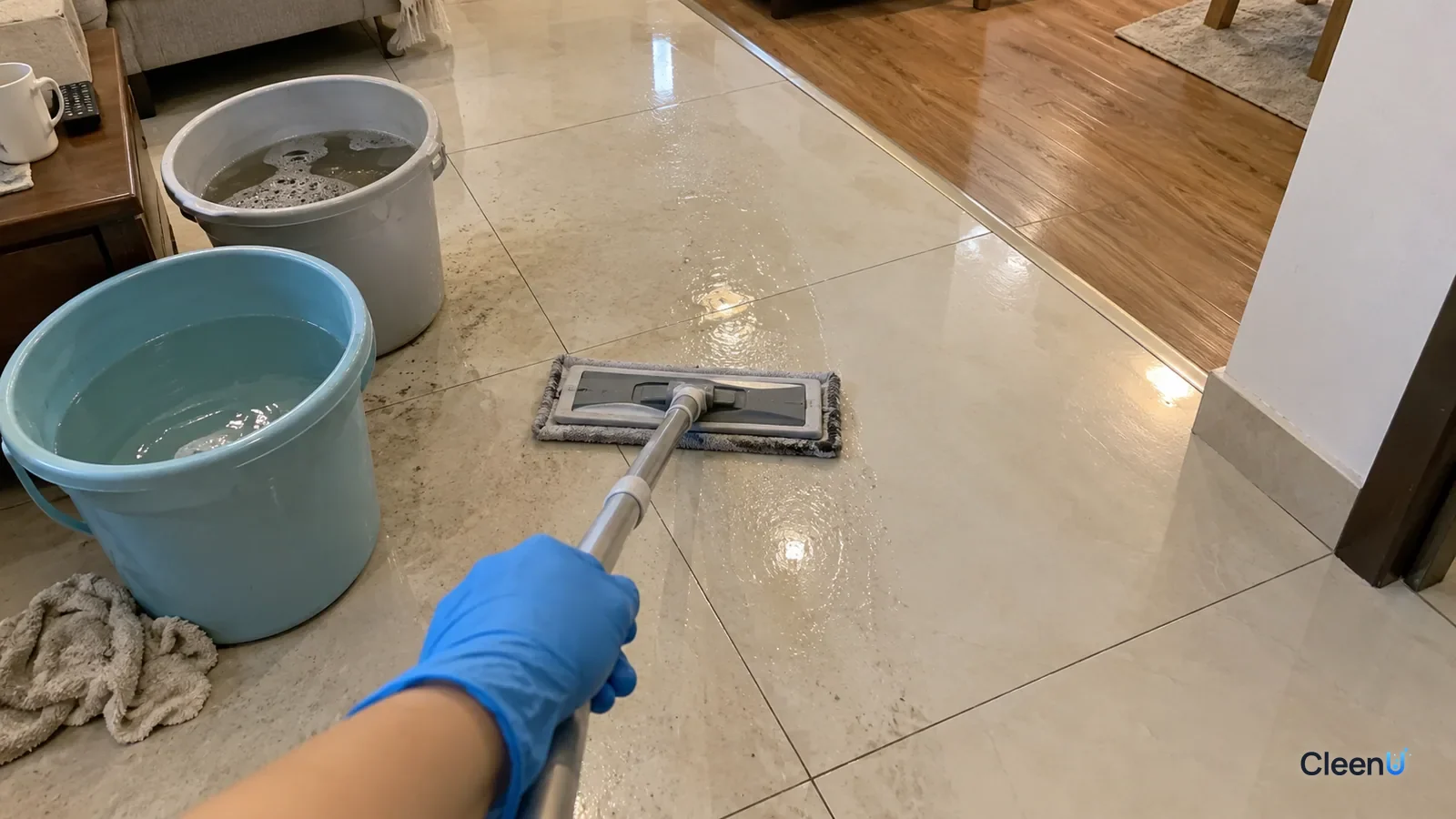
Rinsing after mopping: the questions people ask most
Do no-rinse floor cleaners really not need rinsing?
Not when used at the label ratio. They're formulated with low foam and low solids, so very little is left on the floor after drying.
When should I rinse anyway?
When you used more than the label says, used it full strength on greasy spots, have a crawling baby or pets that lick the floor, or the floor already feels sticky or slick.
Do I need to rinse after mopping with dish soap?
Yes. Dish soap is high in solids and foamy, and without rinsing it always leaves a sticky, slippery residue.
Does rinsing undo the cleaning?
No. The dirt was already emulsified and picked up on the first pass. The rinse just removes leftover cleaner and loosened grime.
My floor is already sticky. What should I do?
Mop two or three times with clean water and a wrung-out pad to lift the residue, then measure cleaner per the label from now on.
Do I need to rinse after my robot mop?
Usually not if you add the right amount of robot mop solution. Sticky floors usually mean too much; cut back and run a few water-only mops.
Whether to rinse after mopping is a common household debate. Some people feel that skipping it leaves residue that isn't good for kids; others think it's a hassle and one pass is enough. The answer depends on what product you used, how much, and who lives in your home.
Why some cleaners are "no-rinse"
After mopping, the water evaporates, but the non-volatile parts of the cleaner, mainly surfactants and builders, stay on the floor. The more that's left, the more the floor turns tacky, streaky, or slick, and the more dust it grabs.
"No-rinse" means the formula keeps those non-volatile ingredients very low: low-foam surfactants, minimal solids, and a little fast-evaporating solvent to help floors dry quickly. Diluted at the right ratio, very little is left after drying, not enough to feel sticky, so a second water pass isn't necessary.
Take CleenU Floor Cleaner as an example. It's a pH-neutral, no-rinse floor cleaner, pH 7.0 to 8.5 as supplied, made with low-foam nonionic surfactants and a small amount of fast-drying solvent, with low solids. Spray and mop straight, or dilute 1:20 for larger areas, with no dwell time. It's made for sealed hard floors like tile, vinyl, laminate, and sealed hardwood, not unsealed or waxed wood, carpet, or robot mop tanks.
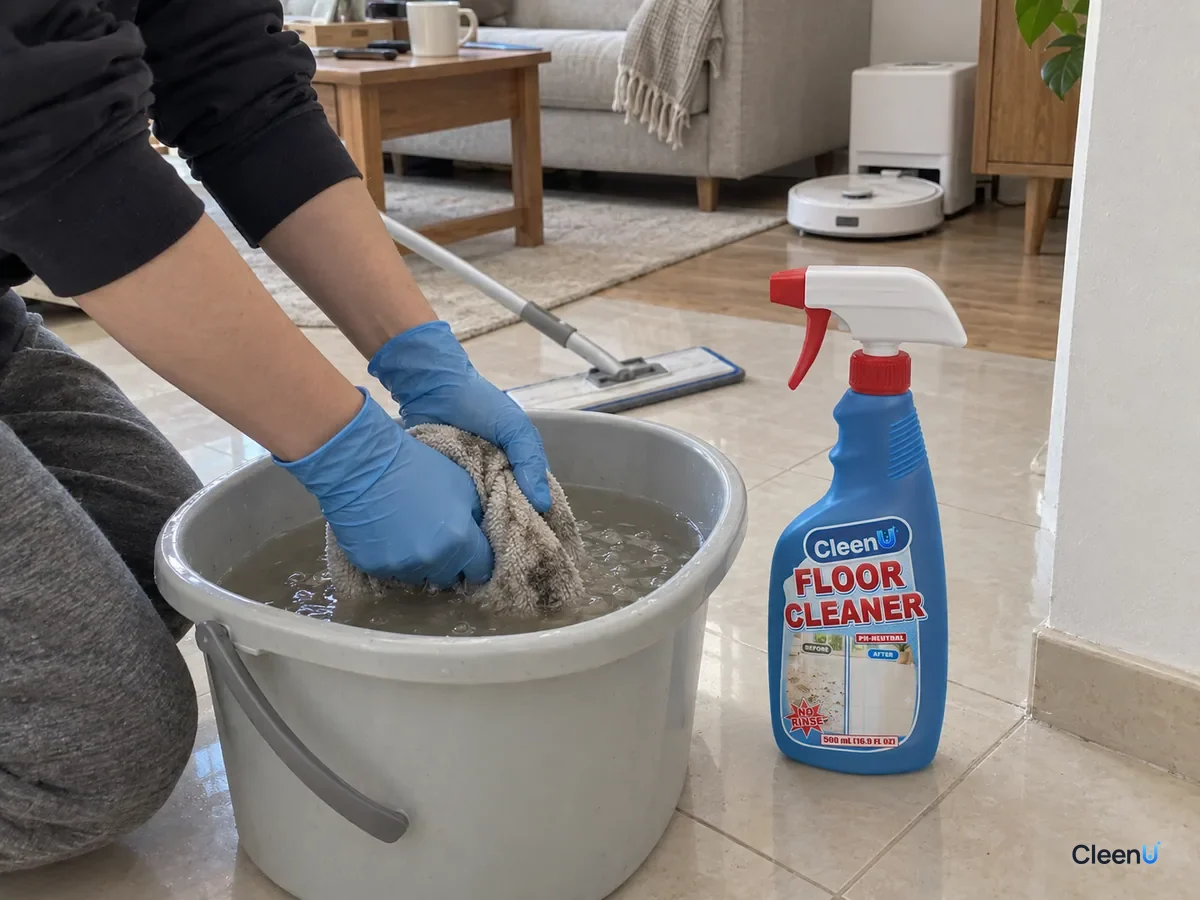
When even a no-rinse cleaner deserves a rinse
No-rinse assumes you're using it at the label ratio. In these situations there may be more residue than usual, so a plain-water pass is a good idea.
You used too much: poured by eye, several capfuls, well above the label ratio.
You used it full strength on greasy spots: in front of the stove or at the entry, where there's more cleaner and emulsified grease left behind.
You have a crawling baby: their hands and knees are on the floor and their hands go in their mouths, so less residue is better.
You have pets that lick the floor or their paws.
The floor already feels sticky or slick, meaning residue has built up and needs to be lifted.
You just deep cleaned: scrubbing loosens long-standing grime that should be rinsed away.
Products that always need a rinse
Dish soap, body wash, and laundry detergent: they aren't made for floors, they're high in solids and foamy, and they always leave residue without a rinse.
"Clean and shine" or "care" floor products: they're designed to leave a layer behind. If you don't want it to build up, or you're switching products, rinse the old layer off first.
Strong acidic or alkaline specialty products used for spot degreasing or descaling: rinse thoroughly afterward.
Bleach and other chlorine products: after the time on the label, rinse-mop with plain water.
How to rinse effectively
Use a fresh bucket of clean water, not the dirty mop water.
Rinse and wring the pad until it's barely damp and mop in one direction.
Change the water when it turns gray.
Open a window or go over the floor with a dry pad so it dries quickly.
What residue actually is, and why it feels sticky or slick
What's left on the floor after mopping isn't really "dirt." It's the part of the cleaner that doesn't evaporate: surfactants, builders, and a small amount of emulsified grease and fine dust they're still holding onto. Once the water is gone, those ingredients spread out into a very thin film.
That film shows up in three ways. Sticky: many surfactants attract some moisture, so on humid days the film pulls water from the air, softens, and feels tacky under bare feet. Slick: the film acts like a lubricant and lowers the friction between your shoes and the floor. Polished and glazed tile, which are already smooth, show this most. Streaky: the film is thicker in some places than others, so light reflects unevenly, and on dark or polished tile you can see the arcs from each swing of the mop.
The bigger problem is that residue attracts dirt. A tacky surface grabs falling dust and the fine grit on shoe soles far more readily than a clean one. Floors with heavy residue tend to look dirty again a day or two after mopping, so people mop more often and add more cleaner, and the cycle feeds itself.
Why the dilution ratio matters so much
No-rinse performance is designed around the label ratio. At 1:20, a 5-liter bucket (about 1.3 gallons) takes roughly 250 mL of cleaner, a little over a cup. Plenty of people pour by eye and end up with two or three times that without realizing it. Double the concentration and you roughly double the non-volatile ingredients left on the floor, and residue that was negligible becomes a film you can feel.
Cleaning power doesn't climb along with concentration. Everyday footprints, dust, and light grease are already emulsified and picked up at the label ratio. Most of the extra cleaner simply stays on the floor. A measuring cup does more for a clean floor than "a little extra for good measure."
Your mop and water matter more than the cleaner
Same cleaner, same ratio, but a dirty mop and dirty water give a very different result. A pad soaked with water from the last room spreads emulsified grease and dust evenly across the next one, and when it dries you get residue and dirt together.
A better routine: rinse and wring the pad after each room. Use two buckets, one with diluted cleaner and one just for rinsing the mop, and change the water when it turns gray. Wring the pad until it's barely damp so there's no visible water trail. Less water means faster drying, and the non-volatile ingredients don't have time to collect into water marks.
Some floors show residue more than others
Dark polished and glazed tile show residue most. Any unevenness in the film turns into a haze when light hits it from the side. Light matte and textured tile hide streaks better but trap dust in their texture, so a sticky film turns them gray faster. Vinyl and laminate have a wear layer, so residue doesn't soak in, but these floors don't like water, so wring the pad extra dry for a rinse pass. Sealed hardwood is sensitive to standing water and repeated wet mopping, so frequent rinsing isn't ideal there. The better fix is measuring cleaner correctly from the start.
Hard water and humidity change the answer
Two household conditions push a floor toward needing a rinse even when you measure carefully. The first is hard water. Calcium and magnesium in tap water can combine with some surfactants and with the fatty acids in kitchen grease to form a dull, insoluble scum, the same chemistry behind soap scum in a shower. Nonionic, low-foam surfactants are less prone to this than ordinary soap, but in very hard water areas, mopping water that dries on the floor still leaves a faint mineral haze. If your kettle scales up quickly, an occasional plain-water pass with a well-wrung pad is reasonable.
The second is humidity. On muggy days, or in rooms that never fully dry out, the floor takes longer to dry and any residue picks up moisture from the air, so it feels tackier than the same amount of residue on a dry day. That's a reason to wring the pad drier and open a window, not to add more cleaner.
A quick test you can do at home
Once the floor is completely dry, rub a clean black or dark cloth firmly across it. If the cloth picks up a white, chalky, or hazy mark, there's more residue than there should be. Do a plain-water pass this time and use less cleaner next time. If the cloth stays clean and the floor feels neither tacky nor slick under bare feet, your current routine doesn't need a rinse.
Sticky or slick floor? Suspect residue first
When a floor feels tacky or slippery after mopping, many people assume it isn't clean enough, add more cleaner, and mop again, and it gets worse. Nine times out of ten, it's too much residue.
Here's an easy test: mop the sticky area twice with clean water and a clean pad, let it dry, then feel it and walk on it. If it's noticeably less tacky, it was residue. Measure your cleaner per the label from now on. For more, see Sticky floor after mopping, Why floors look streaky after mopping, and How to clean every type of floor.
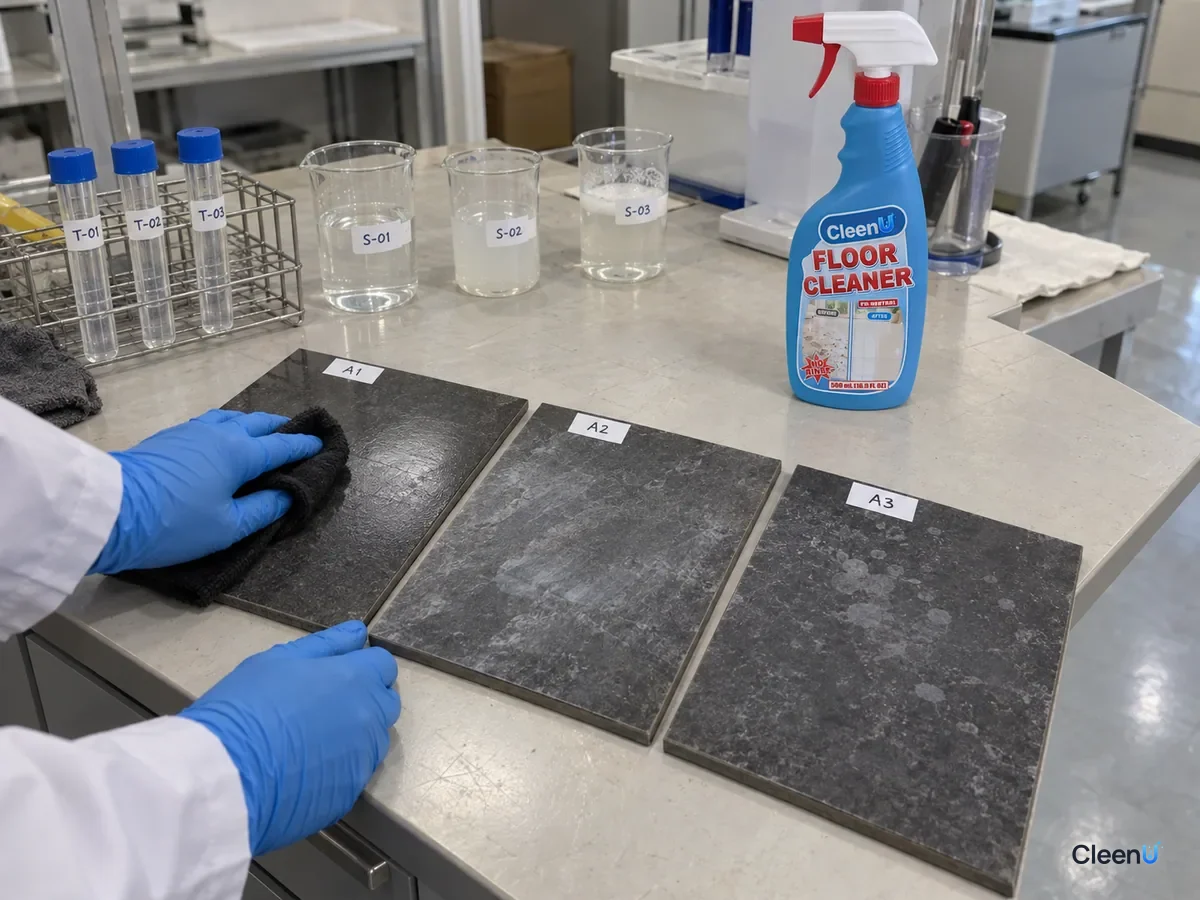
For a low-foam, low-solids floor cleaner that needs no rinse for everyday mopping at the label dilution, take a look at our Floor Cleaner.
Whether to rinse after mopping depends on the label and the situation. A no-rinse cleaner is formulated with low foam and low solids, so at the label dilution it doesn't need a second pass. Rinse with clean water if you used extra cleaner, used it full strength on greasy spots, have a crawling baby or floor-licking pets, the floor already feels sticky or slick, or you just deep cleaned. Dish soap, shine products, strong acids or alkalis, and chlorine products always need rinsing. If a floor feels sticky, suspect residue before reaching for more cleaner.