
Q&A
Can You Mop with Dish Soap, Vinegar, or Bleach?
Direct answer
For everyday mopping, skip dish soap, vinegar, and bleach. Dish soap foams and leaves a sticky film, vinegar etches marble and some finishes, and bleach is harsh and can fade floors. A no-rinse floor cleaner mixed at the label ratio is easier to get right.
Common mop-water add-ins: yes or no
Yes
- A dedicated floor cleaner: low-foam, no-rinse, mixed at the label ratio
No
- Dish soap for routine mopping: foam and residue make floors sticky
- Vinegar on marble, travertine, limestone, or terrazzo: acid etches the surface
- Bleach used with or right after toilet cleaner, vinegar, or ammonia: creates harmful gases
It depends
- Bleach: when you need to disinfect after illness, dilute per the label, ventilate, then rinse-mop with water
- Vinegar on ceramic tile: fine now and then for hard-water spots, not needed daily, and hard on cement grout over time
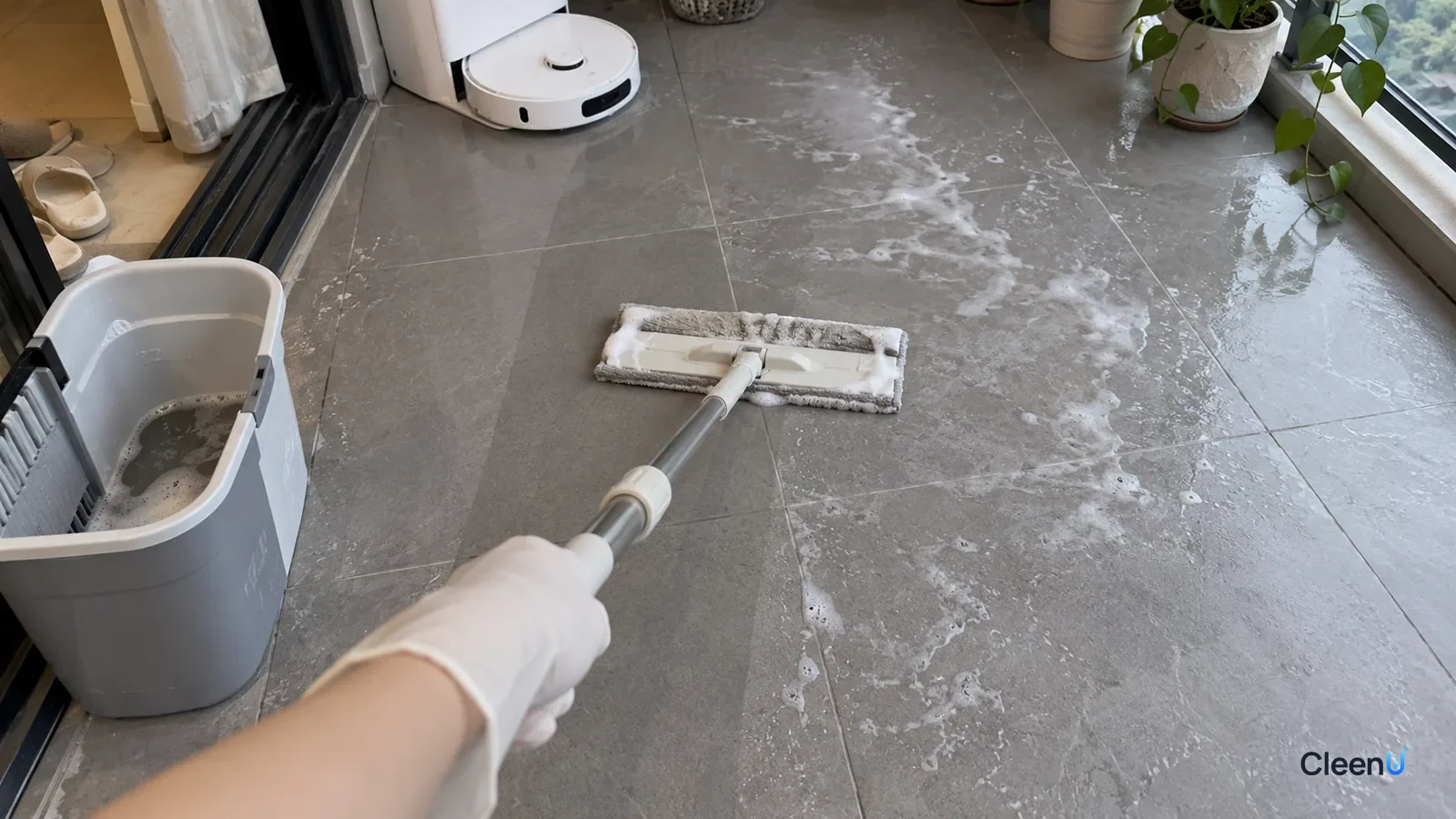
Almost everyone adds something to mop water. A squirt of dish soap to cut grease. A splash of vinegar for odors and germs. A capful of bleach to disinfect. Each has some logic behind it, but for everyday mopping they usually cause more problems than they solve. Here's why, one at a time.
Dish soap: it cuts grease, but the problem is what's left
Dish soap is designed for dishes, which get rinsed under a lot of running water. So it can be foamy and high in surfactants without worrying about residue. Mopping is the opposite: most people mop once and walk away without a rinse pass.
The extra surfactant stays on the floor. Once the water evaporates, it leaves a thin tacky film. Bare feet stick, slippers and paws pick up dust faster, and the floor looks dull and gets dirtier every time you mop. Foam also builds up in the mop head and makes it slick and smelly.
Some dish soaps also contain hand-care ingredients or thickeners that leave a hard-to-remove film on tile and wood. If you really want to use dish soap, add only a drop or two per bucket and follow with a plain-water rinse. At that point, a no-rinse floor cleaner is simply less work.
Vinegar: good on scale, not great on every floor
White vinegar is mostly acetic acid; diluted, it sits around pH 2.5 to 3. That's a weak acid. It dissolves calcium carbonate, so it works on white hard-water spots, and the acidity holds back some bacteria. But vinegar isn't a registered disinfectant and won't replace one.
The issue is what it does to flooring.
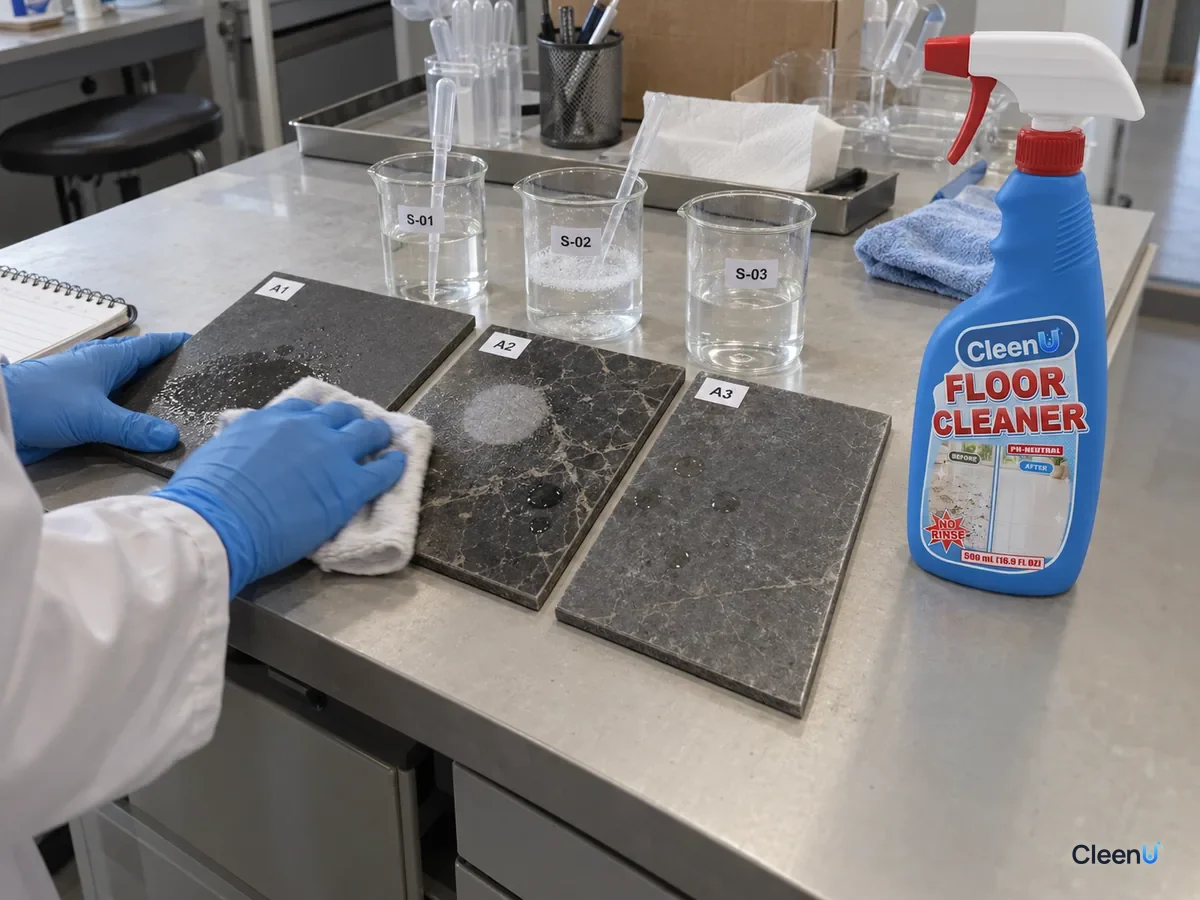
Natural stone, especially marble, limestone, travertine, and terrazzo, is largely calcium carbonate. Vinegar reacts with it and leaves dull, rough etch marks. That damage is permanent.
Ceramic and porcelain tile handle acid fine, but cement-based grout contains alkaline compounds, and repeated acid exposure can make it brittle and sandy.
Finishes on hardwood and laminate, and coatings on some vinyl floors, can dull or haze with long-term acid exposure.
The smell also lingers after mopping, which isn't great for people or pets who are sensitive to it.
So vinegar is fine for occasional spot treatment of hard-water marks on ceramic tile, not as your everyday mop water.
Bleach: useful for disinfecting, unnecessary for routine cleaning
Household bleach is sodium hypochlorite, a chlorine-based disinfectant. When someone in the house has been sick or you need to disinfect a specific area, diluting it per the label makes sense. Adding it to everyday mop water causes a few problems.
Irritation. Hypochlorite reacts with organic soil on the floor and gives off a sharp smell that irritates eyes and airways, especially for kids and pets, who are closest to the floor.
Floor damage. Chlorine bleaches and oxidizes. It can fade wood finishes, colored grout, and rug edges, and residue over time can corrode metal thresholds and drain covers.
Dangerous mixing. Bleach plus acidic cleaners like toilet bowl cleaner or vinegar releases chlorine gas. Bleach plus ammonia produces chloramine vapors. Cleaning the bathroom with several products back to back is exactly when this happens.
When you do need to disinfect, dilute bleach per the label, open windows, and rinse-mop with plain water afterward to remove residue. For everyday cleaning, removing the dirt is enough.
What should go in mop water?
Everyday mopping needs something that lifts shoe marks, dusty film, and light grease without foaming or leaving residue, that's safe for the floor, and that smells mild. That's exactly what a dedicated floor cleaner is designed to do.
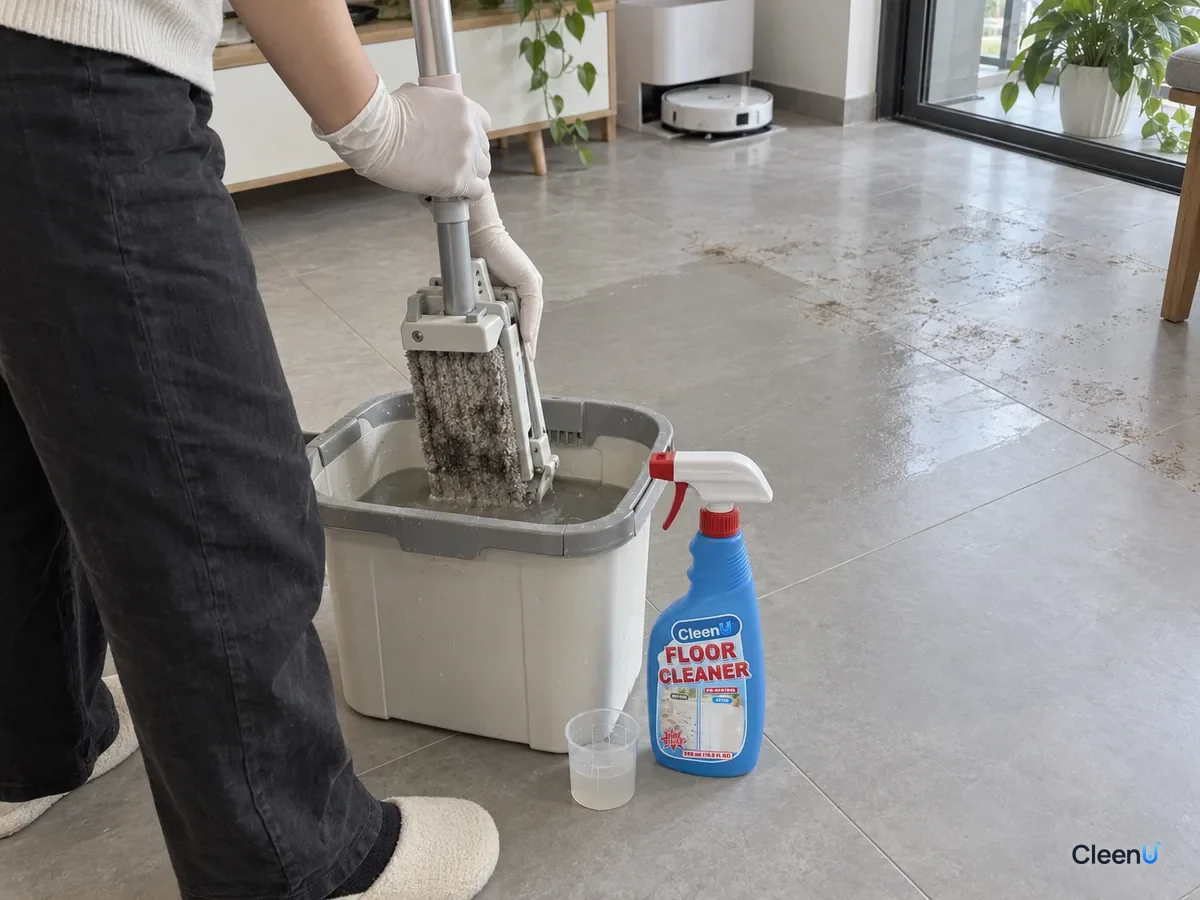
Take CleenU Floor Cleaner as an example. It's a pH-neutral, no-rinse floor cleaner, pH 7.0 to 8.5 as supplied, made with low-foam nonionic surfactants and a small amount of fast-drying solvent, with low solids so no rinse is needed. Spray and mop as is, or mix 1:20 with water for larger areas. No dwell time needed.
Low foam means no suds building up on the floor or in the mop. Low solids means very little non-volatile material is left after the water evaporates, so floors don't turn sticky. The small amount of fast-drying solvent helps the floor dry faster with fewer water marks. It's made for sealed hard floors like ceramic tile, vinyl, laminate, and sealed hardwood. It isn't for unsealed or waxed or oiled wood, carpet, or robot mop tanks (those need a low-foam robot mop solution).
To compare how different floors should be mopped, see How to clean every type of floor.
What mop water actually has to deal with
To figure out what belongs in the bucket, look at what's actually on the floor. Household floor soil is usually four things stacked together.
First, particles: fine grit and dust tracked in from outside, or litter a pet kicks out. They aren't sticky on their own, but they get glued down by the next layer. Second, oily soil: grease shoes pick up from the street and the kitchen, plus skin oil from bare feet. It spreads into an invisible film, and that film is what holds dust to the floor and makes it look dull. Third, whatever water leaves behind when it dries: hardness minerals from tap water and sugar from spilled drinks. Fourth, leftovers from mopping itself, the dish soap or cleaner that never got picked up last time.
What handles most of that is surfactant doing two jobs, wetting and emulsifying. It lets water spread and get underneath the oil film, breaks the oil into tiny droplets that cling to the mop fibers, and frees the particles the oil was holding so they leave with the mop. None of that requires acid or chlorine. Vinegar's acid only helps with the mineral part. Bleach is an oxidizer meant for disinfecting; it doesn't remove grease film or dust any better than a cleaner, and it reacts with organic soil on the floor to make that sharp smell. That's why add-ins tend to fix one small part of the problem and create a new one.
How much to mix, how to mop, and how to know it worked
Measure the dose. At 1:20, a 4-liter bucket takes about 200 mL; a measuring cup is far more accurate than pouring by eye. Extra cleaner doesn't clean better. It stays on the floor and turns tacky. If the greasy area by the kitchen needs more, spray-mop that spot instead of making the whole bucket stronger.
Room-temperature or warm water is fine; warm water softens oily film a little faster. Wring the mop until it stops dripping, and work from the cleanest rooms to the dirtiest, leaving the kitchen and entry for last. When the water in the bucket turns noticeably gray, change it, or you're just spreading dirty water back around.
To check the result, wait until the floor is dry and walk across it barefoot: it shouldn't feel sticky or draggy. Look across it toward the light for streaks or white marks. Then wipe a white paper towel across the floor; it shouldn't come up noticeably gray. If all three check out, you're done. Sticky means too much residue; go over it once with plain water. Draggy with white marks usually means hard water or leftover vinegar or dish soap; rinse once with plain water, then go back to the normal dose.
What to use, floor by floor
Ceramic and porcelain tile: a neutral or mildly alkaline floor cleaner day to day, with extra attention by the kitchen where grease builds up. For occasional hard-water spots, wipe with diluted vinegar and follow with plain water.
Hardwood and laminate: a neutral, low-solids cleaner with a barely damp mop and no puddles. No vinegar, no bleach. For sealed hardwood specifically, see How to mop hardwood floors.
Marble and other natural stone: only a neutral cleaner labeled safe for stone. Never vinegar or acidic products.
Vinyl plank and LVT: a neutral, low-foam cleaner. No solvents, no wax.
Stop if you see this
If you smell sharp chlorine or vinegar fumes or your eyes or throat feel irritated, open the windows and leave the room. Never use bleach with or right after toilet bowl cleaner, vinegar, or ammonia. If stone develops dull etch marks, wood finish turns cloudy, or grout gets sandy, stop using that product. If cleaner gets in your eyes, rinse with plenty of water.
Mopping with dish soap, vinegar, or bleach: common questions
Is a few drops of dish soap in mop water okay?
It works, but it's extra effort. One or two drops is plenty, and you'll need a plain-water rinse pass or it turns sticky. A no-rinse floor cleaner is simpler.
Does mopping with vinegar disinfect?
No. Vinegar holds back some bacteria but isn't a disinfectant. When you need to disinfect, use a product made for it and follow the label.
How often should I mop with bleach?
Only when you need to disinfect, such as after someone has been sick. Dilute per the label, ventilate, and rinse-mop with water afterward. There's no need to add it routinely.
Can I use vinegar on hardwood floors?
We don't recommend it. Acid can dull the finish over time, and the smell lingers. Use a neutral, low-solids floor cleaner.
What should I mop with if I have pets?
A low-foam, low-residue floor cleaner with a mild scent, mixed at the label ratio. Let the floor dry fully before pets walk on it. Skip bleach and essential oils.
Can I put regular floor cleaner in my robot mop?
We don't recommend it. Regular floor cleaners may foam or leave residue that doesn't suit the machine's water lines and sensors. Use a low-foam robot mop solution.
For a low-foam, no-rinse cleaner you can spray and mop or dilute 1:20 for everyday tile, vinyl, and sealed wood floors, take a look at our Floor Cleaner.
Dish soap, vinegar, and bleach all fall short as everyday mop-water add-ins. Dish soap foams and leaves a sticky film. Vinegar etches marble and other stone and wears on grout and some finishes. Bleach is harsh, can fade floors, and is dangerous mixed with acidic cleaners, so save it for disinfecting and follow the label. For routine mopping, a low-foam, no-rinse floor cleaner at the label ratio, a neutral formula matched to your floor, and a barely damp mop is the easiest approach.