
Q&A
Can You Put Vinegar or Bleach in a Robot Mop Tank?
Direct answer
It is not recommended. Vinegar is an acid and bleach is a strong oxidizer; over time both can wear out tank seals, the pump and sensors, and they can harm floors. Many robot manuals allow only water or an approved solution, and using something else may affect your warranty. Water or a low-foam robot mop solution is all you need.
What can go in a robot mop's water tank
Yes
- Plain water
- A low-foam cleaning solution made for robot mops, at the label dose
No
- Chlorine bleach
- White vinegar, citric acid or other acidic liquids
- Rubbing alcohol
- Dish soap or regular high-foam floor cleaner
- Essential oils, fragrance, or baking soda solutions
It depends
- A disinfecting or sanitizing solution the robot maker approves for your model: follow the manual
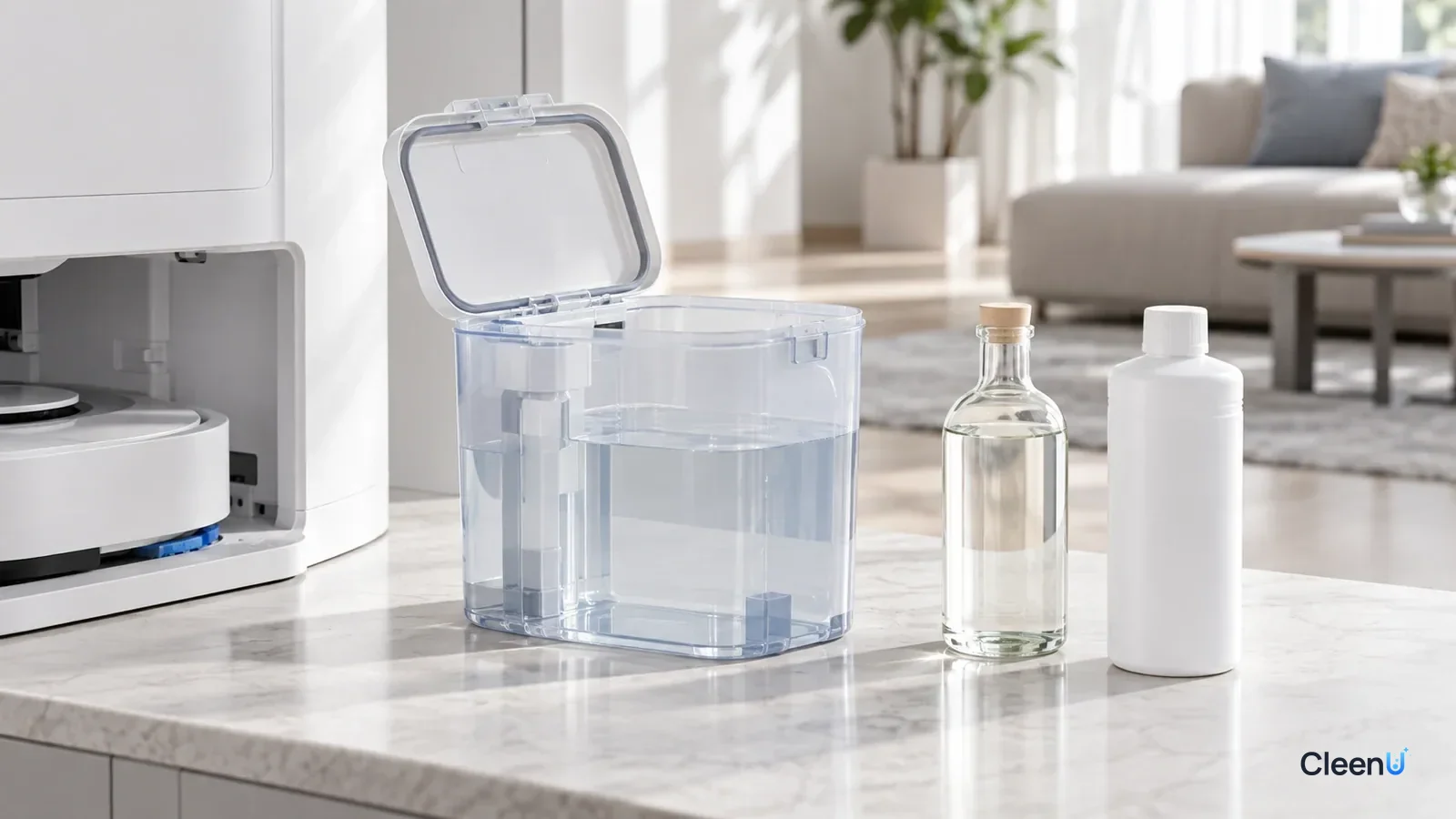
"Mop and disinfect in one go" is why so many people pour vinegar, bleach or disinfectant into a robot mop, especially in homes with older relatives, small kids or pets. The instinct makes sense. But a robot's water system is a small, precise piece of plumbing, and what you put in it matters far more than what goes in a bucket.
Why is a robot's water system so picky?
With a bucket and mop, the solution only touches the mop and the floor. In a robot, the liquid in the tank passes rubber gaskets, silicone tubing, a small pump and tiny outlets before it reaches the pad. On models with a self-cleaning dock, the dirty water is pulled back into a waste tank that has a level sensor inside it.
Those parts are mostly rubber, silicone, plastic and a little metal, designed with water and neutral, low-foam robot solutions in mind. Liquid sits in the lines and flows over those parts again and again. Anything that corrodes rubber or metal, foams heavily, or leaves solid residue causes trouble a little at a time: gaskets harden and crack and start leaking, the pump and outlets clog, and the sensor gets fooled by foam or crystals and throws errors.
So the question is really three questions: will it corrode the parts, will it foam, and will it leave residue or particles behind?
Why not bleach?
Chlorine bleach is sodium hypochlorite, a strong oxidizer. It kills bacteria, and it also oxidizes a lot of materials. Rubber gaskets exposed to it for long periods age, harden and lose their seal; metal parts can corrode; mop pads get bleached; and the finish on sealed wood and laminate floors can turn white or dull.
The bigger concern is mixing. Chlorine bleach combined with acidic products, like vinegar or toilet bowl cleaner, releases toxic chlorine gas; combined with products containing ammonia, it releases other harmful gases. If the tank still holds traces of vinegar or another cleaner and you pour bleach in, you are running a dangerous mix inside the machine.
Why not vinegar?
White vinegar is acetic acid, a weak acid. It feels natural and gentle, but for the machine an acidic liquid sitting in the lines still speeds up gasket aging and isn't kind to the metal parts in the pump.
Vinegar is picky about floors, too. Marble, travertine and terrazzo are mostly calcium carbonate, which acid etches and dulls, and the finish on sealed wood can cloud with repeated exposure. It also doesn't do much against the grime floors actually carry. Vinegar is good at dissolving mineral scale, but most of what a robot mops up is skin oil and greasy film, which vinegar handles poorly.
What about alcohol, disinfectants, essential oils and dish soap?
Rubbing alcohol evaporates fast, can soften some plastics and coatings, and is flammable, which is not something to keep inside a device with a battery and a motor.
Household disinfectants and sanitizers vary widely. Some foam heavily, some leave residue, and most were never designed for a robot's water system or for mopping floors. Whether one is acceptable is up to your robot's maker; don't assume.
The problem with dish soap and regular floor cleaners is foam. Churned in the tanks, the foam builds up until it reaches the waste-tank sensor, triggers a "tank full" error and can spill out of seams. Essential oils and fragrances clog the outlets with oil, and baking soda that doesn't fully dissolve leaves grit and crystals behind.
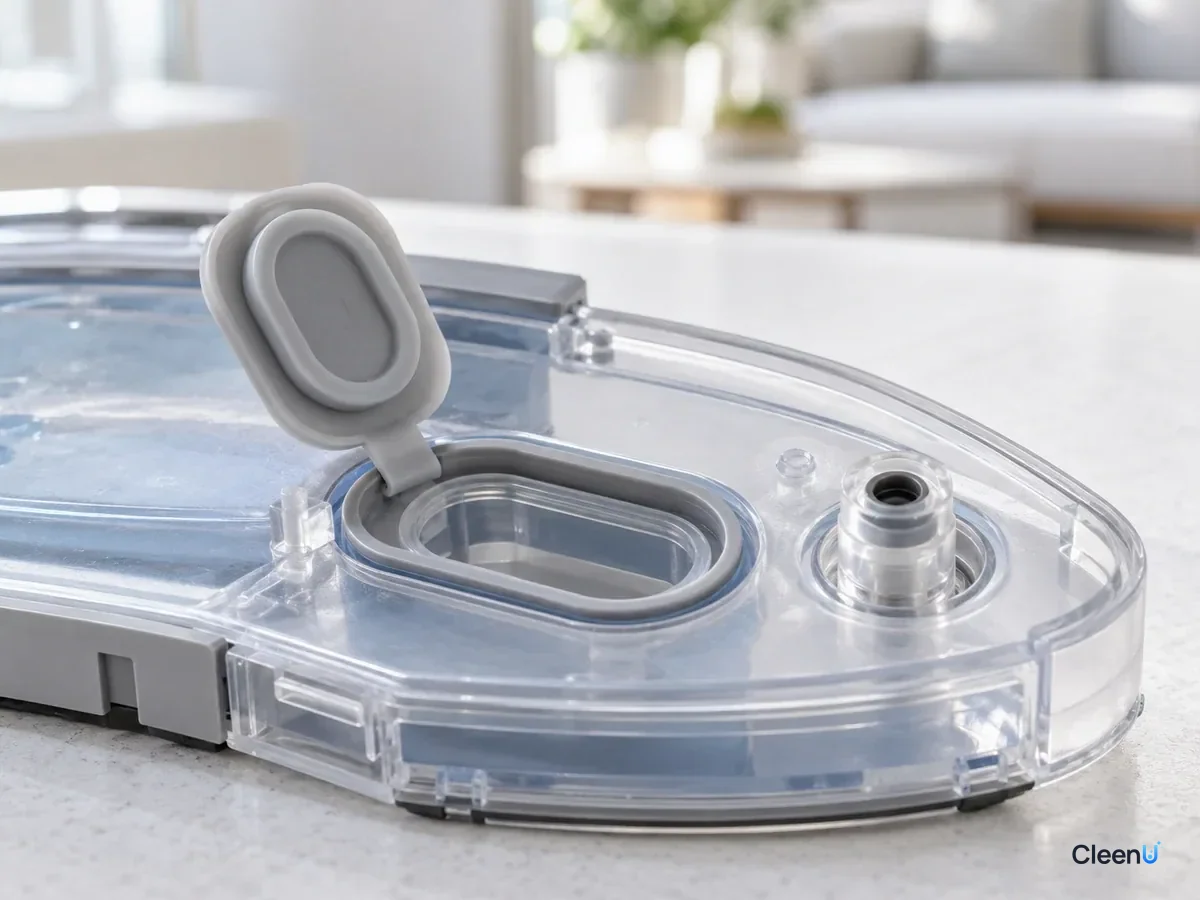
The materials chemistry: what rubber, metal and stone can't handle
The seals and tubing in a robot's water system are mostly rubber or silicone, and the pump and fittings include plastic and a little metal. Deciding whether a liquid can go in the tank really comes down to whether it reacts with those materials.
Sodium hypochlorite (the active in bleach) and rubber: hypochlorite is a strong oxidizer that attacks the chemical bonds in rubber's polymer chains. The rubber ages slowly: first the surface stiffens and loses elasticity, then fine cracks appear, and eventually the seal stops sealing and starts to leak. It happens gradually, so one or two uses show nothing; the damage appears with regular use.
Acid and metal: acetic acid is weak, but long soaking reacts with some metals. Copper and brass fittings and springs are more sensitive. Stainless steel holds up better, but long exposure to acid and chloride can still cause pitting.
Acid and natural stone: marble, terrazzo and some engineered stone are mostly calcium carbonate. Acetic acid reacts with calcium carbonate to form soluble calcium acetate, water and carbon dioxide, dissolving the stone surface bit by bit. The result is dull, darkened or roughened "etch" marks that cleaning can't reverse.
Alcohol and plastic: alcohols can swell or partly dissolve some plastics and coatings, and long contact can leave plastic parts cloudy or brittle.
Why mixing is dangerous: reactions worth remembering
The risk in mixing cleaning products isn't just weaker cleaning. Some combinations produce harmful gases.
Chlorine products plus acidic products: sodium hypochlorite releases chlorine gas under acidic conditions. That's what happens when bleach meets vinegar or an acidic toilet bowl cleaner. Chlorine gas has a sharp, irritating smell and irritates the eyes and airways.
Chlorine products plus ammonia: this forms chloramine gases, which also irritate the airways. Some glass cleaners and urine both contain ammonia compounds, which is one reason pet urine shouldn't be treated with bleach.
Cationic plus anionic surfactants: quat-based disinfectants mixed with anionic products like dish soap bind into an insoluble precipitate. Both stop working, and the solids can clog narrow lines.
A robot tank is a closed space that's used over and over, and traces of the last liquid can remain. Whatever you add, empty and rinse the tank before switching products, and never mix products in the tank.
Keeping things hygienic with kids, pets or older relatives, without disinfectant
What most people are really worried about when they reach for disinfectant is a robot that gets dirtier and smellier over time. Most of the germs and odor, though, don't start on the floor. They start inside the machine: a waste tank left full of dirty water all day, mop pads that never fully dry, and hair and grime built up in the dock's wash tray. Keeping those places clean does far more than adding disinfectant to the tank.
After every run: empty the waste tank, rinse it with water, and leave the lid open to dry. Use up or dump any mixed solution left in the clean-water tank the same day; don't let it sit for days.
Mop pads: if your dock washes and dries the pads, turn the drying function on. If it doesn't, take the pads off after each run, wash them and let them dry completely. When pads turn gray, stiff, or keep smelling after washing, replace them.
Once a week: clean the dock's wash tray and filter to clear out tangled hair and grime, and check the main brush and side brushes for wrapped hair.
Pet areas: clean up vomit and accidents by hand first instead of letting the robot drive through them. Set the area around food and water bowls as a focus zone in the app so it gets an extra pass.
Do that and the robot itself stays clean, the floors it mops don't smell, and there is simply no need for disinfectant in the tank for everyday mopping.
Already put something in? Here is how to fix it
If you have already added vinegar, bleach or another cleaner, don't panic. Work through this in order:
Empty both the clean-water tank and the waste tank, then rinse them with plain water two or three times until you can't smell anything. Fill the clean-water tank with plain water only and run a normal cycle to flush what is left in the lines. Take the mop pads off, rinse them in plain water and let them dry. Finally, check that the gaskets aren't deformed and that the robot isn't showing errors.
If you notice leaks, a smell that won't go away, uneven water flow to the pads or repeated error codes afterward, contact the maker's support. Don't pour in something else to "neutralize" it.
If you really need to disinfect, do it this way
First, separate cleaning from disinfecting. Cleaning removes soil from the floor; disinfecting means killing microbes at a specified concentration and contact time. A robot mop cleaning solution removes soil; it is not a disinfectant. CleenU Robot Vacuum Cleaning Solution is a cleaning product and makes no disinfecting claims.
It can be used in most Roborock, Ecovacs, Dreame, Narwal and iRobot robot mops and in Tineco-type floor washers; where it goes, and whether auto-dosing can be used, depends on the manual. CleenU isn't affiliated with these brands.
In an everyday home, simply cleaning the soil and organic matter off the floor already takes away most of what bacteria need to grow. When you genuinely need to disinfect, say after an illness in the family, a pet vomiting or an accident, the safer route is to clean up the mess by hand, then treat that area by hand with a mop or cloth at the concentration and contact time on the disinfectant's label, and rinse afterward if the label calls for it. Don't pour the disinfectant into the robot. If your robot's maker sells a disinfecting or sanitizing solution approved for your model in the manual, use it as the manual directs.
For everyday mopping, water or a low-foam robot solution is enough. CleenU Robot Vacuum Cleaning Solution, for example, is a neutral, low-foam concentrate with a pH of 6.5 to 7.5, containing no chlorine, no wax and no particles. It dilutes at about 1:50 to 1:100; 10 to 20 mL per fill is usually enough, added to the clean-water tank at the label dose, with no rinse needed afterward. For more on where it goes and how much to use, see where to put cleaning solution in a robot vacuum and how much cleaning solution to use in a robot mop.
This article is part of the Robot Vacuum Cleaning Solution & Maintenance Guide, which covers the full maintenance schedule and links to every troubleshooting guide.
Stop immediately if you notice any of these
A sharp smell, stinging eyes or breathing discomfort after adding something to the tank; heavy foam in the tanks, the lines or on the floor; leaks, error codes or uneven water flow. Stop the robot, open a window, empty the tanks, rinse with plain water, and run it on water only. Never mix chlorine bleach with acidic or ammonia-based cleaners.
More questions about what goes in a robot mop
Can I put vinegar in my robot mop?
It is not recommended. Vinegar is an acid that ages gaskets over time, can etch natural stone like marble, and does little against greasy soil.
Can I put bleach in my robot vacuum tank?
It is not recommended. Bleach is a strong oxidizer that damages gaskets and metal parts and bleaches pads, and it releases toxic gas if it meets an acidic cleaner.
Can I use rubbing alcohol in a robot mop?
It is not recommended. Alcohol is flammable and can soften some plastics and coatings, which is a poor fit for a device with a battery and motor.
Will using disinfectant void my warranty?
It can. Many manuals allow only water or an approved solution, and damage caused by a liquid the manual doesn't allow may not be covered.
Does robot mop cleaning solution disinfect?
No. It removes soil and is not a disinfectant. When you need to disinfect, treat the area by hand following the disinfectant's label.
Can dish soap replace robot mop cleaning solution?
It is not a good idea. Dish soap foams heavily, can trigger false "tank full" errors and overflow, and leaves residue on the floor.
My robot's dirty water tank smells. Can I add bleach to it?
No. Bleach can damage seals and sensors and shouldn't be mixed with cleaning solution. The smell comes from wastewater sitting in the tank, so empty the dirty tank after every run, rinse the tank and filter, and leave the lid open to dry.
For a neutral, low-foam, chlorine-free solution for everyday mopping, try Robot Vacuum Cleaning Solution.
Put only water or a low-foam robot mop solution in the tank. Vinegar, bleach, rubbing alcohol, dish soap and essential oils are all a bad idea: they corrode seals, foam up or leave residue, and they can affect your warranty. If you already added one, empty, rinse and run a water-only cycle. When you truly need to disinfect, do it by hand following the disinfectant's label, not through the robot.