
Troubleshooting
Hazy or Cloudy Wood Floors After Robot Mopping: Is the Cleaning Solution to Blame?
Direct answer
Usually it's surface residue: too much solution, hard-water minerals, or old wax or floor oil combined with cleaner. Wipe a spot with plain water. If the haze fades, it's residue. If it won't wipe off and seems to sit inside the finish, moisture may have gotten into the finish or it's worn.
Check these five things to find the cause of the haze
- How much solution you add each time, and whether you pour by eye and go over the label ratio
- Whether the solution says wax, shine or polish, or has been used alongside other floor-care products
- Whether you live in a hard-water area, with obvious scale in the kettle
- How often the pads are washed, and whether they dry after the dock cleans them
- Whether the floor was ever waxed or treated with floor oil
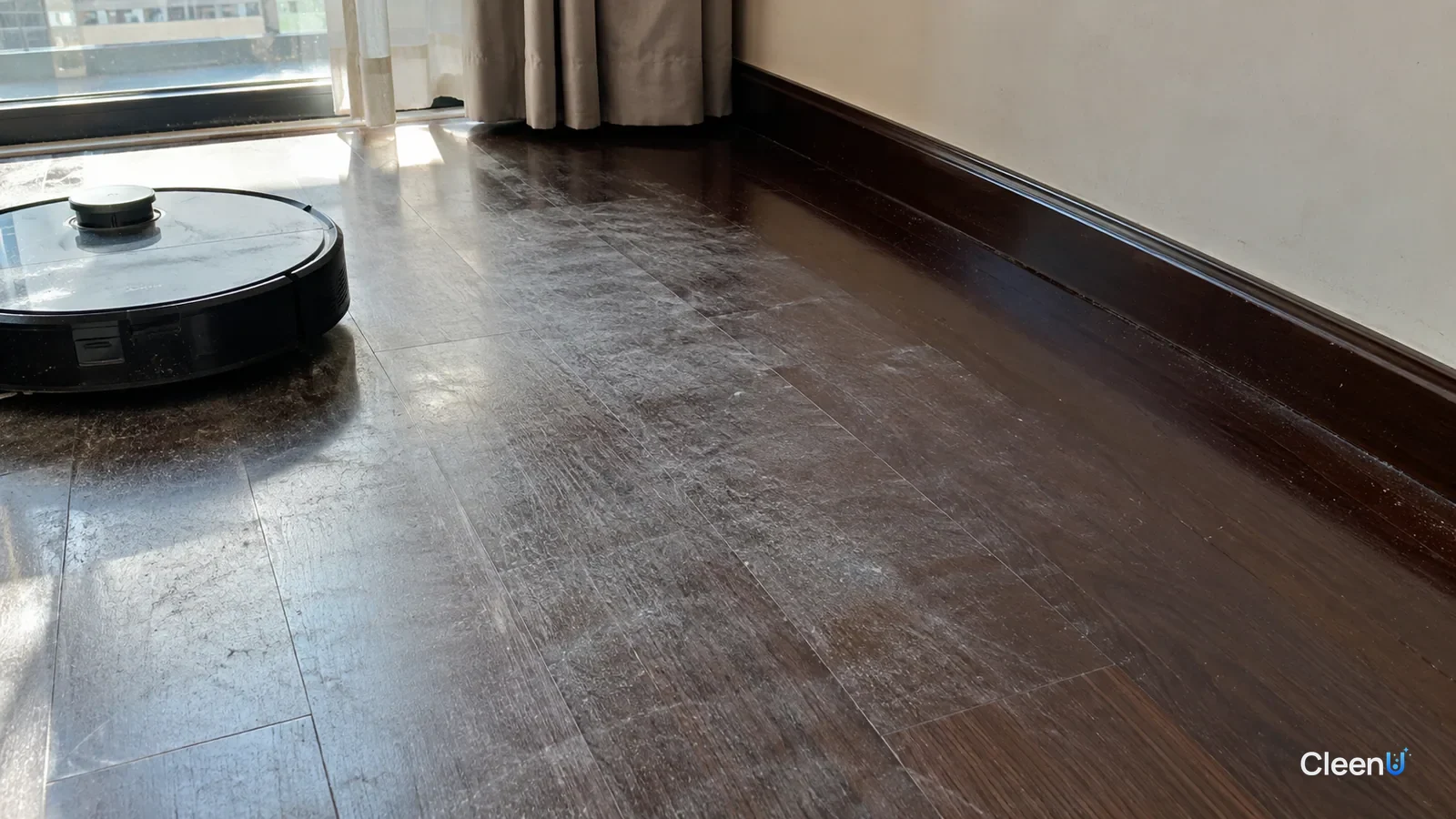
A dark wood floor that used to look rich turns dull and gray after mopping, and in side light it has a whitish haze. Sometimes the whole floor looks cloudy; sometimes the robot's usual path stands out. The first worry is often that the cleaning solution ate into the floor.
In most cases, a hazy wood floor means something has been added to the surface, not that the floor has been damaged. Solution residue, minerals from the water and old wax or floor oil can all leave a very thin film on the finish that scatters light and looks cloudy. Less often, moisture has gotten into the finish or the finish itself has worn, and those need different fixes. Figure out which one you have first, then treat that.
Why a thin film makes a floor look hazy
A wood floor's sheen comes from a smooth finish. Light hits it and most of it reflects in the same direction, so it looks glossy. Add an uneven film, even a few microns thick, and it scatters light in every direction, so the color looks gray or white. Dark floors show the most contrast, so the haze is easiest to see there.
That film can come from several sources.
Cleaning solution residue: surfactants, thickeners, fragrance and other ingredients that don't evaporate stay on the floor after the water dries. More solution means more residue.
Hard-water minerals: calcium and magnesium in tap water come out as white calcium and magnesium carbonate as the water evaporates.
Old wax and floor oils: if the floor was ever waxed, oiled or cleaned with a wax-containing product, that wax film can turn uneven and dull when it meets new cleaning solution and water.
Dirt on the pads: pads that aren't washed clean carry dirty water and detergent residue from the last job back onto the floor.
First, tell residue from finish damage
Try two quick tests on a hazy spot.
The water test: wipe a small area with a cloth dampened with plain water and wrung out, then dry it right away with a dry cloth. If the haze fades noticeably or disappears, it's surface residue, whether solution, minerals or dirt.
The touch test: run a fingernail lightly over it or feel it with your hand. A draggy or tacky feel usually means residue. A smooth surface that still looks white, as if the white is inside the finish, usually means a finish problem.
Two finish problems are common. One is moisture in the finish, which shows as milky white patches inside the coating, often where water pooled or a wet pad sat for a long time. The other is wear: along heavy-traffic paths the finish thins and loses its sheen, so it looks gray and white. Cleaning won't restore either; the floor needs maintenance or refinishing.
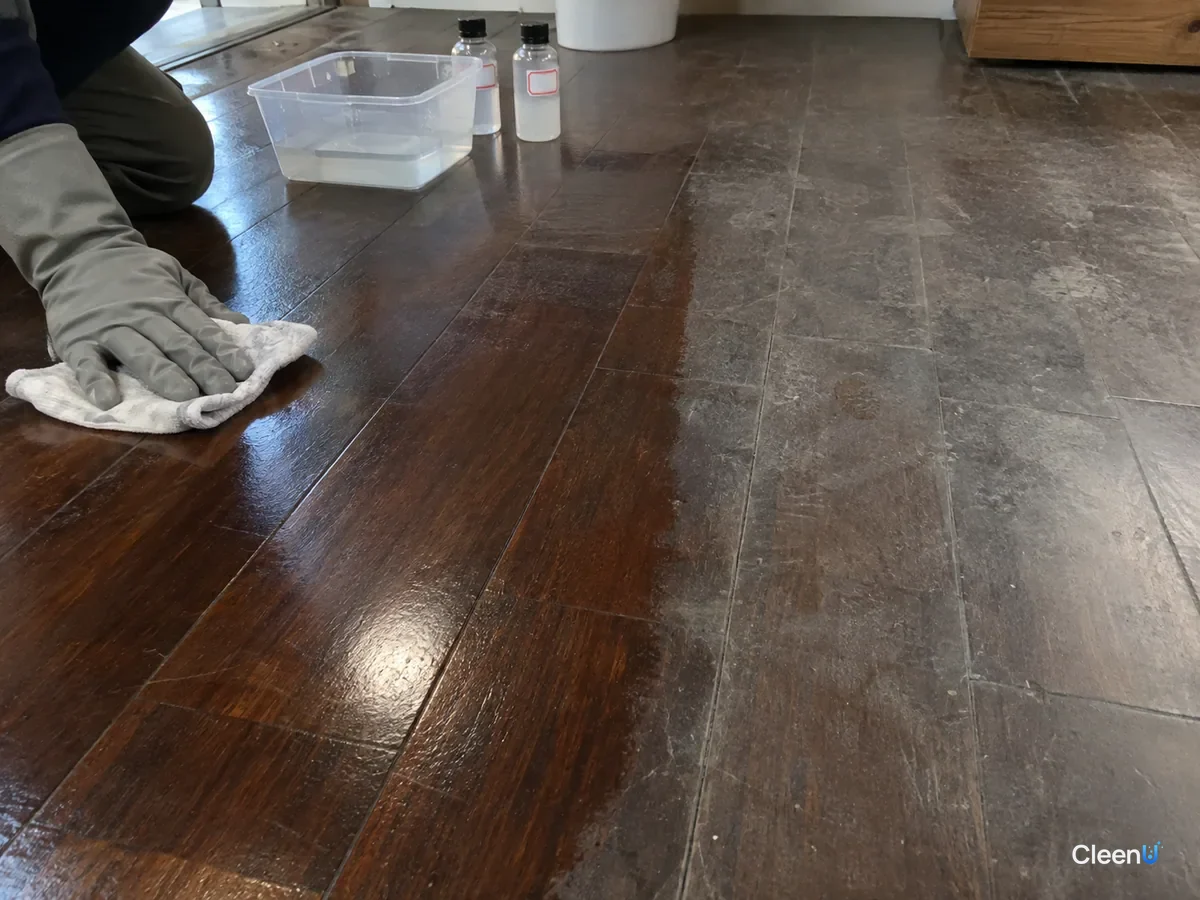
Common causes of hazy wood floors after robot mopping, and fixes
| Cause | What you see | Fix | Prevent it |
|---|---|---|---|
| Too much solution | Haze across the floor, draggy or tacky to the touch, clearly lighter after a water wipe | Mop once or twice with plain water; spot-wipe with a damp cloth and dry right away | Follow the label ratio, lean low and use the measuring cap |
| Hard-water minerals | White rings or dots with whiter edges that water doesn't fully remove | Hand-wipe with a neutral cleaner made for wood floors, then dry right away | Use purified water if your manual allows, and lower the water level |
| Old wax or floor oil | Dull, uneven, tacky in spots, cloudy again after wiping | Remove old wax or oil layers the way the flooring maker recommends | Don't combine wax or oil care products with cleaning solution |
| Dirty pads | Streaky or hazy, grayer the more you mop | Deep-clean or replace the pads, and clean the dock's wash tray | Dry pads after every run and hand-wash them regularly |
| Moisture in the finish | Milky white patches inside the finish that cleaning won't touch | Stop wet mopping there and keep it dry; for bad cases, call a flooring pro | Lower the water level, don't leave standing water, don't let wet pads sit on the floor |
| Worn finish | Dull white along traffic paths, rougher surface | Cleaning can't fix it; the floor needs maintenance or refinishing | Use entry mats and check the finish regularly |
How solution residue forms
A robot mop cleaning solution's job is to help dust and greasy footprints lift off the floor and disperse in water so the pad can carry them away. Surfactant molecules have one water-loving end and one oil-loving end. They surround oily soil and lower the water's surface tension on the floor so the film spreads more evenly.
The catch is that surfactants and the formula's other non-volatile ingredients stay on the floor too. Whatever the pad doesn't pick up is left behind as residue after the water evaporates. At the label ratio, there's so little you can't see it. At two or three times the dose, it can show as haze on a dark wood floor. That's why robot mop solutions stress using less rather than more.
Floor cleaners with wax or care ingredients leave a film on wood floors more easily. Wax is meant to form a surface film, and when a robot mops every day, the wax builds up thicker and more unevenly. So robot mops are best with a wax-free solution made for them. For more on residue and tackiness, see sticky floor after robot mopping.
CleenU Robot Vacuum Cleaning Solution, for example, is a neutral, low-foam concentrate at pH 6.5 to 7.5 with low-foam nonionic surfactants and a defoamer, no wax, no chlorine and no particles. It dilutes at about 1:50 to 1:100; 10 to 20 mL per fill is usually enough. It's for sealed hardwood, not unsealed or waxed wood floors.
Restoring a hazy wood floor
For surface residue, work in this order.
First, mop once or twice with plain water: fill the clean tank with water only, set a low water level and let the robot run a pass or two to carry away most of the soluble residue.
Second, spot-wipe by hand: where haze remains, wipe with a wrung-out microfiber cloth dampened with plain water, then dry it right away with a dry cloth, so the film doesn't dry slowly on the wood.
Third, adjust your dose: from now on, use the low end of the label ratio, about 10 mL for a 1 L clean tank, and plain water for everyday dust.
If water doesn't fully remove hard-water marks, hand-wipe with a neutral cleaner made for wood floors and dry right away. Don't wipe large areas of wood floor with vinegar or other acids, which can affect some finishes, and never put acidic products in the robot's tank.
For old wax buildup, remove the old wax the way the flooring maker or a floor-care pro recommends, and stop combining wax care products with cleaning solution.
Moisture in the finish and a worn finish can't be fixed by cleaning. Mild moisture haze sometimes fades as the floor stays dry. If it's obvious and doesn't fade, have a flooring pro look at it.
Stop wet mopping if you see these
Wood floor seams darken, lift or cup; haze sits inside the finish, doesn't respond to water and drying, and keeps spreading; or the finish is peeling or flaking. Stop wet mopping in wood-floor rooms, switch to vacuum only, keep the floor dry and have the flooring maker or a pro check it.
Wood floors with different finishes carry different haze risks
Sealed floors with UV-cured or polyurethane finishes have a continuous coating, so water and solution don't easily reach the wood. Haze on them is usually residue on the coating, and plain water helps. These floors suit low-water robot mopping best.
Oil-finished floors, including hardwax oil, have no continuous coating. The oil soaks into the top of the wood, so these floors dislike water and surfactants that slowly strip the care layer. After wet mopping they can look blotchy, dull or dry. They aren't suited to daily robot mopping and should be maintained by hand with the products the flooring maker recommends.
Waxed floors: the wax itself turns dull and uneven when it meets water and cleaner, so daily wet mopping keeps bringing the problem back.
If you're not sure which you have, put a few drops of water in an out-of-sight corner. If they bead on the surface for several minutes without soaking in or darkening the wood, the floor is most likely sealed. If the water soaks in quickly and the wood darkens, it's probably oil-finished or the finish has worn through, so be extra careful with wet mopping.
Robot mop settings for wood floors
Lower the water: give wood-floor rooms their own low water setting so the pad is just damp. The floor should be fully dry within a minute or two of mopping.
Dose lightly: on sealed wood, use the low end of the label ratio, and plain water for everyday dust.
Keep pads clean: have the dock dry the pads after every run and hand-wash them regularly. Replace pads that turn stiff or gray.
Don't leave standing water: wipe up drips when the robot docks or rinses, and consider a waterproof mat under the dock.
For more on wood-floor settings, see robot mop on hardwood floors.
CleenU Robot Vacuum Cleaning Solution works in most robot mops from Roborock, iRobot (Roomba Combo and Braava), Ecovacs Deebot, Dreame and Narwal, and in floor washers such as Tineco. Add it to the clean water tank or the dock's designated detergent compartment as your manual directs. CleenU isn't affiliated with these brands; the names only indicate compatibility.
This article is part of the Robot Vacuum Cleaning Solution & Maintenance Guide, which covers the full maintenance schedule and links to every troubleshooting guide.
Common questions about hazy wood floors after robot mopping
Did the cleaning solution eat through my floor's finish?
Usually not. Wipe a small area with plain water first; if the haze fades, it's surface residue. A neutral, wax-free solution used at the label ratio generally won't harm a sealed wood finish.
Should I switch cleaning solutions after the floor turns hazy?
Cut the dose and mop once or twice with plain water first. If it's still hazy at a low dose, check the water hardness, old wax and pads. If you're using a wax or shine product, switch to a wax-free solution made for robot mops.
Can I use vinegar to remove white marks from wood floors?
Not over large areas. Acid can affect some finishes. For hard-water marks, hand-wipe with a neutral cleaner made for wood and dry right away.
Why is only the robot's usual path hazy?
That path gets mopped most, so residue and finish wear both concentrate there. Haze that a water wipe restores is residue; haze that doesn't come back may be worn finish.
Can I use robot mop cleaning solution on a waxed wood floor?
It isn't suited to it. Waxed floors and unsealed wood are outside CleenU Robot Vacuum Cleaning Solution's range, so care for them the way the flooring maker recommends.
How often should I replace mop pads?
Check them every two or three months and replace any that are stiff, flattened, fraying or won't wash clean. Old pads carry dirt and residue back to the floor.
Will switching to distilled water fix hazy wood floors?
Check the dose and water flow first, then the water. Haze usually comes from too much solution or water leaving a film; in hard-water areas minerals add to it, so distilled water can help if your manual allows. Run one or two plain-water passes and see whether the haze fades.
To leave less residue and no wax buildup on sealed wood floors, dose at the low end with the wax-free, low-foam Robot Vacuum Cleaning Solution.
A wood floor that looks hazy after robot mopping usually has a thin film on the finish: residue from too much solution, calcium and magnesium from hard water, old wax or floor oil combined with cleaner, or dirt carried back by the pads. Wipe a small spot with plain water to tell. If the haze fades, it's residue: mop once or twice with plain water, dry spots by hand, then dose at the low end and use a wax-free solution made for robot mops. Treat hard-water marks by hand with a neutral wood-floor cleaner, and remove old wax the way the maker recommends. If the haze sits inside the finish and water won't touch it, moisture may have gotten into the finish or it's worn; cleaning won't fix that, so stop wet mopping and call a flooring pro.