
Q&A
Can You Add Essential Oils or Pet Odor Eliminator to a Robot Mop Tank?
Direct answer
Better not. Essential oils don't dissolve in water. They float, cling to the tank and lines, can damage plastic and seals, and leave an oily film on floors. Pet odor sprays aren't made for machines either. For a light scent, use a robot mop cleaning solution that already has one built in.
What can go in a robot mop's clean water tank
Yes
- Plain water
- A low-foam cleaning solution labeled for robot mops, at the label ratio
No
- Essential oils, oil blends or perfume
- Air freshener or fabric refresher sprays
- Pet odor sprays or undiluted enzyme urine cleaners
- Alcohol-based room scents
It depends
- A pet-home robot mop cleaning solution: it's made for the machine, so use it per the label
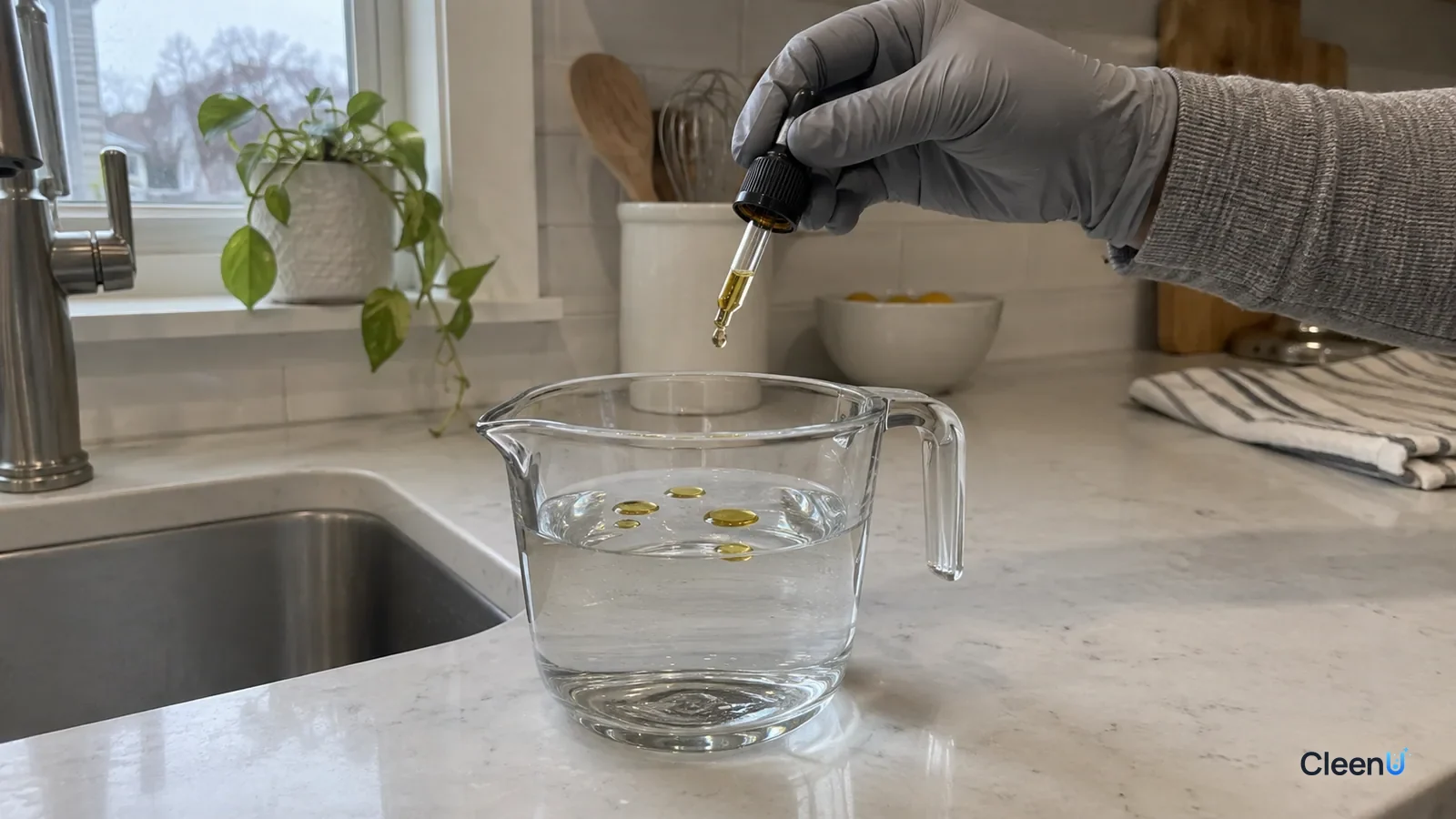
A house that smells fresh after mopping is exactly what many people want, and pet owners want the pet smell gone too. So some add a few drops of lavender, lemon or tea tree oil to the clean tank, or a few sprays of pet odor eliminator, hoping for fresh and deodorized in one go.
It seems easy, but it's not a good idea for the robot, your floors or your pets.
Why shouldn't essential oils go in a robot mop?
They don't dissolve in water. Essential oils are volatile aroma compounds extracted from plants, mostly terpenes, alcohols, esters and aldehydes, and most are nonpolar or weakly polar oils. In water they don't dissolve; they bead into droplets that float on top. Put a drop in a glass of water and you'll see it.
Floating oil clings to the tank walls, filter, pump and fine tubing. Some essential oil components swell plastics and rubber. Limonene, the main component of lemon and orange oils, is actually a solvent that can dissolve some plastics and adhesives. With long exposure, plastic tanks can cloud, turn brittle or crack, and seals can swell, deform and leak.
They leave an oily film. The pad spreads oily water across the floor, the water evaporates, and the slower-evaporating parts of the oil stay behind as a thin film that makes floors slippery and dusty.
The dose is uncontrollable. A few drops sit together on the surface and get pulled by the pump unevenly, strong one moment and weak the next, with very high local concentrations.
"Like dissolves like": why oils attack plastic and seals
Chemists have a rule of thumb: like dissolves like. Substances with similar polarity mix easily. Water is strongly polar, so it dissolves salt and sugar. The terpenes in essential oils are nonpolar, so they don't dissolve in water but readily interact with materials that are also on the nonpolar side.
Robot mop tanks are usually PP, ABS or polycarbonate, and seals are usually silicone, nitrile or EPDM rubber. Oil compounds affect them in different ways.
Rubber seals: nonpolar terpene molecules work into the rubber's molecular network and the rubber absorbs them and grows, which is called swelling. A swollen seal softens and deforms, then shrinks as it dries. A few cycles and it loses its spring and starts to leak.
Some clear plastics: polycarbonate and acrylic can develop fine surface crazing when stress and certain organic solvents act together, so they look hazy and finely cracked. That's environmental stress cracking. Latches, screw bosses and fittings already carry stress, so they tend to go first.
Adhesives and coatings: limonene is sold as an adhesive remover and can soften some glues and coatings.
These changes rarely happen at once. They build through long, repeated contact, and by the time a tank looks hazy or leaks, it's hard to undo. When formulators develop a robot mop solution, they check compatibility with common plastics and rubbers, which is one real difference between a purpose-made solution and adding things to the water yourself.
Why are essential oils a problem for cats and dogs?
This matters most in pet homes.
Cats lack some of the liver enzymes that break down certain essential oil compounds, such as phenols and some terpenes, so they handle them far worse than people or dogs. Contact, licking or long-term inhalation can all pose a risk. Tea tree, citrus, peppermint, eucalyptus and clove are commonly listed as oils to keep away from cats.
Dogs are sensitive to some oils too, tea tree in particular.
Pets walk, lie and lick their paws on the floor, so oil residue left by mopping easily reaches their mouths through paw pads and fur. Keep essential oils out of your robot mop, and don't run a diffuser for long periods in rooms where pets spend time. If a pet drools, vomits, wobbles or seems lethargic, contact your vet and tell them which oils were involved.
Why not pet odor eliminators either?
Pet odor products come in many forms: room sprays, fabric sprays, enzyme urine cleaners, bacteria-based deodorizers and fragrance-based maskers. A few things they share make them a poor fit for a robot mop.
They aren't made for machines. They don't account for foam, residue or the water path. Some foam noticeably and trigger false "tank full" alerts; some carry fragrance and solubilizers that leave residue.
They're meant to be used differently. Enzyme urine cleaners need to sit on the stain long enough to work. Diluted in the clean tank and spread in a thin film that dries fast, they barely do anything.
Their ingredients are complex. Some contain alcohol, quaternary ammonium antimicrobials or other actives that can precipitate, cloud or make floors slippery when mixed with a robot mop solution.
And pet urine and vomit shouldn't be mopped by the robot in the first place. Clean them by hand first; see can a robot mop clean up pet urine.
Want a fresher smell after mopping? Do this
Use a robot mop cleaning solution that already has a light scent. Its fragrance is designed into the formula with solubility, foam and residue in mind, and solubilizers keep it evenly dispersed. At label dilution the scent is light and even, and it won't float or harm the lines.
Watch the dose. A light scent doesn't mean you should add more. At the label ratio, a faint scent that fades within an hour or two is normal. Add more and it turns harsh and leaves more residue.
Ventilate. Opening windows during and after mopping freshens a room better than adding fragrance.
Fix odors at the source. Scent only masks a smell for a while. Pads, the dirty tank and the dock's wash tray are common odor sources, so clean them regularly, along with pet beds and litter boxes.
Want mopping to help with pet odor? Do this
In pet homes, everyday odor mostly comes from paw prints, drool marks and splashes around food bowls, plus organic matter building up in the pads and dock. The approach:
Use a pet-home robot mop solution. CleenU Robot Vacuum Cleaning Solution for Pet Homes adds cyclodextrin-based odor control to a neutral, low-foam base, with no added fragrance. A cyclodextrin is a ring-shaped sugar molecule with a water-repelling pocket that can hold some odor molecules and keep them out of the air. It captures odor rather than covering it with a stronger smell. It dilutes at about 1:50 to 1:100; 10 to 20 mL per fill is usually enough.
Set pet areas as priority zones for an extra pass.
Clean the pads, dirty tank and wash tray often so organic matter doesn't sit and stink in the dock.
Clean up urine and vomit by hand; never send the robot through them.
It works in most robot mops from Roborock, iRobot (Roomba Combo and Braava), Ecovacs Deebot, Dreame and Narwal, and in floor washers such as Tineco. Add it to the clean water tank or the dock's designated detergent compartment as your manual directs. CleenU isn't affiliated with these brands; the names only indicate compatibility. For choosing a scent level, see scented or fragrance-free robot mop cleaning solution.
Already added oil or odor spray? Here's the fix
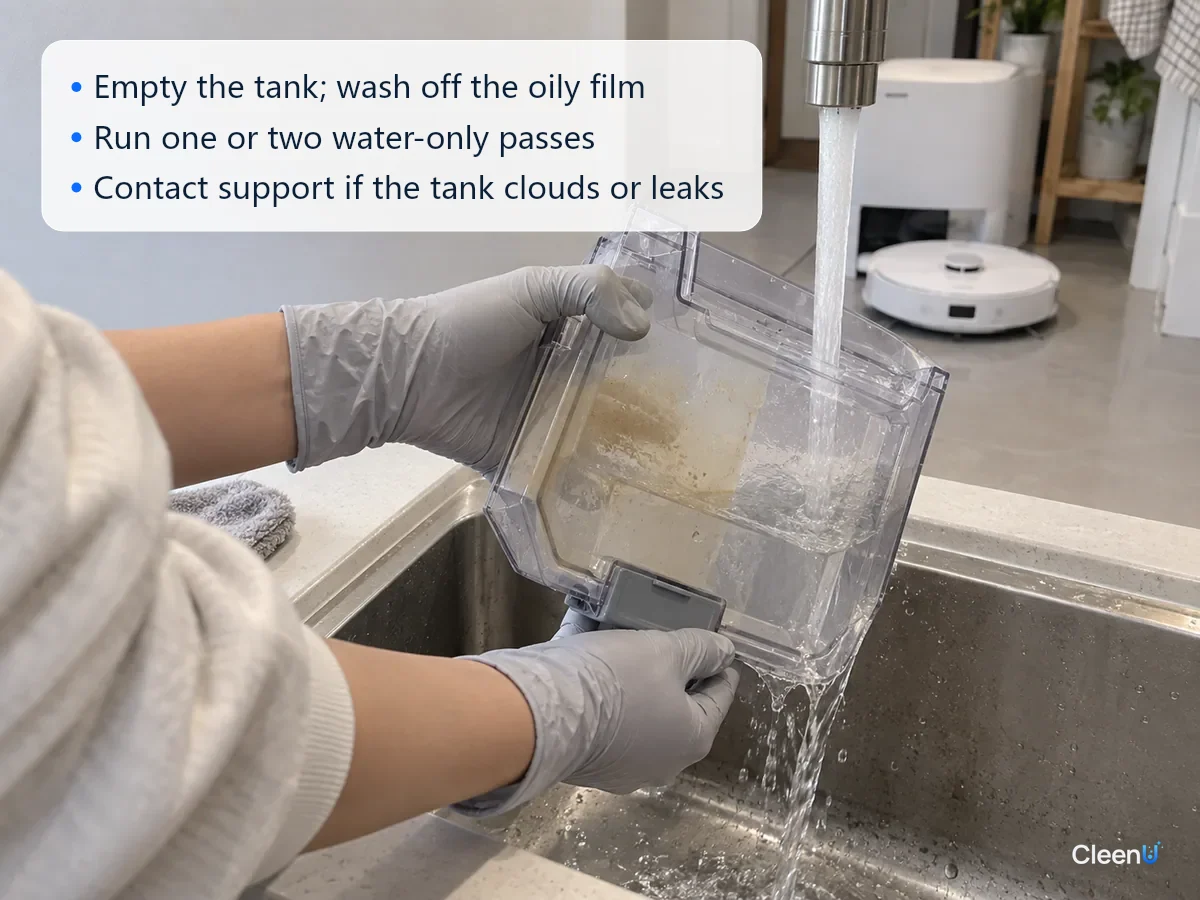
Empty the clean tank and wash the inside with warm water and a little dish soap to remove the oily film, then rinse until there's no foam.
Run the robot once or twice with plain water to flush the lines and floor.
Hand wash the pads with warm water and laundry detergent, rinse and dry.
Check the tank for clouding, warping or leaks, and the seals for swelling. Contact support if anything looks off.
In pet homes, let the floor dry completely before pets come back, and watch them for anything unusual.
Why does fragrance only work built into the solution?
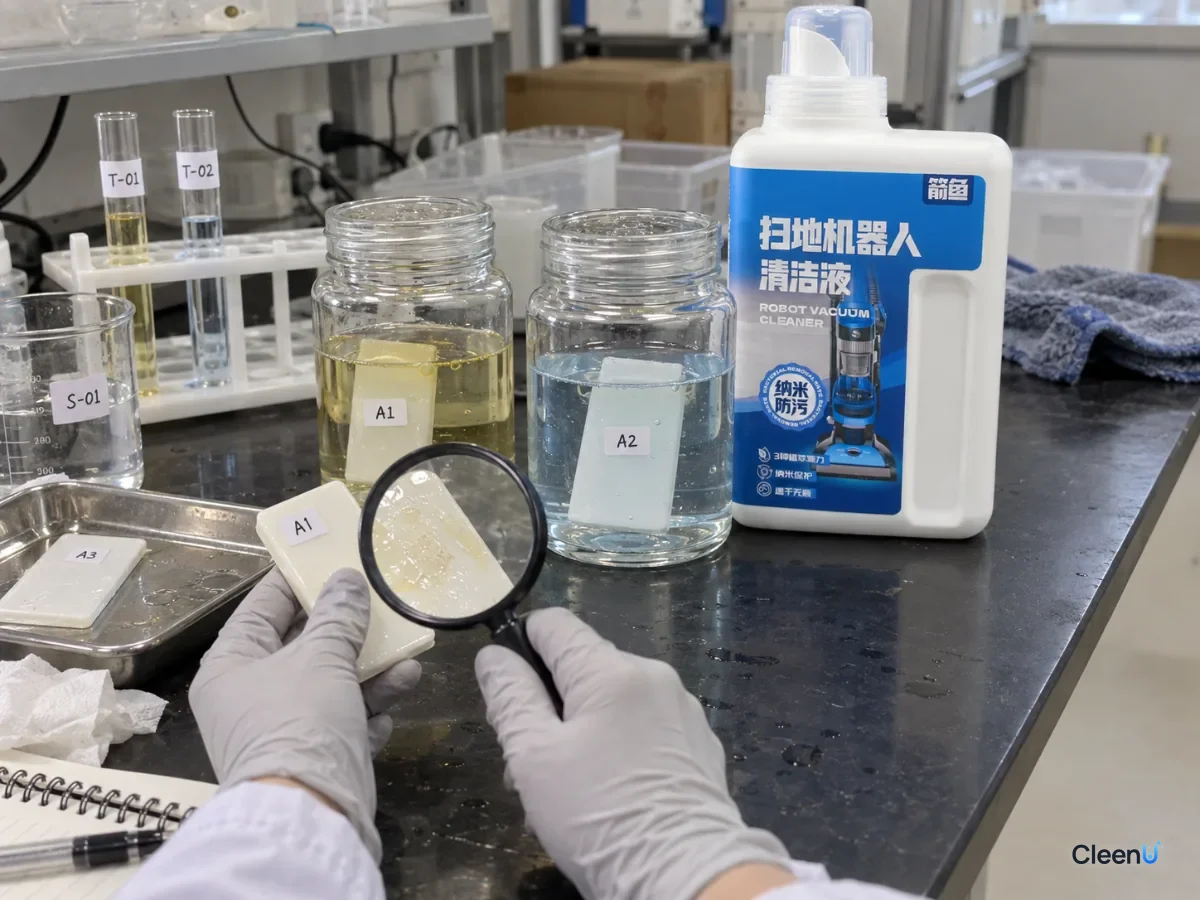
In a purpose-made solution, fragrance is part of the formula. Formulators pick scent materials that dissolve well in that system and are kind to plastics and rubber, disperse them evenly with solubilizers, control the amount, and test foam, residue and stability. At label dilution, the scent is light and even and doesn't float or deposit in the lines.
Adding essential oil to the tank skips all of that: no solubilizing, no compatibility check, and a dose based on guesswork. That's why one fragrance is reliable and the other can damage the machine.
This article is part of the Robot Vacuum Cleaning Solution & Maintenance Guide, which covers the full maintenance schedule and links to every troubleshooting guide.
Common questions about essential oils and odor sprays in robot mops
Not even one or two drops of essential oil?
Better not. Even a drop or two floats and clings inside the lines, and over time it can harm plastic and seals. With a cat at home, skip it entirely.
What about water-soluble "diffuser" fragrance?
Better not. These rely on lots of solubilizer or alcohol to disperse the fragrance and aren't made for machines, so foam and residue are unpredictable. For scent, use a robot solution with a light built-in fragrance.
Can I spray pet odor eliminator on the mop pads?
Better not. It ends up in the dock and dirty tank, with unpredictable residue and foam. For pet-area odor, use a pet-home robot solution and wash the pads often.
My robot has a built-in fragrance compartment. Can I put essential oil in it?
Follow the manual. Some fragrance modules only take the maker's own pads or refills. Never pour essential oil into the water tank or anywhere else.
The floor got slippery after I used essential oil. What now?
Run the robot once or twice with plain water, and if needed wipe by hand with warm water and a little neutral cleaner to remove the film.
What's the best way to get a fresh smell after mopping?
Use a lightly scented robot mop solution at the label ratio, open the windows afterward, and clean the pads and dock regularly to cut odor at the source.
Can I add disinfectant or bleach to my robot mop tank?
No. Chlorine bleach and other strong oxidizers can attack the tank, lines and seals, and they can react with a cleaning solution in the tank; most manuals rule them out. Treat spots such as pet accidents by hand and rinse with water. Keep the tank to water or a solution made for robot mops.
Why can't I smell anything after mopping with cleaning solution?
That is usually normal. A robot mop solution diluted to the label rate has a light scent that fades within an hour or two, and the pet-home version is fragrance-free. Don't add more to chase scent; that raises residue and foam. For a fresher room, clean the pads, dirty tank and dock tray first.
To handle pet odor as the robot mops without adding any fragrance, and with no essential oils or odor sprays in the tank, try Robot Vacuum Cleaning Solution for Pet Homes.
Skip essential oils and pet odor eliminators in your robot mop. Oils don't dissolve in water. They float, cling to the tank and lines, can swell or age plastic and seals, and leave an oily film on floors, and cats are especially sensitive to many oil compounds. Odor sprays aren't made for machines, so foam, residue and ingredients are unpredictable. For a light scent, use a robot solution with fragrance built in at the label ratio. For pet odor, use a pet-home formula, wash the pads and dock often, and clean up urine and vomit by hand.