
How-to
Robot Mopping in a Pet Home: Hair, Paw Prints, Odors, and the Right Cleaning Solution
Direct answer
In a pet home, have the robot vacuum before it mops, clear hair off the brushes every few days, and mop more often, daily at the entry and around food bowls. Clean up accidents by hand first, use a low-foam, low-residue solution at the label dose, and wash the pads and filter often.
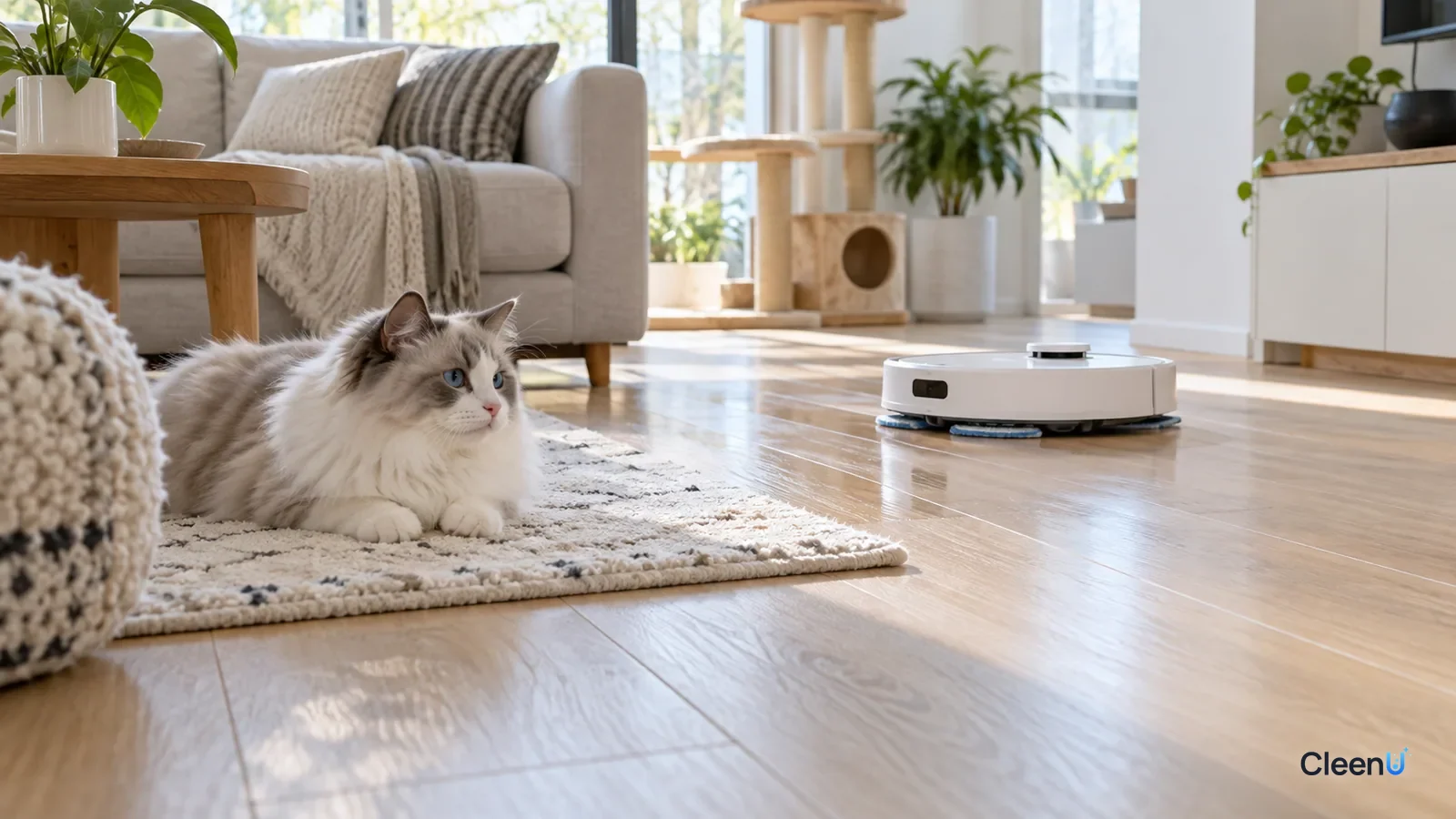
In a home with cats or dogs, clean floors don't stay clean for long. There is always a layer of fur by the couch and under the cat tree, a trail of muddy paw prints at the door, spilled kibble, water and drool marks around the bowls, and a pet smell you can't quite place. A robot mop is close to standard equipment for pet owners, yet many find the brush roll wrapped in hair, pads that sour faster, and sometimes an accident smeared across the house.
Floors in pet homes get dirty in different ways than floors in other homes. Adjust how you use the robot to match, and it becomes a real help instead of another chore.
What makes floors in pet homes different?
Hair: cats and dogs shed every day, more during seasonal molts. Fur is light and picks up static, so it clings to floors and baseboards and wraps around the brush roll, side brushes and mop pads.
Paw prints: pets coming in from the yard or a walk track in dirt and dust. Paw pads also give off a little oil, so paw prints are part mud, part grease, and plain water doesn't fully remove them.
Drool and food bits: the area around food and water bowls collects splashed water, spilled kibble and dried drool. These contain protein and oil, and over time they turn sticky and start to smell.
Skin oil and odor: oil from a pet's skin makes fur stick to the floor and adds to that lingering pet smell. The more skin oil and drool left on the floor, the stronger the smell in the house.
Accidents: vomit, poop and litter tracked out of the box. These are the things a robot mop least wants to meet.
Why the cleaning solution matters more with pets
Pet homes mop more often, so any problem with the cleaning solution gets bigger. Too much foam, churned together with fur in the dirty tank, makes false "tank full" alerts and overflow more likely. Too much residue leaves the floor tacky, so it holds on to hair and dust. A heavy fragrance may bother your pets, and it only covers the smell anyway.
A low-foam, neutral, low-residue robot mop solution suits pet homes better. CleenU Robot Vacuum & Mop Floor Cleaning Solution for Pet Homes is one example. It builds on a low-foam nonionic surfactant base and adds a cyclodextrin-based odor neutralizer. The surfactants wrap the oil in paw prints and the protein in drool marks at low concentration and suspend fur and grit so the pad carries them away, while the odor neutralizers help reduce pet smells on the floor. It is neutral and low-residue, so floors dry clean. It is made for tile, sealed hardwood, laminate, vinyl and other indoor hard floors, not for unsealed or waxed wood. Measure it with the bottle's markings; robot mop solutions like this typically dilute at about 1:50 to 1:100, or roughly 10 to 20 mL per fill.
On brand compatibility: The CleenU pet-home formula works in most Roborock, iRobot (Roomba Combo and Braava), Ecovacs Deebot, Dreame and Narwal robot mops, and in Tineco-type floor washers. Add it to the clean water tank or the compartment your manual specifies. CleenU isn't affiliated with these brands.

How pet-home floor grime differs, chemically
In most homes, floor grime is mainly dust and skin oil from feet. Pet homes add a few messier kinds of soil that take more care to clean.
Paw prints: sweat glands in paw pads release a little oil and moisture, and pets coming in from outside carry dirt and fine grit. So a paw print is oil plus particles: the oily film glues fine dirt to the floor. Plain water picks up some of the particles and pushes the oil around, leaving a gray print. A surfactant has to wet and emulsify the oil first so the particles can be dispersed and suspended, then carried off by the pad.
Drool marks: dog saliva contains proteins such as mucins, plus bits of food. As it dries, the protein forms a slightly tacky film, often with a shiny ring at the edge, and over time it feeds microbes and starts to smell fishy.
Food-bowl splatter: oils in kibble and the protein and starch in wet food and canned food oxidize and turn sticky soon after they hit the floor.
Pet skin oil and odor: oil from a pet's skin makes shed hair stick to the floor, and as that oil breaks down it releases volatile fatty acids and other compounds that make up part of "pet smell."
All of these share one thing: they contain oil or protein, so plain water struggles to lift them, and they're all food for microbes. That's why pads and dirty tanks in pet homes sour faster and need cleaning more often.
How cyclodextrin traps odors
CleenU Robot Vacuum & Mop Floor Cleaning Solution for Pet Homes adds a cyclodextrin-based odor neutralizer to its low-foam nonionic surfactant base.
A cyclodextrin is a ring of glucose units joined end to end, shaped like a tiny cup open at both ends. The outside of the cup is water-loving, so it dissolves in water; the cavity inside is relatively oil-loving. Many odor molecules are small and somewhat oily, and they settle into that cavity to form what's called an inclusion complex. Once trapped, they evaporate less readily, so the nose picks up less.
That's a different idea from masking with fragrance. Fragrance layers another smell on top; cyclodextrin reduces how many odor molecules escape into the air. It works on light odor left on the floor. The sources themselves, like urine or vomit, still have to be cleaned up by hand first; an odor neutralizer is no substitute for that.
What pet homes should avoid in a cleaning solution
Pets lie on the floor, lick their paws and sometimes lick the floor itself, so beyond cleaning performance there are a few more things to look at.
Fragrance: cats and dogs have far keener noses than we do, and a strong scent can make them avoid certain areas. Low-scent or lightly scented products suit pet homes better; the CleenU pet-home formula is fragrance-free.
Essential oils: some, such as tea tree oil, pose a toxicity risk to cats. Don't add essential oils to the tank to freshen things up.
Cationic ingredients: quaternary ammonium surfactants are mainly used to kill germs and soften. Left on the floor, they add slipperiness and aren't a good fit for everyday whole-floor mopping. A neutral, mainly nonionic formula suits daily mopping better.
Dose: the more residue, the more your pets come into contact with it. Measure to the label and let the floor dry before pets walk on it.
Set it up room by room
Living areas, the entry, the bowls and the dock: how to handle each
Living room and bedrooms
Vacuum first, then mop, with a second pass where fur piles up
In the app, choose vacuum-then-mop or run two separate cycles so fur and dust are picked up before the robot mops. Set the areas by the couch, cat tree and pet bed as high-attention zones and vacuum them twice at a higher suction setting.
Caution:Mopping before the fur is picked up rolls it into clumps that stick to the floor or wrap around the pads.
Entry and patio door
Mop the paw-print zone every day
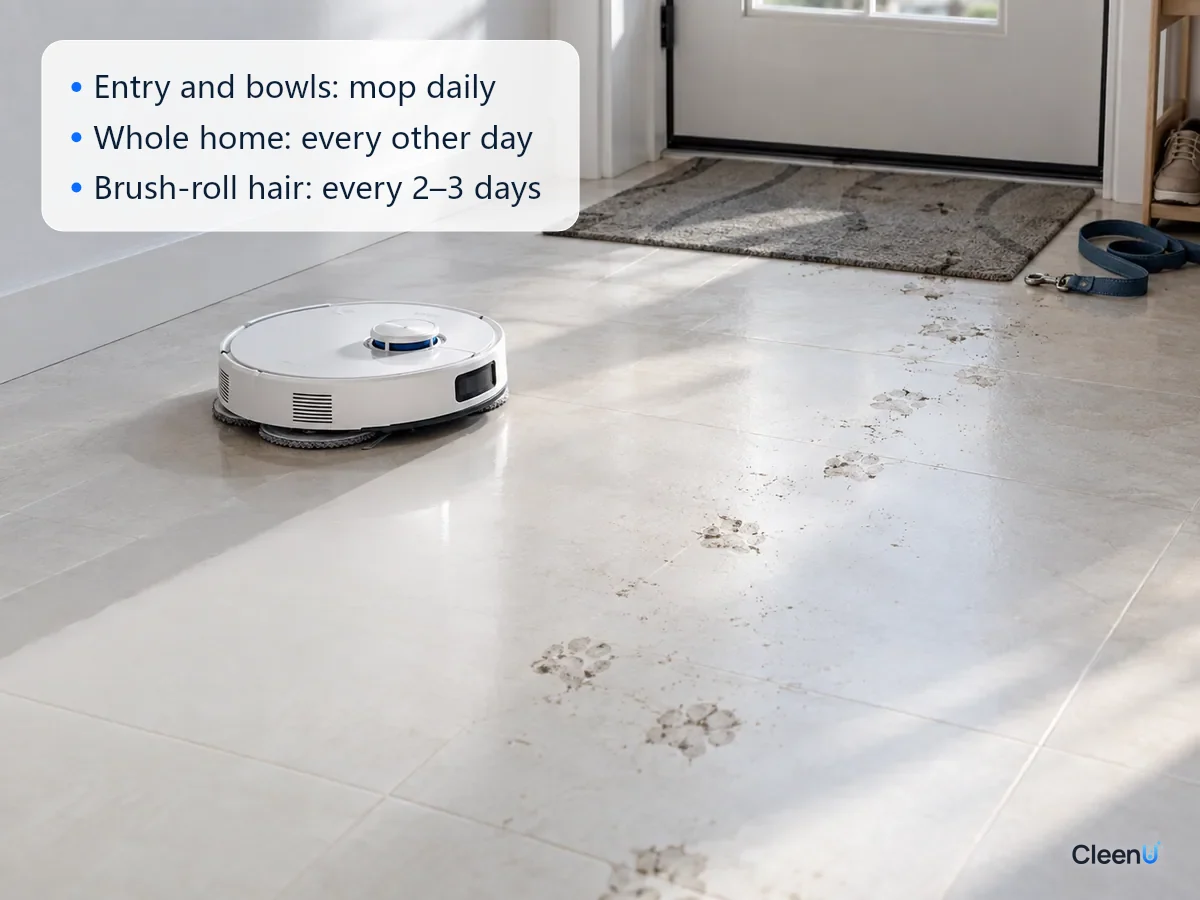
Doorways where pets come and go collect the most paw prints. Schedule a small daily mop of that zone; muddy prints come up more easily before they dry hard. Wiping paws after walks cuts the prints in half.
Around food and water bowls
Pick up food first, then let the robot mop
Scoop up spilled wet food, canned food and large bits by hand before the robot mops, or the pads will smear them around and carry them into the dirty tank. Water tends to pool here, so keep the water flow off the highest setting.
Caution:Wait until the floor is completely dry before putting the bowls back, and keep pets from licking the floor while it is wet.
Litter box and pee pad area
Make it a no-mop zone and vacuum only
Litter clumps when it gets wet, and pee pad areas may have urine on the floor. Set these spots as no-mop zones in the app so the robot only vacuums there, and mop them by hand.
Vomit and poop
Clean up accidents by hand before the robot runs
If your pet vomits or has an accident, pause the robot, put on gloves, pick it up with paper towels and wipe the spot with a damp cloth. Some models can detect pet waste, but don't rely on it completely; check the floor before a scheduled run when you are away.
Caution:If the robot rolls over waste, it spreads it through the house and into the brush and pads. Stop it immediately and remove and thoroughly clean the brush roll and pads.
Dock and robot care
Clean hair and pads about twice as often
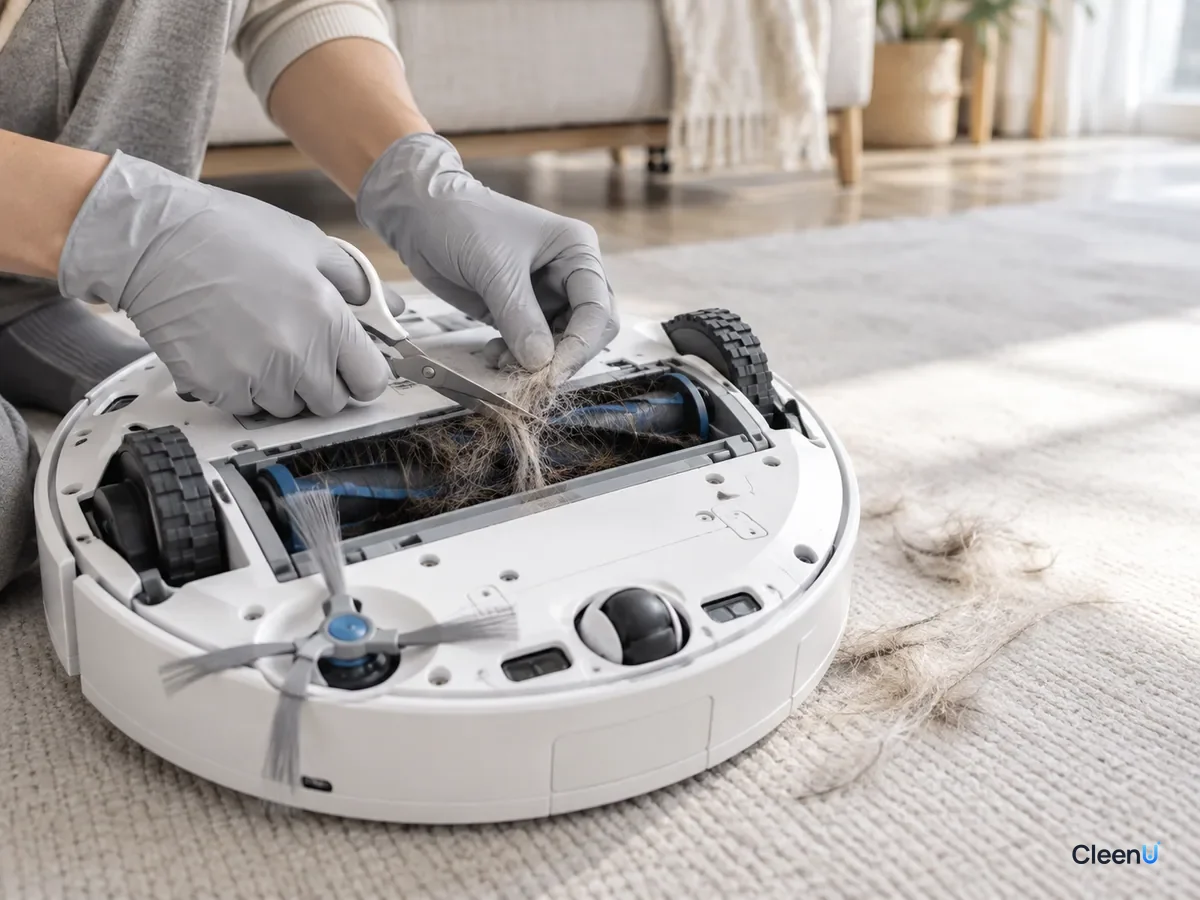
Cut hair off the brush roll and side brushes every two or three days. Empty the dirty tank after each run, and scrub the tank and filter weekly. Turn on pad drying, and replace pads once they turn dark or start to smell.
How often should you mop with pets?
A typical home does fine with mopping two or three times a week. With pets, mop the whole home every other day and the high-traffic spots, like the entry and the area around the bowls, every day. During shedding season, with several pets, or with a dog that goes out every day, a daily whole-home mop makes sense.
Vacuuming should happen even more often. In a home with a lot of fur, vacuum daily and again right before mopping.
When you mop more often, keeping the dose right matters more. Add the measured amount each time and don't double it to fight odors; extra solution only leaves the floor sticky so it holds more fur, and it makes the dirty tank foam.
This article is part of the Robot Vacuum Cleaning Solution & Maintenance Guide, which covers the full maintenance schedule and links to every troubleshooting guide.
How to tell your setup is working
Walk on the floor barefoot after a run. It should feel dry, not tacky. In side light, the entry and bowl area should be free of paw prints and drool marks, and the house should smell less like pets than before. On the robot side, the dirty tank shouldn't keep throwing false "full" alerts, the pads shouldn't sour within a day or two, and hair shouldn't build up on the brush roll enough to slow it down.
If the floor feels sticky, you are probably overdosing or leaving detergent in the pads; see robot mop leaving streaks. For what can and can't go in the tank, see can you put vinegar or bleach in a robot mop tank.
Before running a robot mop in a pet home, make sure
- The robot is set to vacuum before mopping, with extra suction where fur collects
- The litter box and pee pad areas are set as no-mop zones
- Any vomit or accidents are cleaned up by hand before the robot runs
- The solution is low-foam and neutral, measured to the label and never mixed with disinfectant
- Hair is cleared from the brushes every two or three days and the pads are kept dry
Stop if any of these happen
The robot rolled over pet waste or vomit; the brush roll is so wrapped in hair it won't turn or smells burnt; your pet vomits, drools heavily or acts unwell after licking the floor. Stop the robot and unplug it, and clean the brush roll, pads and dirty tank thoroughly. If your pet shows symptoms, call your veterinarian and have the cleaning solution's packaging on hand.
Written for: Cat and dog owners who want a robot mop to cut down on fur, paw prints and pet odorNot for: Unsealed or waxed wood floors; a puppy or kitten still in potty training, when accidents on the floor are frequent (clean by hand for now)
Robot mops and pets: questions owners ask most
Can a robot vacuum handle cat and dog hair?
Yes, with regular upkeep. Cut hair off the brush roll and side brushes every two or three days, and empty the bin or change the dust bag more often than a pet-free home would.
Is a pet-home robot mop solution safe for cats and dogs?
Diluted as marked, floors are fine for pets once they are dry. Keep pets from licking the floor during mopping and until it dries.
Can I add disinfectant to the tank to sanitize pet areas?
No. Disinfectant can damage the robot's water system and cause foam and false alerts, and the residue isn't great for pets. Clean up accidents by hand and treat the spot as the disinfectant label directs.
Why do the mop pads smell so fast since we got a pet?
Pet homes put more drool, skin oil and food bits on the floor, so pads sour faster. Dry them after every run and replace them once they turn dark or smell.
Can pet hair cause false "dirty tank full" alerts?
Hair clogs the filter, and a high-foam solution makes false alerts more likely. Use a low-foam solution and clean the filter weekly.
What is the easiest way to deal with paw prints after walks?
Wipe paws with a damp cloth at the door, and schedule a small daily mop of the entry so prints don't spread through the house.
Can I let my robot mop run over pet urine?
No. A robot will spread urine or vomit across the floor and leave the odor in the pads and dirty tank. Blot it up with paper towels, wipe the spot by hand, wipe again with plain water, then let the robot mop as usual. A pet-home robot mop solution is meant for everyday paw prints, drool marks and food-bowl splashes, not for cleaning up urine directly.
Why choose a fragrance-free robot mop solution for a pet home?
Pets are sensitive to smell, and fragrance can build up in a closed tank, so fragrance-free is the better fit. The CleenU pet-home robot mop solution has no added fragrance and uses cyclodextrin-type odor-control ingredients instead of masking scent. Use about 1:50 to 1:100, usually 10 to 20 mL per fill, and let the floor dry before pets walk on it.
For a low-foam robot mop solution that handles paw prints and pet odor as it mops, try Robot Vacuum Cleaning Solution for Pet Homes.
Robot mopping in a pet home works best when you set it up around your pets. Vacuum before mopping and clear hair often, mop the entry and bowl area daily, keep the robot out of the litter area, and clean up accidents by hand. Use a low-foam, neutral, low-residue robot solution at the label dose and never mix it with disinfectant, and clean the pads, filter and dirty tank about twice as often as you otherwise would. Your floors stay cleaner, the house smells fresher and the robot lasts longer.