
Q&A
Can You Use Robot Mop Cleaning Solution With a Regular Mop?
Direct answer
Usually, yes. Dilute it at the label ratio and use it with a flat mop or spin mop. A low-foam, low-residue formula needs no rinse afterward and won't leave floors tacky. The reverse isn't always true: regular floor cleaners are often high-foam or waxy and may not belong in a robot.
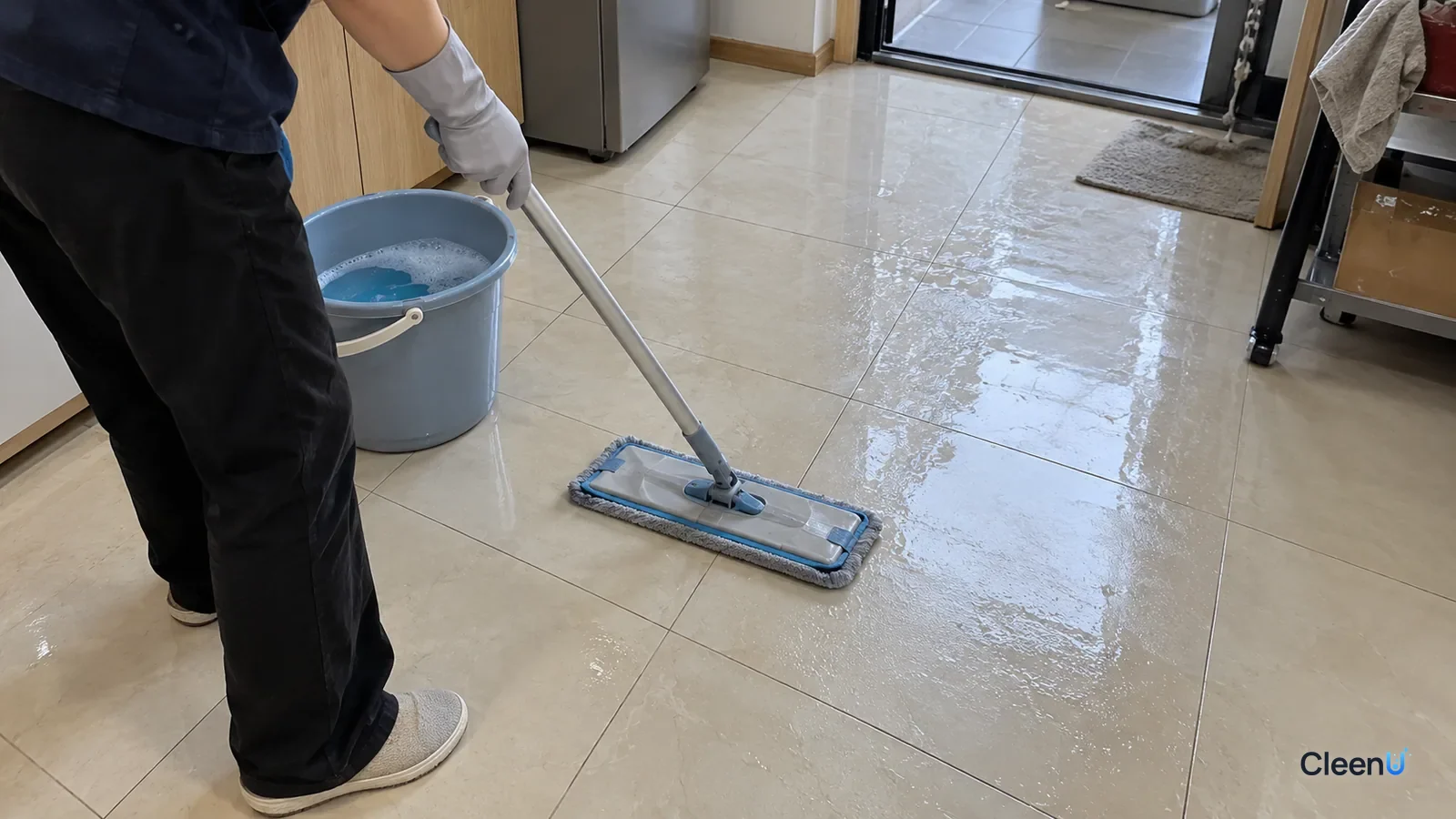
Hand mopping: where this solution can and cannot be used
Yes
- Hand mopping with a flat or spin mop: usually fine at the label ratio; a low-foam, low-residue formula needs no rinse
No
- Unsealed solid wood or waxed floors: not for wet mopping, and not for this type of solution
- Carpet: the solution is made for hard floors; use a carpet cleaner for carpets
- Tabletops, counters, stoves and bathroom fixtures: the matching cleaner suits them better
It depends
- Natural marble: a neutral formula is usually fine; test in a hidden spot and follow the stone's care requirements
- The other way round, regular floor cleaner in a robot: not always suitable, since many are high-foam or contain wax
Splitting the week between robot and hand mopping
In a home with a robot mop, hand mopping mostly fills the gaps. A common routine:
The robot mops daily or every other day, covering big, open areas like the living room, bedrooms and hallway.
Once a week, mop by hand where the robot can't reach: deep under beds and sofas, stairs, the bathroom doorway, narrow gaps between furniture and corners.
Handle kitchen grease, pet accidents and spills by hand as they happen.
Use the same low-foam solution at the same ratio for both. It's simple, avoids mixing, and prevents high-foam residue from hand mopping getting smeared into a film by the robot.
Don't let hand-mopping residue end up in the robot
If you hand mop with a regular high-foam floor cleaner and don't rinse, residue stays on the floor. The next robot run picks it up into the dock and dirty tank, where it can cause foam alerts, and floors get stickier over time.
So in a robot household, hand mop with a low-foam, low-residue formula too, or rinse with plain water afterward, so both kinds of mopping leave the same low residue.
Cleaning stairs and corners by hand
Stairs and corners are the hardest spots for a robot and where dust and hair pile up most. Clear corner dust with a vacuum or brush first, then wipe with a flat mop or cloth wrung until just damp and dipped in diluted solution. On stairs, work top to bottom, wiping each tread first, then the riser and edges. Dry with a clean cloth afterward so the stairs stay dry and slip-resistant.
The questions people ask first
Can I pour robot mop solution into a bucket and mop by hand?
Yes, in most cases. Dilute at the label ratio and use a flat mop or spin mop. A low-foam formula won't show suds, but it still cleans.
How much should I use for hand mopping?
Follow the label. CleenU Robot Vacuum Cleaning Solution dilutes at about 1:50 to 1:100, so about 1 to 2 fl oz (30 to 60 mL) per 3 liters (roughly 3 quarts) of water. Use the stronger end for very dirty floors and the lighter end for routine cleaning.
Do I need to rinse after hand mopping?
Usually not with a low-residue formula at the label ratio. If you overdid it or the floor feels tacky, go over it once with plain water.
Can regular floor cleaner go in my robot mop?
Better not, unless the label says it's for robot mops. Many regular floor cleaners are high-foam or contain wax, which causes foam, residue and clogs in a robot.
Can I use robot mop solution on tables and counters?
It isn't meant as an all-purpose cleaner. It's designed for floors; use the appropriate cleaner for tables, counters and stovetops.
Can I use it in a wet-dry vacuum?
If the label or manual allows it, yes. Scale the dose to the floor washer's tank size.
Are robot mop solution and regular floor cleaner interchangeable?
Only one way. Robot mop solution can go in a bucket at about 1:50–1:100, but regular floor cleaner shouldn't go in a robot: it isn't made to stay low-foam, so it can bubble, clog filters or leave a film.
With a robot mop at home, you rarely mop by hand anymore. But some spots still need a person: under beds where the robot can't reach, stairs, the bathroom doorway, a fresh spill, or a deep clean. And since the robot solution is right there, it's natural to wonder whether you can pour it into a bucket.
In most cases you can, and it's often easier than a regular floor cleaner.
Why does robot mop solution work well for hand mopping?
It's low-foam. When you mop by hand, suds are a nuisance: the mop fills with bubbles, the floor is left sudsy, and you have to rinse. A low-foam formula leaves the floor clean with no suds behind.
It's low-residue. A robot never rinses, so the formula is designed to leave floors clean and non-tacky with no rinse. That saves you the rinse step by hand too.
It's neutral. It's gentle on most hard floors. CleenU Robot Vacuum Cleaning Solution, for example, is a neutral, low-foam concentrate at pH 6.5 to 7.5 with low-foam nonionic surfactants and a defoamer, no wax, no chlorine and no particles, made for tile, vinyl plank, laminate and sealed hardwood.
It's concentrated. One bottle makes many buckets, so the robot and your hand mop share one product and you have one less cleaner to buy.
How to dilute and mop by hand
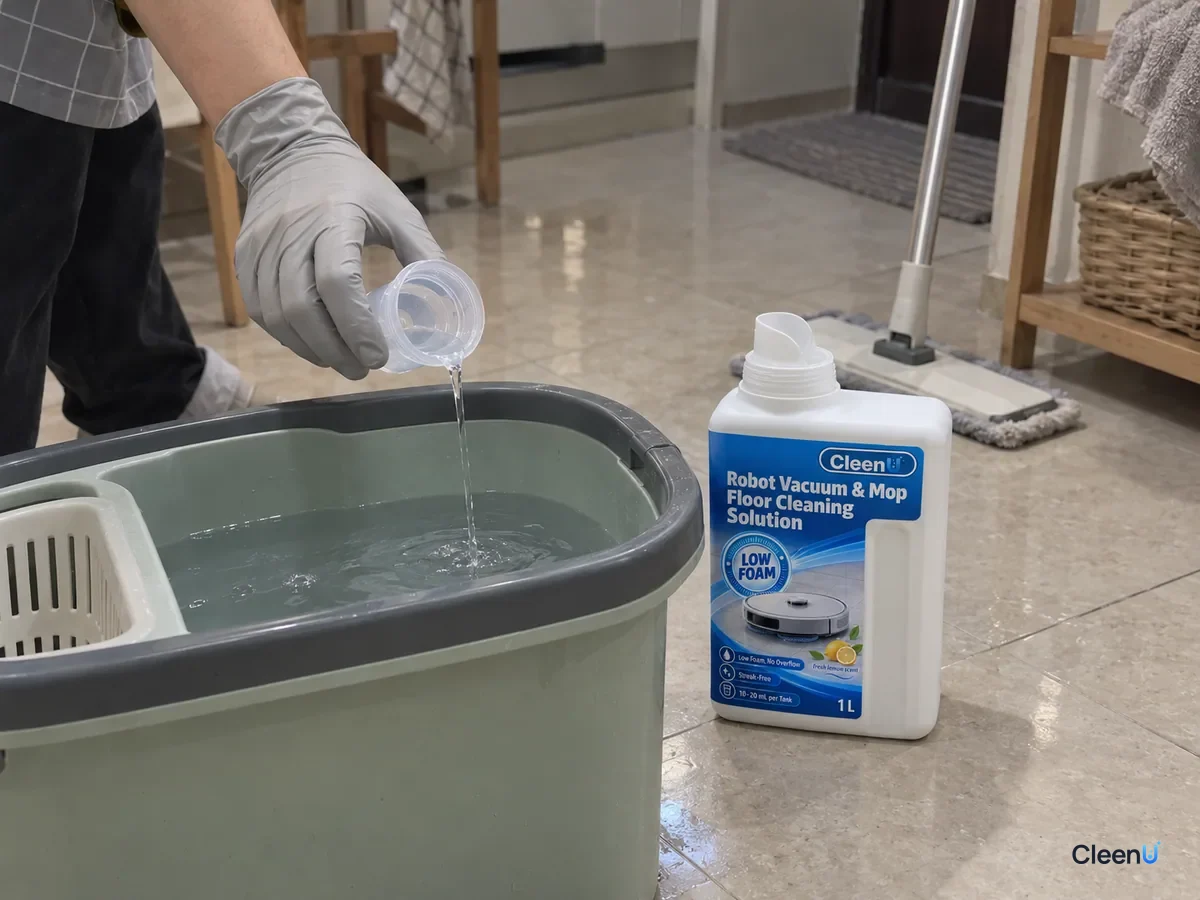
Water first, then solution. Fill the bucket with water, then measure solution with the cap, pour it in and stir gently. Don't whip up bubbles.
Dilute at the ratio. At about 1:50 to 1:100, that's roughly 30 to 60 mL (1 to 2 fl oz) in 3 liters of water, or 50 to 100 mL (about 1.7 to 3.4 fl oz) in 5 liters. Use the lighter end for routine cleaning and the stronger end for very dirty floors, and err on the low side.
Wring the mop until it's just damp. Flat mops and spin mops alike should be wrung until they don't drip, especially on hardwood and laminate. The floor should dry within a minute or two.
Change the water when it's dirty. Hand-mopping water gets dirtier as you go, and that soil can go back onto the floor. Change it every room or two, or use a bucket that separates clean and dirty water.
Mop in one direction. On hardwood, go with the grain; on tile, work from the far side toward the door so you don't smear dirt back and forth.
Skip the rinse. At the label ratio, the floor dries without tackiness. If it feels tacky, you used too much. Go over it with plain water and cut back next time.
Matching the solution to your mop
Flat mops with microfiber pads pair best with a low-foam solution. The pad lies flat, spreading water and pressure evenly, and microfiber picks up soil well. Rotate two pads: mop with one, swap when it's dirty, which is cleaner than rinsing one pad in the bucket over and over. You can also skip the bucket and mist diluted solution onto the pad from a spray bottle, which gives better moisture control on hardwood and small areas.
Spin mops with a wringer bucket: put diluted solution in the wash side and use the spinner to wring the mop until it's just damp. The wash water gets dirty fast, so change it every room or two.
Sponge and string mops: they hold a lot of water and are hard to wring out, so be especially careful on hardwood. String mops trap dirt, so wash and dry them after every use.
Steam mops clean with hot steam and generally don't need, and often shouldn't have, cleaning solution in the tank. Follow the manual.
For heavy spots, use a two-step method
One advantage of hand mopping is targeting problem spots, like grease in front of the stove, muddy prints at the door or splashes around the pet bowls.
Step one, pre-treat the spot. Soak a soft cloth in solution at the strong end of the label, lay it on the spot for a minute or two so the surfactants can wet and emulsify the soil, then wipe it off.
Step two, mop the whole area. Mop the area with solution at the normal ratio to pick up the loosened soil and any extra liquid so the spot doesn't turn tacky.
That works better than making the whole bucket stronger and avoids leaving excess residue across the floor. Once it's done, the robot can take over daily upkeep.
How is hand mopping different from robot mopping?
Strength: for the robot, you calculate by tank size, for example 10 to 20 mL for a 1-liter tank. For hand mopping, scale to the bucket at the same ratio.
Water: a robot puts down a small, even amount of water. By hand you control moisture by wringing the mop, which is harder to judge, so take extra care on hardwood.
Dirty water: the robot has a dock that washes pads and a separate dirty tank. In a bucket, dirty water and solution mix, so change the water promptly.
Spot cleaning: hand mopping is better for heavy spots, like grease in front of the stove, where you can go over an area several times or wipe it with a cloth dipped in diluted solution.
The other direction: can regular floor cleaner go in a robot?
This is where people get mixed up. Robot mop solution working in a bucket doesn't mean regular floor cleaner works in a robot.
Many regular floor cleaners are designed for hand mopping. They make plenty of suds so they feel effective, some contain wax or shine agents to make floors glossy, and some are strong enough that the label says to rinse. In a robot, all of that causes trouble: foam triggers false "tank full" alerts and spills over, wax and shine agents build up on floors and can clog outlet holes, and strong residue leaves floors tacky.
So only products labeled for robot mops, low-foam and with a robot dilution ratio belong in the machine. For why regular cleaners don't work, see can you use regular floor cleaner in a robot mop.
Where not to use it
Unsealed or waxed wood floors: they shouldn't be wet-mopped and aren't a fit for this type of solution.
Carpet: robot mop solution is designed for hard floors; use a carpet cleaner on rugs.
Natural marble: a neutral formula is usually fine, but follow your stone care guidance and test a hidden spot first. See can a robot mop be used on marble floors.
Tables, counters, stovetops and bathroom fixtures: use the appropriate specialized cleaners.
It works in most robot mops from Roborock, iRobot (Roomba Combo and Braava), Ecovacs Deebot, Dreame and Narwal, and in floor washers such as Tineco. Add it to the clean water tank or the dock's designated detergent compartment as your manual directs. CleenU isn't affiliated with these brands; the names only indicate compatibility.
This article is part of the Robot Vacuum Cleaning Solution & Maintenance Guide, which covers the full maintenance schedule and links to every troubleshooting guide.
For one floor solution that works in your robot and your bucket, low-foam with no rinse needed, try Robot Vacuum Cleaning Solution.
In most cases, robot mop cleaning solution works fine for hand mopping. Dilute at the label ratio, wring your flat or spin mop until it's just damp, and a low-foam, low-residue formula leaves floors clean with no rinse and no tackiness. Add water before solution, change dirty water promptly and keep moisture low on hardwood. The reverse isn't true: regular floor cleaners are often high-foam or waxy and only belong in a robot if the label says so. Use dedicated products on carpet, waxed or unsealed wood, and counters and fixtures.